






Koňská brána Gate
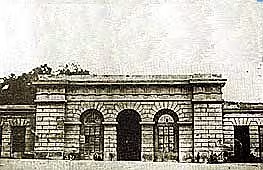
Objekt se nedochoval — na místě dnes nestojí. Následující text popisuje jeho historii, ne současnou návštěvu.
Koňská Brána, also known as Brána sv. Prokopa, was an important historical gate in Prague's fortifications at the upper end of what is now Václavské náměstí. Constructed in the late 14th century, it underwent several transformations before its final reconstruction in the Empire style between 1831 and 1836 by architect Peter Nobile, with Josef Pachl's collaboration. The gate played a crucial role during the Thirty Years' War when it successfully resisted Swedish forces. In 1875, Koňská Brána was demolished to make way for the National Museum building.
The origins of Koňská Brána trace back to the late 14th century as part of Prague's fortifications under the Luxembourg dynasty, with Charles IV reigning as Holy Roman Emperor. It served as a defensive structure and was rebuilt in Baroque style following the Thirty Years' War. The gate's final transformation into the Empire style occurred in the early 19th century, reflecting significant architectural trends.
Architecturally, Koňská Brána evolved through various styles over centuries. Initially constructed with a clay wall lined with limestone blocks, it was rebuilt in Baroque style after the Thirty Years' War. The final Empire style reconstruction by Peter Nobile and Josef Pachl featured five arcade fields instead of the original three, similar to designs like Vienna's Burgtor. This version also included a terrace that served as a promenade for Prague residents, offering a popular lookout point.
Throughout its history, Koňská Brána witnessed several key events. During the Thirty Years' War in 1648, it successfully withstood an attack by Swedish forces under General Arvid Wittenberg. The gate's strategic importance was underscored by its ability to resist such assaults, thanks in part to a ravelin constructed after 1639. In 1862, poet Aleš Balcárek tragically died after falling from the gate, adding a poignant chapter to its history.
Today, the site of Koňská Brána is occupied by the National Museum building, completed between 1885 and 1891. The museum stands as a testament to Prague's rich cultural heritage, housing extensive collections that were once housed in Nosticova paláce Na příkopě. While the original gate no longer exists, its historical significance continues through the museum and the vibrant urban square of Václavské náměstí.
Visiting the site today offers a unique opportunity to connect with Prague's layered history. The National Museum provides insights into Czech culture and history, while the surrounding area remains a vibrant part of the cityscape. Koňská Brána's legacy endures as a symbol of resilience and transformation, inviting visitors to explore its storied past within the heart of Prague.
Then and now
Drag the slider to compare how the landmark may have looked when it was built with the view today.
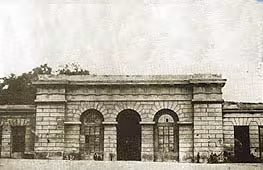
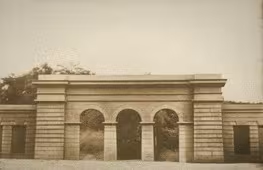
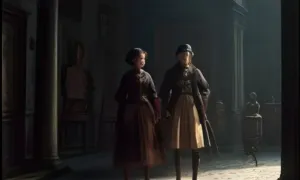
The historical appearance on the left is an AI-generated visualisation and serves as inspiration only.
Historical milestones
- 1648
- The gate successfully resisted an attack by Swedish forces during the Thirty Years' War.
- 1836
- Reconstruction of Koňská brána in Empire style completed.
- 1875
- Koňská brána was demolished to make way for the National Museum.
Architectural development
Initially constructed as part of Prague's fortifications in the late 14th century, Koňská brána underwent several reconstructions. It was rebuilt in Baroque style after the Thirty Years' War and later transformed into its final Empire style form by Peter Nobile and Josef Pachl between 1831-1836. The gate featured a terrace that served as a promenade for Prague residents.
Historical events
In 1648, Koňská brána withstood a siege by Swedish forces during the Thirty Years' War.
The gate was reconstructed in Empire style between 1831-1836.
Koňská brána was demolished in 1875 to facilitate the construction of the National Museum.
Points of interest
- Koňská Brána was originally constructed with a clay wall lined with limestone blocks, showcasing the defensive architectural techniques of the late 14th century. - The gate's ability to withstand Swedish forces during the Thirty Years' War in 1648 is attributed to a ravelin built after 1639, highlighting its strategic military importance.
- During its Empire style reconstruction, Koňská Brána featured five arcade fields instead of three, reflecting architectural influences similar to Vienna's Burgtor and emphasizing aesthetic trends of the period.
- Poet Aleš Balcárek's tragic death in 1862 after falling from the gate adds a poignant chapter to its history, intertwining personal stories with the site’s historical narrative.
- The transformation of Koňská Brána into a terrace for promenading Prague residents before its demolition in 1875 illustrates how public spaces evolved to meet social needs over time.
Guide
This guide is narrated by a synthetic voice generated by artificial intelligence.
Show guide text
This text was created by artificial intelligence and has not been editorially reviewed. It may contain inaccuracies.
Welcome to a remarkable piece of Prague's history! As you stand here at the site where Koňská brána once stood, imagine yourself transported back in time. You're at what used to be one of Prague's most significant fortifications, located at the upper end of Koňský trh—now Václavské náměstí.
The story of Koňská brána begins in the 14th century when it was originally constructed as part of the city’s defensive walls. Its strategic importance is underscored by its resilience during tumultuous times, notably its successful defense against Swedish forces during the Thirty Years' War in 1648. This fortification's evolution reflects Prague's rich architectural history; from its initial construction to its transformation into a Baroque masterpiece and finally, its reconstruction in the Empire style between 1831-1836 by architect Peter Nobile, with Josef Pachl’s collaboration.
As you stand here today, envision the grandeur of this gate as it once was. Although no longer standing, Koňská brána's legacy is etched into the history of this place. Imagine its clay walls lined with limestone blocks—a testament to the defensive architectural techniques of its time. Consider how a ravelin built after 1639 played a crucial role in safeguarding it during those critical moments of conflict.
The gate was not just an architectural feat but also a witness to significant historical events and transformations. Its demolition in 1875 to make way for the National Museum marked the end of its physical presence, yet it continues to live on through stories and history books.
As you reflect on this site, take a moment to appreciate how architecture and history intertwine, telling tales of resilience, transformation, and progress. I invite you to explore further around Václavské náměstí, where the spirit of Koňská brána still resonates in the air.
Thank you for joining me on this journey through time. As we part ways, carry with you the stories and images of a past that has shaped the present. Enjoy your exploration of Prague's rich historical tapestry!
Businesses nearby
Do you run a restaurant, accommodation, shop, museum, rental, wellness or other visitor service near this monument? Show yourself directly to the people heading to it — this is how they will see you in the app and on the web:
Events nearby
Zdroj akcí: otevřená data měst a obcí ČR (Národní katalog otevřených dat) a kalendář akcí Národního památkového ústavu.
Nearby
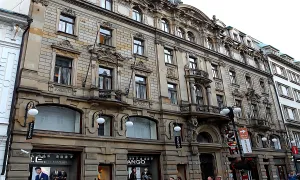
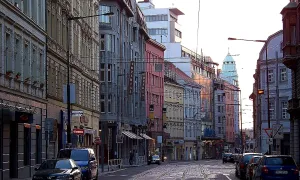
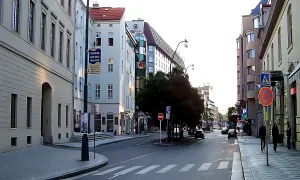
Koňská brána was located near Wimmerovými sady, Kanálskou zahradou, and Rajskou zahradou. Today, the site is part of Václavské náměstí, a significant urban square in Prague.
Visualizations and artistic views


The visualisations are generated by artificial intelligence and serve as inspiration.
Photos from the area
Real photos taken near the monument

Zdroj a licence jsou uvedeny u každého snímku.
Tips from visitors
No tips yet. Be the first!
Log in and add your tip.
Sources and literature
Photos: autor neuveden / Public domain — Wikimedia Commons. The author and licence also appear when you hover over the image.
Faktickým podkladem tohoto textu byl článek na Wikipedii, jehož autory jsou přispěvatelé Wikipedie. Článek je dostupný pod licencí CC BY-SA 4.0.
Location on the map
More monuments – Nové Město
Show all in the municipality


Příběhy a pověsti
Legendy, pověsti a příběhy spjaté s touto památkou
Fotografie návštěvníků
Zatím žádné fotografie. Buďte první, kdo přidá fotografii z návštěvy!
Log in a přidejte svou fotografii nebo hodnoťte.
Za ověřenou návštěvu v aplikaci získáte víc bodů — poznáme podle GPS, že jste na místě.
Reviews and comments