






Kostel Božího Těla (Počátky) Church
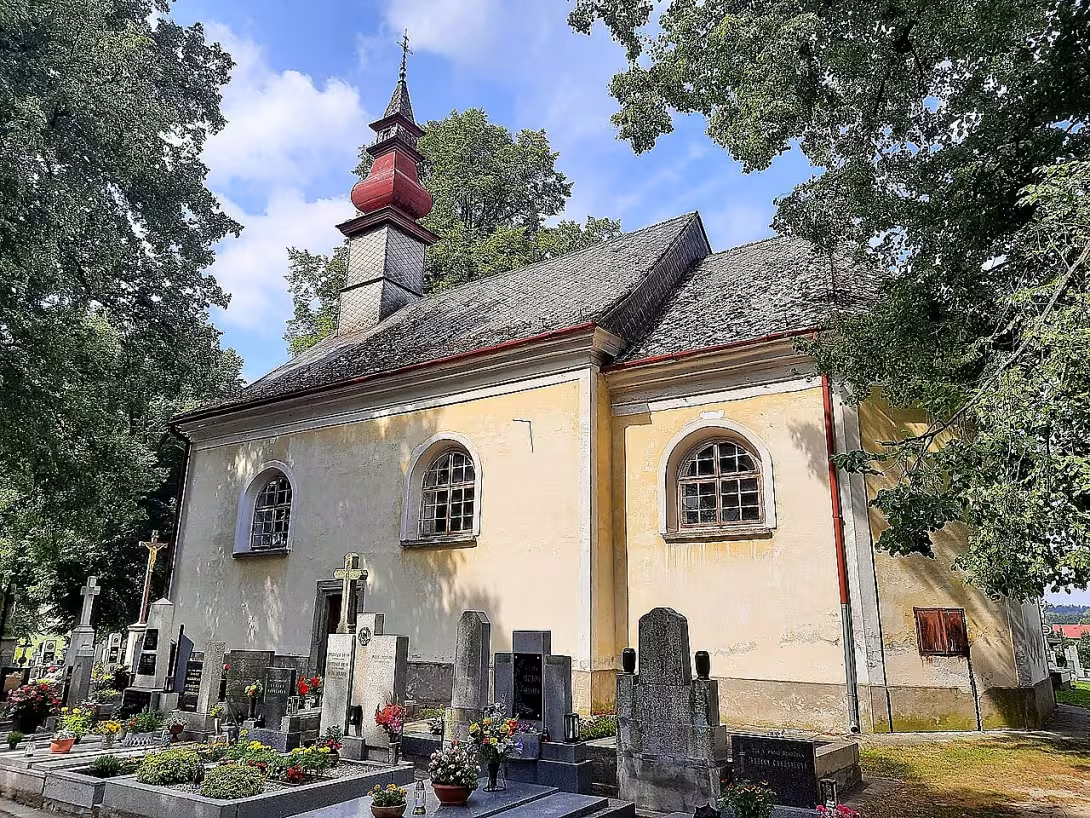
Church of God The bodies are standing in the Cemetery at Žižkov Street. This place has deep roots in local history - there also grows a route through the old Soukenic masters of the Originals, which maps the rich manufacturing tradition of Origin.
The original church was built in the second half of the 16th century. The first written mention of it comes from the town orphan's books from 1565, when Pavel Havrda donated money to repair the church and the skeleton. Like many buildings of his age, however, the church was transformed into a frenzy at the end of the 17th century. The merged reconstruction came in the early years of the 18th century, when in 1705 to 1711 it underwent an extensive Baroque transformation, probably led by Domenico de Angeli. The original Renaissance building was preserved only with the signs of the lords of Hradec, which resembles the chamberlain. The interesting thing is that a significant part of the financing of the reconstruction came from the so-called flood of the early brewery, which shows the economic strength of the local industry.
Architecturally, it's a three-boat structure closed by a three-sided priesthood. The interior is decorated with five altars from 1713 to 1714, which were set up by the priest Vincent Švehla and which are credited by sculptors František Bauguto, the author of the sculpture of St. John Nepomuk in the square. The main altar is a painting of the Lord's Dinner from 1714, created by apparently J. Schmidt's painter. The perfection of the interior is complemented by the organ from Václav Pantoček of Dachic, who donated it in 1717.
West of the church stands a bell with a skeleton, which comes similar to the church from the end of the 16th century. This building underwent a general reconstruction in 1998, and its characteristic onion pit covered by shingles was changed in 1999. Since 1963, the church has been protected as a cultural monument, recognising its place in Czech architectural history.
Then and now
Drag the slider to compare how the landmark may have looked when it was built with the view today.
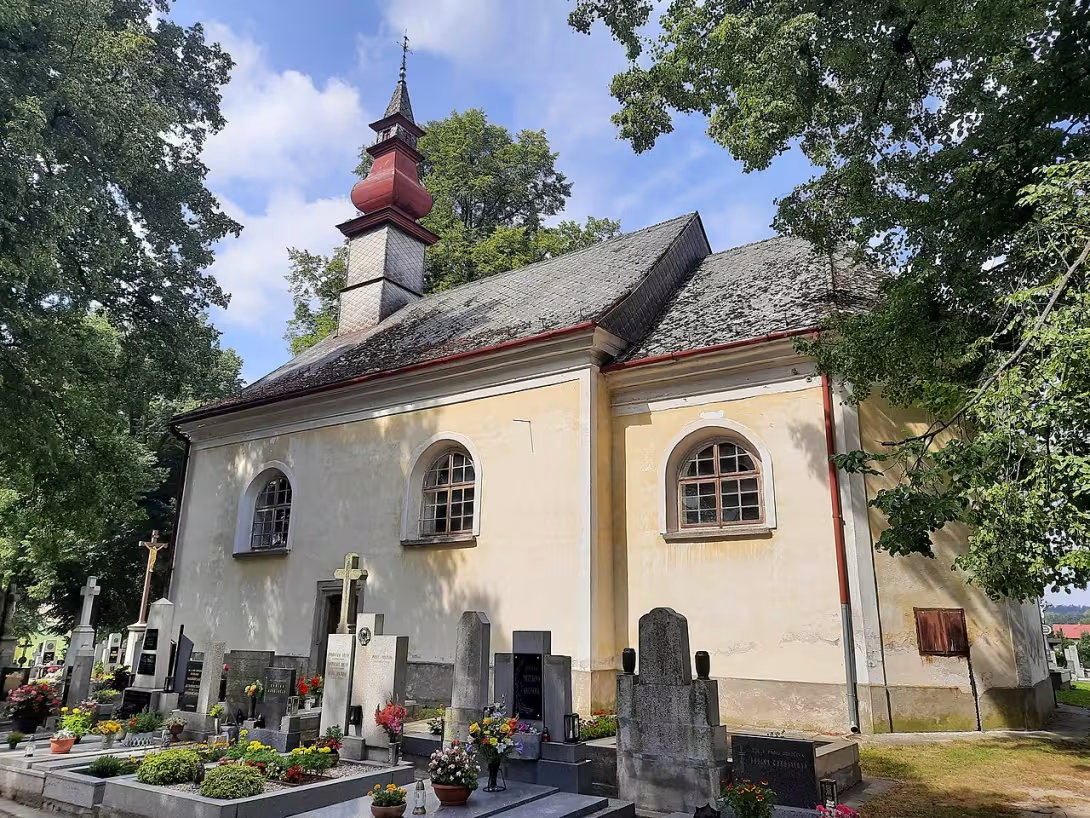

The historical appearance on the left is an AI-generated visualisation and serves as inspiration only.
Historical milestones
- 1565
- The first written mention of a church and a skeleton in urban orphan books.
- 1705-1711
- Baroque reconstruction of the church, financed by a brewery trailer.
- 1713-1714
- Decorating the interior of the altar by František Bauguto and the painting * Dinner of the Lord *.
- 1963
- Statements of the church for a cultural monument.
Architectural development
The original Gothic building from the second half of the 16th century was rebuilt baroque in the 18th century. Only the coat with the signs of the masters from Hradec was preserved. The interior was furnished at the expense of the priest Vincent Švehl, with altars from František Baugut and the painting * Dinner of the Lord * from 1714. The skeletons and belfry from the end of the 16th century are self-standing, robust prismatic buildings.
Historical events
- 1565
- The first written mention of the church in urban orphan books, Pavel Havrda dedicated money to repair the church and the skeleton.
- 1705-1711
- Baroque reconstruction of the church led by Domenico de Angeli, financed from the brewery.
- 1963
- The church is declared a cultural monument.
- 1998-1999
- General reconstruction of the skeleton and bell tower, including replacement of the onion flask.
Points of interest
- Church of God The bodies are connected with the tradition of the Soukenic craft, as its surroundings lie on the route * The paths of the old Soukenic masters of the Initial *.
- The original Renaissance building from the second half of the 16th century preserved only the lining with the signs of the lords of Hradec, reminiscent of their patronage.
- Baroque reconstruction of the church in the years 1705-1711 was financed from a storehouse of local brewery, which shows the economic strength of the initial industry.
- The interior is decorated with five altars from 1713-1714, which were built by the vicar Vincent Švehla and credited by sculptors František Bauguto.
- The organ in the church came from Václav Pantoček from Dachic and were donated in 1717.
Guide
This guide is narrated by a synthetic voice generated by artificial intelligence.
Show guide text
This text was created by artificial intelligence and has not been editorially reviewed. It may contain inaccuracies.
Welcome to the picturesque beginnings of the Highlands. Right now, you're standing in front of an impressive complex that opens a gateway to deep history in front of you. Take a deep breath and look around you. Before your eyes is the church of God's Body, which together with the skeleton and bell tower from the end of the sixteenth century forms an absolutely unique whole. Feel the quiet atmosphere of a place that remembers centuries of human destinies, prayers and craftsmanship.
Let's go together against the tide of time and see how this shrine originated. The first written mention of the church and the local skeleton dates back to 15 hundred and sixty-five, when it was recorded in urban orphan books. At that time there was an older Renaissance building, from which until today, for example, rare lining with the signs of the Hradec masters, which reminds us of their former powerful patronage. At that time, in historical sources, he also reminds us of the name of Paul Ravrada. The life of the city has always been closely linked to the church, but the largest transformation of the entire complex took place in the early eighteenth century. In seventeen hundred and five to seventeen hundred eleven, the church passed through a magnificent Baroque reconstruction. You may be surprised where the money came from for this challenging construction event. The financing was provided by a so-called brewery flood, which was the proceeds of brewing beer. The author of this successful reconstruction was the builder Domenico de Angelis, who gave the temple his present face connecting the early Baroque expression with preserved older elements.
Now pay attention to the architecture itself. You are standing in front of an early Baroque sacral building, which also carries late Gothic elements. When you look at the available buildings, the three-boat area is situated in front of you, ending with a three-sided priesthood. The interior, which was created between seventeen hundred thirteen and seventeen hundred fourteen, is extremely richly decorated and bears traces of the manuscript of Vincent Švehla. Behold the altars which are the real masterpiece of sculptor František Baugut. These altars add depth and spiritual dimension to the inner space. Your attention will certainly also be drawn to the rare painting of the Lord's Dinner, the author of which is painter J. Schmid. And if you perceive the space of all senses, you will appreciate that in seventeen hundred and seventeen the interior was also enriched by Master Václav Pantoček of Dachic, who supplied the organ.
Looking back at the history of this place, specific human stories emerge from the fog of forgotten years. It's not just the names of builders and artists like Domenico de Angelis or František Baugut. The Church of the Body of God in Originals is deeply connected with the tradition of Soukenic craft. The church's surroundings lie on a route so called The Paths of the Old Soukenic Masters of the Originals. The masters and companions here came here not only to work, but also to seek spiritual comfort. The bell tower from the end of the sixteenth century and the adjacent skeleton form a harmonious whole with the church, which was declared a cultural monument for its insatiable historical and cultural value in nineteen hundred and sixty-three. This only confirms the importance of this location for the whole wide area.
Now try to imagine what life in the Originals looked like at the time when beer was brewed to support the construction, or when craftsmen walked past the old walls with coats of arms of the Hradec lords. Every stone carries the story of the people who lived here, worked and left us a legacy that lasted centuries.
I hope you enjoyed the tour of this special area. Take a moment to observe the details around you, walk quietly around and let the genius loci breathe on you. Thank you for your attention, I wish you a wonderful rest of your stay in the Originals and goodbye to other stories from the Highlands.
Tips for visitors
The best time to visit the Church of God's Body is in the summer months when outdoor light is ideal for photography. In June and July it is also possible to visit the church during services offering a unique view of the interior and its acoustics. In winter the indoor lighting and quieter atmosphere are suitable for a quieter tour.
The church is easily accessible by car, it is recommended to park in a public parking lot in the centre of the village Počátky. There are also public transport stops in the vicinity of the church, but the current connection needs to be verified in the traffic search engine. It is recommended to walk because the church is located in the historical center of the village.
When visiting, wear comfortable shoes because the church and its surroundings are often visited even within walks. The interior is cold, so bring a light sweater or sweater. If you are planning to photograph, take a lens with you with you with a higher resolution for detailed images.
The best places for photography are mainly presbytery with richly decorated frescos and baroque altar. The ideal light is in the morning or late afternoon, when the sun lights the church from the side. In the interior it is advisable to use natural light from windows.
In the vicinity of the church it is worth visiting Castle Počátky, which is located about a kilometer from the church. Another interesting thing is the Church of St. Jacob the Greater, just 800 metres from the Church of the Body of God. Both of these monuments are suitable for a visit within one day because they are located in the center of the village.
For families with children, a visit to the Church of the Body is interesting thanks to its historical appearance and rich interior. Children can look at old frescoes and sculptures that tell stories from biblical times. There is also a possibility of walking on the picturesque streets of the historical centre.
Frequently asked questions
Is Kostel Božího Těla (Počátky) open to the public?
Yes, the church is open to the public. Opening hours are 9:00 to 16:00, except for constitutional holidays and off-season.
How do I get to the place by car / public transport?
Church of God The bodies are available by bus No. 503 from Pelhřimova or own car, parking is possible in front of the church or in the nearby street.
How much is the entrance fee and is it paid on the spot?
Payment is made directly at the register in the church.
Is the tour suitable for children and seniors?
Yes, a church tour is suitable for all ages. The church has accessible stairs and uncomplicated spaces, so you can visit it with children or seniors.
How long does the tour take?
The church tour takes approximately 30 minutes. If you want more information about the church and its history, we recommend to arrange with the guide before visiting.
What are the opening times and booking is required?
The church opening hours are from 9:00 to 16:00. Reservation is not required, but if you want more information or talk to the guide, we recommend to check in in in advance.
What's interesting in the immediate vicinity?
In the immediate vicinity of the church there is a cemetery at Žižkov Street, which is also accessible by sightseeing. Other historical monuments and cultural institutions can be found in the surroundings.
For kids
Imagine going back to when the island of the Middle Ages was. The place where the Church of God's Body stands today in the Originals was once cultivated and densely wooded. Who lived here? Farmers and shepherds trying to survive in a difficult time. What happened here? People gathered in the market to buy or sell their crops.
Businesses nearby
Do you run a restaurant, accommodation, shop, museum, rental, wellness or other visitor service near this monument? Show yourself directly to the people heading to it — this is how they will see you in the app and on the web:
Accommodation nearby
Trips and activities nearby
Guided tours, tickets and activities nearby from GetYourGuide
Affiliate link: if you buy from the partner, we may receive a commission. The price for you does not change.
Search tours and activities →Themed route
Castle Počátky Type: monument Baroque chateau with park, which today serves as a cultural center. It is located right in the center of the village, about one kilometer from the main destination.
Church of St. Jacob the Greater (Počátky) Type: monument This Gothic-Renaissance church dates from the sixteenth century and stands in the centre of the village, about eight hundred metres from the Church of God's Body.
Kostel Božího Těla (Počátky) Type: monument The main destination of our route, located in the village Počátky in the district of Pelhřimov in Vysočina Region. It offers a unique atmosphere and is worth a closer look.
Seasonal recommendations
Spring in Originals brings awakening nature, when the surrounding greenery and the first flowering trees contradict the historic stone architecture of the Church of God's Body. The lighting is soft due to the lengthening days, ideal for morning and morning walks, when the landscape is often covered with fine morning herpes. The atmosphere is calm and thoughtful. Practical advice for this period includes wearing firm and waterproof shoes due to spring thaw and occasional showers. Due to the variable weather, layered clothes and a light windbreaker will pay off. The crowds of tourists are minimal at this time, so you can see the memory in complete peace, preferably around noon when the sun warms.
Summer in Vysočina offers full, rich colors of the surrounding countryside and sunny weather to visit the church, which creates sharp shadows on the facade of the building. The atmosphere in the main tourist season is alive, the air smells of resin from nearby forests and birds singing. Due to high temperatures and strong midday sun, the best time for an early morning or late evening tour is when the light is most suitable for photography. Practical advice for summer months includes a sufficient supply of drinking water, headgear and sunglasses. Although there are no mass crowds like in large cities, in July and August it is good to count on slightly higher visits on weekends.
Autumn turns the surrounding area into a colorful palette of shades of yellow, red and brown, which gives the place a melancholy and romantic touch. The lighting is specific due to the low sun, which creates long shadows and golden lights, especially in bright afternoon. Frequent fog and morning herpes give the whole place a mysterious atmosphere. Practical advice for the autumn visit requires warm clothes, ideally wool sweater and a non-fancy jacket, because it is already cold and windy in the Highlands. Weekends can attract lovers of autumn tourism, so it is best for a quiet visit to choose the morning hours in the middle of the working week.
Winter in the Originals covers the Church of God The bodies in the snow blanket that dampens sounds and creates a fairy-tale, quiet atmosphere. The lighting is very short, the sun sets early in the afternoon and the snow reflects a cold, blue light that contrasts with the dark outlines of historical beams and masonry. Practical advice for the winter period is strictly focused on safety and heat: quality winter shoes with anti-slip soles, hats, gloves and warm feather jacket are essential. In Advent time and holidays, while visiting a little more local residents for holiday walks, the overall attendance is very low. It is necessary to count on a shorter time of day to visit and set off ideally around noon when it is the hottest outside.
Visualizations and artistic views


The visualisations are generated by artificial intelligence and serve as inspiration.
Photos from the area
Real photos taken near the monument


Zdroj a licence jsou uvedeny u každého snímku.
Tips from visitors
No tips yet. Be the first!
Log in and add your tip.
Sources and literature
Photos: Anatol Svahilec / CC BY-SA 4.0 — Wikimedia Commons. The author and licence also appear when you hover over the image.
Faktickým podkladem tohoto textu byl článek na Wikipedii, jehož autory jsou přispěvatelé Wikipedie. Článek je dostupný pod licencí CC BY-SA 4.0.
Location on the map

Příběhy a pověsti
Legendy, pověsti a příběhy spjaté s touto památkou
Fotografie návštěvníků
Zatím žádné fotografie. Buďte první, kdo přidá fotografii z návštěvy!
Log in a přidejte svou fotografii nebo hodnoťte.
Za ověřenou návštěvu v aplikaci získáte víc bodů — poznáme podle GPS, že jste na místě.
Reviews and comments