






kostel Čtrnácti sv. pomocníků Church
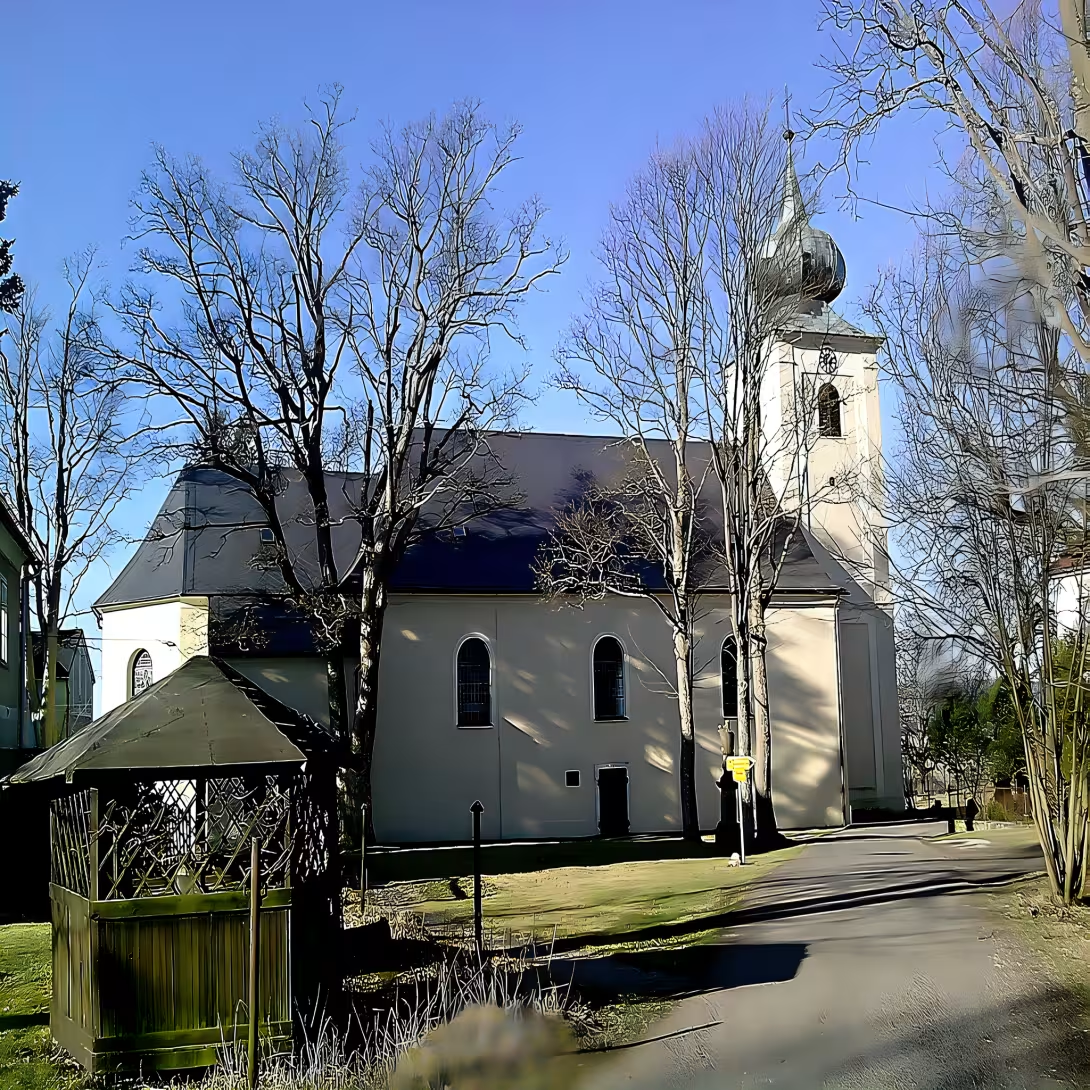
The Church of the Fourteen Holy Helpers in Tři Sekery is a Roman Catholic filial church with historical significance dating back to 1787, when Emperor Joseph II authorized its construction. Situated in the village of Tři Sekery within the Karlovarský region, this monument stands as a testament to religious and cultural history. It serves not only as a place of worship but also hosts various public events such as exhibitions, concerts, weddings, and funerals, making it an integral part of community life.
The origins of the Church of the Fourteen Holy Helpers are deeply rooted in the late 18th century when Bohemia was under the Habsburg Monarchy. Emperor Joseph II's reforms during this period included religious tolerance and administrative restructuring across Europe. The church's construction began after a decree from Joseph II on February 10, 1787, marking its establishment as an independent parish on March 13, 1787. Initially, Tři Sekery was divided between two estates: Kynžvartské Tři Sekery under the Metternich family and Tachovské Tři Sekery under the Windischgrätz family. The decision to build the church in Tachovské Tři Sekery came after local residents resolved disputes over its location, rejecting a proposal to construct it near Chodovská Huť.
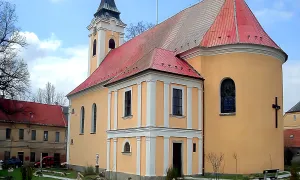
Architecturally, the Church of the Fourteen Holy Helpers is a single-nave structure with dimensions of 23.8 by 11.6 meters and a spacious presbytery measuring 9.5 by 8.35 meters. The construction was overseen by local officials including rychtář Peter Lanzendörfer, with contributions from mason Gallus Lenhart and carpenter Josef Hufnagel. A notable feature is the bell tower added between 1807-1809, standing at 32 meters high with a distinctive onion-shaped dome that enhances its visibility in the landscape.
Ownership of the church has seen significant changes over time. Initially serving as an independent parish, it later became a filial church. After World War II, the German pastor handed it over to a priest from Mariánské Lázně before it was entrusted to a Kynžvart Catholic pastor. Eventually, in 2007, the local community of Tři Sekery acquired the church, leading to comprehensive renovations between 2009 and 2011.
The interior of the church is enriched with historical artifacts transferred from the dissolved Paulaner monastery at Světce u Tachova. This includes a main altar adorned with sculptures of the Fourteen Holy Helpers, dating back to 1860, and other elements such as pulpits, organs, bells, and additional furnishings originating from this monastery. The church also houses significant sculptures, including those of Archangel Michael and Saint John Nepomuk, both predating the church itself.
Today, the Church of the Fourteen Holy Helpers stands not only as a place of worship but also as a cultural monument that plays an active role in community life by hosting various events. Its historical significance, architectural features, and rich interior make it a worthwhile visit for those interested in exploring the heritage of Tři Sekery and its surrounding region. The church's ongoing use and recent renovations ensure that visitors can appreciate both its spiritual and cultural contributions to the area.
Then and now
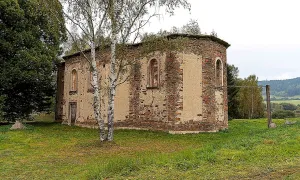
Drag the slider to compare how the landmark may have looked when it was built with the view today.
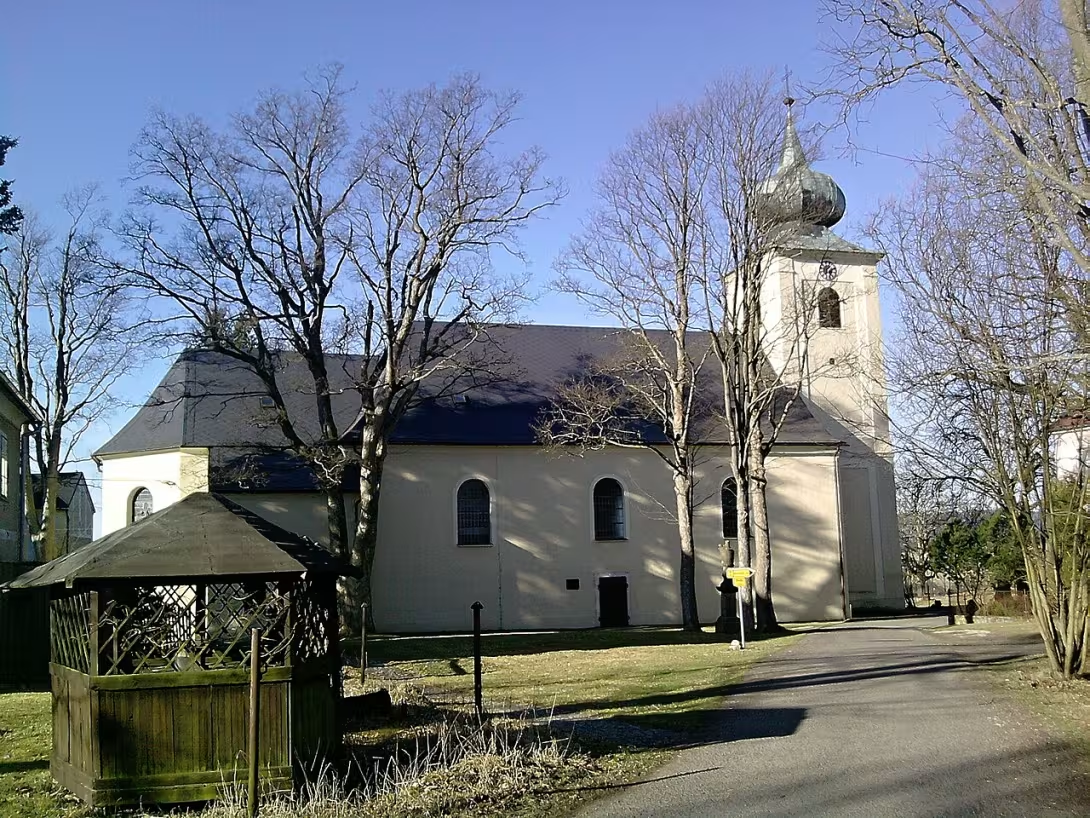

The historical appearance on the left is an AI-generated visualisation and serves as inspiration only.
Historical milestones
- 1787
- Authorization for construction granted by Emperor Joseph II.
- 1790
- Church consecrated by vicar Augustin Haberle.
Architectural development
The church was initially authorized in 1787, with construction beginning on a modest scale due to financial constraints. The bell tower was added between 1807-1809. After World War II, the church underwent several ownership changes before being acquired by the local community in 2007, leading to comprehensive renovations from 2009 to 2011.
Historical events
- 1787
- Authorization for the church's construction by Emperor Joseph II.
- 1790
- Consecration of the church by vicar Augustin Haberle.
Owners
Initially under the jurisdiction of Trstěnice parish until 1787, then managed by local communities in Tři Sekery. Post World War II, it was overseen by a German priest before being handed over to Mariánské Lázne and later Kynžvart's Catholic parish. In 2007, the church came under the ownership of the municipality of Tři Sekery.
Points of interest
- The Church of the Fourteen Holy Helpers was built after a local dispute over its location, with residents rejecting a proposal to construct it near Chodovská Huť. - A distinctive feature of the church is its 32-meter-high bell tower with an onion-shaped dome, which enhances visibility in the landscape and adds architectural uniqueness. - The interior includes significant sculptures such as those of Archangel Michael and Saint John Nepomuk, both predating the church itself, reflecting rich historical layers within its walls. - After World War II, ownership transitioned from a German pastor to a priest from Mariánské Lázně before being entrusted to a Kynžvart Catholic pastor, highlighting shifts in ecclesiastical stewardship over time. - The church's main altar and other artifacts were transferred from the dissolved Paulaner monastery at Světce u Tachova, linking it directly to this historical religious institution.
Guide
This guide is narrated by a synthetic voice generated by artificial intelligence.
Show guide text
This text was created by artificial intelligence and has not been editorially reviewed. It may contain inaccuracies.
Welcome to the Church of the Fourteen Holy Helpers in Tři Sekery, a gem nestled within the Karlovarský kraj. As you stand here, take a moment to soak in the serene atmosphere surrounding this Roman Catholic filial church—a testament to faith and history intertwined.
The story of this church begins with an interesting historical backdrop. It was Emperor Joseph II who, in 1787, authorized its construction, marking a significant chapter in the local community's spiritual life. The church was consecrated six years later in 1790 by vicar Augustin Haberle, embedding it further into the fabric of this area’s cultural heritage.
Architecturally, while the creators remain unnamed, their vision is undeniably present. As you gaze upon the structure, notice its majestic presence—a beacon of history and faith. The church boasts a prominent 32-meter-high bell tower with an onion-shaped dome, a distinctive feature that not only enhances visibility across the landscape but also adds to the architectural allure.
As we delve into key stories tied to this site, remember the local dispute over the church’s location. Initially proposed near Chodovská Huť, residents rejected it, leading to its current placement—a decision that ultimately shaped Tři Sekery's spiritual skyline. This tale of community and consensus highlights the deep connection between the people and their place of worship.
Now, let your eyes wander up towards the bell tower. Its onion-shaped dome is not just a striking visual element but also a symbol of the church’s enduring presence in the community. The addition of this tower between 1807-1809 further accentuates its historical significance.
As we conclude our brief exploration, consider the many layers of history and culture that envelop this site. Whether you're drawn by its architectural beauty or intrigued by its storied past, there's always more to discover here. We invite you to continue your journey through Tři Sekery, where each corner holds a new story waiting to be unveiled.
Thank you for joining us on this auditory walk. May the echoes of history inspire and guide you as you explore further. Farewell, until our paths cross again in another chapter of discovery.
Tips for visitors
The best time to visit the Church of the Fourteen Holy Helpers in Tři Sekery is during late spring or early autumn. During these months, the weather is typically pleasant, and the surrounding landscapes are lush and vibrant, enhancing your experience. Additionally, visiting outside of peak tourist seasons can provide a more serene atmosphere, allowing you to appreciate the church's architecture and historical significance without large crowds.
It's advisable to check current transport options and schedules online prior to your visit to ensure a smooth journey.
When visiting the Church of the Fourteen Holy Helpers, it is recommended to bring comfortable walking shoes as exploring the area around Chodovská Huť involves some walking on uneven terrain. Additionally, carrying a light jacket or sweater can be beneficial due to variable weather conditions in the Karlovarský region. Don't forget your camera to capture the stunning views and architectural details of the church.
For photography enthusiasts, the best spots for capturing images of the Church of the Fourteen Holy Helpers are from the front entrance and any elevated points around Chodovská Huť, where you can get a panoramic view of the church against the backdrop of the Karlovarský landscape. Early morning or late afternoon light provides soft shadows that enhance the architectural features of the church. Remember to respect any photography restrictions in place.
Within 30 minutes of Tři Sekery, visitors can explore other historical sites and natural attractions. The area around Chodovská Huť offers scenic walking trails and opportunities to learn about local history. These nearby sites provide a broader context for the region's cultural heritage, making them worthwhile additions to your itinerary.
For families with children, visiting the Church of the Fourteen Holy Helpers can be both educational and enjoyable. The church's historical significance provides an opportunity to teach children about religious architecture and local history. Nearby natural areas offer space for kids to explore and play, ensuring a balanced day of learning and recreation.
Frequently asked questions
Can the monument be visited?
Religious buildings are usually open mainly during services; at other times a visit is normally arranged with the parish or the operator. We have not verified specific times.
Where is the monument?
Location: Tři Sekery, Karlovarský kraj. The map on this page shows the exact spot.
Why is the monument protected?
It is listed in the Central List of Cultural Monuments of the Czech Republic as a cultural monument (register no. 1000150843).
Businesses nearby
Do you run a restaurant, accommodation, shop, museum, rental, wellness or other visitor service near this monument? Show yourself directly to the people heading to it — this is how they will see you in the app and on the web:
Events nearby

Zdroj akcí: otevřená data měst a obcí ČR (Národní katalog otevřených dat) a kalendář akcí Národního památkového ústavu.
Nearby
The church is located near Chodovská Huť (Chodovský Šmelctál), with surrounding landscapes typical of the Karlovarský region. The area includes natural features and other historical sites within a 5 km radius.
Accommodation nearby
Themed route
Thematic Walking Tour: Church of the Fourteen Holy Helpers and Surroundings
1. Church of the Fourteen Holy Helpers (Kostel Čtrnácti svatých pomocníků) - Type: Historical Religious Site - Why Visit: This church is a significant landmark in Tři Sekery, known for its architectural beauty and historical importance. It serves as the starting point of our tour, offering insights into local religious traditions and community heritage.
2. Chodovská Huť (Chodovský Šmelctál) - Type: Historical Industrial Site - Why Visit: Located near the church, Chodovská Huť is a fascinating site that showcases the region's rich industrial history. Visitors can explore remnants of past smelting activities and learn about the area’s development during the mining boom.
3. Surrounding Scenic Landscapes - Type: Natural Landscape - Why Visit: The landscapes around Tři Sekery are quintessential to the Karlovarský region, offering picturesque views that reflect the natural beauty of this part of the Czech Republic. These areas provide a serene backdrop for reflection and appreciation of nature.
4. Local Historical Sites within 5 km Radius - Type: Cultural Heritage - Why Visit: Within a short distance from Tři Sekery, there are several historical sites that enrich our understanding of local history and culture. These locations offer insights into the traditional lifestyles and historical events that shaped this region.
This tour provides an immersive experience combining religious, industrial, natural, and cultural elements unique to Tři Sekery and its surroundings.
Seasonal recommendations
Spring: Visiting the Church of the Fourteen Holy Helpers during spring offers a unique experience as nature awakens around Tři Sekery, with blooming wildflowers and fresh greenery enhancing the picturesque setting. The soft morning light accentuates the architectural details of this historical monument, creating an ethereal atmosphere perfect for photography enthusiasts. Springtime often sees fewer visitors compared to summer, allowing for a more tranquil exploration. It's advisable to wear comfortable layers as temperatures can vary, and arriving early in the day helps avoid any unexpected showers that are common during this season.
Summer: The Church of the Fourteen Holy Helpers shines under the warm summer sun, with long daylight hours providing ample time to explore its intricate details. This period is ideal for those who appreciate history bathed in natural light, as the church's façade and interiors become vividly illuminated. Summer attracts more tourists, so visiting early or later in the day can help avoid crowds. Light clothing is recommended due to higher temperatures, along with sun protection such as hats and sunscreen. The surrounding landscape of Tři Sekery offers beautiful hiking opportunities for those who wish to extend their visit.
Autumn: Autumn brings a stunning transformation to the area around the Church of the Fourteen Holy Helpers, with vibrant foliage creating a breathtaking backdrop that enhances the historical ambiance. The warm hues of reds and golds set against the church's architecture offer an idyllic setting for photographers and nature lovers alike. While this season is popular for its beauty, it can also see increased visitor numbers as people flock to witness the fall colors. Dressing in layers is wise due to cooler temperatures, and bringing a light jacket or sweater will ensure comfort during your visit.
Winter: The Church of the Fourteen Holy Helpers takes on a magical quality during winter when snow blankets Tři Sekery, transforming it into a serene winter wonderland. This season offers a quieter experience with fewer visitors, allowing for peaceful reflection within and around the church. Illuminated by soft lighting from within and possibly adorned with festive decorations, the church provides a warm respite from the chilly outdoors. Visitors should dress warmly in layers and bring sturdy footwear to navigate potentially icy paths.
Visualizations and artistic views


The visualisations are generated by artificial intelligence and serve as inspiration.
Photos from the area
Real photos taken near the monument


Zdroj a licence jsou uvedeny u každého snímku.
Atmosphere of the place
This atmospheric visualisation of the place and period was generated by artificial intelligence. It is not real footage of the location.
Tips from visitors
No tips yet. Be the first!
Log in and add your tip.
Sources and literature
Photos: Václav Němec / CC BY-SA 3.0, rozlišení zvýšeno umělou inteligencí — Wikimedia Commons. The author and licence also appear when you hover over the image.
Faktickým podkladem tohoto textu byl článek na Wikipedii, jehož autory jsou přispěvatelé Wikipedie. Článek je dostupný pod licencí CC BY-SA 4.0.
Location on the map

Příběhy a pověsti
Legendy, pověsti a příběhy spjaté s touto památkou

Fotografie návštěvníků
Zatím žádné fotografie. Buďte první, kdo přidá fotografii z návštěvy!
Log in a přidejte svou fotografii nebo hodnoťte.
Za ověřenou návštěvu v aplikaci získáte víc bodů — poznáme podle GPS, že jste na místě.
Reviews and comments