



kostel Jména Panny Marie (Vyskytná) Church
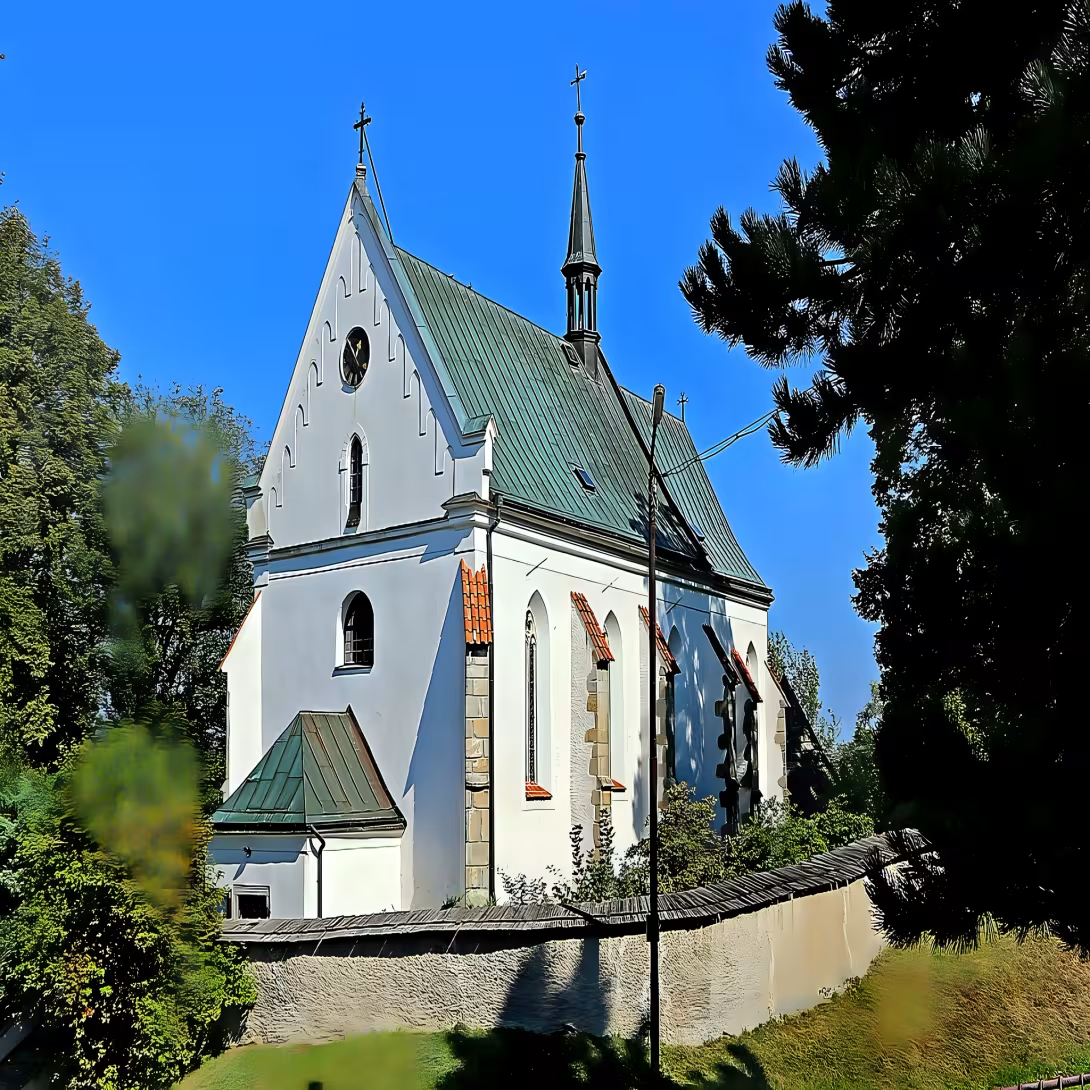
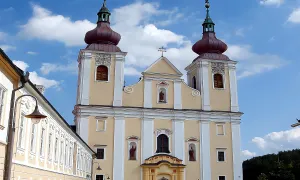
The Church of the Virgin Mary in the heart of the village Vyskytná is a parish temple of the Roman Catholic parish and is one of the protected cultural monuments of the Czech Republic. It stands in a fenced cemetery area and remains an important sacral and architectural centre of the village. He used to be called the Church of St. Nicholas.
The beginnings of the building are covered in uncertainty. According to tradition, the church was to be founded in 1290 by Bishop Tobias of Bechyne, which supports the discovery of stone with carved year 1290. The oldest part, the sacristy on the north side, retains the remains of the Romanesque window and could be originally a separate chapel. Other historical sources, however, suggest that the building was built about a hundred years later and that a fortified chateau was previously built here. Near the church stands a fortified bell tower, which probably comes from a similar time. In 1384, the church was first mentioned as a parish temple. During the ages he went through changes: during the baroque he modified the shield, and in 1908 the construction went through reconstruction into a neo-gothic style.
Architecturally, it is a top gothic single-boat structure with a rectangular boat, which is divided by supporting pillars, and with a five-sided conclusion. The quarry stone construction has a saddle roof with a sandbox. There are no windows or pillars on the north side of the sacristy. By contrast, the south side is revived by three Gothic arched windows. The interior is decorated with an altar picture of the Annunciation of the Virgin Mary by M. Kunzl on the main altar and pictures of St. Wenceslas and John Nepomuk on the side altars. The church used to be decorated with frescoes, which were later treated. A tombstone was preserved in the sacristy. Behind the church is a cross.
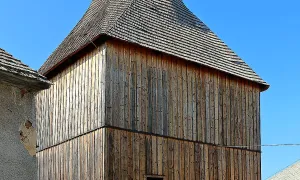
Today the church is surrounded by a harmonious composition: nearby is a morgue (also called a skeleton) and a parish building. The church is a testament to the Gothic faith and medieval building skills that have been preserved here until now. / p >
Then and now
Drag the slider to compare how the landmark may have looked when it was built with the view today.
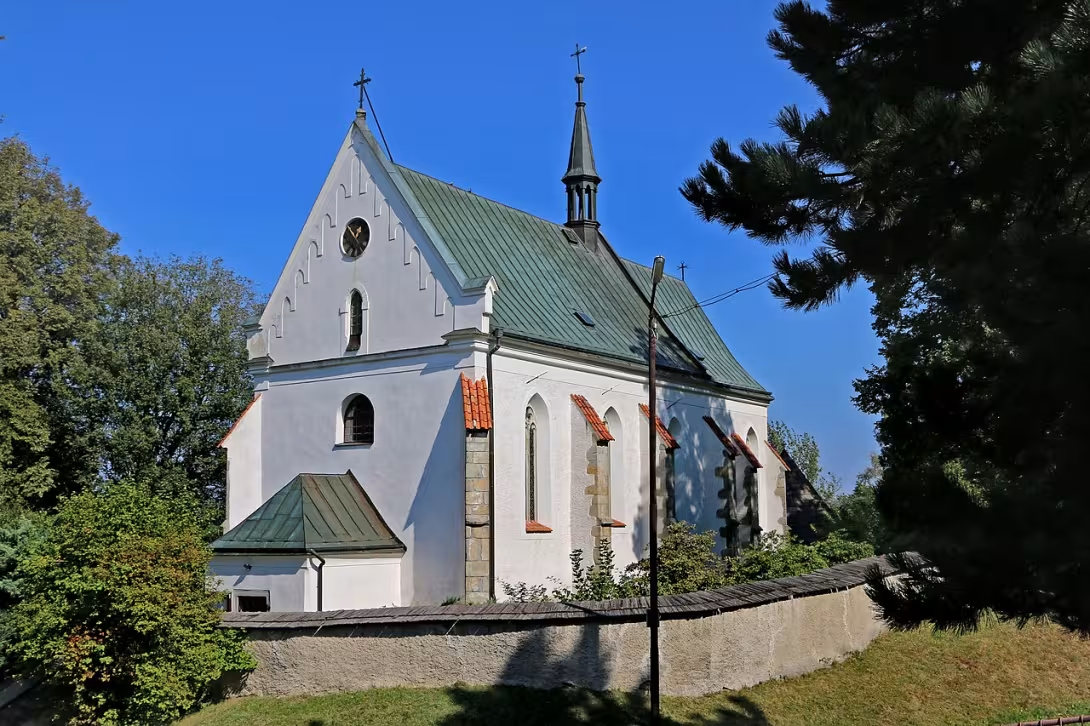
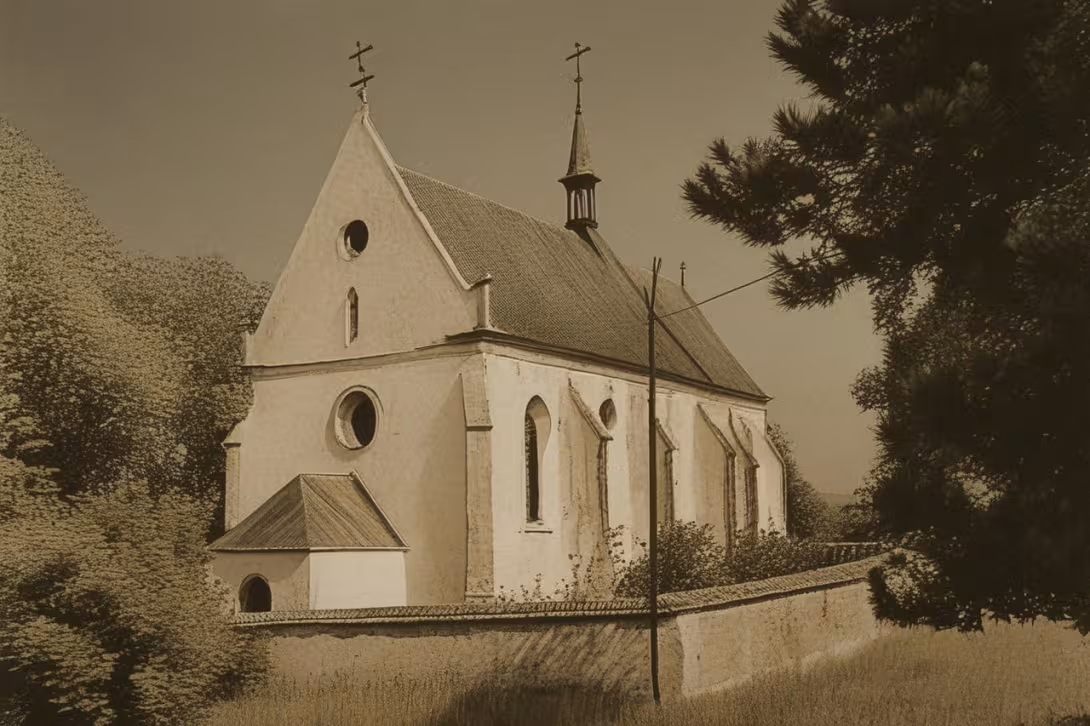
The historical appearance on the left is an AI-generated visualisation and serves as inspiration only.
Historical milestones
- 1290
- Likely to establish a church by Bishop Tobias of Bechyne.
- 1384
- A record of a church as a parish church.
- 1908
- Rebuilding the church into a neo-gothic style.
Architectural development
The construction was built in the highest Gothic style of quarry stone. In the Baroque period the church shield was modified and in 1908 a neo-gothic reconstruction was carried out. Sacristy shows the remains of the Romanesque window, suggesting the earlier origin of this section.
Historical events
In 1384, the church was officially recorded as a parish church. In 1908, extensive reconstruction took place in the neo-gothic style.
Points of interest
- Previously, the temple was called the Church of St. Nicholas. - According to tradition, it was founded in 1290 by Bishop Tobias of Bechyne, which confirms the discovery of a stone with this number. - The sacristy on the north side retains the remains of the Romanesque window and could originally be a separate chapel. - Some sources suggest that there was a fortified chateau at the church site. - The interior is decorated with an altar painting The Annunciation of the Virgin Mary by M. Kunzl and the paintings of St. Wenceslas and John Nepomucký.
Guide
This guide is narrated by a synthetic voice generated by artificial intelligence.
Show guide text
This text was created by artificial intelligence and has not been editorially reviewed. It may contain inaccuracies.
The Parish Church of the Name of the Virgin Mary stands in the centre of Vyskytná on the Vysočina, in the middle of an enclosed cemetery. It was previously dedicated to Saint Nicholas. It belongs to the Roman Catholic parish of Vyskytná and is protected as a cultural monument of the Czech Republic.
It is a late Gothic single-nave structure built of fieldstone. The rectangular nave is divided by buttress pillars and is closed off to the east by a pentagonal apse. The gabled roof is topped by a sanctus bell turret, a small tower on the roof ridge. What is interesting is that the northern side of the nave has no windows or pillars. On the south side, on the other hand, there are three Gothic vaulted windows.
The sacristy is connected to the church from the north. By all accounts, it should be the oldest part of the entire building, possibly originally a Romanesque chapel. Remains of a Romanesque window have been preserved in it and a tombstone is placed inside it.
The beginnings of the church are not entirely clear. According to one version, it was founded in 1290 by Bishop Tobiáš of Bechyně. This would be supported by a stone found with the date 1290 carved into it. Other sources, however, state that the church is roughly a hundred years younger and that an fortified castle stood on its site at that time. Not far from the church stands a fortified bell tower, which is said to date from a similar period. What is certain is that in 1384 the church is documented as a parish church.
In the following centuries, the church was modified and repaired. During the Baroque period, it received a new gable and in 1908 it underwent a neo-Gothic renovation. Its walls were once decorated with frescoes, but these were later plastered over.
Above the main altar is a painting of the Annunciation of the Virgin Mary by the painter Kunzl. On the side altars are paintings of Saint Wenceslaus and Saint John of Nepomuk.
Behind the church stands a cross. Near the church is also a morgue, also called an ossuary, and the parish building.
Tips for visitors
The best time to visit the Church's Name of the Virgin Mary in Výstnná is autumn or spring, when it is quieter and nature offers beautiful colors. This time of the season also provides ideal lighting conditions for shooting architectural details of the church.
The use of a passenger car or public transport is recommended for access to the monument, which you can verify using current information in the online search engine.
When visiting, bring shoes suitable for walking on stoneways and clothing to protect against adverse weather. In addition, you can consider buying a map or a brochure for a place to be better oriented in the history and architecture of the church.
For photography it is best to wait for sunny days when light illuminates the interior and exterior of the building. Also remember to stop by the fortified bell tower and parish building for interesting views.
In the vicinity of the church you can walk through the historical skeleton, which is part of the complex. For families with children is a short walk around the village and nature observation in the surrounding countryside.
Frequently asked questions
Can the monument be visited?
Religious buildings are usually open mainly during services; at other times a visit is normally arranged with the parish or the operator. We have not verified specific times.
Where is the monument?
Location: Vyskytná, Kraj Vysočina. The map on this page shows the exact spot.
Why is the monument protected?
It is listed in the Central List of Cultural Monuments of the Czech Republic as a cultural monument (register no. 24018/3-3348).
For kids
Imagine you go back to the past and suddenly you're standing in the middle of a little village full of surprises and secrets. It is Vyskytná, where stands a magnificent church called the Virgin Mary, as a stunning toy from children's dreams. His white face with gothic windows is turning to heaven and seems to attract attention across the village.
Businesses nearby
Do you run a restaurant, accommodation, shop, museum, rental, wellness or other visitor service near this monument? Show yourself directly to the people heading to it — this is how they will see you in the app and on the web:
Nearby
In the immediate vicinity of the church there is a fortified bell tower, a morgue called a skeleton, a parish building and a cross.
Accommodation nearby
Trips and activities nearby
Guided tours, tickets and activities nearby from GetYourGuide
Affiliate link: if you buy from the partner, we may receive a commission. The price for you does not change.
Search tours and activities →Themed route
1. Church Name of the Virgin Mary, Church - The main destination of the tour, which represents the centre of the village area. 2. Fortified bell tower, construction - Historical building located right by the church. 3. Morgue called skeleton, monument - Unique place in close proximity to the church building. 4. Cross, memorial - Symbolic element located in the immediate vicinity of the monument. 5. Parish building, building - Part of the historical complex forming part of the local complex.
Seasonal recommendations
Spring: In spring, the Church of the Virgin Mary is decorated with its vibrant green surroundings, when flowering shrubs and trees celebrate new growth. Sun rays penetrating through leafy trees create beautiful light effects on the church wall, which gives visitors a sense of peace and renewal. It is recommended to wear light clothes with the possibility to add layers to colder days, especially in early morning or evening.
Summer: The Church of the Virgin Mary offers visitors a warm and bright atmosphere. Green shrubs and trees are in full bloom, which gives the landscape life and color. In the main summer season the number of visitors increases, so it is advisable to visit the church early in the morning or later in the evening to avoid pressurized times. Dosages of sunlight on the church wall create views full of peace and beauty. Wear light clothes suitable for warm weather, but remember to carry a protective umbrella and umbrella in case of unforeseen storms.
Autumn: In autumn, the Church of the Virgin Mary offers visitors melancholy beauty when the leaves of the trees turn golden and red. Sun rays penetrating through empty branches provide the atmosphere with something quiet and reflective, which is ideal for understanding the historical details of the church. The crowds are usually smaller than in the summer, so you can enjoy the visit more fully. It is recommended to wear layered clothing because the temperature can be variable and the morning and evening can be colder.
Winter: Winter brings a mild atmosphere to the Church of the Virgin Mary when trees without leaves are exposed in a clear winter light. The snow blanket can provide the landscape with something romantic and peaceful, which is ideal for photography or understanding the architectural details of the church without disturbing leaves. It is recommended to wear warm clothes, protective shoes and snowshoes for comfort while walking on snowy paths.
Visualizations and artistic views


The visualisations are generated by artificial intelligence and serve as inspiration.
Photos from the area
Real photos taken near the monument


Zdroj a licence jsou uvedeny u každého snímku.
Tips from visitors
No tips yet. Be the first!
Log in and add your tip.
Sources and literature
Photos: This file is available under Creative Commons BY-SA license. Basically: You can use this picture for any purpose, provid / CC BY-SA 4.0, rozlišení zvýšeno umělou inteligencí — Wikimedia Commons. The author and licence also appear when you hover over the image.
Faktickým podkladem tohoto textu byl článek na Wikipedii, jehož autory jsou přispěvatelé Wikipedie. Článek je dostupný pod licencí CC BY-SA 4.0.
Location on the map

Příběhy a pověsti
Legendy, pověsti a příběhy spjaté s touto památkou
Fotografie návštěvníků
Zatím žádné fotografie. Buďte první, kdo přidá fotografii z návštěvy!
Log in a přidejte svou fotografii nebo hodnoťte.
Za ověřenou návštěvu v aplikaci získáte víc bodů — poznáme podle GPS, že jste na místě.
Reviews and comments