






Kostel Nalezení svatého Kříže (Nepřívěc) Church
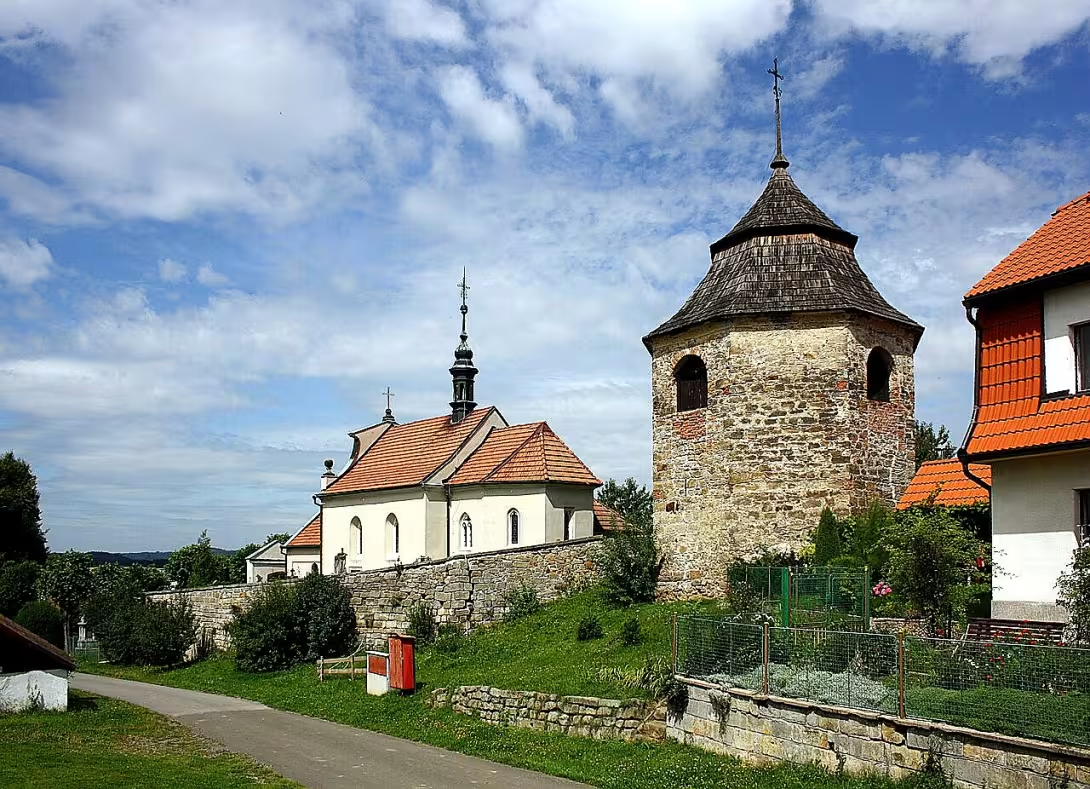
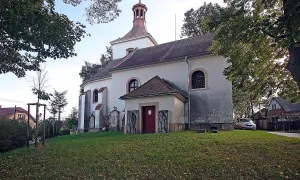
The Church of the Finding of the Holy Cross in Nepřívěc is a remarkable example of architectural evolution and cultural heritage. Situated at the village's heart on an elevated site, this Roman Catholic filial church features original Gothic construction from the second third of the 14th century, with significant Baroque transformations in the early 18th century. As both a sacred building and a protected cultural monument, it provides insights into historical architectural styles and local history.
The church's origins lie in the Gothic period, characterized by pointed arches, ribbed vaults, and flying buttresses across Europe. Constructed during the second third of the 14th century, its original Gothic features are preserved in the presbytery. The early 18th-century renovations marked a shift to Baroque architecture, reflecting broader cultural changes during the Counter-Reformation era.
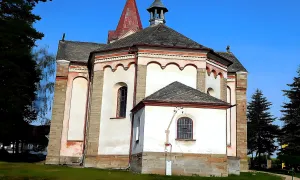
Architecturally, the church is distinguished by its rectangular single-nave structure and polygonal presbytery. Built from large regular blocks of sandstone—a choice influenced by local availability—it stands out for its time due to this material's use. The nave features Baroque panelled vaults while retaining original pointed windows with simple arches, indicative of the church’s dual architectural heritage. The presbytery, also constructed from stone blocks and lacking buttresses, includes two similar windows that echo those in the nave.
Inside, the church houses a late Gothic rosette within one of its pointed windows, adding to its historical allure. The sacristy, accessible via a pointed archway, showcases vaulting with ribs dating after 1506, further highlighting the blend of architectural styles present in this sacred space. The interior is adorned with significant religious artifacts from the 17th to 19th centuries, including a Baroque main altar featuring a Gothic statue of Madonna and finely carved angel sculptures. Additional elements include rococo statues of Saints Peter and Joseph on the portal, as well as baroque side altars dedicated to Saints Vojtěch and Jan Nepomucký.
The church is part of an area that includes a cemetery and a Baroque bell tower from the latter half of the 18th century. The surrounding landscape was expanded in the 19th century to incorporate a western park section, featuring a crucifix and a monument commemorating those who fell in World War I. This expansion reflects the evolving use and significance of the church’s surroundings over time.
Today, the Church of the Finding of the Holy Cross remains an accessible site for visitors interested in exploring its rich history and architectural beauty. Its status as a cultural monument ensures that it is well-preserved, offering a window into both Gothic and Baroque styles. For those intrigued by historical architecture or seeking to understand local heritage, this church provides a compelling destination.
In conclusion, the Church of the Finding of the Holy Cross in Nepřívěc stands as a testament to architectural evolution and cultural history. Its blend of Gothic origins and Baroque transformations offers a unique glimpse into past eras, making it a worthwhile visit for anyone interested in historical architecture or local heritage.
Then and now
Drag the slider to compare how the landmark may have looked when it was built with the view today.
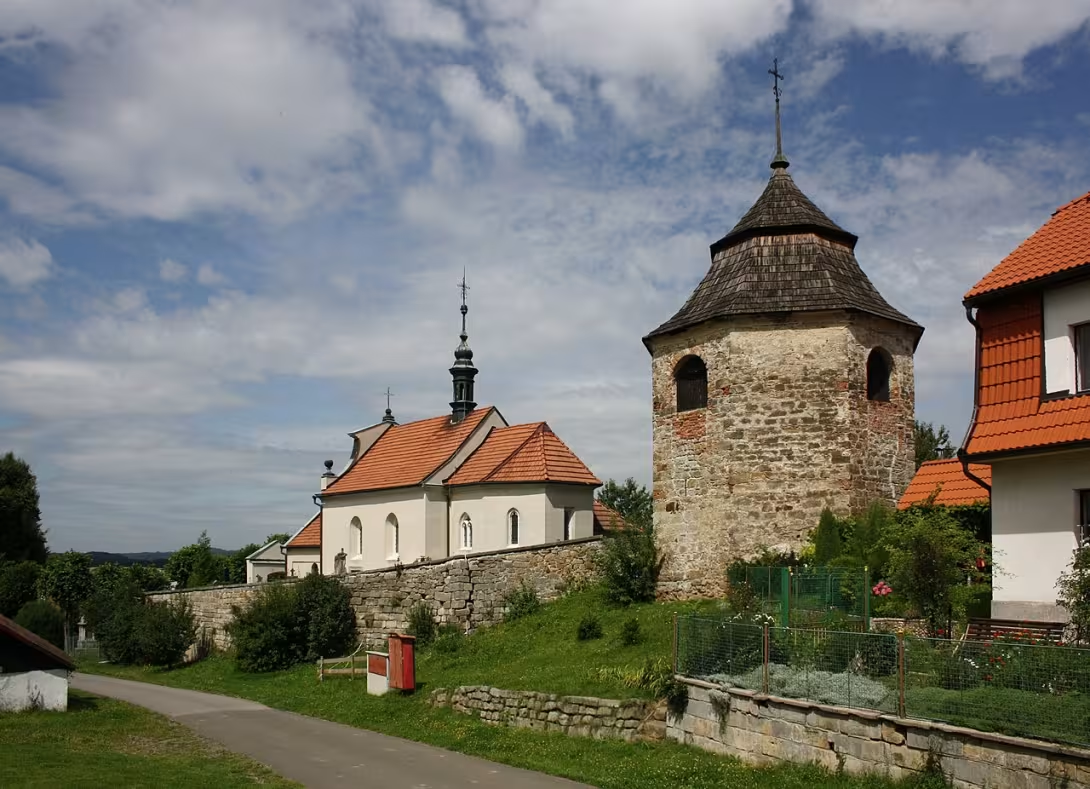
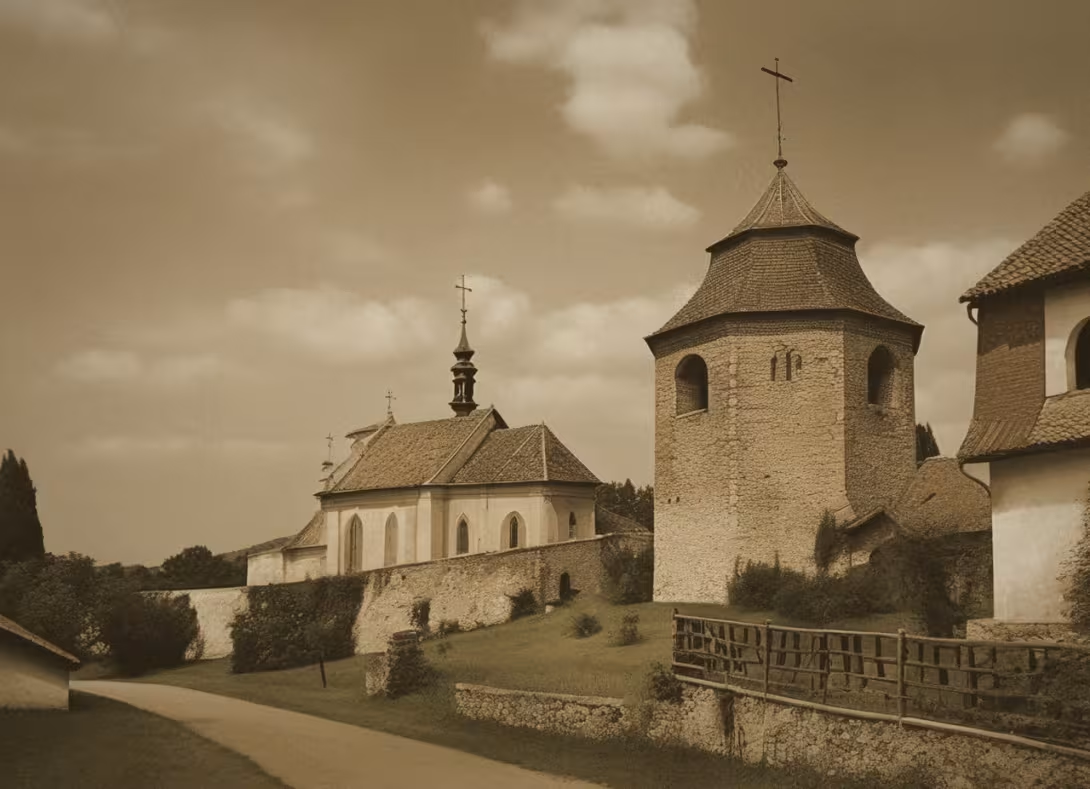
The historical appearance on the left is an AI-generated visualisation and serves as inspiration only.
Historical milestones
- 1340-1360
- Vznik původní gotické stavby kostela.
- 1506
- Datování klenby v sakristii po roce 1506.
- 1700-1720
- Barokní přestavba kostela.
- 1750
- Výstavba barokní věže.
- 19. století
- Rozšíření okolního prostoru o západní parkovou část.
Architectural development
The Church of the Finding of the Holy Cross features a rectangular single-nave structure with a polygonal presbytery. It is constructed from large regular blocks of sandstone, which was an unusual choice for its time due to local availability. The nave has Baroque panelled vaults and retains original pointed windows with simple arches. The presbytery, also built from stone blocks, lacks buttresses and features two similar windows.
Historical events
The church was originally constructed in Gothic style during the second third of the 14th century.
In the early 18th century, the nave underwent Baroque transformation.
Points of interest
- The Church of the Finding of the Holy Cross features a late Gothic rosette within one of its pointed windows, which is an uncommon decorative element that adds to the church's historical and artistic value.
- Despite being primarily Baroque after renovations in the early 18th century, the church retains original Gothic elements such as pointed arches with simple profiles, showcasing a rare blend of architectural styles from different periods within a single structure.
- The sacristy vaulting features ribs that date back to after 1506, indicating an extension or modification during the late Gothic period, which is relatively unusual for churches primarily known for their Baroque architecture.
- Among its religious artifacts, the church houses a Baroque main altar with a Gothic statue of Madonna, illustrating an intriguing fusion of artistic styles and periods within a single piece of ecclesiastical art.
- The surrounding area includes a Baroque bell tower from the latter half of the 18th century, which was part of a significant landscape expansion in the 19th century to incorporate a western park section with a crucifix and a monument commemorating those who fell in World War I.
Guide
This guide is narrated by a synthetic voice generated by artificial intelligence.
Show guide text
This text was created by artificial intelligence and has not been editorially reviewed. It may contain inaccuracies.
Welcome to the Church of the Finding of the Holy Cross in Nepřívěc—a remarkable testament to both spiritual devotion and architectural evolution. As you stand here on this elevated spot at the heart of the village, take a moment to absorb the serene atmosphere surrounding this historic edifice. The church, with its rich history and cultural significance, invites you into a narrative that spans centuries.
The origins of this sacred site trace back to the second third of the 14th century when it was initially constructed in the Gothic style—a period marked by soaring spires and intricate stonework. This early structure set the foundation for what would become a pivotal community landmark. Fast forward to the late medieval era, specifically around 1506, when the church's sacristy received its vaulting, hinting at the continuous care and attention this building has always been afforded.
As time marched on into the Baroque period between 1700 and 1720, significant transformations took place. The church underwent a comprehensive renovation that embraced the ornate and dramatic flair of Baroque architecture. During these years, the structure was imbued with new life, its interiors and exteriors reimagined to reflect the grandeur and opulence characteristic of the era.
One cannot help but be drawn to the late Gothic rosette adorning one of the pointed windows—a rare decorative element that stands out amidst the Baroque modifications. This intricate detail not only enhances the church's aesthetic appeal but also serves as a bridge connecting its medieval roots with later architectural developments.
In 1750, another layer was added to this evolving masterpiece: the construction of a Baroque tower. This addition further accentuated the verticality and grandeur that are hallmarks of Baroque design, offering yet another vantage point from which to appreciate both the church itself and its surrounding landscape.
While specific architects or historical figures associated with these transformations remain unknown, their work endures in the very fabric of this building. Each stone tells a story of craftsmanship, devotion, and community—a narrative that has been woven over generations.
As you continue your exploration, let your curiosity guide you through every corner of this historic site. Notice how history is etched into every detail, from the stonework to the subtle interplay of light through its windows. Allow yourself a moment to imagine the countless individuals who have walked these grounds, each contributing in their own way to the tapestry of stories that Nepřívěc's Church of the Finding of the Holy Cross represents.
Before you move on, take one last look around and let the spirit of this place resonate with you. Whether it be through a quiet reflection or an appreciation of its architectural beauty, there is always more to discover here. Thank you for joining us on this journey through time and faith at Nepřívěc. We hope your visit has been both enlightening and inspiring.
Businesses nearby
Do you run a restaurant, accommodation, shop, museum, rental, wellness or other visitor service near this monument? Show yourself directly to the people heading to it — this is how they will see you in the app and on the web:
Events nearby
Zdroj akcí: otevřená data měst a obcí ČR (Národní katalog otevřených dat) a kalendář akcí Národního památkového ústavu.
Nearby
The church is part of an area that includes a cemetery and a Baroque bell tower built in the latter half of the 18th century. The surrounding landscape was expanded in the 19th century to include a western park section featuring a crucifix and a monument for those who fell in World War I.
Accommodation nearby
Themed route
Tematická výletní trasa: Kostel Nalezení svatého Kříže (Nepřívěc)
1. Kostel Nalezení svatého Kříže - *Typ:* Historický kostel - *Proč stojí za návštěvu:* Tento barokní kostel je centrem historie a duchovního života obce Nepřívěc. Jeho architektura představuje bohatou historii regionu, který byl ovlivněn různými kulturními proudy v průběhu let.
2. Barokní zvonice - *Typ:* Architektonická památka - *Proč stojí za návštěvu:* Postavená v druhé polovině 18. století, tato zvonice je přitažlivým příkladem barokního umění a architektury. Její elegantní design a historický význam dodávají kostelnímu areálu další vrstvu hloubky.
3. Cementárna - *Typ:* Historické místo - *Proč stojí za návštěvu:* Místní cementárna je klíčovým místem pro pochopení historie a tradic obce Nepřívěc. Slouží jako památka na minulost, připomínající životy těch, kteří zde odpočívají.
4. Parková část s křížem a pomníkem - *Typ:* Park a historický památník - *Proč stojí za návštěvu:* Tato parková oblast, rozšířená v 19. století, je domovem kříže a pomníku věnovaného těm, kteří padli ve druhé světové válce. Je to místo pro klidnou meditaci a uctívání památky těch, kteří obětovali svůj život za vlast.
Tato trasa nabízí poutavý pohled na historii a kulturu Nepřívěce, odhalující jak duchovní tak kulturní aspekty regionu.
Seasonal recommendations
Spring: Visiting the Church of the Finding of the Holy Cross in Nepřívěc during spring offers a unique experience as nature begins to awaken. The surrounding landscape is adorned with blooming flowers and lush greenery, creating a picturesque setting that enhances the church's historical charm. This season often brings mild weather, making it comfortable for exploring without heavy clothing. However, be mindful of occasional rain showers which can add a mystical touch but may require waterproof attire. Springtime tends to attract fewer visitors compared to peak summer months, allowing for a more serene and contemplative visit.
Summer: Summer is the ideal time to explore the Church of the Finding of the Holy Cross when the days are long and warm. The vibrant foliage around the church provides a lush backdrop that complements its architectural beauty. This season often sees an influx of tourists, so it's advisable to arrive early in the day to avoid larger crowds. Comfortable walking shoes and light clothing are recommended due to the warmer temperatures. Additionally, carrying water is essential as you explore the area. The extended daylight hours also allow for more time to appreciate both the church and its surroundings.
Autumn: Autumn brings a rich tapestry of colors to the Church of the Finding of the Holy Cross in Nepřívěc, with leaves turning shades of red, orange, and gold. This seasonal transformation creates an enchanting atmosphere that perfectly complements the historic site. The cooler temperatures make for comfortable exploration without the need for heavy layers. However, it's wise to pack a light jacket or sweater as evenings can become quite chilly. Autumn is generally less crowded than summer, providing a more tranquil experience while still offering plenty of daylight hours for sightseeing.
Winter: Winter transforms the Church of the Finding of the Holy Cross into a serene and magical destination, with snow often blanketing the surrounding landscape. The church's architecture takes on an ethereal quality against the white backdrop, making it a picturesque spot for photography enthusiasts. Visitors should dress warmly in layers to combat the cold temperatures and consider bringing gloves and hats. It's important to note that opening hours may be reduced during this season, so checking ahead is advisable. Despite fewer visitors due to the weather, winter offers a peaceful and intimate experience of the historic site.
Visualizations and artistic views


The visualisations are generated by artificial intelligence and serve as inspiration.
Photos from the area
Real photos taken near the monument

Zdroj a licence jsou uvedeny u každého snímku.
Tips from visitors
No tips yet. Be the first!
Log in and add your tip.
Sources and literature
Fotografie: Gampe / CC BY-SA 3.0 — Wikimedia Commons. The author and licence also appear when you hover over the image.
Faktickým podkladem tohoto textu byl článek na Wikipedii, jehož autory jsou přispěvatelé Wikipedie. Článek je dostupný pod licencí CC BY-SA 4.0.
Location on the map


Příběhy a pověsti
Legendy, pověsti a příběhy spjaté s touto památkou
Příběh: Kostel Nalezení svatého Kříže (Nepřívěc)
Bylo to v pondělí ráno, kdy Martin zjistil, že neobvyklá tma přetrvává dál, než by měla, i přes záblesk slunce skrz červené hedvábí oblaků. Křídla kostela se…
Číst příběh
Pověst: Kostel Nalezení svatého Kříže (Nepřívěc)
Podle místní pověsti stojí kostel v Nepřívěci na místě, které si samo vybralo — a lidské ruce neměly v té volbě skoro žádný podíl. Traduje se, že ve čtrnáct…
Číst příběhFotografie návštěvníků
Zatím žádné fotografie. Buďte první, kdo přidá fotografii z návštěvy!
Přihlaste se a přidejte svou fotografii nebo hodnoťte.
Za ověřenou návštěvu v aplikaci získáte víc bodů — poznáme podle GPS, že jste na místě.
Reviews and comments