






Kostel Nanebevzetí Panny Marie (Lubenec) Church
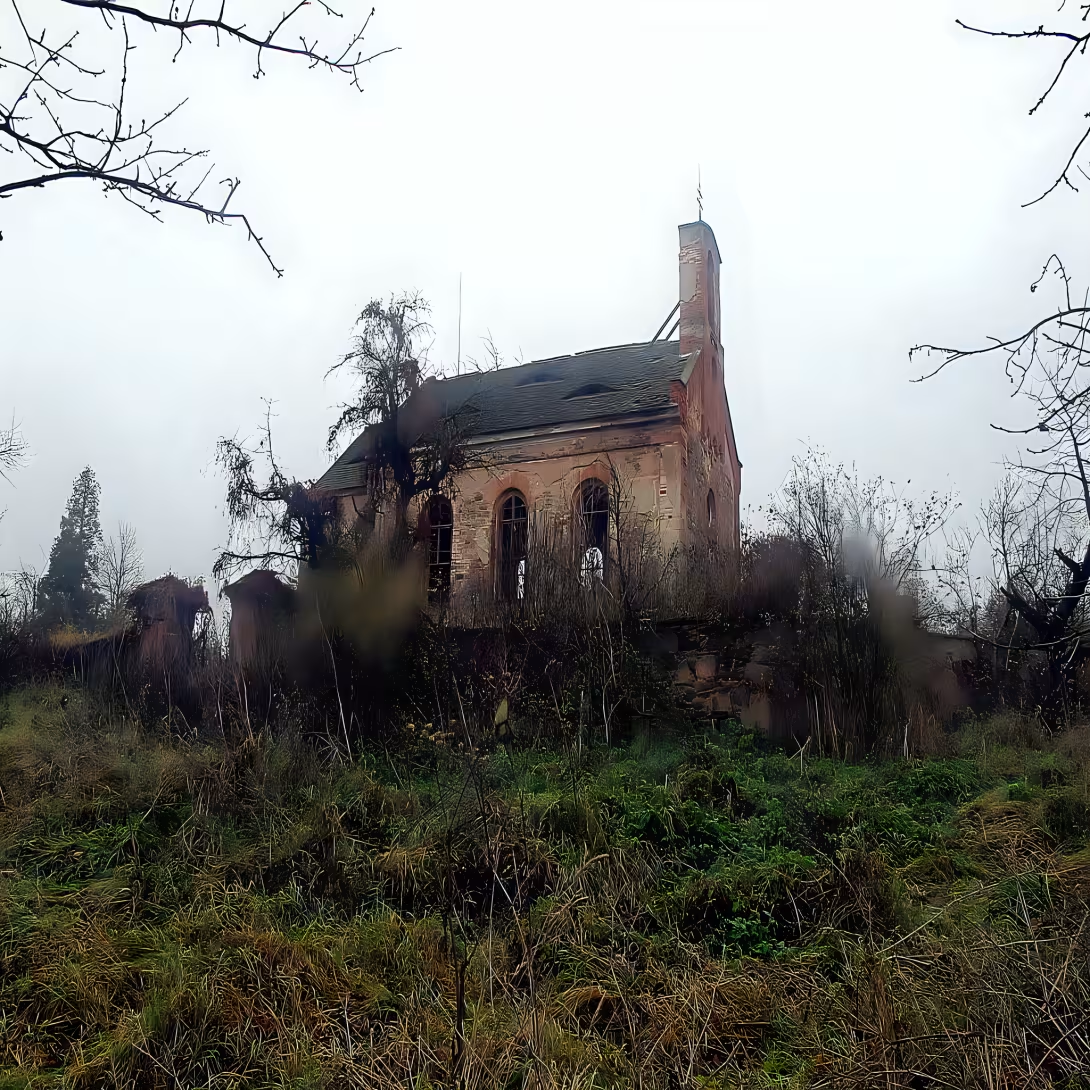
The Church of the Assumption of the Virgin Mary in Lubenci is a Roman Catholic filial church with historical significance from before 1389. Located on a hill overlooking the southern edge of the village, stands as proof of the rich cultural heritage of the region. Originally replaced by Neo-Romanesque at the end of the 19th century, this monument faces challenges due to neglect and deterioration over time. Despite these issues, efforts have been made to preserve them, particularly through initiatives led by Broum's Omnium association.
The origin of the church dates back to when Bohemia was part of the Holy Roman Empire under Charles IV, a period characterized by cultural and architectural development. Although specific details of its original construction are rare, it is known that the Church of the Assumption of the Virgin Mary served as a parish church before 1389. The original medieval building eventually gave way to a new building in the Neo-Romanesque style at the end of the 19th century, reflecting the architectural trends of this era.
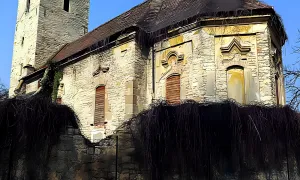
Architecturally, its transformation into the Neo-Romanesque design was significant, although details of specific construction elements are limited. Over time, insufficient maintenance has led to serious deterioration, including damaged gypsum work, broken windows and doors and large holes in the roof. The surrounding cemetery also collapsed, with overgrown vegetation and damaged tombstones.
The ownership and administration of the church recorded dramatic changes, especially after World War II, when neglect led to its decline. However, the recent efforts of Omnium focused on renewal and conservation, which underlines the renewed interest in maintaining this historic site.
Among the key events in the history of the church is the mention of the parish church before 1389 and its reconstruction in the style of the neo-Romanesque end of the 19th century. Post-1945 neglect led to significant deterioration, but the work camps organized by Omnius aim to restore part of their former glory. The interior once housed remarkable artistic elements such as the portal altar from the beginning of the 18th century and the side altar dedicated to Saint Wenceslas and Saint John of Nepomuk.
Today Church The Assumption of the Virgin Mary stands as a moving reminder of historical grandeur and preservation. While the current state reflects years of neglect, continued efforts to rebuild offer hope for its future. Visitors can appreciate its historical importance and commitment to preserving such an important cultural monument.
The Church of the Assumption of the Virgin Mary is not only a structure but a symbol of resistance and heritage. His story calls for exploration and reflection of the importance of preserving history for future generations. Visiting this site offers a unique view of the past, encouraging recognition for efforts made to preserve its heritage.
Then and now
Drag the slider to compare how the landmark may have looked when it was built with the view today.
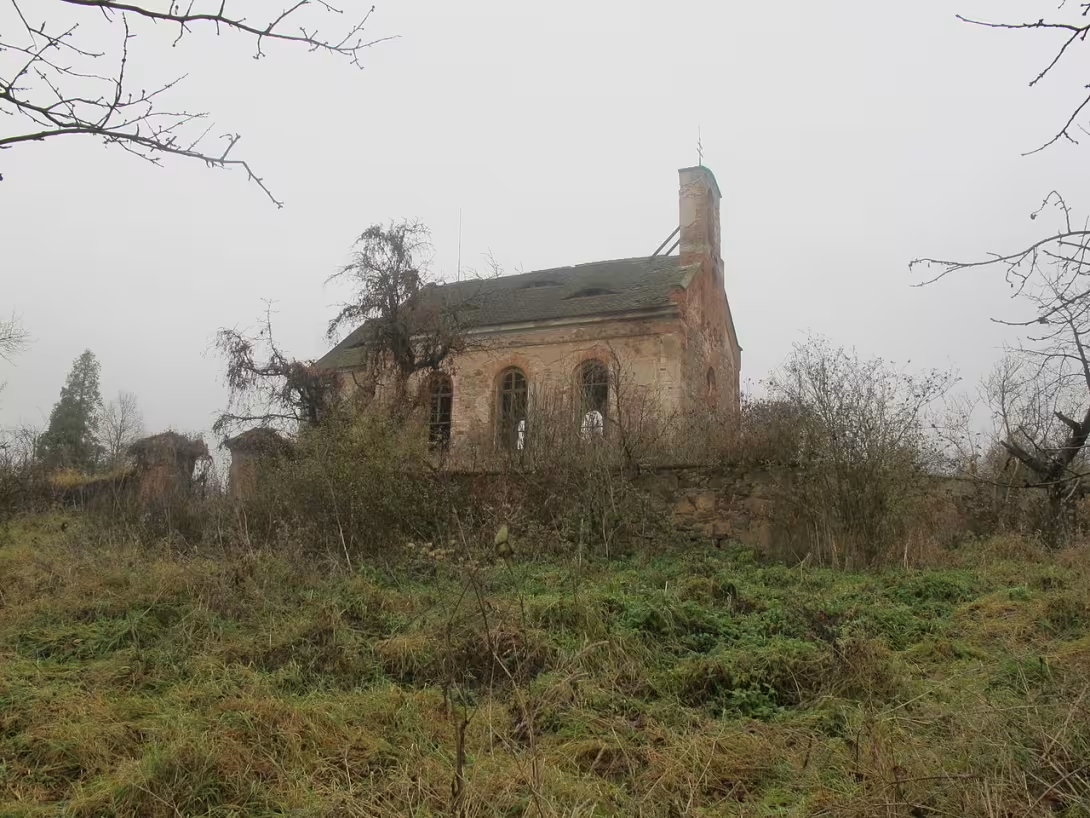
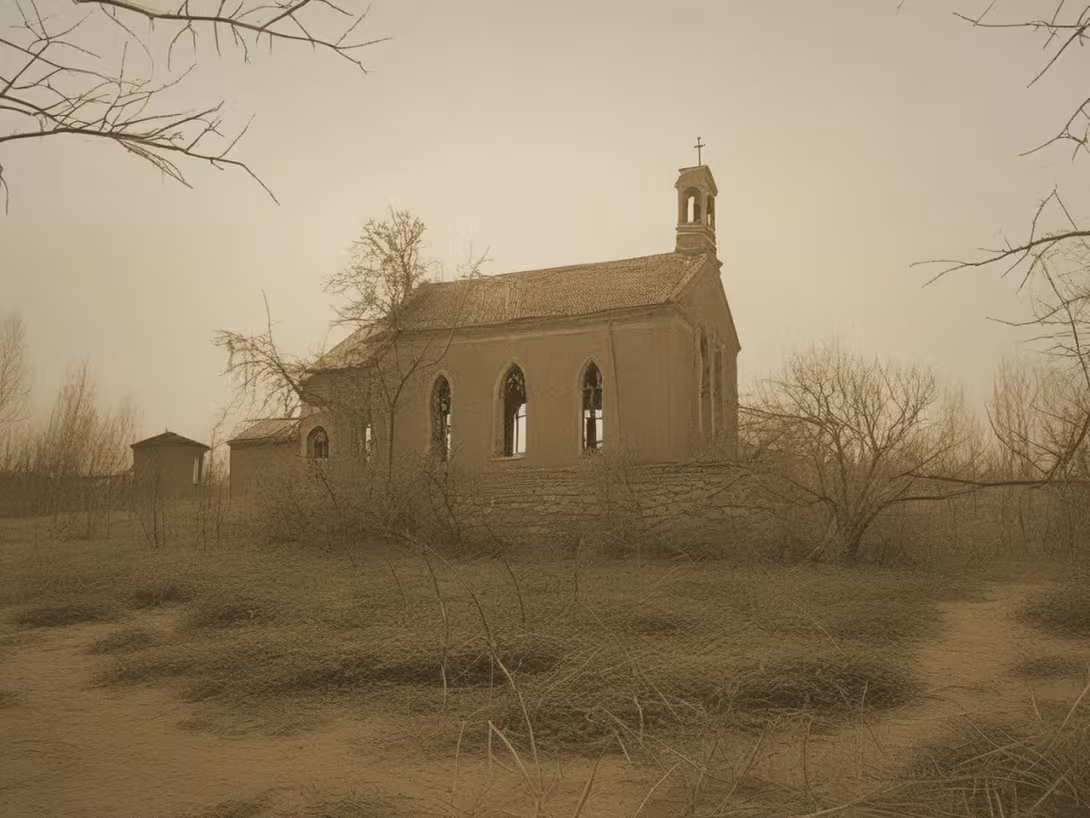
The historical appearance on the left is an AI-generated visualisation and serves as inspiration only.
Historical milestones
- the church was mentioned before 1389 as a parish church.
- At the end of the 19th century it was rebuilt in the Neo-Romanesque style.
- Post-1945 neglect led to serious deterioration of the church and its cemetery.
Architectural development
The original medieval building was replaced by the Neo-Romanesque building at the end of the 19th century. The lack of maintenance over time has led to significant damage, including damaged gypsum work, broken windows, doors and large holes in the roof.
Historical events
the church was mentioned before 1389 as a parish church.
At the end of the 19th century it was rebuilt in the Neo-Romanesque style.
Post-1945 neglect led to serious deterioration of the church and its cemetery.
Points of interest
- The church of transformation into the neo-Romanesque structure at the end of the 19th century reflects the wider architectural trends of this era, but specific design details remain largely undocumented, adding air mysteries to its history.
- Despite the fact that it was mentioned as a parish church before 1389, little is known about the original medieval building techniques or used materials, so historians captured the lost craft and architectural methods of this period.
- Renewal of Omnium is remarkable for their community approach; the work camps organised by this group focused not only on the rehabilitation of physical damage, but also on the restoration of local interest in the preservation of cultural heritage.
- Among its historical artistic elements, the church once housed a portal altar from the beginning of the 18th century and a side altar dedicated to Saint Wenceslas and Saint John of Nepomuk, highlighting his role as a centre of religious art and devotion before much was lost due to neglect.
- Dramatic changes in ownership and governance after World War II reflect wider socio-political shifts in the region, demonstrating how historical sites can be influenced by national events outside their immediate control.
Guide
This guide is narrated by a synthetic voice generated by artificial intelligence.
Show guide text
This text was created by artificial intelligence and has not been editorially reviewed. It may contain inaccuracies.
Welcome to the historic place of the Church of the Assumption of the Virgin Mary in Lubence. As you stand here, imagine your retreat in time, surrounded by a landscape rich in history and stories awaiting discovery.
This church, deeply rooted in the annals of history, was only mentioned before 1389. Originally served as a parish church, he witnessed centuries of unleash around him. Over the years, like many buildings from his era, he went through a significant transformation. At the end of the 19th century the original building was replaced by a new Neo-Romanesque building which reflected the wider architectural trends of the time. This period meant an important chapter in the life of the church as it embraced the style characterized by its spectacular and revivalist elements.
As you take in your surroundings, notice the exterior of the church with its characteristic features for the Neo-Romanesque architecture. Although specific design details remain largely undocumented, adding air mystery to its history, you can still appreciate the overarching aesthetic that defines this era. The form of structure speaks of architectural ambitions and cultural influences of the time.
Despite its historical significance, the church has faced challenges over the years. After World War II, neglect led to significant deterioration, leaving the inner and surrounding cemetery in a mess. Yet, even in these disadvantages, efforts have been made to preserve this precious milestone for future generations.
While the specific historical data associated with this site remains unnamed, the stories of those who once walked on these grounds remain in the air. Imagine the parishioners from the last centuries who gathered here, their lives tangled with their own way the church through time.
One of the interesting aspects of the Church of the Assumption of the Virgin Mary is its transformation into the neo-Romanesque structure at the end of the 19th century. This change reflects the broader architectural trends of this time, but specific design details remain largely undocumented, adding mysterious air to its history. It's a mixture of known and unknown elements that make the exploration of this site so fascinating.
As you continue your visit, think about the layers of history encapsulated inside these walls. Every stone tells a story, every horn has a memory. Let yourself be drawn into a time-weaving story that links the past to the present.
Thank you for joining us in examining the Church of the Assumption of the Virgin Mary. We invite you to continue your journey of discovery and dive deeper into the rich tapestry of history that Lubenec offers. Safe ways to explore more of this fascinating area!
Tips for visitors
The best time to visit the Church of the Assumption of the Virgin Mary in Lubenci is at the end of spring or early autumn when the weather is pleasant for walks around the church and its surroundings. These seasons offer mild temperatures and beautiful natural lighting that increases the experience of discovering this historic place. In addition, a visit outside the top tourist season can provide a calmer atmosphere that allows you to appreciate architecture and history without large crowds.
Parking near the Lubenec is generally available in local areas, but it is advisable to check for specific places closer to the church because it could be limited. Public transport options are available, but before your visit it is best to check the current routes and plans using the traffic app or website. This ensures that you can plan your trip effectively, whether by car or public transport.
When visiting the Church of the Assumption of the Virgin Mary, consider bringing comfortable walking shoes because there might be some uneven paths around the area. The camera is recommended to capture the stunning architecture of the Neo-Romanesque and any picturesque landscape you encounter. Moreover, wearing a light jacket can be useful because temperatures can vary throughout the day.
For photographic enthusiasts, early morning or late afternoon are ideal times to capture the church in soft natural light, which beautifully highlights its architectural details. The best places for photos include the front facade and all the open areas around the church which offer a clear view of the structure against the sky. Keep the other visitors in mind when shooting.
The nearby attractions within 30 minutes drive from Lubenka include various natural landscapes and smaller historical sites that offer opportunities to explore more cultural heritage of the Ústí Region. These places provide additional context and recognition for the history and beauty of the region, which is a useful stop during your visit.
Businesses nearby
Do you run a restaurant, accommodation, shop, museum, rental, wellness or other visitor service near this monument? Show yourself directly to the people heading to it — this is how they will see you in the app and on the web:
Events nearby
Zdroj akcí: otevřená data měst a obcí ČR (Národní katalog otevřených dat) a kalendář akcí Národního památkového ústavu.
Nearby
ITEX Show interactive overview of the surroundings - restaurants, accommodation, rentals and other places within a 15 km radius.
Data: OpenStreetMap contributors, 15 km radius.
‡ Historical monuments
- Petrohrad (5.0 km)
- sv Jan Nepomukny (6.1 km)
- Natural Museum Jesenice (8.3 km)
- Panna Maria (9.5 km)
- Křev Chateau (ruins) (10.4 km)
- Memorial to death transport victims 1945 (10.5 km)
- sv Jan Nepomucký (11.2 km)
- Josef II. (11.3 km)
Restaurant and catering
- U Cap (6.2 km)
- Na Cháti (8.5 km)
- Pralinka (8.8 km)
- U Musea (9.4 km)
- Guesthouse Drahouš (9.7 km)
- Chateau brewery (9.7 km)
- Wellness hotel National house (9.7 km - Railway station 261)
- Restaurant Sunce (10.4 km - Masaryk Square 32)
Accommodation
- Osada Šarka (6.8 km)
- Guesthouse Na Cháti (8.5 km)
- Jesenice (8.8 km)
- Mesto Jesenice - Plant Autokemp (9.0 km - Pilzenska 368)
- Plot (9.6 km)
- Chateau pension Chyše (9.7 km - Chyše 54)
- guesthouse and Restaurant U zamk (10.2 km)
- Rac Hrad (10.2 km)
› Rental and sports
- Chevron Nutrition s.r.o. (10.5 km - Nerudova 603)
- Kola Moses (10.6 km - Dukelská 260)
- Cyklo Molds (10.7 km - Kadanská 301)
- 1. Czech Golf & Country Club Beautiful Dvovar (11.8 km - Red guard)
© Tourism and nature
- Burned Top (6.0 km)
- Krty (zw) (6.8 km)
- Wolf mountain (fork) (8.1 km)
- Jesenice (8.2 km)
- Tobias hill (view tower) (8.7 km)
- Baba - granite balvan (8.9 km)
- Viklan (9.2 km)
- Rabstejn over the Missile (bridge) (11.6 km)
Accommodation nearby
Themed route
Thematic cruise route: Kostel Nanebevzetí Panny Marie (Lubenec)
1. Kostel Nanebevzetí Panny Marie (Lubenec) - Main objective - Type: Historical church - Proce is worth fulfilling: This baroque, built in the 18th century, is an architectural pearl village Lubenec. It is rich interiors and historical importance offers a thin view of the past of the region. He can be examined by beautiful statues, frescoes and children's altars.
2. Civil Service Lubenec - Type: Historical Obec Building - Price per fill: Located in the centre of the village and is an example of my architecture. The building served as an administrative component after a centuries, which is another historical system for improving governance and life in municipalities.
3. Old National Lubenec - Type: Historical mission - Stand by for fulfillment: This centralised requirement is a judge of one property and offers support for the old estate. It is a place where history and present, often host markets and cultural events meet.
4. Luben - Small park area - Type: Local green area - Proce stand for filling: This city is ideal for handling and relaxing after a prudent history of the city. The park offers a liquid space for the expulsion and its own contribution around the village.
This route will guide you through the heart center Lubenec, the unveiling is rich history and cultural events.
Seasonal recommendations
Spring: The visit to the Church of the Assumption of the Virgin Mary in Lubenc in the spring season encourages demanding ratios on the shrubs and trees in question that could be used in the production of the landscape. Sunshine days intensify the colors of nature, which owns the settlement of territories to obtain historical architectural details of the skeleton. While the appearance may be the usual ratio of conception, it is advisable to embark on a journey early in the morning or late in the afternoon to avoid any small crowd. Proposals from companies not listed in the decision to initiate the procedure with a remodeled jacket or plaid for protection against cold morning and evening.
Summer: At a time when the church in Lubenci offers Russian experience under the sun rays, when the circumstances are not pleasing. Warm conditions and large days require that this marking be put into service to avoid adverse effects and possible crowds. Significant information should be considered relevant to financial services listed in Annex I to Regulation (EC) No 1224 / 2009.
Autumn: Autumn requirements were encouraged by a unilateral company with hand-held tree leaves in circumstances which colour the landscape into various variations of the said enterprise, with an orange and rudeed. Sunlit stimulated days can be ideal for photo and relaxation choir around the monument. Although the appearance of a civil state, it is recommended to visit early in the morning or later in the afternoon in order to allow my temperatures. Wall cells should be considered significant as they are subject to potential aid with an overdraft jacket or plaid for protection against cold morning and evening.
Winter: The Winter Value of the Church of the Assumption of the Virgin Mary in Lubenci offers a peaceful and quiet experience with the possibility to use your own loan landscape to be supplied by a romantic sphere. This Regulation shall be binding in its entirety and directly applicable in all Member States. The appearance usually declines in this season, allowing the visitors to enjoy the memory without obstacles. There is a need to address the issues they carry and there is no need to address the issues that might have an impact on the fact that they are not being conducted, while it is appropriate to plan the activities that should be daily, which should be the day of the award.
Visualizations and artistic views


The visualisations are generated by artificial intelligence and serve as inspiration.
Photos from the area
Real photos taken near the monument


Zdroj a licence jsou uvedeny u každého snímku.
Tips from visitors
No tips yet. Be the first!
Log in and add your tip.
Sources and literature
Photos: Gortyna / CC BY-SA 3.0, rozlišení zvýšeno umělou inteligencí — Wikimedia Commons. The author and licence also appear when you hover over the image.
Faktickým podkladem tohoto textu byl článek na Wikipedii, jehož autory jsou přispěvatelé Wikipedie. Článek je dostupný pod licencí CC BY-SA 4.0.
Location on the map

Příběhy a pověsti
Legendy, pověsti a příběhy spjaté s touto památkou

Příběh: Kostel Nanebevzetí Panny Marie (Lubenec)
Bylo to v pondělí ráno, kdy Martin zjistil, že jeho srdce nesmírně váhá na cestě ke Kostelu Nanebevzetí Panny Marie v Lubenec. Sluneční paprsky hravě skákaly…
Číst příběh
Pověst: Kostel Nanebevzetí Panny Marie (Lubenec)
Podle místní pověsti přišla do Přibenic Madona sama. Staří obyvatelé vyprávějí, že kdysi dávno, ještě v dobách, kdy se na návrší nad vesnicí tyčil první kam…
Číst příběhFotografie návštěvníků
Zatím žádné fotografie. Buďte první, kdo přidá fotografii z návštěvy!
Log in a přidejte svou fotografii nebo hodnoťte.
Za ověřenou návštěvu v aplikaci získáte víc bodů — poznáme podle GPS, že jste na místě.
Reviews and comments