



Kostel Nanebevzetí Panny Marie (Raspenava) Church
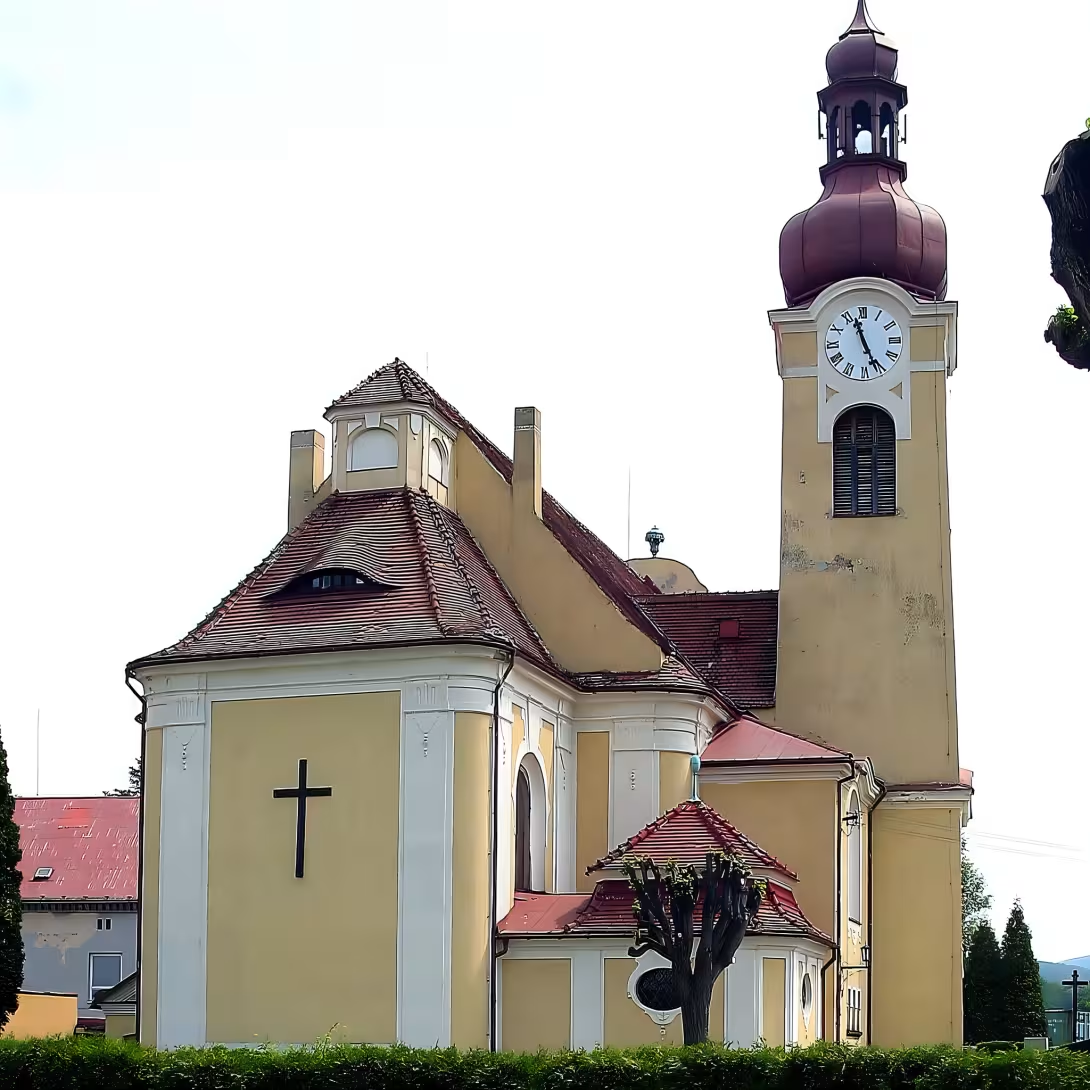
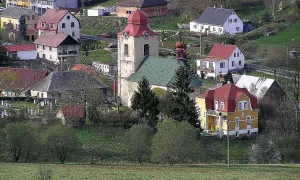
The Church of the Assumption of the Virgin Mary was founded at the beginning of the 20th century as a reconstruction of the older храm, which no longer met the needs of the growing village. Originally there was an early Gothic church, which was baroque in the second half of the 17th century. Only two centuries later, during the second half of the 19th century, the local manufacturer Gustav von Richter decided to finance a completely new church. The project was developed by the Liberec Architectural Office Gustav Sachers Söhne, namely Gustav Sachers younger along with Anton Kropf.
The original building managed to preserve the tower and valuable parts of the interior equipment - the main altar and organ cabinet. The new church grew in a transitional style between the Neo-Baroque and Art-Nouveau and its orientation was changed so that the facade was directed towards the main road passing through the village. The interior was professionally painted by the Liberec painter Karl Krattner from Chrastav between 1912 and 1913. The construction was dominated by the organ - in 1907 it created a new tool with pneumatic traction the famous organist Heinrich Schiffner, who cleverly used the old cabinet from Kindermann from the previous period.
Other architectural elements are enriched around the church. South of the temple is a neo-Baroque garden and near the entrance to the cemetery is a neo-gothic Richter family tomb. František von Neumann, a renowned author of the new counties in Liberec and Frýdlanta, designed this mound in 1895 - dedicated it to its characteristic gotifying form. After 1945, the church fell apart, but in recent years it received restoration care.
An extraordinary discovery has enriched understanding of the place. At the end of 2012, archaeologists dug up the foundations of a Gothic church dating back to the 14th or 15th century - the first medieval temple found in Frýdlantsk. They managed to uncover part of the sacristy, the remains of a cemetery wall of 1.65 metres wide and a burial ground containing 40 very preserved skeletal remains. The oldest of them came from the 15th century, burying in place continued until the 18th century. Under today's asphalt is also the original stone road from the 1930s, which was laid directly on medieval graves. It is assumed that the original church was dedicated to St. Wenceslas and that its mighty wall protected both the rust and the cemetery from the floods of the river Smeda.
Then and now
Drag the slider to compare how the landmark may have looked when it was built with the view today.
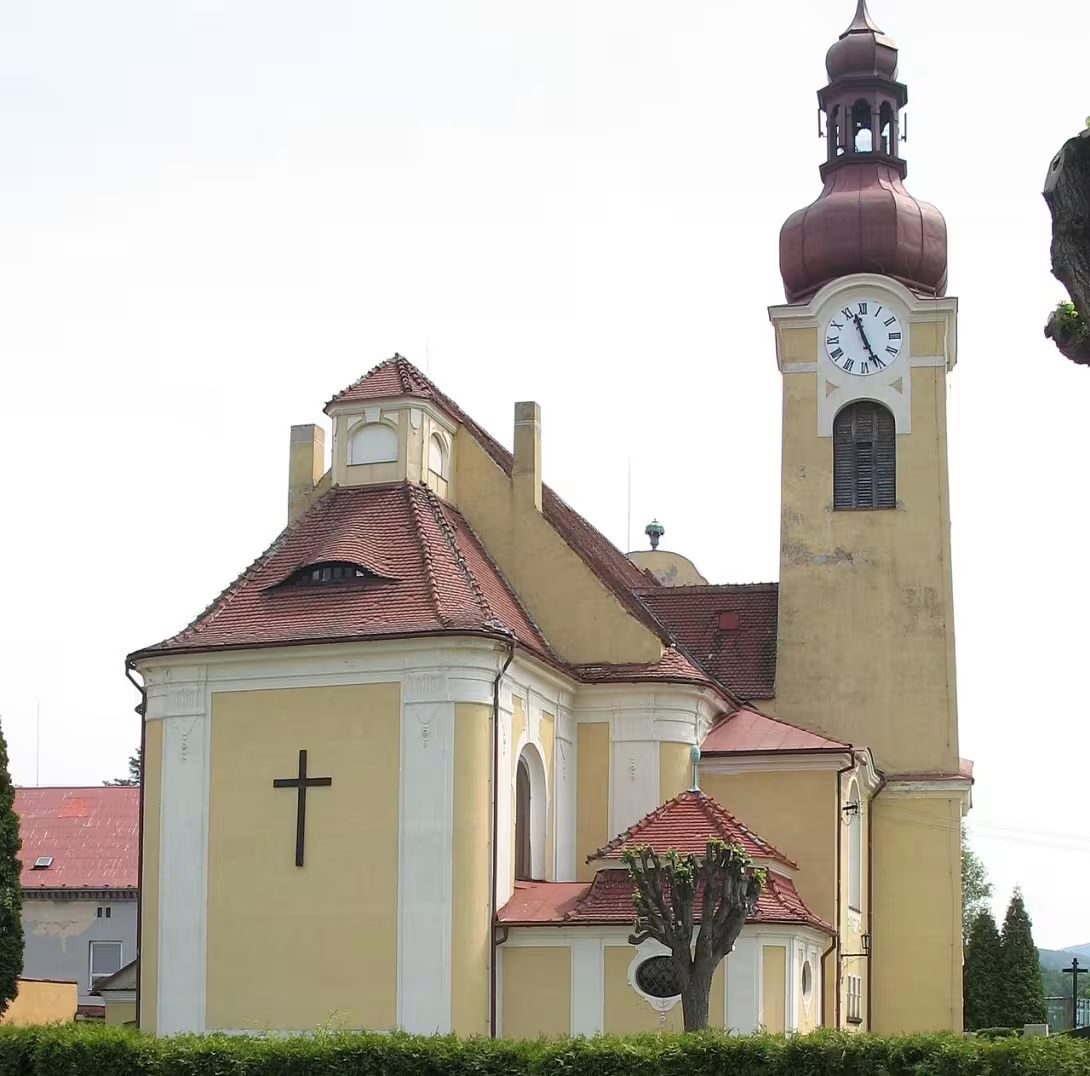
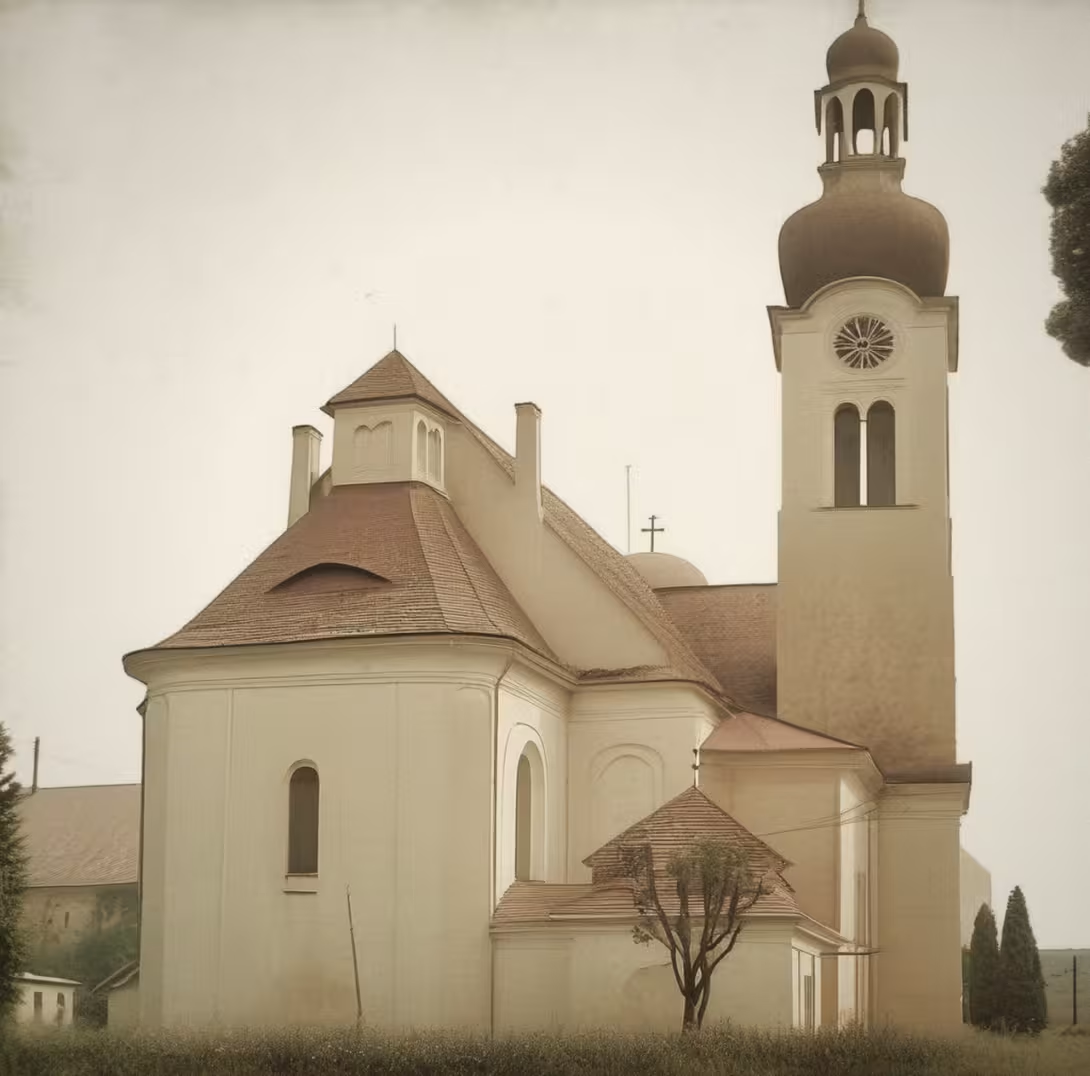
The historical appearance on the left is an AI-generated visualisation and serves as inspiration only.
Historical milestones
- 14.-15th century
- The foundation of the early Gothic Church of the Assumption of the Virgin Mary, which was discovered by archaeological excavations in 2012.
- 17th Century
- Baroque reconstruction of the original church.
- 1906-1907
- A new Art Nouveau-Neobarical building was built according to the design of the Liberec office by Gustav Sachers Söhne.
- 1912-1913
- The interior of the church was painted by artist Karl Krattner from Chrastav.
Architectural development
The original Gothic church from the 14th to 15th century was rebuilt baroque in the 2nd half of the 17th century. In the years 1906-1907 a new church was built in the Neo-Baroque Art Nouveau style, while only the tower and some parts of the interior were preserved, as the main altar and organ closet. The new building was oriented to the front of the main road. In the interior were used modern elements such as pneumatic organ traction from Heinrich Schiffner from 1907.
Historical events
- 14.-15th century
- The creation of the early Gothic Church of the Assumption of the Virgin Mary, which was dedicated to St. Wenceslas.
- 17th Century
- Baroque reconstruction of the original church.
- 1906-1907
- A new Art Nouveau-Neobarical building was built according to the design of the Liberec office by Gustav Sachers Söhne.
- 2012
- Archaeological excavations revealed remains of the original Gothic church and cemetery with 40 skeletal findings.
Points of interest
- In the construction of the church in 1907, an old organist tool from 1895 was used, which was placed in a new wardrobe from the organist Heinrich Schiffner.
- In 2012, archaeologists revealed the foundations of a Gothic church from the 14th or 15th century, including part of the sacristy and cemetery wall.
- 40 very preserved skeletal remains from the period from the 15th to the 18th century were found in the cemetery.
- The original church was probably dedicated to St. Wenceslas and protected the cemetery from the floods of the river Cod.
- Under today's asphalt is the original stone road from the 1930s, located right on medieval graves.
Guide
This guide is narrated by a synthetic voice generated by artificial intelligence.
Show guide text
This text was created by artificial intelligence and has not been editorially reviewed. It may contain inaccuracies.
The Church of the Assumption of the Virgin Mary in Raspenava was built at the beginning of the twentieth century in neo-baroque style and is protected as a cultural monument. It stands on the site where a Gothic church formerly stood. That church was renovated in the baroque style in the second half of the seventeenth century. Two centuries later, however, it was no longer sufficient for the growing community.
The construction of the new church was therefore financed by a local factory owner Gustav von Richter. The project was prepared by the Liberec office Gustav Sachers Söhne, that is Gustav Sachers the younger and Anton Kropf. The new sanctuary is in a transitional style between neo-baroque and Art Nouveau. From the original church, only the tower and part of the interior furnishings remained, the main altar and the organ case. During the reconstruction, the church's orientation was also changed, so today the façade faces the main road. The interior was painted in the years nineteen twelve and nineteen thirteen by Karl Krattner from Chrastava.
The organ has a long history here. In seventeen twenty-three, an instrument with seven stops was created here, which was repaired several times over the next century and a half. For the new church, Heinrich Schiffner built new organs in nineteen seven and used a case by Kindermann for this purpose.
South of the church stands a rectory arranged in neo-baroque style. At the entrance to the cemetery stands a neo-gothic tomb of the Richter family. It was designed in eighteen ninety-five by Franz von Neumann, the author of the new town halls in Liberec and in Frýdlant. After nineteen forty-five, the church deteriorated significantly, but in recent years it has undergone repairs.
At the end of twenty twelve, an exceptional discovery was made in Raspenava. During excavations for a sewage system, archaeologists came across the foundations of a Gothic church from the fourteenth or fifteenth century. They uncovered a corner of the sacristy, part of the wall around the church and a cemetery with forty very well-preserved skeletons. This was the first medieval church found on the Frýdlant territory. Archaeologist Petr Brestovanský called the discovery extraordinary and according to his words such a find might succeed perhaps once in fifty years. Priest Pavel Andrš believes it is the very first Gothic church dedicated to Saint Wenceslaus.
The massive cemetery wall was one point sixty-five meters wide and protected the church and cemetery from the Smědá river. The archaeologist saw in this evidence that they were dealing with floods already in the Middle Ages. The oldest graves date from the fifteenth century, but burials took place here until the eighteenth century. A road now runs over the former cemetery. Under the asphalt lies a stone path from the nineteen thirties, laid directly on baroque graves just one centimeter above them.
The priest wanted to respectfully place the exhumed remains in the underground spaces of the church. Before that, they were to undergo DNA analysis and comparison with present-day residents. However, mayor Pavel Lžičař was doubtful about the result, because after the war the population here changed almost completely.
Tips for visitors
The best time to visit the Church of the Assumption of the Virgin Mary is in the morning when light is mild and the interior radiates a calm atmosphere. During the summer months it is advisable to avoid the noon hours when the church can be hot and busy. If you want to experience a unique atmosphere, visit the church during services that are often accompanied by musical accompaniment and offer the opportunity to know the history of the place firsthand.
The location is also accessible by public transport; Check the current connection in the search engine. The church is located in the heart of the city, so most visitors arrive on foot.
When visiting the church, wear comfortable clothes and shoes, as the interior often moves colder than outside. It is also important to take a small towel or handkerchief because some parts of the church may be wet. If you are planning to take photos, remember to take batteries and a memory card because the interior offers many beautiful details that are worth capturing.
The best places for photography are mainly the interior of the church, especially its altar and Art Nouveau decoration. The outside facade is also very impressive, especially in the morning or afternoon light. For quality images it is advisable to use natural light that falls through the windows of the church. If you want to capture the surrounding area, focus on the Neo-Baroque rectory and the Neo-Gothic Richter family tomb that are located near the church.
In the vicinity of the church, it is worth visiting a neo-baroque rectory and a neo-gothic Richter family tomb located close to the church. For families with children, an interesting activity is a walk around the cemetery surrounded by a wall with gates where children can talk about the history and symbolism of individual tombstones.
It is advisable for families with children to visit the church during special events or tours which are often prepared for children. For example, you can visit the church with a guide to explain the history and attractions of the place in accessible form. Children can also make a small worksheet or play a game to find details in the church interior. It is also possible to find small parks or green areas around the church where children can relax and have fun.
Frequently asked questions
Can the monument be visited?
Religious buildings are usually open mainly during services; at other times a visit is normally arranged with the parish or the operator. We have not verified specific times.
Where is the monument?
Location: Fučíkova, Raspenava, Liberecký kraj. The map on this page shows the exact spot.
Why is the monument protected?
It is listed in the Central List of Cultural Monuments of the Czech Republic as a cultural monument (register no. 19600/5-4431).
For kids
Imagine going back to a time when Raspenava was a small village surrounded by strong forests and amazing nature. The Church of the Assumption of the Virgin Mary was still in full strength, his early Gothic church stood as a hidden treasure in the middle of the village.
How did it look here? The village was full of life, people lived in harmony with nature. The inhabitants of Raspenava fed on agriculture and animal husbandry, their houses being built of wood and clay. At that time, the church stood like the heart of a village where worship and festivities were held.
Businesses nearby
Do you run a restaurant, accommodation, shop, museum, rental, wellness or other visitor service near this monument? Show yourself directly to the people heading to it — this is how they will see you in the app and on the web:
Events nearby
Zdroj akcí: otevřená data měst a obcí ČR (Národní katalog otevřených dat) a kalendář akcí Národního památkového ústavu.
Accommodation nearby
Trips and activities nearby
Guided tours, tickets and activities nearby from GetYourGuide
Affiliate link: if you buy from the partner, we may receive a commission. The price for you does not change.
Search tours and activities →Themed route
I propose a thematic cruise route focused on sightseeing and historical monuments in the village Raspenava. The route runs directly within the area and surrounding the main destination.
1. Kostel Nanebevzetí Panny Marie (Raspenava) (construction) Our main destination. This important church consists of a spiritual centre of the whole location and offers its unique architecture for a tour.
2. Novobarokni edited by fara (construction) This building is located near the church. You will be interested in its neo-Baroque treatment, which harmoniously complements the surrounding sacral complex.
3. Torzo old fary (ruin) It is located right on the premises. This historical torso reminds of the older building development of the site and gives the whole complex melancholic character.
4. Novogotic Richter's Family Tomb (Tomb) This artistically valuable tomb by architect Franz von Neumann stands at the entrance to the cemetery. Its neo-gothic appearance represents an example of high-quality monetary architecture.
5. Hřbitov surrounded by a boundary wall with bránami (area) It decomposes around the church. The entire area is closed by a historic wall with gates that defines sacred soil and completes the overall atmosphere of the place.
Seasonal recommendations
Spring In the spring months, the Church of the Assumption of the Virgin Mary in Raspenava is dressed in a green dress, where the surrounding forests and meadows flourish and the sun's rays penetrate through bright trees. Specific here is mild but variable weather - in the morning often wet, in the afternoon sunny, which creates soft, silvery lighting in the interior of the church, especially in the morning services. The atmosphere is calm, almost intimate, because tourists have not yet started coming in such numbers as in summer. It is recommended to visit early in the morning when the church appears almost desolate and light highlights its Gothic details. Clothes should be layered - warm jackets for spring cold, but also lighter sweater to sunny places. At this time it is also advisable to take advantage of the surroundings: nearby forest trails offer pleasant walks overlooking the church from the foot.
Summer Summer brings a lively but not chaotic atmosphere to Raspenava, where the Church of the Assumption of the Virgin Mary serves as a magnet for tourists and local visitors. There is a long daylight light that the church illuminates from morning to dusk, and its shadows are projected on the stone wall in the afternoon. In the main summer season, it is recommended to arrive before 10 o'clock to avoid crowds that gather especially at the main entrance. Warm but often wet weather requires comfortable shoes and light, breathable clothes - inside the church it is pleasant to cool while outside it may be hot. It is also appropriate to visit the church in the afternoon when the surrounding landscape turns into golden tones and shadows create dramatic contrast with white facades.
Autumn Autumn brings a unique colour to Raspenava, where the surrounding forests are painted in shades of red, yellow and brown, which surrounds the church as a natural altar. The morning fog is specific here, which hovers over the valley and gives the place a mysterious atmosphere, especially during morning services. The sun shines lower in the autumn months, creating dramatic shadows on church towers and highlighting their Gothic elements. It is recommended to visit the church in the morning when the air is clean and the light is most beautiful. Clothes should be warm, but not too heavy - autumn weather changes quickly, and evenings are cold. It is also convenient to take advantage of the surroundings: nearby mushroom forests or walks along old roads offer peaceful moments off the tourist routes.
Winter Winter Raspenava is a fairy tale - church The Assumption of the Virgin Mary rises above the snowy landscape, its silhouette draws against the white canvas of the sky and the snow blanket. The specific here is a quiet, almost sacred silence, which prevails in advent time when the church serves as a centre of local holidays. The sunlight in the winter months is weaker, but in the middle of the morning it creates fine silver reflections on the snow and stone walls of the church. Warm but comfortable clothes are necessary - winter frost and winds from the mountains can be challenging, and the interior of the church is pleasantly warm. It is also convenient to visit the church at sunset, when the snow crystals on the towers shine and the whole landscape gains a magical touch.
Visualizations and artistic views


The visualisations are generated by artificial intelligence and serve as inspiration.
Photos from the area
Real photos taken near the monument


Zdroj a licence jsou uvedeny u každého snímku.
Atmosphere of the place
This atmospheric visualisation of the place and period was generated by artificial intelligence. It is not real footage of the location.
Tips from visitors
No tips yet. Be the first!
Log in and add your tip.
Sources and literature
Photos: neuveden / CC BY-SA 2.5, rozlišení zvýšeno umělou inteligencí — Wikimedia Commons. The author and licence also appear when you hover over the image.
Faktickým podkladem tohoto textu byl článek na Wikipedii, jehož autory jsou přispěvatelé Wikipedie. Článek je dostupný pod licencí CC BY-SA 4.0.
Location on the map

Příběhy a pověsti
Legendy, pověsti a příběhy spjaté s touto památkou
Fotografie návštěvníků
Zatím žádné fotografie. Buďte první, kdo přidá fotografii z návštěvy!
Log in a přidejte svou fotografii nebo hodnoťte.
Za ověřenou návštěvu v aplikaci získáte víc bodů — poznáme podle GPS, že jste na místě.
Reviews and comments