






Kostel Nanebevzetí Panny Marie a svatého Jana Nepomuckého Church
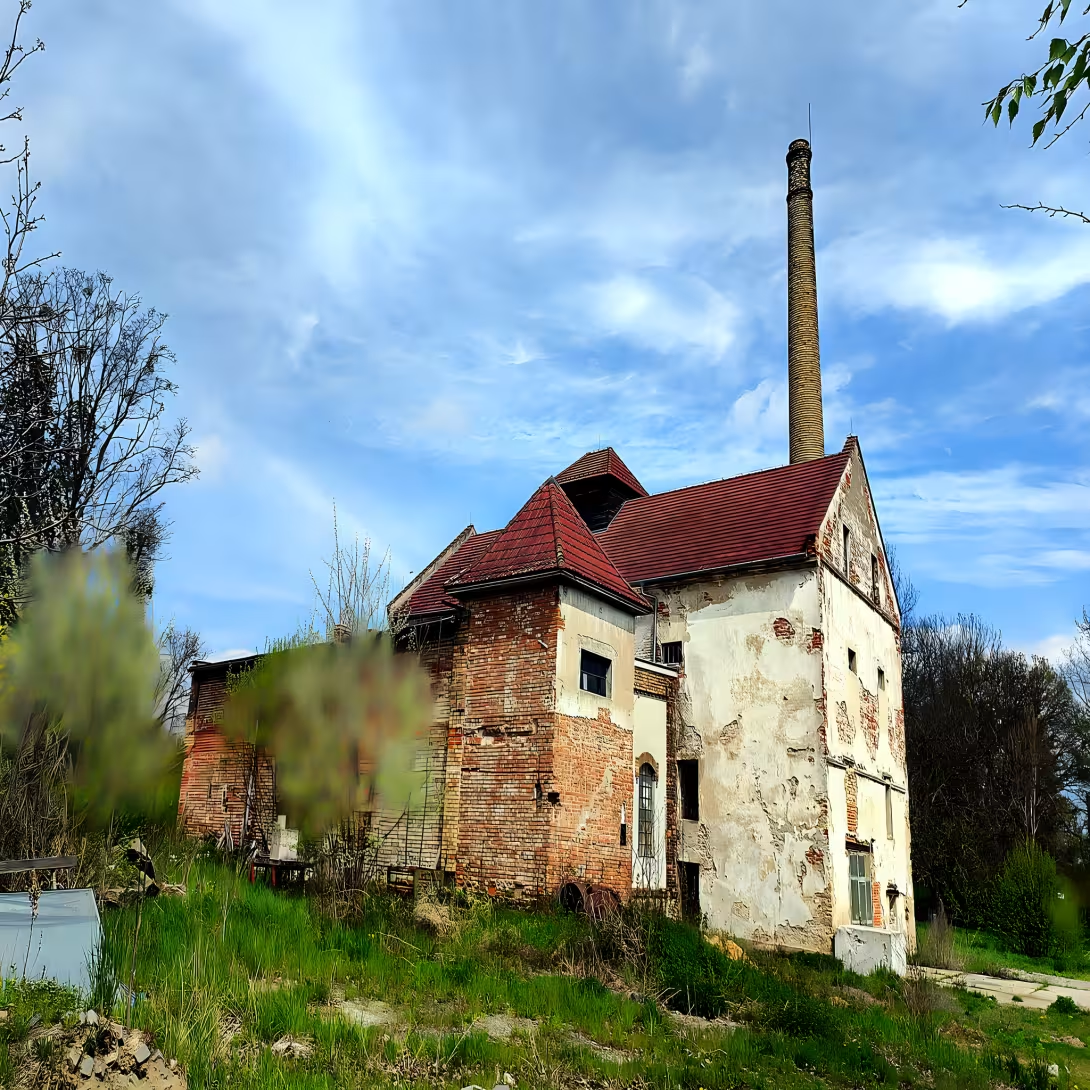
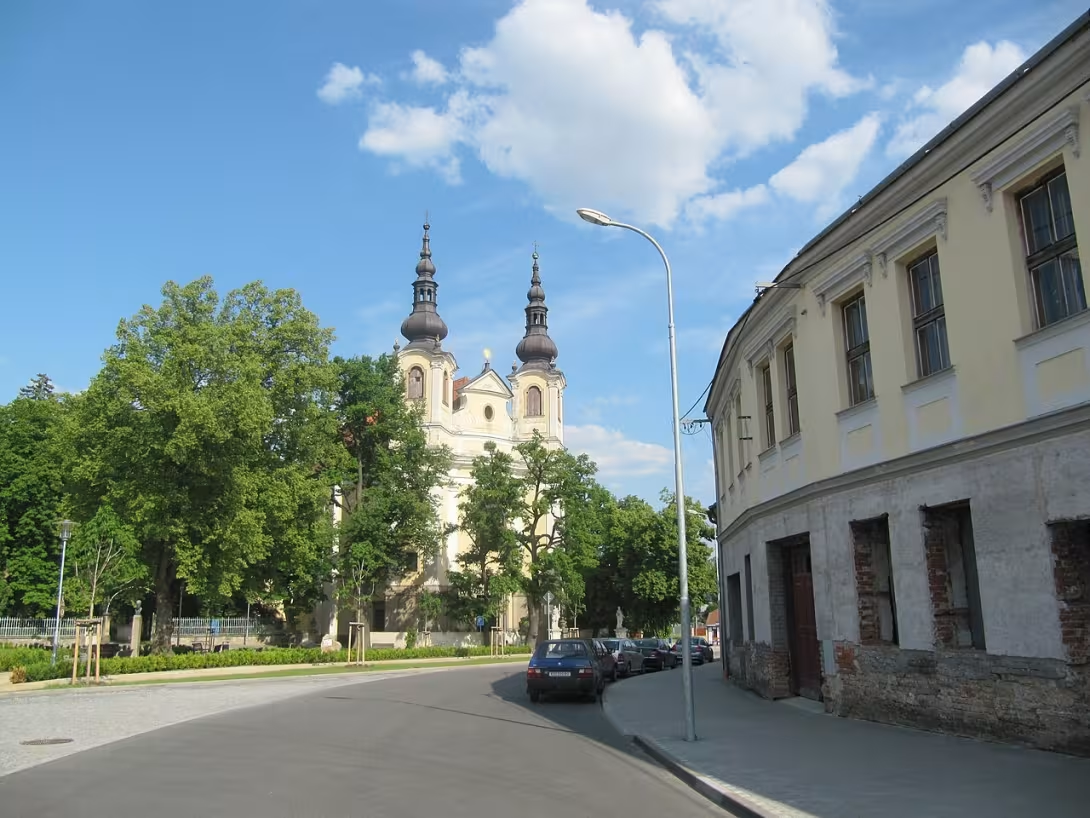
The Church of the Assumption of the Virgin Mary and Saint John of Nepomuk in Kvasice is an outstanding example of late Baroque architecture, known for its intricate design and historical importance. Situated near the castle in Kvasice, this church exemplifies Moravian religious architecture from the 18th century. Built to serve a growing village population, it reflects both spiritual devotion and community needs.
The origins of this church trace back to the early 18th century when Joachim Adam hrabě Rottal realized that the existing church on the village's cemetery could no longer accommodate its expanding congregation. In response, he commissioned a new parish church designed by architect Tomáš Sturmer (Sturm). The foundation stone was laid on May 15, 1730, in anticipation of Saint John of Nepomuk's feast day, who had been canonized the previous year. Construction progressed swiftly, and by July 17, 1740, the church was completed and consecrated.
Architecturally, the Church is a single-nave structure with a curved facade flanked by two obliquely positioned towers. This design enhances its aesthetic appeal and aligns with the late Baroque style of that period. The church's orientation ensures that the axis of its nave points towards the altar of the original cemetery church, creating a symbolic connection between the old and new structures.
Inside, the church houses three altars adorned with marble tables and columns made from fired bricks covered in artificial marble. These altars are particularly noteworthy for their artistic value. The main altar features an expansive painting by Václav Vavřinec Reiner, depicting the Assumption of Mary and Saint John Nepomuk. This artwork is significant as it represents one of the few known works by Reiner on Moravian soil. Additionally, the church contains other notable artworks, including paintings of Saint Vitus and the Five Holy Brothers by Ignác Raab, likely originating from a series depicting Moravian patrons.
The church also boasts two baroque sculptures created in 1741, representing Saints Donatus and Florian. These were crafted by Viennese sculptor Jan Jiří Schauberger, who contributed to both the stucco and sculptural decoration of the building. Beneath the main altar lies a crypt where Joachim Adam hrabě Rottal is interred; he passed away in 1746 at the age of 38 due to a stroke.
Today, the Church stands as a protected cultural monument in the Czech Republic. Its preservation allows visitors to appreciate its architectural beauty and historical importance. The church's proximity to Kvasice castle enhances its prominence within the village, making it an essential stop for those exploring Moravian heritage.
Visiting this church offers a unique opportunity to witness the grandeur of late Baroque architecture and delve into the rich history of 18th-century Bohemia under the Habsburg Monarchy. Its intricate altars and historical connections make it a must-see destination for anyone interested in religious art and architectural history.
Then and now
Drag the slider to compare how the landmark may have looked when it was built with the view today.
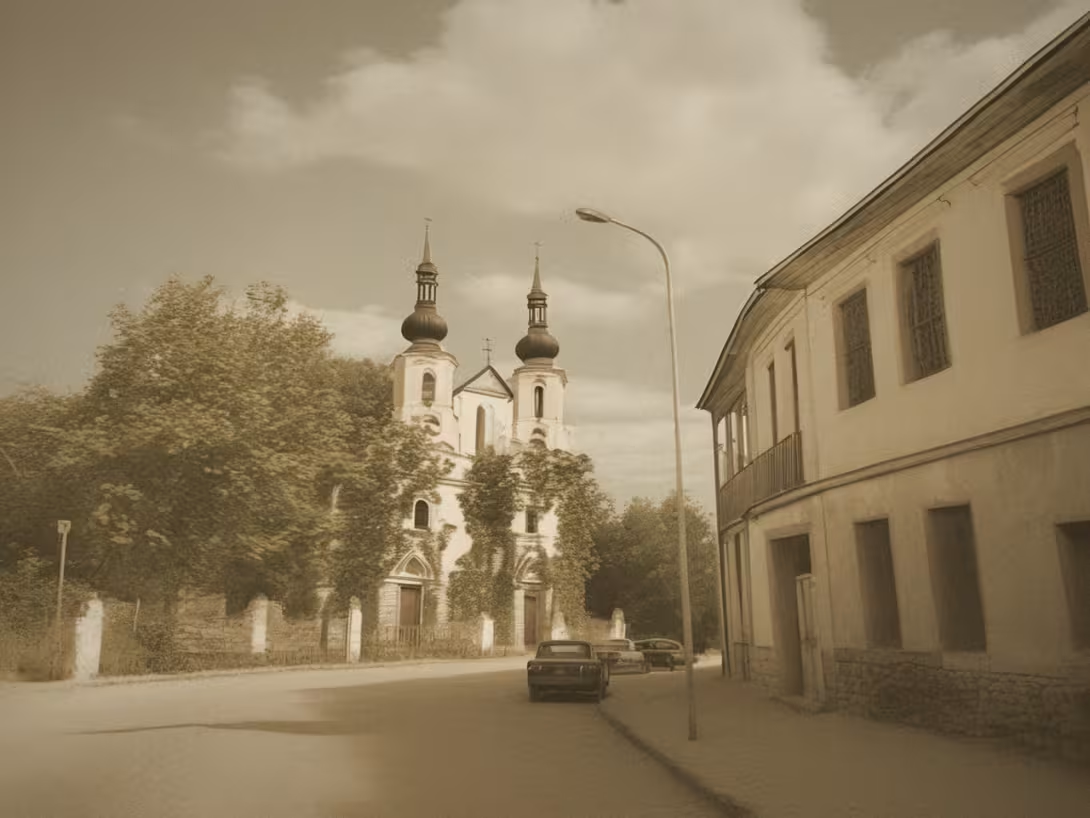
The historical appearance on the left is an AI-generated visualisation and serves as inspiration only.
Historical milestones
- 1730
- Laying of the foundation stone on May 15.
- 1740
- Completion and consecration of the church on July 17.
- 1741
- Creation of baroque sculptures by Jan Jiří Schauberger.
- 1746
- Death of Joachim Adam hrabě Rottal and his burial in the crypt.
Architectural development
The Church of the Assumption of the Virgin Mary and Saint John of Nepomuk in Kvasice is a single-nave structure with a curved facade flanked by two obliquely positioned towers. Designed in late Baroque style, it was built to replace an older church that could no longer accommodate the village's growing population. The architect Tomáš Sturmer (Sturm) oversaw its construction.
Historical events
The foundation stone for the new parish church was laid on May 15, 1730, in anticipation of Saint John of Nepomuk's feast day, who had been canonized the previous year.
Construction of the church was completed and it was consecrated on July 17, 1740.
Points of interest
- The Church of the Assumption of the Virgin Mary and Saint John of Nepomuk in Kvasice is one of the few places where you can see a work by Václav Vavřinec Reiner on Moravian soil, making it a unique artistic treasure.
- Joachim Adam hrabě Rottal commissioned the church after realizing the existing structure could no longer accommodate the growing village population, highlighting his role in addressing community needs through architecture.
- The crypt beneath the main altar houses the remains of Joachim Adam hrabè Rottal, who died at a young age of 38 due to a stroke, adding a personal historical layer to the church's narrative.
- Architect Tomáš Sturmer designed the church with two obliquely positioned towers that enhance its late Baroque aesthetic appeal and create a symbolic connection with the original cemetery church.
- The altars inside the church are adorned with marble tables and columns made from fired bricks covered in artificial marble, showcasing innovative use of materials for artistic effect during the 18th century.
Guide
This guide is narrated by a synthetic voice generated by artificial intelligence.
Show guide text
This text was created by artificial intelligence and has not been editorially reviewed. It may contain inaccuracies.
The parish church of the Assumption of the Virgin Mary and Saint John of Nepomuk in Kvasice in the Kroměřížsko region is a late baroque building, which is considered one of the most beautiful sacred structures of the Moravian countryside. It is protected as a cultural monument.
In the eighteenth century, the original church in the Kvasice churchyard no longer sufficed for the growing number of inhabitants. Joachim Adam, Count Rottal, therefore had a new parish church built. It stands on the town square next to the castle and is oriented so that the axis of its nave points toward the sanctuary of the old church. The cornerstone was blessed on May fifteenth, seventeen thirty, on the eve of the feast of Saint John of Nepomuk, who had been canonized the year before. The building was designed by architect Tomáš Sturmer, also referred to as Sturm. It was completed in seventeen forty, and on July seventeenth of that same year the church was consecrated. The year before, the count had a baroque rectory built on the square as well.
The church is single-naved. Its convex façade is bordered by two obliquely positioned towers.
Inside there are three altars with marble tops and columns made of fired bricks covered with artificial marble. During a major renovation in nineteen seventy-two to nineteen seventy-four, it was discovered that all three altar paintings were painted by Václav Vavřinec Reiner, the great Czech baroque painter. It is probably his only work in Moravia.
The painting of the main altar has an area of sixteen square meters. Above, the Virgin Mary hovers in a blue and white robe. Below, Saint John of Nepomuk enters the church and opposite him walks an angel with a cross. In the background, the martyr is being thrown from the Charles Bridge into the Vltava river. The altar on the Gospel side bears a simpler painting of the Holy Family with Saint Joachim. The infant Jesus on the lap of the Virgin Mary receives a white lily from Saint Joseph, and from columns with Ionic capitals hangs green drapery. The altar on the Epistle side belongs to Saint Francis of Assisi. The painting shows how Francis at a simple wooden cross on Mount La Verna receives the stigmata from Jesus. Jesus is depicted here as a winged seraph surrounded by angels.
In the church there are also paintings of Saint Vitus and the Five Holy Brothers by Ignác Raab. They probably belonged to a series of Moravian patrons from the Cistercian monastery at Velehrad. The sculptor Jan Jiří Schauberger from Vienna participated in the stucco and sculptural decoration. In front of the church stand two baroque statues from seventeen forty-one, Saint Donatus and Saint Florian.
The church has three crypts. In the largest, beneath the main altar, the founder Joachim Adam Rottal is buried. He died on September twenty-third, seventeen forty-six at the Kvasice castle after a stroke, at the age of thirty-eight.
Tips for visitors
The best time to visit the Church of the Assumption of the Virgin Mary and Saint John of Nepomuk in Kvasice is during late spring or early autumn. These seasons offer pleasant weather, allowing visitors to appreciate both the church's architectural beauty and the surrounding Moravian countryside. Additionally, visiting outside peak summer months can result in fewer crowds, providing a more serene experience.
It's advisable to check current routes and schedules in advance using a transportation app or website.
When planning your visit, consider bringing comfortable walking shoes as exploring both the church and its surroundings may involve some walking. A camera is recommended for capturing the intricate details of the late Baroque architecture and the stunning altars inside the church. Additionally, carrying a light jacket can be useful, especially if visiting during cooler months.
Photography enthusiasts will find several spots around the church ideal for capturing its beauty. The best natural lighting usually occurs in the early morning or late afternoon when the sun casts soft shadows across the façade and interior. Inside, the altars are particularly photogenic under the gentle light filtering through stained glass windows. Outside, the square near Kvasice Castle provides a picturesque backdrop.
For families with children, visiting this church can be both educational and enjoyable. The historical significance of Saint John of Nepomuk offers an interesting story to share with younger visitors. Nearby, within 30 minutes, is the Kvasice Castle, which often features family-friendly activities and exhibits. Exploring the castle grounds can provide a fun adventure for children after visiting the church.
Frequently asked questions
Can the monument be visited?
Religious buildings are usually open mainly during services; at other times a visit is normally arranged with the parish or the operator. We have not verified specific times.
Where is the monument?
Location: Kvasice, Zlínský kraj. The map on this page shows the exact spot.
Why is the monument protected?
It is listed in the Central List of Cultural Monuments of the Czech Republic as a cultural monument (register no. 34339/7-6051).
Businesses nearby
Do you run a restaurant, accommodation, shop, museum, rental, wellness or other visitor service near this monument? Show yourself directly to the people heading to it — this is how they will see you in the app and on the web:
Events nearby
Zdroj akcí: otevřená data měst a obcí ČR (Národní katalog otevřených dat) a kalendář akcí Národního památkového ústavu.
Nearby
Located near the Kvasice castle, the church is situated on a square that enhances its prominence in the village. The surrounding landscape includes typical Moravian countryside features.
Accommodation nearby
Trips and activities nearby
Guided tours, tickets and activities nearby from GetYourGuide
Affiliate link: if you buy from the partner, we may receive a commission. The price for you does not change.
Search tours and activities →Themed route
Thematic Walking Tour: Kvasice
1. Kostel Nanebevzetí Panny Marie a svatého Jana Nepomuckého (Church) Begin your journey at the heart of Kvasice with this stunning church, located prominently on the village square. Its architectural beauty and historical significance make it an essential visit for anyone interested in Moravian religious heritage.
2. Kvasice Castle Just a short walk from the church, explore the nearby castle ruins that add to the area's rich history. The castle offers panoramic views of the surrounding countryside, providing a perfect backdrop for understanding the historical context of Kvasice.
3. Village Square and Surrounding Landscapes Continue your exploration around the village square where the church is situated. Take in the typical Moravian countryside features that define this region, including rolling hills and lush greenery. This area offers a peaceful setting to reflect on the history you've just experienced.
4. Church Nádvoří (Courtyard) Return to the church's courtyard for a closer look at its architectural details and any ongoing exhibitions or events. The nádvoří provides an intimate space to appreciate the craftsmanship of this historic site further.
5. Church Tower Conclude your tour by climbing the church tower, if accessible. From here, enjoy breathtaking views over Kvasice and the surrounding landscapes, offering a unique perspective on the area's natural beauty and historical significance.
Seasonal recommendations
Jaro: In the spring season, the Church of the Assumption of the Virgin Mary and Saint John of Nepomuk offers visitors a celebration of nature's revival, where blooming gardens around the church create a vibrant and colorful panoramic view. Sunny days are ideal for appreciating the architecture of the church, as the light highlights its details and enhances its historical appearance. Visit in the early afternoon to avoid midday heat, which can be strenuous for walking tours. The mild spring chill may bring cool days, so take a light jacket or sweater if you plan an extended tour.
Summer: Summer in Kvasice brings warm sunny days and a lively atmosphere that is ideal for visiting the church during the afternoon. With full daylight, one can fully appreciate the architectural beauty of the building, although crowds of tourists may increase due to summer tourism in the area. It's recommended to come early in the morning or later in the evening to explore the church with fewer people and enjoy a more relaxed atmosphere. Given the warm conditions, it is advisable to bring sun protection glasses, light clothing, and plenty of water for drinking.
Autumn: Autumn offers a unique atmosphere around the Church of the Assumption of the Virgin Mary and Saint John of Nepomuk with its golden leaves adorning the surrounding greenery. Sunny autumn days provide ideal conditions for appreciating the historical details of the church when the light is softer and warmer than in summer. Visit later in the day to avoid morning chills and possible rainy weather. It's advisable to bring warm clothing, as autumn temperatures can be unexpectedly cold, especially in the afternoons.
Winter: The winter season brings a quieter and more serene impression of the Church of the Assumption of the Virgin Mary and Saint John of Nepomuk. Light from frozen days can create a dramatic effect on the architecture, especially when the sun sets early behind the horizon. Visit in the morning or in the shade to save light and be able to view the church before closing, which is common on cold days. It's important to dress warmly with fur coats and hats, and bring an umbrella or protective boots, as winter can bring snowy weather.
Visualizations and artistic views


The visualisations are generated by artificial intelligence and serve as inspiration.
Photos from the area
Real photos taken near the monument


Zdroj a licence jsou uvedeny u každého snímku.
Tips from visitors
No tips yet. Be the first!
Log in and add your tip.
Sources and literature
Photos: palickap / CC BY 3.0, rozlišení zvýšeno umělou inteligencí — Wikimedia Commons. The author and licence also appear when you hover over the image.
Faktickým podkladem tohoto textu byl článek na Wikipedii, jehož autory jsou přispěvatelé Wikipedie. Článek je dostupný pod licencí CC BY-SA 4.0.
Location on the map

Příběhy a pověsti
Legendy, pověsti a příběhy spjaté s touto památkou
Fotografie návštěvníků
Zatím žádné fotografie. Buďte první, kdo přidá fotografii z návštěvy!
Log in a přidejte svou fotografii nebo hodnoťte.
Za ověřenou návštěvu v aplikaci získáte víc bodů — poznáme podle GPS, že jste na místě.
Reviews and comments