






Kostel Nanebevzetí Panny Marie (Žalmanov) Church
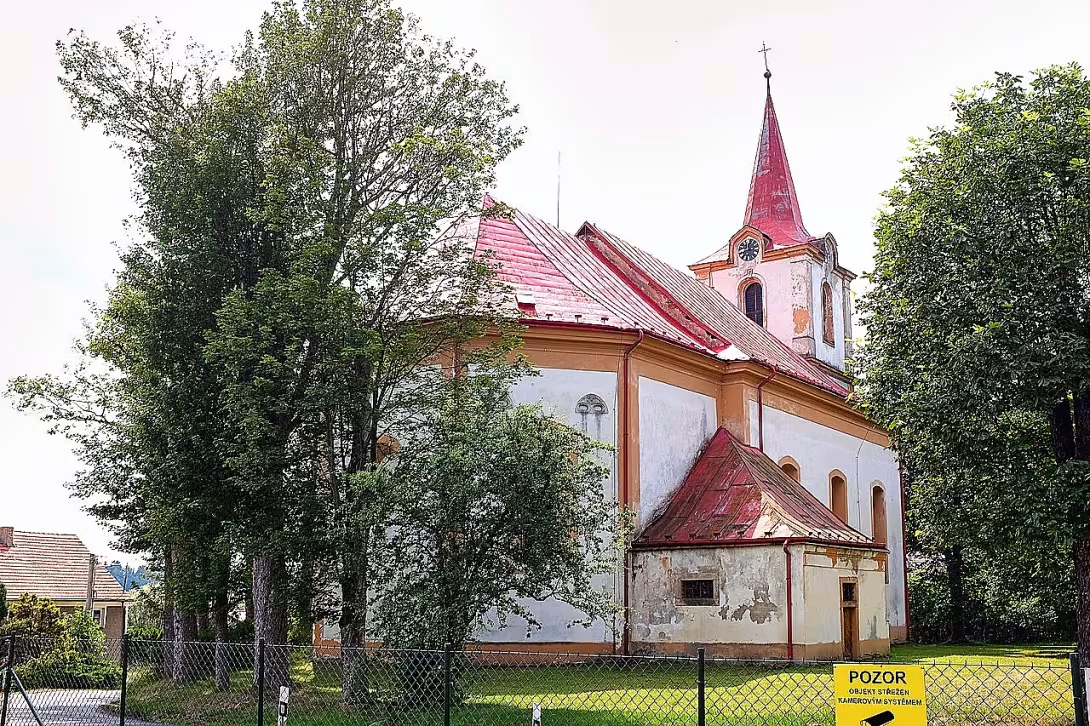
Kostel Nanebevzetí Panny Marie in Žalmanov is a late Gothic church recognized as a significant cultural monument since the mid-14th century. Situated within the Stružná municipality in Karlovarský kraj, this historical site has undergone numerous transformations reflecting religious and architectural shifts over centuries. Originally built as a parish church, it gained prominence for its resilience during turbulent times such as the Hussite Wars and later adaptations in the Baroque period.
The origins of Kostel Nanebevzetí Panny Marie trace back to the mid-14th century when it was constructed under the patronage of the Rýzmburk family. This era in Bohemia saw significant religious and political changes, including the rise of the Hussite movement, which later impacted the church's history. Initially serving as a parish church for the děkanát in Loket, its role evolved due to historical events.
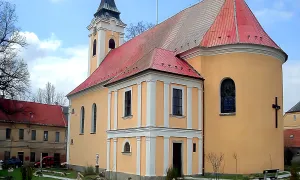
Architecturally, the church is characterized by its late Gothic style with subsequent Baroque modifications. It features a single-nave orientation on an oblong plan, covered by a metal roof. The slightly recessed three-sided presbytery also has a metal roof. The northern wall of the presbytery houses a sacristy with rectangular openings and smaller windows in its gable ends. A notable addition is the three-story belfry tower, culminating in an octagonal spire covered by a high metal roof. This tower includes oblong portals and round-arched windows.
Throughout its history, Kostel Nanebevzetí Panny Marie has seen several owners and administrators who influenced its development. Initially under the Rýzmburk family's patronage, it later came into the possession of Anna, née von Kolowrat, in 1403, who appointed a new parish priest. The church suffered damage during the Hussite Wars at the beginning of the 15th century, leading to its temporary decline as a parish. In 1487, the presbytery was transformed into a family mausoleum for the Colonies and Šlik families, later expanded in Renaissance style by Kašpar Colony z Felsu and Anna Karolína Šliková in 1578.
Significant events have marked the church's history. In 1606, during Linhart Colona z Felsu's tenure, a new early Baroque nave was added to the existing mortuary chapel with its crypt. This period also saw the appointment of a Protestant clergyman who served from 1618 to 1623. The re-establishment of Catholic administration in 1623 led to the church becoming a filial church under St. Michael Archangel parish in Bochov, later shifting allegiance to Andělská Hora by 1720.
The church's fortunes have fluctuated over time. In 1811, it was severely damaged by fire caused by wind-blown embers from a nearby castle, leading to the destruction of frescoes and organs. Restoration efforts followed, including constructing a new parish house in 1818 and installing new organ pipes from Ferdinand Johann Guth's workshop in 1842. The church underwent further renovations in the late 20th century, with facade restoration in the early 1990s and roof treatment against wood-boring insects and fungi in 2011.
Today, Kostel Nanebevzetí Panny Marie stands as a testament to its rich history and architectural evolution. Although it has faced periods of neglect, recent legal decisions have ensured state responsibility for its preservation. The church remains an important cultural monument, reflecting the historical and religious transformations of the region. Visitors are invited to explore this remarkable site, which offers insights into the past while standing as a symbol of resilience and continuity in the picturesque landscapes of Karlovarský kraj.
Historical milestones
- 1403
- Anna, rozená z Koldic, appointed a new parish priest.
- 1487
- The presbytery was converted into a family mausoleum.
- 1578
- Mausoleum expanded in the Renaissance style by Kašpar Colony z Felsu and Anna Karolína Šliková.
- 1606
Architectural development
The church was initially constructed as a late Gothic parish church in the mid-14th century. It suffered damage during the Hussite Wars and later saw significant changes, including a baroque expansion of its nave in 1606. The presbytery was transformed into a family mausoleum in 1487 and expanded again in 1578.
Historical events
Hussite Wars damage in the early 15th century
Baroque expansion in 1606
Owners
páni z Rýzmburka (14th century)
Anna, rozená z Koldic (1403)
Kašpar Colony z Felsu and Anna Karolína Šliková (1578)
Linhart Colona z Felsu (1606)
Points of interest
- The church's resilience during the Hussite Wars is notable; despite suffering damage in these conflicts at the beginning of the 15th century, it managed to survive and later serve as a mausoleum for prominent families. - In a surprising twist of history, Kostel Nanebevzetí Panny Marie transitioned from being a parish church to becoming a family mausoleum in 1487, reflecting the changing social dynamics and priorities of its owners.
Guide
This guide is narrated by a synthetic voice generated by artificial intelligence.
Show guide text
This text was created by artificial intelligence and has not been editorially reviewed. It may contain inaccuracies.
Welcome to the historical site of Kostel Nanebevzetí Panny Marie in Žalmanov, nestled within the picturesque landscapes of Karlovarský kraj. As you stand here, imagine the centuries-old stories that this late Gothic church has witnessed since its inception in the mid-14th century. The church's enduring presence is a testament to its cultural and historical significance.
The origins of this sacred site trace back to a time when it served as a parish church, playing an integral role in the spiritual lives of the local community. In 1403, Anna, born into the noble Koldic family, appointed a new parish priest, marking one of the many pivotal moments in its storied past. Over the years, the church has undergone various transformations and expansions, reflecting both religious shifts and architectural trends.
As you explore the exterior, take a moment to appreciate the resilience this structure embodies. Despite suffering damage during the tumultuous Hussite Wars at the beginning of the 15th century, it not only survived but also adapted, later becoming a filial church. This adaptability is evident in its architecture, where the blend of Gothic and Baroque elements tells tales of changing times.
Now, let's delve into some key stories and figures associated with this site. The presbytery was converted into a family mausoleum in 1487, signifying its importance as a final resting place for prominent families. In 1578, the mausoleum underwent an expansion in the Renaissance style by Kašpar Colony z Felsu and Anna Karolína Šliková, further enhancing its grandeur.
Among the historical figures linked to this church are the influential páni z Rýzmburka, as well as Linhart Colona z Felsu and Jakub Kašpar Colona z Felsu. Their legacies are interwoven with the history of Kostel Nanebevzetí Panny Marie, adding layers to its rich narrative.
One intriguing aspect of this church is its transformation from a site of conflict during the Hussite Wars into a place of peace and remembrance. This surprising twist in its history highlights the resilience and enduring spirit of both the structure and the community it served.
As you continue your exploration, we invite you to immerse yourself further in the stories and mysteries that Kostel Nanebevzetí Panny Marie holds. Each stone, each corner, whispers tales from centuries past, waiting for you to uncover them. Thank you for joining us on this journey through history, and may your visit inspire a deeper appreciation for the cultural heritage of Žalmanov.
We look forward to seeing you discover more hidden gems in our region. Until next time, farewell and safe travels!
Tips for visitors
The best time to visit the Church of the Assumption of the Virgin Mary in Žalmanov is during late spring or early autumn. During these months, the weather is typically mild and pleasant, making it ideal for exploring both the church and its surrounding landscapes. The natural beauty of the Karlovarský region is particularly striking during this time, with vibrant flora and clear skies enhancing your experience.
Parking and transportation options are convenient for visitors to Žalmanov. There are parking facilities available in the village, which can accommodate most vehicles. For those preferring public transport, both bus and train services connect nearby towns to Žalmanov, though it's recommended to check current schedules online or through local travel apps for the most accurate information.
When planning your visit, consider bringing comfortable walking shoes as you may want to explore the surrounding area of Žalmanov. A camera is also advisable, especially if you enjoy photography, as there are several picturesque spots around the church where natural light enhances the beauty of the late Gothic architecture and the serene landscapes.
For photography enthusiasts, the best spots for capturing images include the eastern facade of the church, which offers a stunning view during sunrise. The surrounding fields and forests provide excellent opportunities for landscape shots, particularly in the golden hours of early morning or late afternoon when the light is soft and warm.
Nearby attractions within a 30-minute drive from Žalmanov include other historical sites that contribute to the cultural heritage of the area. Visitors can explore these additional landmarks to gain a deeper understanding of the region's history and enjoy more scenic views, making it an enriching experience for families with children.
Businesses nearby
Do you run a restaurant, accommodation, shop, museum, rental, wellness or other visitor service near this monument? Show yourself directly to the people heading to it — this is how they will see you in the app and on the web:
Nearby
Located in the village of Žalmanov within Stružná municipality, the church is surrounded by picturesque landscapes typical of the Karlovarský region. Nearby are other historical sites and natural features that contribute to the area's cultural heritage.
Accommodation nearby
Trips and activities nearby
Guided tours, tickets and activities nearby from GetYourGuide
Affiliate link: if you buy from the partner, we may receive a commission. The price for you does not change.
Search tours and activities →Themed route
Thematic Walking Tour: Žalmanov's Cultural Heritage
1. Kostel Nanebevzetí Panny Marie (Žalmanov) - *Type:* Church - *Why Visit:* Begin your journey at this stunning Baroque church, a centerpiece of the village's cultural and spiritual life. Its architecture and serene atmosphere offer a glimpse into the region's rich religious history.
2. Village Square (Náměstí) - *Type:* Public Space - *Why Visit:* Just a short walk from the church, this charming village square is surrounded by traditional houses that reflect the architectural style of the Karlovarský region. It's an ideal spot to appreciate local life and perhaps enjoy a quiet moment with a view of the surrounding landscapes.
3. Historical Homes (Historické domy) - *Type:* Architectural Sites - *Why Visit:* Explore the nearby historical homes that line the streets around the village square. These structures provide insight into the traditional building techniques and lifestyles of the area's past inhabitants, adding depth to your understanding of Žalmanov’s heritage.
4. Local Artisan Workshop (Místní umělecká dílna) - *Type:* Cultural Site - *Why Visit:* Conclude your tour at a local artisan workshop where you can witness traditional crafts being made. This experience connects visitors with the region's cultural practices and offers an opportunity to appreciate or purchase unique handcrafted items.
This thematic walking tour encapsulates the essence of Žalmanov, highlighting its architectural beauty and cultural significance while staying true to the area’s historical context.
Seasonal recommendations
Spring: The arrival of spring at the Church of the Assumption of the Virgin Mary in Žalmanov brings a refreshing atmosphere as nature awakens with vibrant colors and blossoming flora. The gentle sunlight enhances the church's architectural details, casting warm hues across its façade. This season is ideal for capturing serene photographs without the summer crowds. Visitors are advised to wear comfortable layers, as temperatures can vary throughout the day. Early morning visits are recommended to enjoy a quieter experience and appreciate the soft light that accentuates the church’s beauty.
Summer: During the summer months, the Church of the Assumption of the Virgin Mary is bathed in long daylight hours, allowing for extended exploration. The lush greenery surrounding the church creates a picturesque setting, perfect for leisurely strolls or picnics nearby. This season attracts more visitors due to its favorable weather and vibrant natural surroundings. To avoid large crowds, it’s best to arrive early in the morning or later in the afternoon. Comfortable walking shoes and light clothing are recommended, along with sun protection such as hats and sunscreen.
Autumn: Autumn transforms the Church of the Assumption of the Virgin Mary into a stunning spectacle with its rich palette of reds, oranges, and yellows. The falling leaves create a magical atmosphere that complements the historical architecture beautifully. This season is particularly enchanting for photography enthusiasts looking to capture the church amidst the seasonal changes. As temperatures begin to cool, visitors should dress in layers and consider bringing an umbrella or raincoat, as autumn weather can be unpredictable. Visiting during weekdays can help avoid larger weekend crowds.
Winter: Winter cloaks the Church of the Assumption of the Virgin Mary in a serene blanket of snow, offering a unique and tranquil experience. The church’s silhouette against the crisp winter sky creates a striking contrast that is both peaceful and awe-inspiring. Due to shorter daylight hours and potential closures during extreme weather, it's important to check opening times before visiting. Warm clothing, including coats, hats, gloves, and boots, is essential for comfort. Early visits are advisable not only to beat the cold but also to enjoy a quieter atmosphere before winter holidays bring in larger crowds.
Visualizations and artistic views


The visualisations are generated by artificial intelligence and serve as inspiration.
Photos from the area
Real photos taken near the monument


Zdroj a licence jsou uvedeny u každého snímku.
Tips from visitors
No tips yet. Be the first!
Log in and add your tip.
Sources and literature
Fotografie: Lubor Ferenc / CC BY-SA 4.0 — Wikimedia Commons. The author and licence also appear when you hover over the image.
Faktickým podkladem tohoto textu byl článek na Wikipedii, jehož autory jsou přispěvatelé Wikipedie. Článek je dostupný pod licencí CC BY-SA 4.0.
Location on the map
Příběhy a pověsti
Legendy, pověsti a příběhy spjaté s touto památkou
Fotografie návštěvníků
Zatím žádné fotografie. Buďte první, kdo přidá fotografii z návštěvy!
Přihlaste se a přidejte svou fotografii nebo hodnoťte.
Za ověřenou návštěvu v aplikaci získáte víc bodů — poznáme podle GPS, že jste na místě.
Reviews and comments