






Kostel Narození Panny Marie (Buškovice) Church
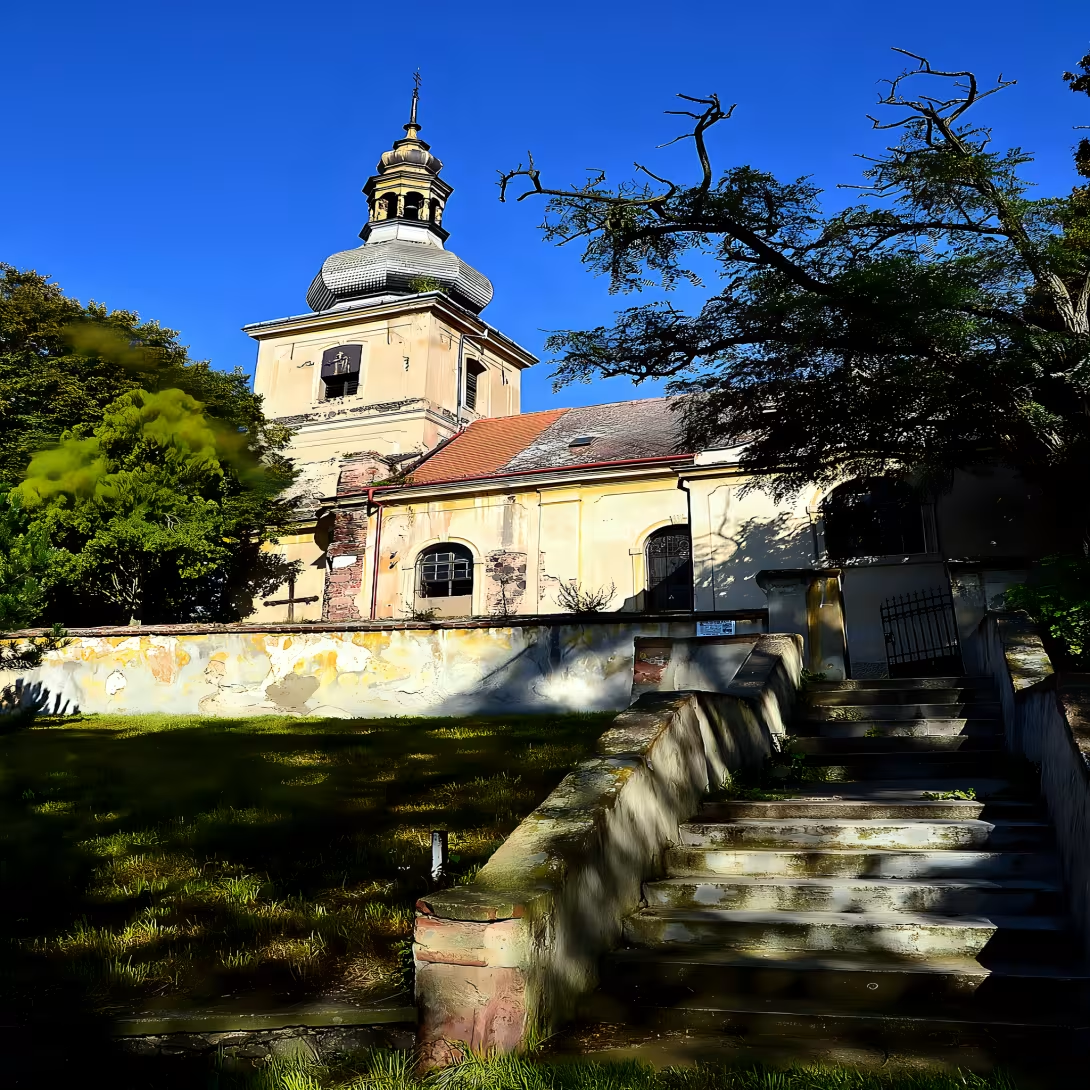
On the slope north of the square in Buškovic stands the parish church, which along with its cemetery and surrounding chapels has been developed at one location for seven hundred years. Today it is managed by the association Pro kostely.
The oldest written record of the church dates from 1361 when a priest named Jan served there. However, it is not certain whether he served in today's building or in the now-destroyed Church of Saint Bartholomew, which originally stood nearby. The church where we are now was initially dedicated to Saint John and remained so until 1627, when following re-Catholicization it became a parish church consecrated to the Nativity of the Virgin Mary. Over time, the parish grew – first Vroutek came under its jurisdiction, later Vidhostice and Libyně were removed from the regime. Since 1949, Brody and Krásný Dvůr have also been administered with Buškovic, although the parish is now managed from Podbořany.
The core of the building dates from the early Gothic period. Based on its floor plan and dimensions of the presbytery and approximately two-thirds of the nave, its construction can be dated to between 1275 and 1325. The presbytery is vaulted with a single Gothic cross-ribbed vault that was not part of the original structure – it was added around the middle of the 14th century. It wasn't until the first quarter of the 18th century that the church underwent major reconstruction. Between 1717 and 1718, a tower with its distinctive onion dome was built, and new roofs were erected over the nave and presbytery. At the same time, the nave was roofed, a sacristy was constructed, a new choir was added, and round-arch windows were created. In 1728, the Chapel of the Wounded Savior was added, and in 1744, the Chapel of Saint Procopius. Both chapels were built as central structures before the western facade and their roofs still feature typical Baroque elements. Another renovation period occurred in 1820.
The interior furnishings mostly date from the late 18th and 19th centuries – neoclassical fittings and the main altar from 1870. In 1790, the church acquired new organs made by Ferdinand Müller of Nepomyšl. The Sanctus bell appeared in the first decade of the 20th century, and stained glass windows were installed in 1932 and 1933. However, around 1990, the organs suffered vandalism, were dismantled, and restored by Rudolf Valent, after which they moved to a church in Malý Březno.
In front of the church stands a Baroque statue of Saint John Nepomucene dated 1713 with its characteristic ball foot adorned with relief acanthus – it was renovated in 1925. Near the square is also a statue of Saint Florian and a column of the Most Holy Trinity.
Currently, both the church and the two chapels are in poor condition, and the mausoleum ruin on the cemetery is collapsed. However, maintenance work can be seen on the cemetery wall and the building itself from time to time. It has been protected as a cultural monument since 1964.
Then and now
Drag the slider to compare how the landmark may have looked when it was built with the view today.
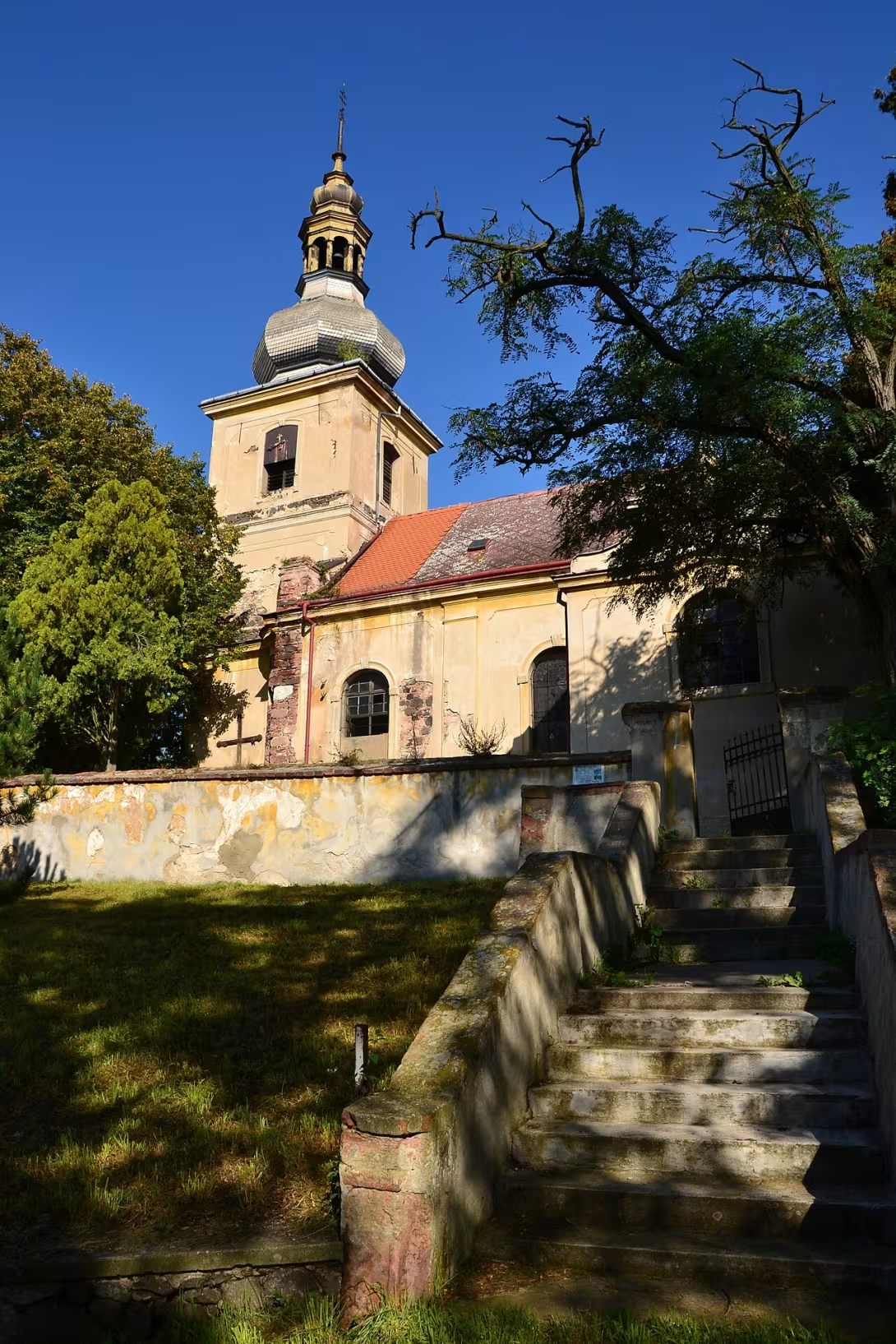
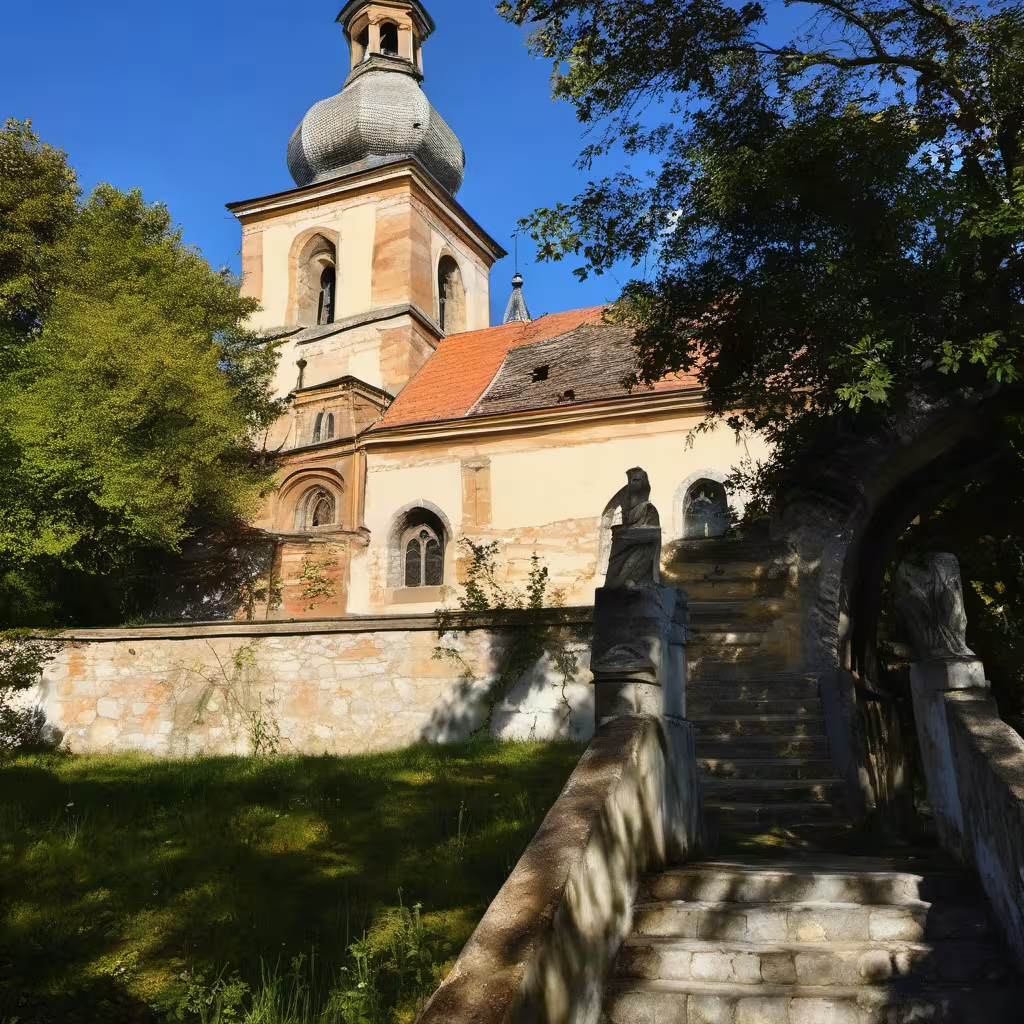
The historical appearance on the left is an AI-generated visualisation and serves as inspiration only.
Historical milestones
- 1361
- First written mention of the Buškovice church with Jan as parish priest.
- 1713
- Mention of a wooden bell tower at the church site.
- 1717-1718
- Construction of a new tower and roofs over the nave and presbytery during Baroque renovations.
Architectural development
The core structure of the Church of the Nativity of the Virgin Mary is early Gothic, with its presbytery and approximately two-thirds of the nave dating from around 1275–1325. The church underwent significant Baroque renovations in the first quarter of the 18th century, including a new tower and roofs over the nave and presbytery. Additional chapels were added to the complex in 1728 and 1744.
Historical events
The first written mention of the Buškovice church dates back to 1361 with Jan as the parish priest.
In 1713, a wooden bell tower was mentioned at the church site.
A significant Baroque reconstruction occurred in the early 18th century, including the construction of a new tower and roofs.
Owners
The sequence of owners with years if available, otherwise zero.
Points of interest
- The oldest written record of the church dates back to 1361 when a priest named Jan served there. - Originally dedicated to Saint John, the church became a parish church with dedication to the Nativity of the Virgin Mary in 1627 following re-Catholicization. - The core structure of the church originates from the early Gothic period and is dated between 1275 and 1325. - A significant reconstruction occurred in the first quarter of the 18th century, including the addition of a tower with its distinctive onion dome and new roofs over the nave and presbytery. - The interior furnishings are mainly from the late 18th and 19th centuries, featuring a neoclassical setup and a main altar from 1870.
Guide
This guide is narrated by a synthetic voice generated by artificial intelligence.
Show guide text
This text was created by artificial intelligence and has not been editorially reviewed. It may contain inaccuracies.
Welcome to Buškovice. As you stand here, taking in the view, you are looking at a site that has been a cornerstone of this community for centuries. Before you rises the Kostel Narození Panny Marie, positioned prominently on this hillside just north of the village square. Take a moment to appreciate its commanding presence. It does not stand alone; it is part of a larger, sacred complex that includes two central chapels and a cemetery, all of which contribute to the solemn and historical atmosphere of this location. Even as you observe the building in its current state, you can feel the weight of the many generations that have gathered here, seeking solace and community within these walls.
To truly understand the significance of what you see, we must travel back through the mists of time. The history of this site is not merely a collection of dates, but a long, unfolding story of faith and endurance. The very first written mention of this church dates all the way back to the year 1361. In those medieval times, the church was served by a parish priest named Jan. Imagine the world as it was then, and consider that for over six hundred years, this ground has remained a place of spiritual importance. The church you see today is a living testament to that incredible longevity, having survived the shifting political and religious landscapes of the centuries.
As you look at the structure, try to perceive the different layers of history etched into its very form. The core of the church is rooted in the late Gothic period, a time of architectural transition and profound craftsmanship. However, the building you see now is not purely a product of the Middle Ages. It has been shaped and reshaped by the passage of time, most notably during the Baroque era. As you observe the silhouette of the building, you are seeing a marriage of these two distinct styles. The original Gothic foundations provided the strength, while the subsequent Baroque modifications added a different character and scale to the structure.
Please, direct your attention to the tower and the rooflines. The history of the tower is particularly telling of the church's evolution. In the early 18th century, specifically around 1713, records mention a wooden bell tower standing at this site. But as the community grew and the desire for more permanent structures took hold, this was replaced. Between 1717 and 1718, during a period of significant Baroque renovation, a new tower was constructed, along with new roofs over both the nave and the presbytery. When you look at the proportions of the building, you are seeing the results of those ambitious 18th-century projects, which sought to modernize and beautify the sacred space.
While the architecture tells a story of stone and timber, the identity of the church tells a story of profound religious change. This brings us to a fascinating turning point in the history of the Kostel Narození Panny Marie. Originally, this church was not dedicated to the Virgin Mary, but to Saint John. It served as a parish church under that dedication for centuries. However, the landscape of faith in this region underwent a massive transformation during the 17th century. Following the period of re-Catholicization, the church underwent a change in its very essence. In 1627, the dedication was shifted, and it became known as the Church of the Nativity of the Virgin Mary. This change was not merely a matter of renaming; it reflected the broader religious shifts that were reshaping the cultural and spiritual identity of the entire region.
As you continue to examine the exterior, you might notice the signs of time and the challenges the building faces. It is true that the church is currently in a state of poor technical condition, a fact that serves as a poignant reminder of the fragility of our historical monuments. Yet, there is a certain dignity in its weathered appearance. It stands as a survivor. It has weathered the elements, the changing tides of history, and the slow march of centuries. The very fact that it remains standing, holding onto its Gothic roots and its Baroque additions, is a testament to its enduring importance to the people of Buškovice.
It is easy to wonder about the people who walked these paths before us. We know of Jan, the priest from 1361, but we can only imagine the countless others—the villagers who celebrated baptisms here, the families who gathered for weddings, and the mourners who found peace in the surrounding cemetery. Every stone and every modification, from the wooden bell tower of 1713 to the grander Baroque renovations of the 1710s, was driven by the hands and the hearts of people who believed this place was worth preserving and perfecting.
As you prepare to move on, take one last look at the way the church sits upon the hillside, overlooking the village. It is more than just a building; it is a landmark of memory. Whether you are drawn to the medieval origins, the Baroque transformations, or the complex history of its dedication, the Kostel Narození Panny Marie remains a vital link to the past. We invite you to continue your exploration of Buškovice, perhaps walking through the cemetery or looking further into the village to see how this historic site has shaped the community around it. Thank you for joining us on this brief journey through time. Enjoy the rest of your visit.
Tips for visitors
The best time to visit the Church of the Nativity of the Virgin Mary in Buškovice is during late spring or early autumn. During these seasons, you'll enjoy mild weather that's perfect for exploring both the church and its surroundings. The natural light enhances the intricate details of the Gothic architecture and Baroque elements, making it ideal for photography enthusiasts. Additionally, visiting outside peak tourist season ensures a more tranquil experience, allowing you to appreciate the historical significance without large crowds.
Parking is available nearby, but it's always wise to check current availability online before your visit. Public transportation options are also accessible; however, specific routes and schedules should be verified using a travel planner or local transit website. This flexibility in transport ensures that visitors can easily reach Buškovice from various starting points.
When visiting the church complex, consider bringing comfortable walking shoes as you'll likely want to explore the surrounding area, including the Baroque statue of St. John Nepomucene and other nearby religious monuments like statues of St. Florian and the Holy Trinity. A camera with a good zoom lens is recommended for capturing detailed shots of the architecture and sculptures.
For photography enthusiasts, early morning or late afternoon light offers the best conditions to capture the church's intricate details and surrounding landscape. The gable roofs of the central chapels provide unique angles for dynamic shots, while the Baroque statue of St. John Nepomucene is a striking subject in its own right. Be mindful of lighting conditions and consider using a tripod for stability.
Families with children will find plenty to enjoy at Buškovice. The church's historical significance can be an educational experience, sparking interest in history and architecture among young visitors. Nearby, the statues of St. Florian and the Holy Trinity offer additional points of interest that are easily accessible on foot. For a broader exploration, consider visiting other religious monuments within a 30-minute radius to extend your family outing.
Frequently asked questions
Is Kostel Narození Panny Marie (Buškovice) open to the public?
Yes, the church is open to the public and offers beautiful architecture and a quiet environment. However, it is important to respect the services and privacy of local residents.
How do I get to the place by car / public transport?
The church is located in the heart of the village Buškovice, so it is possible to get there by car or walk. Transportation by bus is not available, we recommend using a car or taxi.
How much is the entrance fee and is it paid on the spot?
Entry to the church is free, but it is advisable to bring pocket money for any gifts in the church.
Is the tour suitable for children and seniors?
Yes, the church is suitable for families with children and seniors. It is a quiet environment and children can see beautiful architecture and participate in services.
How long does the tour take?
The church tour takes about 15-30 minutes, depending on the interest of the visitors.
What are the opening times and booking is required?
The church is open daily from 9:00 to 18:00. Reservation is not necessary, but it is good to call the church phone number in advance.
What's interesting in the immediate vicinity?
Near the church there is a local parish and municipal office. We recommend visiting a nearby garden estate where children can see animals and get information about agricultural activities.
For kids
Imagine going back to the past, until the fields here were full of wheat and barley. When you grew up in Bushkovice, the Church of the Birth of the Virgin Mary stood here since 1583. It was a large building with a high tower that was raised above the village like an open finger.
Businesses nearby
Do you run a restaurant, accommodation, shop, museum, rental, wellness or other visitor service near this monument? Show yourself directly to the people heading to it — this is how they will see you in the app and on the web:
Events nearby
Zdroj akcí: otevřená data měst a obcí ČR (Národní katalog otevřených dat) a kalendář akcí Národního památkového ústavu.
Nearby
The church complex includes two central chapels with gable roofs, and nearby stands a Baroque statue of St. John Nepomucene from 1713. The surrounding area features additional religious monuments such as statues of St. Florian and the Holy Trinity.
Accommodation nearby
Themed route
1. Kostel Narození Panny Marie (Buškovice)
Type: Church
This church is the centerpiece of your visit, featuring a stunning architectural design with two central chapels topped by gable roofs. The serene atmosphere and historical significance make it an essential stop for anyone interested in religious architecture.
2. Baroque Statue of St. John Nepomucene
Type: Religious Monument
Located just outside the church, this 1713 statue is a remarkable example of Baroque artistry. It offers insight into the region's rich cultural and spiritual history, making it a must-see for those interested in religious sculptures.
3. Statue of St. Florian
Type: Religious Monument
A short walk from the church complex, this statue adds another layer to your exploration of local religious heritage. Its presence highlights the community’s devotion and artistic expression through sculpture.
4. Statue of the Holy Trinity
Type: Religious Monument
Nearby stands this evocative statue, providing a contemplative experience for visitors. It complements the other religious monuments in the area, offering a deeper understanding of local spiritual traditions.
This itinerary provides a focused exploration of Buškovice’s rich religious heritage, centered around its main church and surrounding statues.
Seasonal recommendations
In spring, the Kostel Narození Panny Marie in Buškovice is surrounded by awakening nature and fresh greenery, which creates a poignant contrast with the building's poor condition. The soft, morning light is ideal for capturing the architectural details of the structure. Visitors should wear layered clothing to adapt to fluctuating temperatures and aim for early morning visits to enjoy the peaceful atmosphere.
During the summer, the site is bathed in bright sunlight and framed by lush, deep green foliage. The atmosphere is vibrant, though the heat can be intense. It is recommended to arrive early in the day to avoid the peak heat and any potential crowds during the main summer season. Light, breathable clothing and plenty of water are essential for a comfortable visit.
Autumn brings a melancholic beauty to Buškovice, as the golden and red hues of the falling leaves complement the weathered state of the church. Misty mornings often add a mysterious layer to the surroundings, enhancing the site's historic feel. Practical footwear, such as waterproof boots, is necessary due to damp ground, and a warm jacket is advised for the cooling air.
In winter, the Kostel Narození Panny Marie is often enveloped in frost or snow, creating a stark, silent landscape that emphasizes its isolation. The atmosphere is quiet and reflective. Because of the cold and shorter daylight hours, visitors should wear heavy winter clothing and plan their visit for the middle of the day to make the most of the available light.
Visualizations and artistic views


The visualisations are generated by artificial intelligence and serve as inspiration.
Photos from the area
Real photos taken near the monument

Zdroj a licence jsou uvedeny u každého snímku.
Atmosphere of the place
This atmospheric visualisation of the place and period was generated by artificial intelligence. It is not real footage of the location.
Tips from visitors
No tips yet. Be the first!
Log in and add your tip.
Sources and literature
Photos: Petr Kinšt / CC BY-SA 4.0, rozlišení zvýšeno umělou inteligencí — Wikimedia Commons. The author and licence also appear when you hover over the image.
Faktickým podkladem tohoto textu byl článek na Wikipedii, jehož autory jsou přispěvatelé Wikipedie. Článek je dostupný pod licencí CC BY-SA 4.0.
Location on the map

Příběhy a pověsti
Legendy, pověsti a příběhy spjaté s touto památkou
Fotografie návštěvníků
Zatím žádné fotografie. Buďte první, kdo přidá fotografii z návštěvy!
Log in a přidejte svou fotografii nebo hodnoťte.
Za ověřenou návštěvu v aplikaci získáte víc bodů — poznáme podle GPS, že jste na místě.
Reviews and comments