






Kostel Narození Panny Marie (Páleč) Church
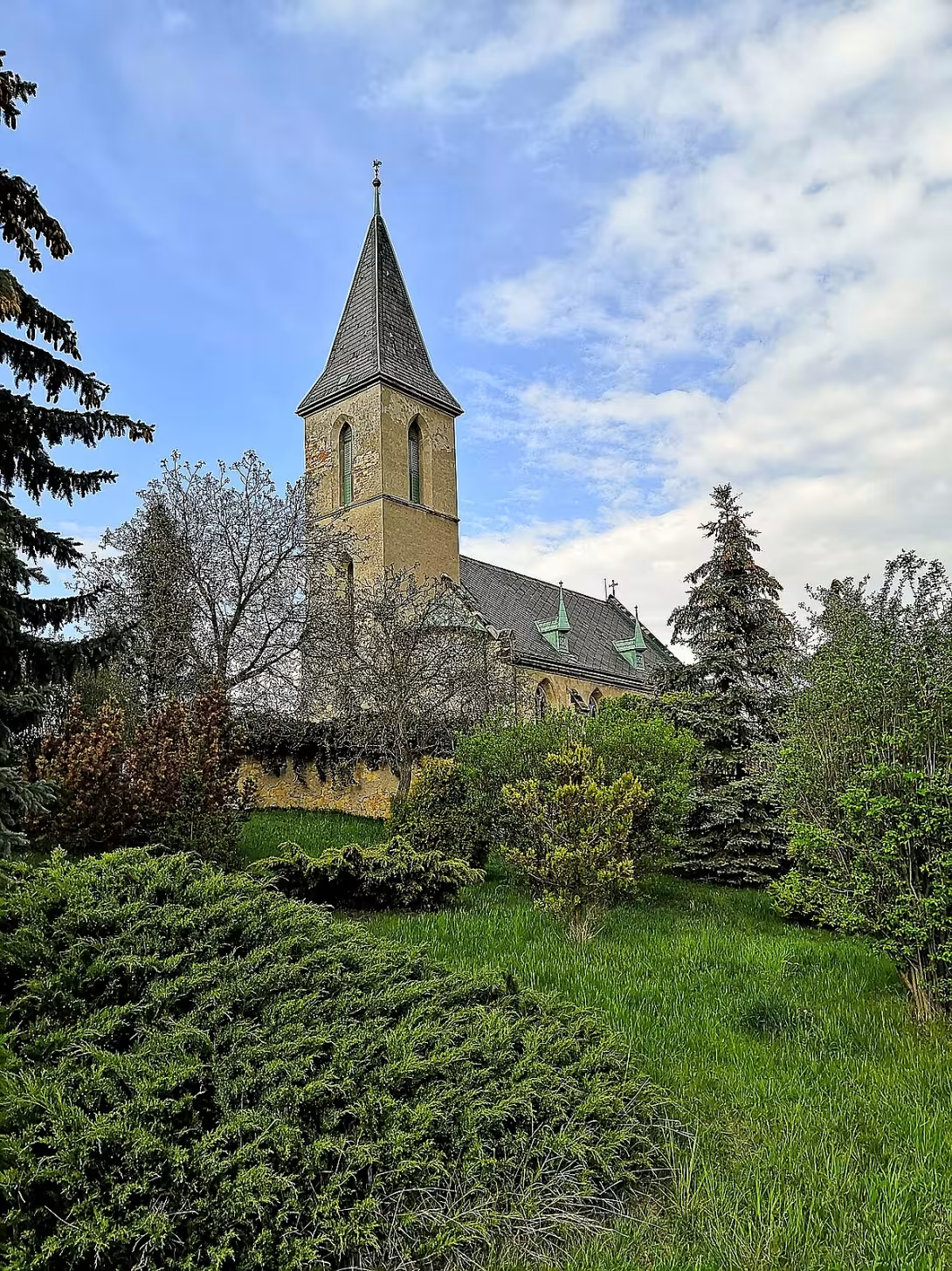
Kostel Narození Panny Marie in Páleč is a notable historical monument showcasing early Gothic architecture and religious history in the Czech Republic. Built in 1333 under Prague Bishop Jan z Dražic's commission, this filial church with a tribune style was originally donated to the Augustinian Canons' Monastery in Roudnice. Its cultural monument status highlights its significance.
The origins of Kostel Narození Panny Marie date back to the early 14th century, during significant religious and political changes in Bohemia. Constructed amid the rise of Gothic architecture and Catholic influence across Central Europe, it reflects the architectural trends and ecclesiastical priorities of that era.
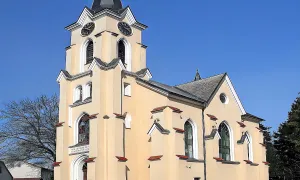
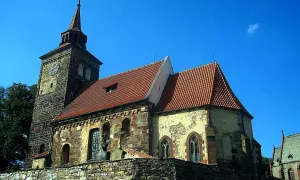
Architecturally, the church is distinguished by its early Gothic style, preserved through a major reconstruction in 1889. This restoration maintained its original Gothic appearance while introducing new polychromed interiors and pseudo-Gothic furnishings. The exterior features a single-nave structure with a western tower and an eastern presbytery. Notably, the west façade includes a four-story tower with a portal featuring a pointed arch, topped by a broken cornice. This façade also showcases three windows with pronounced Gothic elements like tracery and pinnacles. The southern façade mirrors this design, featuring an entrance portal used today for access.
Ownership of Kostel Narození Panny Marie has changed several times throughout its history. Initially under the Augustinian Canons' Monastery in Roudnice, it fell into non-Catholic hands during the Hussite Wars due to the loss of a parish in Velký Páleč. In 1706, the Metropolitan Chapter of Prague acquired the church.
Key events include its acquisition by the Metropolitan Chapter of Prague and the 1889 reconstruction efforts that preserved its Gothic character. Additionally, a nearby Renaissance bell tower was demolished in 1901, with its bells relocated to the church's belfry.
Today, Kostel Narození Panny Marie stands as an accessible cultural monument, inviting visitors to explore its rich history and architectural beauty. The polychromed interior, featuring pseudo-Gothic elements, offers a glimpse into its storied past. Its historical significance and preserved Gothic features make it a worthwhile destination for those interested in Czech heritage and ecclesiastical architecture.
Visiting Kostel Narození Panny Marie provides an opportunity to connect with the architectural and religious history of the region. Its enduring presence as a cultural monument underscores its importance, making it a must-see site for anyone exploring the historical landscapes of the Czech Republic.
Then and now
Drag the slider to compare how the landmark may have looked when it was built with the view today.
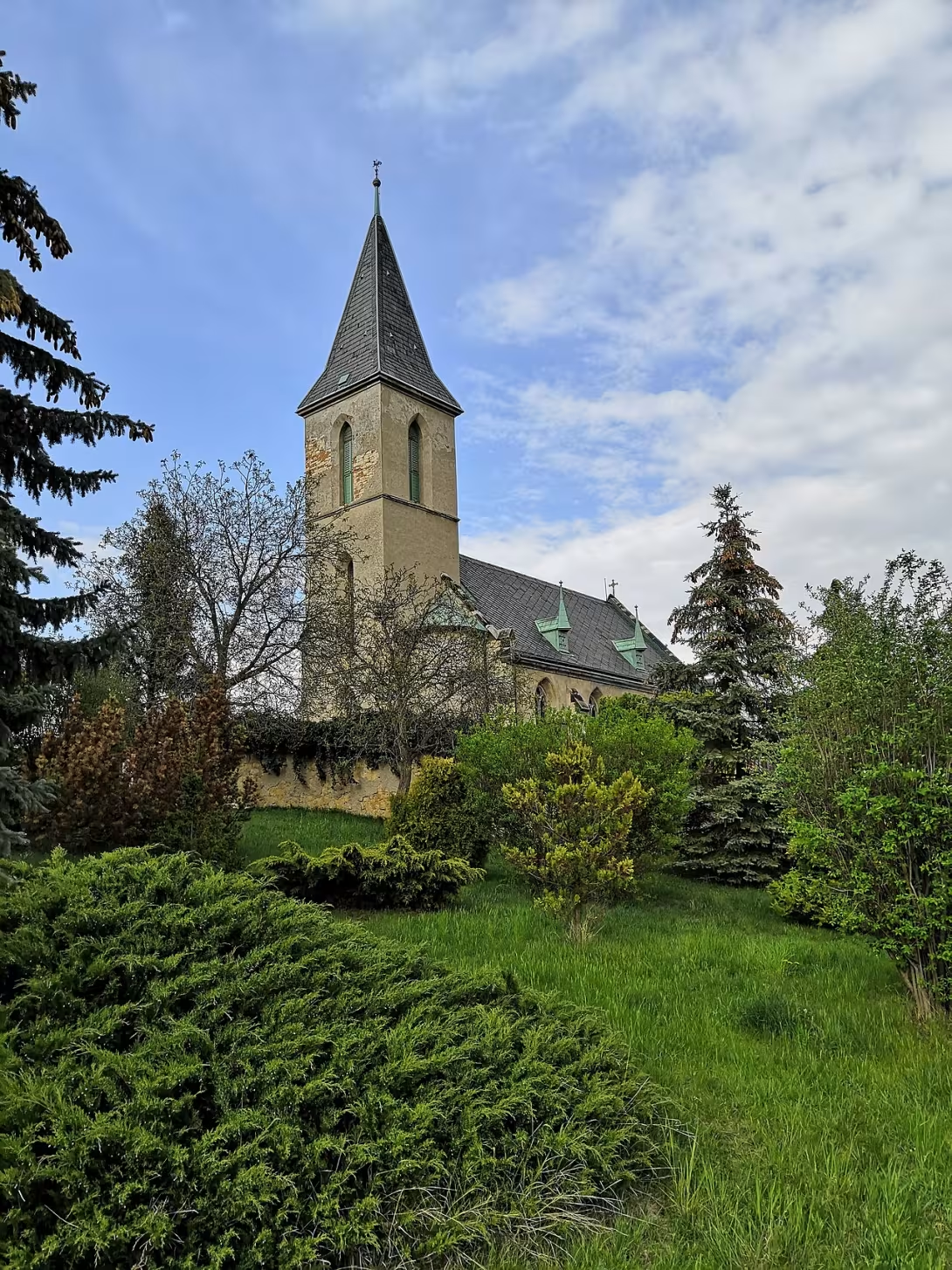

The historical appearance on the left is an AI-generated visualisation and serves as inspiration only.
Historical milestones
- 1333
- Construction of the church began under Bishop Jan z Dražic.
- 1706
- The Metropolitan Chapter of Prague acquired the church.
- 1889
- Reconstruction to preserve Gothic appearance and new furnishings added.
Architectural development
The church was originally built in early Gothic style and later underwent a reconstruction in 1889, which aimed to restore its original Gothic look. During this period, it received polychromed interiors and new pseudo-Gothic furnishings. A Renaissance bell tower that stood nearby was demolished in 1901.
Historical events
Constructed in 1333 under Bishop Jan z Dražic's commission.
Acquired by the Metropolitan Chapter of Prague in 1706.
Reconstructed in 1889 to preserve its Gothic appearance.
Owners
Initially owned by the Augustinian Canons' Monastery in Roudnice; passed to non-Catholic residents during the Hussite Wars; acquired by the Metropolitan Chapter of Prague in 1706.
Points of interest
- The church's west façade features a unique four-story tower with a pointed arch portal and a broken cornice, reflecting the distinctive Gothic architectural style prevalent in early 14th-century Bohemia.
- During the Hussite Wars, Kostel Narození Panny Marie fell into non-Catholic hands due to the loss of its parish in Velký Páleč, highlighting the turbulent religious shifts during that period.
- A nearby Renaissance bell tower was demolished in 1901, and its bells were relocated to the church's belfry, showcasing a blend of historical architectural elements within the site.
- The 1889 reconstruction introduced polychromed interiors with pseudo-Gothic furnishings, blending original Gothic styles with newer artistic influences from that era.
- Initially donated to the Augustinian Canons' Monastery in Roudnice, the church's ownership shifted significantly over time, reflecting broader historical and ecclesiastical changes in the region.
Guide
This guide is narrated by a synthetic voice generated by artificial intelligence.
Show guide text
This text was created by artificial intelligence and has not been editorially reviewed. It may contain inaccuracies.
Welcome to the historic site of Kostel Narození Panny Marie in Páleč, a remarkable testament to Gothic architecture and centuries of history. As you stand before this venerable structure, take a moment to absorb its grandeur. The church’s west façade captivates with its unique four-story tower, featuring a pointed arch portal topped by a broken cornice—a distinctive hallmark of the early 14th-century Bohemian Gothic style.
The story of this church begins in 1333 when it was commissioned by Prague Bishop Jan z Dražic. Its construction marked an era rich in religious and architectural development, with the church originally intended as a donation to the Augustinian Canons' Monastery in Roudnice. Over time, Kostel Narození Panny Marie has witnessed significant transformations, including its acquisition by the Metropolitan Chapter of Prague in 1706 and a major reconstruction in 1889. This restoration aimed to preserve its original Gothic appearance while introducing new furnishings.
As you explore this site, notice how the architecture weaves history into every detail. The church's design reflects not only aesthetic choices but also the cultural and religious currents of its time. Imagine standing here during the Hussite Wars when the church fell into non-Catholic hands—a period that shaped much of Bohemia’s historical landscape.
Jan z Dražic, a significant figure in the church's history, played a crucial role in its establishment. His vision brought this architectural gem to life, embedding it with spiritual and cultural significance that endures today.
One intriguing aspect of Kostel Narození Panny Marie is its resilience through turbulent times. Its survival and continued presence tell stories of adaptation and preservation efforts spanning centuries. This church stands as a silent witness to the ebb and flow of history in this region, inviting you to ponder its past while enjoying its serene beauty.
As your journey through Kostel Narození Panny Marie continues, I encourage you to explore further, imagining the lives that have passed through these sacred walls. Each step offers new insights into a rich tapestry of history and architecture. Thank you for joining me on this exploration, and may your visit be as enlightening as it is inspiring.
Tips for visitors
The best time to visit the Church of the Nativity of the Virgin Mary in Páleč is during late spring or early autumn when the weather is pleasant, allowing you to comfortably explore both the church and its surroundings. These seasons offer mild temperatures and beautiful natural scenery, enhancing your experience as you appreciate the historical architecture without the discomfort of summer heat or winter cold.
Alternatively, public transport is accessible, and checking current routes via a search engine will help you plan your journey efficiently. This flexibility makes it easy for both locals and tourists to visit the church.
When planning your visit, consider bringing comfortable walking shoes, especially if you intend to explore the surrounding area of Páleč. A camera is also recommended to capture the unique architectural details of the church, particularly during the golden hours of early morning or late afternoon when natural light beautifully illuminates its features. Additionally, carrying a water bottle and some snacks can enhance your visit, keeping you refreshed throughout.
For families with children, Páleč offers a serene environment to explore history together. The Church of the Nativity of the Virgin Mary provides an educational experience for older children interested in architecture or history. Nearby, within 30 minutes, visitors can enjoy nature walks and discover local flora and fauna, making it an ideal spot for family outings that combine learning with leisure.
Photography enthusiasts will find several spots around the Church of the Nativity of the Virgin Mary where lighting is particularly favorable. The east-facing façade catches the morning sun beautifully, while the west side offers stunning sunset views. Inside, natural light filtering through stained glass windows creates a captivating atmosphere perfect for photography.
Frequently asked questions
Can the monument be visited?
Religious buildings are usually open mainly during services; at other times a visit is normally arranged with the parish or the operator. We have not verified specific times.
Where is the monument?
Location: Páleč, Středočeský kraj. The map on this page shows the exact spot.
Why is the monument protected?
It is listed in the Central List of Cultural Monuments of the Czech Republic as a cultural monument (register no. 34420/2-554).
Businesses nearby
Do you run a restaurant, accommodation, shop, museum, rental, wellness or other visitor service near this monument? Show yourself directly to the people heading to it — this is how they will see you in the app and on the web:
Events nearby

Zdroj akcí: otevřená data měst a obcí ČR (Národní katalog otevřených dat) a kalendář akcí Národního památkového ústavu.
Accommodation nearby
Themed route
Tematická výletní trasa: Kostel Narození Panny Marie (Páleč)
1. Kostel Narození Panny Marie, Páleč
- Typ: Historický kostel
- Proč stojí za návštěvu: Tento barokní kostel je centrem kulturního dědictví obce Páleč. Jeho architektura a historie přitahují všechny, kteří mají zájem o středoevropskou sakrální umění. Vnitřek kostela je domovem bohatého nábytku a duchovních obrazů.
2. Kaple svaté Anny, Páleč
- Typ: Kaple
- Proč stojí za návštěvu: Tato kaple je známá pro svou klidnou atmosféru a historický význam. Je ideálním místem pro odpočinek a reflexi, zatímco si užíváte přírodní krásy okolního prostředí. Kaple sloužila jako duchovní centrum pro místní obyvatele po staletí.
3. Obecní nádraží, Páleč
- Typ: Historické nádraží
- Proč stojí za návštěvu: Navzdory svému relativně malému rozsahu je toto nádraží důležitým historickým místem, které odráží dopravní význam Pálče v minulosti. Je ideálním místem pro pochopení regionální infrastruktury a jejího rozvoje.
4. Pamětihodný strom, obec Páleč
- Typ: Historické dřevo
- Proč stojí za návštěvu: Tento starobylý strom je nejen přírodním monumentem, ale také často sloužil jako místním legendám a pověstem. Návštěva tohoto místa nabídne jedinečný pohled na spojení mezi přírodou a lidovou tradicí.
Tato trasa vás provede skrze klíčové historické a kulturní body obce Páleč, poskytujíc hluboký vhled do jejího dědictví a krásy.
Seasonal recommendations
Spring: The arrival of spring at the Church of the Nativity of the Virgin Mary in Páleč brings a refreshing transformation to the surrounding landscape, with blooming wildflowers and budding trees creating a picturesque backdrop for visitors. The soft, warm light of early morning or late afternoon enhances the church's architectural details, casting gentle shadows that accentuate its historical beauty. During this season, it is advisable to dress in layers as temperatures can vary significantly between day and night. Spring mornings may still be cool, so bringing a light jacket or sweater is wise. With fewer tourists compared to summer, spring offers an ideal time for those seeking a quieter experience while enjoying the church's serene atmosphere amidst nature's renewal.
Summer: Summer at Páleč is characterized by vibrant greenery and long daylight hours that illuminate the Church of the Nativity of the Virgin Mary in its full glory. The lush landscape surrounding the church provides a stunning natural setting, perfect for outdoor photography or leisurely walks after exploring the interior. Given the peak tourist season, it's recommended to visit early in the morning or later in the afternoon to avoid larger crowds and enjoy a more tranquil experience. Comfortable walking shoes and light clothing are essential due to warmer temperatures, and carrying water is advisable to stay hydrated during your visit.
Autumn: Autumn offers a magical ambiance at Páleč as the Church of the Nativity of the Virgin Mary is enveloped in warm hues of red, orange, and gold. The changing leaves create a stunning contrast with the church's historic architecture, making it an ideal time for photography enthusiasts. Cooler temperatures mean visitors can comfortably explore without the need for heavy clothing; however, bringing a light jacket is recommended as evenings can be chilly. Autumn tends to have fewer tourists than summer, providing a more peaceful setting to appreciate the church and its surroundings.
Winter: The Church of the Nativity of the Virgin Mary in Páleč takes on an enchanting character during winter, with snow-covered landscapes offering a serene and almost ethereal atmosphere. The soft light filtering through snow enhances the church's architectural features, creating a unique visual experience. Visitors should dress warmly in insulated layers to stay comfortable while exploring, as temperatures can be quite low, especially in shaded areas or on windy days. Despite potentially fewer visitors, winter provides a quiet and reflective opportunity to appreciate the church's historical significance amidst the tranquility of a snowy setting.
Visualizations and artistic views


The visualisations are generated by artificial intelligence and serve as inspiration.
Photos from the area
Real photos taken near the monument


Zdroj a licence jsou uvedeny u každého snímku.
Tips from visitors
No tips yet. Be the first!
Log in and add your tip.
Sources and literature
Photos: Michail Nužnyj / CC BY-SA 4.0 — Wikimedia Commons. The author and licence also appear when you hover over the image.
Faktickým podkladem tohoto textu byl článek na Wikipedii, jehož autory jsou přispěvatelé Wikipedie. Článek je dostupný pod licencí CC BY-SA 4.0.
Location on the map
Příběhy a pověsti
Legendy, pověsti a příběhy spjaté s touto památkou
Fotografie návštěvníků
Zatím žádné fotografie. Buďte první, kdo přidá fotografii z návštěvy!
Log in a přidejte svou fotografii nebo hodnoťte.
Za ověřenou návštěvu v aplikaci získáte víc bodů — poznáme podle GPS, že jste na místě.
Reviews and comments