






kostel Narození Panny Marie ve Štípě Church
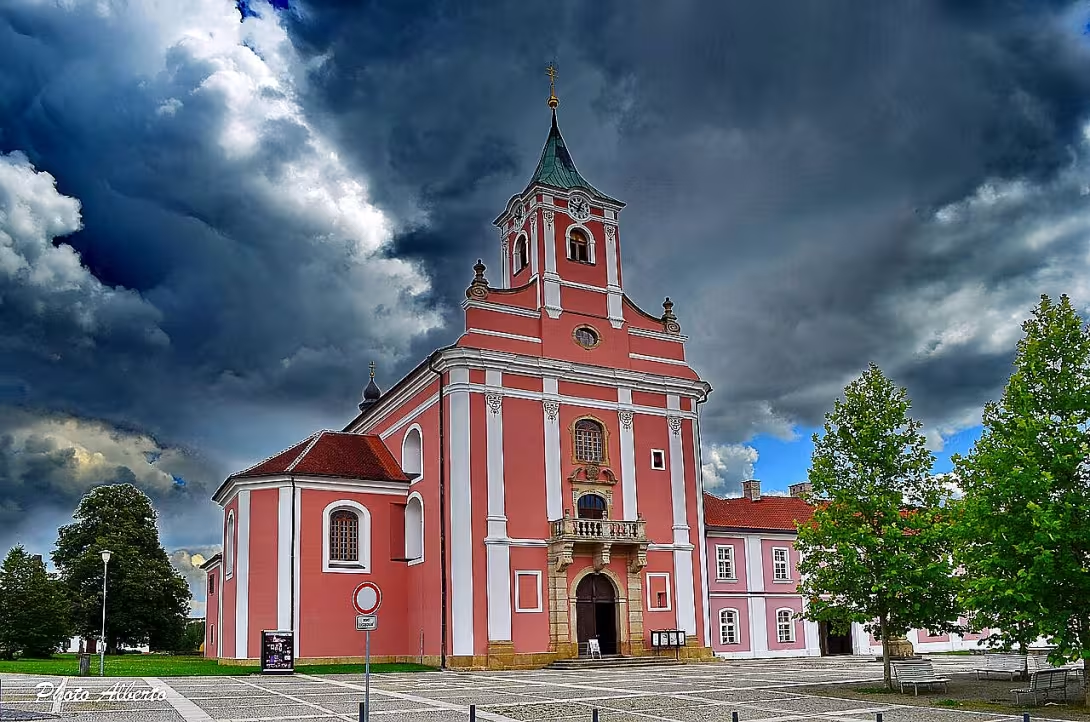
The Church of the Nativity of the Virgin Mary in Štípa is a significant Marian pilgrimage site located in eastern Moravia near Zlín. This baroque church houses the revered statue of Our Lady of Štípa and forms part of an architectural ensemble that includes its adjacent monastery, sculptural decorations around the church, and a group of protected linden trees. Pilgrimages to this sacred site date back to the 14th century, highlighting its longstanding religious importance.
The origins of the Church trace back to the early 17th century when Albrecht z Valdštejna, a prominent nobleman and owner of the Lukov estate, founded both the monastery and church. This initiative was inspired by his first wife, Lukrécie Nekšovna z Landeka, who died in 1614 and wished for such a religious establishment. The founding charter for the monastery was issued in 1617, marking an important milestone. Albrecht commissioned Italian artists to construct the new church and monastery between 1615 and 1620. However, due to historical events like the Thirty Years' War, construction progressed slowly until the Seilern family acquired the estate in 1724. Under their guidance, Moravian architect Ignác Josef Cyrani completed the Baroque church, which was consecrated in 1765 with a gathering of 35,000 pilgrims.
Architecturally, the Church is characterized by its baroque style and single nave design. The interior features significant artistic elements such as a glass case housing the statue of Our Lady of Štípa on the main altar, flanked by sculptures of saints Cyril and Methodius, Francis Seraphicus, and Norbert. Additional statues include those of Saint Joseph, Saint Anne, Saint Joachim, and Saint Elizabeth in the apse behind the altar. The church's ceiling is adorned with paintings depicting scenes from the life of the Virgin Mary, while a crossway path dating back to 1905 enhances its spiritual ambiance. Notably, during the 18th and 19th centuries, the church served as a burial site for the Seilern family, with a prominent marble tombstone dedicated to Count Christian August Seilern located on the right side of the nave.
Ownership and administration of the Church have seen several transitions over the centuries. Initially under Albrecht z Valdštejna's ownership in the 17th century, it later passed through various hands, including the Minkvicové family during the tumultuous period of the Thirty Years' War. The Seilern family played a crucial role in its development and preservation until they acquired the estate in 1724. Today, the church is managed by the local parish of Štípa, under the jurisdiction of the Vizovice deanery and the Olomouc archdiocese.
In contemporary times, the Church remains a vibrant site for religious devotion and cultural heritage. Regular services are held four times weekly, with the main pilgrimage occurring on the weekend closest to September 8th, celebrating the Nativity of the Virgin Mary. The church is accessible to the public daily from May through September as part of the Open Gates project, inviting visitors to explore its rich history and artistic treasures. Adjacent to the church, the monastery is currently managed by the Carmelite order since 1996, further enhancing the spiritual atmosphere of this historic site.
The Church of the Nativity of the Virgin Mary in Štípa offers a unique glimpse into the religious and cultural heritage of eastern Moravia. Its baroque architecture, historical significance, and enduring tradition as a pilgrimage destination make it an invaluable landmark worth visiting for those interested in history, art, and spirituality.
Then and now
Drag the slider to compare how the landmark may have looked when it was built with the view today.
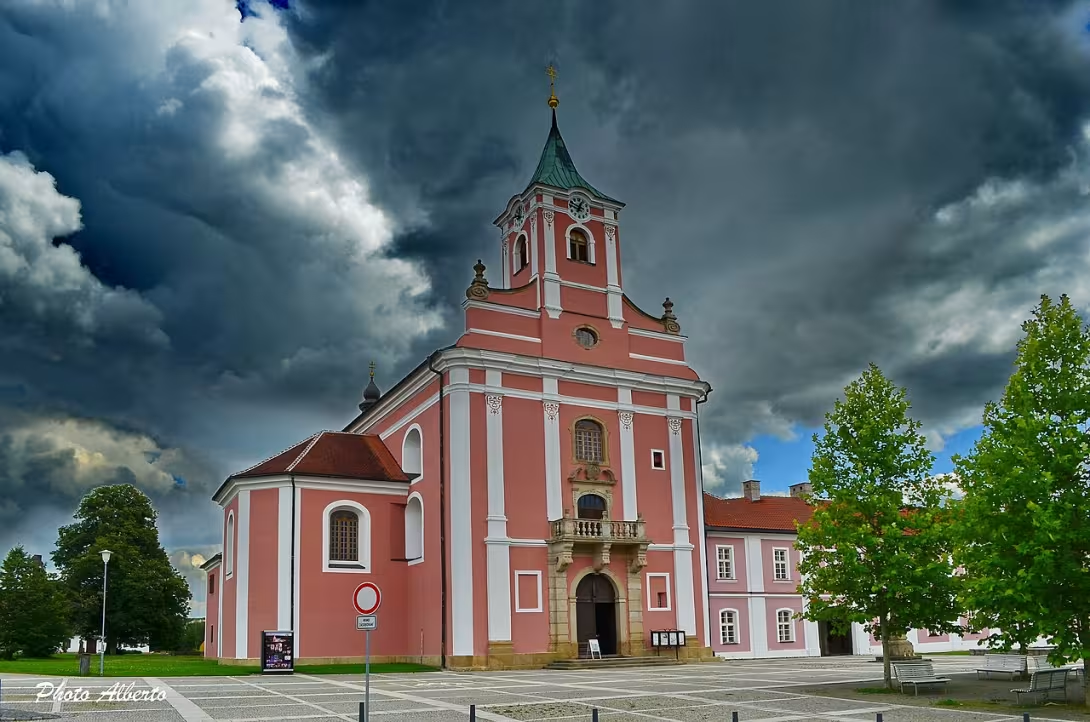
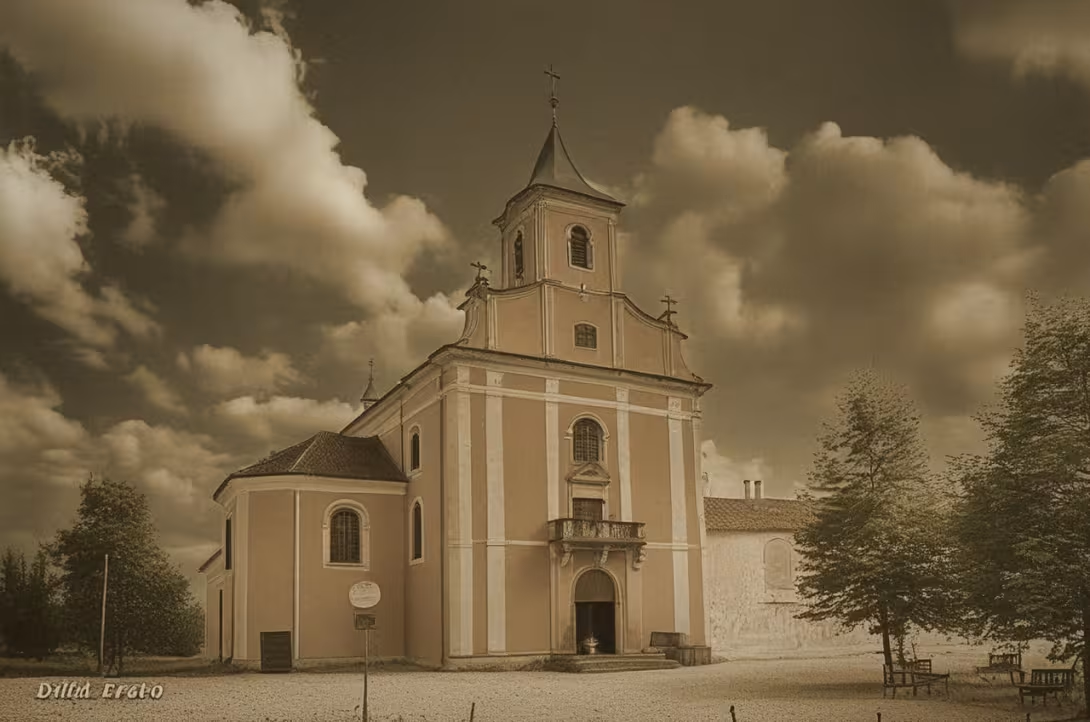
The historical appearance on the left is an AI-generated visualisation and serves as inspiration only.
Historical milestones
- 1617
- The founding charter for the monastery was issued.
- 1765
- The Baroque church was consecrated with a large gathering of pilgrims.
Architectural development
Initially, a chapel was built to protect the statue of Our Lady of Štípa. After its secularization, Albrecht z Valdštejna commissioned Italian artists in 1615-1620 to construct a new church and monastery. The Baroque church was completed under the guidance of Moravian architect Ignác Josef Cyrani by the Seilern family.
Historical events
The tradition of pilgrimages to the sacred statue of Our Lady of Štípa dates back to the 14th century.
In the late 18th century, during Josephine reforms, the original church was secularized and closed.
The current Baroque church was consecrated in 1765 with the participation of 35,000 pilgrims.
Owners
The estate was initially owned by Albrecht z Valdštejna in the 17th century, who founded the monastery and church. After his death, ownership passed through various hands including the Minkvicové family during the Thirty Years' War, until the Seilern family acquired it in 1724.
Points of interest
- The statue of Our Lady of Štípa is believed to have miraculous powers and has been credited with numerous healings and answered prayers throughout history.
- During the Thirty Years' War, the church was severely damaged by Swedish troops in 1643. Legend says that a local peasant woman saved the statue from destruction by hiding it under her apron, leading to the survival of this important religious icon.
- The sculptural decorations around the church include unique Baroque elements that depict various saints and biblical scenes, some of which were crafted using techniques brought by Italian artists commissioned by Albrecht z Valdštejna.
- The group of protected linden trees surrounding the church is said to have been planted as part of a vow made by pilgrims seeking blessings or healing. These trees are considered sacred and contribute to the site's serene atmosphere.
- In 1905, a crossway path was constructed leading up to the church, which includes stations depicting scenes from Christ’s Passion. This addition enhanced the spiritual journey for pilgrims visiting Štípa.
Guide
This guide is narrated by a synthetic voice generated by artificial intelligence.
Show guide text
This text was created by artificial intelligence and has not been editorially reviewed. It may contain inaccuracies.
Welcome to the historic Church of the Nativity of the Virgin Mary in Štípa, a cherished Marian pilgrimage site nestled in eastern Moravia. As you stand here, take a moment to absorb the serene presence of this sacred place, surrounded by its architectural companions—the monastery and the picturesque sculptural decorations that grace the church's surroundings. Notice how the graceful linden trees, protected for their beauty, form an intimate circle around this spiritual haven.
The story of this remarkable site begins in 1617 when a founding charter was issued to establish the monastery here. This initiative marked the start of a journey that would see Štípa become a beacon of faith and devotion. By 1765, the Baroque church you see before you was consecrated amidst a large gathering of pilgrims, cementing its place as a spiritual landmark.
As you gaze upon the church's architecture, let your eyes wander over its Baroque elements—a style that speaks to an era of grandeur and artistic flourish. The church is not just a structure but a vessel for history and faith, housing the revered statue of Our Lady of Štípa. This cherished icon has drawn countless pilgrims seeking solace and miracles.
The church's past intertwines with significant historical figures, such as Albrecht z Valdštejna, whose influence in this region is part of its storied legacy. During the tumultuous times of the Thirty Years' War, the church faced adversity when it was severely damaged by Swedish troops in 1643. Yet, legend tells us of a local peasant woman who heroically saved the sacred statue from destruction—a testament to the enduring spirit that defines Štípa.
One of the most captivating aspects of this site is the belief surrounding the statue of Our Lady of Štípa. Throughout history, it has been credited with miraculous healings and answered prayers, a beacon of hope for many who have come seeking divine intervention.
As you continue to explore this sacred space, let yourself be enveloped by its rich tapestry of faith, resilience, and beauty. Each stone and sculpture carries the whispers of those who walked these grounds before you, inviting reflection and connection.
We invite you to delve deeper into Štípa's enchanting history, perhaps wandering through its monastery or simply sitting under the linden trees, absorbing the tranquility that surrounds you. Thank you for joining us on this journey through time and faith at the Church of the Nativity of the Virgin Mary. May your visit be filled with inspiration and peace.
Tips for visitors
The best time to visit the Church of the Nativity of the Virgin Mary in Štípa is during the spring or early autumn months. During these times, the weather is generally mild and pleasant, making it ideal for exploring both the church and its surroundings. Additionally, visiting in May coincides with many Marian celebrations, which can enhance your experience with special events and a vibrant atmosphere at this significant pilgrimage site.
Parking and transportation options are available for visitors to Štípa. The area is accessible by car, with parking facilities nearby, though it's advisable to check the current availability as spaces may be limited during peak times or events. Public transport can also be used to reach Štípa; however, specific routes and schedules should be verified through a transportation search tool prior to your visit.
When planning your visit, consider bringing comfortable walking shoes, especially if you intend to explore the church grounds and nearby linden trees. A camera is recommended for capturing the architectural beauty of the church and monastery. Given that lighting conditions can vary throughout the day, early morning or late afternoon visits are ideal for photography, as the soft light enhances the textures and details of the structures.
For families with children, Štípa offers a serene environment to explore together. The historic site itself provides an educational experience about local history and architecture. Nearby, you can spend time enjoying the natural beauty under the protected linden trees. While there are no specific family-oriented attractions within 30 minutes of Štípa mentioned in your provided context, the tranquil setting is perfect for a leisurely walk or picnic.
Businesses nearby
Do you run a restaurant, accommodation, shop, museum, rental, wellness or other visitor service near this monument? Show yourself directly to the people heading to it — this is how they will see you in the app and on the web:
Nearby
Nearby, there are protected linden trees and an adjacent monastery currently managed by the Carmelite order. The area is part of the Olomouc archdiocese.
Accommodation nearby
Trips and activities nearby
Guided tours, tickets and activities nearby from GetYourGuide
Affiliate link: if you buy from the partner, we may receive a commission. The price for you does not change.
Search tours and activities →Themed route
Thematic Tour Itinerary: Štípa, Zlín Region
1. **Church of the Nativity of the Virgin Mary (Church) Start your journey at this stunning Baroque church located in the heart of Štípa. Known for its intricate architecture and historical significance within the Olomouc archdiocese, it offers a glimpse into the rich religious heritage of the area. The church's beautiful interior is adorned with exquisite frescoes and altarpieces that captivate visitors.
2. **Protected Linden Trees (Natural Site) A short walk from the church will lead you to the nearby protected linden trees, a serene natural site offering tranquility and shade. These ancient trees are part of Štípa's cherished green spaces, providing an ideal spot for reflection or a leisurely stroll amidst nature’s beauty.
3. **Carmelite Monastery (Monastic Site) Adjacent to the linden grove lies the Carmelite monastery, currently managed by the Carmelite order. This spiritual retreat offers visitors a chance to explore its peaceful grounds and learn about the monastic life that has been an integral part of Štípa's community for centuries. The monastery is known for its architectural charm and serene atmosphere.
4. **Monastery Grounds (Exploration Site) Spend some time wandering through the expansive grounds of the Carmelite Monastery. This area provides a perfect setting to appreciate the harmonious blend of nature and architecture, with well-maintained gardens and quiet pathways inviting contemplation and relaxation.
5. **Nádvoří (Courtyard) (Exploration Site) Conclude your visit at the monastery's courtyard, where you can enjoy panoramic views of the surrounding landscape. The nádvoří serves as a gathering space that reflects the historical and cultural essence of Štípa, offering visitors a final moment to absorb the tranquility and beauty of this remarkable locale.
This itinerary offers an enriching exploration of Štípa's religious and natural heritage, providing insights into its architectural wonders and serene landscapes.
Seasonal recommendations
Spring: Visiting the Church of the Nativity of the Virgin Mary in Štípa during spring offers a serene atmosphere as nature begins to awaken. The surrounding landscape is adorned with blooming flowers, providing a picturesque backdrop that enhances the church's historical charm. This season often sees fewer visitors compared to summer, allowing for a more tranquil experience. It's advisable to dress in layers, as temperatures can vary throughout the day. Early mornings or late afternoons are ideal times to visit when lighting is soft and shadows add depth to the church’s architecture.
Summer: In the height of summer, the Church of the Nativity of the Virgin Mary basks in long daylight hours, offering perfect conditions for photography with its natural light illuminating the intricate details. However, this season also attracts more visitors due to favorable weather, so it's wise to arrive early or later in the day to avoid crowds. Comfortable walking shoes and light clothing are recommended, as temperatures can be quite warm. Don't forget sunscreen and a hat if you plan on exploring the surrounding areas.
Autumn: Autumn brings a magical transformation to Štípa with vibrant foliage that creates a stunning contrast against the church's historic facade. The cooler weather makes for pleasant strolls around the area, and the softer light of late afternoon can cast beautiful hues over the building. This is an excellent time for photography enthusiasts seeking dramatic landscapes. As days become shorter, it’s best to plan your visit earlier in the day. Layered clothing will help you stay comfortable as temperatures drop.
Winter: The church takes on a majestic appearance during winter, with snow often adding a touch of enchantment to its surroundings. However, colder temperatures and potential snowfall mean that visitors should dress warmly in coats, hats, gloves, and sturdy boots. Keep in mind that the church may have shorter opening hours due to the season, so it's important to check ahead. The quieter atmosphere during this time allows for a peaceful exploration of the site, with less foot traffic compared to other seasons.
Visualizations and artistic views


The visualisations are generated by artificial intelligence and serve as inspiration.
Photos from the area
Real photos taken near the monument


Zdroj a licence jsou uvedeny u každého snímku.
Tips from visitors
No tips yet. Be the first!
Log in and add your tip.
Sources and literature
Fotografie: Albertophoto21 / CC BY-SA 4.0 — Wikimedia Commons. The author and licence also appear when you hover over the image.
Faktickým podkladem tohoto textu byl článek na Wikipedii, jehož autory jsou přispěvatelé Wikipedie. Článek je dostupný pod licencí CC BY-SA 4.0.
Location on the map



Příběhy a pověsti
Legendy, pověsti a příběhy spjaté s touto památkou

Fotografie návštěvníků
Zatím žádné fotografie. Buďte první, kdo přidá fotografii z návštěvy!
Přihlaste se a přidejte svou fotografii nebo hodnoťte.
Za ověřenou návštěvu v aplikaci získáte víc bodů — poznáme podle GPS, že jste na místě.
Reviews and comments