



zámek Lešná (Štípa) Chateau
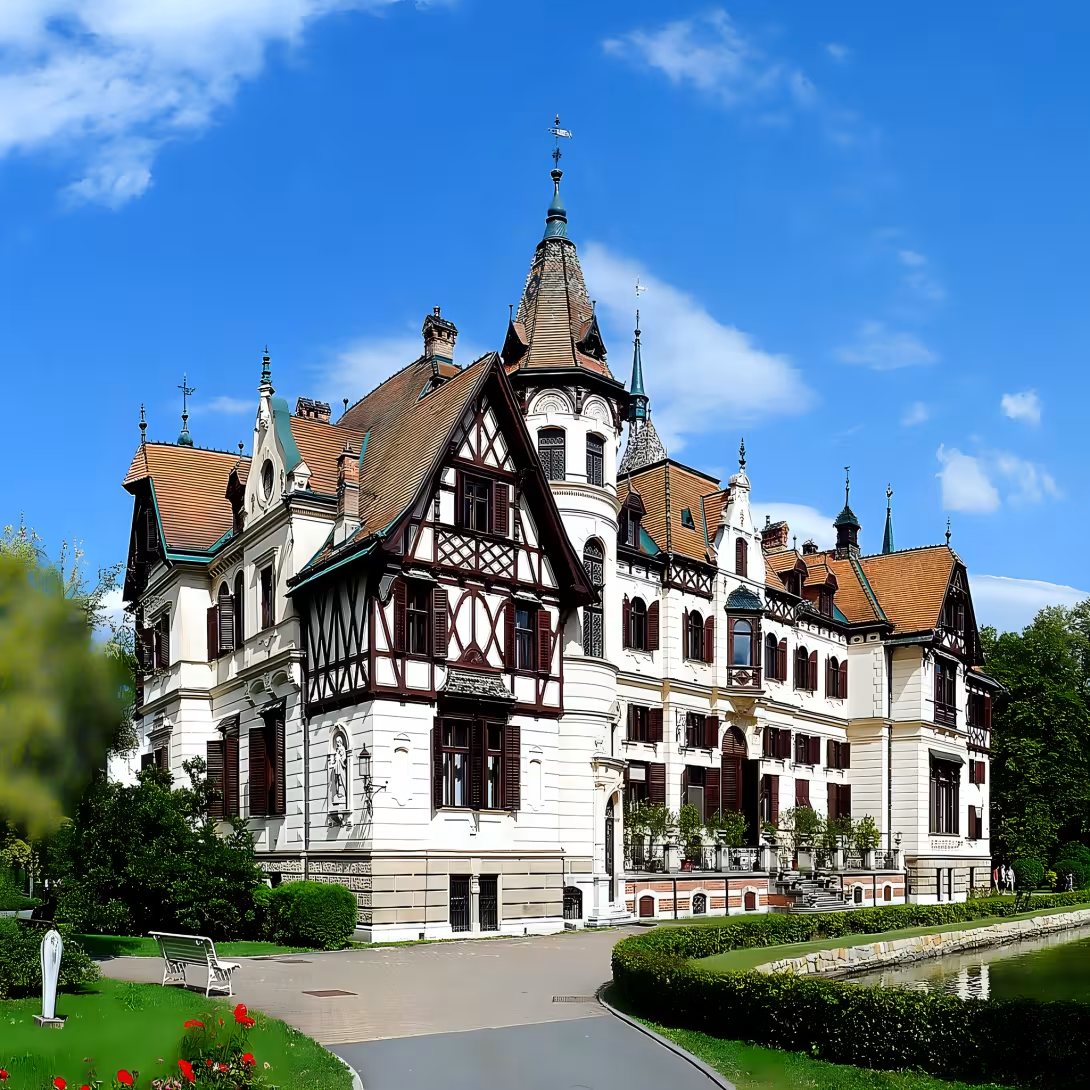
Zámek Lešná, located in Štípa, Zlín region of the Czech Republic, is a historical monument showcasing architectural evolution and aristocratic heritage. Originally constructed for the Seilern family between 1804 and 1810, it was later transformed into its current historicist form from 1887 to 1894. The castle's significance lies in its rich history, architectural transformation, and cultural importance during the Austro-Hungarian Empire.
The origins of Zámek Lešná are linked to the decline of Hrad Lukov, which became uninhabitable by 1793. In response, Count Josef Jan Seilern initiated the construction of a new baroque-style manor on a wooded hill known as Lešná in 1804. This estate served as a comfortable and representative residence for the Seilern family, marking a shift from their previous château. The castle's early years were marked by notable visits, including that of Austrian writer Franz Grillparzer in 1813.
Architecturally, Zámek Lešná underwent significant changes over time. The original baroque manor was demolished in 1887 to make way for a new structure designed by Johann Mick and completed by Viktor Siedek after Mick's death in 1890. This historicist castle featured modern amenities such as central heating, electricity, hot and cold running water, an indoor plumbing system, and even a domestic telephone. The design included multiple wings with various functional spaces: the ground floor housed representative areas and living quarters, while the first floor contained family rooms and guest accommodations.
Ownership of Zámek Lešná remained with the Seilern family until 1945 when they were forced to leave Czechoslovakia due to post-war property reforms. The estate was confiscated by the state, and today it is owned by the city of Zlín. Despite these changes in ownership, the castle continues to be a site of historical interest.
Throughout its history, Zámek Lešná served as a hub for social gatherings and hunting parties attended by aristocrats from across the Austro-Hungarian Empire. Its advanced amenities and strategic location made it an ideal venue for such events, reflecting the lifestyle and status of its owners during that era.
Today, Zámek Lešná is situated within a zoological garden in Štípa, surrounded by landscaped gardens and parklands that were part of the original estate design. The castle's collections are managed by the National Heritage Institute, ensuring their preservation for future generations. Visitors can explore this architectural gem to gain insight into its historical significance and appreciate its transformation over time.
Zámek Lešná offers a unique glimpse into the past, showcasing the evolution of architecture and aristocratic life in the Czech Republic. Its rich history and preserved collections make it a worthwhile destination for those interested in exploring cultural heritage. Visitors are invited to experience this remarkable site and discover the stories embedded within its walls.
Then and now
Drag the slider to compare how the landmark may have looked when it was built with the view today.
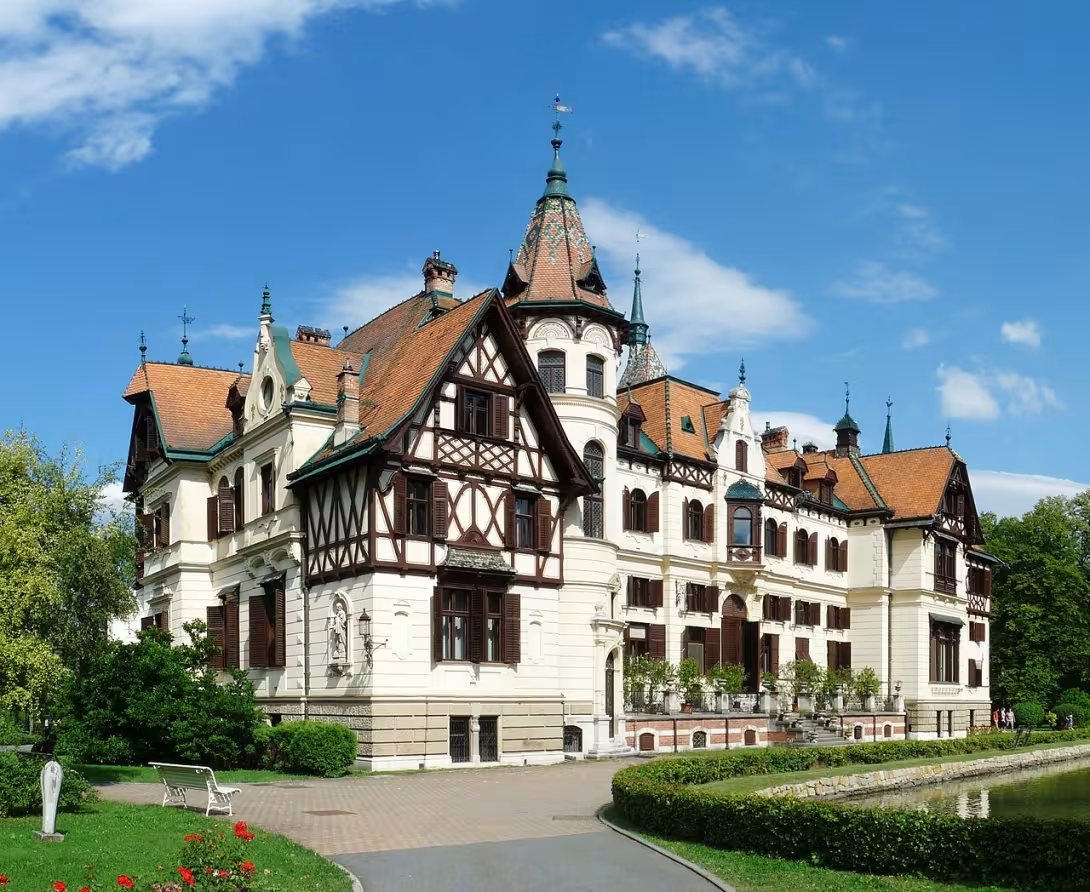

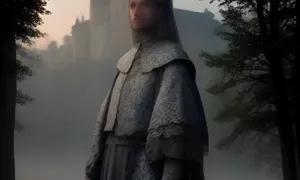
The historical appearance on the left is an AI-generated visualisation and serves as inspiration only.
Historical milestones
- 1813
- The renowned Austrian writer Franz Grillparzer stayed at the castle.
- 1887
- Decision made to demolish the original baroque-style manor.
Architectural development
The original baroque-style manor, constructed between 1804 and 1810, featured a single-story building with an attached wing. In 1887, it was demolished to make way for a new historicist castle designed by Johann Mick and completed by Viktor Siedek after Mick's death in 1890. The new structure included modern amenities such as central heating and electricity.
Historical events
1804-1810: Construction of the original baroque-style manor began under Count Josef Jan Seilern.
1887-1894: Reconstruction into a new historicist style castle designed by Johann Mick and Viktor Siedek.
1945: The estate was confiscated from the Seilern family during post-war property reforms.
Owners
Originally built for the Seilern family in the early 19th century, the estate was confiscated from them in 1945 when they were forced to leave Czechoslovakia. The castle is currently owned by the city of Zlín.
Points of interest
- Although Zámek Lešná is renowned for its architectural transformation, it was originally built on the site of an older estate that became uninhabitable, reflecting a common practice of repurposing land in European aristocratic history.
- The castle's early years included a visit from Austrian writer Franz Grillparzer in 1813, highlighting its cultural significance as a gathering place for notable figures during the Austro-Hungarian Empire.
- Despite its grandeur and modern amenities like central heating and electricity, Zámek Lešná was confiscated by the state after World War II due to post-war property reforms, illustrating the dramatic shifts in ownership that many aristocratic estates experienced during this period.
- The castle's strategic location on a wooded hill not only provided a picturesque setting but also made it an ideal venue for hunting parties, reflecting the leisure activities favored by the Austro-Hungarian aristocracy.
- Today, Zámek Lešná is surrounded by a zoological garden and landscaped parklands, showcasing how historical estates can be repurposed to serve contemporary cultural and recreational purposes.
Guide
This guide is narrated by a synthetic voice generated by artificial intelligence.
Show guide text
This text was created by artificial intelligence and has not been editorially reviewed. It may contain inaccuracies.
Lešná Castle in Štípa, a district of Zlín, was once the seat of the Seilern counts. It acquired its present appearance in the historicizing style between 1887 and 1894. It is located within the grounds of the Zlín zoological garden. The building belongs to the city of Zlín, while the castle furniture and collections are owned by the state and managed by the National Heritage Institute.
The story of Lešná begins at the nearby Lukov Castle. Count Jan Fridrich of Seilern-Aspangu purchased the Lukov estate in 1724 and moved the administrative offices from the deteriorating castle to the village. From 1793 the castle was uninhabited, and by 1804 it was already listed as a ruin. The Seilerns therefore sought a more comfortable and representative residence.
Count Josef Jan Seilern chose a forested hillside called Lešná. In 1804 he established a pheasantry there, and in 1806 a new castle rose within it, with the count's chambers on the first floor. Soon stables, a coach house and landscaping of the surrounding area were added. Josef Jan Seilern completed the Baroque castle between 1809 and 1810 and had another wing with a tower built onto it. In 1813, the Austrian writer and dramatist Franz Grillparzer stayed here.
In 1887, František Seilern decided to demolish the old castle and build a new one in its place. It was designed by the Viennese architect Johann Mick. After his death in 1890, Viktor Siedek took over the work.
The new castle became the principal residence of the family and offered all the comforts of its time. It had central heating, electricity and plumbing with both hot and cold water. It was equipped with spacious bathrooms, flush toilets and an internal pipe telephone system. The basement contained utility and service rooms, the ground floor housed ceremonial and living spaces. The first floor belonged to the owner's family, while guests stayed in the attic.
At the turn of the nineteenth and twentieth centuries, the castle with its surrounding buildings, park and game reserve formed a unique architectural and natural complex. Hungarian relatives would visit, neighbors from nearby castles and nobility from many parts of the Austro-Hungarian monarchy. Dozens of guests would gather here for grand autumn hunts.
The Seilerns owned the castle until 1945. Then their property was confiscated and the family had to move to Austrian Litschau.
Tips for visitors
The best time to visit Zámek Lešná is during the late spring or early autumn months, from May to September. During these periods, the surrounding gardens and parklands are lush and vibrant, offering a picturesque setting for your visit. The weather is generally mild, making it comfortable for exploring both indoors and outdoors. Additionally, visiting in these months allows you to avoid the peak tourist season, providing a more tranquil experience.
It's advisable to check the latest schedules and routes using a transportation app or website before your visit to ensure smooth travel plans.
When visiting Zámek Lešná, it’s recommended to bring comfortable walking shoes as there are extensive grounds to explore. A hat and sunscreen can be useful during sunny days, while an umbrella or raincoat might be necessary if the weather is unpredictable. Additionally, carrying a camera will allow you to capture the stunning architecture of the castle and the beauty of its gardens.
For photography enthusiasts, some of the best spots within Zámek Lešná include the main entrance and the landscaped gardens that offer various angles of the castle against natural backdrops. The soft light during early morning or late afternoon provides ideal conditions for capturing the estate’s baroque architecture in a flattering manner.
Nearby, within about 30 minutes from Zámek Lešná, you can visit the charming town of Štípa itself, which offers local shops and cafes. For families with children, the adjacent zoological garden is an excellent place to explore, providing educational opportunities and entertainment for all ages.
Frequently asked questions
Can the monument be visited?
Some buildings of this kind are open for guided tours, others serve another purpose or are privately owned. We have not verified whether and when this monument is open – please ask the operator.
What are the opening hours and admission?
We have not verified the opening hours or admission. Current information is published by the operator.
Where is the monument?
Location: Lešná (areál) 112, Štípa, Zlín, Zlínský kraj. The map on this page shows the exact spot.
Why is the monument protected?
It is listed in the Central List of Cultural Monuments of the Czech Republic as a cultural monument (register no. 22230/7-1943).
Businesses nearby
Do you run a restaurant, accommodation, shop, museum, rental, wellness or other visitor service near this monument? Show yourself directly to the people heading to it — this is how they will see you in the app and on the web:
Events nearby
Zdroj akcí: otevřená data měst a obcí ČR (Národní katalog otevřených dat) a kalendář akcí Národního památkového ústavu.
Nearby
Zámek Lešná is situated within a zoological garden in Štípa. The surrounding area includes landscaped gardens and parklands that were part of the estate's original design.
Accommodation nearby
Trips and activities nearby
Guided tours, tickets and activities nearby from GetYourGuide
Affiliate link: if you buy from the partner, we may receive a commission. The price for you does not change.
Search tours and activities →Themed route
Tematická výletní trasa zámek Lešná (Štípa)
1. Zámek Lešná
Typ: Zámek
Proč stojí za návštěvu: Zámek Lešná je krásným příkladem barokní architektury, který byl v minulosti sídlem šlechtické rodiny. Jeho historie a bohaté interiéry nabízejí návštěvníkům pohled na život z doby, kdy byla Štípa centrem moci a vlivu.
2. Zoologický zahrada
Typ: Zoologický park
Proč stojí za návštěvu: Rozlehlé prostory zoologické zahrady nabízejí možnost setkání s různorodou faunou. Je to ideální místo pro rodiny a milovníky zvířat, kde mohou učit se o přirozeném prostředí a chovu divokých druhů.
3. Landskapední zahrady
Typ: Parklandy
Proč stojí za návštěvu: Původně navržené jako součást šlechtického majetku, tyto zahrady jsou krásným příkladem pečlivého a uměleckého zahradního designu. Jsou ideálním místem pro relaxaci a procházky v klidné a esteticky působivé atmosféře.
4. Parková oblast
Typ: Parklandy
Proč stojí za návštěvu: Přirozený park kolem zámku nabízí širokou škálu aktivit od krásné procházky po piknik. Jeho přírodní prostředí je perfektním místem k užívání venkovního klidu a pohledů na okolní krajinu.
Tato trasa nabízí návštěvníkům komplexní zážitek, který spojuje historii, přírodu a umění v jednom harmonickém celku.
Seasonal recommendations
Spring: Visiting Zámek Lešná during spring offers a picturesque setting as the surrounding landscape bursts into life with blooming flowers and lush greenery, creating an enchanting atmosphere perfect for photography. The gentle warmth of the season brings out vibrant colors in nature, enhancing the beauty of the castle grounds. It's advisable to wear comfortable layers that can be adjusted to the changing temperatures throughout the day. While spring is a popular time for visitors, arriving early in the morning can help avoid larger crowds and provide a more serene experience.
Summer: Summer at Zámek Lešná is characterized by long daylight hours, allowing ample time to explore both the castle's interiors and its expansive gardens. The warm weather enhances the outdoor experience, making it ideal for leisurely walks or picnics amidst nature. However, this season also attracts more visitors, so planning your visit during weekdays can help avoid peak times. Wearing light clothing and comfortable shoes is recommended, along with bringing a hat and sunscreen to protect against the sun.
Autumn: The autumn months transform Zámek Lešná into a stunning tapestry of reds, oranges, and yellows as the leaves change color. This season offers a unique charm with its cooler temperatures and crisp air, making it an excellent time for photography enthusiasts seeking dramatic landscapes. While fewer visitors are present compared to summer, it's still wise to arrive early to enjoy the castle in relative tranquility. Layered clothing is advisable to accommodate the fluctuating weather conditions typical of autumn.
Winter: Winter at Zámek Lešná presents a magical atmosphere with snow-covered grounds and festive decorations that evoke a sense of wonder. The shorter daylight hours mean it's best to visit early, as some areas may close sooner in the day. Visitors should dress warmly, wearing coats, hats, gloves, and sturdy boots to navigate potentially icy paths comfortably. Despite fewer visitors during this season, the castle's charm is enhanced by its serene winter setting, offering a peaceful retreat from the hustle and bustle of holiday festivities elsewhere.
Visualizations and artistic views


The visualisations are generated by artificial intelligence and serve as inspiration.
Photos from the area
Real photos taken near the monument


Zdroj a licence jsou uvedeny u každého snímku.
Tips from visitors
No tips yet. Be the first!
Log in and add your tip.
Sources and literature
Photos: Czeva / CC BY-SA 3.0, rozlišení zvýšeno umělou inteligencí — Wikimedia Commons. The author and licence also appear when you hover over the image.
Faktickým podkladem tohoto textu byl článek na Wikipedii, jehož autory jsou přispěvatelé Wikipedie. Článek je dostupný pod licencí CC BY-SA 4.0.
Location on the map

Příběhy a pověsti
Legendy, pověsti a příběhy spjaté s touto památkou
Fotografie návštěvníků
Zatím žádné fotografie. Buďte první, kdo přidá fotografii z návštěvy!
Log in a přidejte svou fotografii nebo hodnoťte.
Za ověřenou návštěvu v aplikaci získáte víc bodů — poznáme podle GPS, že jste na místě.
Reviews and comments