



Kostel Narození svatého Jana Křtitele (Kublov) Church
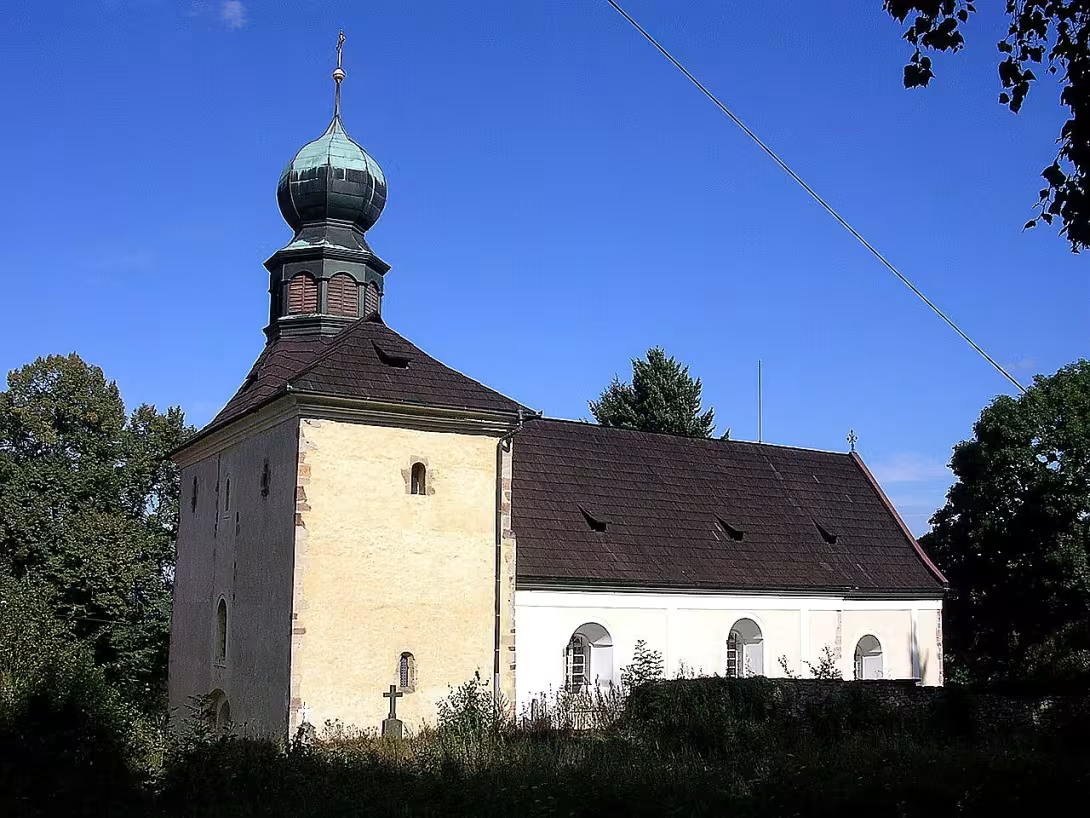
The Church of the Nativity of Saint John the Baptist in Kublov is a significant cultural monument located on Velíz hill near the village of Kublov. Constructed around the mid-13th century, it showcases early Gothic and Baroque architectural styles due to various transformations over time. Initially replacing an earlier chapel dedicated to Saint John the Baptist, this church was part of a monastery destroyed during the Hussite Wars. Its historical importance is underscored by its status as a protected cultural monument in the Czech Republic.
The origins of the Church trace back to an early chapel founded around 1003 by Duke Jaromír. This structure was established as gratitude for his rescue from an attack by the Vršovci clan, highlighting its medieval roots and religious significance. By the mid-13th century, this chapel evolved into a more complex church within a Benedictine monastery. The monastery declined in the 14th century and was destroyed during the Hussite Wars around 1425, leaving only the church.
Architecturally, the church began as a simple early medieval chapel before transforming by the mid-13th century. Its original design featured early Gothic elements, later altered during Baroque renovations between 1770 and 1774. These changes included adding a parsonage and modifying its facade, resulting in a blend of Gothic and Baroque styles that define its current appearance. The church features a single nave with a rectangular presbytery, retaining a Gothic portal and vaulting from its original construction.
Throughout history, the Church has had various owners and administrators. Initially part of a Benedictine monastery, it survived after the monastery's destruction during the Hussite Wars. Baroque renovations in the late 18th century included architectural enhancements and adding a parsonage. In the late 20th century, restoration efforts led by academic sculptor Karel Stádník uncovered rare fresco fragments.
Several key events are associated with the church's history. The original chapel was founded as an act of thanksgiving by Duke Jaromír, marking its early significance. The monastery's destruction during the Hussite Wars is pivotal, leading to the church's survival and transformations. Additionally, late 20th-century restoration efforts led by Karel Stádník are noteworthy for preserving the church's historical integrity.
Today, the Church of the Nativity of Saint John the Baptist remains an accessible cultural monument, attracting visitors interested in its rich history and architectural beauty. Its blend of Gothic and Baroque styles offers a unique glimpse into the region's past, while its status as a protected site underscores its importance to Czech heritage. The church is situated near Kublov village, surrounded by natural landscapes that enhance its appeal for those seeking historical insight and scenic beauty.
Visiting this monument provides an opportunity to explore a significant piece of Bohemian history, offering insights into the architectural and cultural developments of medieval Europe. Its preservation efforts highlight the dedication to maintaining such sites for future generations, making it a worthwhile stop for anyone interested in exploring Czech historical landmarks.
Then and now
Drag the slider to compare how the landmark may have looked when it was built with the view today.
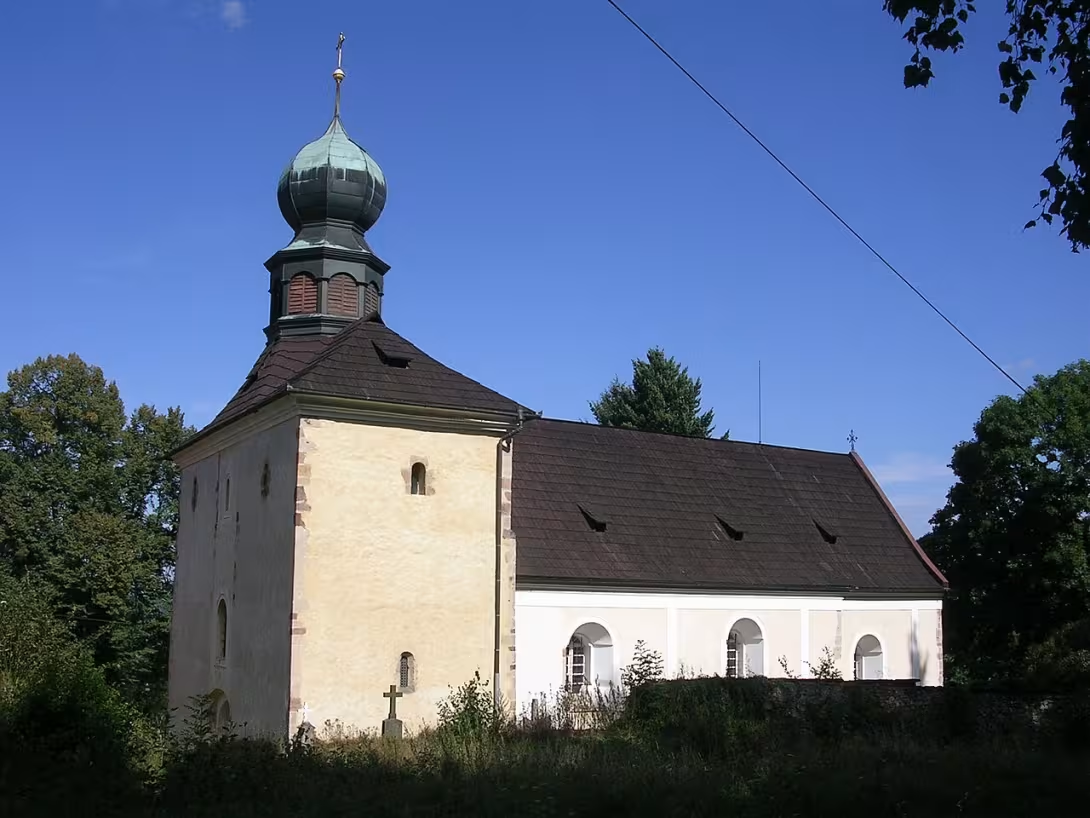

The historical appearance on the left is an AI-generated visualisation and serves as inspiration only.
Historical milestones
- 1003
- Založení kaple svatého Jana Křtitele knížetem Jaromírem.
- kolem 1250
- Transformace kaple na komplexnější kostel v rámci benediktinského kláštera.
- 1425
- Zničení kláštera během husitských válek, přežil pouze kostel.
- 1770-1774
- Barokní renovace s architektonickými úpravami a přidáním fara.
- koncem 20. století
- Obnova vedena akademickým sochařem Karel Stádník, objevení freskových fragmentů.
Architectural development
The church began as a simple chapel in the early medieval period. By the mid-13th century, it had evolved into a more complex structure, becoming part of a Benedictine monastery. Following its destruction during the Hussite Wars, significant baroque renovations were carried out between 1770 and 1774, which included the addition of a parsonage. The church underwent further restoration in the late 20th century.
Historical events
The original chapel was founded by Duke Jaromír around 1003 as a thanksgiving for his rescue from an attack by the Vršovci clan.
In the mid-14th century, the monastery associated with the church declined and was eventually destroyed during the Hussite Wars in 1425.
Points of interest
- The Church of the Nativity of Saint John the Baptist in Kublov was originally founded as a chapel by Duke Jaromír around 1003, following his miraculous escape from an attack by the Vršovci clan, highlighting its deep medieval roots and connection to personal gratitude.
- During the Hussite Wars, the monastery associated with the church was destroyed around 1425, but remarkably, the church itself survived. This survival allowed it to undergo significant architectural transformations over the centuries, blending Gothic and Baroque styles.
- In a surprising twist of history, late 20th-century restoration efforts led by academic sculptor Karel Stádník uncovered rare fresco fragments within the church, providing valuable insights into its artistic heritage that were previously unknown or hidden from view.
- The church's architectural journey includes a significant Baroque renovation between 1770 and 1774, during which a parsonage was added and its facade modified, showcasing how historical events influenced its evolving design.
- Despite being part of a monastery that no longer exists, the Church of the Nativity of Saint John the Baptist remains a protected cultural monument in the Czech Republic today, illustrating its enduring significance as both a religious site and a piece of national heritage.
Guide
This guide is narrated by a synthetic voice generated by artificial intelligence.
Show guide text
This text was created by artificial intelligence and has not been editorially reviewed. It may contain inaccuracies.
Welcome to the Church of the Nativity of Saint John the Baptist in Kublov, a remarkable cultural monument perched on Velíz hill. As you stand here, take a moment to absorb the serene yet profound atmosphere surrounding this historic site. The church's silhouette against the backdrop of the rolling landscape invites a sense of reverence and curiosity about its storied past.
The origins of this sacred place date back to around 1003 when Duke Jaromír founded a chapel dedicated to Saint John the Baptist. This act followed his miraculous escape from an attack by the Vršovci clan, marking the site with deep medieval roots tied to personal gratitude and divine intervention. Over time, the chapel evolved into a more complex structure as part of a Benedictine monastery around 1250, reflecting its growing significance in the region.
As you look upon the church today, notice how it has gracefully weathered centuries of change. The architecture bears witness to various transformations, most notably during the baroque renovations between 1770 and 1774. These changes introduced new architectural elements and a parish house, enhancing both the aesthetic and functional aspects of the building.
The church's resilience is particularly evident from its survival through the tumultuous Hussite Wars in 1425, when the monastery was destroyed but the church stood firm. This period left an indelible mark on its history, emphasizing themes of endurance and faith amidst adversity.
One cannot explore this site without acknowledging Karel Stádník, whose academic restoration efforts at the end of the 20th century uncovered fascinating fresco fragments. These discoveries have added layers to our understanding of the church's artistic heritage and historical narrative.
An intriguing aspect of this place is its connection to Duke Jaromír's personal story of survival and gratitude, which set the foundation for what you see today. This intertwining of personal history with architectural evolution makes Kublov a captivating study in resilience and transformation.
As you continue your exploration, allow yourself to be drawn into the layers of stories that this church holds. Each stone and fragment has witnessed centuries unfold, inviting you to delve deeper into its rich tapestry of history.
Thank you for joining us on this journey through time at the Church of the Nativity of Saint John the Baptist in Kublov. May your visit inspire a continued curiosity about the past and an appreciation for the stories that places like these hold. Safe travels as you continue your exploration, and we hope to see you again soon.
Frequently asked questions
Can the monument be visited?
Religious buildings are usually open mainly during services; at other times a visit is normally arranged with the parish or the operator. We have not verified specific times.
Where is the monument?
Location: Kublov, Středočeský kraj. The map on this page shows the exact spot.
Why is the monument protected?
It is listed in the Central List of Cultural Monuments of the Czech Republic as a cultural monument (register no. 24212/2-336).
Businesses nearby
Do you run a restaurant, accommodation, shop, museum, rental, wellness or other visitor service near this monument? Show yourself directly to the people heading to it — this is how they will see you in the app and on the web:
Events nearby
Zdroj akcí: otevřená data měst a obcí ČR (Národní katalog otevřených dat) a kalendář akcí Národního památkového ústavu.
Nearby
The church is situated near Kublov village, surrounded by natural landscapes. Nearby features include a parsonage and a cemetery with a mausoleum. The remnants of the former monastery are also in proximity.
Accommodation nearby
Themed route
Kublov Thematic Walking Tour
1. Kostel Narození svatého Jana Křtitele (Kublov) - Church Begin your journey at the heart of Kublov with this stunning Baroque church, dedicated to the Nativity of St. John the Baptist. This architectural gem is renowned for its intricate design and historical significance in the region. The church's serene atmosphere offers a perfect starting point to immerse yourself in local history.
2. Parsonage - Historical Building A short walk from the church, visit the charming parsonage situated within Kublov village. This historic building provides insight into the lives of past clergy and their families who served the community. Its well-preserved structure is a testament to traditional architecture and offers a glimpse into the daily life of bygone eras.
3. Cemetery with Mausoleum - Cemetery Explore the nearby cemetery, which features an intriguing mausoleum that adds a layer of historical depth to your visit. This site is not only significant for its resting souls but also offers a tranquil space for reflection amidst beautifully maintained grounds. The mausoleum itself holds stories from the past, making it a poignant stop on your tour.
4. Remnants of the Former Monastery - Historical Site Conclude your thematic walk by visiting the remnants of the former monastery close to Kublov. Although only ruins remain, they provide a fascinating glimpse into the monastic life that once thrived in this area. The site's historical significance is enhanced by its connection to the church and surrounding community, offering a comprehensive understanding of Kublov’s rich past.
This tour offers an enriching experience through Kublov's significant sites, each contributing uniquely to the village's cultural tapestry.
Seasonal recommendations
Spring: The arrival of spring at the Church of the Nativity of St. John the Baptist in Kublov brings a rejuvenating atmosphere as nature awakens around this historic site. With blooming flowers and fresh greenery, the church's surroundings are bathed in soft, natural light that enhances its architectural beauty. Visitors can enjoy serene walks through the nearby landscapes, which gradually fill with vibrant colors. It’s advisable to dress in layers, as temperatures can vary throughout the day. While spring is a quieter time for tourism compared to summer, it offers an ideal opportunity to explore without large crowds.
Summer: Summer at Kublov's church is characterized by long daylight hours and warm weather, making it perfect for exploring both the interior of the church and its picturesque surroundings. The lush greenery provides a stunning backdrop, and the vibrant light accentuates the historic details of the structure. This is the peak tourist season, so expect larger crowds, especially on weekends and holidays. To avoid the midday heat and long lines, consider visiting early in the morning or later in the afternoon. Comfortable walking shoes and light clothing are recommended.
Autumn: Autumn transforms Kublov into a tapestry of warm colors, with leaves turning shades of red, orange, and gold around the Church of St. John the Baptist. The cooler temperatures create a cozy atmosphere, ideal for leisurely strolls through the historic site. As the days shorten, lighting inside the church becomes softer and more intimate, enhancing its spiritual ambiance. This is a less crowded time to visit compared to summer, offering a peaceful experience. Dress warmly in layers, as evenings can be quite chilly.
Winter: In winter, Kublov's church presents a serene and almost mystical atmosphere under a blanket of snow. The stark beauty of the landscape contrasts with the warm glow from within the church, creating a magical setting for visitors. Snow-covered paths lead to the site, offering picturesque views perfect for photography. Winter is a quieter time for tourism, allowing for an undisturbed exploration of this historic gem.
Visualizations and artistic views


The visualisations are generated by artificial intelligence and serve as inspiration.
Photos from the area
Real photos taken near the monument


Zdroj a licence jsou uvedeny u každého snímku.
Tips from visitors
No tips yet. Be the first!
Log in and add your tip.
Sources and literature
Photos: cs:ŠJů / CC BY-SA 3.0 — Wikimedia Commons. The author and licence also appear when you hover over the image.
Faktickým podkladem tohoto textu byl článek na Wikipedii, jehož autory jsou přispěvatelé Wikipedie. Článek je dostupný pod licencí CC BY-SA 4.0.
Location on the map






Příběhy a pověsti
Legendy, pověsti a příběhy spjaté s touto památkou
Fotografie návštěvníků
Zatím žádné fotografie. Buďte první, kdo přidá fotografii z návštěvy!
Log in a přidejte svou fotografii nebo hodnoťte.
Za ověřenou návštěvu v aplikaci získáte víc bodů — poznáme podle GPS, že jste na místě.
Reviews and comments