



kostel Navštívení Panny Marie (Hluboké Mašůvky) Church
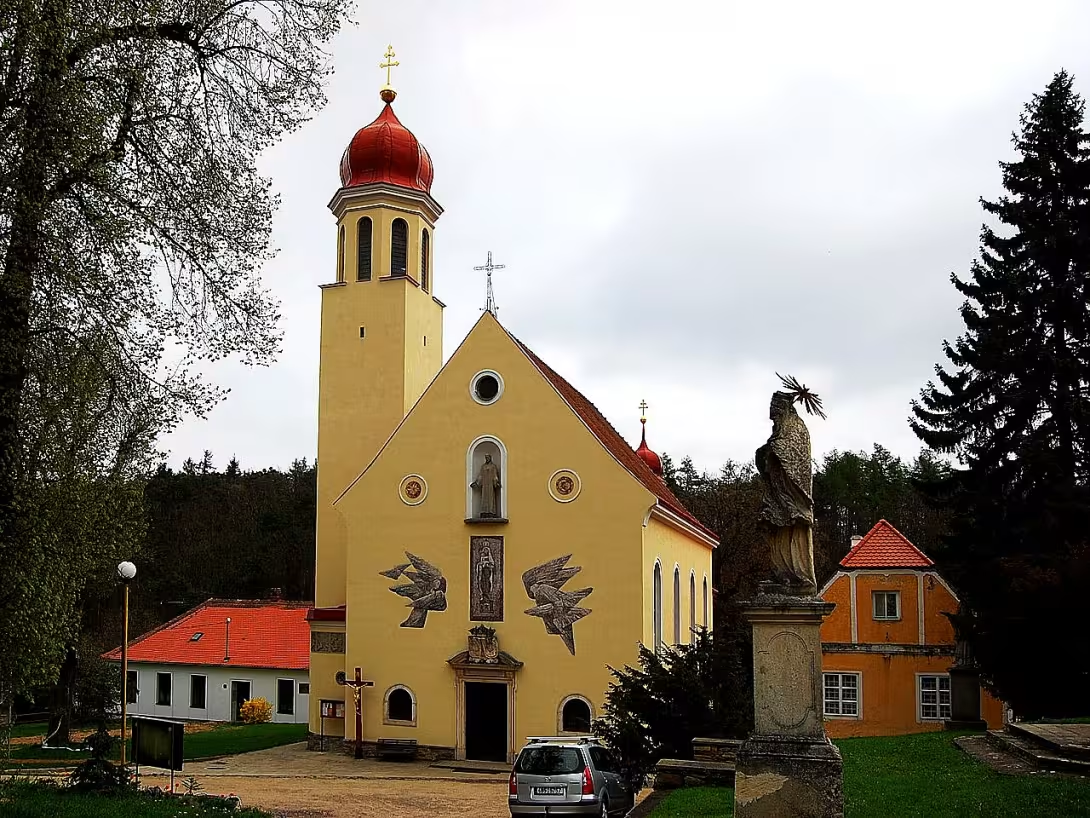
The Church of the Visitation of the Virgin Mary in Hluboké Mašůvky is a Roman Catholic church recognized as a cultural monument of the Czech Republic. Situated in the Znojmo District, this architectural gem blends baroque and modern elements. Constructed after 1680 to replace an earlier wooden chapel, it features a distinctive pentagonal chancel with a rectangular nave. Between 1948-1950, architect Theobald Krátký expanded the church by adding a hall with a spire. This combination of historical and modern artistic contributions makes it notable for visitors interested in religious history and architectural evolution.
The origins of this church date back to the late 17th century, during Europe's baroque period. An original stone chapel replaced an earlier wooden structure from before 1618. This change reflects a broader European trend towards more durable and elaborate churches due to religious fervor and practical needs. By mid-20th century, the church underwent significant transformation with its expansion between 1948 and 1950 as part of post-war efforts across Europe to rebuild and modernize structures.
Architecturally, the Church of the Visitation is notable for integrating baroque elements with mid-20th-century design innovations. Under Theobald Krátký’s direction, a more expansive structure replaced the original chapel's simple stone construction, adding both height and modernity. Standing at approximately 30 meters tall, it features an early baroque portal on its western facade, blending historical craftsmanship with newer artistic expressions. Above this portal is a modern sculpture of Christ by Jan Tomáš Fischer, adding contemporary flair to the traditional design. Relief symbols representing the four evangelists, also created by Fischer, are near the pulpit in the nave, enhancing the church’s artistic appeal.
Throughout its history, the Church has remained under the administration of the local Roman Catholic parish, serving as a central place of worship and community gathering. The mid-20th-century expansion marked a significant chapter in its development, reflecting broader architectural adaptation trends during that era. This period saw modern design elements integrated while preserving the church’s baroque heritage, ensuring continued relevance and functionality.
The church also features several artistic additions contributing to its cultural significance. A notable 1988 addition is a facade mosaic by Pavel Šlegl and Petr Štěpán, adding vibrant visual interest. In 2011, painter Milivoj Husák enhanced the western facade with symbols of night and day, symbolizing time's passage and the church’s enduring presence in the community.
Today, the Church of the Visitation stands as a testament to historical resilience and artistic innovation. It remains an active place of worship and is accessible to visitors exploring its rich architectural heritage and cultural significance. The blend of baroque foundations with modern contributions makes it compelling for those interested in religious history, architecture, or art.
The Church offers a unique glimpse into the evolving landscape of European church architecture. Its combination of historical depth and contemporary enhancements invites appreciation of its cultural and architectural significance. Whether drawn by its baroque roots or intrigued by modern artistic additions, this monument is well worth visiting for anyone exploring Czech history and culture.
Then and now
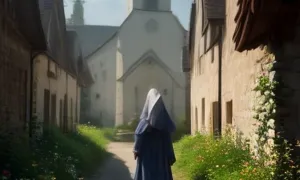
Drag the slider to compare how the landmark may have looked when it was built with the view today.
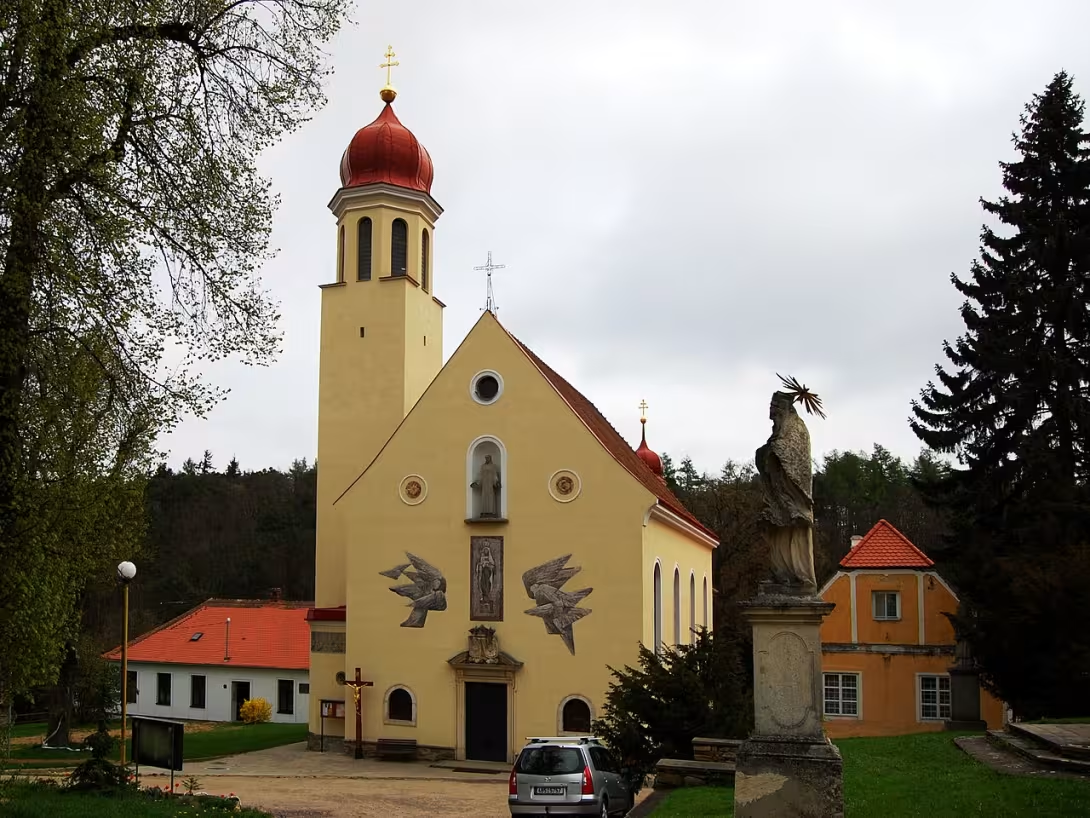

The historical appearance on the left is an AI-generated visualisation and serves as inspiration only.
Historical milestones
- 1680
- Construction of the original stone chapel.
- 1948-1950
- Expansion with a new hall and spire designed by Theobald Krátký.
Architectural development
Initially built as a simple stone chapel in the late 17th century, the church underwent significant expansion in the mid-20th century. A new hall with a spire was added between 1948 and 1950, following Theobald Krátký's architectural plans. This development introduced modern elements while preserving baroque features.
Historical events
The original stone chapel was constructed after 1680, replacing an earlier wooden structure.
Between 1948-1950, the church was expanded with a new hall and spire designed by Theobald Krátký.
Points of interest
- The Church of the Visitation's distinctive pentagonal chancel is a unique architectural feature not commonly found in other churches from its era, reflecting innovative design choices made during its construction.
- Architect Theobald Krátký’s mid-20th-century expansion included a spire that significantly altered the church’s skyline, making it one of the tallest structures in Hluboké Mašůvky and symbolizing post-war rejuvenation efforts.
- Jan Tomáš Fischer's modern sculpture of Christ above the baroque portal represents an intriguing blend of historical and contemporary art styles, highlighting a dialogue between past and present within the church’s architecture.
- The relief symbols of the four evangelists near the pulpit, also created by Jan Tomáš Fischer, are not only artistic embellishments but serve as didactic tools, teaching visitors about biblical narratives through visual representation.
- In 1988, the addition of a facade mosaic by Pavel Šlegl and Petr Štěpán introduced vibrant colors to the church’s exterior, marking an evolution in its artistic narrative that connects with broader trends in modern art.
Guide
This guide is narrated by a synthetic voice generated by artificial intelligence.
Show guide text
This text was created by artificial intelligence and has not been editorially reviewed. It may contain inaccuracies.
The Church of the Visitation of the Virgin Mary is a Roman Catholic parish church in Hlubokých Mašůvkách in the Znojmo region. It is protected as a cultural monument of the Czech Republic.
Its origins are connected with a natural spring. Before 1618, a wooden chapel already stood here. After 1680, it was replaced by a stone chapel with a five-sided chancel and a short nave with a rectangular ground plan. The church acquired its current appearance in the years 1948 to 1950, when it was enlarged according to the project of Theobald Krátký by adding a nave with a prismatic tower. It measures approximately 30 metres.
The reconstruction connected the old with the new. An original early Baroque portal was inserted into the new western facade. In a niche above it is a modern statue of Christ by Jan Tomáš Fischer. Relief symbols of the four evangelists above the pulpit at the corner of the nave also come from the same author.
The decoration of the facade was created later as well. In 1988, a mosaic was added to it, created by Pavel Šlegl and Petr Štěpán. In 2011, symbols of night and day by painter Milivoje Husák were added to it.
The history of the church also includes its music. František Bauer-Martinkovský played the organ here for 45 years.
Tips for visitors
The best time to visit the Church of the Visitation of the Virgin Mary in Hluboké Mašůvky is during late spring or early autumn, when the weather is pleasant and the surrounding countryside is lush with greenery. This period offers a serene atmosphere for exploring the church's architecture without the crowds that might be present during peak tourist seasons. Additionally, visiting on weekdays can provide a more tranquil experience.
It is advisable to check the latest schedules and routes via a transportation search engine or local travel websites.
When visiting the church, consider bringing comfortable walking shoes as you may want to explore the village and its surroundings on foot. A camera is recommended for capturing the beautiful architecture of the church and the picturesque landscapes around it. Additionally, carrying a light jacket might be useful as temperatures can vary throughout the day.
For photography enthusiasts, the best spots to capture the Church of the Visitation are from the front where you can appreciate its Romanesque architectural style in full view. Early morning or late afternoon light provides soft shadows and highlights that enhance the church's features. Exploring nearby areas like the village square may also offer unique perspectives.
Nearby, within a 30-minute drive, visitors can explore other cultural sites such as local museums or historical landmarks specific to the Jihomoravský kraj region. These locations provide additional context and enrich your understanding of the area's history and culture. For families with children, consider planning activities that include exploring nature trails or visiting nearby playgrounds to keep younger visitors engaged.
Frequently asked questions
Can the monument be visited?
Religious buildings are usually open mainly during services; at other times a visit is normally arranged with the parish or the operator. We have not verified specific times.
Where is the monument?
Location: Hluboké Mašůvky, Jihomoravský kraj. The map on this page shows the exact spot.
Why is the monument protected?
It is listed in the Central List of Cultural Monuments of the Czech Republic as a cultural monument (register no. 1000161765).
Businesses nearby
Do you run a restaurant, accommodation, shop, museum, rental, wellness or other visitor service near this monument? Show yourself directly to the people heading to it — this is how they will see you in the app and on the web:
Accommodation nearby
Themed route
Tematická výletní trasa: Hluboké Mašůvky a kostel Navštívení Panny Marie
1. Kostel Navštívení Panny Marie (Hluboké Mašůvky) - Typ: Kostel - Proč stojí za návštěvu: Tento barokní kostel je architektonickým zázrakem s bohatou historií. Jeho vnitřek nabízí krásné umělecké prvky a duchovní atmosféru, která přitahuje návštěvníky hledající klid i kulturní zážitek.
2. Nádvoří kostela Navštívení Panny Marie - Typ: Nádvoří - Proč stojí za návštěvu: Procházka po nádvoří umožňuje užít si klidné okamžiky a ocenit historické architektonické prvky, které ohraničují toto místo. Je ideální pro relaxaci a reflektování po návštěvě kostela.
3. Kaple u kostela - Typ: Kaple - Proč stojí za návštěvu: Kaple je menším, ale ne méně významným duchovním centrem, které nabízí intenzivnější atmosféru pro modlitbu a meditaci. Je vhodné pro ty, kteří hledají osobnější zážitek.
4. Park u kostela - Typ: Park - Proč stojí za návštěvu: Park nabízí příležitost pro krátké procházky nebo relaxaci v přírodě, což je ideální způsob, jak uzavřít svou návštěvu. Jeho klidné prostředí doplňuje duchovní a kulturní zážitek kostela.
Tato trasa nabízí komplexní pohled na hlavní památku Hlubokých Mašůvek, s možností prohloubení návštěvy prostřednictvím okolních duchovních a přírodních atrakcí.
Seasonal recommendations
A visit to the Church of Our Lady in Hluboké Mašůvky offers unique experiences throughout the year, with each season bringing its own specific atmosphere and beauty. In spring, the church appears surrounded by blooming flower beds, offering a beautiful green haven for relaxation and reflection. The morning sun illuminates the vaults of the church, highlighting its architectural details. Visitors should take advantage of the mild weather and bring along a warm coat for the morning chill, while typically lower visitor numbers allow for a more peaceful exploration.
Summer in Hluboké Mašůvky brings warm and sunny days that make the church an ideal escape from uncomfortable heat waves. The church becomes a cooler environment with its shady walkways and interior spaces where one can enjoy tranquility and gentle sounds. During peak summer season, it is recommended to visit early in the morning or late afternoon to avoid crowds of tourists. Warm clothing and sun protection are key for comfort during your visit.
Autumn brings melancholic beauty to Hluboké Mašůvky as tree leaves turn into golden and reddish hues, providing a picturesque backdrop for the church. The atmosphere is often calm with mild rains that can add a mystical feel to the historic setting. In this season, it is advisable to wear warm clothing and protective boots due to potential rainy conditions. Visitor numbers typically decrease, allowing for a more relaxed exploration of the church without unnecessary pressure.
Winter brings frosty and often snowy conditions to Hluboké Mašůvky, where the church becomes a refuge from the cold. Winter light creates dramatic contrasts on its walls and vaults, while snow provides a quiet and peaceful atmosphere. Warm clothing and protective boots are essential for comfort during the winter season, allowing you to enjoy the church in peace without many other visitors.
Visualizations and artistic views


The visualisations are generated by artificial intelligence and serve as inspiration.
Photos from the area
Real photos taken near the monument


Zdroj a licence jsou uvedeny u každého snímku.
Tips from visitors
No tips yet. Be the first!
Log in and add your tip.
Sources and literature
Photos: Ph-435 / CC BY-SA 3.0 — Wikimedia Commons. The author and licence also appear when you hover over the image.
Faktickým podkladem tohoto textu byl článek na Wikipedii, jehož autory jsou přispěvatelé Wikipedie. Článek je dostupný pod licencí CC BY-SA 4.0.
Location on the map



Příběhy a pověsti
Legendy, pověsti a příběhy spjaté s touto památkou
Fotografie návštěvníků
Zatím žádné fotografie. Buďte první, kdo přidá fotografii z návštěvy!
Log in a přidejte svou fotografii nebo hodnoťte.
Za ověřenou návštěvu v aplikaci získáte víc bodů — poznáme podle GPS, že jste na místě.
Reviews and comments