






Kostel Navštívení Panny Marie (Moldava) Church
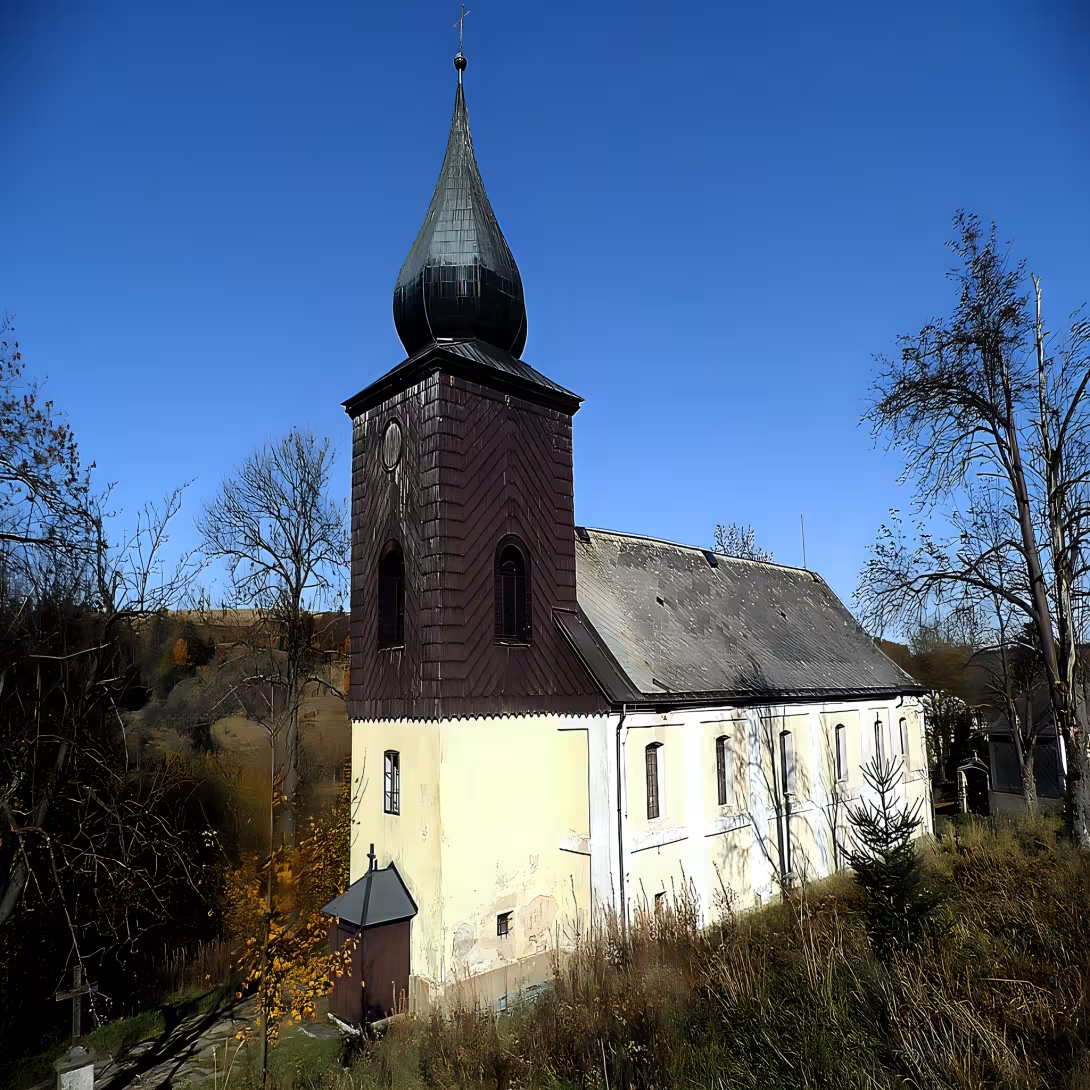
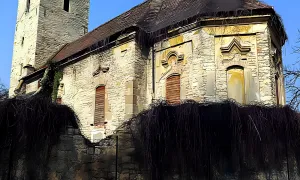
The Church Visit of the Virgin Mary in Moldova is a Roman Catholic parish church located on the western edge of the village, near the road and under the hill. The first documented in 1346 as a service to local glassmakers, this historical monument has undergone significant transformations for centuries. Originally probably built of wood, it was rebuilt in 1687 after Counter-Reformation, with other modifications in 1851. church, recognized for its cultural importance, is protected as a cultural monument since 1964.
The origin of the Church of Visits dates back to the mid-14th century when Moldava was part of the Czech Kingdom under the Holy Roman Empire. The church first appeared in historical records in 1346, serving local glassmakers who were at that time integral to the economy of the region. This period was characterised by significant religious and political changes throughout Europe, including the spread of the Hussite movement in Bohemia. At first it is likely that the wooden structure reflects early architectural procedures.
In 1687, after the counter-reformation, the church underwent a substantial reconstruction. The counter-Reformation was a key period that sought to reform the Catholic Church and counter the influence of the Protestant Reformation. This led to the reconstruction of the church in its original place, indicating a shift in religious practice as the locals who accepted Lutheranism returned to Catholicism. Until 1851, further architectural modifications were made to improve its structure and appearance.
Architectural is the church Visits characterized by their rectangular, single-boat design with three closed ends. Sacristy, square space is located behind Chancel, complements this arrangement. An important feature is the oblique roof covered with shingles, which is supplemented by bell decorated bulbus dome. Exterior includes the lesion wounds and segment window, which complements its distinctive appearance. Inside, the ship has a flat ceiling, while the presbytery boasts cross vaults. The interior is equipped with a pseudohorac style that reflects the stylistic influences of later periods.
During its history, the church was closely linked to the religious life of the local community. After the counter-Reformation, it became the focal point of Catholic worship in Moldova and served as evidence of the changing religious landscape of the region. The administration and maintenance of the church probably evolved over time and reflected wider historical trends and changes within the parish.
Key events in the history of the church include its first mention in 1346 and its reconstruction in 1687 after counter-reformation. These milestones emphasize the permanent presence and adaptation of the church to change religious dynamics. The architectural evolution of the church further underlines its importance as a cultural and spiritual monument.
The Church of Visits today remains an accessible place for visitors who are interested in exploring the rich history of Moldova. Its status as a protected cultural monument ensures its preservation for future generations. Visitors can appreciate its historical architecture and learn about the region's religious heritage. The nearby parish house, built around 1800, adds a church to the historical context and offers insight into the past of the community.
The church Visit of the Virgin Mary in Moldova is a testament to the historical and cultural development of the region. Its architectural features and its storied past make it a convincing destination for interested people in history and architecture. Visitors are invited to explore this remarkable site and experience its permanent heritage from first hand.
Historical milestones
- 1346
- The church first documented the service of local glassmakers.
- Around 1350
- Probably original construction, maybe wooden construction.
- 1687
- Reconstruction after counter-reformation.
- 1851
- Other architectural modifications made.
- 1964
- Recognized and protected as a cultural monument.
Architectural development
the church is a rectangular one-boat construction with three closed ends and a square sacristy behind the handle. It is equipped with an oblique roof covered with shingles and bell tower, which is on top of the pebble dome. The interior contains flat ceilings in the ship and crossover vaults in the presbytery, with pseudohoric equipment.
Historical events
The first mentioned in 1346 serves the local glassmakers.
Rebuilt in 1687 after counter-reformation.
Points of interest
- The Church Visit was originally probably built out of wood before the reconstruction in 1687, reflecting early medieval architectural practices that were common to religious structures serving local communities.
- In 1687, after the counter-Reformation, the church underwent a major reconstruction as part of a wider movement to restore Catholic dominance and anti-Protestant influences that rooted in earlier times of religious upheaval in Europe.
- A unique pseudodoraic interior style church contrasts with its simpler exterior architecture which shows how later stylistic trends influenced renovation long after the original period of construction.
- A distinctive architectural feature is the arched roof covered with belt bands, which is supplemented by bell decorated pebble dome, which adds a church to the unique silhouette and emphasizes the regional construction techniques at the time.
- The church was first documented serving local glassmakers in 1346, indicating its historical role as a community centre for industry, which was crucial for the economy Moldava in the Middle Ages.
Guide
This guide is narrated by a synthetic voice generated by artificial intelligence.
Show guide text
This text was created by artificial intelligence and has not been editorially reviewed. It may contain inaccuracies.
Welcome to the Church of Visits of the Virgin Mary in Moldova, a quiet and historic jewel nestled on the western edge of this charming village near the road and under a mild hill. When you're standing here, imagine going back to time, surrounded by stories that have appeared for centuries.
The origin of this church dates back to 1346, when it first served local glassmakers - a proof of its long-standing connection to the craft and culture of the community. It is believed that around 1350 the original building was probably a wooden building which reflected early medieval architectural practices which were common to religious creations serving local communities.
As you look at the church now, notice how it is a symbol of transformation and resistance. In 1687, after the counter-Reformation, this sacred place had undergone a major reconstruction. This period meant a shift in his architectural identity, adaptation to the changing tide of history while preserving its spiritual essence. Other modifications were made in 1851, each layer adds depth to its story.
While particular architects and historical figures associated with these transformations remain unknown, their impact is evident in every stone and beam that holds this structure together. The journey through time culminated in 1964 when it was recognised and protected as a cultural monument, thereby ensuring that its stories will continue to be told for generations to come.
As you stand here today, take a moment to appreciate the architectural details that have resisted the test of time. Notice how the building harmonises with its surroundings, invites contemplation and respect. The history of the church is not only about its physical form, but also about the lives it touched and the community it served.
One interesting aspect of this church is its development from probably wooden construction to the permanent building you see today. This transformation speaks of the adaptability and continuity of faith through changing times, which is a fascinating topic for anyone interested in history and architecture.
At the end of our journey here in the church Visits I urge you to explore further, perhaps wander around the village or dive deeper into the Moldavian rich tapestry of stories. Thank you for joining me on this time walk, and may your visit leave you with lasting memories and new recognition for the lasting legacy of history.
Goodbye and enjoy the rest of your research in Moldova!
Tips for visitors
The best time to visit the Church of the Visitation of the Virgin Mary in Moldova is during late spring or early autumn, when the weather is pleasant and the surrounding landscape is fresh green. This period also tends to be less crowded than the peak of summer months, allowing a more peaceful experience. Natural light at this time is ideal for the award of architectural details church.
Visitors are encouraged to use public transport or park in nearby areas and walk on site.
When visiting, it is recommended to bring comfortable walking shoes, especially if you plan to explore the surroundings or visit a nearby parish house built around 1800. A zoom camera can be useful for capturing complex details of architecture church and interior from different angles. In addition, it is advisable to bring water and layers because weather conditions may change.
For photo lovers, the morning light provides soft lighting that highlights the texture and colors of the exterior and surrounding church. The area below the hill offers a unique background to capture the church in its natural environment. Inside, if permitted, shooting near the windows during daylight may highlight the color glass details beautifully.
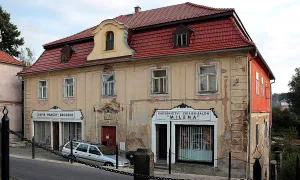
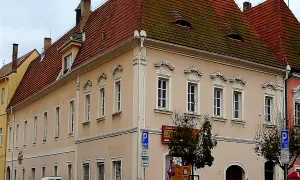
Near attractions within 30 minutes include a parish house built around 1800, which has an elongated two-storey structure with a high oblique roof covered with shingles. This historic building offers a view of local architectural styles and serves as proof of the rich cultural heritage of the area.
Frequently asked questions
Can the monument be visited?
Religious buildings are usually open mainly during services; at other times a visit is normally arranged with the parish or the operator. We have not verified specific times.
Where is the monument?
Location: Moldava, Ústecký kraj. The map on this page shows the exact spot.
Why is the monument protected?
It is listed in the Central List of Cultural Monuments of the Czech Republic as a cultural monument (register no. 42705/5-2684).
Businesses nearby
Do you run a restaurant, accommodation, shop, museum, rental, wellness or other visitor service near this monument? Show yourself directly to the people heading to it — this is how they will see you in the app and on the web:
Nearby
Near is a parish house built around 1800, with an elongated two-storey structure with a high fireproof roof covered with shingles.
Accommodation nearby
Trips and activities nearby
Guided tours, tickets and activities nearby from GetYourGuide
Affiliate link: if you buy from the partner, we may receive a commission. The price for you does not change.
Search tours and activities →Themed route
Thematic cruise route: Kostel Navštívení Panny Marie (Moldava)
1. Church of the Virgin Mary - * Type: * Historical landmark, religious place - * Why is it worth visiting: * This Baroque church is the centre of cultural and spiritual life in the village Moldava. Its architecture and historical importance offers a backdrop to the past when a local community was founded.
2. Parish House - * Type: * Historical building - * Why is it worth a visit: * Located just a few minutes of poverty from the church and is an example of Classicist architecture from 1800. It is a rectangular two-storey shape with high shingles offers an interesting contrast to the bone barroc and provides insight into the lives of the parish from the minimum century.
3. The Church's Tanks - * Type: * Historical designation - * Why is it worth visiting: * Square overrated is a place where you can look at many art elements and architectural details. It is also mine for quiet moments or other important events and festivities.
4. Church Tower - * Type: * Historical tower - * Why is it worth visiting: * The view from the sentence offers to the village Moldava and the surrounding landscape. It is an ideal place for photography and for those that can be used to decide on demistel in the same process.
5. Interior of the Church - * Type: * Religious interiors - * Why is it worth visiting: * The interior of the church is rich in art elements like me statues and frescoes. It features a narrow insight into the history and spiritual importance of the city, which is that there is no simultaneous cultural action.
This route offers a comprehensive use for the Church of Navstaví Virgin Mary and is an surrounding part of the historical and cultural aspects of the region.
Seasonal recommendations
Spring: Visiting the Church of the Visitation of the Virgin Mary in Moldova in spring offers a unique experience as nature awakens with vibrant colors and fresh flowers. The surrounding landscapes are decorated with flowering flowers that create an idyllic background for photography and reflection. During this time, the church can host special services or events that embrace renewal topics, thus increasing the spiritual atmosphere. Visitors should dress up in layers to suit different temperatures, and consider coming early to get peace before the larger crowds gather.
Summer: Summer is a popular time to explore the church Visits of the Virgin Mary thanks to extended daily hours and pleasant weather. The lush greenery around Moldova offers a picturesque environment, ideal for peaceful walks or picnics around. However, this season also attracts more visitors, so it is advisable to plan your visit early in the morning or later in the afternoon to avoid peak times. Light clothing is recommended, along with sunscreen and water to make comfortable during the survey.
Autumn: Autumn brings a stunning transformation to Moldova with a rich tapestry of red, orange and yellow, because the leaves change colour. The architecture of the church excels beautifully against this natural palette, which offers a calm and thoughtful atmosphere. This is the perfect time for photographers enthusiasts to capture seasonal beauty. Visitors should dress appropriately in layers due to cold temperatures and prepare for a shorter time of day planned accordingly for their visit.
Winter: Winter surrounds the Church of Our Lady's Visits in Moldova with calm, almost magical atmosphere as snow covers the landscape. The church can have ethereal quality under soft winter lighting, which provides a quiet environment for reflection. Visitors should dress well and be prepared for potentially shorter opening times due to weather conditions. Arriving soon it is advisable to fully enjoy the quiet beauty of the season before the crowds gather.
Visualizations and artistic views


The visualisations are generated by artificial intelligence and serve as inspiration.
Photos from the area
Real photos taken near the monument


Zdroj a licence jsou uvedeny u každého snímku.
Tips from visitors
No tips yet. Be the first!
Log in and add your tip.
Sources and literature
Photos: KarelTvrdik / CC BY-SA 3.0, rozlišení zvýšeno umělou inteligencí — Wikimedia Commons. The author and licence also appear when you hover over the image.
Faktickým podkladem tohoto textu byl článek na Wikipedii, jehož autory jsou přispěvatelé Wikipedie. Článek je dostupný pod licencí CC BY-SA 4.0.
Location on the map

Příběhy a pověsti
Legendy, pověsti a příběhy spjaté s touto památkou
Fotografie návštěvníků
Zatím žádné fotografie. Buďte první, kdo přidá fotografii z návštěvy!
Log in a přidejte svou fotografii nebo hodnoťte.
Za ověřenou návštěvu v aplikaci získáte víc bodů — poznáme podle GPS, že jste na místě.
Reviews and comments