






Kostel Nejsvětější Trojice (Bílý Potok) Church
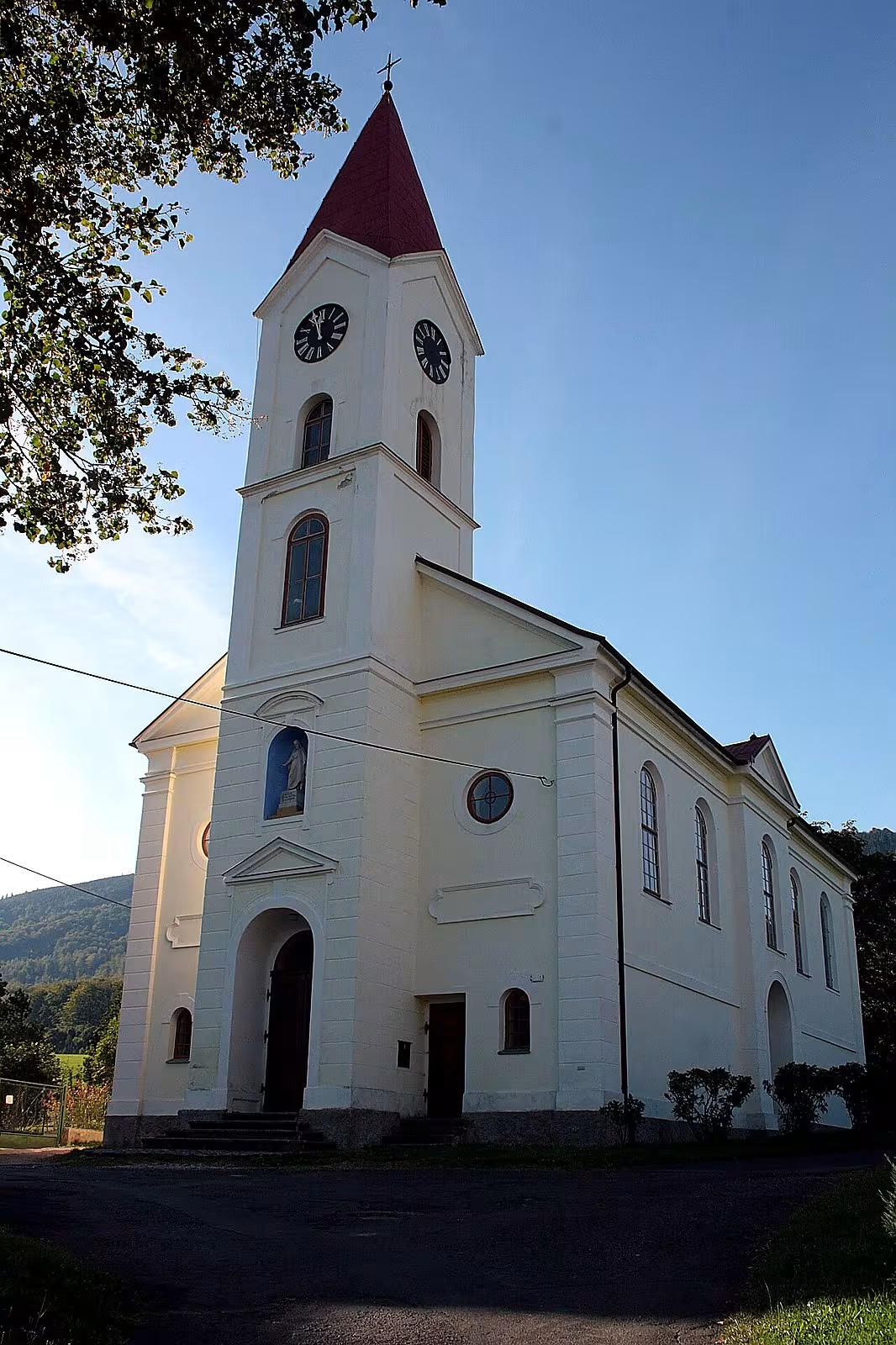
Kostel Nejsvětější Trojice in Bílý Potok is a historic church located in northern Czech Republic's Liberecký kraj region. Constructed between 1888 and 1890, this architectural gem reflects the historicism style with pseudoromantic elements. Recognized as a cultural monument since December 21, 1998, it serves as a filial church to the parish of Hejnice. The church is notable for its two stained glass windows depicting Saint Anne with Mary, donated in 1917 by Florian Krause's family.
The origins trace back to an earlier chapel built in 1774 under Franz Prager, a local householder and baker. Construction was initiated following permission granted by Count Christian Philip Clam-Gallas, who also contributed building materials such as lime, bricks, and timber. Despite its consecration on May 1, 1781, structural issues necessitated mandatory repairs in 1819 and 1826 due to weather-related damages. As the local population grew, a decision was made to replace the chapel with a more substantial church structure between 1888 and 1890. The new construction was led by Josef Neisser, a stonemason from Frýdlant, supported financially and logistically by local residents and international donors.
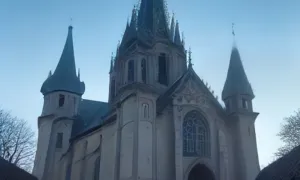
Architecturally, Kostel Nejsvětější Trojice embodies the pseudoromantic style, characterized by its single nave and polygonal tower positioned at the northern facade. The church's interior is styled in a new classicist manner, harmonizing with its exterior design. Two significant stained glass windows enhance the aesthetic appeal of the church, adding to its historical and artistic value.
Throughout its history, Kostel Nejsvětější Trojice has been an integral part of the community's spiritual life. The church was consecrated on September 28, 1890, by Hejnice parish priest Reinhard Seifert. In 1894, a grand celebration marked the 300th anniversary of Bílý Potok’s founding, featuring speeches and a mass conducted by local clergy.
Today, Kostel Nejsvětější Trojice stands as a testament to the region's rich cultural heritage. It underwent significant restoration at the beginning of the 21st century, addressing both interior elements like the lustr and organ, and exterior features such as plasterwork, roofing, and windows. The church houses pneumatic Schuster-built organs with two manuals and a pedalboard, adding to its musical legacy.
Visitors can appreciate not only its architectural beauty but also the historical narratives embedded within its walls. Its status as a cultural monument underscores its importance in preserving local history and heritage. The church remains accessible to those interested in exploring the intersection of art, architecture, and community life in this picturesque region.
Then and now
Drag the slider to compare how the landmark may have looked when it was built with the view today.
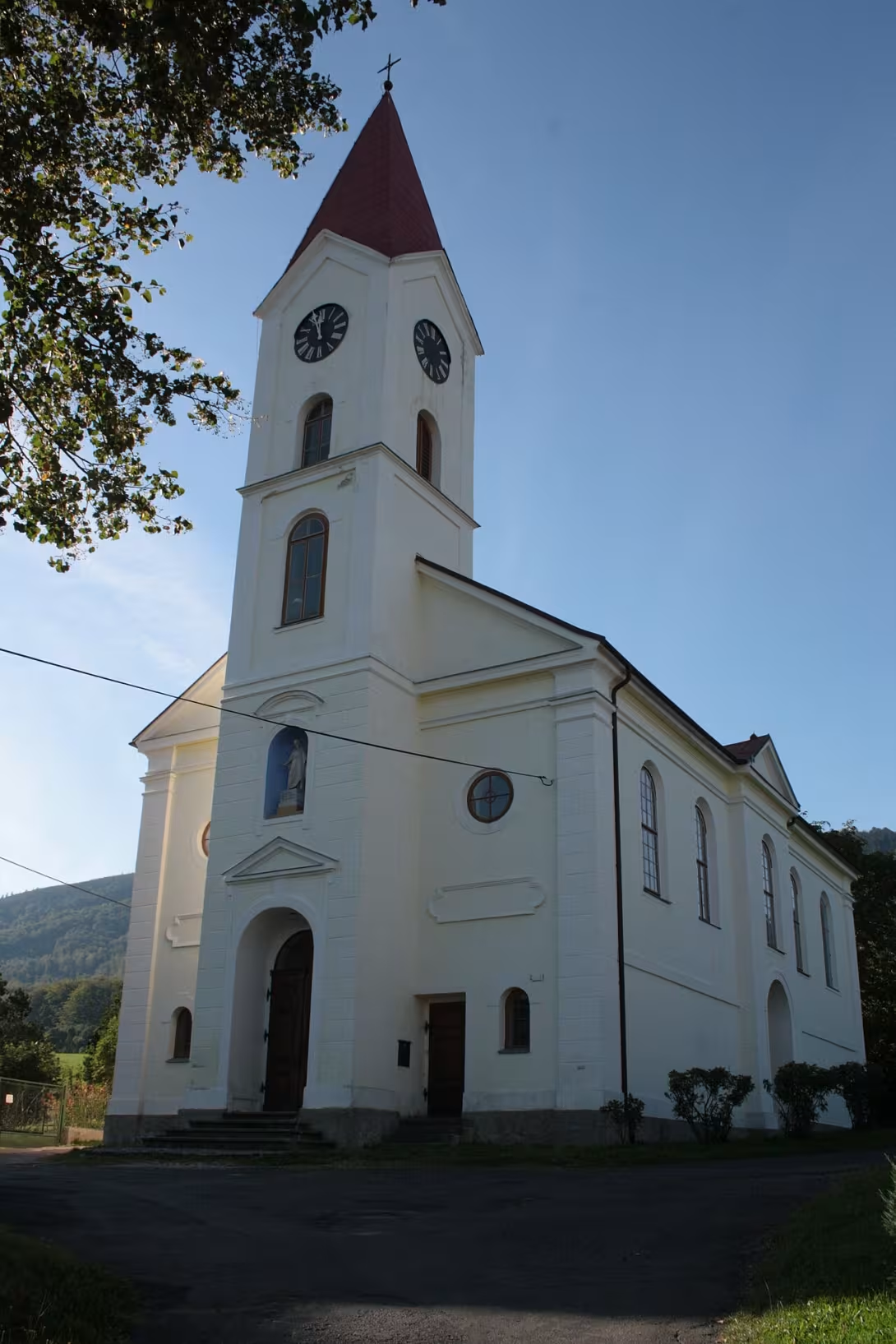

The historical appearance on the left is an AI-generated visualisation and serves as inspiration only.
Historical milestones
- 1774
- Construction of a chapel began under Franz Prager.
- 1781
- The chapel was consecrated on May 1.
- 1819
- Mandatory repairs were carried out due to structural issues.
- 1888
- Construction of the current church began under Josef Neisser.
Architectural development
Initially, a chapel was constructed in 1774 with local funding and materials provided by Count Christian Philip Clam-Gallas. Due to structural issues and increasing population, it was replaced by the current church between 1888 and 1890. The church underwent restoration at the beginning of the 21st century, addressing both interior and exterior elements.
Historical events
The church was consecrated on September 28, 1890, by Hejnice parish priest Reinhard Seifert.
In 1894, a significant celebration marked the 300th anniversary of the town's founding.
Points of interest
- The church's stained glass windows were a generous donation from the family of Florian Krause in 1917, adding a personal touch to its artistic heritage.
- Originally built as a chapel in 1774 under Franz Prager, it highlights the community’s early efforts at establishing a spiritual center, reflecting local craftsmanship and dedication.
- Count Christian Philip Clam-Gallas not only permitted but also materially supported the initial construction of the chapel with resources like lime, bricks, and timber, showcasing his influence and involvement in regional development.
- The church was consecrated by Hejnice parish priest Reinhard Seifert on September 28, 1890, marking a significant moment in its history as it transitioned from a small chapel to a larger ecclesiastical structure.
- In 1894, the church played a central role in celebrating the 300th anniversary of Bílý Potok’s founding with speeches and a mass, demonstrating its longstanding significance within the community.
Guide
This guide is narrated by a synthetic voice generated by artificial intelligence.
Show guide text
This text was created by artificial intelligence and has not been editorially reviewed. It may contain inaccuracies.
Welcome to the historic site of Kostel Nejsvětější Trojice in Bílý Potok, a remarkable testament to architectural beauty and cultural heritage nestled within Liberecký kraj. As you stand here, enveloped by the serene ambiance of this sacred space, take a moment to absorb the surroundings that have witnessed centuries unfold.
The journey of this spiritual edifice began in 1774 when Franz Prager initiated the construction of a humble chapel, marking an early endeavor by the community to establish a focal point for worship and gathering. This modest structure was consecrated on May 1, 1781, serving as a beacon of faith for its time. However, as years passed, structural challenges necessitated significant repairs in 1819, ensuring the chapel's continued presence.
Fast forward to 1888, under the guidance of architect Josef Neisser, construction commenced on what would become the church you see today. Between 1888 and 1890, this new structure rose from the ground, reflecting a blend of historicism with pseudoromantic elements—a style that captures both the grandeur and intricacy characteristic of its era.
As you explore Kostel Nejsvětější Trojice, direct your gaze to its architectural nuances. The church's design embodies a harmonious balance between form and function, inviting contemplation on its storied past. While specific details may not be immediately visible, the overall aesthetic speaks volumes about the era in which it was built.
Among the treasures housed within this sacred space are two stained glass windows, a generous donation from the family of Florian Krause in 1917. These windows offer more than just visual splendor; they encapsulate personal stories and artistic heritage, depicting Saint Anne with Mary—a narrative that adds depth to your visit.
While many historical figures associated with Kostel Nejsvětější Trojice remain unnamed, the spirit of those who contributed to its existence is palpable. Each stone and pane tells a story of dedication, faith, and community—a legacy preserved through time.
Now, let your curiosity lead you further into this captivating site. Imagine the lives that have intersected here, the prayers whispered within these walls, and the history etched in every corner. As you continue to explore, consider the layers of stories waiting to be discovered.
Thank you for joining us on this journey through time at Kostel Nejsvětější Trojice. May your visit inspire reflection and admiration for the rich tapestry of history that surrounds you. We invite you to delve deeper into its mysteries and cherish the experience as you move forward in your exploration.
Tips for visitors
The best time to visit the Church of Nejsvětější Trojice in Bílý Potok is during late spring or early autumn, when the weather is pleasant and the natural surroundings are particularly beautiful. This period also tends to be less crowded than summer months, allowing for a more serene experience. The church's historicism style with pseudoromantic elements can be appreciated best under the soft light of these seasons.
Public transportation options are available and can provide convenient access to the area; however, specific schedules should be verified through a transport search tool prior to your trip. Walking paths might also offer scenic routes to the church.
Weather-appropriate clothing is advisable as well, considering the season and time of day. A camera can be useful for capturing the church’s architectural details.
For photography enthusiasts, early morning or late afternoon light provides ideal conditions for capturing the church's features, with softer shadows enhancing its historicism style. The east side of the church often offers a picturesque view during sunrise, while sunset might illuminate the west façade beautifully. Exploring different angles around the church can reveal unique perspectives.
Nearby attractions within 30 minutes include the parish of Hejnice and other local sites in Liberecký kraj that offer insights into the region's history and culture. These destinations provide additional context to the area’s heritage, making them worthwhile for visitors interested in exploring beyond the church itself.
Frequently asked questions
Can the monument be visited?
Religious buildings are usually open mainly during services; at other times a visit is normally arranged with the parish or the operator. We have not verified specific times.
Where is the monument?
Location: Bílý Potok, Liberecký kraj. The map on this page shows the exact spot.
Why is the monument protected?
It is listed in the Central List of Cultural Monuments of the Czech Republic as a cultural monument (register no. 49791/5-5856).
Businesses nearby
Do you run a restaurant, accommodation, shop, museum, rental, wellness or other visitor service near this monument? Show yourself directly to the people heading to it — this is how they will see you in the app and on the web:
Accommodation nearby
Trips and activities nearby
Guided tours, tickets and activities nearby from GetYourGuide
Affiliate link: if you buy from the partner, we may receive a commission. The price for you does not change.
Search tours and activities →Themed route
Tematická výletní trasa: Kostel Nejsvětější Trojice a okolí
1. Kostel Nejsvětější Trojice (Bílý Potok) - Typ: Náboženská památka - Proč stojí za návštěvu: Tento barokní kostel je centrem duchovního života v Bílém Potoku. Jeho architektura a historický význam přitahují návštěvníky, kteří se zajímají o bohatou kulturní tradici regionu.
2. Nádvoří kostela Nejsvětější Trojice - Typ: Historické nádvoří - Proč stojí za návštěvu: Nádvoří nabízí klidný prostor pro relaxaci a reflektování. Je to ideální místo k procházce, kde můžete užít si krásy venkovního prostředí a poznat více o historickém kontextu kostela.
3. Kaple na hřbitově - Typ: Kaple - Proč stojí za návštěvu: Tato kaple je součástí hřbitova u kostela a představuje důležitý aspekt místního pohřebního rituálu. Její jednoduchá architektura a klidná atmosféra nabízejí vhled do tradic a zvyklostí obyvatel Bílého Potoku.
4. Místní muzeum v kostelním areálu - Typ: Malé místní muzeum - Proč stojí za návštěvu: Muzeum poskytuje cenné informace o historii a kulturním dědictví obce. Exponáty zde vystavované pomáhají lépe pochopit místní tradice a životní styl předků.
5. Park u kostela - Typ: Místní park - Proč stojí za návštěvu: Park nabízí krásné prostory pro piknik nebo jen pro chvilku odpočinku v přírodě. Jeho zelené louky a staré duby jsou ideálním místem k relaxaci po prozkoumání historických památek.
Tato trasa nabízí komplexní pohled na kulturní a duchovní život Bílého Potoku, zatímco umožňuje návštěvníkům užít si klidnou přírodní prostředí okolí.
Seasonal recommendations
Spring: The spring season at the Church of the Holy Trinity in Bílý Potok offers a rejuvenating atmosphere as nature awakens around the historic site. The surrounding landscape is adorned with blooming wildflowers and fresh greenery, providing a picturesque backdrop for visitors. During this time, the church's architecture stands out against the vibrant colors of spring foliage. To make the most of your visit, consider bringing binoculars to observe local wildlife returning from migration. Although crowds are generally moderate, arriving early in the morning can ensure a more tranquil experience while enjoying the soft light that enhances the church’s details.
Summer: Summer at the Church of the Holy Trinity is characterized by long daylight hours and warm weather, making it an ideal time for exploring both the interior and the lush outdoor surroundings. The verdant landscape offers excellent opportunities for photography and leisurely walks around the area. However, this season can attract larger crowds due to its popularity among tourists and locals alike. To avoid the midday heat and peak visitor times, plan your visit in the early morning or late afternoon. Comfortable walking shoes and light clothing are recommended, along with sun protection such as hats and sunscreen.
Autumn: Autumn presents a unique charm at the Church of the Holy Trinity, with the surrounding landscape transforming into a palette of rich reds, oranges, and yellows. The falling leaves create an enchanting ambiance that complements the historic architecture beautifully. This season is ideal for capturing stunning photographs or simply enjoying a peaceful stroll through the colorful scenery. Dress warmly and consider bringing a light jacket, as temperatures can drop significantly in the evenings.
Winter: The winter season envelops the Church of the Holy Trinity in a serene, snow-covered landscape that adds an ethereal quality to its historic presence. Snowfall often enhances the church's architectural details, creating a magical atmosphere perfect for quiet reflection or photography. It is essential to dress warmly in layers, wear waterproof boots, and bring gloves and hats to stay comfortable during your visit. Arriving early can help you avoid any disruptions caused by snowfall, ensuring a smooth experience at this picturesque site.
Visualizations and artistic views


The visualisations are generated by artificial intelligence and serve as inspiration.
Photos from the area
Real photos taken near the monument


Zdroj a licence jsou uvedeny u každého snímku.
Tips from visitors
No tips yet. Be the first!
Log in and add your tip.
Sources and literature
Photos: Jan Polák / CC BY-SA 3.0 — Wikimedia Commons. The author and licence also appear when you hover over the image.
Faktickým podkladem tohoto textu byl článek na Wikipedii, jehož autory jsou přispěvatelé Wikipedie. Článek je dostupný pod licencí CC BY-SA 4.0.
Location on the map

Příběhy a pověsti
Legendy, pověsti a příběhy spjaté s touto památkou
Příběh: Kostel Nejsvětější Trojice (Bílý Potok)
Bylo to v pondělí ráno, kdy Martin zjistil, že jeho životní cesta může být nekonečná změna. V temném úhlu kostela Nejsvětější Trojice našel útočiště před výz…
Číst příběh
Pověst: Kostel Nejsvětější Trojice (Bílý Potok)
Traduje se, že místo, kde dnes stojí kostel Nejsvětější Trojice, si samo vybralo Boha dříve, než si Bůh vybral místo. Staří obyvatelé Bílého Potoka vyprávěl…
Číst příběhFotografie návštěvníků
Zatím žádné fotografie. Buďte první, kdo přidá fotografii z návštěvy!
Log in a přidejte svou fotografii nebo hodnoťte.
Za ověřenou návštěvu v aplikaci získáte víc bodů — poznáme podle GPS, že jste na místě.
Reviews and comments