



Socha svatého Jana Nepomuckého (Bílý Potok) Statue
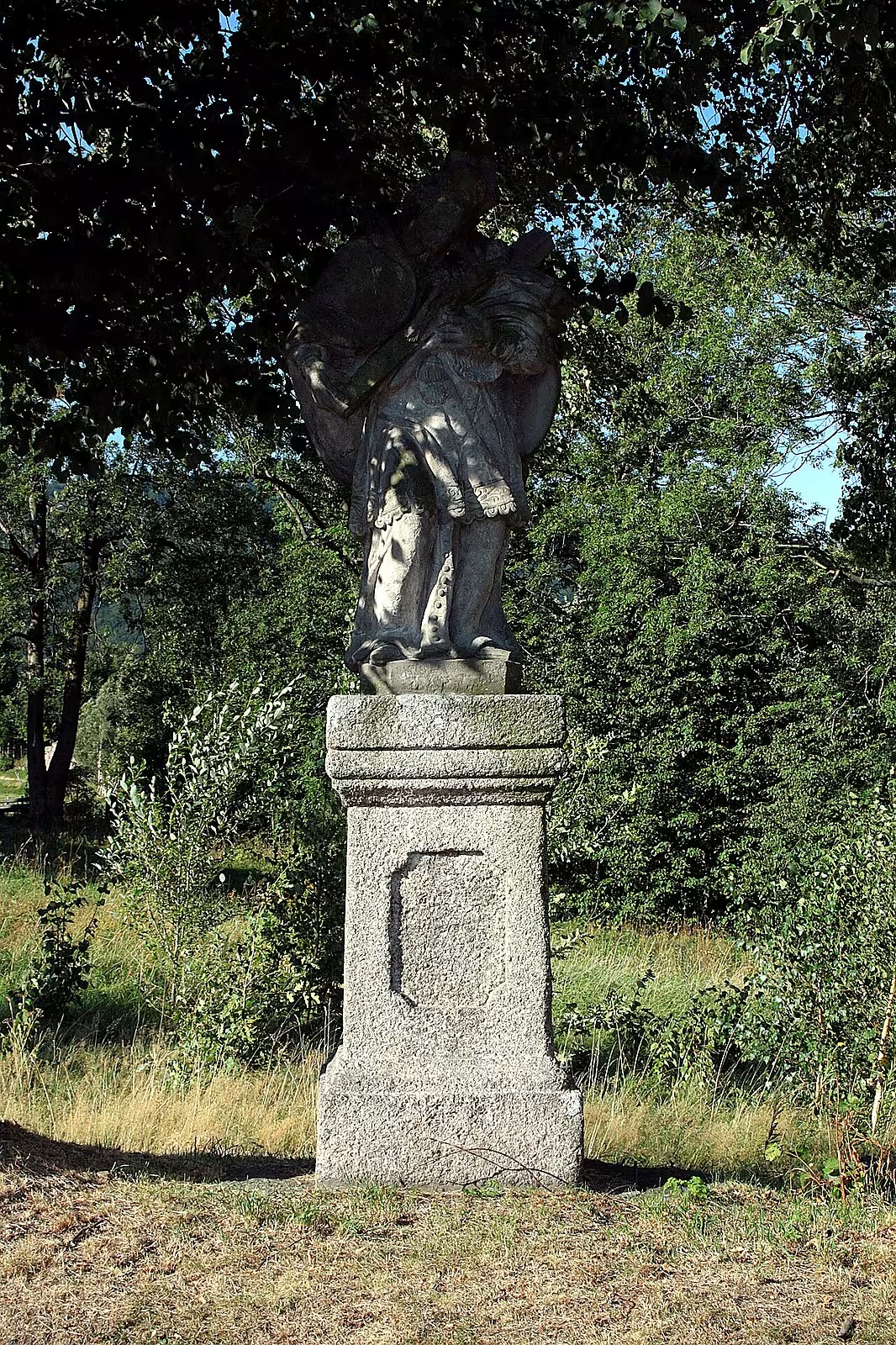
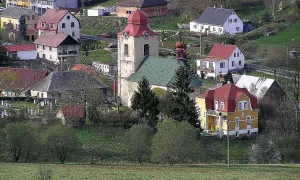
The statue of St. John Nepomuk in the Frýdlant excerpt, namely in the White Potok, is a Baroque statue of sandstone built on granite pedestal. This monument is located approximately in the centre of the village and lies east of the Church of the Holy Trinity, where it is accompanied by two massive lids. It is included among the cultural monuments of the Czech Republic and attracts visitors with its historical value and location.
The creation of the statue can date back to 1767 when it was built by the then speedster Johann Kaspar Krause in front of his house with a descriptive number 15. This historical context is crucial, as the second half of the 18th century in Czech countries was the peak of the baroque worship of St. John Nepomuk. During this period, the trend of the construction of sacral sculptures developed, which served as religious symbols and works of art.
The architecture of the statue is characteristic of Baroque style. A sculpture made of sandstone stands on a granite pedestal, which gives its appearance strong and durability. The saint is depicted in a typical baroque form: dressed in canovnik's robe with cleric and quadrant on his head, holding crucifix with both hands. This style emphasizes the spiritual value of the character and artistic skill of the time.
The statue has undergone several reconstructions throughout its history, indicating its lasting cultural and historical importance. In 1901 and 1932 two major repairs were made to help preserve the sculpture for future generations. Another reconstruction took place at the beginning of the 21st century, namely in 2002, when it was reconstructed by an academic painter and sculptor Ivan Hamáček for the financial support of the local district office.
The statue of St. John Nepomuk in the White River is not only a cultural monument, but also a place with a rich history. Its creation was the initiative of the speedster Johann Kaspara Kraus and its location in front of his house suggests a personal connection between the owner and the monument. Over the years, the statue has become a religious symbol and an important part of local culture.
Today, the statue is open to the public and worth a visit. Its historical context, architectural features and location in the picturesque landscape make it an attractive destination for lovers of history and culture. Visiting this monument is an opportunity to become familiar with an important aspect of Czech cultural tradition and appreciate the artistic skill of past generations. The statue of St. John Nepomuk in the White River is a reminder of the rich history and important part of the cultural heritage of the Czech Republic, which deserves the attention of every traveler.
Then and now
Drag the slider to compare how the landmark may have looked when it was built with the view today.
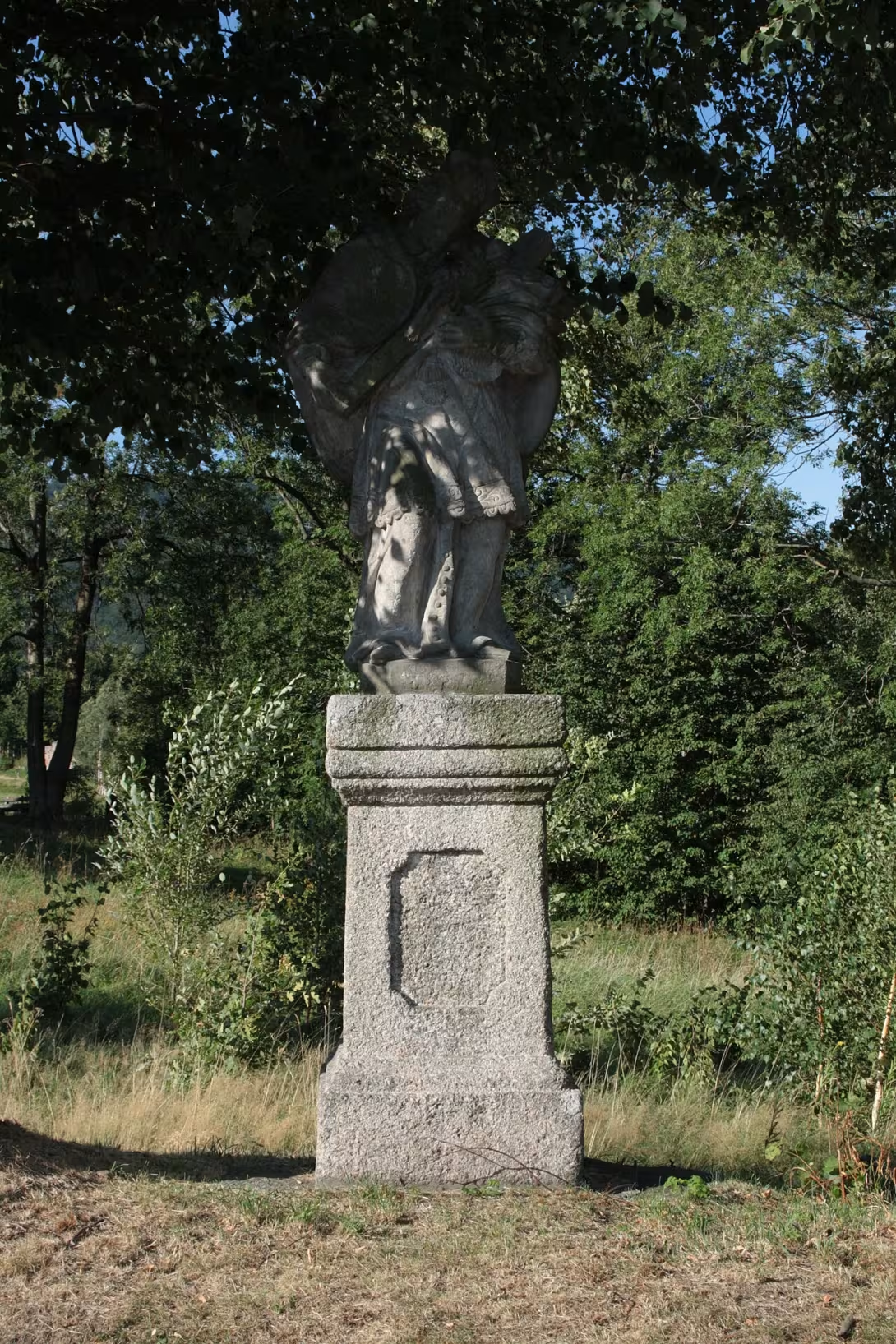

The historical appearance on the left is an AI-generated visualisation and serves as inspiration only.
Historical milestones
- 1767
- the creation of a statue from the initiative of the then speedster Johann Kaspara Krause
- 1901
- reconstruction of the statue
- 1932
- reconstruction of the statue
- 2002
- reconstruction of the sculpture by academic painter and sculptor Ivan Hamakek
Architectural development
The statue is made of sandstone on granite pedestal in Baroque style. During history it has undergone several repairs, the last reconstruction in 2002 was carried out by an academic painter and sculptor Ivan Hamáček.
Historical events
In 1767, the statue was built by the speedster Johann Kasparo Kraus. In 1901 and 1932 she underwent reconstruction. Further reconstruction was carried out in 2002 with financial assistance from the District Office.
Points of interest
- The statue of St. John Nepomuk is a Baroque statue of sandstone built on granite pedestal. - It was created in 1767 when he had it built by the then speedster Johann Kaspar Krause in front of his house with a descriptive number of 15. - The statue underwent several reconstructions: in 1901 and 1932, then again in 2002. - It is one of the cultural monuments of the Czech Republic and stands approximately in the centre of the village Bílý Potok. The location of the statue is east of the Church of the Holy Trinity, where it is accompanied by two massive lashes.
Guide
Show guide text
This text was created by artificial intelligence and has not been editorially reviewed. It may contain inaccuracies.
Welcome to the White River, a picturesque village located in the heart of the Frydlant Corner. You are standing in front of one of the most significant historical elements of this place, the stone statue of St. John Nepomuk. Dive into the silence and calm that prevails here, and let the atmosphere of this historic space affect you. A monumental sculpture stands before you, which in more than two hundred years of existence has earned the title of cultural monument of the Czech Republic. The first impression this statue will give you is certainly its fortress and dignity. It is a work carved from sandstone, which stands on a massive granite pedestal. This contrast of materials, soft sandstone and hard granite adds stability and visual weight to the composition, which is typical of Baroque art.
Let us now look at what lies behind this statue in terms of history and creation. This sculpture was not built randomly or for no reason. We're dating back to 1767. The initiator of this work was the then speedster of the village, Johann Kaspar Kras. It's interesting to realize that the statue was originally right in front of his house, which carried descriptive number 15. This suggests to us that this was a private initiative, but it has acquired the dimensions of the public monument. At that time, it was customary for important citizens or spiritual people to build statues of saints as a sign of piety, protection or gratitude. Saint Jan Nepomucký was a very popular patron in Czech countries, especially for his connection to silence and mystery, making him an ideal protector for many people.
Now pay attention to the details of the statue itself that is before you. Saint Jan Nepomucký is depicted in a typical Baroque form, which is characteristic of this era. Notice his clothes. The saint is dressed in canonical clothing, which is a specific type of spiritual clothing. He carries a cleric and a quadrant on his head, a hat that gives him a dignified and serious look. These clothing elements are important because they precisely determine its position and identity. In both hands is a crucifix, a cross with the body of Christ. This detail is crucial to understanding his role as protector. The statue is carved from sandstone, which is a stone that has often been used in this area for sculpture work due to its availability and processing. The granite base ensures that the statue lasts for centuries in various weather conditions.
The history of this statue is not only about its creation, but also about the care that has been given to it over the years. As we have already mentioned, the statue has undergone several reconstructions that were necessary to preserve it. The first major repair took place in 1901. The second reconstruction followed in 1932. These interventions were probably necessary due to the natural aging of sandstone and the effects of the weather. However, the latest and most important recovery took place in 2002. At that time, an academic painter and sculptor Ivan Hamáček took care of the reconstruction of the sculpture. His work was crucial for the return of the statue to its original appearance and for its further protection. Ivan Hamáček is a personality that has become famous for its works of art and its intervention in this sculpture shows how important professional care for cultural heritage is. Without such a renewal, the statue could be in a much worse state today, or it could be completely lost.
Who was Johann Kaspar Kras? He was a speedster, which was an important office in the village at the time. The speedster took care of the administration of the village, judicial matters and other administrative tasks. His decision to put the statue of St. John Nepomuk in front of his house can be seen as a manifestation of personal piety, but also as a way of gaining popularity among the people. It was common at that time that the statues of saints served not only as religious symbols, but also as landmarks in the village. This statue probably filled both of these functions. It was a place where people could stop, pray and at the same time serve as a familiar place in the village.
An interesting feature of this statue is also its location and importance in the context of the entire village Bílý Potok. The Frýdlantý exit is an area with a rich history and cultural heritage. This statue is one of the many elements that make up this heritage. Her presence in the village reminds us how important faith and spiritual life were to the inhabitants in the past centuries. Even today, when you look at her, you can feel a connection to people who lived here over 200 years ago. It is a sort of bridge between times that allows us, today's visitors, to understand and appreciate the values and traditions that were there.
You can see how the light hits the surface of sandstone and granite. These materials have different textures and colors that change depending on the time and weather. It gives the statue dynamic and life. Although it is a stone sculpture that seems static, in reality it is a work that lives and changes along with nature around it. Sandstone can change its shade over time, granite remains firm and durable. This contrast is beautiful and worth watching.
The statue of St. John Nepomuk in the White River is therefore not only a historical monument but also an artistic work that has its own story and meaning. It is a reminder of how important cultural heritage protection is and how much it can lose if we do not take care of it. Thank you for taking the time to stop and enjoy this moment with this statue. We hope that you enjoyed this experience and that you have gained new knowledge of the history and art of this area.
If you have the option, try looking at the statue from different angles. Each angle can show you a different aspect of the work. Close up, you can see the details in the clothes and the face of the saint. From a distance you see the overall composition and how the statue fits into the surrounding environment. It's a great way to enjoy art and history.
Bílý Potok offers many other places to explore. This statue is just one of many elements that make up his historical face. Take your time for more walking and exploring. Who knows what other stories and secrets await you. When you leave, remember this moment and the soha that accompanied you. He's a kind of protector who wishes you well.
So let's say goodbye to this beautiful monument. Thank you for your attention and for putting on your headphones and letting us guide you through this audio guide. We hope that this experience will remind you of the visit to the White River and the history that lives here. He wishes you everything good and inspiring on the next journey. When you come back, maybe you'll stop again and look at the new look-in. After all, every encounter with art and history escapes them
Tips for visitors
The best time to visit the statue of St. John Nepomuk in the White River is during spring or autumn, when nature is around in full beauty and fewer people. This time of year offers a peaceful atmosphere to understand the historical and cultural importance of the monument.
Transport to the village is also available by public means.
When visiting the statue, bring a hat, protective clothing and a bag of drinks. Depending on the weather, the outdoor trip can be more comfortable. Photography is possible from all sides of the statue, with the best lighting conditions offering a period of afternoon sunlight.
In the vicinity of the monument there is the Church of the Holy Trinity, which is suitable for viewing and other entertainment. For families with children it may be interesting to explore the natural beauty of the Frýdlantý way, where you can take even short walks.
Frequently asked questions
Can the monument be visited?
This is a structure in a public space that can usually be seen from outside free of charge. We have not verified that this particular one is freely accessible.
Where is the monument?
Location: Bílý Potok. The map on this page shows the exact spot.
Why is the monument protected?
It is listed in the Central List of Cultural Monuments of the Czech Republic as a cultural monument (register no. 1000138540).
Businesses nearby
Do you run a restaurant, accommodation, shop, museum, rental, wellness or other visitor service near this monument? Show yourself directly to the people heading to it — this is how they will see you in the app and on the web:
Nearby
V blízkosti sochy se nachází kostel Nejsvětější Trojice.
Accommodation nearby
Trips and activities nearby
Guided tours, tickets and activities nearby from GetYourGuide
Affiliate link: if you buy from the partner, we may receive a commission. The price for you does not change.
Search tours and activities →Themed route
1. Statue of St. John Nepomuk (statue): The main destination of the journey, which represents an important religious symbol in the village. 2. The immediate complex of the statue (space): A place suitable for stopping and detailed observation of the plastic work. 3. Church of the Holy Trinity (church): Architectural building near the statue, which complements the religious character of the route.
Seasonal recommendations
Spring: In the spring period, the surroundings of the statue of St. John Nepomuk in the White River are revived by flowers and new foliage of trees, adding landscape beauty. Sun rays are projected on the statue and its surroundings, creating a special atmosphere of calm and recovery. It is advisable to visit this historical object with light clothes, because the temperature may be medium, but it is still recommended a mild jacket for colder days. The best time to visit is usually noon when the sun is high and illuminates the statue from the most beautiful angles.
Summer: The summer season brings long sunny days and warm atmosphere around the statue of St. John Nepomuk. The sun illuminates the statue in full brightness, increasing its visual beauty. This season it is advisable to visit the memory of the afternoon when the sun rays are not too fiery and you can enjoy the quiet surroundings. Light clothing is recommended to protect against the sun such as scarves or hats as well as UV protection cream.
Autumn: In autumn, the surroundings of the statue of St. John Nepomuk in the White River are covered with coloured leaves, adding landscape beauty. Sun rays are less intense and illuminates the statue in silver light, creating a calm atmosphere. It is advisable to visit a monument with clothes for cooler weather such as warm jackets or coats, because the temperature can be medium to low. The best time to visit is usually an early afternoon when the sun is high, but still not caught in a strong light.
Winter: In winter, the surrounding area of the statue of St. John Nepomuk is covered with snow and the freezing rays of the sun illuminate the statue in a quiet atmosphere. Visiting the sights is best with warm clothes such as fur coats and gloves because it can be very cold. The most beautiful time for visiting is usually early afternoon, when the sun's rays illuminate the statue in a mild light and the surrounding area becomes frosty beauty.
Visualizations and artistic views


The visualisations are generated by artificial intelligence and serve as inspiration.
Photos from the area
Real photos taken near the monument

Zdroj a licence jsou uvedeny u každého snímku.
Tips from visitors
No tips yet. Be the first!
Log in and add your tip.
Sources and literature
Photos: Jan Polák / CC BY-SA 3.0 — Wikimedia Commons. The author and licence also appear when you hover over the image.
Faktickým podkladem tohoto textu byl článek na Wikipedii, jehož autory jsou přispěvatelé Wikipedie. Článek je dostupný pod licencí CC BY-SA 4.0.
Location on the map
Příběhy a pověsti
Legendy, pověsti a příběhy spjaté s touto památkou

Fotografie návštěvníků
Zatím žádné fotografie. Buďte první, kdo přidá fotografii z návštěvy!
Log in a přidejte svou fotografii nebo hodnoťte.
Za ověřenou návštěvu v aplikaci získáte víc bodů — poznáme podle GPS, že jste na místě.
Reviews and comments