






kostel Nejsvětější Trojice (Kameničky) Church
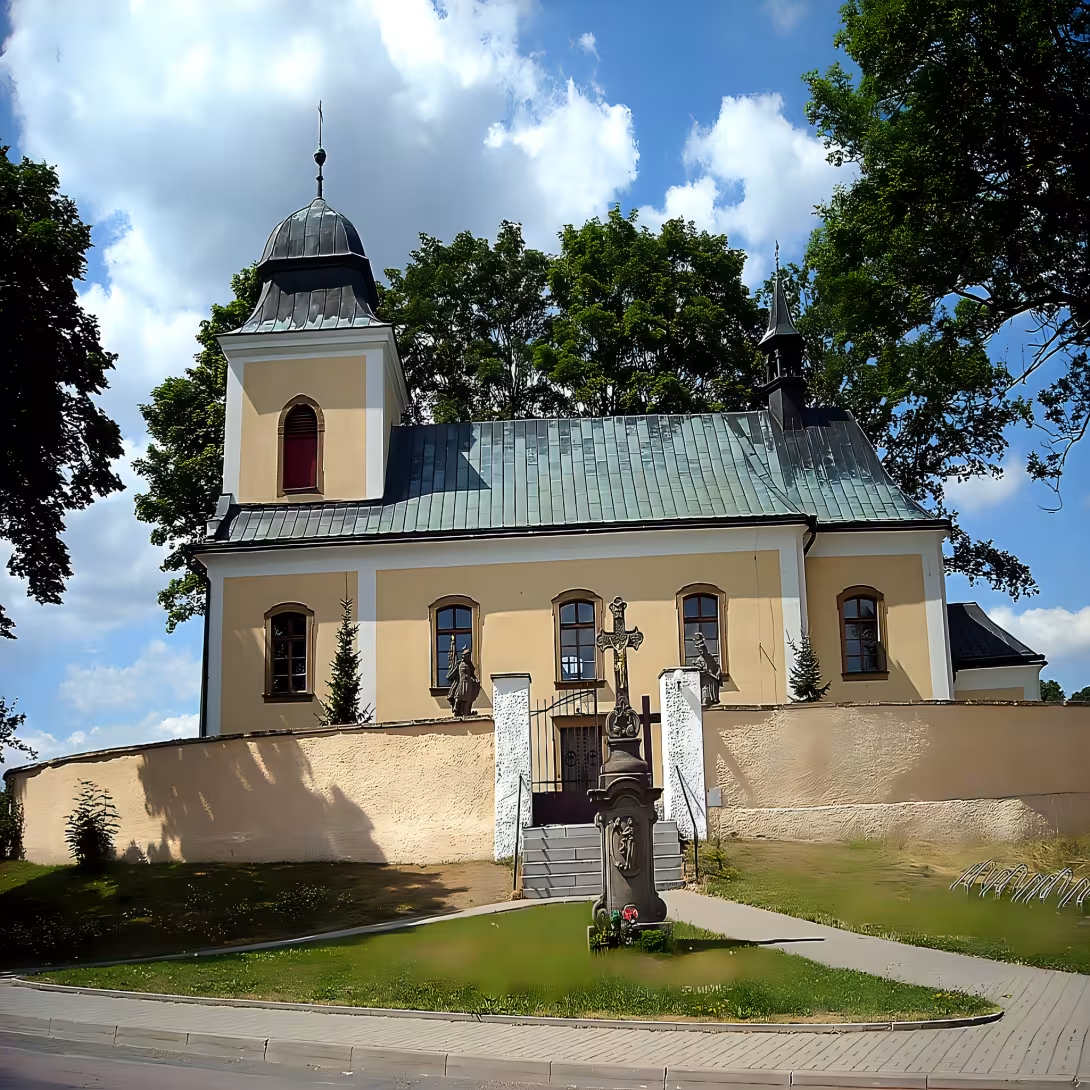
The Church of the Holy Trinity in Kameničky is a notable Baroque monument situated at a crossroads within this picturesque village. Built between 1764 and 1766 by Count Filip Kinský, it exemplifies the architectural elegance of its time. The church's historical significance is enhanced by its designation as a cultural monument in the Czech Republic, featuring sculptures and details that attract visitors to its serene atmosphere.
The origins of this Baroque masterpiece date back to the mid-18th century when Count Filip Kinský commissioned its construction on the site of an original wooden church. This period saw significant cultural and architectural development across Bohemia, then part of the Habsburg Monarchy, where flourishing arts were influenced by the Baroque style under enlightened absolutist rule. The Church of the Holy Trinity first appeared in historical records as a parish church in 1350 within the Litomyšl bishopric's listings. Over time, it transitioned to a filial church to Hlinsko after 1620 and later saw the establishment of a local chapter in 1786, culminating in its recognition as a parish by 1855.
Architecturally, the Church of the Holy Trinity is distinguished by its single-nave design. It stands on an elevated site surrounded by nearly circular walls from a former cemetery, featuring a square belfry that adds to its historical charm. The church's western tower was added in 1830, and it boasts a roof covered with sheet metal. Its facade is ochre-colored, adorned with corner okses and white pilasters, while the windows are oblong, framed by compressed arches. These elements reflect the Baroque style prevalent during its construction.
Ownership of the church initially rested with Count Filip Kinský, who funded its creation in the 18th century. While subsequent ownership details remain unspecified, the church underwent significant modifications over time, including the addition of a tower and loft in 1830 and repairs between 1945 and 1950. These changes have contributed to preserving its historical integrity.
Throughout its history, the Church of the Holy Trinity has witnessed various key events that underscore its cultural importance. Its construction marked a shift from an original wooden structure to a Baroque edifice, reflecting broader architectural trends in Europe during that era. The addition of the tower and subsequent repairs further highlight the church's enduring significance within the community.
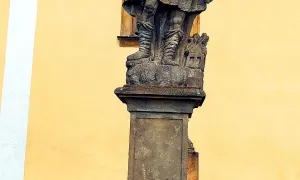
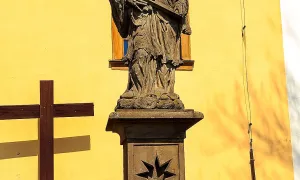
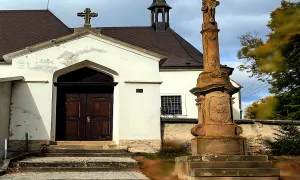
Today, the Church of the Holy Trinity remains accessible to visitors who are drawn by its historical and architectural allure. Its serene setting at an intersection in Kameničky, coupled with sculptures such as those of Saint Florian and Saint John Nepomucene within the former cemetery grounds, make it a compelling destination for history enthusiasts and architecture aficionados alike. The church's status as a cultural monument ensures that its legacy continues to be appreciated by future generations.
The Church of the Holy Trinity in Kameničky stands not only as an architectural marvel but also as a beacon of historical continuity within the region. Its preservation allows visitors to step back into a time when Baroque elegance reigned supreme, offering insights into the cultural and artistic endeavors of its era. This monument invites exploration and appreciation, promising a journey through history that is both enlightening and inspiring.
Then and now
Drag the slider to compare how the landmark may have looked when it was built with the view today.
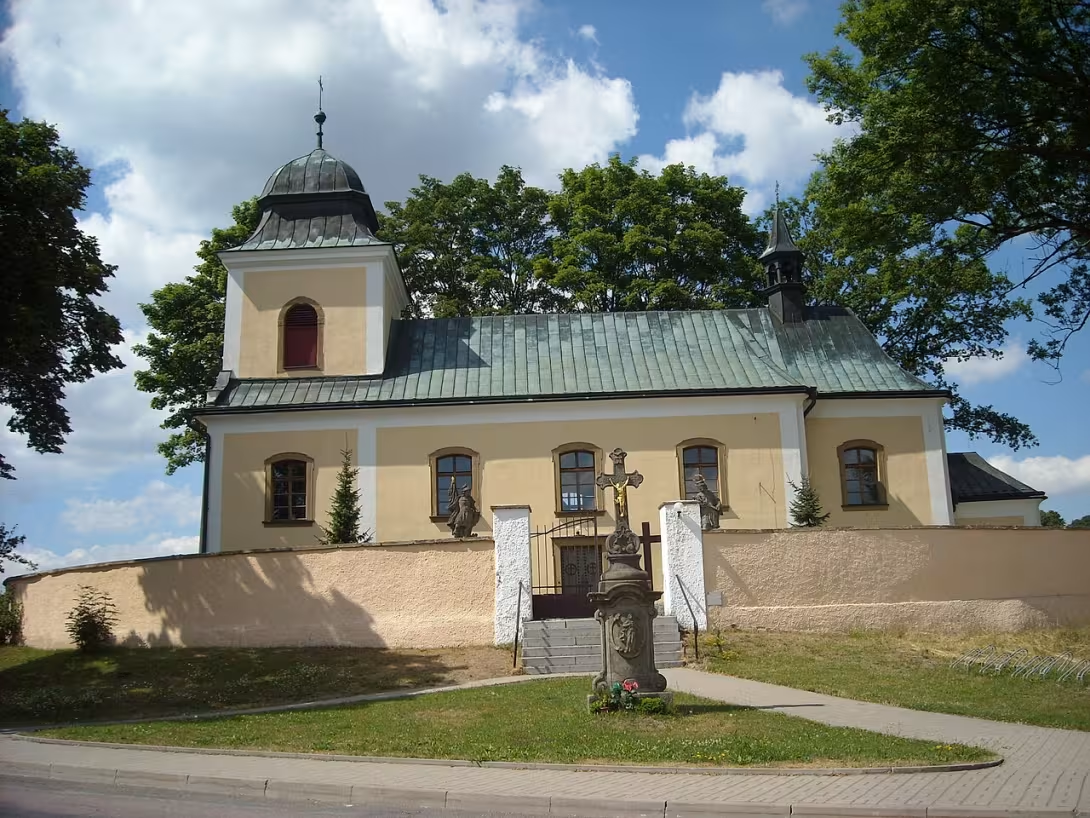

The historical appearance on the left is an AI-generated visualisation and serves as inspiration only.
Historical milestones
- 1350
- The church was first mentioned as a parish church in the list of the Litomyšl bishopric.
- 1620
- It became a filial church to Hlinsko after this year.
- 1786
- A local chapter was established.
- 1855
- The parish was founded.
Architectural development
The baroque Church of the Holy Trinity was built as a single-nave structure with a nearly circular enclosing wall from a former cemetery. A square belfry is part of this enclosure. The church features a western tower added in 1830, and its roof is covered with sheet metal. Architectural elements include corner okses with white pilasters and an ochre-colored facade.
Historical events
The current baroque Church of the Holy Trinity was constructed from 1764 to 1766 on the site of an original wooden church.
A tower and loft were added in 1830, with repairs conducted between 1945 and 1950.
Owners
The church was originally built at the expense of the estate owner, Count Filip Kinský, between 1764 and 1766. Subsequent ownership details are not specified.
Points of interest
- The Church of the Holy Trinity was originally built on the site of a wooden church, reflecting a common practice in the 18th century where new structures replaced older ones to accommodate growing congregations and more elaborate architectural designs.
- In its early history as part of the Litomyšl bishopric, the church underwent significant changes in ecclesiastical status, transitioning from a parish church to a filial church under Hlinsko before eventually regaining its parish status by 1855, highlighting shifts in local religious governance.
- The addition of the western tower in 1830 was not merely an architectural enhancement but also symbolized the community's resilience and adaptation over time, as it marked one of several modifications that helped preserve the church through changing eras.
- The sculptures of Saint Florian and Saint John Nepomucene within the former cemetery grounds are intriguing because they reflect the Baroque era's emphasis on integrating art with architecture to convey religious themes and stories, adding layers of cultural depth to the site.
- Despite its designation as a cultural monument, specific details about subsequent ownership after Count Filip Kinský remain unspecified, adding an element of mystery and inviting further exploration into the church’s historical narrative.
Guide
This guide is narrated by a synthetic voice generated by artificial intelligence.
Show guide text
This text was created by artificial intelligence and has not been editorially reviewed. It may contain inaccuracies.
The Church of the Holy Trinity stands in the center of the village of Kameničky in the Chrudim district. It is baroque and single-naved and rose on an elevated hill at a road intersection. As a cultural monument, the entire complex is protected, meaning the church with its surrounding wall, mortuary chapel, and statues of saints.
The church is first mentioned in 1350, when it is listed in the records of the Litomyšl bishopric as a parish church. After 1620 it became a subsidiary church and fell under Hlinsko. The current building was constructed between 1764 and 1766 by the estate owner Count Philip Kinský on the site of the original wooden church. In 1786 a chaplaincy was established here, and in 1855 a parish. The tower and gallery were added in 1830. The church was renovated between 1945 and 1950.
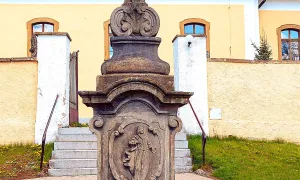
The church is surrounded by an almost circular plastered wall of the former cemetery with a square mortuary chapel. A stone staircase leads from the road into the complex and a simple pilastered gate with latticed doors. In front of the staircase stands a sandstone crucifix. Inside the complex on either side of the entrance to the church are statues of Saint Florian and Saint John of Nepomuk.
On the western side a square tower is partially built into the structure. Above the roof it rises with a bell chamber. Three sides of it have semicircular arched windows with stone surrounds and shutters with louvres. The tower is topped by a mansard-style copper roof. On the east the church is closed by a recessed, almost square chancel with a hexagonal tabernacle on the roof. Behind the chancel is an additional rectangular sacristy.
The façade is ochre. The corners are beveled and emphasized with white pilasters except on the west. Rectangular windows with stone frames are arched with a compressed arch. The nave is lit by four windows on the south side and three on the north, the chancel has one window on each side. The main entrance is located in the middle of the southern side and has a stone frame with a double broken lintel. On the north side by the tower is a plain entrance to the gallery.
Frequently asked questions
Can the monument be visited?
Religious buildings are usually open mainly during services; at other times a visit is normally arranged with the parish or the operator. We have not verified specific times.
Where is the monument?
Location: Kameničky, Pardubický kraj. The map on this page shows the exact spot.
Why is the monument protected?
It is listed in the Central List of Cultural Monuments of the Czech Republic as a cultural monument (register no. 32772/6-882).
Businesses nearby
Do you run a restaurant, accommodation, shop, museum, rental, wellness or other visitor service near this monument? Show yourself directly to the people heading to it — this is how they will see you in the app and on the web:
Events nearby
Zdroj akcí: otevřená data měst a obcí ČR (Národní katalog otevřených dat) a kalendář akcí Národního památkového ústavu.
Nearby
The church is situated on a hill at the intersection of roads in Kameničky. The surrounding area includes sculptures of Saint Florian and Saint John Nepomucene within the former cemetery.
Accommodation nearby
Themed route
Tematická výletní trasa: Kostel Nejsvětější Trojice a okolí
1. Kostel Nejsvětější Trojice (Kameničky)
Typ: Historická památka
Proč stojí za návštěvu: Tento kostel, umístěný na výšině při křižovatce cest, je architektonickou perli obce Kameničky. Jeho bohatá historie a unikátní design ho činí nezbytnou návštěvní pro každého zájemce o duchovní a kulturní památky.
2. Sculptura svatého Floriána
Typ: Umělecký prvek
Proč stojí za návštěvu: Tato socha, nacházející se v bývalém hřbitovním areálu poblíž kostela, představuje svatého Floriána, patrona hasičů. Je to poutavý umělecký prvek, který obohacuje historickou atmosféru místa.
3. Sculptura svatého Jana Nepomuckého
Typ: Umělecký prvek
Proč stojí za návštěvu: Další socha v bývalém hřbitovním areálu, kterou ztvárňuje svatý Jan Nepomucký. Je známý pro svůj přínos k českému katolickému duchu a jeho postava je oblíbená mezi návštěvníky.
Tato trasa nabízí pohled na klíčové historické a umělecké prvky obce Kameničky, které jsou neodmyslitelnou součástí jejího kulturního dědictví.
Seasonal recommendations
Spring: Visiting the Church of the Holy Trinity in Kameničky during spring offers a serene experience as nature awakens around this historic site. The vibrant greenery and blooming flowers provide a picturesque backdrop, enhancing the church's architectural beauty with natural light filtering through stained glass windows. This season often sees fewer visitors compared to summer, allowing for a more tranquil exploration of the area. It’s advisable to wear comfortable walking shoes as paths may be muddy after rain. Early morning visits can help avoid any lingering dew and provide softer lighting conditions ideal for photography.
Summer: The church is particularly inviting in the warm glow of summer sunlight, with long days offering ample time for leisurely tours and exploration. While this season attracts more visitors due to its pleasant weather, arriving early in the day or later in the afternoon can help avoid peak crowds. Light, breathable clothing is recommended to stay comfortable under the sun. The lush surroundings are perfect for picnicking after a visit, making it an ideal time for families looking to enjoy both cultural and natural attractions.
Autumn: Autumn transforms Kameničky into a tapestry of warm colors as leaves turn golden and red, creating a stunning contrast against the church’s historic facade. This season is known for its crisp air and gentle breezes, which can make exploring the site more pleasant compared to summer heat. Visitors should be prepared for varying weather conditions; layering clothing is advisable to accommodate cooler temperatures. The quieter atmosphere in autumn makes it an excellent time for photography enthusiasts seeking dramatic landscapes.
Winter: During winter, the Church of the Holy Trinity takes on a magical quality under a blanket of snow, with its architecture standing out starkly against the white landscape. Snow-covered paths and possibly iced-over windows create a unique visual experience. Wearing warm layers is essential, along with sturdy footwear for navigating icy surfaces. Visiting during less busy times can provide a peaceful and intimate encounter with the church’s winter charm.
Visualizations and artistic views


The visualisations are generated by artificial intelligence and serve as inspiration.
Photos from the area
Real photos taken near the monument


Zdroj a licence jsou uvedeny u každého snímku.
Tips from visitors
No tips yet. Be the first!
Log in and add your tip.
Sources and literature
Photos: Eva Skálová / CC BY-SA 3.0, rozlišení zvýšeno umělou inteligencí — Wikimedia Commons. The author and licence also appear when you hover over the image.
Faktickým podkladem tohoto textu byl článek na Wikipedii, jehož autory jsou přispěvatelé Wikipedie. Článek je dostupný pod licencí CC BY-SA 4.0.
Location on the map
Příběhy a pověsti
Legendy, pověsti a příběhy spjaté s touto památkou
Fotografie návštěvníků
Zatím žádné fotografie. Buďte první, kdo přidá fotografii z návštěvy!
Log in a přidejte svou fotografii nebo hodnoťte.
Za ověřenou návštěvu v aplikaci získáte víc bodů — poznáme podle GPS, že jste na místě.
Reviews and comments