






Kostel Nejsvětější Trojice (Krásný Les) Church
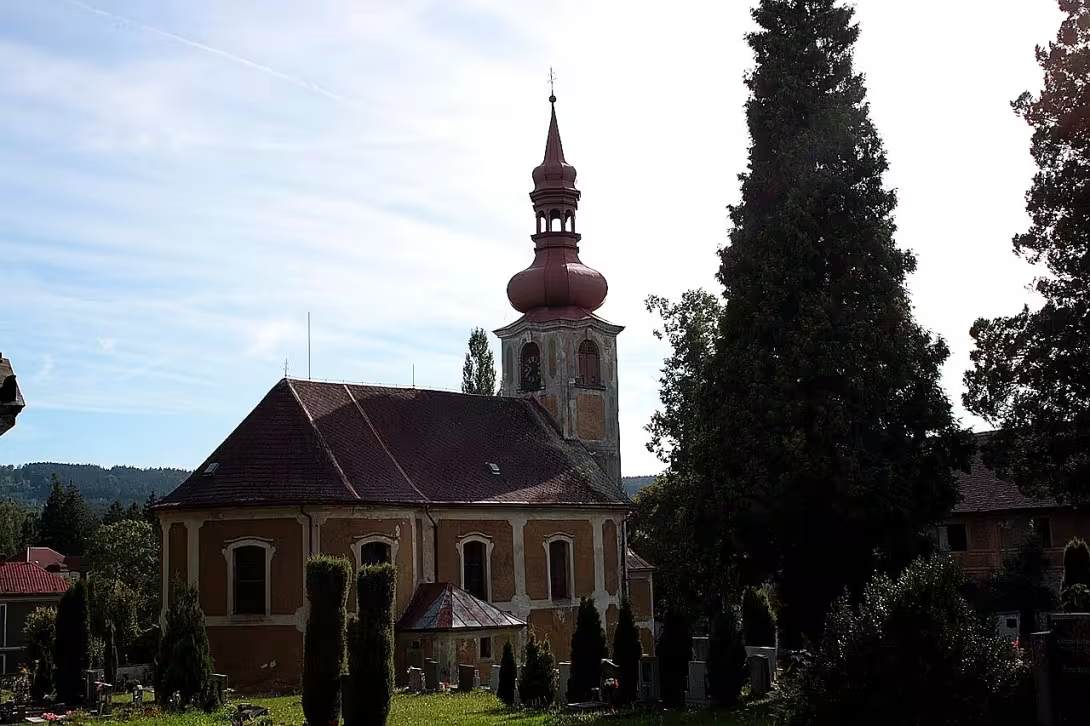
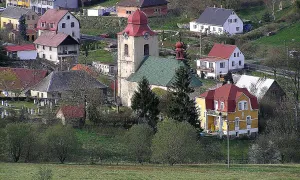
The Church of the Holy Trinity in Krásný Les is a baroque-style sacred building located in Jindřichovice pod Smrkem, within the Frýdlantské Vrchy region in northern Czech Republic. Originally constructed as a chapel, it expanded into a church by 1670 and underwent significant architectural transformations throughout the 18th century. The addition of a presbytery in 1717, along with further modifications around 1775 and at the turn of the 19th century, enhanced its baroque style. Recognized as a cultural monument of the Czech Republic, this church is notable for its intricate architecture featuring a single nave with an extended presbytery, a polygonal tower, and detailed interior decorations.
The origins of the Church of the Holy Trinity trace back to a chapel expanded into a larger structure by 1670. This expansion marked the beginning of significant architectural development, continuing with the addition of a presbytery in 1717. Further modifications occurred around 1775 and at the turn of the 19th century, enhancing its baroque style. These changes reflect the broader historical context of Bohemia during this period, which was part of the Holy Roman Empire under Habsburg rule. The region experienced significant religious and cultural shifts during the Reformation and Counter-Reformation periods, influencing architectural styles such as baroque.
Architecturally, the church is a quintessential example of baroque design. It features a single oblong nave complemented by an extended presbytery with convex-concave walls. On its northern side sits an oblong sacristy, while a rectangular vestibule on the southern side serves as the entrance to the church. The polygonal tower, adorned with lisenes and windows in oval and rectangular shapes, is topped with a bulbous dome. Boasting segmental arches, the exterior of the building is further defined by two bands of lisenes and segmentally arched windows. Inside, both the nave and presbytery are characterized by flat ceilings enhanced with stucco decorations. The sacristy features a net vault, while the space beneath the tower has a truss ceiling. A notable feature within the church is its choir screen, crafted in classical style in 1802.
The interior of the Church of the Holy Trinity houses several significant artifacts and furnishings. It contains one main altar and two side altars from the 19th century, alongside a pulpit dating back to the turn of the 18th and 19th centuries. A baroque baptismal font from the latter half of the 17th century is complemented by a rococo base and cylindrical pedestal. The church also features paintings of Saint Philomena and Saint Louise, both dated to 1856. The original organ, built in 1709 by Johann Jakub Josef Richter, underwent several modifications over time, including significant reworking by Josef Müller.
Surrounding the church is a cemetery featuring four neoclassical gravestones from the early 19th century and another from 1835. Near the southern entrance stands a late baroque belfry with an oblong base and pyramidal top, adorned with pilasters, recessed fields, and an oblong portal, capped by a shield featuring segmental elements.
Today, the Church of the Holy Trinity remains a significant cultural monument in Krásný Les. Its rich history and architectural beauty make it a worthwhile visit for those interested in baroque architecture and Czech cultural heritage. Visitors can explore its intricate design and appreciate the historical artifacts within, gaining insight into the religious and cultural transformations that have shaped this region over centuries.
Then and now
Drag the slider to compare how the landmark may have looked when it was built with the view today.
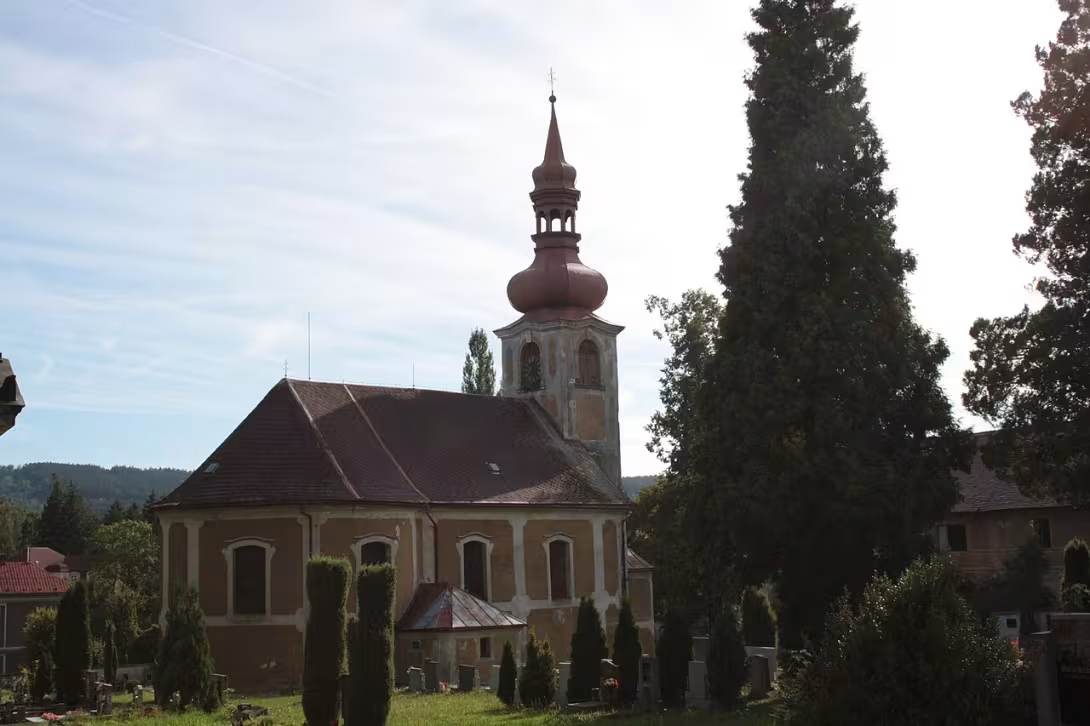
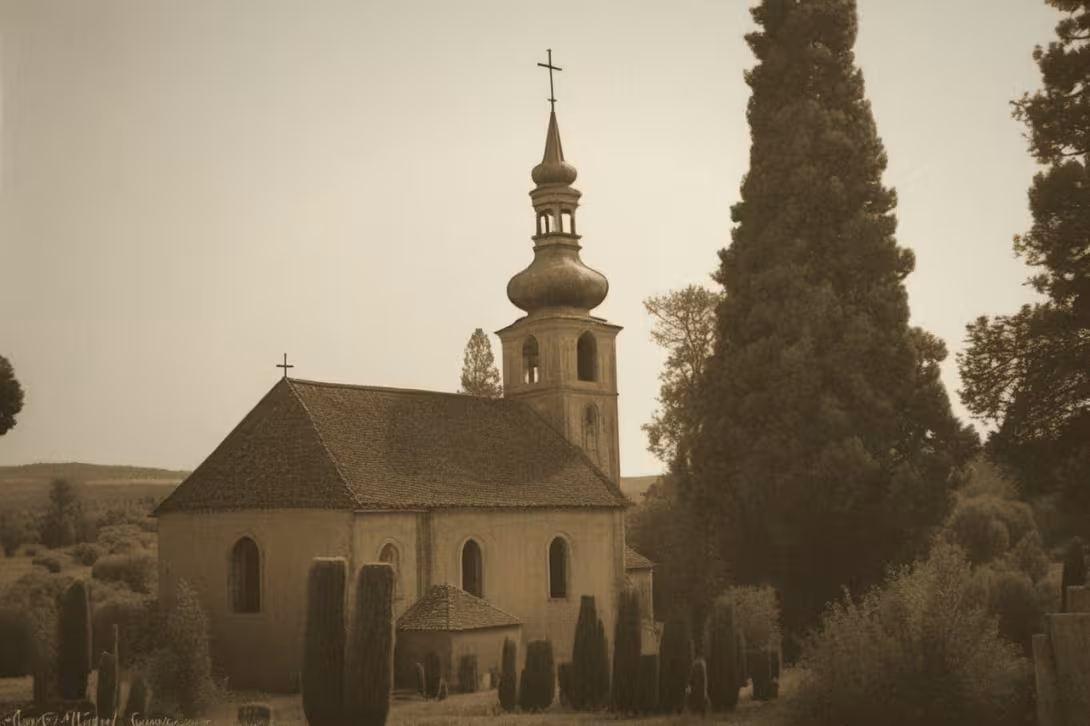
The historical appearance on the left is an AI-generated visualisation and serves as inspiration only.
Historical milestones
- 1500
- Původní stavba kaple
- 1670
- Rozšíření na kostel
- 1717
- Přidání presbytáře
- 1775
- Další architektonické úpravy
- 1800
- Úpravy na přelomu století
Architectural development
The Church of the Holy Trinity began as a simple chapel, which was expanded into a larger structure by 1670. In 1717, a presbytery was added, marking significant architectural development. Further modifications occurred around 1775 and at the turn of the 19th century, enhancing its baroque style with features such as a polygonal tower and intricate interior decorations.
Historical events
The chapel on the site was expanded into a church in 1670.
A presbytery was added to the church in 1717.
Points of interest
- The Church of the Holy Trinity was originally a modest chapel before expanding into its current form by 1670, reflecting the common practice in Bohemia during this period where smaller chapels were often enlarged to accommodate growing congregations or increased religious significance.
- Johann Jakub Josef Richter, who built the church's original organ in 1709, was a notable figure in the history of Czech organ-making. His work is characterized by intricate craftsmanship typical of the baroque era, and his organs are considered important cultural artifacts within the region.
- The paintings of Saint Philomena and Saint Louise, both dated to 1856, were added during a period when religious art was used as a means of reinforcing Catholic identity in response to Protestant influences. These artworks reflect the Counter-Reformation's emphasis on vivid imagery to inspire devotion among believers.
- The church’s choir screen, crafted in classical style in 1802, represents an interesting blend of baroque and neoclassical elements. This fusion highlights the transitional architectural trends occurring at the turn of the 19th century as European tastes began shifting towards more restrained classicism after the ornate baroque period.
- The cemetery surrounding the church contains four neoclassical gravestones from the early 19th century, which are significant for their stylistic departure from earlier baroque funerary art. These gravestones offer insight into changing attitudes toward death and commemoration during this era in the Czech lands.
Guide
This guide is narrated by a synthetic voice generated by artificial intelligence.
Show guide text
This text was created by artificial intelligence and has not been editorially reviewed. It may contain inaccuracies.
Welcome to the Church of the Holy Trinity in Krásný Les, a remarkable testament to baroque architecture nestled within the enchanting Frýdlantské Vrchy region. As you stand before this sacred building, you're greeted by its elegant façade that captures both history and artistry.
The origins of this church trace back to 1500 when it began as a modest chapel. By 1670, it had expanded into the structure we see today, reflecting a common trend in Bohemia where chapels grew alongside their congregations or religious significance. This expansion marked the beginning of its journey through time and transformation.
As you look around, notice the architectural details that speak volumes about its past. The church underwent significant changes throughout the 18th century, with a presbytery added in 1717. Further modifications took place around 1775, each layer adding to its historical narrative. Although the architects remain unnamed, their work is evident in every stone and design choice.
While specific stories and personalities linked to this site are not documented, imagine the countless individuals who have passed through these doors over the centuries—each leaving a trace of their presence. The church's evolution mirrors the broader history of the region, standing as a silent witness to the passage of time.
One intriguing aspect is how this building transitioned from a simple chapel to an architectural gem by 1670. This transformation reflects not just physical growth but also an increase in its spiritual and community role—a theme that resonates with many historical sites across Bohemia.
As you continue your exploration, take a moment to absorb the atmosphere of this sacred space. Feel the weight of history around you and let yourself be drawn into its story. The Church of the Holy Trinity invites you to delve deeper, offering a rich tapestry of cultural heritage waiting to be discovered.
Thank you for visiting this historic site. We hope your journey through Krásný Les has been enlightening and inspiring. Safe travels as you continue to explore the wonders that await in the Czech Republic.
Tips for visitors
The best time to visit the Church of the Holy Trinity in Krásný Les is during late spring or early autumn. During these seasons, you can enjoy pleasant weather that enhances the experience of exploring both the church and its surrounding cemetery with neoclassical gravestones. The natural beauty of the Frýdlantské Vrchy region is particularly striking at this time, making it ideal for a leisurely visit.
For those preferring public transport, there are routes that can bring you close to the location; however, it's advisable to check current connections in advance using a travel planner or local resources.
When visiting the Church of the Holy Trinity, consider bringing comfortable walking shoes and weather-appropriate clothing, as you may want to explore the surrounding cemetery area. A camera is also recommended for capturing the architectural details of the church and the unique gravestones from the early 19th century. Remember that photography might be restricted in certain areas inside the church, so it's wise to check beforehand.
Photography enthusiasts will find several spots around the church where lighting is optimal, especially during the golden hours of sunrise or sunset. The late baroque belfry near the southern entrance offers a picturesque backdrop for photos. Additionally, capturing images from different angles within the cemetery can provide varied perspectives of the neoclassical gravestones.
For families with children visiting Krásný Les, there are several engaging activities to consider. Exploring the historical elements of the church and its cemetery can be both educational and entertaining for kids. The open spaces around the site allow for a bit of outdoor play or exploration. Additionally, planning your visit during less crowded times, such as weekday mornings, can make for a more relaxed experience.
Frequently asked questions
Can the monument be visited?
Religious buildings are usually open mainly during services; at other times a visit is normally arranged with the parish or the operator. We have not verified specific times.
Where is the monument?
Location: Krásný Les, Liberecký kraj. The map on this page shows the exact spot.
Why is the monument protected?
It is listed in the Central List of Cultural Monuments of the Czech Republic as a cultural monument (register no. 24418/5-4340).
Businesses nearby
Do you run a restaurant, accommodation, shop, museum, rental, wellness or other visitor service near this monument? Show yourself directly to the people heading to it — this is how they will see you in the app and on the web:
Nearby
The church is surrounded by a cemetery featuring four neoclassical gravestones from the early 19th century and another from 1835. A late baroque belfry with an oblong base and pyramidal top stands near the southern entrance.
Accommodation nearby
Trips and activities nearby
Guided tours, tickets and activities nearby from GetYourGuide
Affiliate link: if you buy from the partner, we may receive a commission. The price for you does not change.
Search tours and activities →Themed route
Tematická výletní trasa: Kostel Nejsvětější Trojice a jeho okolí
1. Kostel Nejsvětější Trojice (Krásný Les)
Typ: Náboženská památka
Proč stojí za návštěvu: Tento barokní kostel je centrem duchovního života v Krásném Lese. Jeho architektura a historický význam nabízejí pohled na bohatou kulturní tradici obce.
2. Hřbitov
Typ: Historické místo
Proč stojí za návštěvu: Hřbitov kolem kostela je domovem čtyř neoklasicistních hrobků z počátku 19. století a další hrobka z roku 1835. Tyto památky jsou příkladem historického uměleckého díla, které odráží estetiku té doby.
3. Barokní věž
Typ: Architektonický prvek
Proč stojí za návštěvu: Tato pozdně barokní věž s obdélním základem a pyramidovou korunou se nachází u jižního vchodu kostela. Je to nejen funkční prvek, ale také vizuální ukazatel historických architektonických preferencí.
Tato krátká trasa nabízí pohled na klíčové prvky okolí Kostela Nejsvětější Trojice a umožňuje návštěvníkům ocenit historickou a kulturní hodnotu tohoto místa.
Seasonal recommendations
Spring: Visiting the Church of the Holy Trinity during spring offers a unique experience as nature awakens around Krásný Les. The surrounding landscape is adorned with blooming flowers, creating a vibrant and colorful atmosphere that enhances the church's serene beauty. As daylight extends, the natural light beautifully illuminates the interior, highlighting intricate architectural details. Visitors should be prepared for occasional rain showers, so wearing waterproof footwear and carrying an umbrella or raincoat can enhance comfort. This season often sees moderate crowds, making it ideal to explore at a leisurely pace without feeling rushed.
Summer: The summer months bring long days and warm weather to the Church of the Holy Trinity, inviting visitors to enjoy the lush greenery surrounding Krásný Les. The bright sunlight enhances the church's exterior stonework, while inside, the cool interior provides respite from the heat. This is a popular time for tourists, so arriving early in the morning can help avoid larger crowds and ensure a more peaceful visit. Comfortable walking shoes and light clothing are recommended to navigate the grounds comfortably under the sun.
Autumn: Autumn transforms the area around the Church of the Holy Trinity into a picturesque scene with vibrant fall foliage. The changing leaves create a warm, golden hue that beautifully contrasts with the church's architecture. This season often sees fewer visitors compared to summer, allowing for more intimate exploration of the site. Cooler temperatures mean dressing in layers is advisable, and carrying a light jacket can provide warmth during early morning or late afternoon visits when temperatures drop.
Winter: Winter offers a serene and tranquil atmosphere at the Church of the Holy Trinity, with snow often blanketing Krásný Les in a peaceful white cover. The church's architecture takes on an ethereal quality under soft winter lighting, creating a magical ambiance perfect for reflection. However, this season also brings shorter days and potentially challenging weather conditions. Visitors should dress warmly in layers, wear waterproof boots, and plan visits during daylight hours as the site may have reduced opening times. Despite fewer visitors due to the cold, it's wise to check ahead for any closures or special arrangements.
Visualizations and artistic views


The visualisations are generated by artificial intelligence and serve as inspiration.
Photos from the area
Real photos taken near the monument


Zdroj a licence jsou uvedeny u každého snímku.
Tips from visitors
No tips yet. Be the first!
Log in and add your tip.
Sources and literature
Photos: Jan Polák / CC BY-SA 3.0 — Wikimedia Commons. The author and licence also appear when you hover over the image.
Faktickým podkladem tohoto textu byl článek na Wikipedii, jehož autory jsou přispěvatelé Wikipedie. Článek je dostupný pod licencí CC BY-SA 4.0.
Location on the map
Příběhy a pověsti
Legendy, pověsti a příběhy spjaté s touto památkou
Fotografie návštěvníků
Zatím žádné fotografie. Buďte první, kdo přidá fotografii z návštěvy!
Log in a přidejte svou fotografii nebo hodnoťte.
Za ověřenou návštěvu v aplikaci získáte víc bodů — poznáme podle GPS, že jste na místě.
Reviews and comments