






Kostel Nejsvětější Trojice (Kuks) Church
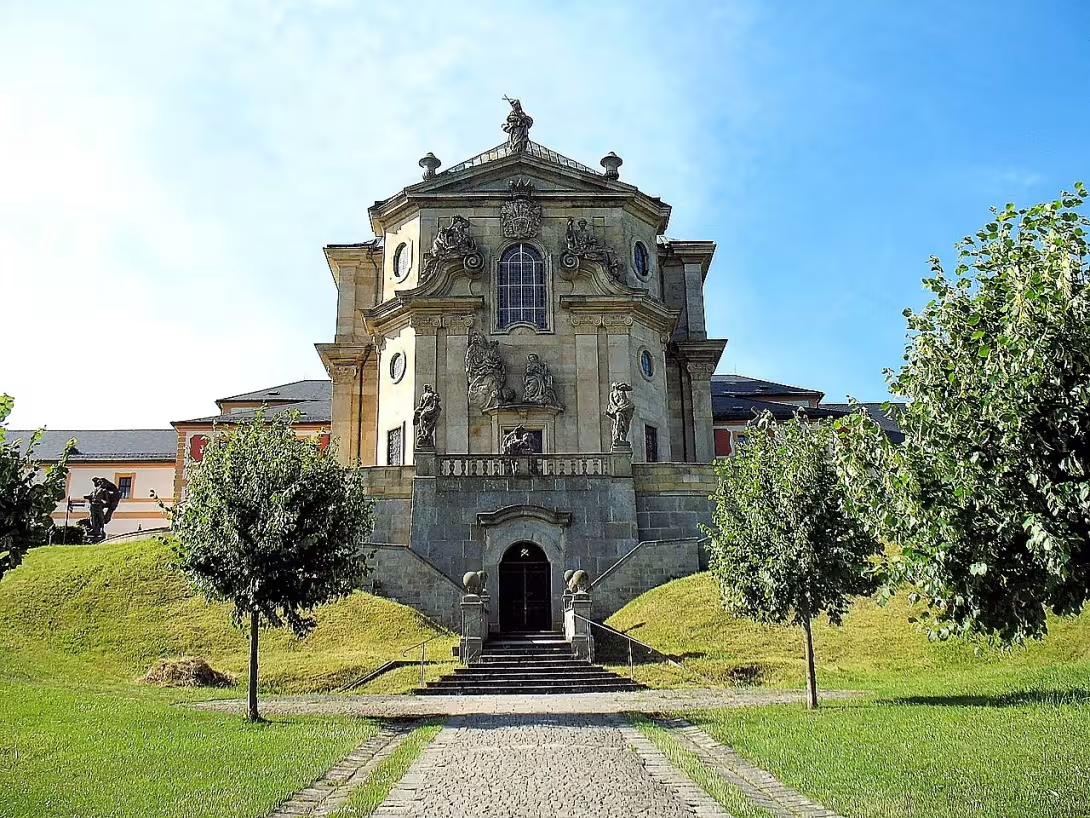
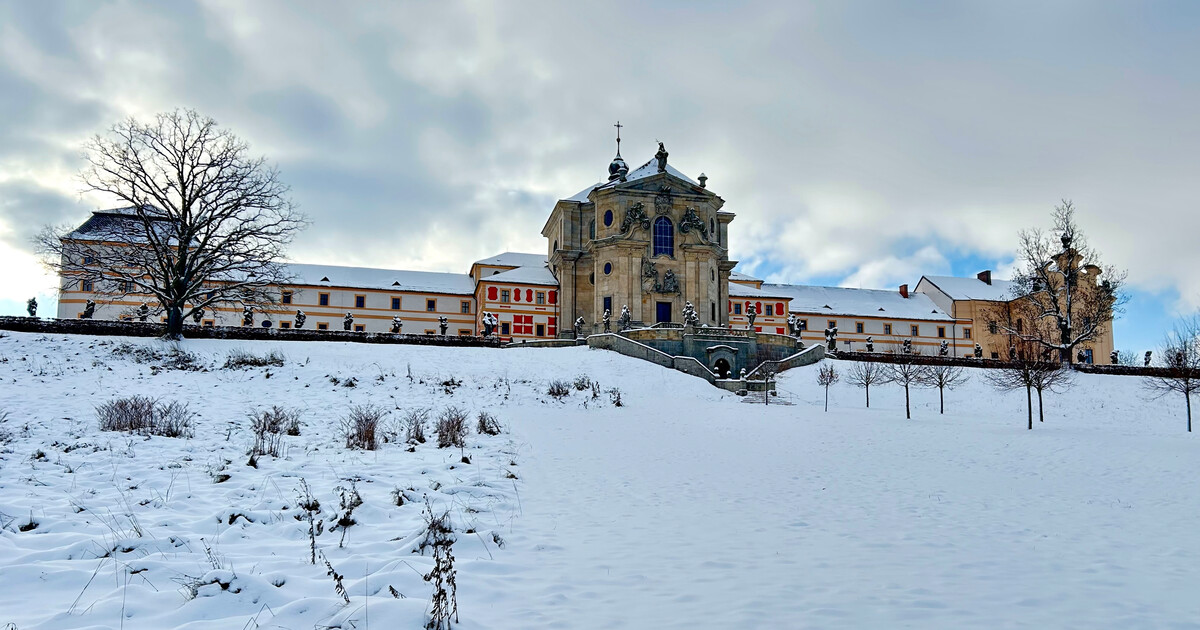
The Church of the Holy Trinity grew from 1707 to 1715 as the central building of the Baroque Hospital in Kuks, founded by the owner of the local estate Count František Antonín Špork. The construction was entrusted to Italian builders - architects Giovanni Battista Alliprándi, builder Antonio Pietr Nettola and stonemason Pietr Giovanni Dell Torre. The church was to serve as part of a shelter for approximately a hundred war veterans and old servants from Šporkov Manor, with whom it was connected on the north side, facing the Elbe.
In the early 1709, the construction works were intensified - the stone was transported by up to 72 horses. Already in 1710 the space was covered and the top of the temple decorated with the first plastics. The interior decoration was completely taken over by Italian artists and craftsmen. On 20 August 1717 the church was ceremonially consecrated by John Adam Wroclaw of Mitrovich. The interesting thing is that even before his official consecration, in 1712, a second-born daughter František Antonín Špork, Anna Kateřina, married her cousin at the church. In the same year, the remains of General Jan Špork, originally buried in Lysé nad Labem, were also stored in the church crypt.
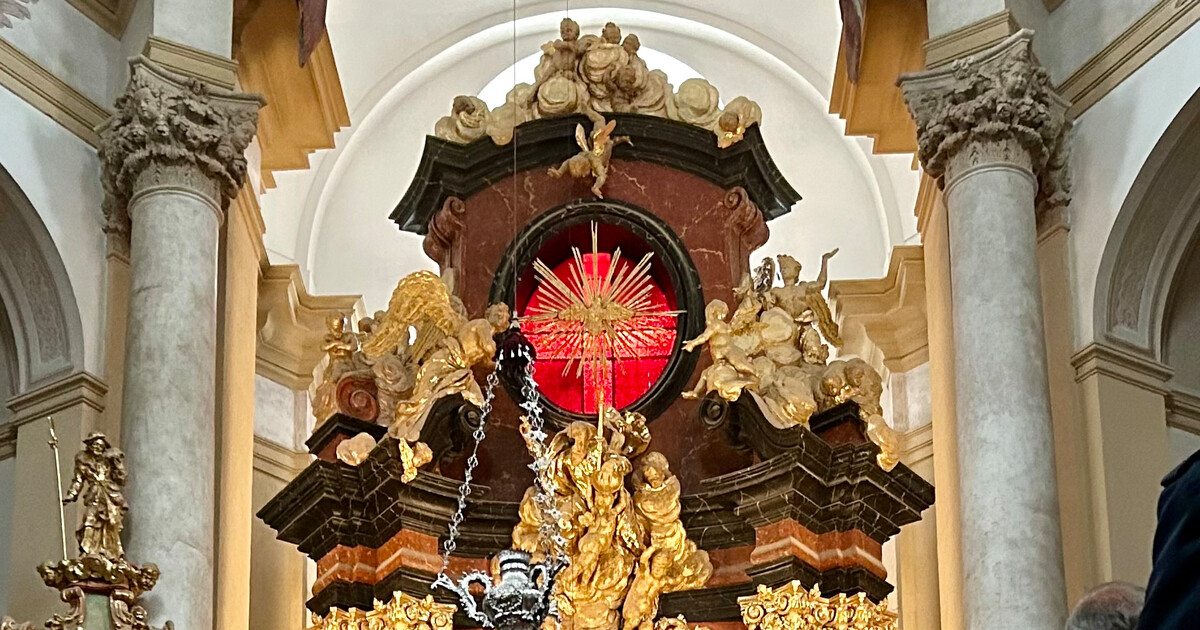
The architectural solution of the church is quite unique. The Его floor plan, which connects the Latin cross into the octagonal, has no direct equivalent in Central Europe according to historians. The church is located in the centre of the north facade of the hospice in the middle of a large terrace, which is decorated by allegorical statues of the Virtue and the Nerds of Matthias Bernard Braun. The outside facade is intricately shaped with polling edges, scraped by corners and various shampoo windows. The priestry was located unconventional in the south of the church to harmonically connect the building to the hospital complex.
The campus of the hospice, originally intended as a monastery of religious anunciatas, was gradually extended and completed in 1748, ten years after Sporko's death. Further adjustments were made during the 18th and 19th centuries. In 1769, Trutnov builder Leopold Niederocker performed restoration work, and in 1872, the architect Jan Schmoranz brought a neo-gothic treatment. From 1743 until the German occupation in 1938, members of the Order of Merciful Brothers took care of the running of the Kuk Hospital.
Today, the church is part of the Kuks Monument Reserve and was declared a national cultural monument in 1995. The unique architectural ensemble with excellent sculpting decoration became the dominant of not only the village but also the landscape surrounding Trutnova. Under the church was preserved the family tomb of Šporky and Swéerts- Sportsk. From 2013 to 2015, extensive reconstruction of the premises including gardens and farm buildings took place.
Then and now
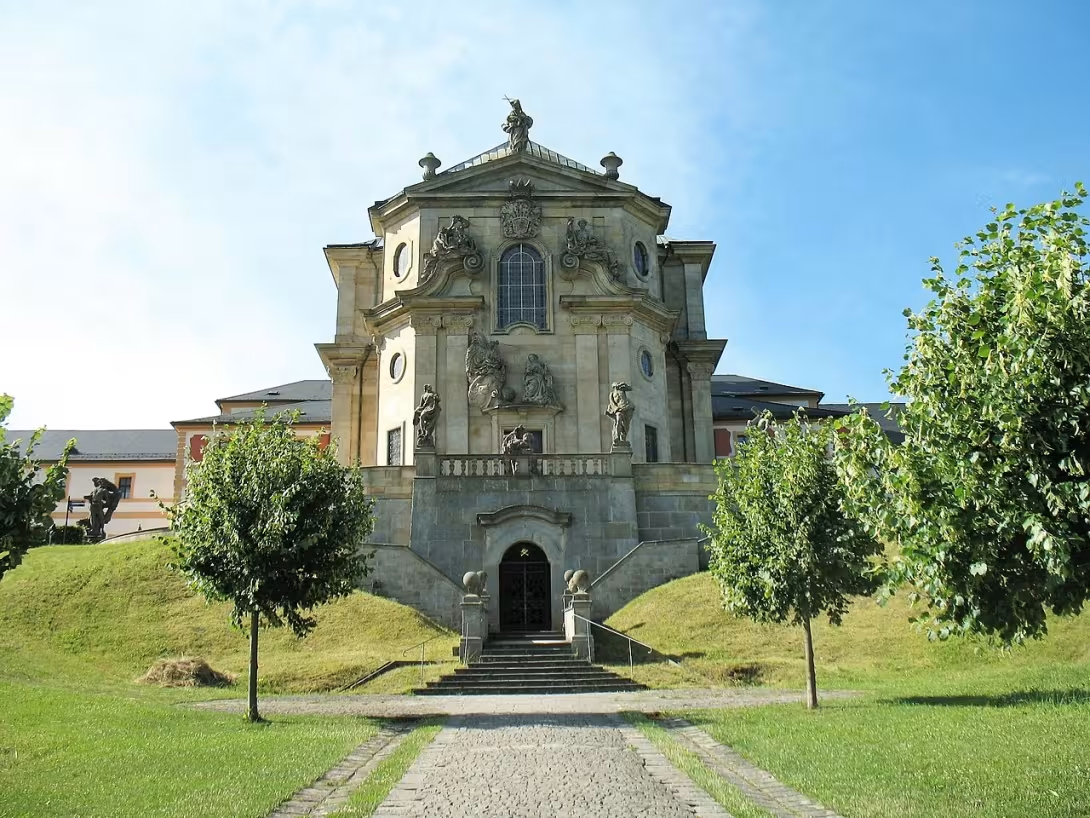
Drag the slider to compare how the landmark may have looked when it was built with the view today.
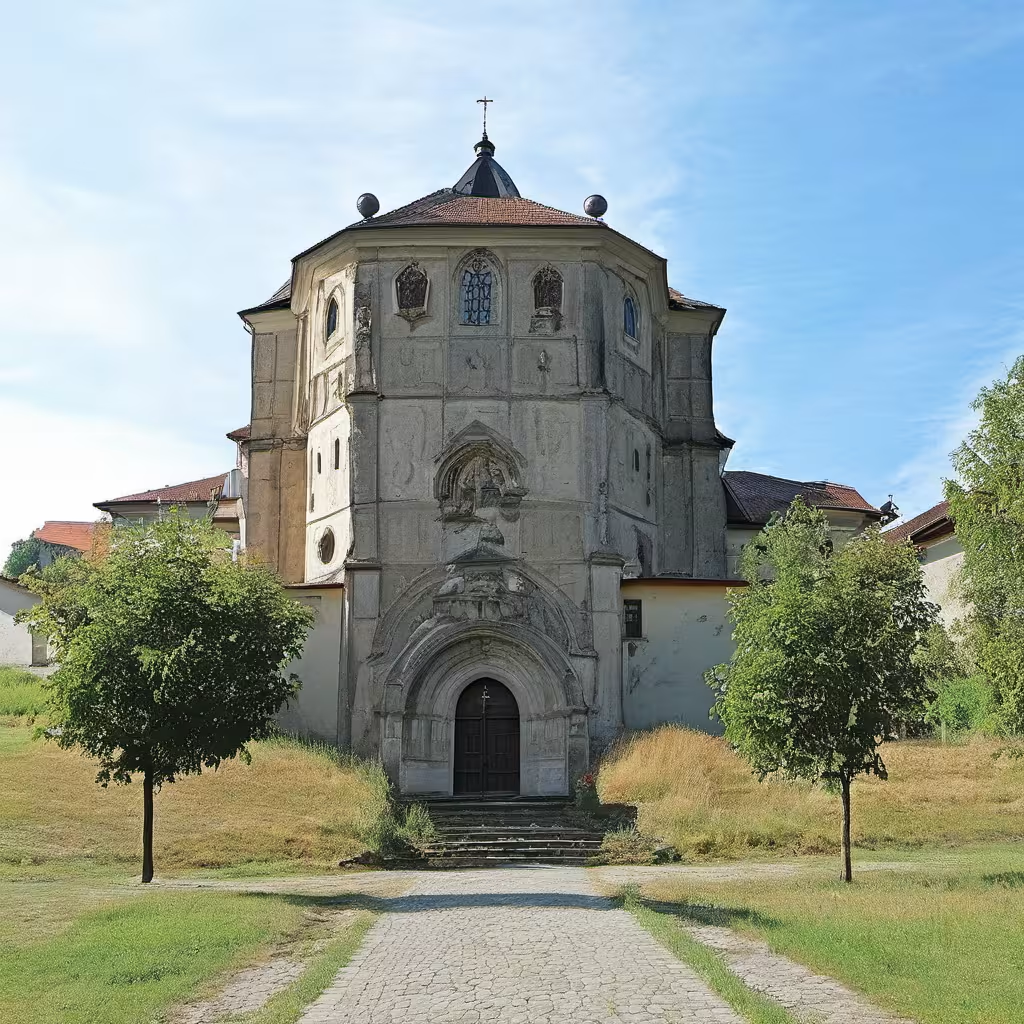
The historical appearance on the left is an AI-generated visualisation and serves as inspiration only.
Historical milestones
- 1707-1715
- Construction of the Church of the Holy Trinity as a central building of the complex.
- 1717
- The ceremonial consecration of the church by Jan Adam Wroclaw of Mitrovich.
- 1748
- Complete completion of the Baroque Hospital in Kuks.
- 1872
- Novogotic modifications by architect Jan Schmoranz.
- 1995
- Declaration by the church for a national cultural monument.
- 2013-2015
- Extensive reconstruction of the premises including gardens and farm buildings.
Architectural development
The church was built by Italian builders Giovanni Battista Alliprándi, Antonio Pietro Nettola and Pietro Giovanni Della Torre. In 1769 Leopold Niederocker made modifications to the hospice area, while the neo-gothic modifications took place in 1872 under the direction of Jan Schmoranz.
Historical events
- 1709
- Intense church construction with stone import.
- 1712
- The wedding of Anna Kateřina Šporková and František Karl Rudolf from Swéerts- Reist in church.
- 1743-1938
- Care for hospital members of the Order of Merciful Brothers.
Owners
Hake
Points of interest
- The floor plan connecting the Latin cross with the octagonal does not, according to historians, have a direct equivalent in Central Europe. - In 1712 the wedding of Anna Kateřina, daughter of František Antonín Špork, took place in the church before the official consecration of the building. - During construction work in 1709, the stone was transported up to 72 horses. - Priestry was located untraditionally in the south of the church, so that the building harmoniously fits into the hospital complex. - The church was supposed to serve as part of a shelter for approximately a hundred war veterans and old manor servants.
Guide
This guide is narrated by a synthetic voice generated by artificial intelligence.
Show guide text
This text was created by artificial intelligence and has not been editorially reviewed. It may contain inaccuracies.
Welcome to Kuks, where you are now in front of one of the most famous architectural works of the Baroque era - the Church of the Holy Trinity. You stand by this formidable state, whose ground plan has already surprised you with its unusual and elegance. In front of you, you see a building with an octagonal core that is crossed, which makes it a unique example of baroque architecture in Europe. This church was built as a central building of the campus of the hospice founded by Count Franz Antonín Špork, which is why you can reach this location.
Let's go into history. In 1707 the construction of this church began under the leadership of the architects Giovanni Battista Alliprándi and Antonio Pietro Netty, with later participation by Pietro Giovanni Dell Torre. The goal was to create not only a religious center, but also a burial place for the House of Sporks. The church was festively consecrated on 20 August 1717 by Jan Adam Vratislav of Mitrovic and became a key part of the Baroque hospital, which was completed in 1748.
Look up at the front of the church. Note the elegant connection of the eight-angle plan with the cross diagram, which is visible through the high windows and columns inside. This architectural experiment has not found a direct period in Central Europe, which makes it a unique monument object.
Key personalities associated with this monument are not only Count František Antonín Špork and Jan Adam Vratislav, but also Anna Kateřina Šporková. Her wedding took place in 1712 before the official consecration of the church, which was an event full of ceremonial parades and enthusiasm.
It is also interesting that during the construction works in 1709, the stone for the construction was carried by an enormous distance - 72 kilometres in total. This shows the logistical skills and determination of the time.
Now that you've noticed the essential elements of this historic place, we're going to invite you to further explore the site. Take a look at the surrounding gardens and economic buildings that have recently been renovated and enjoy the atmosphere of this place full of history and beauty. Let Kuks open the door to the past and bring you many new experiences. Thank you for your visit!
Frequently asked questions
Is Kostel Nejsvětější Trojice (Kuks) open to the public?
Yes, the church is open to the public. The tours are possible after the previous booking.
How do I get to the place by car / public transport?
The nearest bus stop is in Kuks and the church is 10 minutes' walk away. Parking is available at the monastery.
How much is the entrance fee and is it paid on the spot?
Admission is paid on site, the current price list can be found on the official site of the sights.
Is the tour suitable for children and seniors?
Yes, the church is also accessible to people with disabilities. For families with children we recommend visiting during school holidays.
How long does the tour take?
The tour can be completed in 30-60 minutes, depending on your attention and interest.
What are the opening times and booking is required?
The opening hours of the church are from April to October daily from 9: 00 to 5: 00. Reservation is recommended, but not mandatory.
What's interesting in the immediate vicinity?
The monastery Kuks and Jan Amos Komenský Memorial are located near the church - both places are worth visiting.
For kids
Imagine going back to the past! Until Count František Antonín Špork decided to establish one of Europe's largest medical institutions. And to make his complex really special, he built a beautiful Baroque church of the Holy Trinity.
How did it look here? The church stood in the middle of a large complex where everyone was treated from royal masters to poor people. Even there was a great Jesuit Gymnasium and a hospital with the most modern treatment methods of the time.
Businesses nearby
Do you run a restaurant, accommodation, shop, museum, rental, wellness or other visitor service near this monument? Show yourself directly to the people heading to it — this is how they will see you in the app and on the web:
Events nearby
Zdroj akcí: otevřená data měst a obcí ČR (Národní katalog otevřených dat) a kalendář akcí Národního památkového ústavu.
Nearby
Jan Amos Komenský Memorial
Kuks Monastery
Accommodation nearby
Themed route
Thematic cruise route around the Holy Trinity Church (Kuks)
1.Kostel Nejsvětější Trojice (Kuks) - Type: Historical monument, Baroque architecture - Why is he worth a visit? The church is the most important example of the Czech medical Baroque and was built in the 18th century as part of the medical complex Kuks. It is known for its unique architecture, rich history and artistic features.
2. The Kucha Garden - Type: Historical garden - Why is he worth a visit? This Baroque garden is part of the medical complex and has been used for therapeutic purposes. It is considered one of the oldest gardens in Europe that has been designed with regard to health care.
3. Dishwasher House - Type: Historical object - Why is he worth a visit? This object served as an apartment for doctors and other staff of the medical complex. Today it is used for various cultural events and exhibitions that represent the history of Kuks.
4. Kušnický pavilion - Type: Historical building - Why is he worth a visit? The pavilion was used for medical purposes and is known for its architectural beauty. It is part of the total picture of the Baroque complex Kuks.
5. Park Kuks - Type: Park, natural space - Why is he worth a visit? The park offers beautiful walks in a quiet and green environment around the medical complex. It is an ideal place to relax after exploring historical buildings.
This route offers a view of the unique medical Baroque complex Kuks, each part of which has its own historical and cultural significance.
Seasonal recommendations
In the spring Kuks flourishes and the surrounding parks awaken into life. Fresh greenery contrasts beautifully with white facades of church and sandstone statues. I recommend visiting a monument in the morning when the light is fine and the air is clean. Due to the variable weather, it is advisable to choose layered clothes and comfortable shoes for walks around the premises.
The summer season brings full sun and rich color landscape. The atmosphere is energetic, but due to the large number of visitors in the high season, it is best to come first thing in the morning to avoid the biggest crowds. Prepare light summer clothes and don't forget to protect against the sun, because the open area around the church offers only the least shadow.
Autumn in Kukse is magical thanks to golden leaves and frequent fog in the valley, which give the place a mysterious and melancholy touch. The lighting is warm and ideal for capturing baroque details in photographs. I recommend you take a warm sweater or a lighter jacket with you, because it may be cold enough in the open landscape.
In winter the monument is peaceful and majestic, especially if the area is covered by a layer of snow. The contrast of the white landscape and architecture creates a unique and quiet scene. Don't forget the high-quality thermal and non-slippery shoes. Before travelling, carefully verify the current opening times, which are shorter in this period than in summer.
Visualizations and artistic views


The visualisations are generated by artificial intelligence and serve as inspiration.
Photos from the area
Real photos taken near the monument

Zdroj a licence jsou uvedeny u každého snímku.
View from the area
This animation was generated by artificial intelligence from a real photograph of the surroundings. The motion and details are not real footage of the location.
Tips from visitors
No tips yet. Be the first!
Log in and add your tip.
Sources and literature
Fotografie: Marie Čcheidzeová / CC BY-SA 4.0 — Wikimedia Commons. The author and licence also appear when you hover over the image.
Faktickým podkladem tohoto textu byl článek na Wikipedii, jehož autory jsou přispěvatelé Wikipedie. Článek je dostupný pod licencí CC BY-SA 4.0.
Location on the map

Příběhy a pověsti
Legendy, pověsti a příběhy spjaté s touto památkou
Fotografie návštěvníků
Zatím žádné fotografie. Buďte první, kdo přidá fotografii z návštěvy!
Přihlaste se a přidejte svou fotografii nebo hodnoťte.
Za ověřenou návštěvu v aplikaci získáte víc bodů — poznáme podle GPS, že jste na místě.
Reviews and comments