






Kostel Nejsvětější Trojice (Stranná) Church
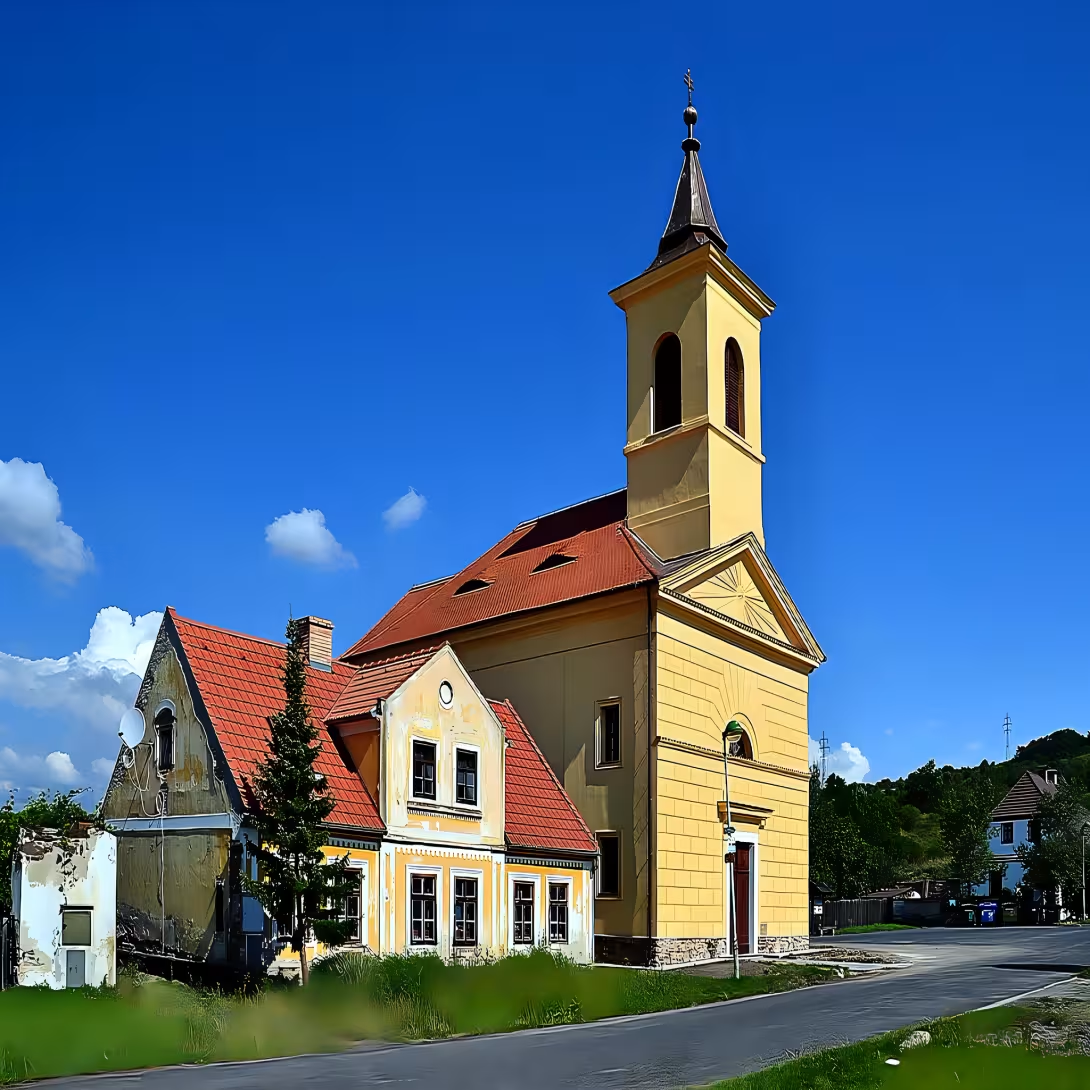
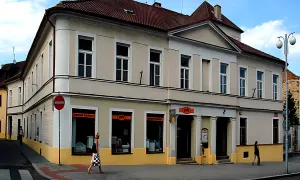
Kostel Nejsvětější Trojice in Stranná is a neoclassical church that has stood the test of time. Its historic bells and Baroque furnishings offer a glimpse into the past. Located in the Ústecký kraj region, this charming church has been an integral part of the community since its first mention in records dating back to 1361.
The church's history is marked by significant events. A severe landslide in 1820 damaged Stranná, leading to the construction of a new church in 1842. After World War II, the church was abandoned until its restoration began at the start of the 21st century. Today, it serves as a filial church under the Chomutov deanery.
The church's architecture is characterized by its neoclassical style, featuring a triple-apsed presbytery and a bell tower above the main façade. Inside, visitors can admire the flat ceiling and Baroque furnishings, including remnants of equipment from 1859 and organs from the same era. A crucifix from 1820 also stands proudly within the church.
The church's history is further enriched by its bells. Three original bells once hung within its walls. The largest bell, Linharta ze Štampachu, was cast in Jáchymov in 1590, while the middle-sized bell was also cast there in 1614. The smallest bell dates back to 1544. Two of these bells were relocated to Chomutov after the church's abandonment, with one being placed on the city hall's tower.
In addition to its historical significance, visitors can explore the surrounding area, which features a remains of a Calvary from 1873 and a statue of the Virgin Mary from 1858. Today, Kostel Nejsvětější Trojice in Stranná is a must-visit destination for anyone interested in history, architecture, or simply wanting to experience the beauty of this charming church.
Then and now
Drag the slider to compare how the landmark may have looked when it was built with the view today.
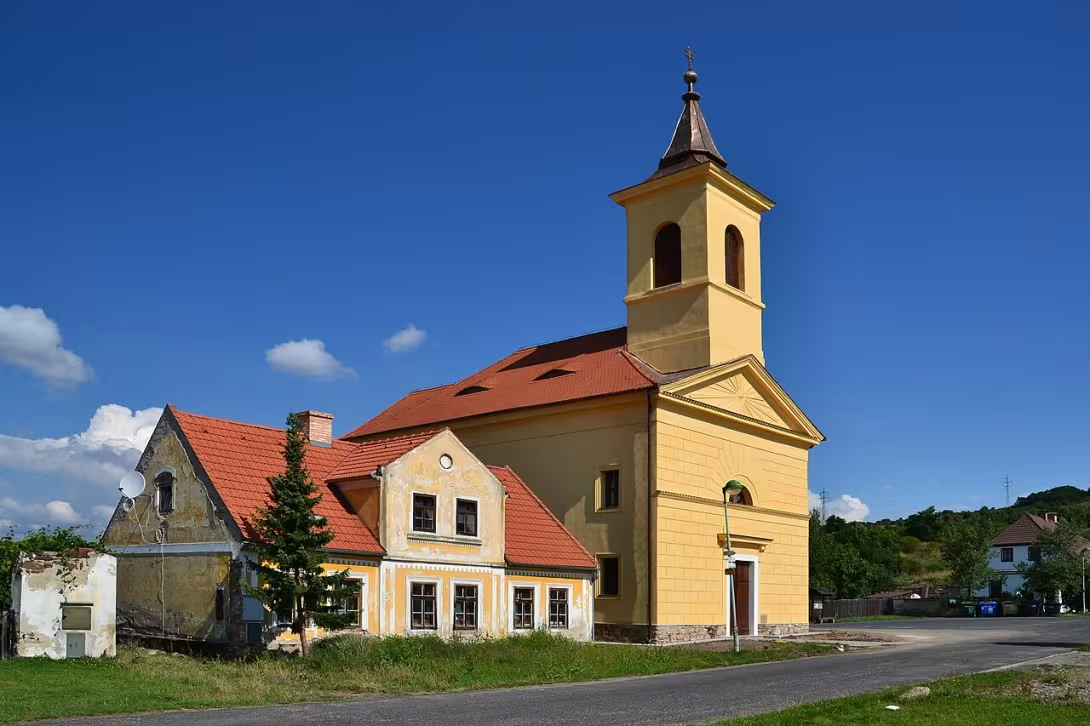

The historical appearance on the left is an AI-generated visualisation and serves as inspiration only.
Historical milestones
- 1590
- Linhart's zvon was cast by Hans Wieldt in Jáchymov
- 1614
- Middle-sized zvon was also cast in Jáchymov
- 1544
- Smallest zvon was cast
Architectural development
The church is a neoclassical building with a triple-apsed presbytery and a bell tower above the main façade.
Historical events
- 1361
- First mentioned in records
- 1820
- Stranná was severely damaged by a landslide
- 1842
- Old church replaced with a new one
- 1945
- Church abandoned after World War II
Points of interest
– The church's original bells were not only used for worship but also served as a form of communication in the past. The largest bell, Linharta ze Štampachu, was cast in Jáchymov in 1590 and was used to announce important events and summon people to gatherings.
– One of the most surprising facts about the church is that it was abandoned after World War II and left to ruin for decades before its restoration began in the early 21st century. This period of neglect has helped preserve many of the original Baroque furnishings and architectural features.
– The church's neoclassical architecture is not only aesthetically pleasing but also reflects the cultural exchange between Europe and Asia during the 18th and 19th centuries. The triple-apsed presbytery and bell tower are characteristic features of this style, which was popularized by European architects who traveled to China and incorporated Asian design elements into their work.
– Visitors may be surprised to learn that two of the original bells were relocated to Chomutov after the church's abandonment, with one being placed on the city hall's tower. This move helped preserve these historic artifacts for future generations.
– The church's surrounding area is home to a lesser-known Calvary from 1873 and a statue of the Virgin Mary from 1858. These additional historical features make the church an even more compelling destination for history buffs and architecture enthusiasts.
Guide
This guide is narrated by a synthetic voice generated by artificial intelligence.
Show guide text
This text was created by artificial intelligence and has not been editorially reviewed. It may contain inaccuracies.
The Church of the Holy Trinity in Stranná is an Empire style building that was constructed on the site of an older church. That church was first mentioned in the municipality as far back as 1361.
The fate of both buildings was influenced by nature. In 1820, a severe landslide damaged Stranná and the old church had to be replaced by a new one in 1842. After 1945, the church was abandoned and did not undergo restoration until the beginning of the 21st century. Until December 31, 2012, it was the parish church of the Stranná parish. From January 3, 2013, due to the merger of parishes in the Litoměřice diocese, it became a daughter church of the Chomutov deanery parish.
The church is single-naved and unoriented, which means that its axis does not point in the traditional direction towards the east. The presbytery is terminated with a polygonal apse, a rectangular sacristy stands to the side, and above the main façade rises a prismatic tower. Inside there is a flat ceiling. Remnants of Baroque furnishings and an organ from 1859 have been preserved here. The crucifix dates from 1820, the year the municipality was struck by the landslide.
The bells have an interesting story. The church once had three of them. The largest bore the name Linhart of Štampach and was cast in Jáchymov in 1590 by Hans Wieldt. The middle bell was also cast in Jáchymov, in 1614. The smallest dated from 1544.
Two of the bells ended up in Chomutov. One of them was placed on the city tower at the Church of the Assumption of the Virgin Mary. The cracked Renaissance bell from 1614 was purchased in 1930 by the Chomutov city council for the municipal museum. According to the inscriptions, it was cast by the Jáchymov bell founder Hans Zinck. On the bell, its donors are identified by inscriptions and their coats of arms, the spouses Jan Jindřich of Štampach and Eleonora Barbora of Fictum.
A torso of a Calvary from 1873 has been preserved on the square near the church. On the edge of the municipality stands a statue of the Virgin Mary from 1858.
Tips for visitors
The best time to visit the Church of the Holy Trinity is during spring and autumn, when the weather is mild and sunny. This allows for a pleasant stroll around the surrounding area and optimal photography conditions.
For up-to-date information on schedules and routes, check online or consult with local authorities.
Don't forget to bring your camera and a comfortable pair of shoes for exploring the surrounding area. A hat and sunscreen are also recommended for outdoor activities.
For photography enthusiasts, the best spots to capture stunning images are around the church's exterior and nearby Calvary. The morning sunlight creates a beautiful golden glow, making it an ideal time for taking photos.
If you're traveling with family, consider visiting the nearby statue of the Virgin Mary from 1858. This historic landmark offers a unique opportunity for kids to learn about local history and culture.
Frequently asked questions
Can the monument be visited?
Religious buildings are usually open mainly during services; at other times a visit is normally arranged with the parish or the operator. We have not verified specific times.
Where is the monument?
Location: Stranná, Ústecký kraj. The map on this page shows the exact spot.
Businesses nearby
Do you run a restaurant, accommodation, shop, museum, rental, wellness or other visitor service near this monument? Show yourself directly to the people heading to it — this is how they will see you in the app and on the web:
Events nearby
Zdroj akcí: otevřená data měst a obcí ČR (Národní katalog otevřených dat) a kalendář akcí Národního památkového ústavu.
Nearby
Nearby, you can find the remains of a Calvary from 1873 and a statue of the Virgin Mary from 1858.
Accommodation nearby
Themed route
Stranná Pilgrimage Route
This route takes you through the charming town of Stranná, showcasing its rich history and cultural heritage.
1. The Virgin Mary Statue (1858) Start your journey at this beautiful statue of the Virgin Mary, located in the heart of Stranná. This 19th-century landmark is a great introduction to the town's spiritual side. 2. Calvary Remains (1873) Walk to the nearby remains of the Calvary from 1873. Although not fully intact, this historic site offers a glimpse into the town's past and its strong Catholic traditions. 3. Kostel Nejsvětější Trojice (Stranná) (Kostel) Your final destination is the stunning Kostel Nejsvětější Trojice (Stranná), a beautiful church that dates back to the 18th century. Take time to admire its architecture, explore the interior, and soak up the peaceful atmosphere.
This route offers a unique blend of history, culture, and spirituality, making it an unforgettable experience in Stranná.
Seasonal recommendations
Here is the seasonal recommendation for visiting the historic landmark, Kostel Nejsvětější Trojice (Stranná):
Spring
The spring season brings a gentle warmth and vibrant greenery to the surroundings of the church. As you approach the site, you'll notice the blooming flowers and trees adding a pop of color to the scenery. The atmosphere is peaceful and serene, making it an ideal time for contemplation and reflection.
Practical tips: Arrive early in the morning or late in the afternoon to avoid the crowds that gather during peak hours. Wear comfortable shoes and clothing suitable for mild weather conditions. Take your time to admire the beauty of nature and the architecture of the church.
Summer
Summer is a popular time to visit, with warm sunshine and lush greenery surrounding the church. The atmosphere is lively, with children playing in the adjacent park and families picnicking on the grass. As you enter the church, you'll be struck by the cool interior and the soft light filtering through the stained-glass windows.
Practical tips: Plan your visit early in the morning or late in the afternoon to avoid the peak tourist hours. Wear comfortable clothing and shoes suitable for walking. Be prepared for potential crowds and noise from the surrounding park.
Autumn
As autumn arrives, the surroundings of the church take on a warm, golden hue. The leaves change colors, creating a picturesque backdrop for your visit. The atmosphere is cozy and inviting, making it an ideal time to relax and unwind.
Practical tips: Visit during the week or early in the morning to avoid crowds. Wear layers suitable for changing weather conditions and comfortable shoes. Take your time to admire the autumn foliage and enjoy the peaceful atmosphere.
Winter
Winter brings a serene silence to the surroundings of the church, with snowflakes gently falling onto the frozen landscape. The atmosphere is tranquil and contemplative, making it an ideal time for reflection and meditation.
Practical tips: Plan your visit during the week or early in the morning to avoid crowds. Wear warm clothing and comfortable shoes suitable for walking on snowy terrain. Take your time to admire the winter scenery and enjoy the peaceful atmosphere.
Visualizations and artistic views


The visualisations are generated by artificial intelligence and serve as inspiration.
Photos from the area
Real photos taken near the monument


Zdroj a licence jsou uvedeny u každého snímku.
Tips from visitors
No tips yet. Be the first!
Log in and add your tip.
Sources and literature
Photos: Petr Kinšt / CC BY-SA 3.0, rozlišení zvýšeno umělou inteligencí — Wikimedia Commons. The author and licence also appear when you hover over the image.
Faktickým podkladem tohoto textu byl článek na Wikipedii, jehož autory jsou přispěvatelé Wikipedie. Článek je dostupný pod licencí CC BY-SA 4.0.
Location on the map
Příběhy a pověsti
Legendy, pověsti a příběhy spjaté s touto památkou
Fotografie návštěvníků
Zatím žádné fotografie. Buďte první, kdo přidá fotografii z návštěvy!
Log in a přidejte svou fotografii nebo hodnoťte.
Za ověřenou návštěvu v aplikaci získáte víc bodů — poznáme podle GPS, že jste na místě.
Reviews and comments