



Kostel Nejsvětějšího Srdce Ježíšova (Liberec XXXIII-Machnín) Church
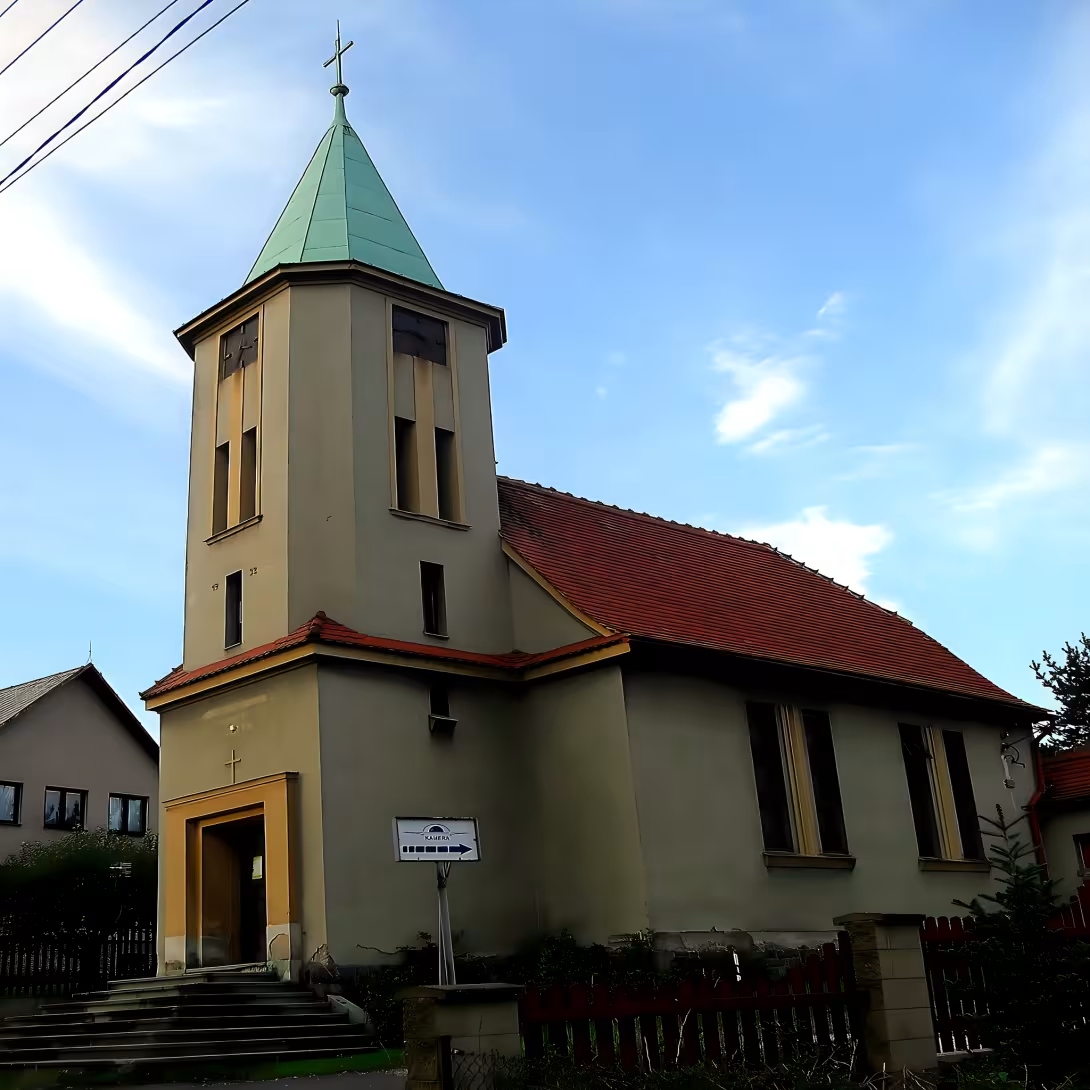
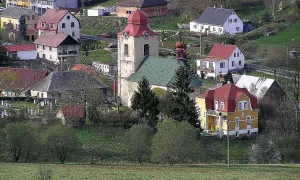
The Roman Catholic Philistine Church in Machnín was founded in the early 1930s. The builder was J. Seibt, who created a single-boat construction with arched ceilings. Architecture follows modern concept - the church has a dominant western prism tower and closed presbytery with apsidon. The outer walls of the church are equipped with cement plaster. The internal equipment comes from the construction period and has the current character.
The construction was financed by a collection between local parishioners and supporters, which was also supported by the local community. The land on which the church stands, dedicated and partly sold the local miller Wagner. The construction started with the laying of the base stone on 2 May 1932. The bricks from Hrádek nad Nisou were used for construction, the carpentry work was carried out by Ernst Prokop and Herman Seibt, the painting of the interior was handled by local painter Adolf Hildebrand. The ceremonial consecration took place on 4 June 1933 in the presence of the Litomeric Canon Antonín Wagner.
Before the church was consecrated, three bells were made by Herdel Chomutov. But these bells did not survive the wars between 1939 and 1945. Today, a small bell comes from the chapel on Bedřichovka. The valuable object of the church is the painting of the Virgin Mary painted on wood, dedicated to Heinrich Demuth, a native from the nearby Frýdlant.
The churches received the last major modification in 1975 when it was repainted and at the same time modified its interior. There is a cemetery near the church. Between 1920 and 1921, members of the German Gym Association around the cemetery erected a marble obelisk in the eternal memory of those who fell in the First World War. In 1925, an urn grove was established near the cemetery to bury the deceased in the form of ash.
The Church of the Holy Heart of Jesus thus remains witness to several historical layers of this North Bohemia site and keeps a memory of the generations of parishioners who built it.
Then and now
Drag the slider to compare how the landmark may have looked when it was built with the view today.
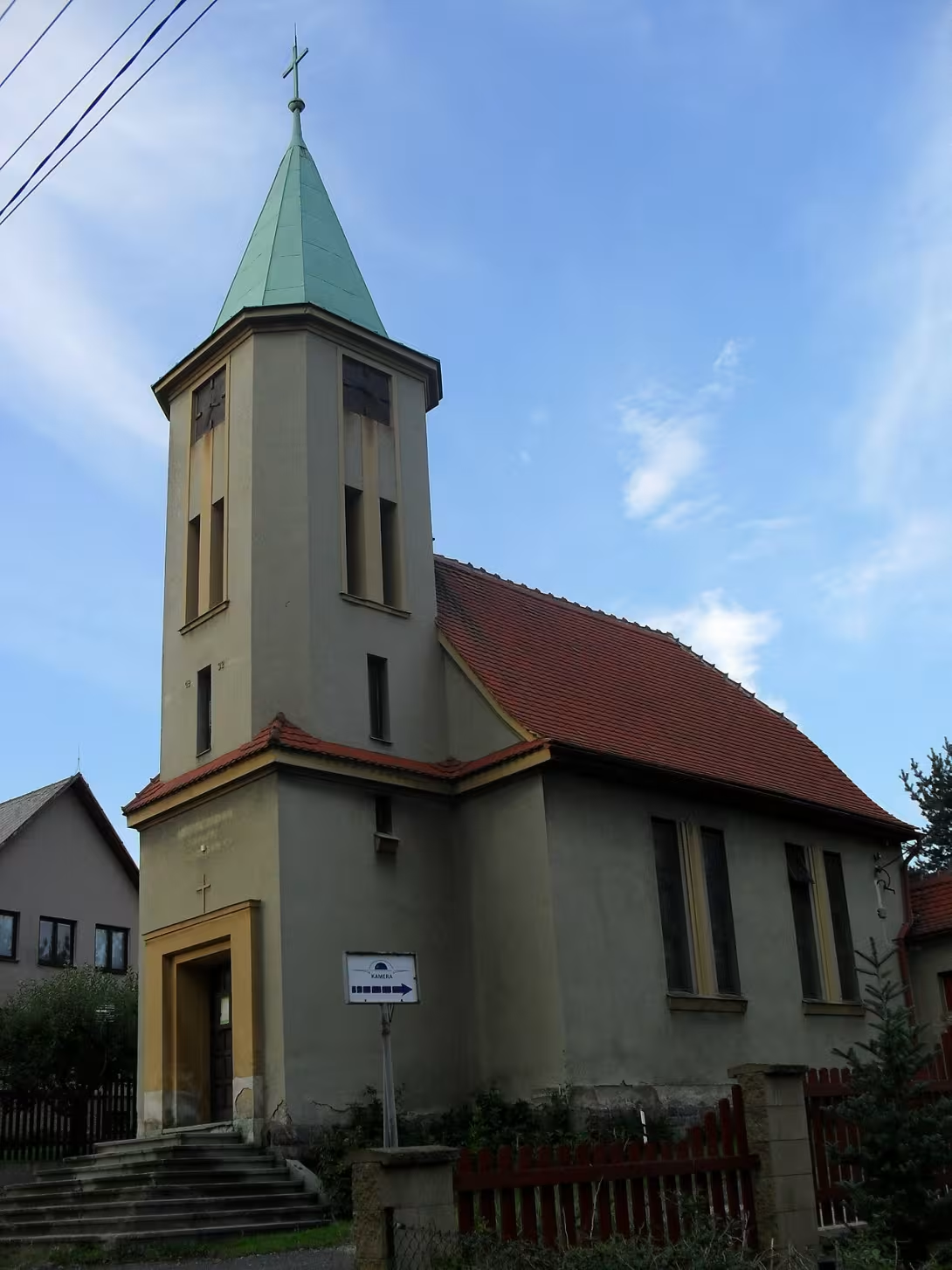

The historical appearance on the left is an AI-generated visualisation and serves as inspiration only.
Historical milestones
- 2.5.1932
- Laying of the church base stone
- 1933
- The ceremonial consecration of the church and the consecration of three bells
- 1975
- Last painted church and modified interior
Architectural development
The church was built as a one-ship building with a prism tower and an apsid. The bricks from Hrádek nad Nisou were used, the carpentry work carried out by Ernst Prokop and Herman Seibt. The painting was done by local painter Adolf Hildebrand. The church was designed in a spirit of functionalism and is arched. The internal device is modern and corresponds to the time of origin.
Historical events
2 may 1932 - laying of the church base stone
4th June 1933 - ceremonial consecration of the church by the lithomeric canary Antonín Wagner
1975 - last painting of the church and interior
Points of interest
- The church was built in the 1930s as a philic Roman Catholic temple.
- The construction was initiated and financed by local parishioners and supporters, with the land for the church donated and sold by local miller Wagner.
- The base stone was laid on 2nd May 1932, the ceremonial consecration took place on 4th June 1933 in the presence of the Litomeric Canon Antonín Wagner.
- The church has a modern architecture with a dominant western prism tower and sealed ceilings.
- In the interior there is a painting of the Virgin Mary on the wood, dedicated to Heinrich Demuth from the nearby Frýdlant.
Guide
This guide is narrated by a synthetic voice generated by artificial intelligence.
Show guide text
This text was created by artificial intelligence and has not been editorially reviewed. It may contain inaccuracies.
The Church of the Most Sacred Heart of Jesus in Machníně, also called the Church of the Divine Heart of Our Lord, is a Roman Catholic subsidiary church. It is a modern sacred building from the first half of the nineteen thirties.
Money for the construction was raised through a collection in the surrounding area. The local miller Wagner donated the land in part and sold part of it. The foundation stone was laid on May second, nineteen thirty-two. The church was designed by builder Seibt and built from bricks from Hrádek nad Nisou. The carpentry work was carried out by Ernst Prokop and Herman Seibt. The interior painting was undertaken by local painter Adolf Hildebrand. The church was solemnly consecrated by canon Antonín Wagner from Litoměřice on June fourth, nineteen thirty-three.
Even before the church's consecration, three bells were blessed. They were cast by the Chomutov firm Herdel, but they did not survive the war. Today, ringing is done with a small bell from the chapel on Bedřichovka. A painting of the Virgin Mary painted on wood was donated to the church by Heinrich Demuth, a native of Frýdlant.
The church is single-nave and vaulted. On the western side it has a prismatic tower, on the opposite end an apse. The facade is covered with cement plaster and the interior furnishings are modern. The church was last painted in nineteen seventy-five and at the same time the interior was renovated.
A cemetery lies by the church. Members of the German Gymnastic Association built a marble obelisk in front of it in nineteen twenty and nineteen twenty-one to commemorate those who fell in the First World War. In nineteen twenty-five, a cremation grove was created here. Both are therefore older than the church itself.
Frequently asked questions
Can the monument be visited?
Religious buildings are usually open mainly during services; at other times a visit is normally arranged with the parish or the operator. We have not verified specific times.
Where is the monument?
Location: Liberec XXXIII-Machnín, Liberecký kraj. The map on this page shows the exact spot.
For kids
Imagine going back to the past. The town of Machín was a small town at the time, where people lived in peace and related to nature. The Church of the Holy Heart of Jesus stood here as a small chapel where prayers and weddings were held.
How did it look here? Who lived here? What happened here? The town of Machnin was full of life and work. People lived in homes that were built around the church. The earth was fertile, and people were working it. There were also woods where wood was collected to build houses.
Businesses nearby
Do you run a restaurant, accommodation, shop, museum, rental, wellness or other visitor service near this monument? Show yourself directly to the people heading to it — this is how they will see you in the app and on the web:
Events nearby


Zdroj akcí: otevřená data měst a obcí ČR (Národní katalog otevřených dat) a kalendář akcí Národního památkového ústavu.
Nearby
- A city with a historical centre and an important industrial past, where bricks were used to build a church.
- The chapel village where the bell used in the church in Makhnín came from.
- Historic city with rich cultural history where Heinrich Demuth lived, dedicated to the painting of the Virgin Mary.
Accommodation nearby
Trips and activities nearby
Guided tours, tickets and activities nearby from GetYourGuide
Affiliate link: if you buy from the partner, we may receive a commission. The price for you does not change.
Search tours and activities →Themed route
1. Chateau above Nisou, the city: Historical Centre and Industrial History where bricks were made for the construction of the church. Distance about 10 km. 2. Bedřichov, village: Place with chapel, where the bell used in the church in Machnín comes from. Distance about 5 km. 3. Church of the Holy Heart of Jesus, Church: Main destination of the trip in the village Liberec XXXIII-Machnín. 4. Frýdlant, historic city: A city with a rich cultural history. Distance about 15 km.
Seasonal recommendations
Spring In the spring months, the Church of the Holy Heart of Jesus in Makhnín is dressed in light, which penetrates through the young leaves of the surrounding trees and creates fine shadows on its facade. Nature is awakening - green lawns and flowering shrubs provide a peaceful, refreshing atmosphere, while the sun's rays paint the interior of the church with a golden reflection. The interior, illuminated by natural light, looks light and air, as if the space itself was opening up to the new year. The sound environment is also specific - the singing of birds and the noise of wind in tree crowns complements the silence of prayers. * Practical advice: * Spring visit is ideal in March to April when the church is even less visited than in summer. It is recommended to dress in layers - it is cold in the morning, but the afternoon sun warms. The best time is early morning or late afternoon when the light falls into the church most beautiful and the crowds are minimal. If you are planning a visit in May, consider the possibility of rain and wear waterproof clothes.
Summer In summer months, the church in Machnín becomes a place where the peace of spiritual reflection meets the livelihood of the outdoor environment. The sun, which shines directly into the window openings in the morning, creates a warm, almost meditative atmosphere in the interior, while outside the sounds of footsteps along the sidewalk and the noise of leaves remind you that you are in the middle of the city. The evening hours then bring pleasant cooling - the church shines and its walls absorb heat, so inside there is pleasant temperature even on a hot day. The surrounding area is green and full of life, but there are also various events in the summer months, which can attract more visitors. * Practical advice: * The best time is early morning or late afternoon when the church is colder and the crowds are less. In July and August, avoid noon hours - not only is it hot inside, but there may also be queues at the entrance. Light but decent clothing (shoulders and knees covered), sunglasses and water is recommended. If you visit the church in the main summer season, count on the possibility that some events in the area (e.g. concerts or exhibitions) can attract more people.
Autumn Autumn brings a strange, almost mystical atmosphere to Machín, where the Church of the Holy Heart of Jesus becomes a place where the warmth of the inner space meets the cold, golden colors of the surrounding nature. The sun, which shines lower above the horizon in September and October, paints the facade of the church into the soft shades of orange and brown, while in the interior the light disperses through the colored stained glass and creates a game of light that is unique at this time of the year. The surrounding area changes - the leaves of trees turn into pallets of yellow, red and brown tones that contradict the darker walls of the church. The air is cleaner and colder, which gives the visit a sense of peace and focus. * Practical advice: * The best time to visit is in the afternoon when the sun creates the most beautiful effects on the facade. In November, you can count on colder weather - warm clothes and rain are necessary. In advent time (since the second half of November) the church can be visited by more believers, but the crowds are smaller than in summer. It is also recommended to visit the church at a time when it is not too windy so that the strong wind does not spoil your tour.
Winter Winter Makhnín and its church offer a completely different, almost fairy-tale atmosphere, where the white snow coat and gray winter light are projected into the interior of the church and create a calm, contemplative mood. The snow, which covers the roofs and surrounding trees, gives the church the impression of lightness and purity, while the inner space is lit with artificial light, which creates warm, golden shades and contrasts with the outside cold. The winter sun, which shines low above the horizon, penetrates the church only briefly - morning and afternoon - and creates long shadows that provide the interior with dramatic character. The surrounding area is quiet, almost snowy, and visiting the church becomes an experience that combines spiritual peace with the beauty of winter nature. * Practical advice: * In winter it is best to visit the church in the morning when there is still light and temperatures are not too low. Clothes should be warm, but untouchable - inside the church is a pleasant temperature, but it can be very cold outside. In December, you can count on the possibility that the church will be visited by more believers in advent time, but opening times are shorter than summer. It is also recommended to avoid visits in strong frost, where roads can be slippery and uncomfortable.
Visualizations and artistic views


The visualisations are generated by artificial intelligence and serve as inspiration.
Photos from the area
Real photos taken near the monument


Zdroj a licence jsou uvedeny u každého snímku.
Atmosphere of the place
This atmospheric visualisation of the place and period was generated by artificial intelligence. It is not real footage of the location.
Tips from visitors
No tips yet. Be the first!
Log in and add your tip.
Sources and literature
Photos: Adam Fogl / CC BY-SA 3.0, rozlišení zvýšeno umělou inteligencí — Wikimedia Commons. The author and licence also appear when you hover over the image.
Faktickým podkladem tohoto textu byl článek na Wikipedii, jehož autory jsou přispěvatelé Wikipedie. Článek je dostupný pod licencí CC BY-SA 4.0.
Location on the map
More monuments – Liberec XXXIII-Machnín
Show all in the municipality
Příběhy a pověsti
Legendy, pověsti a příběhy spjaté s touto památkou
Fotografie návštěvníků
Zatím žádné fotografie. Buďte první, kdo přidá fotografii z návštěvy!
Log in a přidejte svou fotografii nebo hodnoťte.
Za ověřenou návštěvu v aplikaci získáte víc bodů — poznáme podle GPS, že jste na místě.
Reviews and comments