



kostel Panny Marie Sněžné v Rokycanech Church
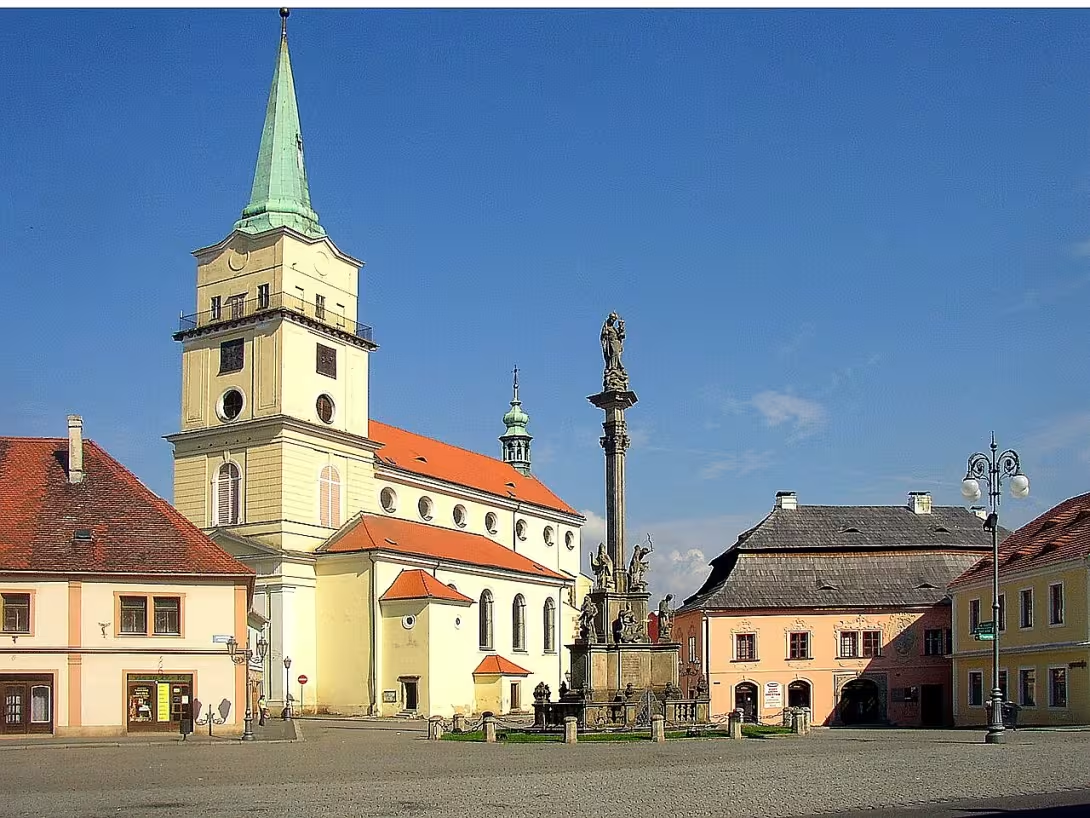
The Church of the Virgin Mary Snow stands on Masaryk Square in Rokycany and is one of the important sacral structures of the Pilsen Region. It is a Roman Catholic temple with a strongly anchored history in urban development, which retains the elements of its Gothic past despite significant baroque and classical interventions from the turn of the eighteenth and nineteenth centuries. Bones is granted protection as a cultural monument of the Czech Republic.
The presence of the church in this place can be demonstrated at least from the 14th century when Rokycany evolved from a freely expanding settlement to a fortified city. In 1363 the Probostness of the Augustinian Order was established here and the church acquired the status of the main temple Rokycan. It became part of the entire fortified district, which also included the chapel of Saint Anne and the Archbishop Chateau serving as the headquarters of the feudal administration. This area belonged to the Archbishop of Prague. The original construction took the form of a Gothic basilica with three boats and a five-sided presbytery. On the west side, a tower and a shield rose, the entrance was made up of a Gothic portal with a rich figural sculpture decoration.
The fate of the temple was very urgent during the great fire in September of 1784, which destroyed a significant part of Rokycan. In the following years 1785 to 1788 the church passed in the hands of builder Ignatius Jan Nepomuk Palliardi, who rebuilt it into a late Baroque form. The builder Jan Hofmann participated in both reconstruction and deanery. The interesting thing is that Palliardi kept the basic Gothic available during the reconstruction - a tripod with a presbytery - and left it knowingly in the spirit of the original Gothic plan. The interior equipment was collected from other churches, especially the main altar, which comes from the abolished church of St. Michael the Archangel in Prague. As part of the Josephine reforms, the chapel of Saint Anne was abolished at the church as well as the Church of St. Peter and Paul in the suburbs.
So far, Palliardi has not included a tower in his recovery. The bells remained in the temporary bell tower next to the temple for the next 30 years. The new tower was built between 1821 and 1823 in Empire style according to the design of builder František Heger. Construction development was completed in 1856, when the tower increased by one floor above the gallery, reaching its present height of sixty-six metres. In this way the church gradually transformed in its present form, which combines the Gothic foundations with classical elegance.
The Church of the Virgin Mary of Snow is attributed to a distinctive influence on the religion in Rokycan. The Sokcha of the Virgin Mary Rokycanská, which the church guards, was dedicated as an object of respect. According to the old sources it was dedicated to the 32nd Holy Way Chapel from Prague to Staré Bloslav, which was created between 1674 and 1690. / p >
Then and now
Drag the slider to compare how the landmark may have looked when it was built with the view today.
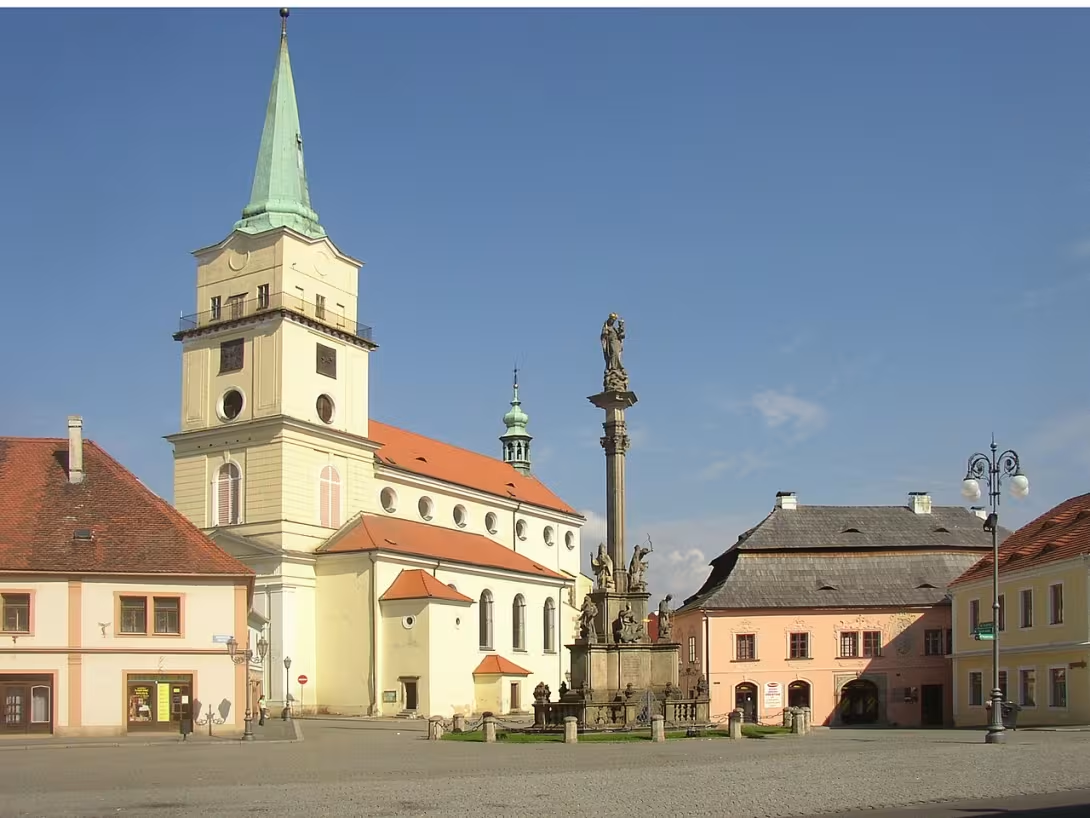
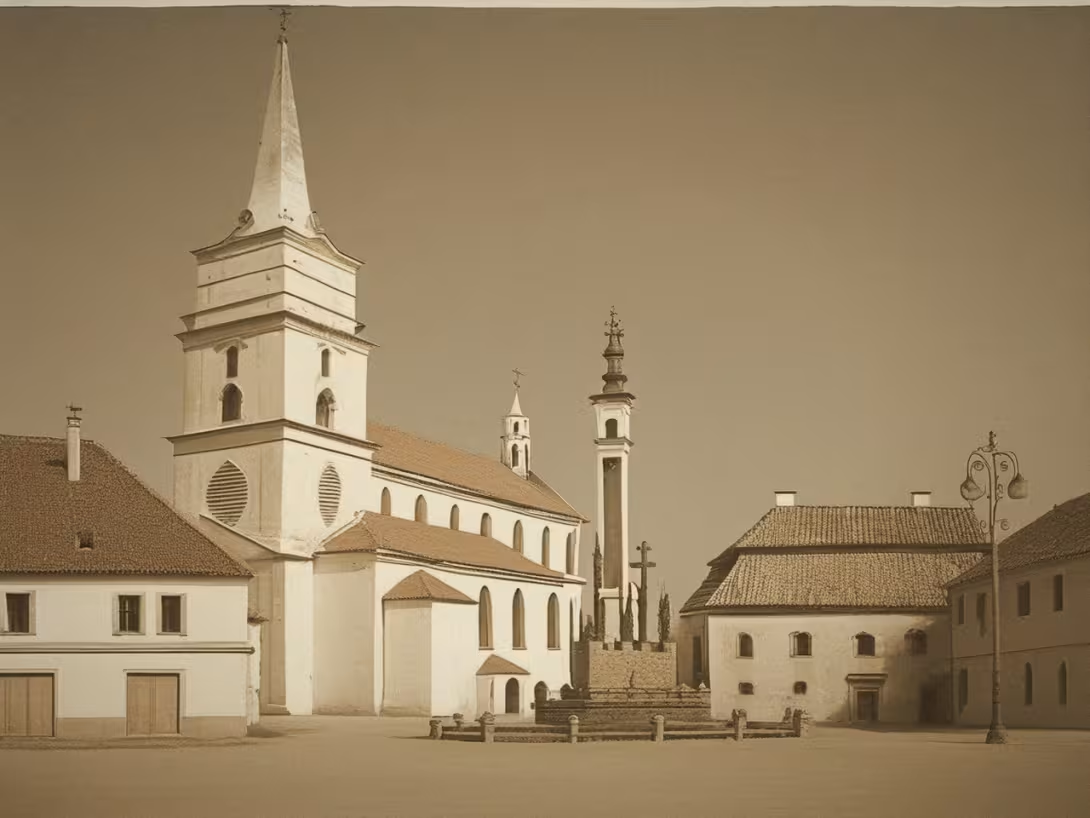
The historical appearance on the left is an AI-generated visualisation and serves as inspiration only.
Historical milestones
- 1363
- Establishing the Provost of the Order of the Augustinian
- 1784
- The fire that destroyed the church and most of the town Rokycan
Architectural development
The church was originally Gothic and had a basilical tripod structure. After the fire in 1784, the church was rebuilt into the late Baroque form of Ignatius Jan Nepomuk Palliardi, which preserved the basic space available to the original medieval temple. Interior equipment was imported from other churches. The Empire Tower, built by František Heger, supplied the construction with its characteristic silhouette.
Historical events
- 1363
- Establishing the Probostness of the Order of the Augustinian at the Church
- 1784
- The fire that destroyed the church and most of the town Rokycan
- 1821-1823
- The position of the Empire Tower according to the František Heger project
Points of interest
- The Church of Our Lady of Snow stands on Masaryk Square in Rokycany and is protected as a cultural monument of the Czech Republic.
- The presence of the church can be demonstrated at least from the 14th century when Rokycany evolved from a free settlement to a fortified city. In 1363 the Probostness of the Augustinian Order was founded here and the church acquired the status of the main temple.
- During a big fire in 1784, the temple was severely damaged. In the following years it was rebuilt into a late Baroque form by the builder Ignatius Jandou Nepomuk Palliardi, who kept the basic Gothic available.
- Sokcha of the Virgin Mary Rokycanská, which the church guards, was dedicated as an object of respect. According to the old sources it was dedicated to the 32nd Holy Way Chapel from Prague to Staré Byslav.
- The new tower of the church, which reached its height of sixty-six metres today, was built between 1821 and 1823 in the Empire style according to the František Heger project.
Guide
This guide is narrated by a synthetic voice generated by artificial intelligence.
Show guide text
This text was created by artificial intelligence and has not been editorially reviewed. It may contain inaccuracies.
The Church of Our Lady of the Snows stands on Masaryk Square in Rokycany. Its architectural development can be traced continuously from the Gothic period. Its present appearance was given to it by a late Baroque and Classicist reconstruction at the turn of the 18th and 19th centuries. The church is protected as a cultural monument of the Czech Republic.
A church has stood on this site at least since the 14th century. At that time it became the main church of Rokycany, which was transforming from a spontaneously growing settlement into a fortified town. In 1363 an Augustinian provost's office was established there. The church became part of a fortified district, which also included the Chapel of Saint Anne and the archbishop's castle. From there the town was administered, which belonged to the Prague archbishopric.
The medieval church was a three-aisled basilica with a five-sided presbytery. On the western side it had a gable and a tower. Entry to the church was through a Gothic portal with sculptural decoration of figures. The building was repaired and modified many times.
In September 1784 a devastating fire swept through Rokycany. It destroyed almost the entire town and the church burned down. Between 1785 and 1788 it was repaired and reconstructed in a late Baroque style by Ignác Jan Nepomuk Palliardi. The reconstruction preserved the basic layout of the medieval church, that is the three aisles with the presbytery. The deanery was also renovated under the direction of builder Jan Hofmann. Interior furnishings were brought into the church from other churches. In particular, the altar comes from the demolished Church of Saint Michael the Archangel in Prague. As part of Josephine reforms, the neighboring Chapel of Saint Anne was closed, and likewise the Church of Saints Peter and Paul on the Rokycany outskirts.
Palliardi's renovation did not affect the tower. For the next thirty years the bells therefore hung in a provisional bell tower beside the church. The tower was only built in the years 1821 to 1823 in the Empire style according to a design by František Heger. The architectural development of the church ended in 1856 when the tower received another storey above the gallery. This brought it to a height of 66 meters.
In the church there is a statue of Our Lady of Rokycany. To her was dedicated the thirty-fourth chapel of the Holy Path from Prague to Stará Boleslav, founded in the years 1674 to 1690.
Tips for visitors
The best time to visit the church of Our Lady of Snow in Rokycany is autumn or spring when it is quieter and nature offers beautiful colors. This period also offers ideal lighting conditions for photography, especially at noon, when the sun refreshes the interior of the church and surrounding greenery.
When visiting, take with you suitable shoes because the church has historic interiors and the soil can be cold. It is also good to have a camera with you to capture the beauty of architecture and details in the interior.
The photography of the church offers the best possibilities from the outside, especially in sunny midday light. The interior can be photographed considering that the use of live colours and brightness can highlight historical architecture.
In the vicinity of the church it is possible to visit the national monument Rokycan Chateau, located nearby. For families with children it is interesting to explore the historic streets of the city and perhaps even visit natural parks or recreation areas nearby.
Frequently asked questions
Can the monument be visited?
Religious buildings are usually open mainly during services; at other times a visit is normally arranged with the parish or the operator. We have not verified specific times.
Where is the monument?
Location: Masarykovo nám. 137, Střed, Rokycany, Plzeňský kraj. The map on this page shows the exact spot.
Why is the monument protected?
It is listed in the Central List of Cultural Monuments of the Czech Republic as a cultural monument (register no. 28423/4-2410).
For kids
Imagine going back to the past and finding yourself in the small town of Rokycany. Located here is Masaryk Square and there is a beautiful church of Our Lady of Snow. It was built in 1400, but today it looks very different.
How did it look here? Who lived here? What happened here? Imagine being a little knight and coming into town to learn about his history. Rokycany was a small town where people lived for a living in agriculture and crafts. They were good people who loved their city and protected them from attacks.
Businesses nearby
Do you run a restaurant, accommodation, shop, museum, rental, wellness or other visitor service near this monument? Show yourself directly to the people heading to it — this is how they will see you in the app and on the web:
Events nearby
Zdroj akcí: otevřená data měst a obcí ČR (Národní katalog otevřených dat) a kalendář akcí Národního památkového ústavu.
Nearby
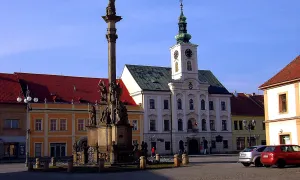
Masaryk Square in Rokycany in Pilsen Region
Accommodation nearby
Trips and activities nearby
Guided tours, tickets and activities nearby from GetYourGuide
Affiliate link: if you buy from the partner, we may receive a commission. The price for you does not change.
Search tours and activities →Themed route
Thematic cruise route: Church of the Virgin Mary Snow in Rokycany
1. Church of the Virgin Mary Snow in Rokycany (church) This Baroque church is the most prominent architectural work in Střed. Its rich history and artistic elements, such as frescoes and statues, make it an undisputed star of the region. Visit the church tower for a view of the surrounding countryside.
2. St. John Nepomuk Chapel (Chapel) This chapel is located not far from the main church and offers a quiet atmosphere for meditation and consideration. She's known for her simple but impressive architectural style.
3. Church of St. Anne (Church) Around 15 minutes' walk from the Church of Our Lady of Snow, St. Anne's Church is another example of Baroque architecture in the village. Its interior and historical value are the reason for its visit.
4. Naves (local centre) Explore the local sites where there are various traditional shops and restaurants. It's an ideal place to relax after a church tour and discover local life.
5. Memory tree (natural monument) A short walk through the village you can reach one of the oldest and most distinctive trees in the village. This memorable oak tree is a popular place for relaxation and photography.
This route offers visitors a view of the rich history and culture of Střed, focusing on key monuments around the Church of Our Lady of Snow.
Seasonal recommendations
Spring: In the spring season, the views from the church of Our Lady of Snow offer unforgettable views of flowering landscapes where trees and shrubs dress up in various shades of green. The sun rays illuminate the architecture of the church, highlighting its historical beauty. At this time there may be more visitors due to pleasant weather and blooming nature, so it is advisable to visit the church in the early morning or later in the day. It is recommended to wear clothes according to temperature because spring weather can suddenly be cold.
Summer: In summer, the atmosphere around the church of Our Lady of Snow is full of life and light. Church becomes a popular place for tourists who want to take advantage of long summer days. Solar lighting is ideal for photography, but it can also be very warm, especially around noon. It is recommended to visit the church in the early morning or evening so that it is possible to save in the sun while enjoying a calmer visit without large crowds. Remember to prepare yourself with sun protection and plenty of drinking water.
Autumn: In the autumn months, the Church of Our Lady of Snow offers a unique view of the bright leaves of trees and mild sun rays that illuminate its architecture. This time is usually less demanding on the crowd than in the summer, which means more peaceful tours. When visiting, it is advisable to wear several layers of clothing due to falling temperatures and the possibility of rain weather, especially in October.
Winter: In the winter months, the Church of Our Lady of Snow offers a peaceful atmosphere under covering snow or ice light. Winter lighting is unique, especially during short days when the church may seem miraculous in the shadow of the night. Visitors should expect shorter opening times and, in the case of snow weather, prepare with warm clothes, shoes suitable for snow conditions and possibly with moisture protection. Visiting the church on an early day can be a special experience when peace and quiet is present.
Visualizations and artistic views


The visualisations are generated by artificial intelligence and serve as inspiration.
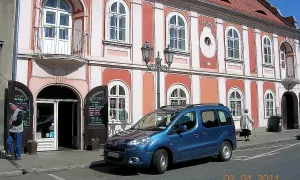
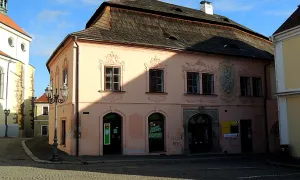
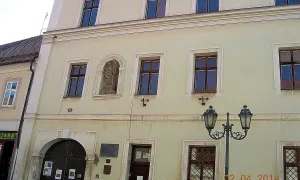
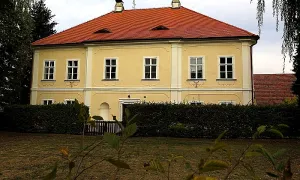
Photos from the area
Real photos taken near the monument

Zdroj a licence jsou uvedeny u každého snímku.
View from the area
This animation was generated by artificial intelligence from a real photograph of the surroundings. The motion and details are not real footage of the location.
Atmosphere of the place
This atmospheric visualisation of the place and period was generated by artificial intelligence. It is not real footage of the location.
Tips from visitors
No tips yet. Be the first!
Log in and add your tip.
Sources and literature
Photos: User:Miaow Miaow / Public domain — Wikimedia Commons. The author and licence also appear when you hover over the image.
Faktickým podkladem tohoto textu byl článek na Wikipedii, jehož autory jsou přispěvatelé Wikipedie. Článek je dostupný pod licencí CC BY-SA 4.0.
Location on the map
Příběhy a pověsti
Legendy, pověsti a příběhy spjaté s touto památkou
Fotografie návštěvníků
Zatím žádné fotografie. Buďte první, kdo přidá fotografii z návštěvy!
Log in a přidejte svou fotografii nebo hodnoťte.
Za ověřenou návštěvu v aplikaci získáte víc bodů — poznáme podle GPS, že jste na místě.
Reviews and comments