






Kostel Povýšení svatého Kříže (Podštěly) Church
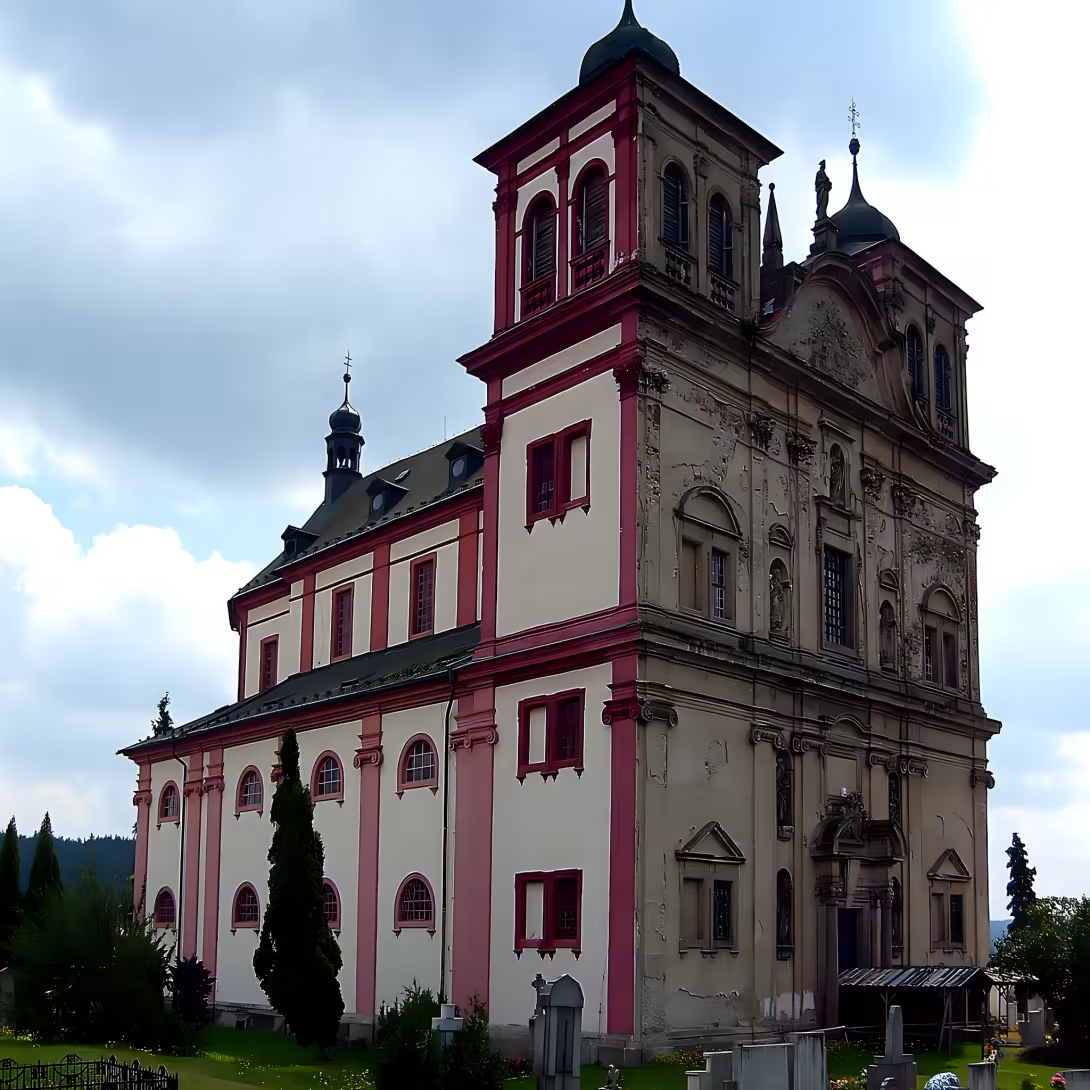
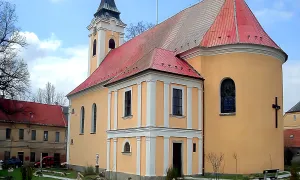
Kostel Povýšení svatého Kříže in Podštěly near Chyše is an early Baroque Roman Catholic church with origins dating back to the mid-14th century as a Gothic structure. It was notably rebuilt in 1710 by Johann Baptist Rappa and stands today as a cultural monument of the Czech Republic, recognized for its architectural and historical significance.
The church's journey began around the mid-14th century when it was originally constructed in the Gothic style. By the late 17th century, significant damage necessitated reconstruction, transforming it into an early Baroque edifice. The foundation stone for this new structure was laid on December 5, 1697, marking a pivotal moment in its history. Johann Baptist Rappa completed the church by 1710, embedding it with Baroque elements that define its current form.
Architecturally, Kostel Povýšení svatého Kříže is distinguished by its two-towered façade and three-nave basilica design, featuring a semi-circular presbytery. The church's exterior is adorned with pilasters and Baroque sculptures, including significant figures like saints Vojtěch, Jan Nepomucký, Zikmund, Vít, Václav, Ludmila, and Josef, along with an image of the Virgin Mary with Jesus. These artistic elements highlight the church's rich decorative heritage.
Throughout its history, the church has undergone several transformations. In 1854, a comprehensive reconstruction was undertaken under architect Ignác Ullmann. The early 20th century saw further renovations funded by local communities and organizations. Despite repairs in 1969 and re-roofing efforts in 1991, financial constraints have limited extensive restoration work.
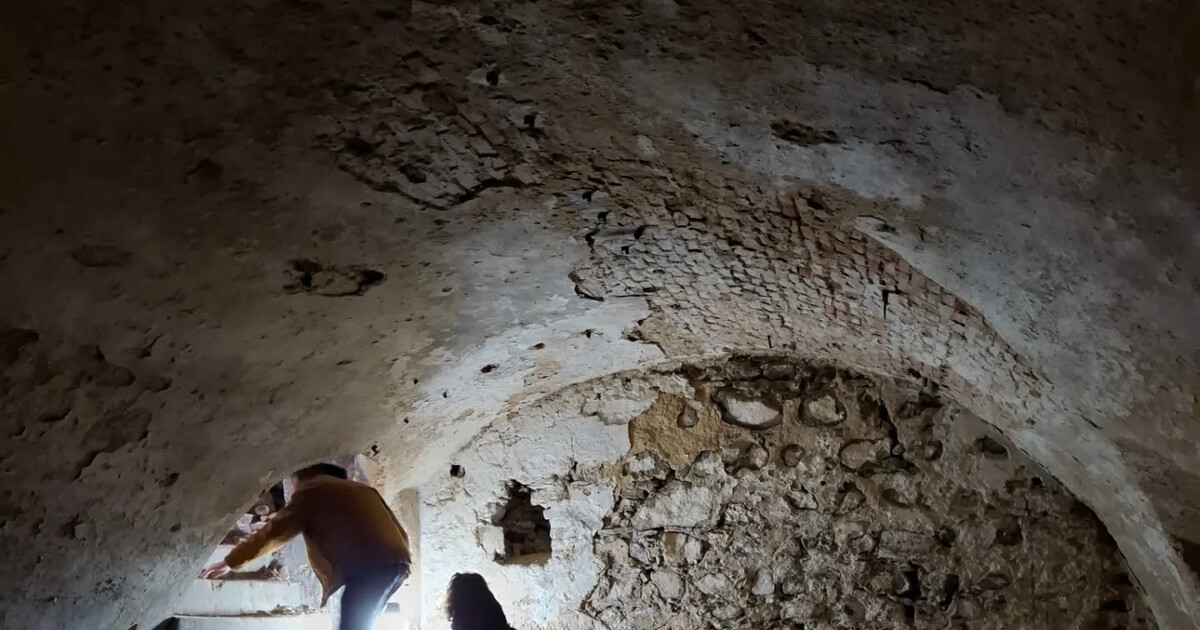
The church's crypt holds historical significance as it houses the graves of its Baroque founders, Karel Jiří Václav Michna and Anna Ludmila Michnová. Additionally, remnants of a Křížová cesta (Way of the Cross) established in 1863 can still be found nearby, adding to the site's historical allure.
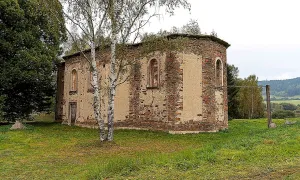
Today, Kostel Povýšení svatého Kříže is closed and not used for religious services. Its western and northern façades are in a state of disrepair, along with several Baroque sculptures that require restoration. Despite these challenges, the church remains an important cultural landmark worth visiting for its architectural beauty and historical depth.
Visitors to this site can appreciate the enduring legacy of Baroque architecture and the rich history encapsulated within its walls. While access is currently restricted, the church's significance as a testament to the region's cultural heritage makes it a compelling destination for those interested in exploring Czech history and art.
Then and now
Drag the slider to compare how the landmark may have looked when it was built with the view today.
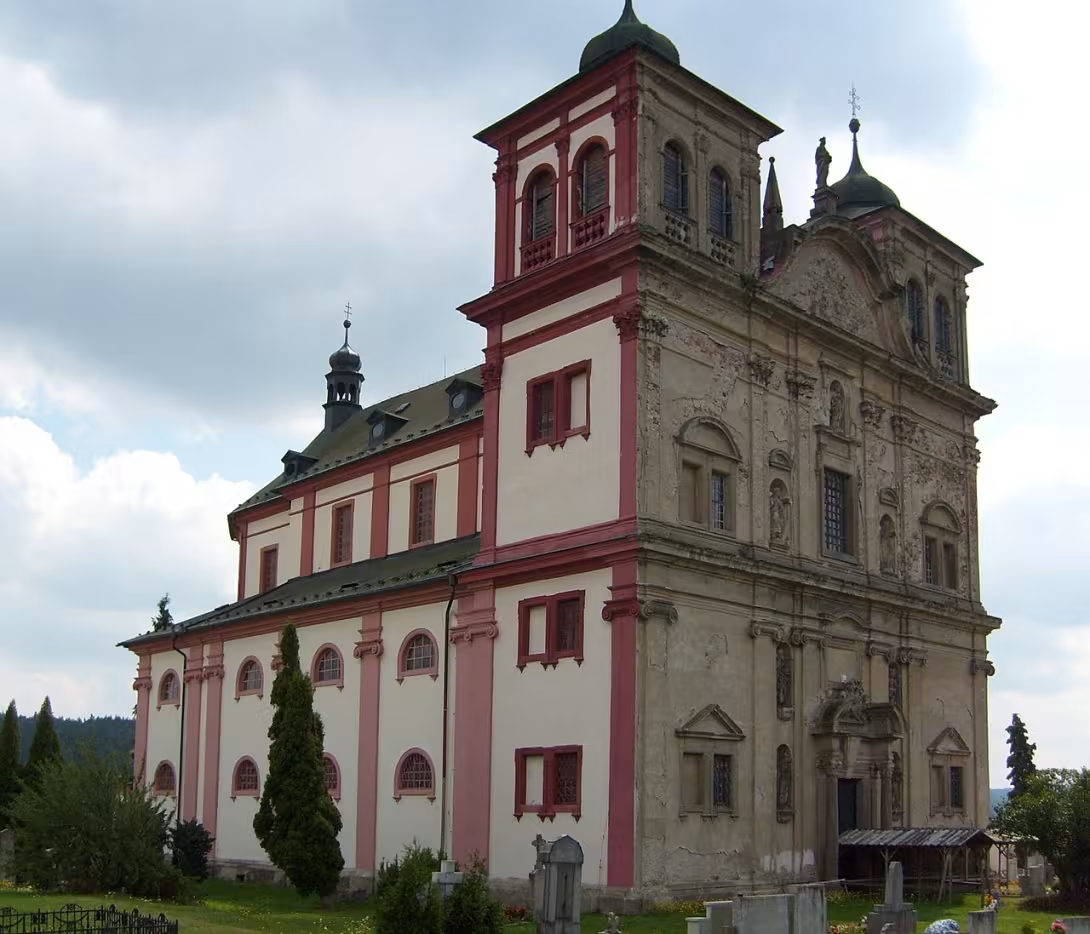
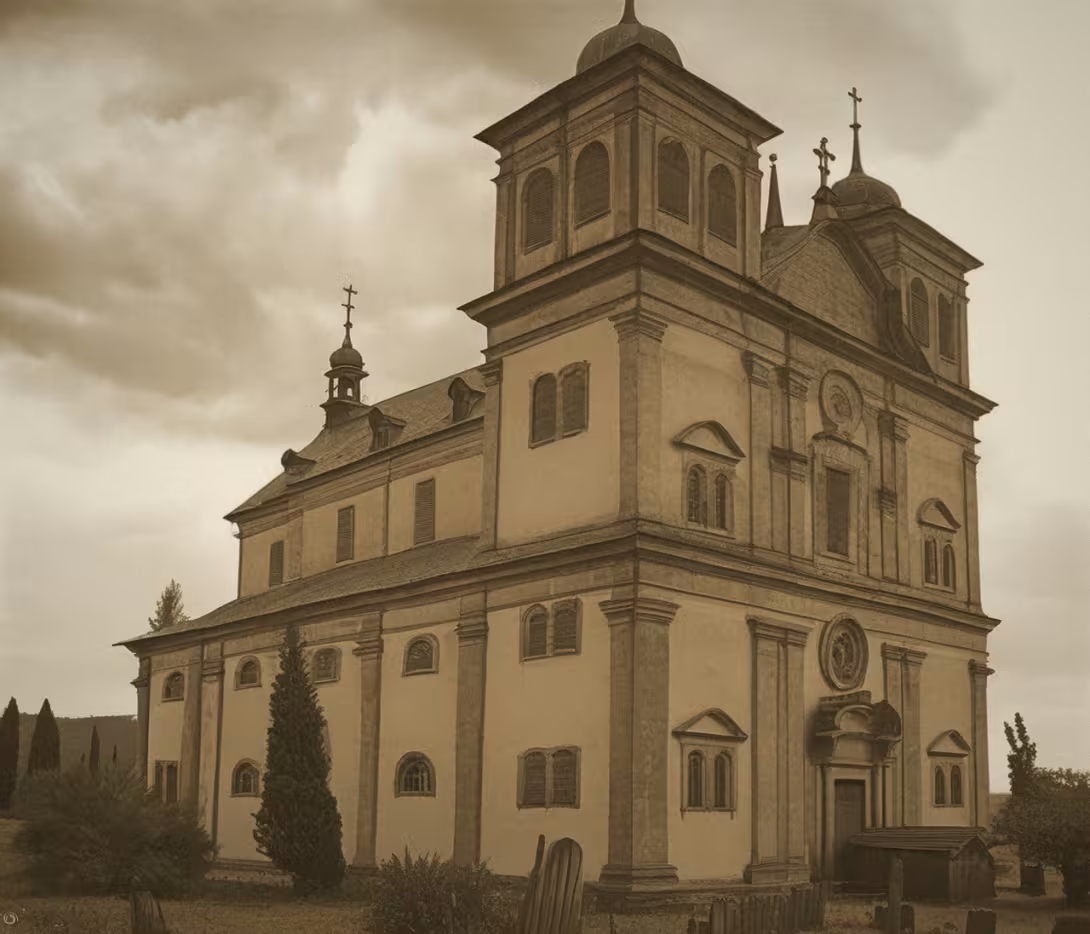
The historical appearance on the left is an AI-generated visualisation and serves as inspiration only.
Historical milestones
- kolem 1350
- Původní stavba gotického kostela.
- 1697
- Založení základního kamene pro barokní rekonstrukci.
- 1710
- Dokončení rekonstrukce Johannem Baptistou Rappou.
- 1854
- Komplexní rekonstrukce pod vedením architekta Ignáce Ullmanna.
- 1863
- Založení Křížové cesty u kostela.
Architectural development
The church underwent significant architectural changes from its original Gothic structure to its current Baroque form. The foundation stone was laid in 1697, and it was completed by Johann Baptist Rappa in 1710. Subsequent reconstructions occurred in 1854 under Ignác Ullmann and again in the early 20th century with local funding. Despite repairs in 1969 and 1991, financial constraints have limited further restoration.
Historical events
- 1697
- The foundation stone for the church was laid on December 5.
- 1854
- A comprehensive reconstruction of the church took place under the supervision of architect Ignác Ullmann.
- 1969
- Repairs and maintenance were conducted, but by 1970 the church was in such a dilapidated state that demolition was considered.
Points of interest
- The church's crypt is historically significant as it contains the graves of its Baroque founders, Karel Jiří Václav Michna and Anna Ludmila Michnová, offering a unique connection to those who played pivotal roles in its architectural transformation.
- In 1863, a Křížová cesta (Way of the Cross) was established near the church, with remnants still present today. This historical pathway adds an intriguing layer to the site's religious and cultural heritage.
- Despite being closed for religious services, the church has undergone several renovations funded by local communities and organizations in the early 20th century, reflecting the community's dedication to preserving its cultural landmark.
- The church features a distinctive two-towered façade with Baroque sculptures of saints such as Vojtěch, Jan Nepomucký, Zikmund, Vít, Václav, Ludmila, and Josef, along with an image of the Virgin Mary with Jesus. These artistic elements highlight its rich decorative heritage.
- In 1854, architect Ignác Ullmann led a comprehensive reconstruction of Kostel Povýšení svatého Kříže, showcasing the evolving architectural styles that have influenced the church's design over centuries.
Guide
This guide is narrated by a synthetic voice generated by artificial intelligence.
Show guide text
This text was created by artificial intelligence and has not been editorially reviewed. It may contain inaccuracies.
Welcome to the historic site of Kostel Povýšení svatého Kříže in Podštěly, a remarkable testament to architectural evolution and cultural heritage. As you stand before this majestic structure, take a moment to absorb its grandeur—a two-towered façade that stands as a sentinel over time.
The origins of this church trace back to the mid-14th century when it was first constructed in the Gothic style. However, history took its toll, and by 1697, plans were set into motion for an extensive Baroque reconstruction. The transformation reached fruition in 1710 under the skilled hands of Johann Baptist Rappa, who reimagined the church as a three-nave basilica with a semi-circular presbytery—a harmonious blend of resilience and artistry.
As you gaze upon its façade, notice how it encapsulates centuries of history within its walls. The Baroque sculptures and pilasters add layers of depth to this already rich narrative. Each element invites contemplation, from the intricate details that adorn its exterior to the serene ambiance that envelops you inside.
This church is not just a structure; it's a repository of stories and souls who have shaped its legacy. Among them are Karel Jiří Václav Michna z Vacínova and Anna Ludmila Michnová, rozená Kolovrat-Krakovská—pioneers whose final resting place lies within the church’s crypt. Their contributions to this architectural marvel ensure their memories endure through time.
In 1863, another chapter was added with the establishment of a Křížová cesta (Way of the Cross), enriching its spiritual significance and offering visitors like you an opportunity to engage with its sacred journey.
As we conclude our exploration, I invite you to linger in this space where history resonates through every stone. Take your time to explore further—perhaps delve into the crypt or wander along the Křížová cesta. Each step here is a step back in time, connecting us to those who came before.
Thank you for joining me on this journey. May your visit inspire and enlighten as you continue to discover the wonders of Podštěly and beyond.
Tips for visitors
The best time to visit Kostel Povýžení svatého Kříže is during late spring or early autumn when the weather is mild, making it ideal for exploring both the church and its surroundings. These seasons offer comfortable temperatures and fewer crowds, allowing you to fully appreciate the historical architecture and serene landscape. Additionally, visiting during these times often coincides with local festivals or events that can enhance your experience.
It’s advisable to check current schedules in a travel app or online to plan your trip efficiently. The area around the church is pedestrian-friendly, making it easy to explore on foot.
When visiting Kostel Povýžení svatého Kříže, consider bringing comfortable walking shoes as you'll likely want to explore the surrounding Baroque Way of the Cross and cemetery. A camera or smartphone for photography is recommended, especially if you're interested in capturing the intricate architectural details of the church. Additionally, a light jacket might be useful due to variable weather conditions.
For photography enthusiasts, the best spots around Kostel Povýžení svatého Kříže are during the golden hours—shortly after sunrise or before sunset—when the lighting is soft and warm, enhancing the church's early Baroque features. The surrounding landscape also offers picturesque views that can complement your photos of the church. Don't forget to capture the remnants of the Baroque Way of the Cross for a unique perspective.
Nearby attractions within 30 minutes include other historical sites such as the cemetery with its notable architectural elements, offering insight into local history and culture. These sites provide additional context and enrich your understanding of the area's heritage. Exploring these nearby locations can make for a fulfilling day trip in the region.
Frequently asked questions
Can the monument be visited?
Religious buildings are usually open mainly during services; at other times a visit is normally arranged with the parish or the operator. We have not verified specific times. According to the heritage register the structure is in poor condition – do not enter it and take care nearby.
Where is the monument?
Location: Na Špičáku, Podštěly, Chyše, Karlovarský kraj. The map on this page shows the exact spot.
Why is the monument protected?
It is listed in the Central List of Cultural Monuments of the Czech Republic as a cultural monument (register no. 46738/4-1280).
Businesses nearby
Do you run a restaurant, accommodation, shop, museum, rental, wellness or other visitor service near this monument? Show yourself directly to the people heading to it — this is how they will see you in the app and on the web:
Events nearby
Zdroj akcí: otevřená data měst a obcí ČR (Národní katalog otevřených dat) a kalendář akcí Národního památkového ústavu.
Nearby
Situated near Chyše, the church is surrounded by a landscape that includes other historical sites within a 5 km radius. The area features remnants of a Baroque Way of the Cross and a cemetery with notable architectural elements.
Accommodation nearby
Themed route
Tematická výletní trasa: Kostel Povýšení svatého Kříže a okolí
1. Kostel Povýšení svatého Kříže (Podštěly) Typ: Historický kostel Proč stojí za návštěvu: Tento barokní chrám je centrem duchovního života v Podštělech a přitahuje svou architektonickou krásou a historickým významem. Je to ideální místo pro poznání místní kultury a náboženské tradice.
2. Barokní Cesta kříže Typ: Historický reliéf Proč stojí za návštěvu: Tato cesta je uměleckou památkou, která vede po značených bodových reliéfech a sochařských prvcích. Nabízí poutavý pohled do minulosti a představuje duchovní cestu pro návštěvníky, kteří se zajímají o barokní umění.
3. Kostelní hřbitov Typ: Historický hřbitov Proč stojí za návštěvu: Hřbitov je známý svými architektonicky významnými pohřebními památkami, které ilustrují historii a místní kulturu. Je to místo klidu a úcty, kde lze prozkoumat umělecké prvky z různých období.
Tato trasa nabízí pohled na bohatou historii a kulturní dědictví oblasti Podštělí. Vzdálenosti mezi jednotlivými body jsou krátké, což umožňuje snadný průchod v rámci několika hodin.
Seasonal recommendations
Spring: The arrival of spring at the Church of the Exaltation of the Holy Cross brings a renewal of life to Podštěly, with blossoming flowers and fresh greenery surrounding the historic site. This season offers a gentle atmosphere as nature awakens, providing a serene backdrop for visitors exploring the church's architecture amidst its recovering beauty. The spring light is soft and diffused, casting a warm glow over the structure and enhancing its historical details. It's an ideal time to visit when the crowds are fewer compared to summer, allowing for a more intimate experience. Visitors should dress in layers to accommodate fluctuating temperatures and plan their visits during weekdays or early mornings to avoid any lingering winter chill.
Summer: Summer at the Church of the Exaltation of the Holy Cross is characterized by long daylight hours and vibrant nature, with lush landscapes enhancing the historic ambiance. This season attracts more visitors due to its warm weather, making it a popular time for tourists exploring Karlovarský kraj's cultural sites. The bright summer light accentuates the church’s architectural features, though it can also lead to crowded conditions during peak hours. To make the most of your visit, consider arriving early in the morning or later in the afternoon when temperatures are more comfortable and crowds have thinned. Light, breathable clothing is recommended for exploring both indoors and outdoors.
Autumn: Autumn at the Church of the Exaltation of the Holy Cross offers a picturesque setting with vibrant foliage that frames the historic structure beautifully. The changing leaves create a warm, golden atmosphere that enhances the church's appearance, making it an ideal time for photography enthusiasts. As temperatures begin to cool, this season provides a comfortable environment for longer visits without the summer heat. However, visitors should be prepared for shorter days and potentially unpredictable weather conditions. Layered clothing is advisable, allowing you to adjust easily as you explore both inside and outside the church.
Winter: Winter transforms the Church of the Exaltation of the Holy Cross into a serene, snow-covered landmark in Podštěly. The cold season brings a quiet atmosphere with fewer visitors, offering an intimate experience amidst the stark beauty of the landscape. Visitors should dress warmly in layers, including hats and gloves, to comfortably enjoy their time at the church. It's advisable to check ahead for any seasonal adjustments to visiting times or potential closures due to weather conditions.
Visualizations and artistic views


The visualisations are generated by artificial intelligence and serve as inspiration.
Photos from the area
Real photos taken near the monument


Zdroj a licence jsou uvedeny u každého snímku.
Tips from visitors
No tips yet. Be the first!
Log in and add your tip.
Sources and literature
Photos: Ben Skála / CC BY 2.5, rozlišení zvýšeno umělou inteligencí — Wikimedia Commons. The author and licence also appear when you hover over the image.
Faktickým podkladem tohoto textu byl článek na Wikipedii, jehož autory jsou přispěvatelé Wikipedie. Článek je dostupný pod licencí CC BY-SA 4.0.
Location on the map
Příběhy a pověsti
Legendy, pověsti a příběhy spjaté s touto památkou
Fotografie návštěvníků
Zatím žádné fotografie. Buďte první, kdo přidá fotografii z návštěvy!
Log in a přidejte svou fotografii nebo hodnoťte.
Za ověřenou návštěvu v aplikaci získáte víc bodů — poznáme podle GPS, že jste na místě.
Reviews and comments