






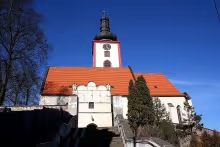
Kostel Povýšení svatého Kříže in Veselí nad Lužnicí is a Roman Catholic parish church recognized as a cultural monument of the Czech Republic. Situated within the town, this historical building stands out for its early Gothic architectural style and rich history dating back to 1261. The church's significance lies in its well-preserved structure, which showcases various phases of architectural evolution from Romanesque beginnings through Gothic transformations to Baroque additions.
The origins of Kostel Povýšení svatého Kříže trace back to the early Gothic period when Bohemia experienced significant cultural and architectural development. The church's first documented mention dates to 1261, marking its establishment during an era that saw the flourishing of Gothic architecture across Europe. This style influenced religious buildings throughout the continent, with Kostel Povýšení svatého Kříže serving as a testament to this movement.
Architecturally, the church began as a Romanesque structure before transitioning into early Gothic style. The presbytery was added in the late 14th century, reflecting evolving design preferences of that period. A significant event occurred in 1655 when a fire damaged the church, necessitating extensive reconstruction efforts. These included new vaulting completed by 1658 and the addition of two oratories, contributing to its architectural complexity. The current form of the church tower, designed by Anton Erhard Martinelli, was finalized in 1724, adding a Baroque touch to the predominantly Gothic structure.
The interior of Kostel Povýšení svatého Kříže is equally noteworthy for its artistic elements. It features a late Gothic portal and preserved fragments of early Gothic wall paintings from the mid-14th century, uncovered in 1909. Additionally, Baroque paintings from 1598 adorn the church, including coats of arms of notable figures such as Petr Vok z Rožmberka and Kateřina z Ludanic. The interior also houses a late 17th-century baptismal font, a baroque-style main altar from the latter part of that century, and an 18th-century pulpit with rokajové kartuše.
Today, Kostel Povýšení svatého Kříže remains a significant cultural site. It is protected as a cultural monument, ensuring its preservation for future generations to appreciate. Visitors can explore the church's rich history and architectural beauty, making it a worthwhile destination for those interested in Gothic architecture and Czech cultural heritage.
Kostel Povýšení svatého Kříže stands as a remarkable example of historical continuity and architectural evolution. Its well-preserved structure offers insights into various periods of Bohemian history, from the early Gothic era to Baroque influences. This monument invites visitors to delve into its storied past and appreciate the craftsmanship that has endured through centuries.
Historical milestones
- 1261
- First written mention of the church.
- 1655
- The church was damaged by a fire and underwent reconstruction.
- 1724
- Completion of the church tower designed by Anton Erhard Martinelli.
Architectural development
Kostel Povýšení svatého Kříže began as a Romanesque structure before transitioning to early Gothic style. The presbytery was added in the late 14th century, and after a fire in 1655, significant reconstruction took place including new vaulting and oratories. The church tower's current form, designed by Anton Erhard Martinelli, dates from 1724.
Historical events
- 1261
- First written mention of the church.
- 1655
- The church was damaged by a fire, leading to reconstruction efforts.
- 1724
- Completion of the church tower designed by Anton Erhard Martinelli.
Points of interest
- Despite its early Gothic origins, the church's presbytery was added in the late 14th century, reflecting a shift from Romanesque to more elaborate Gothic design preferences during that period.
- In 1909, restoration efforts uncovered fragments of early Gothic wall paintings dating back to the mid-14th century, revealing artistic details long hidden beneath later layers of paint and plaster.
Guide
Show guide text
Welcome to the historic site of Kostel Povýšení svatého Kříže in Veselí nad Lužnicí I. As you stand before this remarkable structure, take a moment to absorb its presence—a testament to centuries of history and architectural evolution.
The origins of this church trace back to the early Gothic period, with its first written mention dating to 1261. This era marked a significant transition from the Romanesque style, characterized by simpler forms, to the more intricate and expressive Gothic architecture that followed. Over time, the church underwent several transformations, including the addition of the presbytery in the late 14th century, reflecting evolving architectural tastes.
As you observe the church's exterior, notice how it harmoniously blends its early Gothic roots with later modifications. The structure carries an air of resilience and beauty, having endured a devastating fire in 1655 that necessitated extensive reconstruction efforts. These included new vaulting completed by 1658, showcasing the community’s dedication to preserving their sacred space.
One of the most striking features you'll encounter is the church tower, completed in 1724 under the guidance of architect Anton Erhard Martinelli. His design added a distinctive touch that enhances the skyline of Veselí nad Lužnicí I. The tower stands as a symbol of both historical continuity and architectural innovation.
While exploring this site, consider the many hands and minds that contributed to its story—though specific individuals remain unnamed in history, their collective efforts have left an indelible mark on this cultural monument.
An intriguing aspect of Kostel Povýšení svatého Kříže is the discovery made during restoration work in 1909. Fragments of early Gothic wall paintings were uncovered, offering a rare glimpse into the artistic expressions of the past and adding another layer to its historical narrative.
As you conclude your visit, we invite you to continue exploring the surrounding area, letting the church's history inspire your journey through Veselí nad Lužnicí I. Thank you for joining us on this exploration of Kostel Povýšení svatého Kříže—a place where art, architecture, and history converge. Safe travels as you continue to discover more wonders in the Jihočeský kraj region.
Tips for visitors
The best time to visit the Church of the Exaltation of the Holy Cross in Veselí nad Lužnicí is during late spring or early autumn. During these seasons, you can enjoy pleasant weather that enhances your experience while exploring the church's architectural details and surrounding landscapes. Additionally, visiting outside of peak tourist season means fewer crowds, allowing for a more serene visit to appreciate the Gothic features of this historical monument.
Parking and transportation options are convenient for visitors. The area around Veselí nad Lužnicí is accessible by both car and public transport. If driving, there are parking facilities nearby where you can leave your vehicle. For those preferring public transport, local bus services connect to the town, though it's advisable to check current routes and schedules in advance using a transportation search tool.
When planning your visit, consider bringing comfortable walking shoes as exploring the church and its surroundings may involve some walking. A camera is also recommended, especially for capturing the intricate Gothic details of the church. Early morning or late afternoon light provides ideal conditions for photography, casting soft shadows that highlight architectural features. The interior offers excellent opportunities for capturing the play of light through stained glass windows.
For families with children, visiting the Church of the Exaltation of the Holy Cross can be both educational and enjoyable. Engage your kids by explaining the historical significance of the church and its Gothic architecture. Nearby, within a 30-minute drive or walk, you might explore other cultural sites in the region that offer interactive experiences suitable for younger audiences. Always check ahead for any family-friendly activities or guided tours available at the time of your visit.
Businesses nearby
Do you run a restaurant, accommodation, shop, museum, rental, wellness or other visitor service near this monument? Show yourself directly to the people heading to it — this is how they will see you in the app and on the web:
Accommodation nearby
Trips and activities nearby
Guided tours, tickets and activities nearby from GetYourGuide
Search tours and activities →Themed route
Thematic Walking Tour: Veselí nad Lužnicí I
1. Kostel Povýšení svatého Kříže (Church of the Exaltation of the Holy Cross) - Type: Church - Why Visit: This stunning baroque church is a centerpiece of Veselí nad Lužnicí, showcasing intricate architectural details and an impressive interior. Its historical significance as a religious site makes it a must-see for anyone interested in cultural heritage.
2. Nádvoří kostela Povýšení svatého Kříže (Churchyard of the Church of the Exaltation of the Holy Cross) - Type: Historical Site - Why Visit: Explore the serene churchyard surrounding the church, offering a peaceful setting to reflect on history and enjoy beautifully maintained grounds. It's an ideal spot for photography enthusiasts looking to capture the essence of Veselí nad Lužnicí.
3. Věž kostela Povýšení svatého Kříže (Church Tower) - Type: Architectural Feature - Why Visit: Climb or view from a distance this iconic tower, which provides panoramic views of the surrounding area. The vantage point is perfect for appreciating the town's layout and architecture.
4. Veselí nad Lužnicí I Historical Center (Town Center) - Type: Urban Area - Why Visit: Stroll through the charming streets of the historical center, where traditional Czech architecture blends seamlessly with modern life. The area is rich in local culture and offers a glimpse into daily life in this picturesque town.
5. Lužnice Riverbank (Riverbank) - Type: Natural Feature - Why Visit: Walk along the scenic riverbank of the Lužnice, offering tranquil views and a chance to relax by the water. It's an excellent place for nature lovers seeking a quiet spot to unwind after exploring the town.
This tour provides a comprehensive experience of Veselí nad Lužnicí I, focusing on its historical and cultural highlights while enjoying natural beauty along the way.
```Seasonal recommendations
Spring: Visiting the Church of the Exaltation of the Holy Cross during spring offers a unique experience as nature awakens around Veselí nad Lužnicí I. The surrounding landscape is adorned with blooming flowers and lush greenery, creating a vibrant atmosphere that enhances the church's historical beauty. Natural light filters through stained glass windows, casting colorful reflections on the interior surfaces. Visitors should dress in layers to accommodate fluctuating temperatures and arrive early to enjoy the serene environment before larger crowds gather.
Summer: Summer is an ideal time for exploring this historic site due to its extended daylight hours, allowing visitors ample time to appreciate both the church's architecture and the surrounding natural beauty. The lush greenery and warm weather create a picturesque setting that complements the historical ambiance of the church. However, it's advisable to visit early in the morning or later in the afternoon to avoid peak tourist times and ensure a more tranquil experience.
Autumn: Autumn brings a magical transformation to the Church of the Exaltation of the Holy Cross with its warm hues of reds, oranges, and yellows enveloping the landscape. The cooler temperatures make for comfortable exploration, while the soft autumn light enhances the church's architectural details. Visitors should wear comfortable walking shoes as they may wish to stroll through the nearby scenic trails. This season offers a quieter visit compared to summer, with fewer tourists enjoying the natural beauty of the region.
Winter: Winter at the Church of the Exaltation of the Holy Cross presents a serene and peaceful setting, often covered in a blanket of snow that adds to its picturesque charm. The shorter days mean visiting early is recommended to make the most of the limited daylight hours. Visitors should dress warmly with layers and appropriate footwear for potential icy conditions. Despite potentially reduced opening hours during this season, the church offers a tranquil experience away from the summer crowds, allowing for reflection in a quiet winter landscape.
Visualizations and artistic views

Vizualizace jsou generovány umělou inteligencí a slouží jako inspirace.


Atmosphere of the place
Atmospheric visualization of the setting and era
Tips from visitors
No tips yet. Be the first!
Log in and add your tip.



Reviews and comments