






Kostel svatého Ondřeje (Rychnov nad Malší) Church
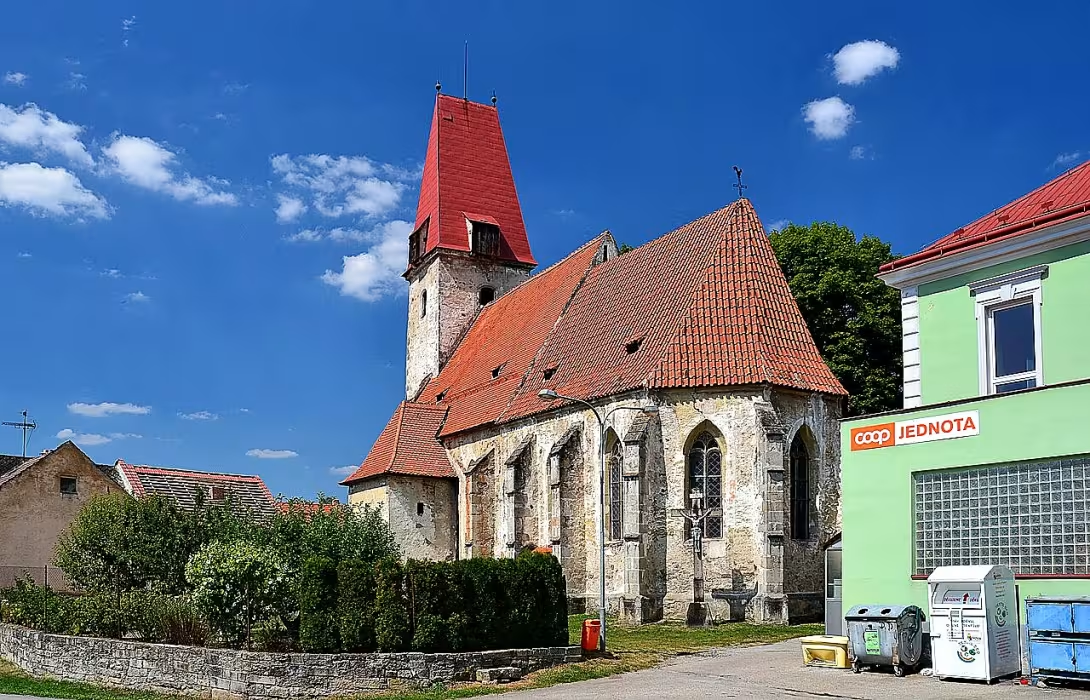
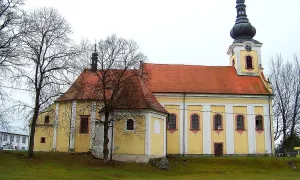
The Church of Saint Andrew in Rychnov nad Malší stands as a testament to architectural evolution from the early 14th century through significant modifications in the 16th century. This cultural monument, located in the Czech Republic, reflects the historical and artistic developments of its time, particularly within the Gothic tradition.
Originating at the dawn of the 14th century, the church was initially constructed as a single-nave hall with an unknown presbytery plan. Although the exact motivations behind its construction are not detailed in historical records, it emerged during a period when Bohemia was part of the Holy Roman Empire under King John of Luxembourg. This era saw significant Gothic architectural advancements across Europe, influencing structures like this church.
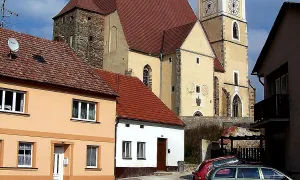
Architecturally, the church underwent substantial transformations at the beginning of the 16th century. Initially featuring a single-nave design, it evolved into a two-nave structure with a deep five-sided presbytery and an attached sacristy on its northern side. Around 1490, a bell tower was added to the western façade, enhancing both functionality and aesthetic appeal. The early 16th century saw further modifications, including the addition of a choir loft and vaulting, as well as adaptations to the tower that introduced an atypically intersected portal. These changes culminated in the construction of a larger polygonal chancel around the turn of the first and second quarters of the 16th century.
The church's architectural style is characterized by late Gothic influences, evident in its network vaults and intricately carved portals. The presbytery features a unique network vault with irregularly curved ribs, while the sacristy retains elements from the original structure. The tower, adorned with two kordonové římsy (cordons) and narrow rectangular windows on the upper floors, houses a late Gothic portal with elaborate stone carvings.
Throughout its history, the church has experienced periods of neglect, particularly after 1945 when it began to deteriorate. However, efforts have been made to preserve this historical monument, ensuring its continued existence as a cultural landmark. Today, the Church of Saint Andrew is maintained and accessible to visitors, offering insights into the architectural and historical narrative of Rychnov nad Malší.
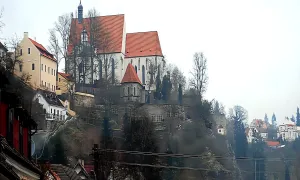
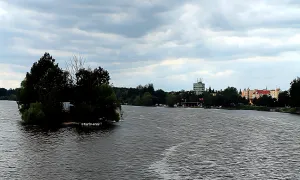
The church's location on a gentle slope, protected by two hills to the north, adds to its picturesque setting. Situated at the intersection of historical routes near the river Malše, it provides a glimpse into the past while remaining an integral part of the village's landscape.
Visiting the Church of Saint Andrew offers a unique opportunity to explore a piece of Gothic architecture that has withstood the test of time. Its rich history and architectural details make it a worthwhile destination for those interested in cultural heritage and historical structures.
Then and now
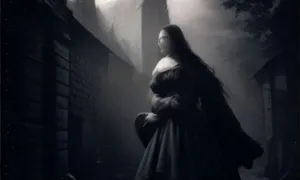
Drag the slider to compare how the landmark may have looked when it was built with the view today.
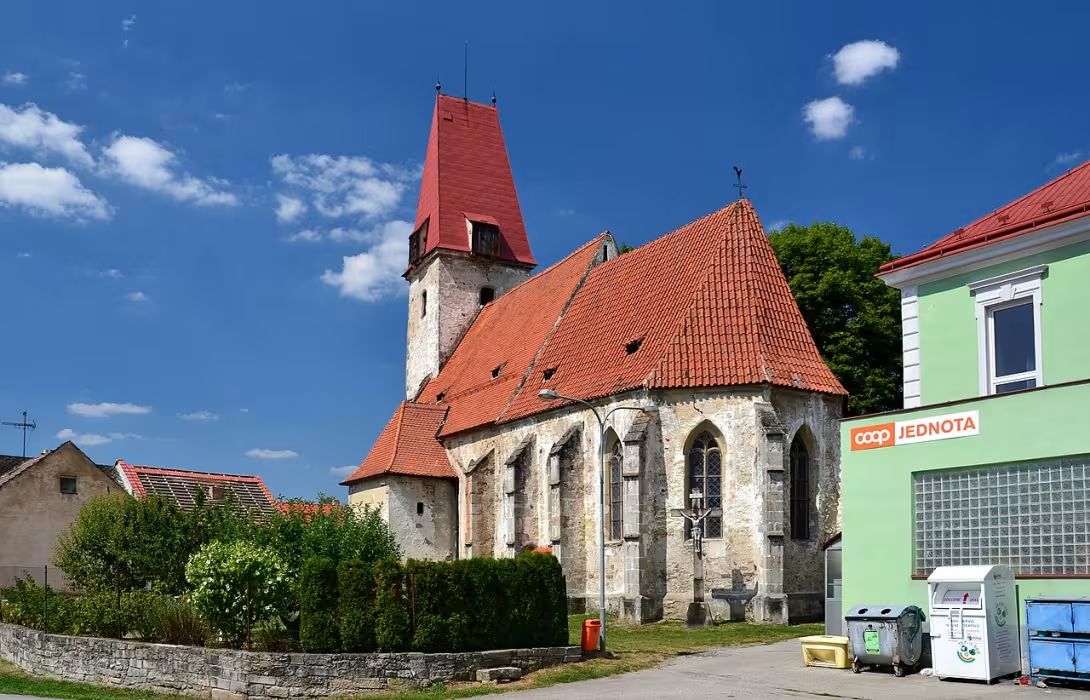
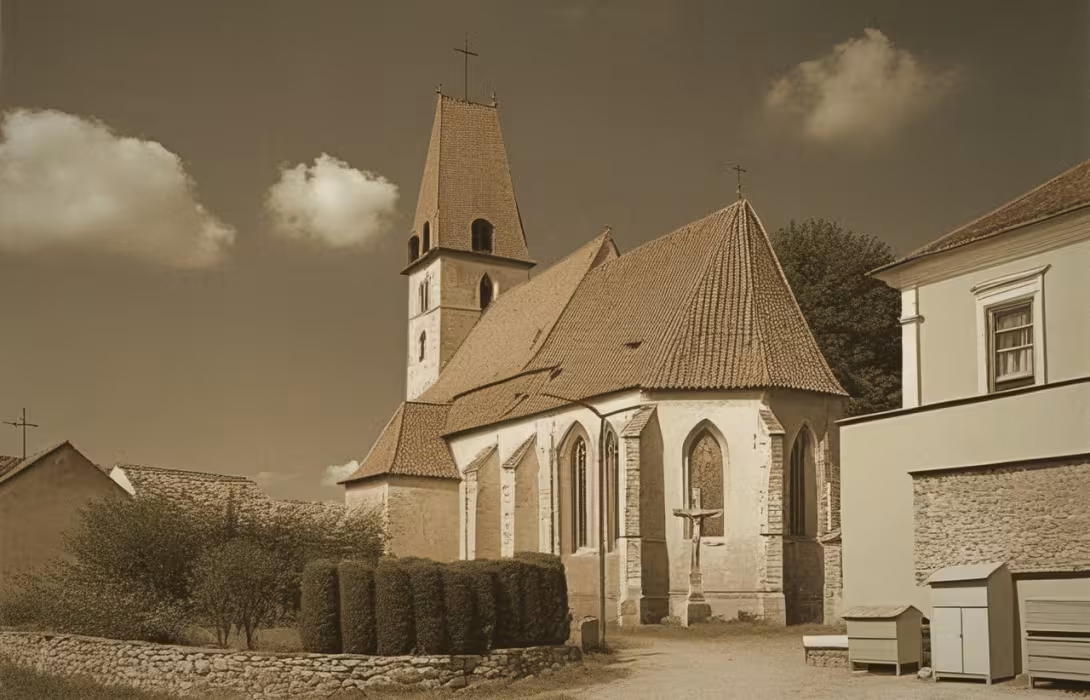
The historical appearance on the left is an AI-generated visualisation and serves as inspiration only.
Historical milestones
- 14th century
- Construction of the original single-nave hall church.
- 1490
- Addition of a bell tower to the western façade.
- 16th century
- Introduction of choir loft and vaulting, along with modifications to the tower.
Architectural development
The original single-nave hall church with an unknown presbytery plan was constructed no later than the first half of the 14th century. Around 1490, a bell tower was added to the western façade. In the early 16th century, a choir loft and vaulting were introduced, along with modifications to the tower that included an atypically intersected portal. A larger polygonal chancel was added around the turn of the first and second quarters of the 16th century.
Historical events
The church was originally built no later than the first half of the 14th century.
In the early 16th century, significant modifications were made including the addition of a choir loft and vaulting.
Points of interest
- The Church of Saint Andrew's initial construction during the early 14th century coincided with King John of Luxembourg's reign over Bohemia, a period marked by significant Gothic architectural advancements. This era influenced many structures across Europe, including this church.
- Despite its historical significance, the exact motivations behind the original construction of the Church of Saint Andrew are not detailed in historical records, leaving room for speculation about its early purpose and patrons.
- The church's bell tower was added around 1490, a period when such features were becoming more common as both functional elements and aesthetic enhancements to religious buildings across Europe.
- One of the most distinctive architectural features is the atypically intersected portal on the tower, which reflects unique design choices made during its early 16th-century modifications, setting it apart from other Gothic structures.
- After periods of neglect post-1945, concerted preservation efforts have been undertaken to maintain the Church of Saint Andrew as a cultural landmark, ensuring that future generations can appreciate its historical and architectural significance.
Guide
This guide is narrated by a synthetic voice generated by artificial intelligence.
Show guide text
This text was created by artificial intelligence and has not been editorially reviewed. It may contain inaccuracies.
Welcome to the Church of Saint Andrew in Rychnov nad Malší, a remarkable cultural monument nestled here in the heart of the Czech Republic. As you stand before this historic edifice, take a moment to absorb its grandeur and feel the centuries of history that surround you.
The origins of this church trace back to the early 14th century, a time when Gothic architecture was flourishing across Europe under the reign of King John of Luxembourg in Bohemia. This era marked significant advancements in architectural design, influencing many structures, including this one. Initially constructed as a single-nave hall church, it has since evolved through various phases of reconstruction.
As you gaze upon its structure, notice the two-nave layout that speaks to its later transformations, particularly at the beginning of the 16th century when significant modifications were made. The deep five-sided presbytery and the sacristy attached on the northern side are key architectural features that reflect the late Gothic influences characteristic of this period.
Look upwards and appreciate the bell tower added in 1490 to the western façade, a testament to the church's evolving architecture over time. This addition not only enhanced its visual appeal but also its functional role within the community.
While specific architects remain unknown, the Church of Saint Andrew stands as a silent witness to the rich history that has unfolded around it. Its walls may not reveal famous historical figures directly associated with it, yet they resonate with stories from an era marked by architectural innovation and spiritual devotion.
One intriguing aspect of this church is its timing during King John of Luxembourg's reign—a period when Bohemia was at the forefront of Gothic architectural advancements. This context adds a layer of historical significance to your visit, connecting you to a pivotal moment in European history.
As we conclude our virtual tour, I invite you to linger a little longer and explore this magnificent structure further on your own. Each corner holds its own story, waiting to be discovered by those who seek them. Thank you for joining me today at the Church of Saint Andrew in Rychnov nad Malší. May your visit inspire curiosity and appreciation for the rich tapestry of history that surrounds us all.
Tips for visitors
The best time to visit the Church of Saint Andrew in Rychnov nad Malší is during late spring or early autumn. During these seasons, the weather is typically mild, making it ideal for exploring both the church and its picturesque surroundings. The gentle slopes and historical routes around the village provide a scenic backdrop that enhances your experience. Additionally, visiting outside peak tourist season means fewer crowds, allowing you to appreciate the cultural monument more fully.
It’s recommended to verify current routes and schedules using a transportation search tool before your visit.
When visiting the Church of Saint Andrew, consider bringing comfortable walking shoes as you may want to explore the surrounding area on foot. A camera is also advisable for capturing the stunning landscapes and architectural details of the church. Since lighting can vary throughout the day, early morning or late afternoon visits are ideal for photography, offering softer light that enhances the natural beauty of the site.
For families with children, Rychnov nad Malší offers a pleasant environment to explore together. The village's historical routes and proximity to the river Malše provide opportunities for leisurely walks and outdoor activities suitable for all ages. Nearby attractions within 30 minutes include scenic hiking trails and other cultural sites that can make your visit more engaging for both adults and children.
Frequently asked questions
Can the monument be visited?
Religious buildings are usually open mainly during services; at other times a visit is normally arranged with the parish or the operator. We have not verified specific times.
Where is the monument?
Location: Rychnov nad Malší, Jihočeský kraj. The map on this page shows the exact spot.
Why is the monument protected?
It is listed in the Central List of Cultural Monuments of the Czech Republic as a cultural monument (register no. 31343/3-1435).
Businesses nearby
Do you run a restaurant, accommodation, shop, museum, rental, wellness or other visitor service near this monument? Show yourself directly to the people heading to it — this is how they will see you in the app and on the web:
Events nearby
Zdroj akcí: otevřená data měst a obcí ČR (Národní katalog otevřených dat) a kalendář akcí Národního památkového ústavu.
Nearby
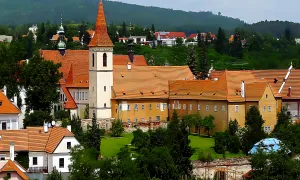
Rychnov nad Malší is situated on a gentle slope, protected to the north by two hills. The village lies at the intersection of historical routes and near the river Malše, offering picturesque landscapes.
Accommodation nearby
Trips and activities nearby
Guided tours, tickets and activities nearby from GetYourGuide
Affiliate link: if you buy from the partner, we may receive a commission. The price for you does not change.
Search tours and activities →Themed route
Thematic Walking Tour: Rychnov nad Malší
1. Kostel svatého Ondřeje (Church of St. Andrew) - Type: Historical Church - Why Visit: Begin your journey at the heart of Rychnov nad Malší with this stunning example of Gothic architecture. The Church of St. Andrew is renowned for its intricate design and historical significance, offering a glimpse into the region's rich cultural heritage.
2. Malše River - Type: Natural Landscape - Why Visit: A short walk from the church will bring you to the serene banks of the Malše River. This picturesque setting provides an ideal spot for relaxation and reflection, with its gentle flow complementing the historical charm of Rychnov nad Malší.
3. Historical Routes Intersection - Type: Cultural Landmark - Why Visit: Explore the area where ancient trade routes intersected near the village. This location is steeped in history, offering insights into how these pathways contributed to the development and prosperity of the region over centuries.
4. Northern Hills - Type: Natural Landscape - Why Visit: Conclude your tour by venturing towards the two hills that protect Rychnov nad Malší from the north. These natural landmarks provide stunning panoramic views of the village and its surroundings, offering a perfect vantage point to appreciate the beauty of this historic locale.
This thematic walking tour encapsulates the essence of Rychnov nad Malší, blending historical intrigue with natural splendor in just a few steps.
Seasonal recommendations
Spring: Visiting the Church of St. Andrew during spring offers a serene experience as nature begins to awaken around Rychnov nad Malší. The surrounding landscape is adorned with blooming flowers and lush greenery, creating a picturesque setting that enhances the historical charm of the church. This season often sees fewer visitors compared to summer, providing a more tranquil atmosphere for exploration. It's advisable to wear layers, as temperatures can vary throughout the day. Early morning visits are recommended to enjoy the soft light filtering through the trees and avoid any potential crowds.
Summer: Summer is an ideal time to explore the Church of St. Andrew due to its favorable weather conditions and vibrant natural surroundings. The area bursts with life, offering lush greenery and a variety of outdoor activities nearby. While this season attracts more visitors, arriving early in the morning can help you avoid larger crowds and fully appreciate the church's architecture in the gentle summer light. Comfortable walking shoes and light clothing are recommended for navigating both the church and its scenic surroundings.
Autumn: Autumn brings a unique charm to the Church of St. Andrew with its warm hues and crisp air, making it a perfect time for those who enjoy cooler weather and stunning fall foliage. The landscape transforms into a palette of reds, oranges, and yellows, providing a breathtaking backdrop for photography enthusiasts. This season typically sees fewer tourists than summer, allowing for a more relaxed visit. Wearing layers is essential as temperatures can fluctuate significantly throughout the day.
Winter: Winter offers a distinctive experience at the Church of St. Andrew, with its serene atmosphere accentuated by snow-covered landscapes and shorter daylight hours. The church may have limited opening times during this season, so it's important to check in advance. Visiting on a clear winter day can provide breathtaking views of the surrounding area blanketed in snow. Warm clothing is essential, including hats, gloves, and sturdy boots, to ensure comfort while exploring the historical site in colder conditions.
Visualizations and artistic views


The visualisations are generated by artificial intelligence and serve as inspiration.
Photos from the area
Real photos taken near the monument


Zdroj a licence jsou uvedeny u každého snímku.
Tips from visitors
No tips yet. Be the first!
Log in and add your tip.
Sources and literature
Photos: Petr Kinšt / CC BY 4.0 — Wikimedia Commons. The author and licence also appear when you hover over the image.
Faktickým podkladem tohoto textu byl článek na Wikipedii, jehož autory jsou přispěvatelé Wikipedie. Článek je dostupný pod licencí CC BY-SA 4.0.
Location on the map

Příběhy a pověsti
Legendy, pověsti a příběhy spjaté s touto památkou
Fotografie návštěvníků
Zatím žádné fotografie. Buďte první, kdo přidá fotografii z návštěvy!
Log in a přidejte svou fotografii nebo hodnoťte.
Za ověřenou návštěvu v aplikaci získáte víc bodů — poznáme podle GPS, že jste na místě.
Reviews and comments