



Kostel Proměnění Páně ve Varnsdorfu Church
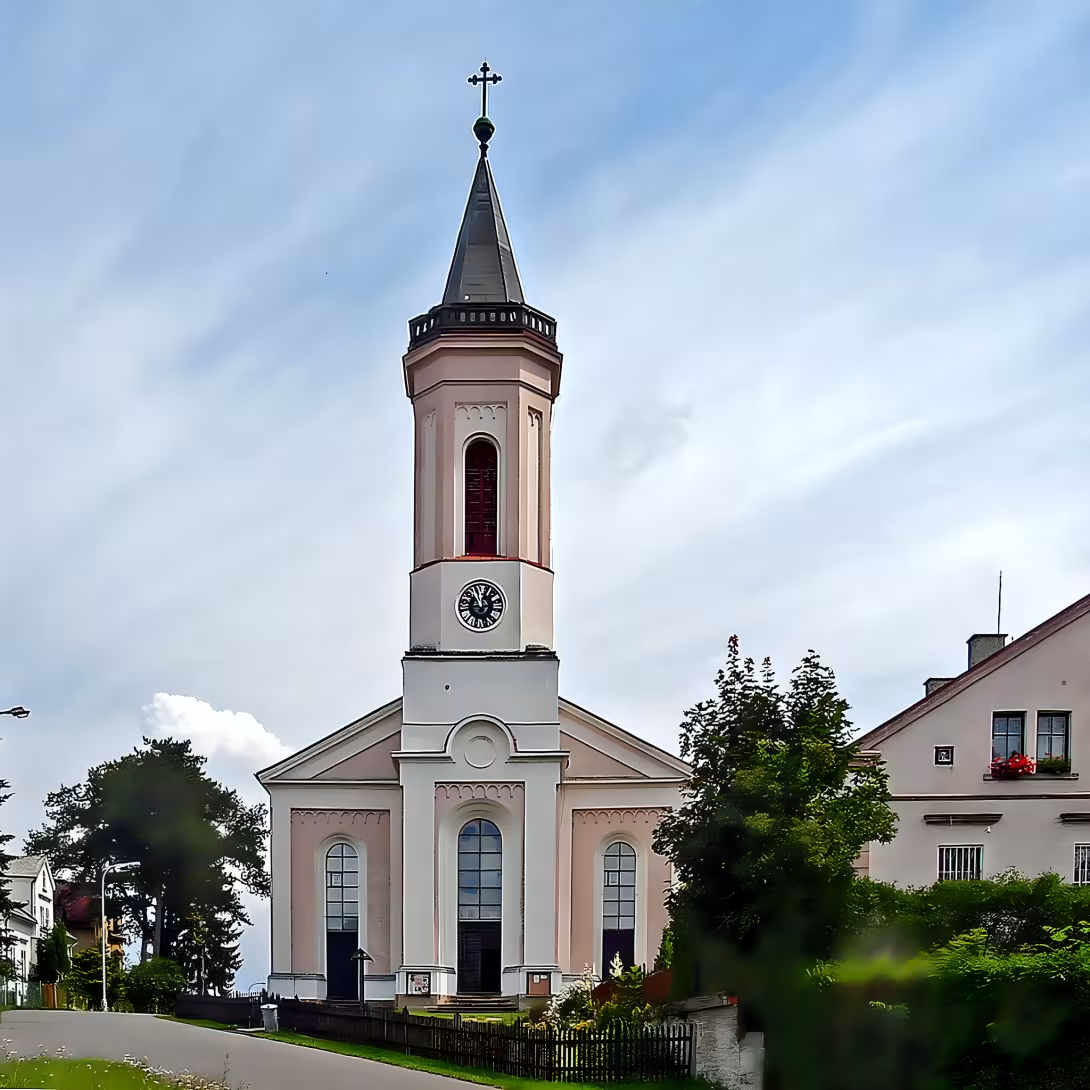
Kostel Proměnění Páně ve Varnsdorfu is an ancient Catholic temple with rich history. Its creation is inextricably linked to the personality of Varnsdorf Katechetta Anton Nittel and one of the greatest ecclesiastical crisis of the nineteenth century - the first Vatican Council of 1869, which declared the Pope's infallibility.
Anton Nittel stood up to this decree with open resistance. He was excommunicated for his disapproval in 1871, thus becoming the initiator of religious disagreements, which was transferred from the German-language part of Austria-Hungary to the Czech-Morse countries. Following this, Nittel founded an ancient Catholic parish in Varnsdorf - the first ever parish of this religion in the Czech countries and the Habsburg monarchy ever.
The architect Franz Stolle designed a New Romanesque church for the new village, whose construction started in 1873. The work of progress was fast - the construction lasted only a year and in October 1874 the tower was already occupied with its top ornament. The tower was fed by four bells; The biggest one, by Raimund Artel, weighs 1,000 and 300 kilograms. The opening ceremony of the church took place on the 27th of December 1874. Gradually the church was enriched with valuable interior equipment: in 1875 the Berlin firm Dinsa large organ installed here, and in July 1882 he devoted Vincent Pilz to a beautiful alabaster statue of Christ on the main altar.
Varnsdorf has become an important center of ancient Catholicism. In 1877, the state recognized the church, and among the first three ancient Catholic municipalities in Austria-Hungary - alongside Vienna and Rieda - it was Varnsdorf who won. Since 1880 there has also been a bishop for Austrian believers. When the bishop's throne was transferred from Vienna to Varnsdorf in 1897, the church was promoted to the cathedral. This position remained for almost a century.
World War II and Communist dictatorship were fatal to the ancient Catholic community. After the move of the Sudeten Germans, the church gradually lost its original purpose and served various purposes - it was in stock and the urban Colombarium. The renewal came later. In 1995 the bishopric moved to Prague, the church transformed into a cathedral - the second most important temple in the bishop of the Czech Republic. With the new name of the Lord's Change and successive repairs, which included the restoration of stained windows in 2000, he regained dignity.
Today, the temple serves as a testament to the courage of an individual who, in the nineteenth century, dared to doubt the authority of Rome, and at the same time as a quiet place for passage through Czech history.
Then and now
Drag the slider to compare how the landmark may have looked when it was built with the view today.
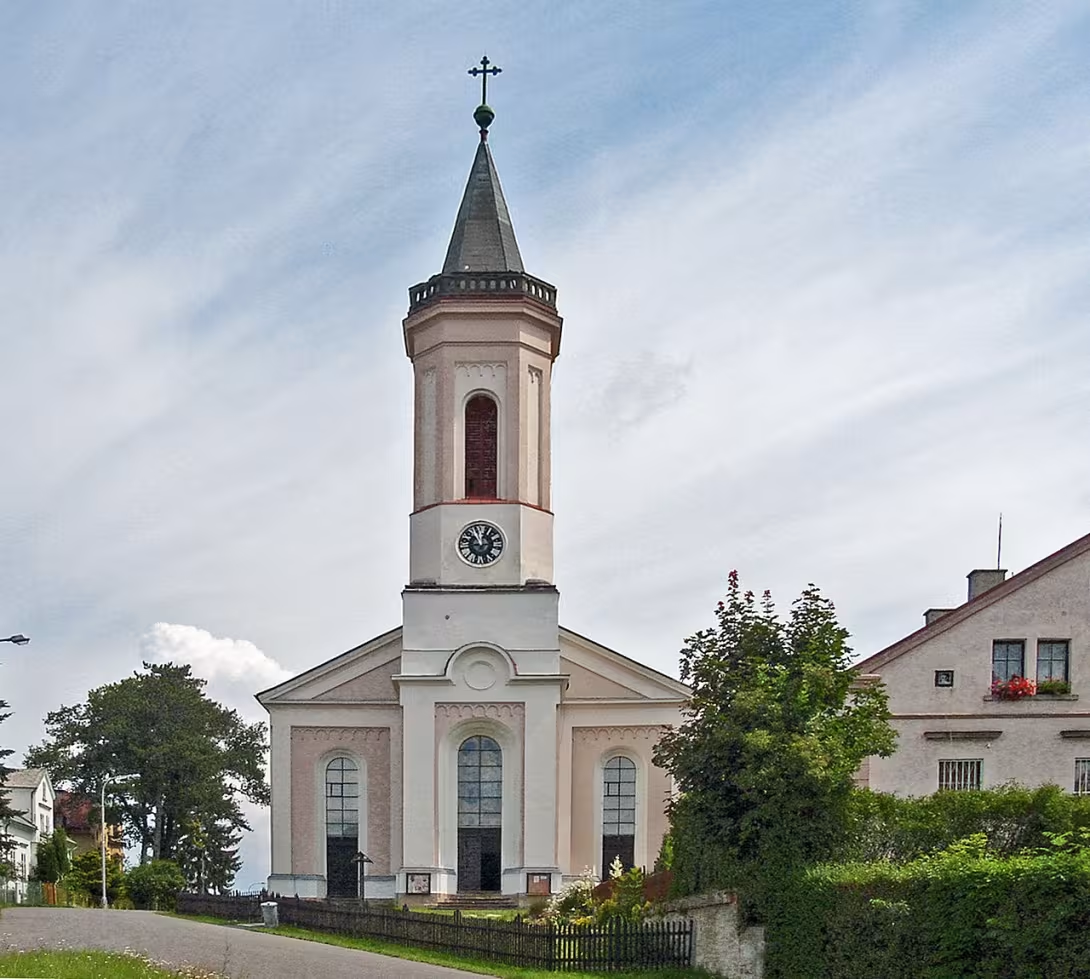
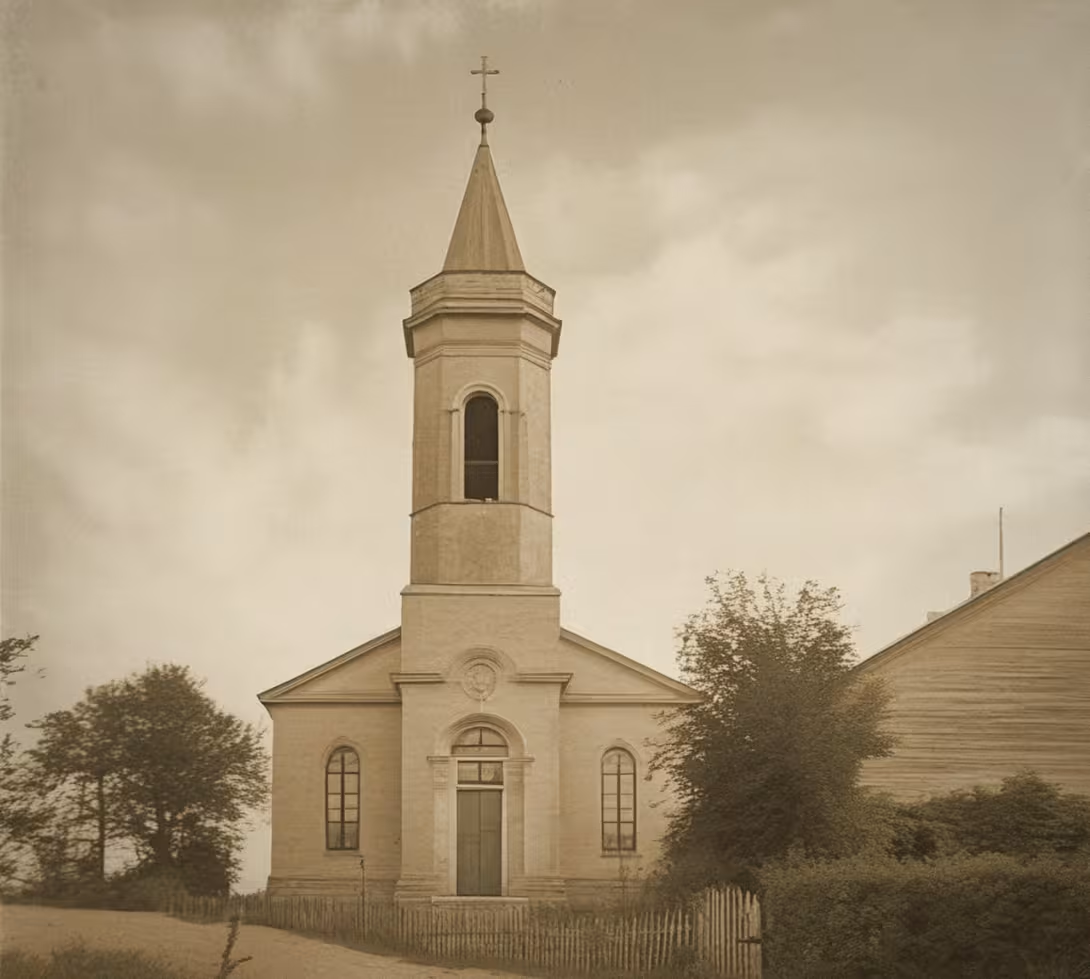
The historical appearance on the left is an AI-generated visualisation and serves as inspiration only.
Historical milestones
- 1869
- The first Vatican Council has declared dogma of papal infallibility, causing resistance and the emergence of an ancient Catholic movement
- 1871
- Anton Nittel was excommunicated from the Catholic Church for refusing dogma of infallibility and founded an old Catholic parish in Varnsdorf
- 1874
- Ceremonial opening of the church Lord's Change and installation of four bells, including the largest bell weighing 1300 kg
- 1897
- Transfer of the bishop's residence to Varnsdorf and promotion of the church to the cathedral of the Old Catholic Church
- 1995
- The movement of the bishop to Prague and the church became a cathedral, at the same time it was renamed the Church of the Transformation of the Lord
Architectural development
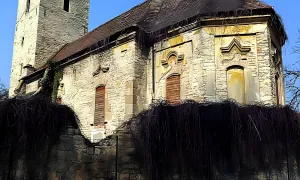
The church was built as a simple brick building in a pseudo-Romanesque style with a rectangular ground plan, a saddle roof and a massive prism tower. The facade is divided by flat passports. The interior is dominated by an alabaster statue of Christ on the altar of 1882 and an organ from the Berlin firm Dins from 1875. In the 20th century, the church underwent various modifications, including use as a Colombian, and in the 1990s, extensive repairs took place.
Historical events
Opening of construction in 1873 as a protest against papal infallibility and the establishment of the first ancient Catholic parish in Bohemia.
The ceremonial opening of the church on December 27, 1874 and the installation of four bells, the largest of which comes from Raimund Artel.
Transfer of the bishop to Varnsdorf and promotion of the church to the cathedral on 1 January 1897.
Rename to the Church of the Transformation of the Lord and repair of stained windows in 2000 after the movement of the bishop's residence to Prague.
Owners
Old Catholic Church
Points of interest
- Kostel Proměnění Páně ve Varnsdorfu is the first ancient Catholic parish church in the Czech countries and in the Habsburg monarchy, founded in 1871 on the initiative of Katechetta Anton Nittel.
- Its construction was completed in just a year, in 1874, when it was festively opened on December 27.
- The largest of the original four church bells, by Raimund Artel, weighs 1,300 kilograms.
- The church was promoted to the cathedral in 1897, when Varnsdorf became the seat of the bishop for Austrian ancient Catholic believers.
- After 1995 he became a concathedral and his name changed to * The Lord's Change *.
Guide
This guide is narrated by a synthetic voice generated by artificial intelligence.
Show guide text
This text was created by artificial intelligence and has not been editorially reviewed. It may contain inaccuracies.
The Church of the Transfiguration of the Lord in Varnsdorf in the Děčín district belongs to the Old Catholic Church. Its origins are connected with a dispute that divided the Catholic world at the end of the 1860s.
The catalyst was the First Vatican Council, convened on December 8, 1869, and its dogma on papal infallibility. A major movement arose against it in Germany, which spread to Austria-Hungary. In Varnsdorf, the local catechist Anton Nittel, who lived from 1826 to 1907, publicly criticized the dogma. In 1871, he was excommunicated from the Catholic Church for his opposition. In response, he founded an Old Catholic parish in Varnsdorf, the very first in the Czech lands and in the entire Austria-Hungary at that time.
The new community elected a church council whose members included prominent Varnsdorf citizens and factory owners. At Nittel's urging, they decided to build a parish church. The simple brick building in the Neo-Romanesque style was designed by architect Franz Stolle. Construction began in 1873 and the work lasted only a year. The church spire was installed in October 1874. Four bells were obtained for the tower. The largest of them was cast by Raimund Artel and weighs 1300 kilograms, while the others were funded by Varnsdorf girls. The church was solemnly opened on December 27, 1874. A year later, the Berlin firm Dinse delivered a large organ. The alabaster statue of Christ on the altar, donated by Vincent Pilz in July 1882, is considered the most valuable decoration. A memorial plaque with German text inside the church commemorates Nittel's achievements.
The state recognized the Old Catholic Church in 1877. At that time, three religious communities were established in the monarchy, in Vienna, in Varnsdorf, and in Ried. At the end of August 1880, construction of the rectory began. That same year, an Old Catholic bishopric was established for Austrian believers. From January 1, 1897, the bishop resided in Varnsdorf and the church was elevated to the status of a cathedral. The bishopric remained there for almost 100 years.
The Nazis were not particularly favorable to the Old Catholic community during the Second World War. After the expulsion of the Sudeten Germans, the church became an easy victim of communist dictatorship. The church then served various purposes, among other things as a municipal columbarium.
In 1995, a decision was made to move the bishopric to Prague. The Varnsdorf church, as a sign of appreciation, became a co-cathedral, that is, the second main church of the bishopric. After repairs were completed, it was given the name of the Transfiguration of the Lord. In the year 2000, repair of the stained glass windows began.
Tips for visitors
The best time to visit the Lord's Transformation Church in Varnsdorf is in the morning after opening, when there is pleasant light in the interior and fewer visitors. If you want to experience a quiet atmosphere, come here on Monday or Tuesday morning. On Sunday, after services, the church can be busy, so check your current services on site before visiting. In the summer months it is advisable to visit the church early in the morning to avoid high temperatures outside.
The church is accessible by car and public transport.
When visiting the church, wear comfortable clothes and shoes because the interior has stone floors that can be cold. In the summer months bring light clothes, but don't forget the light sweater or coat, because it may be cold in the church. Children can take small laptops or drawing items to fill in the time during the visit. If you are planning a longer stay, bring water and something to eat.
Photography in the church is permitted, but the rules of local administrators must be respected. The best places for photography are the main boat church and its interior decoration, especially frescoes and altar. For quality images is ideal natural light, which falls morning or afternoon. Avoid lightning in the interior to avoid damage to sensitive surfaces. The exterior of the church is also beautiful, especially at sunset when its stone details are illuminated.
In the vicinity of the church is worth visiting Chateau Varnsdorf, located approximately one kilometer from the church. This Baroque chateau with the surrounding park is another important historical object that offers beautiful walks and the opportunity to discover another part of local history.
For families with children, a visit to the Church of the Change of the Lord is interesting because of its historical importance and architecture. Children can see the interior of the church and listen to the stories associated with its creation. It is possible to find small parks and green areas around the church where children can play. When visiting the Zac Varnsdorf, children can see the park and perhaps even observe animals that sometimes occur there.
Frequently asked questions
Can the monument be visited?
Religious buildings are usually open mainly during services; at other times a visit is normally arranged with the parish or the operator. We have not verified specific times.
Where is the monument?
Location: Varnsdorf, Ústecký kraj. The map on this page shows the exact spot.
Why is the monument protected?
It is listed in the Central List of Cultural Monuments of the Czech Republic as a cultural monument (register no. 16073/5-4041).
For kids
Imagine going back 153 years and finding yourself in a small village of Varnsdorf. In the center of the village there is a beautiful church of the Transformation of the Lord. It was a time when people lived by their traditions and beliefs.
The church stood like a sculpture on the top. There were people who lived around him. The country was full of work and effort. People gathered in church to pray and celebrate their important anniversaries. It was a time when people liked their traditions and beliefs.
Businesses nearby
Do you run a restaurant, accommodation, shop, museum, rental, wellness or other visitor service near this monument? Show yourself directly to the people heading to it — this is how they will see you in the app and on the web:
Nearby
- Baroque chateau with park, built in the 18th century, which is another important historical object in the surroundings.
- Protected area with rich flora and fauna, located near Varnsdorf.
Accommodation nearby
Themed route
Thematic cruise route: Historical and natural treasures Varnsdorf
1. Church of the Transformation of the Lord * Type: * Sacral monument A unique church built in 1726-1728 according to the plans of Kilian Ignác Dientzenhofer, which combines Baroque architecture with elements of folk building. Its interior with rich decoration and unique organical work is an excellent example of the sacral artistic creation of the region.
2. Chateau Varnsdorf * Type: * Baroque lock It lies only a short walk from the church and offers a view to the 18th century. Its park with historical trees and period arrangements complements the atmosphere of the place where important nobles lived. The inner spaces serve as a cultural centre with variable exhibitions.
3. National Nature Reserve Black Forest * Type: * Protected natural territory The ideal ending for nature lovers. Reservation with beech and mixed forests is home to rare species of plants and animals, including protected butterflies. The short hiking trail allows peaceful walks between trees and observations of local fauna.
Seasonal recommendations
Spring Spring in the Church of the Transformation of the Lord surrounds visitors with a gentle, variable atmosphere. The sun's rays penetrate glass windows that disperse light into the coloured masses of the church's vitrates, while nature wakes up outside - meadows at the church flourish with primrose and spring grass, while trees on the baits begin to dress green. The inner spaces are lit by soft, scattered light, which creates a calm, almost meditation mood. During this period, the church is an ideal place for quieter walks, where you avoid the main activity. I recommend visiting him on Monday or Tuesday morning when the crowds are minimal. Put on light but comfortable shoes as the path to the church leads along stone paths, and cover your shoulders with a light scarf - spring weather is variable, often cold in the morning and warm in the afternoon.
Summer Summer brings live, sunny energy to the Church of the Lord's Transformation, which is reflected both in the interior and in the surroundings. Outside, there are green meadows and trees that shade the church and create a pleasant place to relax. The sunlight, which penetrates the stained glass, creates playful shadows and colorful reflections on the ground and walls of the church, which gives the place a magical atmosphere. In the main summer season, however, it is necessary to count on higher attendance rates, especially on Saturdays and Sunday afternoons. I recommend arriving early in the morning when the church is still calm, and avoiding the noon hours when it is the hottest out. Wear light, airy clothes, but don't forget the sunglasses and hat - the sun on the open surfaces can be intense.
Autumn Autumn visit to the Church of the Transformation of the Lord offers a unique atmosphere where outdoor nature turns into colours from golden to dark red shades. The leaves on the trees surrounding the church begin to scale and fall, while the inner spaces are lit by a softer, dimming light that creates a quiet, reflexive mood. In this period, the church is an ideal place for reflection, as the outdoor silence is disturbed only by the rustling of falling leaves. Visiting is lower than summer, but it is necessary to count on rain and colder weather. I recommend visiting the church on Friday or Saturday afternoon, when the outside is pleasant and crowds less. Wear warmer clothes, but don't forget waterproof shoes because autumn rains can make the way to the church slippery.
Winter The winter visit to the Church of the Transformation of the Lord is surrounded by a calm, moderate atmosphere where the outside world is covered with white snow. The sun, which penetrates through the stained glass, creates fine, silvery reflections on the walls of the church that give the place mysterious beauty. Outside is a quiet, snowy environment that creates a sense of peace and rest. In advent time, the church is often lit with Christmas lights, which adds a warm, relaxed atmosphere to the interior. Visiting is lower than in summer months, but it is necessary to count on shorter opening times and possible restrictions due to winter weather. I recommend visiting the church on Sunday afternoon, when the outside is the quietest. Wear warm, suitable clothes, including solid shoes, as the roads can be frozen, and remember warm gloves - winter cold can be difficult.
Visualizations and artistic views


The visualisations are generated by artificial intelligence and serve as inspiration.
Photos from the area
Real photos taken near the monument

Zdroj a licence jsou uvedeny u každého snímku.
Atmosphere of the place
This atmospheric visualisation of the place and period was generated by artificial intelligence. It is not real footage of the location.
Tips from visitors
No tips yet. Be the first!
Log in and add your tip.
Sources and literature
Photos: Mirek256 / Public domain, rozlišení zvýšeno umělou inteligencí — Wikimedia Commons. The author and licence also appear when you hover over the image.
Faktickým podkladem tohoto textu byl článek na Wikipedii, jehož autory jsou přispěvatelé Wikipedie. Článek je dostupný pod licencí CC BY-SA 4.0.
Location on the map

Příběhy a pověsti
Legendy, pověsti a příběhy spjaté s touto památkou
Fotografie návštěvníků
Zatím žádné fotografie. Buďte první, kdo přidá fotografii z návštěvy!
Log in a přidejte svou fotografii nebo hodnoťte.
Za ověřenou návštěvu v aplikaci získáte víc bodů — poznáme podle GPS, že jste na místě.
Reviews and comments