






Kostel Spasitele Church
Objekt se nedochoval — na místě dnes nestojí. Následující text popisuje jeho historii, ne současnou návštěvu.
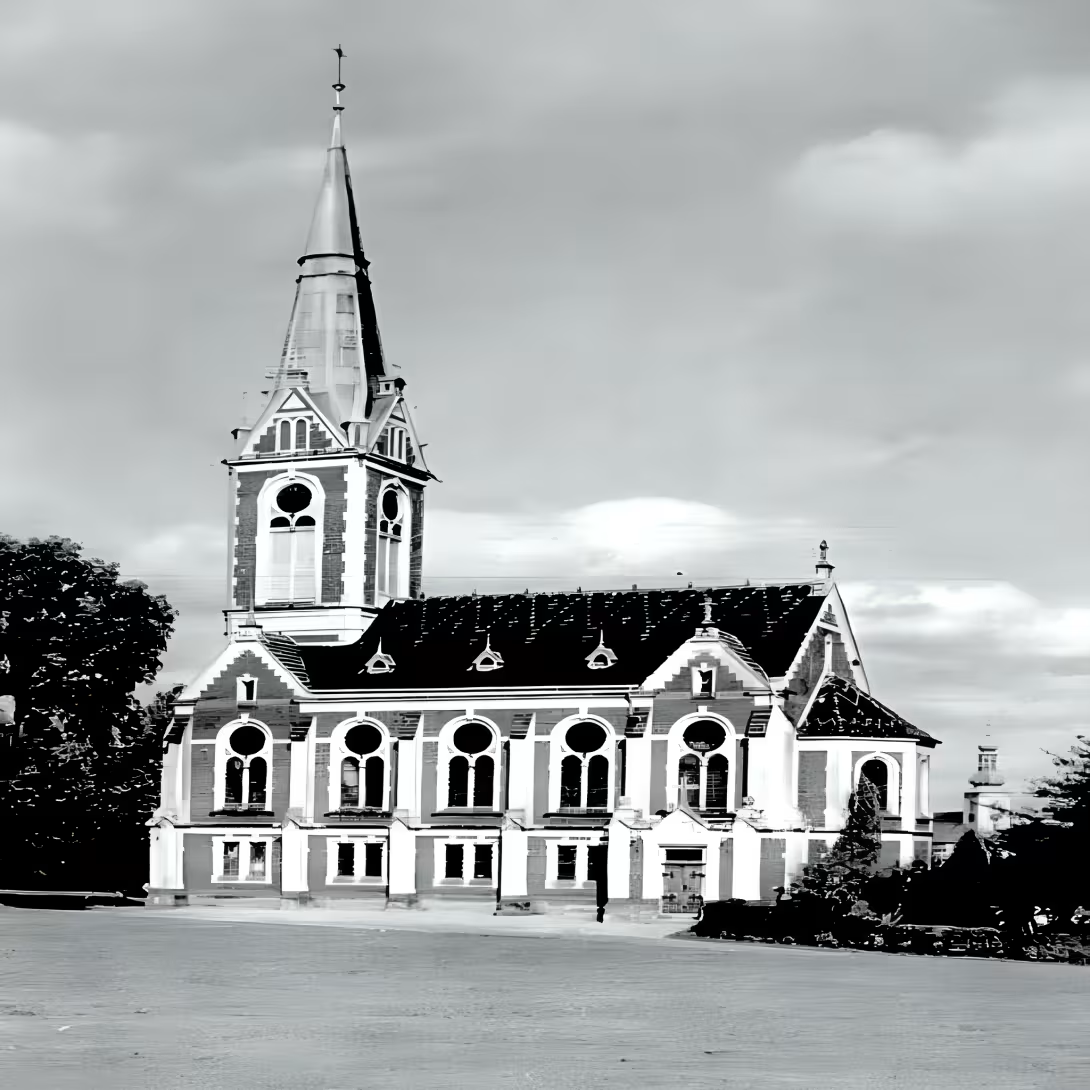
The Church of the Saviour in Krásná Lípa exemplifies early 20th-century Neo-Gothic architecture. It reflects local craftsmanship and broader European trends. Located in Ústecký kraj, this church served as a spiritual center for the Old Catholic community until its demolition in 1971. Notable features included distinctive half-round apses and stained glass windows by artist Titzl, marking it as a significant cultural landmark.
The origins of the Church of the Saviour date back to the late 19th century. Preparations began in 1890 with the formation of a local Old Catholic society. By 1899, the society acquired land opposite the municipal cemetery and received city council permission to build, along with a financial contribution of 12,000 korun under specific conditions regarding funeral practices. Construction commenced on January 20, 1900, designed by architect Josef J. Schmidt, and was consecrated in its unfinished state on September 1, 1901, by Bishop Administrator Miloš Čech.
Architecturally, the church showcased Neo-Gothic style with brickwork adorned with stucco decorations, a five-sided apse, and distinctive windows featuring vitraux by Titzl. The high tower was topped with an octagonal roof, enhancing its striking appearance. Inside, it housed works from local craftsmen, including a main altar designed by Carl Hentschel and an oltářní obraz titled "Christ as Teacher" painted by August Frind.
Throughout its history, the Church of the Saviour experienced several significant events. After World War I, it suffered damage due to war requisitions and vandalism but underwent renovations in 1923. New bells were consecrated by Bishop Alois Pašek in 1926. Despite these efforts, the church fell into disrepair after World War II as its original congregation diminished, leading to its eventual use as a storage facility for fuel tanks in the 1960s.
Today, the site where the Church of the Saviour once stood is marked by two plots: one owned by the city of Krásná Lípa and another by a private company. While the church itself no longer exists, its historical significance remains as part of the cultural heritage of the region. Visitors can explore the nearby municipal cemetery, which includes notable structures such as a neoclassical chapel from 1882 and a neo-Renaissance Dittrich family mausoleum.
The Church of the Saviour's legacy continues to resonate as an example of early 20th-century architectural ambition and community spirit. Although it no longer stands, its story invites reflection on the cultural and historical narratives that shaped Krásná Lípa, making it a worthwhile visit for those interested in exploring the region's rich heritage.
Then and now
Drag the slider to compare how the landmark may have looked when it was built with the view today.
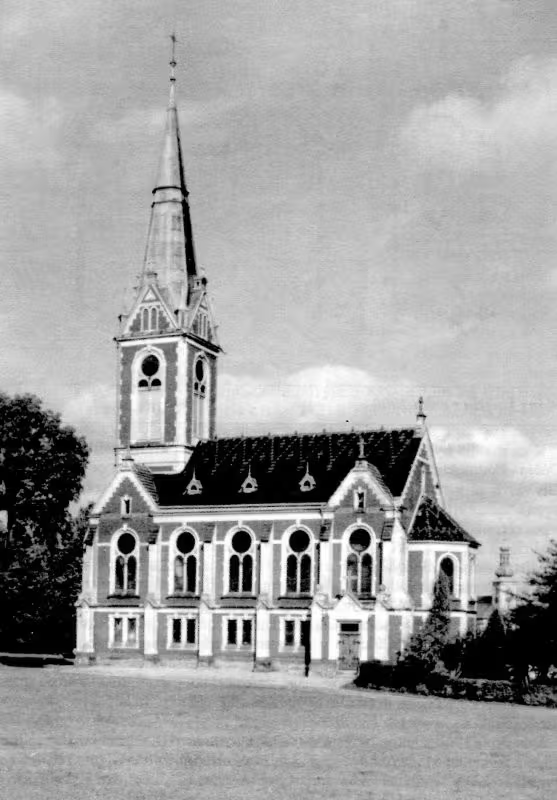

The historical appearance on the left is an AI-generated visualisation and serves as inspiration only.
Historical milestones
- 1901
- The unfinished church was consecrated by Bishop Administrator Miloš Čech.
- 1971
- The church was demolished after falling into disrepair and being used as a storage facility.
Architectural development
Construction of the Neo-Gothic Church of the Saviour began in 1900, with completion by 1903. The building featured brickwork adorned with stucco decorations and had a distinctive five-sided apse. After World War I, it suffered from war requisitions and vandalism but underwent several renovations, including new windows and electrical installations.
Historical events
- 1901
- The unfinished church was consecrated by Bishop Administrator Miloš Čech.
- 1971
- The church was demolished after falling into disrepair and being used as a storage facility.
Points of interest
- Despite its demolition in 1971, the Church of the Saviour was once a focal point for Old Catholic practices in Krásná Lípa, reflecting the community's resilience and adaptability amidst changing religious landscapes.
- The church’s stained glass windows by Titzl were not just decorative but symbolized the merging of local artistry with broader European artistic movements at the turn of the 20th century.
- Architect Josef J. Schmidt designed the Church of the Saviour to include a distinctive five-sided apse, an unusual feature that set it apart from typical Neo-Gothic structures and highlighted innovative architectural experimentation in Krásná Lípa.
- After World War II, the church transitioned into a storage facility for fuel tanks during the 1960s, showcasing how historical buildings can be repurposed to meet contemporary needs even as they face neglect.
- The site's current division between city ownership and private company control reflects ongoing debates about heritage preservation versus modern development in Krásná Lípa.
Guide
This guide is narrated by a synthetic voice generated by artificial intelligence.
Show guide text
This text was created by artificial intelligence and has not been editorially reviewed. It may contain inaccuracies.
Welcome to the site of the Church of the Saviour in Krásná Lípa. As you stand here, imagine the Neo-Gothic architectural splendor that once graced this location, a testament to early 20th-century design and spiritual devotion. Although the church no longer stands, its story continues to resonate through the echoes of history.
The Church of the Saviour was conceived as an important religious hub for the local Old Catholic community. Its construction began in the dawn of the 1900s and was completed enough by 1901 to be consecrated by Bishop Administrator Miloš Čech. This church, designed by architect Josef J. Schmidt, became a focal point for spiritual gatherings until its unfortunate demolition in 1971.
As you take in this site, picture the distinctive architectural elements that once defined it. The church featured half-round apses and was adorned with stained glass windows created by artist Titzl. These windows were not merely decorative; they symbolized deeper meanings and stories within the Old Catholic faith. Though now absent, their memory invites us to reflect on the artistic vision that once brought light into this sacred space.
The history of the Church of the Saviour is interwoven with key figures who shaped its legacy. Bishop Administrator Miloš Čech played a pivotal role in consecrating the church, marking it as a spiritual landmark for the community. Another significant figure was August Frind, whose influence extended to religious practices and community life during that era.
An intriguing aspect of this site is how it reflects the resilience and adaptability of the Old Catholic community amidst changing religious landscapes. Despite its demolition in 1971 after years of disrepair and use as a storage facility, the church's impact endures through stories and memories passed down by those who experienced its presence.
As we conclude our journey here at this historical site, I invite you to explore further into Krásná Lípa, where more tales of heritage await discovery. Thank you for joining me on this virtual tour, and may your curiosity lead you to uncover even more hidden gems in the rich tapestry of history that surrounds us.
Businesses nearby
Do you run a restaurant, accommodation, shop, museum, rental, wellness or other visitor service near this monument? Show yourself directly to the people heading to it — this is how they will see you in the app and on the web:
Nearby
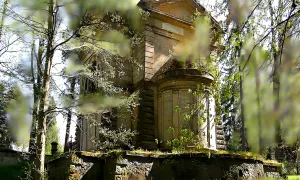
The church was located opposite a municipal cemetery, which includes a neoclassical chapel from 1882 and a protected neo-Renaissance Dittrich family mausoleum.
Visualizations and artistic views


The visualisations are generated by artificial intelligence and serve as inspiration.
Photos from the area
Real photos taken near the monument


Zdroj a licence jsou uvedeny u každého snímku.
Atmosphere of the place
This atmospheric visualisation of the place and period was generated by artificial intelligence. It is not real footage of the location.
Tips from visitors
No tips yet. Be the first!
Log in and add your tip.
Sources and literature
Photos: autor neuveden / Public domain, rozlišení zvýšeno umělou inteligencí — Wikimedia Commons. The author and licence also appear when you hover over the image.
Faktickým podkladem tohoto textu byl článek na Wikipedii, jehož autory jsou přispěvatelé Wikipedie. Článek je dostupný pod licencí CC BY-SA 4.0.
Location on the map


Příběhy a pověsti
Legendy, pověsti a příběhy spjaté s touto památkou
Fotografie návštěvníků
Zatím žádné fotografie. Buďte první, kdo přidá fotografii z návštěvy!
Log in a přidejte svou fotografii nebo hodnoťte.
Za ověřenou návštěvu v aplikaci získáte víc bodů — poznáme podle GPS, že jste na místě.
Reviews and comments