






Dittrichova hrobka Tomb
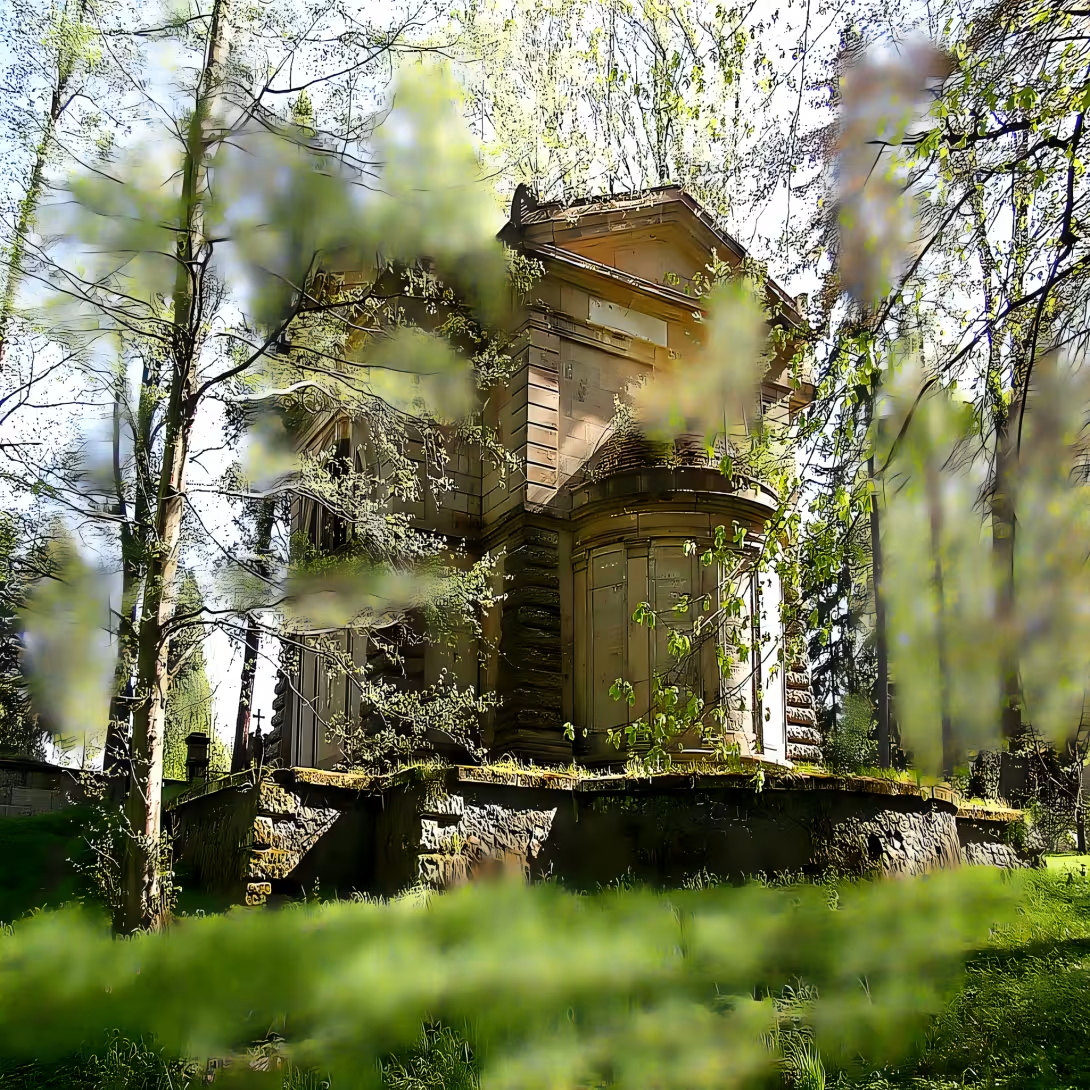
The Dittrichova hrobka, a unique Neo-Renaissance mausoleum in the Czech Republic, stands as a testament to the Dittrich family's wealth and status in northern Bohemia during the late 19th century. Located in Krásná Lípa, Ústecký kraj, this remarkable monument was built between 1888 and 1889 for the Dittrich family, prominent industrialists in the textile industry. The mausoleum's exceptional design and craftsmanship make it a rare example of a family tomb that served as a burial site and a venue for memorial services and events.
Commissioned by Carl August Dittrich, a member of the Dittrich family, the mausoleum was built on a 14.4-hectare plot of land donated in 1882. The cemetery began operating in October 1882, and two years later, the Dittrich family decided to build a grand mausoleum. The building's design and architecture are characteristic of the Neo-Renaissance style, featuring a Greek cross floor plan and a semi-circular apse on the south side. The exterior walls are clad in sandstone, while the interior was designed by local painter August Frind, who created a cycle of frescoes depicting the different stages of human life, titled "The Journey of Life."
The Dittrichova hrobka is a unique example of a family tomb that served not only as a burial site but also as a venue for memorial services and events. The building's design and architecture are notable for their exceptional quality and craftsmanship. The interior frescoes depict the cycle "The Journey of Life," representing the different stages of human life. The mausoleum features an altar, pews, a pulpit, a grille, lighting, and an entrance gate to the park, although most of the original furnishings have not survived.
The Dittrichova hrobka has undergone significant changes in ownership and administration over the years. Originally owned by the Dittrich family, it was later acquired by the Czech Republic. In 2018, the Omnium association received the mausoleum as a gift from the state, but it was eventually acquired by the city of Krásná Lípa in 2023 for a symbolic 10,000 crowns. The city plans to restore the mausoleum and ensure its preservation for future generations.
Despite its historical significance and architectural value, the Dittrichova hrobka has been neglected and vandalized over the years. Its current state is a testament to the challenges of preserving cultural heritage sites in the Czech Republic. However, its unique design and artistic form make it an essential destination for those interested in history, architecture, and art. Visitors can explore the mausoleum's interior and admire the frescoes, which provide a glimpse into the lives of the Dittrich family and their place in the history of northern Bohemia.
Then and now
Drag the slider to compare how the landmark may have looked when it was built with the view today.
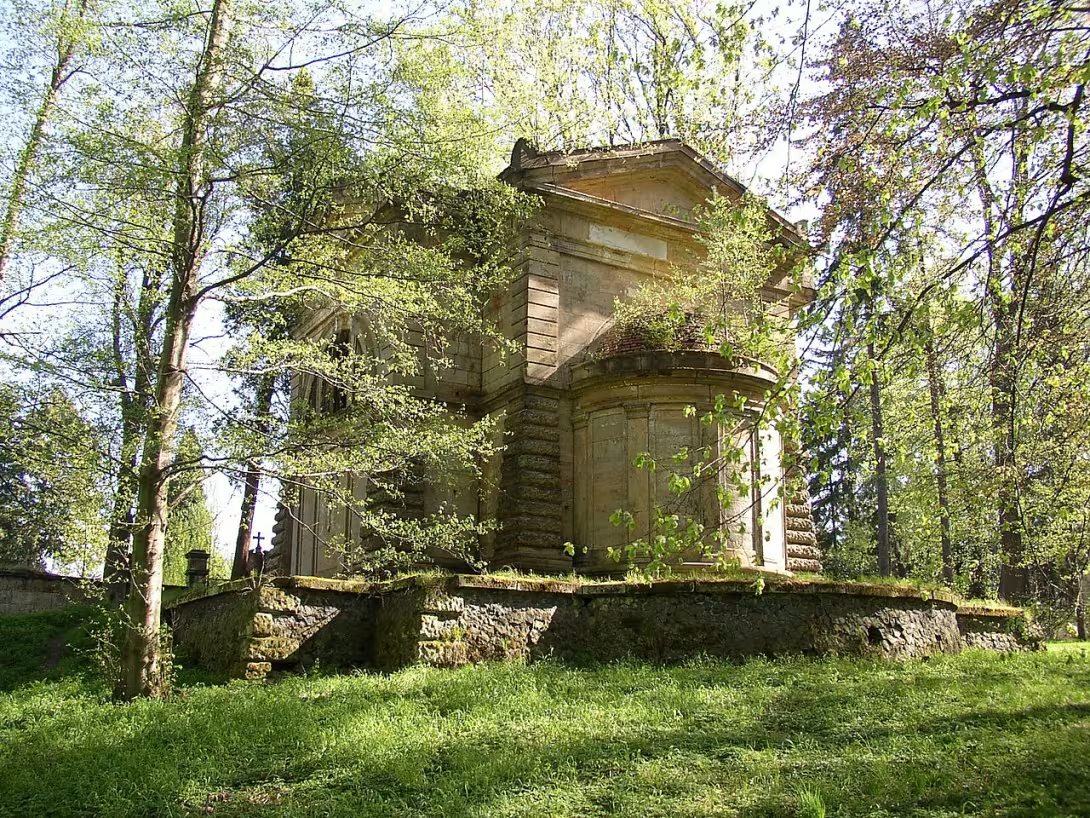
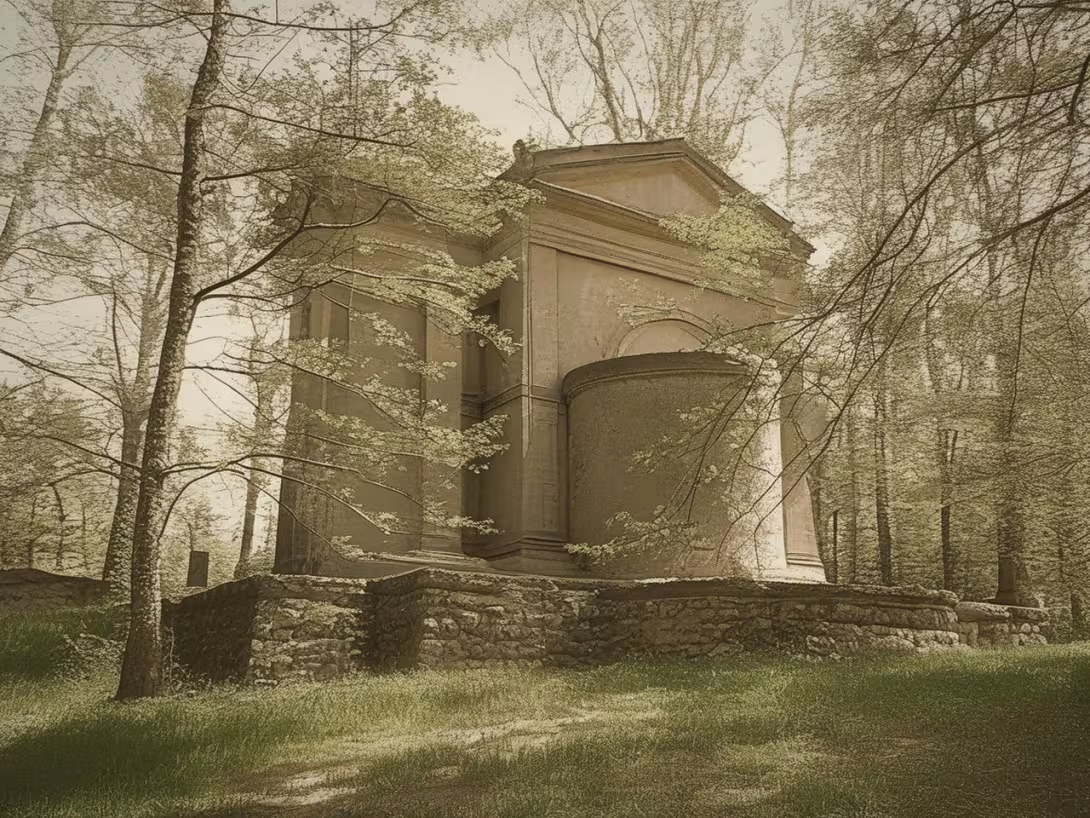
The historical appearance on the left is an AI-generated visualisation and serves as inspiration only.
Historical milestones
- 1823
- Julius Carl Raschdorff was born.
- 1852
- August Frind was born.
- 1853
- Carl August Dittrich was born.
- 1882
- The new cemetery began to serve in October 1882.
- 1888
- The Dittrich family commissioned the construction of the mausoleum.
- 1890
- Christian Anemüller died.
- 1894
- The mausoleum was electrified in 1894.
- 1914
- Julius Carl Raschdorff died
Architectural development
The mausoleum was built using fired bricks, with the exterior walls clad in sandstone. The building's design and architecture are characteristic of the Neo-Renaissance style, with a Greek cross floor plan and a semi-circular apse on the south side. The interior was designed by the local painter August Frind, with frescoes depicting the cycle 'Der Gang durchs Leben' (The Journey of Life).
Historical events
- 1882
- The new cemetery began to serve in October 1882.
- 1888
- The Dittrich family commissioned the construction of the mausoleum.
- 1894
- The mausoleum was electrified in 1894.
- 2007
- The Dittrichova hrobka was declared a national cultural monument in 2007.
Owners
Carl August Dittrich (1853–1918), Dittrich family, Czech Republic, Omnium, Krásná Lípa
Points of interest
– The Dittrichova hrobka was built on a 14.4-hectare plot of land donated by the Dittrich family in 1882, which was originally intended for a cemetery. The cemetery began operating in October 1882.
– The Dittrichova hrobka was designed by the local painter August Frind, who created a cycle of frescoes depicting the different stages of human life, titled "The Journey of Life." The frescoes are a unique example of the artist's work.
Guide
This guide is narrated by a synthetic voice generated by artificial intelligence.
Show guide text
This text was created by artificial intelligence and has not been editorially reviewed. It may contain inaccuracies.
Welcome! You are standing before the Dittrich Mausoleum, a unique mausoleum in the Czech Republic and Central Europe. It is designed in the neorenaissance style and was built between 1888 and 1889 for the Dittrich family, who were an influential industrial family in northern Bohemia. It feels as though you have just stepped into another world, unlikely that you've just found yourself at one of our most beautiful and valuable historical landmarks.
Let's move forward in time to discover why the Dittrich family decided to build this beautiful mausoleum. In 1882, a new cemetery garden began operating on a 14.4-hectare plot donated by the Dittrich family. The family wanted to create a place for burials and memorial ceremonies. And it is here, at this location, that the Dittrich Mausoleum was created.
Notice how the mausoleum stands out in this environment. It is truly an architectural gem located right where you are. Take a look at the façade and notice how it is adorned with rich details. The mausoleum was designed by local painter August Frind, who created a cycle of frescoes that decorate the walls of the mausoleum. Frind was a true master of his craft, and his work is a genuine artistic treasure.
Now pay attention to some of the key figures associated with this mausoleum. They were Carl August Dittrich senior, Carl Dittrich junior, Eduard Hielle, and Alžběta Hielle. These were people who had a significant influence on the development of the mausoleum and are buried here. Their stories are interesting and worth learning about.
The Dittrich Mausoleum has one intriguing historical fact: it was built on a site that originally housed a cemetery. Although it may seem like just an ordinary cemetery, it is much more than that. It is a place where the past meets the present, where human lives intersect and encounter artistic treasures.
Come explore Dittrich's Mausoleum further and ensure you enjoy yourself. Welcome to this unique world that will fascinate and captivate you.
Tips for visitors
The best time to visit Dittrichova hrobka is during the spring and summer months when the surrounding landscape is in full bloom. The mausoleum is particularly beautiful during this time, with the lush greenery and vibrant flowers creating a picturesque backdrop.
Parking is available near the mausoleum, but it can be limited during peak season. It's recommended to arrive early to secure a spot. Alternatively, you can use public transportation, which is available from nearby towns.
Visitors are advised to bring comfortable walking shoes, as the mausoleum is located in a rural area and the terrain can be uneven. It's also a good idea to bring a camera, as the scenery is photogenic.
The best spots for photography are around the mausoleum itself, particularly during the golden hour when the light is soft and warm. The surrounding hills and forests also offer great opportunities for capturing scenic shots.
For families with children, the mausoleum can be a great educational experience. The unique architecture and history of the site can spark interesting conversations and learning opportunities. However, it's worth noting that the site may not be stroller-friendly due to the uneven terrain.
Businesses nearby
Do you run a restaurant, accommodation, shop, museum, rental, wellness or other visitor service near this monument? Show yourself directly to the people heading to it — this is how they will see you in the app and on the web:
Nearby
The mausoleum is located in the town of Krásná Lípa, in the Ústecký kraj region of the Czech Republic. The surrounding landscape is characterized by rolling hills and forests.
Accommodation nearby
Themed route
The Dittrichova hrobka is a unique and fascinating destination that offers a glimpse into the life and legacy of a remarkable individual. To fully appreciate its significance, we recommend exploring the surrounding area, which is characterized by rolling hills and forests.
1. Krásná Lípa: Start your journey in the charming town of Krásná Lípa, where the Dittrichova hrobka is located. Take a stroll through the town's picturesque streets and get a feel for its history and culture. 2. Lázeňský park: Just a short walk from the hrobka, the Lázeňský park offers a peaceful escape from the hustle and bustle of daily life. Take a leisurely walk through the park and enjoy the beautiful scenery. 3. Dittrichova hrobka: The main attraction, the Dittrichova hrobka, is a must-visit destination. Learn about the life and legacy of Dittrich and explore the impressive mausoleum. 4. Dittrichova hrobka - park: After visiting the hrobka, take some time to explore the surrounding park, which offers a serene and peaceful atmosphere. 5. Dittrichova hrobka - okolí: End your journey by exploring the immediate surroundings of the hrobka, which offer a glimpse into the history and significance of the site.
Seasonal recommendations
Jaro: Spring is the best season to visit Dittrich's Mausoleum, as it offers warmer and sunnier weather that allows for unrestricted exploration of the site. During this time, nature around the mausoleum is in full bloom, creating a pleasant atmosphere. We recommend visiting the mausoleum in late spring when the interior spaces are open and there are no large crowds.
Léto: Summer is the peak season for visitors to Dittrich's Mausoleum. During the summer months, the site sees the most visitors, so it’s advisable to arrive early to avoid large crowds. The summer weather is ideal for exploring both the mausoleum and its surrounding nature. We recommend visiting in the late morning or early afternoon to avoid the largest crowds.
Podzim: Autumn is a season of beautiful nature around Dittrich's Mausoleum, with trees displaying colorful foliage and cooler weather creating a pleasant atmosphere for exploring the site. During this period, the interior spaces are open, allowing visitors to see the interiors as well. We recommend visiting in late autumn when the weather is enjoyable and there are no large crowds.
Zima: Winter is a season when the mausoleum is open only for limited hours. We recommend visiting in late autumn or early winter to avoid the largest crowds. In winter, it’s also important to dress warmly, so we advise bringing warm clothing.
Visualizations and artistic views


The visualisations are generated by artificial intelligence and serve as inspiration.
Photos from the area
Real photos taken near the monument


Zdroj a licence jsou uvedeny u každého snímku.
Tips from visitors
No tips yet. Be the first!
Log in and add your tip.
Sources and literature
Fotografie: Mirek256 / CC BY-SA 3.0, rozlišení zvýšeno umělou inteligencí — Wikimedia Commons. The author and licence also appear when you hover over the image.
Faktickým podkladem tohoto textu byl článek na Wikipedii, jehož autory jsou přispěvatelé Wikipedie. Článek je dostupný pod licencí CC BY-SA 4.0.
Location on the map



Příběhy a pověsti
Legendy, pověsti a příběhy spjaté s touto památkou

Fotografie návštěvníků
Zatím žádné fotografie. Buďte první, kdo přidá fotografii z návštěvy!
Přihlaste se a přidejte svou fotografii nebo hodnoťte.
Za ověřenou návštěvu v aplikaci získáte víc bodů — poznáme podle GPS, že jste na místě.
Reviews and comments