






Kostel Stětí svatého Jana Křtitele (Skramníky) Church
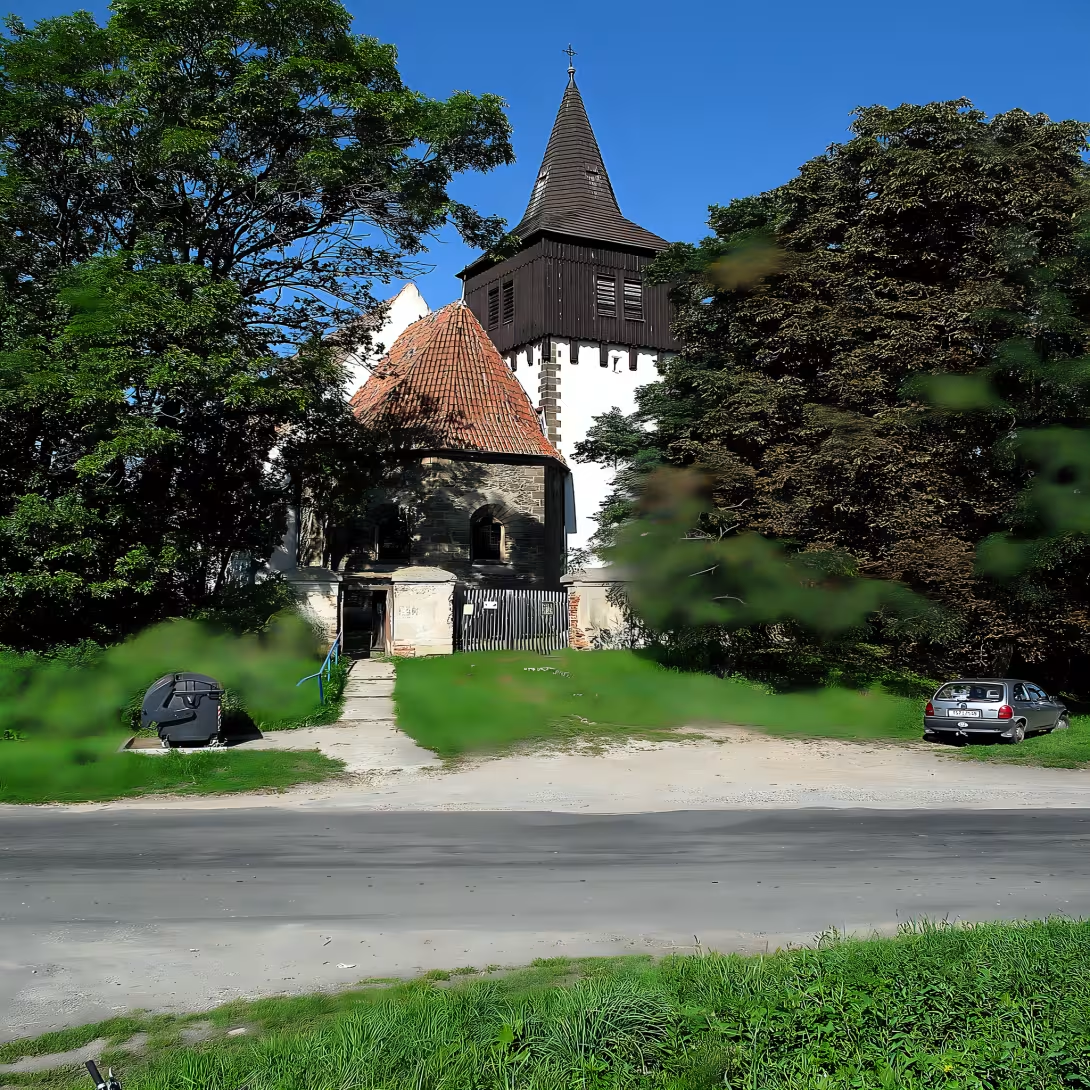
Kostel Stětí svatého Jana Křtitele in Skramníky is a filial church of historical and architectural significance. Constructed at the start of the 20th century, it exemplifies new Gothic architecture, designed by architect Gabriel after its predecessor was demolished in 1906. Since its reconstruction, it has been part of the Roman Catholic parish of Pečky and was registered as a cultural monument of the Czech Republic in 1963.
The site's origins may date back to 1056 when monks from Sázavský monastery possibly established a chapel here. The first documented mention of the church is from 1656. Over centuries, it underwent various modifications and renovations, including significant changes in the 16th century and tower repairs in 1696. The early 20th-century reconstruction was influenced by a broader European revival of interest in Gothic architecture during a period when Bohemia experienced cultural and political shifts as part of the Austro-Hungarian Empire.
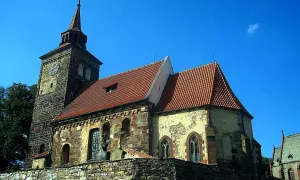
Architecturally, Kostel Stětí svatého Jana Křtitele is a single-nave brick building with an oblong floor plan oriented east. It features a 14th-century apse with a three-sided closure and a polygonal tower capped by a spire on its northern side. The church's exterior is enclosed within a wall made of quarry stone and bricks, which also encompasses associated buildings like a rectory and former cemetery. Notably, the western façade boasts a high gable roof and an entrance to the undercroft with segmentally arched framing.
Inside, the church presents a blend of Baroque and Rococo elements from the 18th century. The apse is vaulted with a six-part ribbed ceiling supported by profiled consoles, while the nave has a flat timber beam ceiling and two windows on its side walls. A triumphal arch leads to an image of the Last Supper flanked by angels above it. The gallery is brick-built, supported by columns, and covered with three barrel vaults. Among the interior's highlights are artworks such as Láďa Novák’s painting "Stětí svatého Jana Křtitele" from 1917, a Rococo pulpit from the 18th century, and a Baroque image of the Seven Sorrows of the Virgin Mary in an Rococo frame.
The church houses two notable bells: a Gothic bell named Maria and Jan Křtitel, cast by Ondřej Ptáček in 1503, and a Renaissance bell from 1585. The former features reliefs of Saint John the Baptist and the Virgin Mary with a Latin inscription emphasizing its dedication to God, the Virgin Mary, and Saint John the Baptist.
Today, Kostel Stětí svatého Jana Křtitele remains accessible for visitors interested in exploring its rich history and architectural beauty. Its status as a cultural monument underscores its significance within the Czech Republic’s heritage landscape. The church offers a unique glimpse into the historical transformations of religious architecture, making it a worthwhile destination for those intrigued by both Gothic revival styles and Bohemian ecclesiastical history.
Then and now
Drag the slider to compare how the landmark may have looked when it was built with the view today.
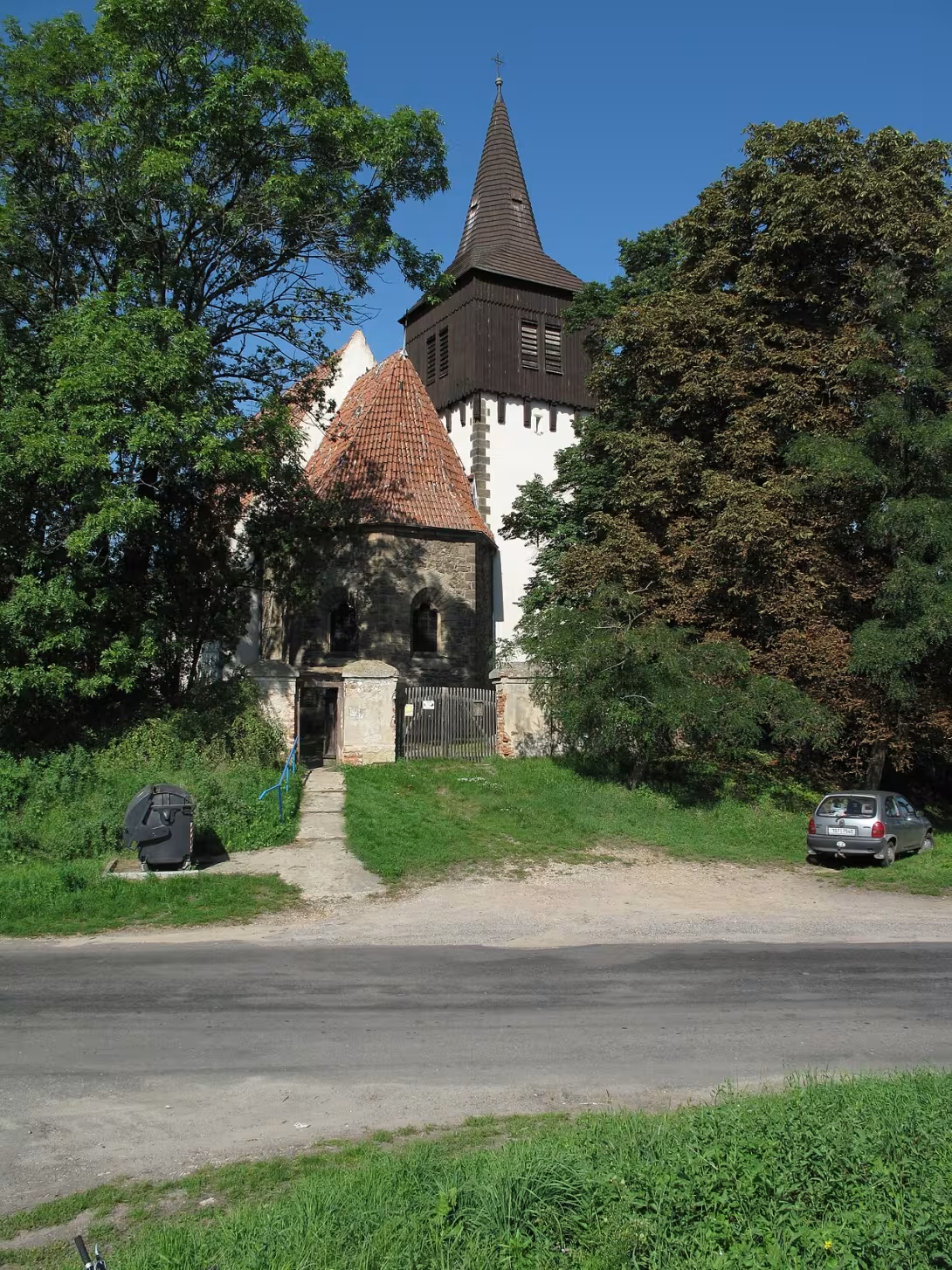

The historical appearance on the left is an AI-generated visualisation and serves as inspiration only.
Historical milestones
- 1056
- A chapel likely existed at this site, established by monks from Sázavský monastery.
- 1656
- The first written mention of the church dates back to this year.
Architectural development
The church has undergone several architectural transformations. Initially, there may have been a chapel established by monks from Sázavský monastery in 1056. The Gothic structure underwent modifications and renovations over centuries, including significant changes in the 16th century and repairs to its tower in 1696. In 1906, it was demolished and rebuilt in the new Gothic style based on Gabriel's design.
Historical events
- 1906
- The original church was demolished and rebuilt in the new Gothic style.
- 1963
- The church was registered as a cultural monument of the Czech Republic.
Points of interest
- The site where Kostel Stětí svatého Jana Křtitele stands may have roots dating back to 1056 when monks from Sázavský monastery possibly established a chapel there, suggesting its long-standing religious significance.
- Despite being documented as early as 1656, the church underwent significant architectural changes in the 16th century and had its tower repaired in 1696, reflecting ongoing community investment over centuries.
- The Gothic bell named Maria and Jan Křtitel was cast by Ondřej Ptáček in 1503, featuring reliefs of Saint John the Baptist and the Virgin Mary with a Latin inscription, linking it to medieval craftsmanship traditions.
- Architect Gabriel designed the church's new Gothic structure at the start of the 20th century, influenced by a broader European revival of interest in Gothic architecture during a time when Bohemia was experiencing cultural and political shifts within the Austro-Hungarian Empire.
- Inside the church, Láďa Novák’s painting "Stětí svatého Jana Křtitele" from 1917 stands out among its Baroque and Rococo elements, showcasing a blend of artistic styles that highlight the church's historical and cultural evolution.
Guide
This guide is narrated by a synthetic voice generated by artificial intelligence.
Show guide text
This text was created by artificial intelligence and has not been editorially reviewed. It may contain inaccuracies.
Welcome to the historic site of Kostel Stětí svatého Jana Křtitele in Skramníky. As you stand here, take a moment to absorb the serene atmosphere surrounding this remarkable church. Designed by architect Gabriel in the early 20th century, its new Gothic style stands as a testament to both religious devotion and architectural innovation.
The origins of this sacred site trace back centuries, with roots possibly reaching as far back as 1056 when monks from Sázavský monastery are believed to have established a chapel here. This suggests that the location has long been considered spiritually significant. Fast forward to 1656, and we find the first written mention of the church, marking it as an enduring fixture in this community.
As you gaze upon the structure before you, notice its architectural elegance. The new Gothic style is evident in its design, characterized by pointed arches and intricate detailing that invite contemplation. While specific features are not detailed here, take a moment to appreciate the craftsmanship and dedication involved in its reconstruction after the original was demolished in 1906.
This church has been part of the Roman Catholic parish of Pečky since its rebirth, continuing a legacy of faith and community service. Although no specific historical figures are associated with this site today, imagine the countless individuals who have passed through these doors over the centuries, each contributing to its rich tapestry of stories.
One fascinating aspect of Kostel Stětí svatého Jana Křtitele is its deep historical roots that predate even the earliest documented records. The possibility that a chapel existed here since 1056 adds an intriguing layer of mystery and continuity, connecting us to a distant past where monks from Sázavský monastery first laid down spiritual foundations.
As you conclude your visit, I invite you to reflect on the journey this site has taken through time—from its early beginnings as a humble chapel to its current status as a cherished historical monument. Whether you're drawn by architectural beauty or intrigued by its storied past, there's always more to explore and discover here in Skramníky.
Thank you for joining me today at Kostel Stětí svatého Jana Křtitele. May your visit inspire a deeper appreciation of history and the stories that shape our world.
Tips for visitors
The best time to visit Kostel Stětí svatého Jana Křtitele is during late spring or early autumn when the weather is mild, making it ideal for exploring both the church and its surroundings. These seasons offer pleasant temperatures and fewer crowds, allowing you to fully appreciate the historical architecture and serene environment of Skramníky village.
Walking around the area is also a delightful option given its compact size.
When visiting, consider bringing comfortable walking shoes as you'll likely explore both the church grounds and the village itself. A camera with a zoom lens can be useful to capture detailed architectural features of the church, while binoculars might enhance your view of the surrounding landscape from the elevated site. Don't forget sun protection if you're planning an afternoon visit.
Photography enthusiasts will find several spots around the church ideal for capturing its beauty. The best light is typically during the golden hours—shortly after sunrise or before sunset—when the natural lighting accentuates the textures of the building's stone and brickwork. Try to capture images from different angles, including shots that incorporate the surrounding cemetery wall and rectory.
For families with children, Skramníky offers a peaceful environment for exploration beyond just the church. The former village cemetery provides an interesting historical context, while the nearby Středočeský kraj region is rich in cultural sites within a 30-minute drive. Exploring these areas can be both educational and enjoyable, offering a mix of history and nature.
Frequently asked questions
Can the monument be visited?
Religious buildings are usually open mainly during services; at other times a visit is normally arranged with the parish or the operator. We have not verified specific times.
Where is the monument?
Location: Skramníky, Středočeský kraj. The map on this page shows the exact spot.
Why is the monument protected?
It is listed in the Central List of Cultural Monuments of the Czech Republic as a cultural monument (register no. 17333/2-850).
Businesses nearby
Do you run a restaurant, accommodation, shop, museum, rental, wellness or other visitor service near this monument? Show yourself directly to the people heading to it — this is how they will see you in the app and on the web:
Nearby
The church is situated on an elevation at the center of Skramníky village. The site includes a former cemetery enclosed by a wall made of quarry stone and bricks, along with associated buildings like a rectory.
Accommodation nearby
Trips and activities nearby
Guided tours, tickets and activities nearby from GetYourGuide
Affiliate link: if you buy from the partner, we may receive a commission. The price for you does not change.
Search tours and activities →Themed route
Thematic Walking Tour: The Church of the Beheading of St. John the Baptist and Its Surroundings
1. Church of the Beheading of St. John the Baptist (Skramníky) - Historical Landmark Begin your journey at this central historical landmark situated on an elevation in Skramníky village. The church, with its rich history and architectural beauty, offers a glimpse into the past and serves as the focal point for exploring the area's cultural heritage.
2. The Former Cemetery - Historical Site Adjacent to the church is the former cemetery, enclosed by an impressive wall made of quarry stone and bricks. This site provides insight into historical burial practices and offers a serene environment that complements the spiritual atmosphere of the church.
3. The Rectory - Architectural Interest A short walk from the church leads to the rectory, an associated building with its own architectural charm. The rectory stands as a testament to the historical lifestyle of clergy in the region and offers visitors a chance to appreciate traditional village architecture.
This thematic tour invites you to explore these interconnected sites, each offering unique insights into Skramníky's history and cultural significance.
Seasonal recommendations
Spring: Visiting the Church of St. John the Baptist during spring offers a delightful experience as nature awakens around Skramníky. The landscape is adorned with blooming flowers and fresh greenery, creating a picturesque setting that enhances the church's historic charm. This season often brings mild weather, making it comfortable for walking tours around the area. Visitors should be prepared for occasional rain showers, so carrying an umbrella or wearing waterproof clothing can enhance comfort. While crowds are generally moderate, arriving early in the day allows you to enjoy the serene atmosphere before more visitors arrive.
Summer: The summer months bring vibrant life and warmth to the Church of St. John the Baptist, with long daylight hours perfect for exploring Skramníky's historic sites. This is a popular time for tourists, so expect larger crowds, especially during peak holiday periods. To avoid congestion, consider visiting early in the morning or later in the afternoon. Light, breathable clothing and sun protection are essential due to the warm temperatures. The lush surroundings provide an ideal backdrop for outdoor photography, capturing the church amidst summer's natural beauty.
Autumn: Autumn transforms Skramníky into a stunning tapestry of reds, oranges, and yellows, offering visitors a unique opportunity to see the Church of St. John the Baptist framed by fall foliage. The cooler temperatures make it an ideal time for leisurely walks and exploration without the summer heat. While crowds are generally smaller compared to summer, weekends can still be busy with local visitors enjoying the picturesque scenery. Layered clothing is advisable as the weather can vary, with crisp mornings giving way to milder afternoons.
Winter: The winter season envelops the Church of St. John the Baptist in a serene and peaceful atmosphere, often blanketed by snow that adds a magical touch to its historic architecture. Shorter days mean visiting hours may be reduced, so it's wise to check opening times ahead of your visit. Winter weather can be unpredictable, with cold temperatures and possible snowfall, so dressing warmly is essential. Despite the chill, winter offers a quieter experience with fewer visitors, allowing for a more intimate exploration of this historic site amidst the tranquil beauty of the Czech countryside.
Visualizations and artistic views


The visualisations are generated by artificial intelligence and serve as inspiration.
Photos from the area
Real photos taken near the monument


Zdroj a licence jsou uvedeny u každého snímku.
Atmosphere of the place
This atmospheric visualisation of the place and period was generated by artificial intelligence. It is not real footage of the location.
Tips from visitors
No tips yet. Be the first!
Log in and add your tip.
Sources and literature
Photos: Juan de Vojníkov / CC BY-SA 3.0, rozlišení zvýšeno umělou inteligencí — Wikimedia Commons. The author and licence also appear when you hover over the image.
Faktickým podkladem tohoto textu byl článek na Wikipedii, jehož autory jsou přispěvatelé Wikipedie. Článek je dostupný pod licencí CC BY-SA 4.0.
Location on the map
Příběhy a pověsti
Legendy, pověsti a příběhy spjaté s touto památkou

Fotografie návštěvníků
Zatím žádné fotografie. Buďte první, kdo přidá fotografii z návštěvy!
Log in a přidejte svou fotografii nebo hodnoťte.
Za ověřenou návštěvu v aplikaci získáte víc bodů — poznáme podle GPS, že jste na místě.
Reviews and comments