



kostel Stětí svatého Jana Křtitele (Týnec nad Labem) Church
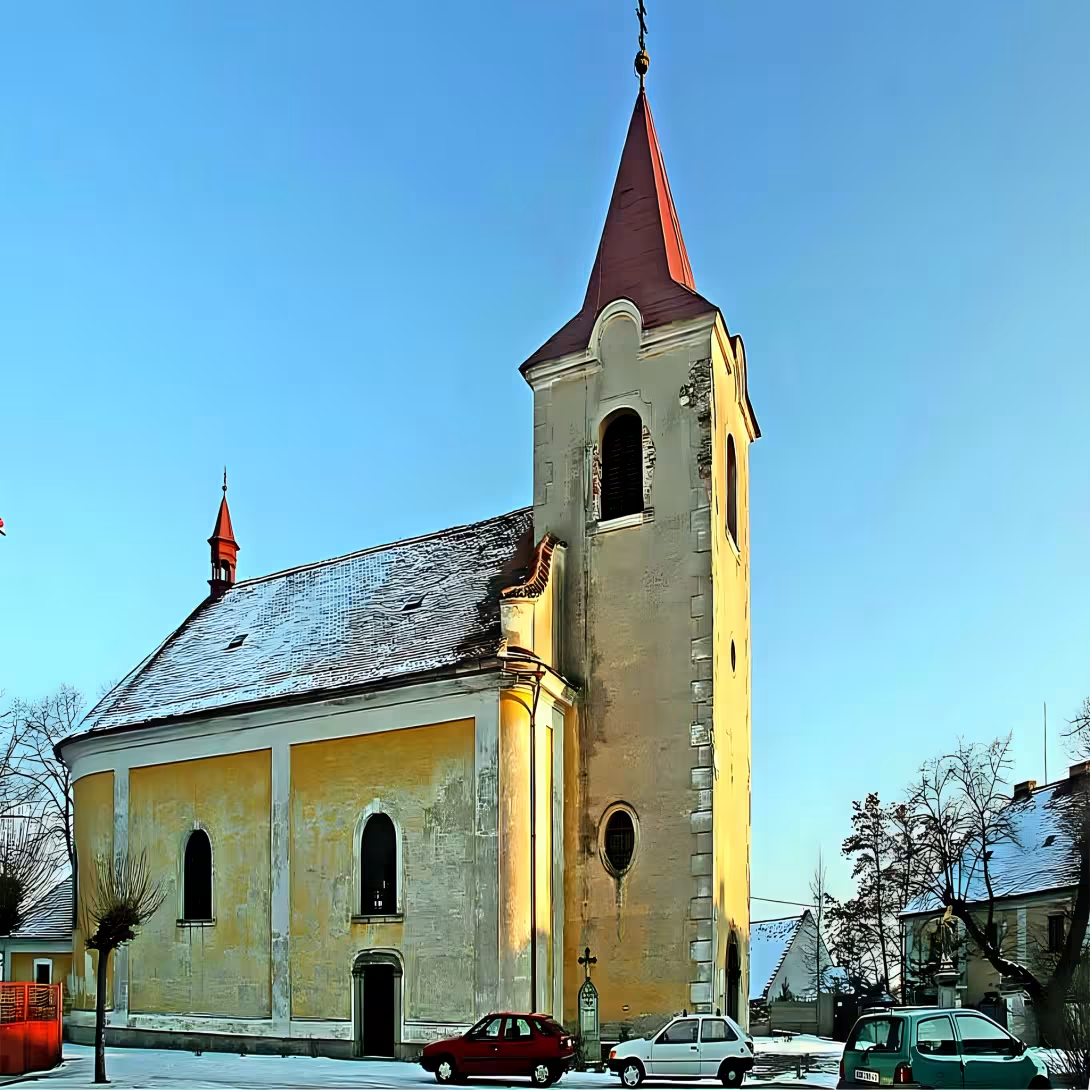
The church of St. John the Baptist in Týnec nad Labem serves as a parish temple of the parish in the Kutnohora vicariate of the royal Hradec diocese. Together with the adjacent rectory, it is registered as a cultural monument of the Czech Republic and represents a good testimony about the sacral architecture of the late Baroque.
The original medieval church, which stood here, had a gothic character and belonged to the property of the tankers from Sedlce near Kutná Hora, who maintained their spiritual and economic ties with the maintenance of the adjacent residence. The year 1780, however, became a milestone - the older Gothic building was demolished and the foundation stone for the new building in the late Baroque style was laid on 24 April of that year. The church thus acknowledged the fundamental transformation which removed it from the medieval nature and imprinted the features of its time.
During the 19th century the church passed through a number of modifications and repairs. In 1834, there was serious damage when it was damaged by fire. On that occasion, two valuable Renaissance bells were destroyed, carried from the original Gothic church and hung in his tower. Other modifications were made between 1836 and 1905. In recent times, namely in the period 2007-2008, there was extensive repair of facades, which gave the construction a look corresponding to its historical significance.
From the point of view of the construction design it is a relatively simple building - a single-boat church with an uninhabited presbytery, behind which the sacristy is located in the axis of the building. The entrance facade prepares a tower with a simple roof that harmonically closes the composition. Michaela von Melas's tomb is interesting, which leads to the entrance from the north wall of the church - the tomb is located under the church and thus creates an unusual element of the building. The church ship is glazed with two Czech patties, which is a structural solution characteristic of the time of its creation.
The interior is mainly from the 19th century and is held in Neo-Renaissance style. However, the exception is two side altars dating back to 1720, which were transferred to the church in 1786 from the abandoned abbey in Sedlce. The objects preserved from the original Gothic church include the Renaissance Baptist from 1630, which serves its purpose today. The gem is decorated with ceiling frescoes depicting scenes from the life of St. John the Baptist - which was created in 1781 by Jesuit painter Josef Kramolín, who breathed into these walls a typical distinctive colour and colour.
The church is not an isolated building - part of the complex is also a rectory with related economic buildings. Fara represents a single storey building from a mixed masonry, combining stone and brick, and its shorter facade is oriented towards Komenský Square, making it an integral part of the city structure Týnka.
Then and now
Drag the slider to compare how the landmark may have looked when it was built with the view today.
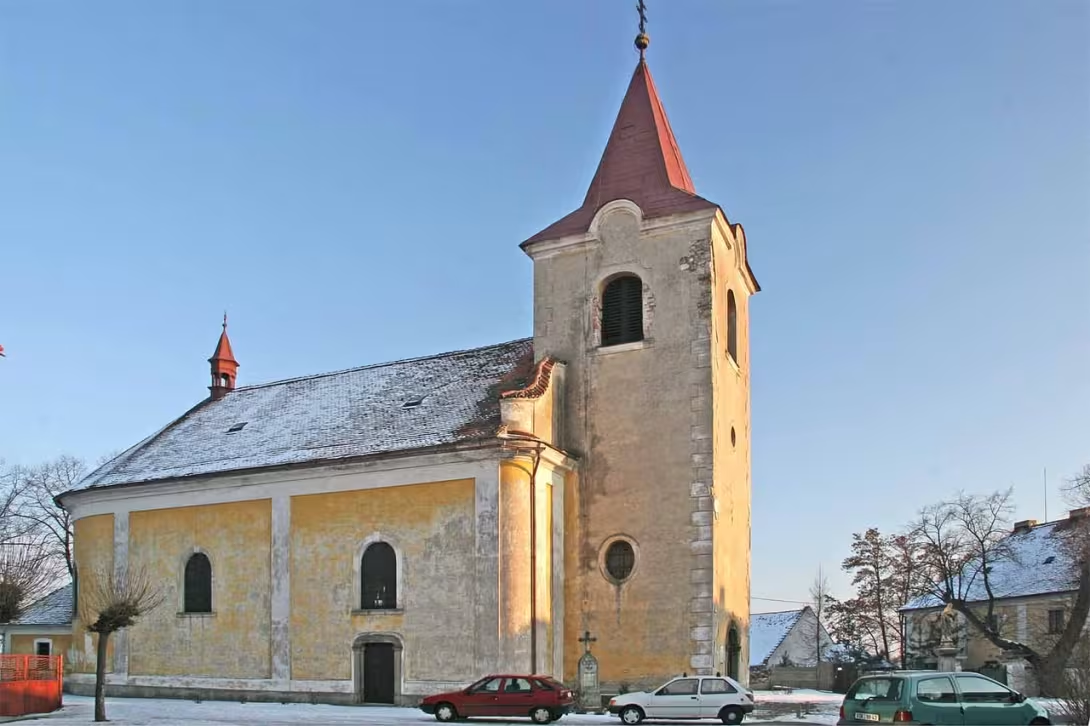
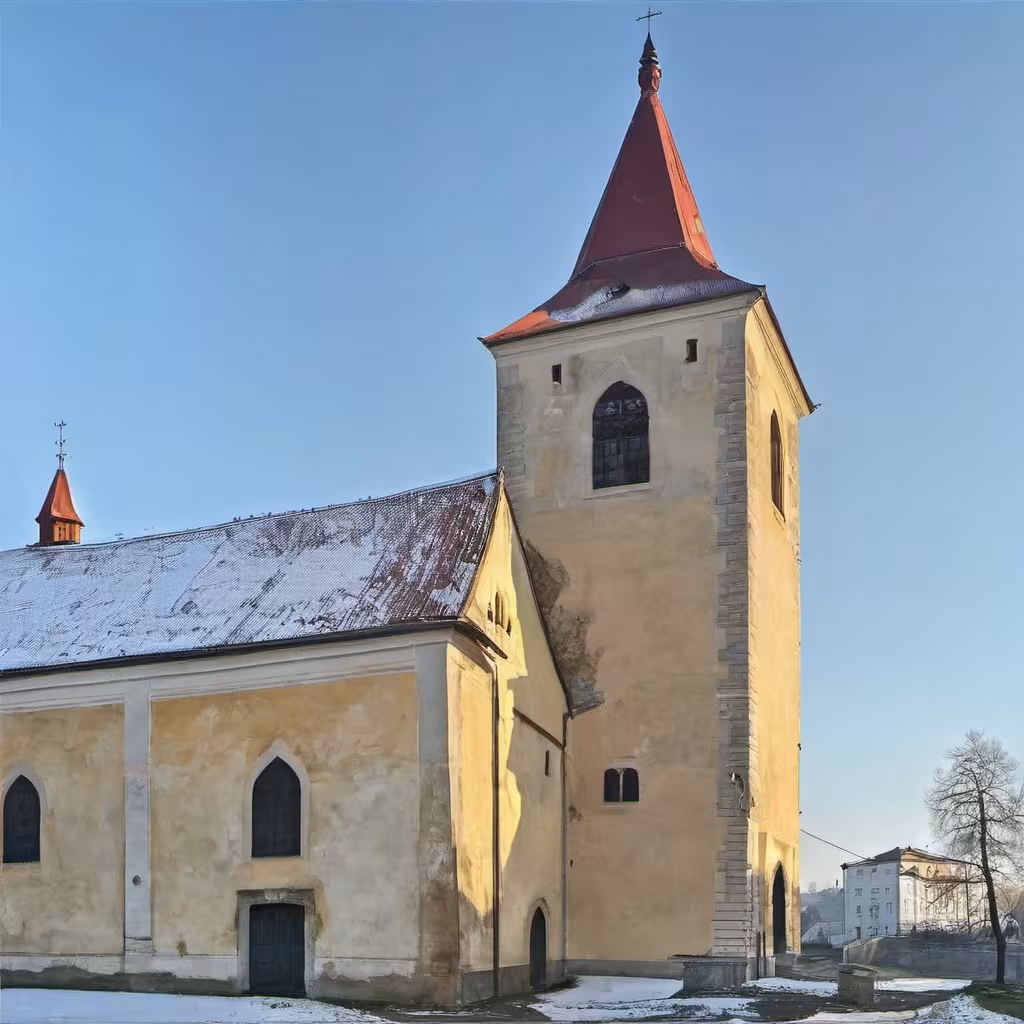
The historical appearance on the left is an AI-generated visualisation and serves as inspiration only.
Historical milestones
- 1780
- The demolition of the original Gothic church and the laying of the foundation stone of the new church.
- 1781
- Finishing the construction and painting of frescoes by Josef Kramolín.
- 1834
- Damage to the church with a fire that destroyed the Renaissance bells.
- 2007
- Commencing extensive repair of the facades of the church.
Architectural development
The original Gothic church was replaced by a late Baroque new building. In 1834 there were modifications after the fire, other repairs followed in 1836 and 1905. The construction consists of a mixed masonry and the ship is glazed with two Czech patties.
Historical events
1780: demolishing the original gothic church and laying the foundation stone of the new building. 1834: damage to the church by fire and subsequent modifications. 2007-2008: extensive facade repair.
Owners
Originally tankers from Sedlce near Kutná Hora, later parish Týnec nad Labem.
Points of interest
- The original Gothic church belonged to the tankers from Sedlce near Kutná Hora who kept their spiritual and economic ties here. - In 1834 the church was damaged by a fire in which two valuable Renaissance bells were destroyed transferred from the original Gothic building. - Under the church is the tomb of Michael von Melas, which leads to the entrance from the north wall, which creates an unusual element of construction. - In the interior there is a Renaissance baptist from 1630, which was preserved from the original Gothic church and still serves today. - The ceiling frescoes with scenes from the life of St. John the Baptist were created in 1781 by Jesuit painter Josef Kramolín.
Guide
This guide is narrated by a synthetic voice generated by artificial intelligence.
Show guide text
This text was created by artificial intelligence and has not been editorially reviewed. It may contain inaccuracies.
The Church of the Beheading of Saint John the Baptist in Týnec nad Labem is a late Baroque structure from the early eighteen-eighties of the eighteenth century. It serves as the parish church of Týnec parish, which belongs to the Kutná Hora vicariate of the Royal Hradec Diocese. Together with the rectory, it is protected as a cultural monument.
A Gothic church once stood on this site, which belonged to the Cistercians from Sedlec near Kutná Hora. The Cistercians also had their residence by the church. In seventeen eighty, the old church was demolished and already on April twenty-fourth of that same year, the foundation stone of the new building was laid. In eighteen thirty-four, the church was renovated after it was damaged by fire. Two Renaissance bells that were in the tower and had been moved from the original church were lost in it. Further repairs and alterations came in eighteen thirty-six and nineteen oh five. The facades underwent extensive renovation between two thousand seven and two thousand eight.
The building is relatively simple. It has a single nave, which is directly followed by the presbytery without any offset. Behind it lies the sacristy on the church's axis. Above the entrance façade rises a tower with a simple roof. The nave is vaulted with two Czech barrel vaults. On the north wall, an external entrance leads to the tomb of Michael von Melas, which extends under the church.
The area also includes a rectory with farm buildings. It is a two-storey single-wing building made of stone and brick. Its shorter façade faces Komenský Square.
The church furnishings are predominantly Neo-Renaissance and date from the nineteenth century. An exception is a pair of side altars from seventeen twenty. They came to Týnec in seventeen eighty-six from the dissolved Sedlec abbey. From the original Gothic church, a Renaissance baptismal font from sixteen thirty has been preserved. The ceiling is decorated with frescoes depicting scenes from the life of Saint John the Baptist. They were painted in seventeen eighty-one by Jesuit painter Josef Kramolín.
Tips for visitors
The best time to visit is during the morning hours of the working week, when the surrounding church is a quiet atmosphere and soft light ideal for a tour of Baroque architecture. Weekends get busier for local services.
You can reach Týnek nad Labem by car and public transport. We recommend checking the specific transport connections in the current connection search engine.
For the photography of the exterior of the church we recommend to use the space adjacent to the square, from where the late Baroque facade stands out. The best lighting conditions for building images are in the afternoon when the sun lights up the main entrance.
In the immediate vicinity of the church is located the historical core of the town of Týnce nad Labem and the River Elbe, which offer a pleasant environment for walks. These places are also suitable for families with children who appreciate the calm atmosphere of historical buildings.
During the visit we recommend to carry comfortable shoes to move around the historical centre and possibly a bottle of water.
Frequently asked questions
Can the monument be visited?
Religious buildings are usually open mainly during services; at other times a visit is normally arranged with the parish or the operator. We have not verified specific times.
Where is the monument?
Location: Týnec nad Labem, Středočeský kraj. The map on this page shows the exact spot.
Why is the monument protected?
It is listed in the Central List of Cultural Monuments of the Czech Republic as a cultural monument (register no. 28713/2-871).
For kids
Imagine going back to the past. On one side of the Elbe River is a small town Týnec nad Labem and in its heart the church of St. John the Baptist. Now imagine you just came to this church.
Businesses nearby
Do you run a restaurant, accommodation, shop, museum, rental, wellness or other visitor service near this monument? Show yourself directly to the people heading to it — this is how they will see you in the app and on the web:
Nearby
Komensky Square, River Elbe, the historical core of the city Týnec nad Labem.
Accommodation nearby
Trips and activities nearby
Guided tours, tickets and activities nearby from GetYourGuide
Affiliate link: if you buy from the partner, we may receive a commission. The price for you does not change.
Search tours and activities →Themed route
1. Historical core of the city Týnec nad Labem (Type: City area) - The walk through these alleys allows you to soak up the atmosphere of the old town. 2. Komenský Square (Type: Square) - This place serves as the heart of the village and offers a view of local architecture. 3. Church of the House of St. John the Baptist (Type: Church) - The main destination of the trip, which represents a major sacral object. 4. River Elbe (Type: River) - A picturesque water complex that offers a quiet environment for ending walks.
Seasonal recommendations
Spring: In the spring period, the Church of the Shift of St. John the Baptist in Týnec nad Labem offers visitors breathtaking views of flowering vegetables and the first flowers that celebrate the revival of nature. Sun rays shining through the windows of the church create unique patterns on the walls, which gives a visit to magic and peace. This time of year is ideal for those seeking a place without excessive crowds; visit him on time in the morning or later in the day, they can enjoy a peaceful experience. It is recommended to wear clothes suitable for mild weather and the possibility to zoom in on gloves or coats in case of a colder morning or evening.
Summer: The summer period is characterized by long days and warm sunny light, which emphasize architectural details of the Church of St John the Baptist. In the main summer season the attendance may be higher, so it is advisable to come early to save unnecessary waiting and be able to enjoy the historical interiors in peace. Wearing light clothes and a sun helmet is important as well as having a drink with you to avoid dehydration in warm weather.
Autumn: In the autumn, the Church of the Shift of St. John the Baptist offers visitors a view of the golden and red vault of trees, which adds a romantic tone to the atmosphere. Sunny days are more frequent than rainy days, which allows you to enjoy the outdoor areas around the monument in peace and beautiful light. They visited him at the end of the day, they can record charming clouds above the landscape. It is recommended to wear top clothes suitable for colder weather and the possibility to zoom in on an umbrella or raincoat in the event of a sudden snowboarding.
Winter: Winter brings church The walls of St. John the Baptist an atmosphere of peace and quiet when the surrounding countryside is covered with snow. The light turns into fine gold colors on sunny days or a dark tone behind the clouds, which gives the visit a unique atmosphere. Wearing warm clothes, gloves and a sun helmet is essential for comfort during the visit. Winter also offers the possibility to enjoy the church in a calmer environment when crowds are less frequent than in other seasons.
Visualizations and artistic views


The visualisations are generated by artificial intelligence and serve as inspiration.
Photos from the area
Real photos taken near the monument


Zdroj a licence jsou uvedeny u každého snímku.
View from the area
This animation was generated by artificial intelligence from a real photograph of the surroundings. The motion and details are not real footage of the location.
Atmosphere of the place
This atmospheric visualisation of the place and period was generated by artificial intelligence. It is not real footage of the location.
Tips from visitors
No tips yet. Be the first!
Log in and add your tip.
Sources and literature
Photos: Zp at cs.wikipedia / CC BY-SA 3.0, rozlišení zvýšeno umělou inteligencí — Wikimedia Commons. The author and licence also appear when you hover over the image.
Faktickým podkladem tohoto textu byl článek na Wikipedii, jehož autory jsou přispěvatelé Wikipedie. Článek je dostupný pod licencí CC BY-SA 4.0.
Location on the map




Příběhy a pověsti
Legendy, pověsti a příběhy spjaté s touto památkou
Fotografie návštěvníků
Zatím žádné fotografie. Buďte první, kdo přidá fotografii z návštěvy!
Log in a přidejte svou fotografii nebo hodnoťte.
Za ověřenou návštěvu v aplikaci získáte víc bodů — poznáme podle GPS, že jste na místě.
Reviews and comments