



kostel Panny Marie Sedmibolestné v Týnci nad Labem Church
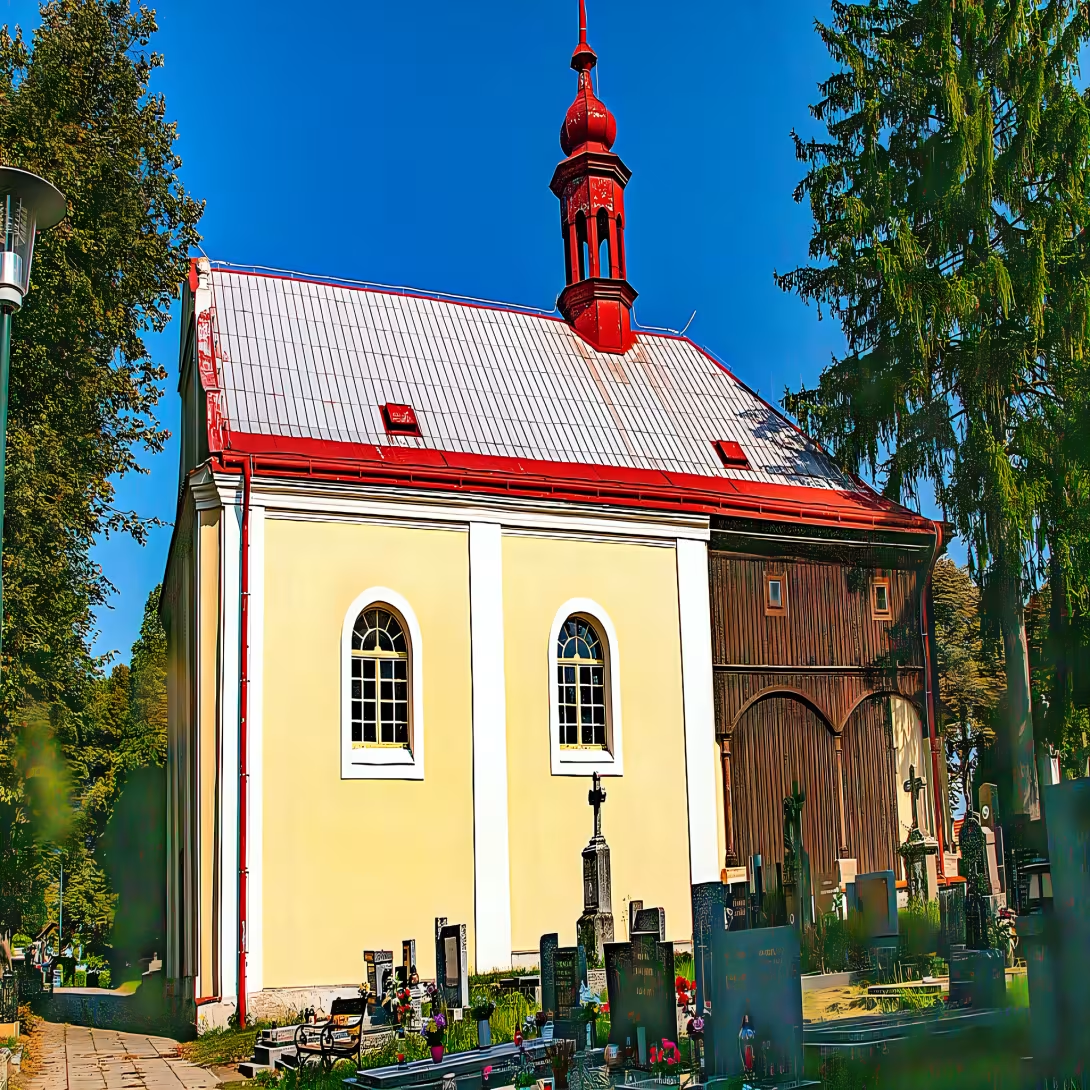
The cemetery church of the Virgin Mary of the Seven Painful is located on the northwest edge of Týnek nad Labem at the end of King George's street on the road to Beloušice. This is a Baroque building where the church, along with seven tombstones and fenced walls with gates, are protected as a cultural monument of the Czech Republic.
The beginning of the construction dates back to the second half of the 17th century. The Baroque Chapel was founded in 1682 and documented in 1724. During the 18th century, the fate of the building changed gradually: in 1786, under the Josephine reforms, the cemetery was transferred to the original chapel from the Church of the House of St. John the Baptist. The wars of Naples have brought hard times. In 1806 the chapel was abolished and served as a warehouse of grain and forage for horses.
The salvation of construction was brought about by local citizens' initiative. In 1815 husband and wife Jan Nepomuk Harrer, townsfolk and tanneluh, and Barbora Harrerová, at their own expense, restored the chapel and extended it to a church which was consecrated the same year. The owners built their family tomb in it. During the enlargement, a rectangular boat with a late Baroque front was built on the west side. After both sides of the original chapel there was a wooden oratory on the columns - a unique manifestation of the folk baroque from after 1806. In 1857 the church went through repair to today's appearance. The cemetery was expanded in 1878.
The construction has the character of a simple stone building. The single-boat object with a rectangular boat on the west side has a flat-ceiling with a Fabion ledge. The presbytery is right-angled with a triangular conclusion and a five-sided apsid. The valenou of the vault has the end of the presbytery, which surrounds the sides on the floor of the wooden oratory raised by columns. Underneath the north oratory there is a walled sacristy and cylindrical annex of the spindle staircase. The western facade ends with a volute shield. The roof is saddled with a lid, looped above the presbytery.
The interior retains its historical value. The floor is made up of original wooden pentagon. The main altar dates back to 1725. Copies of Baroque paintings on side altars are from the second half of the 18th century. The door to the circle from 1815 is decorated with pictures of St. Joseph with child and St. John Nepomucký. The wooden benches are from the first third of the 19th century, while the two benches from 1725 were preserved. Varhanami from 1840, the work of organist Josef Jiruska from Hradec Králové, is sound bark. Fourteen paintings of the cross road dates back to the late 18th century.
Then and now
Drag the slider to compare how the landmark may have looked when it was built with the view today.
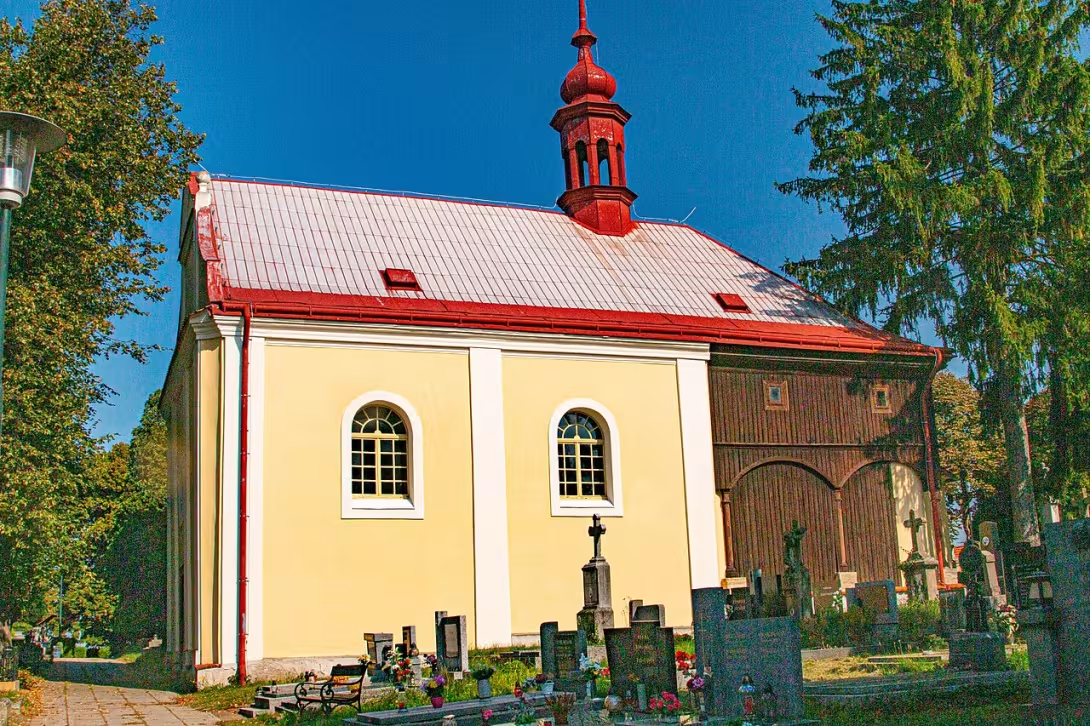
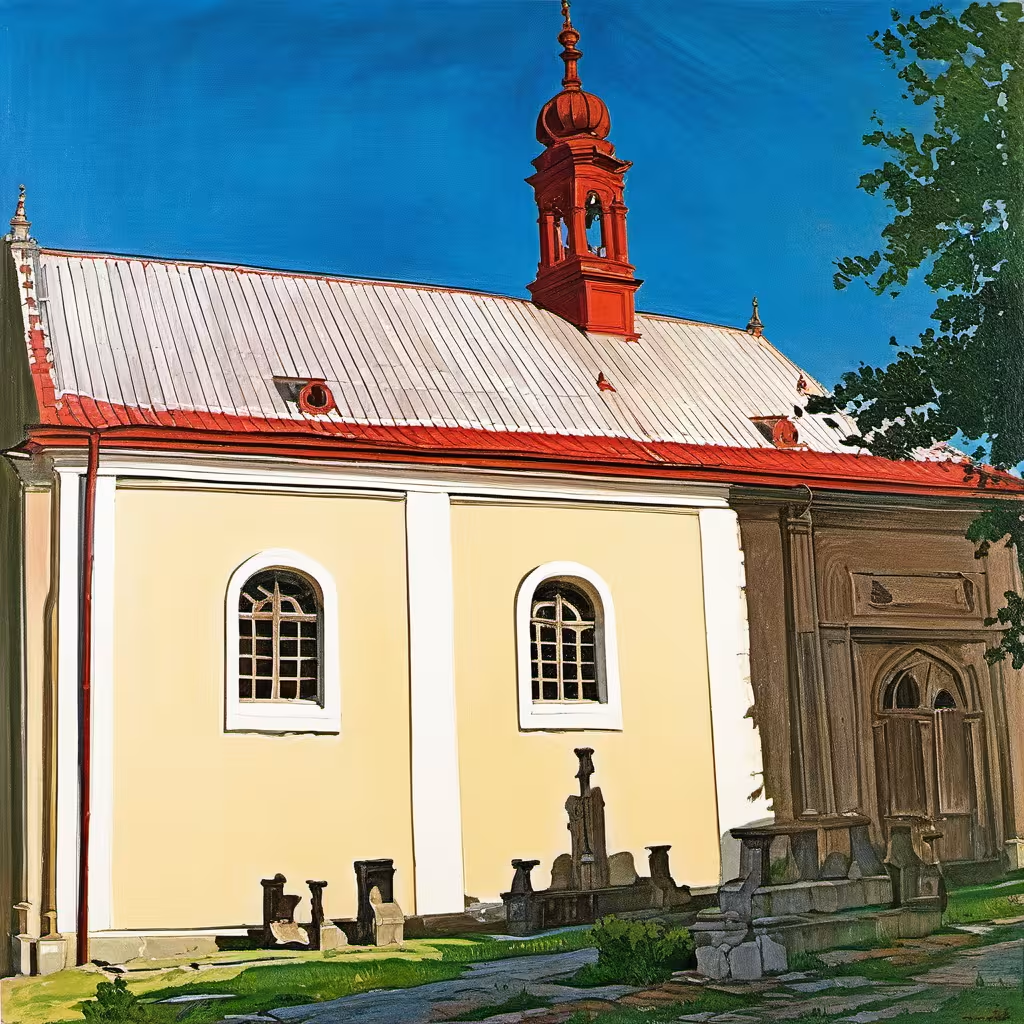
The historical appearance on the left is an AI-generated visualisation and serves as inspiration only.
Historical milestones
- 1724
- Proof of the original chapel of the Virgin Mary.
- 1815
- The church was consecrated and the Harrera family tomb was founded.
Architectural development
The original Baroque chapel was extended in 1815 to a church with a rectangular boat and wooden ornaments. In 1857 there were repairs which brought the church to its present form.
Historical events
- 1786
- The chapel was transferred to the cemetery.
- 1806
- The chapel was canceled and served as a warehouse during the Naples Wars.
- 1815
- The husbands of Jan Nepomuk Harrer and Barbora Harrerová expanded the church and rebuilt it.
Owners
Parish Office Týnec nad Labem
Points of interest
- The cemetery church of the Virgin Mary is protected as a cultural monument of the Czech Republic. - The beginnings of the building dates back to the second half of the 17th century, where the Baroque chapel was founded in 1682 and documented in 1724. - In 1815 husband and wife Jan Nepomuk Harrer and Barbora Harrerová restored the chapel at their own expense and extended it to a church that was consecrated the same year. - During enlargement, a rectangular boat with a late baroque front and a wooden oratory on the columns was built on the west side - a unique expression of the folk baroque. - The interior retains its historical value, including original wooden pentagon on the floors and organ from Josef Jiruska in 1840.
Guide
This guide is narrated by a synthetic voice generated by artificial intelligence.
Show guide text
This text was created by artificial intelligence and has not been editorially reviewed. It may contain inaccuracies.
The Cemetery Church of Our Lady of Seven Sorrows stands on the northwestern edge of Týnec nad Labem, at the end of King Jiří Street near the road to Bělušice. It is a Baroque structure that was built on the site of an original Baroque chapel. The church, together with seven tombstones and enclosure walls with gates, is protected as a cultural monument.
The Chapel of Our Lady was founded in 1682 and documented in writing in 1724. During the Josephine reforms in 1786, the cemetery was moved here from the Church of the Beheading of Saint John the Baptist. During the Napoleonic Wars in 1806, the chapel was closed and served as a storage facility for grain and hay for horses.
A turning point came in 1815. The married couple Jan Nepomuk Harrer, a townsman and furrier, and Barbora Harrerová had the chapel repaired and expanded into a church at their own expense. The church was consecrated that same year and the couple was allowed to establish a family tomb in it. On the western side, a rectangular nave with a late Baroque facade was then added to the axis. On both sides of the original chapel, wooden oratories on columns were built, a unique expression of folk Baroque from the period after 1806. The church was renovated to its present form in 1857 and the cemetery was expanded in 1878.
The core of the structure is a stone chapel, to which a flat-ceilinged nave with a Fabio cornice is attached. This is followed by a rectangular presbytery with a triangular end and a pentagonal apse. The end of the presbytery is covered by a barrel vault. The presbytery on the upper floor is surrounded by wooden oratories supported by columns. Under the northern oratory is a masonry sacristy and a cylindrical extension with a spiral staircase. The western facade is topped with a volute gable. The roof is gabled with a turret, and hipped above the presbytery.
Inside, the original floor made of wooden pentagons has been preserved. The main altar dates from 1725. The side altars have copies of Baroque paintings from the second half of the eighteenth century. The doors to the gallery from 1815 are decorated with paintings of Saint Joseph with the child and Saint John of Nepomuk. The wooden pews are from the first third of the nineteenth century, though two have been preserved from 1725. The organ on the choir from 1840 was built by organist Josef Jiruška from Hradec Králové. The Stations of the Cross consist of 14 paintings from the end of the eighteenth century.
Tips for visitors
The best time to visit the Church of Our Lady of the Seven Painful in Týnek nad Labem is the autumn period, especially in October. During this time you have the chance to enjoy the beautiful green and fire the color of the leaves that give the church a romantic touch. The sunny days are ideal for sightseeing, as the sun illuminates the interior of the church with fine light.
The capital can be reached by tram to the nearest station, from which the church is reached by short walk.
What to take with you: We recommend you bring your camera to capture the beauty of the interior and architecture. It is also important to have shoes with you suitable for walking on stone roads around the church. If you are planning a longer stay, bring an umbrella or clothes to the winter climate.
Photography: The best places for photography are the inside of the church and its surroundings. The interior is lit with natural light, which is ideal for taking photos around lunch time. Outside it is recommended to photograph the sunset when the atmosphere is most romantic.
What to visit nearby: Near the church you will find a cemetery, which is an interesting location for those interested in history and architecture. You can also visit the local museum or walk around the Elbe River, which offers nice views of the landscape.
Tips for families with children: The church is also suitable for family visit. Children can appreciate historical stories and architecture, while parents enjoy the peace and beauty of the place. There is also a playground for children where they can have fun after a tour.
Frequently asked questions
Can the monument be visited?
Religious buildings are usually open mainly during services; at other times a visit is normally arranged with the parish or the operator. We have not verified specific times.
Where is the monument?
Location: Týnec nad Labem, Středočeský kraj. The map on this page shows the exact spot.
Why is the monument protected?
It is listed in the Central List of Cultural Monuments of the Czech Republic as a cultural monument (register no. 102585).
For kids
Hello, friends! Do you hear that mysterious sound from the past? Do you feel bold enough to dive into it? Imagine a time trip that takes you back 332 years to the Baroque church, which stands on the northwest edge of Týnec nad Labem. It's like uncovering a hidden treasury full of secrets and stories.
Businesses nearby
Do you run a restaurant, accommodation, shop, museum, rental, wellness or other visitor service near this monument? Show yourself directly to the people heading to it — this is how they will see you in the app and on the web:
Nearby
The surrounding landscape is composed of agricultural land and forests.
Accommodation nearby
Trips and activities nearby
Guided tours, tickets and activities nearby from GetYourGuide
Affiliate link: if you buy from the partner, we may receive a commission. The price for you does not change.
Search tours and activities →Themed route
Thematic cruise route: Church of the Virgin Mary of the Seven Painful in Týnci nad Labem
1. Church of the Virgin Mary Seven Painful - * Type: * Religious monument - * Why is it worth visiting: * The church is an architectural pearl baroque period with rich interior decorations. Its history dates back to the 14th century, making it an important place to understand regional architecture and religious life.
2. Church of St. John the Baptist - * Type: * Religious monument - * Why is it worth visiting: * This church is another example of rich history and architecture in the area. Its simple but elegant Baroque style offers contrast to the more complex design of the Church of the Seven Painful.
3. St. John Nepomuk's Chapel - * Type: * Religious monument - * Why is it worth visiting: * The chapel is dedicated to St. Jan Nepomuk, patron of Bohemia. It is a place of peace and shelter for visitors and locals who enjoy its historical importance and beautiful surroundings.
4. Microregion Týnec nad Labem - * Type: * Cultural and natural area - * Why is it worth visiting: * Surrounded by the landscape offers beautiful views of the Elbe River. It is an ideal place for relaxation, walks and knowledge of local culture and traditions.
This route will allow you to explore the rich history and architecture of Týnek nad Labem while also providing the opportunity to enjoy the peaceful environment of the surrounding areas.
Seasonal recommendations
Spring: In the spring season, the kostel Panny Marie Sedmibolestné v Týnci nad Labem opens up a new light that decorates architectural elements and highlights the colour of the blooming nature around it. Flowers on the surrounding designs and in the park areas are in their best bloom, which adds an atmosphere of peace and beauty. Exploring the church at this time is ideal due to less difficult weather and the presence of morning milk on the ground that creates a magical effect. It is recommended to visit the church early in the morning or in the shade of afternoon hours in order to enjoy a calmer visit and avoid overheated sun. Clothes may be mild, taking into account morning cold or afternoon warm seconds.
Summer: Summer brings full attendance and lively atmosphere to the Church of the Virgin Mary. The sunny days highlight the architectural beauty and colour of interiors, but also bring larger crowd visits during the summer months. Exploring the church is best in early mornings or late afternoons when the number of tourists is reduced and the temperature is more favourable. This season it is advisable to wear light clothes and a protective sun helmet or scarf that protects from strong sun. It is also important to bring drinks with you in order to remain hydrated during the visit.
Autumn: In the autumn period, kostel Panny Marie Sedmibolestné v Týnci nad Labem performs in its most beautiful clothes when leaves on trees pick up hot colors. The atmosphere is calm and relaxed, making the visit ideal for relaxing and enjoying the changing nature. When planning a visit, it is advisable to consider morning or late afternoon times when the temperature is lighter and fewer tourists. Clothes should be warm, taking into account possible winter seconds, and it is recommended to wear an umbrella or protective jacket for unpredictable weather.
Winter: In winter, the kostel Panny Marie Sedmibolestné v Týnci nad Labem offers a cosy and peaceful atmosphere where fewer visitors are present and sunlight refreshes interiors with otherwise invisible intensity. Freezing weather creates a characteristic view of the surrounding landscape, which is especially beautiful from the roof of the church. The best time to visit is usually early in the morning or at noon when the sun illuminates the interior and the outdoor views are the most beautiful. Clothes should be warm, taking into account low winter temperatures, and it is recommended to use protective shoes for cold floors in the church.
Visualizations and artistic views


The visualisations are generated by artificial intelligence and serve as inspiration.
Photos from the area
Real photos taken near the monument


Zdroj a licence jsou uvedeny u každého snímku.
Tips from visitors
No tips yet. Be the first!
Log in and add your tip.
Sources and literature
Photos: Petr1888 / CC BY-SA 4.0, rozlišení zvýšeno umělou inteligencí — Wikimedia Commons. The author and licence also appear when you hover over the image.
Faktickým podkladem tohoto textu byl článek na Wikipedii, jehož autory jsou přispěvatelé Wikipedie. Článek je dostupný pod licencí CC BY-SA 4.0.
Location on the map





Příběhy a pověsti
Legendy, pověsti a příběhy spjaté s touto památkou

Fotografie návštěvníků
Zatím žádné fotografie. Buďte první, kdo přidá fotografii z návštěvy!
Log in a přidejte svou fotografii nebo hodnoťte.
Za ověřenou návštěvu v aplikaci získáte víc bodů — poznáme podle GPS, že jste na místě.
Reviews and comments