






kostel sv. Jana Křtitele (Loket) Church
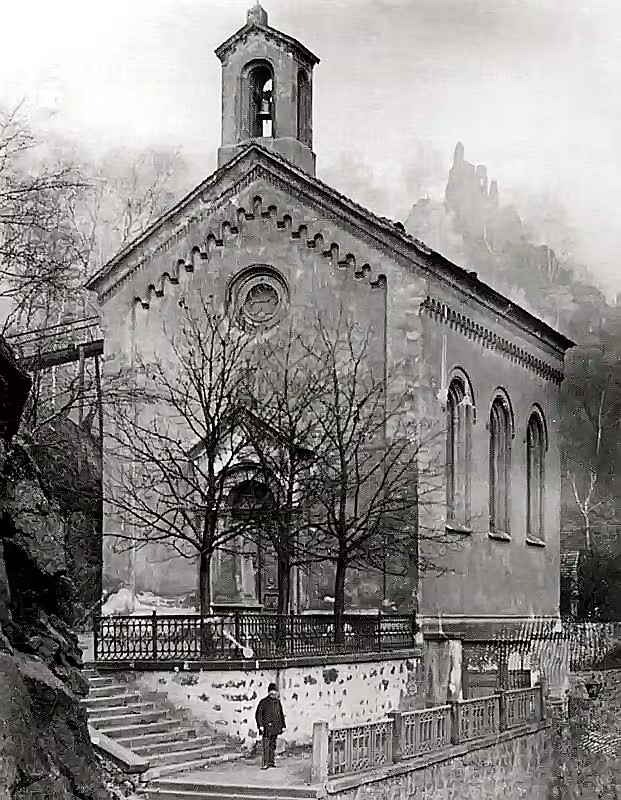
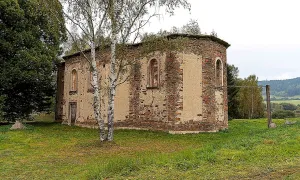
The Church of St. John the Baptist in Loket is a historical monument once located outside the town walls near an ancient ford over the Ohře River. First mentioned in 1253, this medieval church experienced various religious affiliations and architectural changes before its demolition in 1852 due to structural issues. Today, only remnants remain, inviting visitors to explore its historical significance.
Originally built outside Loket's town walls near a ford later replaced by the baroque Jánský bridge, the church was first documented in 1253 when donated to the Order of Knights with the Red Star. Over time, it served both Catholic and Protestant congregations, reflecting broader European religious shifts during the Reformation. By the mid-16th century, significant reconstruction occurred, evidenced by an inscription on its original Gothic portal.
Architecturally, the church's medieval structure is not well-documented. However, by the mid-16th century, it was rebuilt into a single-nave design with a gabled roof and several windows. Late 16th-century expansions accommodated a growing congregation. Despite multiple repairs in the 17th and 18th centuries, structural integrity eventually failed, leading to its demolition in 1852.
Ownership changed over time, reflecting regional religious dynamics. Initially under the Order of Knights with the Red Star, it later served Protestant congregations in the 16th century before returning to Catholic control in 1627. These shifts highlight the church's role as a focal point for both faith communities.
Key events include its initial donation to the knights in 1253 and reconstruction by 1511, marking significant architectural changes. Late 16th-century expansions were crucial for accommodating more worshippers. However, the loss of August Cordus’s altarpiece during demolition in 1852 remains a poignant reminder of the church's artistic heritage.
Today, the site is marked by partial restoration efforts on its supporting and terrace walls, completed between 2022 and 2023. While the original structure no longer exists, remnants like the neoclassical tombstone of Dr. August Maria Glückselig serve as cultural reminders of its past. Visitors can appreciate the historical significance within Loket's scenic landscapes and explore nearby cultural heritage sites.
The Church of St. John the Baptist in Loket offers a glimpse into the region’s rich religious history and architectural evolution. Its story, marked by both continuity and change, invites visitors to reflect on its past while enjoying the beauty of its surroundings.
Then and now
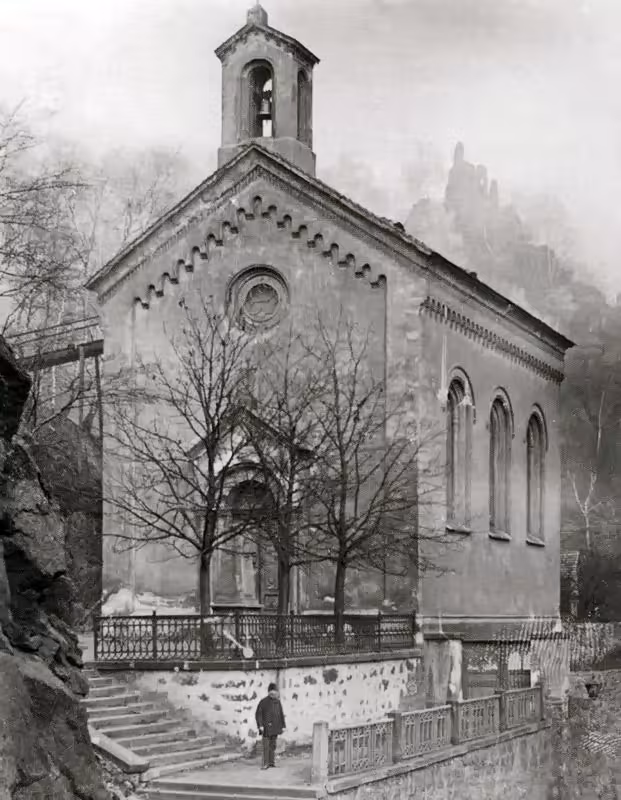
Drag the slider to compare how the landmark may have looked when it was built with the view today.
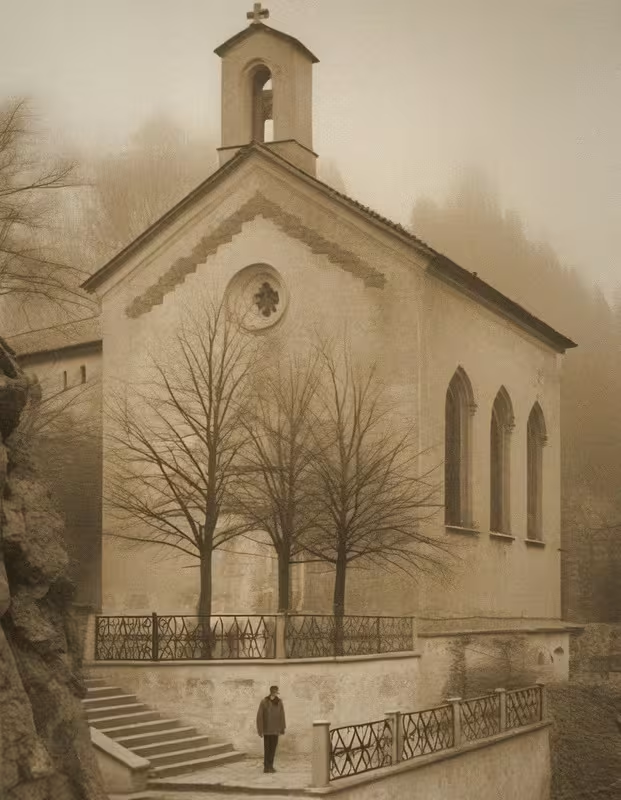
The historical appearance on the left is an AI-generated visualisation and serves as inspiration only.
Historical milestones
- 1253
- The church was first mentioned as a donation to the Order of Knights with the Red Star.
- 1511
- The church underwent reconstruction, evidenced by an inscription on its original Gothic portal.
- 1627
- The church was returned to Catholic ownership and use after being held by Protestants.
Architectural development
The church's original medieval structure is not well-documented, but it was significantly rebuilt by the mid-16th century. It featured a single-nave design with a gabled roof and several windows. The church underwent expansions in the late 16th century to accommodate more worshippers. By the 17th and 18th centuries, it had been repaired multiple times before its eventual demolition.
Historical events
- 1253
- First mentioned in historical records as a donation to the Order of Knights with the Red Star.
- Reconstruction and expansion completed by the late 16th century due to increasing congregation size.
- 1852
- Demolished in 1852 after being deemed structurally unsound.
Owners
- 1253
- 1627
Points of interest
- The Church of St. John the Baptist was originally donated to the Order of Knights with the Red Star in 1253, a lesser-known knightly order that played a significant role in medieval European history.
- Despite its demolition in 1852, one intriguing remnant is the neoclassical tombstone of Dr. August Maria Glückselig, which serves as a cultural reminder and an unexpected piece of artistic heritage at the site.
Guide
This guide is narrated by a synthetic voice generated by artificial intelligence.
Show guide text
This text was created by artificial intelligence and has not been editorially reviewed. It may contain inaccuracies.
Welcome to the historical site of the Church of St. John the Baptist in Loket. As you stand here today, imagine the serene landscape that once surrounded this medieval church, positioned outside the town walls near a historic ford over the Ohře River. Now, as you gaze around, envision where the baroque Jánský Bridge stands—a testament to the evolution of this locale.
The Church of St. John the Baptist first emerged in historical records in 1253 when it was generously donated to the Order of Knights with the Red Star. This lesser-known knightly order played a significant role during medieval times, and their influence is part of what makes this site so fascinating. Over the centuries, the church served as a spiritual home for both Catholic and Protestant congregations, reflecting the shifting religious landscape of the region.
As you stand here, let your imagination wander to its architectural past. Although no longer standing, the remnants of its history suggest it once featured an original Gothic portal, which was reconstructed in 1511—a detail marked by an inscription that whispers tales from a distant era. The church's architecture, though largely lost to time, remains a subject of intrigue and scholarly interest.
Throughout its existence, the Church of St. John the Baptist witnessed significant historical events. Notably, after serving Protestant congregations for years, it was returned to Catholic ownership in 1627, marking an important moment in its storied past. Figures like August Cordus are tied to this site's history, adding layers of human stories and endeavors.
One intriguing remnant that defies the church's demolition is a neoclassical tombstone belonging to Dr. Aug—standing as a silent witness to the passage of time and the narratives once housed within these walls.
As we conclude our journey here, I invite you to ponder the rich tapestry of history that unfolded around this location. Each stone and memory contributes to the story of Loket, inviting us to explore further and uncover more about its past. Thank you for joining me on this historical exploration. May your curiosity lead you to discover even more hidden gems in this captivating region.
---
Thank you for listening to this audio guide. I hope it has enriched your understanding of the Church of St. John the Baptist in Loket. Enjoy the rest of your visit, and feel free to explore further into the history that surrounds us here.
Tips for visitors
The best time to visit the site of the Church of St. John the Baptist in Loket is during late spring or early autumn. During these seasons, the weather is typically mild, making it ideal for exploring the scenic landscapes around the Ohře River and enjoying outdoor activities without extreme temperatures. Additionally, visiting outside of peak tourist season means fewer crowds, allowing you to appreciate the historical significance and natural beauty of the area more intimately.
Parking and transportation options are convenient in Loket. There is parking available near the town center, from where you can easily walk or take a short ride to the site of the former church. Public transport is also accessible, with buses serving the area; however, it's advisable to check current routes and schedules online before your visit. For those preferring cycling, there are bike paths that offer scenic routes along the river.
When visiting the Church of St. John the Baptist site, consider bringing comfortable walking shoes as you'll likely be exploring on foot. A camera is recommended for capturing the picturesque views of the Ohře River and surrounding landscapes. Since the church itself no longer stands, photography will focus more on the historical context provided by nearby landmarks like the baroque stone bridge known as Jáma. Sunscreen and a hat are also advisable if you plan to spend time outdoors during sunny days.
For families with children, the area around Loket offers several attractions that can make for an enjoyable day out. The historic bridges and fortifications provide interesting backdrops for family photos and educational opportunities about medieval architecture and history. Additionally, the natural surroundings are perfect for a leisurely walk or picnic by the river, allowing kids to explore and play in a safe environment. There are also local museums within a short distance that can offer interactive exhibits suitable for children.
In terms of photography, the best spots around the site include viewpoints along the Ohře River where you can capture both the natural beauty and historical significance of the area. The golden hours—shortly after sunrise or before sunset—are ideal times to photograph the landscape as the light is softer and more flattering. Additionally, the baroque stone bridge known as Jáma provides a striking subject with its intricate details and reflections in the river.
Businesses nearby
Do you run a restaurant, accommodation, shop, museum, rental, wellness or other visitor service near this monument? Show yourself directly to the people heading to it — this is how they will see you in the app and on the web:
Events nearby

Zdroj akcí: otevřená data měst a obcí ČR (Národní katalog otevřených dat) a kalendář akcí Národního památkového ústavu.
Nearby
The church's location near the Ohře River and its proximity to historic bridges and fortifications highlight Loket's strategic importance. The area is also known for its scenic landscapes and other cultural heritage sites.
Accommodation nearby
Trips and activities nearby
Guided tours, tickets and activities nearby from GetYourGuide
Affiliate link: if you buy from the partner, we may receive a commission. The price for you does not change.
Search tours and activities →Themed route
Thematic Walking Tour: Loket
1. Kostel sv. Jana Křtitele (Loket) - *Type:* Church - *Why Visit:* This stunning Gothic church, perched on a rock above the Ohře River, offers breathtaking views of the surrounding landscapes and is an architectural marvel with its intricate stonework and historical significance. Its strategic location highlights Loket's medieval importance.
2. Historic Bridges - *Type:* Architectural Landmarks - *Why Visit:* Explore the historic bridges that span the Ohře River, connecting different parts of Loket. These bridges are not only vital to the town’s infrastructure but also serve as picturesque spots for photography and reflection on the area's rich history.
3. Fortifications - *Type:* Historical Sites - *Why Visit:* Discover the remnants of Loket's medieval fortifications, which underscore the town's strategic military importance throughout history. Walking along these ancient walls offers a glimpse into the past defenses that protected this key location.
4. Scenic Landscapes Along the Ohře River - *Type:* Natural Scenery - *Why Visit:* Stroll along the banks of the Ohře River, where lush greenery and serene waters create an idyllic setting for relaxation and contemplation. The river's path through Loket provides a picturesque backdrop that enhances the charm of this historic town.
This tour captures the essence of Loket by combining its historical architecture with natural beauty, offering visitors a comprehensive experience of the area's cultural heritage.
Seasonal recommendations
Jaro: During the spring season, visiting St. John the Baptist Church in Loket is special due to the lively and flourishing surrounding area, which provides a beautiful natural atmosphere for exploring historical ruins. Sunny days can turn into cooler evenings, so it's advisable to bring light outerwear and a warm coat for protection against sudden weather changes. Visit early in the morning or late afternoon to avoid midday sunbathing, which can attract more visitors. Spring is also a great time for morning excursions when flowers are in full bloom and the landscape offers its most beautiful views.
Léto: Summer brings long sunny days and warm weather, making a visit to St. John the Baptist Church in Loket an ideal summer activity. The historic ruin site offers relief from the heat of sunbathing and is a popular spot for visitors looking to avoid crowds at major tourist attractions. It's recommended to arrive earlier or later in the afternoon to enjoy milder temperatures and minimize contact with crowds. Don't forget protective sunglasses, sunscreen, and plenty of drinking water, as summer sunshine can be intense.
Podzim: Autumn offers a unique atmosphere for visiting St. John the Baptist Church in Loket when forests and surrounding landscapes transform into vibrant shades of gold, orange, and red. A warm coat is essential as temperatures can be cooler, especially in the evening when autumn sunsets become shorter. The beautiful natural coloring provides an ideal backdrop for photography and relaxation outdoors. Visit early in the morning or in the evening to avoid mid-autumn days with low temperatures, when the site may be less frequented.
Zima: The winter season brings a calm and quiet atmosphere for visiting St. John the Baptist Church in Loket, as the area is covered in snow or colored by icy hues. Warm clothing and protective gear are key to a comfortable visit, especially with shorter daylight hours and the possibility of winter storms. Arriving earlier in the afternoon can help maximize time in the light, while later visits offer opportunities to explore the site in peaceful and quiet conditions. In winter months, remember that opening hours may be limited due to weather.
Visualizations and artistic views


The visualisations are generated by artificial intelligence and serve as inspiration.
Photos from the area
Real photos taken near the monument


Zdroj a licence jsou uvedeny u každého snímku.
Tips from visitors
No tips yet. Be the first!
Log in and add your tip.
Sources and literature
Fotografie: neznámý, foto z počátku 20. století / CC0 — Wikimedia Commons. The author and licence also appear when you hover over the image.
Faktickým podkladem tohoto textu byl článek na Wikipedii, jehož autory jsou přispěvatelé Wikipedie. Článek je dostupný pod licencí CC BY-SA 4.0.
Location on the map
Příběhy a pověsti
Legendy, pověsti a příběhy spjaté s touto památkou
Fotografie návštěvníků
Zatím žádné fotografie. Buďte první, kdo přidá fotografii z návštěvy!
Přihlaste se a přidejte svou fotografii nebo hodnoťte.
Za ověřenou návštěvu v aplikaci získáte víc bodů — poznáme podle GPS, že jste na místě.
Reviews and comments