






Městské opevnění v Lokti Town walls
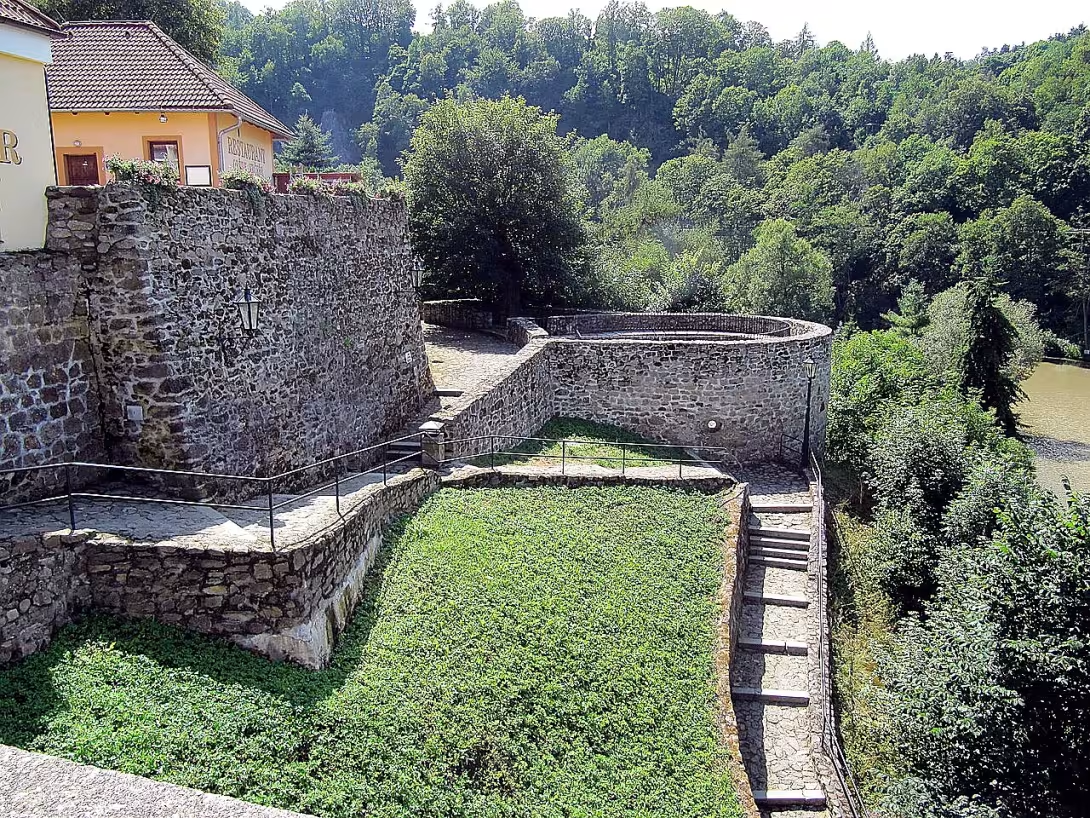
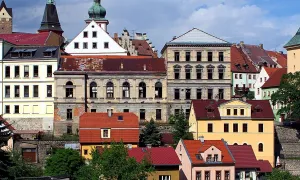
Městské opevnění v Lokti is a partially preserved medieval fortification in Sokolov district in the Karlovy Vary Region, protected as a cultural monument since 1963. This historic building is situated on the top of the islet in the bend of the Ohře River, which created a deep, sawn valley here in the granite flesh.
The development of fortifications in this location dates back to the second half of the 12th century, when Romanesque castle with rotunda was founded in the highest place. Around 1240, the substation was converted into a fortified royal city. Under the rule of Přemysl Otakar II, German colonization was carried out in connection with the introduction of the Mana system. The existence of the Elk suburbs is documented by the year 1308, when Loket was already listed as a city.
The original Gothic fortification underwent later modifications and included several defensive elements. The largest was the main wall of the castle surrounding almost the entire city. It was built of quarry stone, it was approximately 1.5 metres wide and its height was up to 5 metres high. The crown wall was equipped with a battlements, while from the inside they formed wooden stands covered with shingles roofs. From the outside, the main wall was protected by a park wall. The system included horseshoe bastions with shooting areas; Four of the original eight survived, with only one preserved whole.
The most important architectural elements include two preserved towers. The Black Tower, whose name is modern and derived from appearance to repairs in the first half of the 20th century, was once part of the Lower Gate. It's made of quarry stone with corners made of regular blocks and has a helmet roof with lantern. In its interior, the spiral staircase leads to the second floor and during the summer season the tower is accessible. The second preserved building is the Robic Tower in the southern part of the fortifications, which once connected the city with the same-name suburb. It is also walled from quarry stone with corner carved blocks and has a tent roof with concave broken ridges. A unique architectural detail is placed on the top floor of the console.
The fate of the fortifications was linked to various owners and political changes. From 1434 to 1547 Loket was stopped by Šlik. During this period, the city, except the north side, surrounded the park fortification with artillery bastions and a main city gate was established. After strengthening the fortifications during the Thirty Years' War, Loket acquired the status of a fortress city in 1663, but lost it in the late 18th century. In 1835 a substantial part of the fortress system died at the main city gate and in 1840 it decided to sell the city fortifications.
The current situation of the retained parts is the result of the corrections made between 1970 and 1990. The city walls represent an interesting destination for tourists who can walk through the western, southern and eastern districts of the city. Fortification in Lokti is an important witness to medieval urban development and offers a view of the historical architecture of defence systems. It is a suitable place for anyone who wants to get to know the history of this region.
Historical milestones
- around 1150
- The creation of a Romanesque castle with a rotunda in the highest place of the island.
- 1240
- Transforming a substation into a fortified royal city.
- 1308
- Demonstration of the existence of the Loket suburbs and city status.
- 1663
- Getting Fortress City status after strengthening the fortifications.
- 1840
- The decision to sell out the city fortification.
Architectural development
The fortification began as a Romanesque castle and was transformed into a fortified royal town around 1240. During the reign of Přemysl Otakar II, German colonization took place, leading to the construction of park fortifications with bastions and the main city gate. During the Thirty Years' War, there was a further strengthening of the fortifications.
Historical events
- 1240
- Substation converted into fortified royal city.
- 1434
- Loket stopped for the Snails.
- 1663
- Loket became a fortress city.
Owners
Přemysl Otakar II. (beginning of the 13th century), Šlikové (1434-1547), city Loket (after 1547)
Points of interest
- Městské opevnění v Lokti is a protected cultural monument since 1963. - The development of fortifications dates back to the second half of the 12th century when Romanesque castle with rotunda was founded at the highest point. - The largest was the main wall of the wall surrounding almost the entire city, built of quarry stone and protected by a park wall. - The most important architectural elements include the Black Tower with helmet roof and the Robic Tower with tent roof and the Prevet detail. - The fate of the fortifications was linked to the Šliky who stopped Loket between 1434 and 1547.
Guide
Show guide text
This text was created by artificial intelligence and has not been editorially reviewed. It may contain inaccuracies.
Welcome to Loktu, a small town with a rich history and an interesting architecture. You are standing right in front of a partially preserved medieval fortification that has been created to protect this place since the 12th century and is protected as a cultural monument since 1963. On the top of the island, surrounded by the attractive sounds of the river Ohra, you can look at the main wall with its distinctive bastions and important defensive towers such as the Black Tower and the Robic Tower. It's a place where history and nature harmonically intertwine.
Let's dive into the past of the Elbow. The creation of the town fortification dates back to the second half of the 12th century, when Romanesque castle with rotunda was founded in the highest place. This castle was a key element of defense and symbolized the power and authority of the rulers back then. In 1240, the substation was transformed into a fortified royal city, which meant a new era for Loket. This change was an important milestone which showed the growing strategic and economic importance of this place. In 1308, the existence of the Loket suburbs was confirmed and the city status was officially recognised, indicating the development of the community and its prosperity.
Take a look up at the main wall of the castle, which surrounded almost the entire city. This wall was built of quarry stone and protected by the park, which provided peace and beauty of this defensive structure. Notice the distinctive baskets that were a key part of the city's defense. The Black Tower and the Robich Tower are real architectural pearls, each with their own character and history. These towers were not only important defensive elements, but also witnessed many events that shaped the fate of the Loc.
The key character associated with this place is Přemysl Otakar II., whose government has brought about new development and prosperity. Šlikové, an important family from that time, also played an important role in the history of the Loct. Their stories are firmly linked to the site and enrich its historical context.
The interesting thing about this place is that the city fortification in Lokti was obtained the status of the fortress city in 1663 after strengthening the fortifications. This fact shows the long history of defense and strategic importance held by the Czech Republic.
Now that you have immersed yourself in the history and architecture of the city fortification Loktu, by inviting them to explore other attractions of this beautiful place. Walk the streets of the old town, discover historic houses and be enchanted by the atmosphere of past times. When you get back here, I'll see you!
Thank you for your visit and have a nice day of discovery!
Tips for visitors
The best time to visit the city fortification in Lokti is autumn and spring, when the weather is quietest and nature offers beautiful experiences. In addition, there are various cultural events and markets at these times that can enrich your visit.
Parking is possible to find near the city center Loket. The city is also accessible by public transport; Check the current connection at the time of planning your visit. Transportation to the monument itself is the easiest walk since it is located in the middle of the city.
When you visit the fortifications in Lokti, you should bring sun protection and plenty of drinking. It is also important to have suitable shoes to move along stone corridors and stairs.
For photography offers fortifications in Lokti several interesting perspectives, especially the west side overlooking the river Ohře. The best light is usually in the afternoon until the evening when the sun illuminates the walls and ancient architecture.
You can visit the remains of the Romanesque castle nearby. It's the perfect place for those who like history and ancient architecture. For families with children, Loket is also suitable because it offers various activities and amusement parks nearby.
Businesses nearby
Do you run a restaurant, accommodation, shop, museum, rental, wellness or other visitor service near this monument? Show yourself directly to the people heading to it — this is how they will see you in the app and on the web:
Events nearby


Zdroj akcí: otevřená data měst a obcí ČR (Národní katalog otevřených dat) a kalendář akcí Národního památkového ústavu.
Nearby
The city of Loket is located in the valley of the Ohře River with granite massif and is close to other historical monuments such as the remains of Romanesque castle.
Accommodation nearby
Trips and activities nearby
Guided tours, tickets and activities nearby from GetYourGuide
Affiliate link: if you buy from the partner, we may receive a commission. The price for you does not change.
Search tours and activities →Themed route
1. Granite Massiv (natural body): An impressive rock base on which the whole city stands and which gives it a unique character. 2. Městské opevnění v Lokti (historical walls): The main destination of the road, which represents the city's original defence system. 3. Remains of the Romanesque castle (historical monument): Ancient settlements that resemble the early Middle Ages in this area. 4. Valley of the river Ohře (natural landscape): A picturesque space surrounding the city that forms a natural water moat.
Seasonal recommendations
Spring brings to Lokte the awakening nature and fresh green, which gently covers stone walls. The soft spring light highlights the details of the walls and creates an optimistic atmosphere. We recommend wearing laminated clothing because the temperature can change quickly during the day. The best time to visit is in the morning, when the streets are quiet and the air is the cleanest.
The summer season is characterized by intense sun and bright colors that burn the walls into a rich shade. The atmosphere is very lively and a city full of visitors in the high season. To avoid the greatest crowds and heat, it is advisable to arrive first thing in the morning. Do not forget light clothing, cover your heads and plenty of fluids for comfortable passage after fortification.
Autumn offers the most picturesque views thanks to golden leaves and morning fog reaching the river Ohře. Stone masonry in this light seems mysterious and nostalgic, which underlines the historical nature of the monument. Waterproof and wind-resistant clothing is suitable. For the best visual experience we recommend a walk in late afternoon in the golden light.
In winter, fortifications get a strict and dramatic look, especially if masonry is covered with snow or frost. There is peace and quiet, which allows for a deeper experience of history without disturbing elements. It is necessary to have warm, thermal clothes and firm, anti-slip shoes. In advent time we recommend prior verification of shortened opening times.
Visualizations and artistic views


The visualisations are generated by artificial intelligence and serve as inspiration.
Photos from the area
Real photos taken near the monument


Zdroj a licence jsou uvedeny u každého snímku.
Tips from visitors
No tips yet. Be the first!
Log in and add your tip.
Sources and literature
Photos: Palickap / CC BY-SA 3.0 — Wikimedia Commons. The author and licence also appear when you hover over the image.
Faktickým podkladem tohoto textu byl článek na Wikipedii, jehož autory jsou přispěvatelé Wikipedie. Článek je dostupný pod licencí CC BY-SA 4.0.
Location on the map
Příběhy a pověsti
Legendy, pověsti a příběhy spjaté s touto památkou

Fotografie návštěvníků
Zatím žádné fotografie. Buďte první, kdo přidá fotografii z návštěvy!
Log in a přidejte svou fotografii nebo hodnoťte.
Za ověřenou návštěvu v aplikaci získáte víc bodů — poznáme podle GPS, že jste na místě.
Reviews and comments