






Kostel svaté Anny (Boží Dar) Church
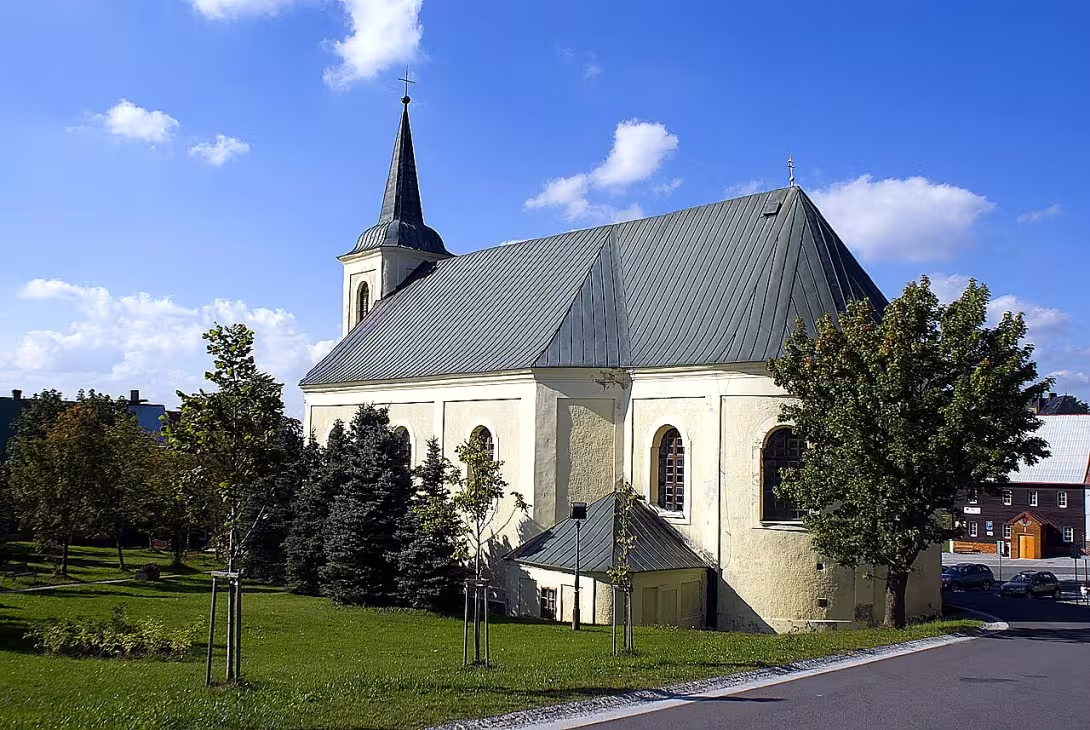
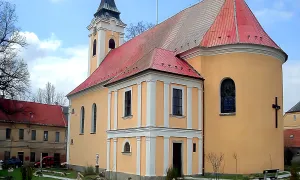
Kostel svaté Anny in Boží Dar is a Baroque church near the town center of this historic mining community. Built in 1771 by Prague architect Filip Heger, it stands as the third ecclesiastical structure on its site and has been recognized as a cultural monument since January 17, 1964. Its significance lies not only in its architectural style but also in its elevation at approximately 1020 meters above sea level, making it one of the highest urban churches in Central Europe.
The origins of Kostel svaté Anny trace back to the early 16th century when a wooden Renaissance chapel was erected on this site. Due to harsh weather conditions typical of the highlands in the Krkonoše Mountains, the structure deteriorated and was replaced by a stone late-Renaissance church in 1593. This new building featured three bells from Hans Wildt of Jáchymov and saw the addition of a bell tower between 1605 and 1607. A valuable tin baptismal font created by Jáchymov coppersmith Leonhard Dürr in 1612 further enriched its historical significance.
The current Baroque church, designed by Filip Heger, was constructed after the previous structure burned down in the mid-18th century. Its architectural style reflects the flourishing of arts and architecture during the Baroque era across Europe, a period marked by dramatic expressions and grandeur. The church's design is attributed to Heger, who also contributed to other notable structures such as the town hall in nearby Jáchymov.
Throughout its history, Kostel svaté Anny has faced challenges that have shaped its current state. In the late 1960s, due to severe deterioration, it was closed for safety reasons, with discussions even considering demolition similar to what happened with other local churches. However, community opposition led to a decision against this course of action. Local efforts, including those by páter František Krásenský who applied protective paint to the roof, have helped preserve the church.
Today, Kostel svaté Anny remains an important cultural and historical site in Boží Dar. Although it has undergone various phases of neglect and restoration, its unique position as one of the highest churches in Central Europe continues to draw interest. The town of Boží Dar initiated a public fundraising campaign in 2016 aimed at reconstructing and repairing the church, highlighting ongoing community involvement in preserving this monument.
Visitors can appreciate not only its architectural beauty but also its rich history that reflects broader cultural shifts within Bohemia during significant historical periods. Its elevation offers a unique perspective of the surrounding landscape, making it an intriguing destination for those interested in both architecture and history. The church stands as a testament to resilience and community spirit, inviting all who visit to explore its storied past and appreciate its enduring presence.
Then and now
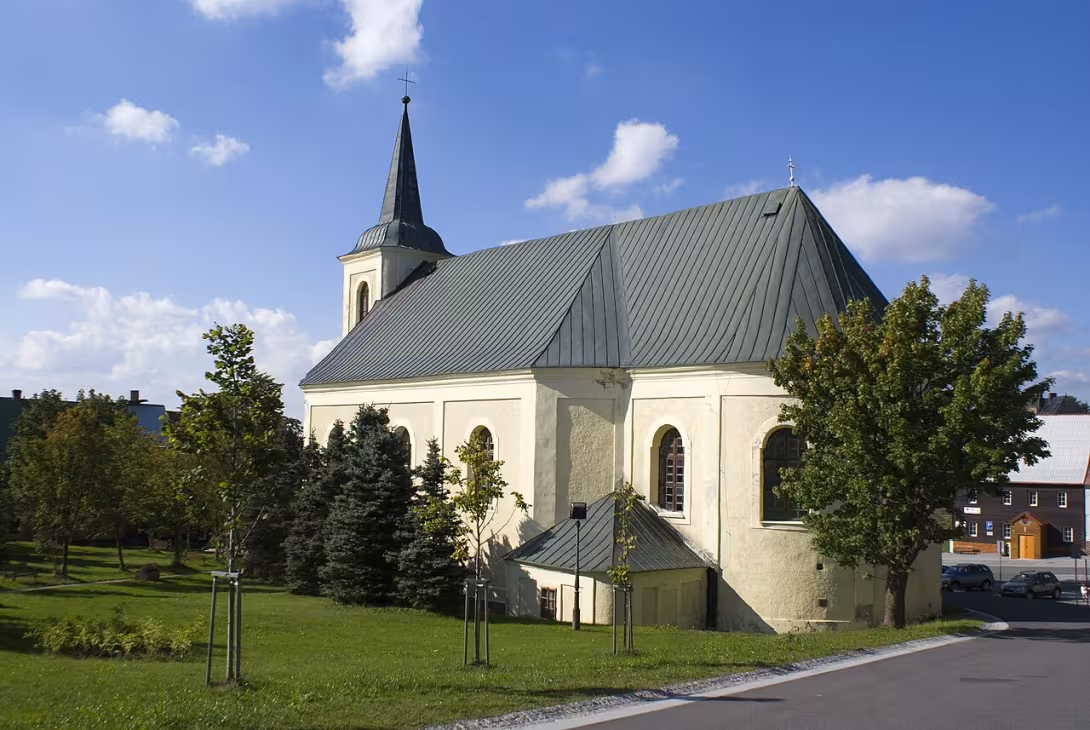
Drag the slider to compare how the landmark may have looked when it was built with the view today.
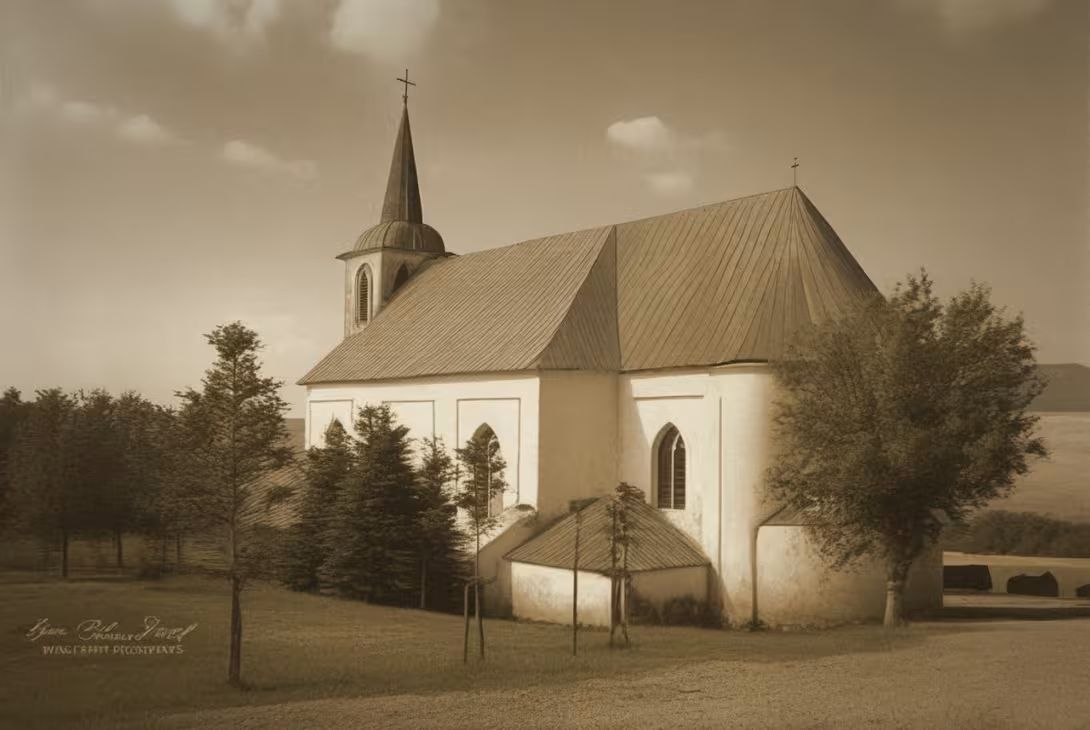
The historical appearance on the left is an AI-generated visualisation and serves as inspiration only.
Historical milestones
- 1510
- Construction of a wooden Renaissance chapel on the site of the church.
- 1593
- Erection of a late Renaissance stone church.
- 1605
- Addition of a tower to the church between 1605 and 1607.
- 1612
- Creation of a valuable silver baptismal font from Jáchymov.
- 1771
- Construction of the current Baroque church by Filip Heger.
- 1964
- Declared a cultural monument on January 17th.
Architectural development
The site initially hosted a wooden early Renaissance chapel in the 1530s, which deteriorated due to harsh weather. It was replaced by a stone late-Renaissance church in 1593, featuring three bells from Hans Wildt of Jáchymov. A new bell tower was added between 1605 and 1607. The present baroque church, designed by Filip Heger, was built in 1771 after the previous structure burned down.
Historical events
In the early 16th century, a wooden Renaissance chapel was replaced by a stone late-Renaissance church in 1593.
The current baroque structure was constructed in 1771 after the original wooden chapel burned down.
Points of interest
- The church features a unique tin baptismal font crafted by Jáchymov coppersmith Leonhard Dürr in 1612, showcasing the region's rich tradition of metalwork.
- Despite discussions about demolition due to severe deterioration in the late 1960s, Kostel svaté Anny was preserved thanks to community opposition and efforts like those of páter František Krásenský who applied protective paint to its roof.
Guide
This guide is narrated by a synthetic voice generated by artificial intelligence.
Show guide text
This text was created by artificial intelligence and has not been editorially reviewed. It may contain inaccuracies.
Welcome to the historic site of Kostel svaté Anny in Boží Dar, a remarkable testament to architectural resilience and cultural heritage nestled near the town center. As you stand before this baroque masterpiece, take a moment to absorb its grandeur—a structure that has weathered time and adversity to tell its story.
The origins of this sacred site trace back to 1510 when a wooden Renaissance chapel was first erected here. This initial structure marked the beginning of a long-standing tradition of spiritual architecture on this hallowed ground. By 1593, the site saw the construction of a late Renaissance church, which further solidified its religious significance. Between 1605 and 1607, an additional tower was added, enhancing both the church's stature and its skyline presence.
Fast forward to 1612, and you'll find that this church became home to a precious silver baptismal font crafted by Jáchymov coppersmith Leonhard Dürr. This artifact is a testament to the region’s rich tradition of metalwork, capturing the essence of artistic craftsmanship from centuries past.
The present baroque edifice, designed by Prague architect Filip Heger and completed in 1771, stands as a symbol of architectural evolution on this site. Its listing as a cultural monument since January 17, 1964, underscores its historical importance. Despite facing severe deterioration that sparked discussions about demolition in the late 1960s, the church was preserved thanks to community efforts—a testament to the enduring spirit and dedication of those who cherish it.
As you explore this site, take note of the unique tin baptismal font from 1612. This remarkable piece not only highlights the region's artistic heritage but also invites reflection on the stories of countless individuals whose lives have intersected with this sacred space over the centuries.
Though specific historical figures associated directly with Kostel svaté Anny remain largely unknown, the church itself serves as a silent witness to the unfolding history and cultural shifts that have shaped Boží Dar. Each stone and artifact within its walls speaks volumes of the past, inviting you to ponder the myriad lives touched by this enduring monument.
As we conclude our journey through time at Kostel svaté Anny, I invite you to continue exploring this remarkable site. Let your curiosity guide you as you delve deeper into its history, architecture, and the stories it holds. Thank you for joining me on this exploration of a place where past and present converge in beautiful harmony. Safe travels as you continue your journey through the rich tapestry of history that Boží Dar has to offer.
Businesses nearby
Do you run a restaurant, accommodation, shop, museum, rental, wellness or other visitor service near this monument? Show yourself directly to the people heading to it — this is how they will see you in the app and on the web:
Accommodation nearby
Trips and activities nearby
Guided tours, tickets and activities nearby from GetYourGuide
Affiliate link: if you buy from the partner, we may receive a commission. The price for you does not change.
Search tours and activities →Themed route
Thematic Tour Plan: Boží Dar, Karlovarský kraj
1. Kostel svaté Anny (Boží Dar) - *Type:* Church - *Why Visit:* Begin your journey at the heart of Boží Dar with this stunning Baroque church dedicated to Saint Anne. Known for its intricate architecture and serene atmosphere, it offers a glimpse into the rich religious history of the region. Explore the interior's beautiful frescoes and altarpieces that tell stories from biblical times.
2. Boží Dar Historical Center - *Type:* Historic Town Area - *Why Visit:* Stroll through the charming streets of Boží Dar’s historical center, located just a short walk from the church. This area is filled with well-preserved buildings that showcase traditional Saxon architecture. The cobbled pathways and quaint shops provide an authentic feel of life in this historic town.
3. Boží Dar Memorial Park - *Type:* Memorial Site - *Why Visit:* A short walk from the historical center, the Boží Dar Memorial Park is a poignant reminder of the region's past struggles during World War II. The park features memorials dedicated to those who suffered and perished, offering visitors a reflective space to honor their memory and learn about local history.
4. Boží Dar Local Museum - *Type:* Museum - *Why Visit:* Conclude your tour at the Boží Dar Local Museum, which is conveniently located near the church. This museum provides insights into the cultural heritage of the area through exhibits on traditional crafts, historical artifacts, and local customs. It's a perfect place to deepen your understanding of the region’s history and culture.
This thematic tour offers a comprehensive exploration of Boží Dar, blending religious, historical, and cultural experiences in a compact and easily navigable route.
Seasonal recommendations
Spring: Visiting the Church of Saint Anne (Boží Dar) during spring offers a unique experience as nature awakens around this historic site. The blossoming trees and vibrant wildflowers create a picturesque backdrop, enhancing the serene atmosphere of the church. The soft morning light filtering through the foliage provides an ethereal quality to the stained glass windows inside. Visitors should be prepared for occasional showers typical of the season by bringing waterproof clothing or umbrellas. As the weather warms up during the day, it’s advisable to wear layers that can be easily adjusted.
Summer: Summer is a popular time to explore the Church of Saint Anne (Boží Dar), with longer daylight hours allowing more time for sightseeing and photography. The lush greenery surrounding the church and the warm sunlight create an inviting ambiance perfect for leisurely walks in the nearby parklands. However, this season also attracts larger crowds, especially during the peak tourist months. To avoid long lines at the entrance, consider visiting early in the morning or later in the afternoon. Comfortable walking shoes and light clothing are recommended to stay cool under the summer sun.
Autumn: Autumn brings a stunning display of colors as the foliage around the Church of Saint Anne (Boží Dar) transforms into shades of red, orange, and gold. The cooler temperatures make for pleasant strolls through the surrounding countryside, with crisp air enhancing the sensory experience of visiting this historic site. This season is ideal for photography enthusiasts looking to capture the church against a backdrop of autumnal beauty. Visitors should dress warmly in layers as temperatures can drop significantly by late afternoon. It’s also worth noting that while crowds are smaller than in summer, some local festivals may increase visitor numbers.
Winter: The Church of Saint Anne (Boží Dar) takes on a magical quality during winter when snow blankets the landscape, creating a serene and picturesque setting. The contrast between the white snow and the historic architecture is particularly striking, offering unique photographic opportunities. However, visitors should be aware that the church may have shorter opening hours due to inclement weather conditions. Wearing warm clothing, including hats and gloves, is essential to stay comfortable during your visit. Additionally, it’s advisable to check ahead for any potential closures or changes in schedule caused by winter storms.
Visualizations and artistic views


The visualisations are generated by artificial intelligence and serve as inspiration.
Photos from the area
Real photos taken near the monument

Zdroj a licence jsou uvedeny u každého snímku.
Atmosphere of the place
This atmospheric visualisation of the place and period was generated by artificial intelligence. It is not real footage of the location.
Tips from visitors
No tips yet. Be the first!
Log in and add your tip.
Sources and literature
Fotografie: Kaama / CC BY-SA 3.0 — Wikimedia Commons. The author and licence also appear when you hover over the image.
Faktickým podkladem tohoto textu byl článek na Wikipedii, jehož autory jsou přispěvatelé Wikipedie. Článek je dostupný pod licencí CC BY-SA 4.0.
Location on the map
Příběhy a pověsti
Legendy, pověsti a příběhy spjaté s touto památkou
Fotografie návštěvníků
Zatím žádné fotografie. Buďte první, kdo přidá fotografii z návštěvy!
Přihlaste se a přidejte svou fotografii nebo hodnoťte.
Za ověřenou návštěvu v aplikaci získáte víc bodů — poznáme podle GPS, že jste na místě.
Reviews and comments