






Výdejový stojan benzínové čerpací stanice HEFA "C" Other
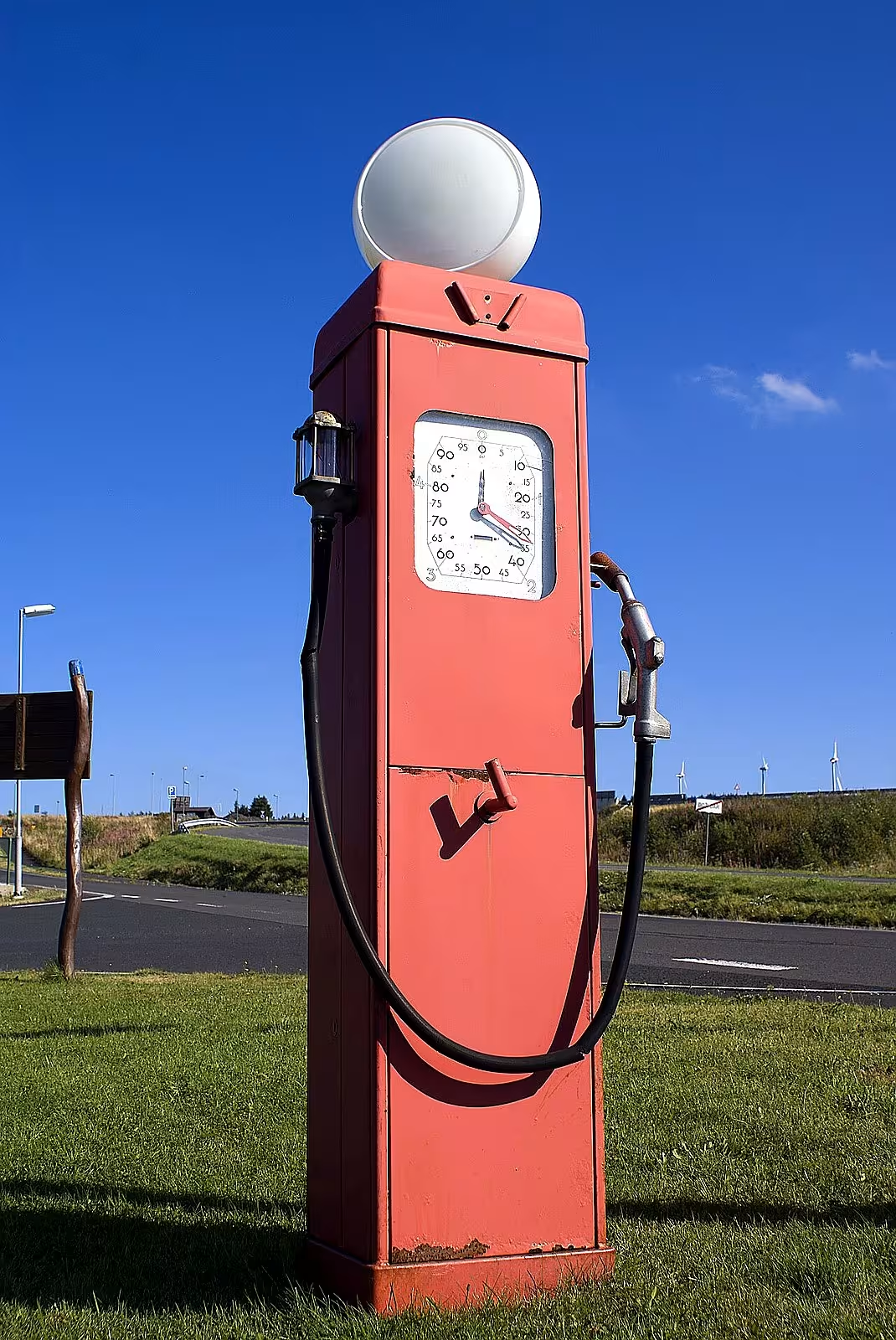
The HEFA C petrol station in God's Daro in Karlovy Vary is a unique technical monument from the turn of the 1950s. The building has been protected as a real-estate cultural monument of the Czech Republic since 2010. It represents an important evidence of the development of petrol technology in the post-war Czechoslovakia and is probably the only known specimen produced in the Adamov machinery plants.
HEFA type C is based on the patent of the Prague company Hejduk and Faix, which introduced it into production in 1935. The original design made it possible to measure the volume of fluid through the flow meter and offered variants with an electric or manual pump. After the nationalisation of Hejduk and Faix, production of stands in state enterprises continued. At the end of the 1950s, the production of the HEFA C type was moved to the Adamov Engineering. Production ended in 1960 when it was replaced by ADAST. Installation of the stand in God's Dar is expected between 1958 and 1959.
The construction consists of welded rectangular iron profiles covered by smooth sheets. The left cover sheet serves as a door for the safekeeping of the gun and the sight. is divided into two parts with hinges and lock. The internal mechanism includes a quadruple flow meter, a float chamber, a canister measuring device and a dial with a counter. The stand was originally anchored into the ground by screws and connected by a pipe to an underground tank in a reinforced concrete pit with a evaporator. The original colour was consistent with the Benzina standard in combination with red and yellow. Part of the object is a replica of a shining glass extension, so-called globe, which was typical for stands up to 1960.
Technical attractions include the location of the six-digit identification number. For this type it is embossed directly on the dial, not on the label as was normal. The hand pump is equipped with a lever on the shaft. It was possible to secure the gun with a padlock or to lock it and the sight inside the machine. There is a possibility that the stand was only assembled from older parts imported from Prague.
The stand stands in the parking lot east of St. Anne's Church in God's Daro, near the gas station on arrival from the Czech-German state border. The preserved technical artifact illustrates the history of centralization of industrial production in Czechoslovakia. Visiting this place offers a view of the history of pumping technology and reminds us of the era when the design of machines became part of everyday infrastructure.
Historical milestones
- 1935
- Introduction of HEFA C to production by Hejduk and Faix.
- 1958-1959
- The expected period of production and installation of the stand in God's Daro.
- 2010
- The stand was declared a cultural monument of the Czech Republic.
Architectural development
The stand was made of rectangular iron profiles and lined with smooth sheets with permeability for the counter. The original colour was consistent with the Benzina standard combined with red and yellow. Part of it is a replica of a shining glass extension, called a globe, which was a typical feature of stands until 1960.
Historical events
1935: Hejduk and Faix introduce the HEFA C type into production. 1958-1959: Likely to install a stand in God's Daro. 2010: Declaration for a real estate cultural monument.
Points of interest
- The stand is a unique technical monument from the turn of the 1950s and has since 2010 been protected as a real cultural monument. - It's probably the only known specimen of this type made in the Adamov Engineering. - The six-digit number is stamped directly on the dial, not on the label, as was common for other stands. - The original color design of the stand was consistent with the Benzina standard and combined red and yellow. - There is a possibility that the stand was only assembled from older parts imported from Prague.
Guide
Show guide text
This text was created by artificial intelligence and has not been editorially reviewed. It may contain inaccuracies.
Welcome to God's Dar, a place where nature encounters history and even the smallest details can tell fascinating stories about human efforts and technical progress. Please stop for a moment and focus fully on the object in front of you right now. You may have expected an audio guide to lead you to a monumental temple or a magnificent castle, but today I'm bringing you to something else, a monument that doesn't have tall towers, but carries within it the spirit of an industrial era. You are standing in front of a gas station with a fuel station type HEFA C. At first glance, it may look like an ordinary piece of old iron, but you're actually seeing a unique technical monument that has survived for decades, and today reminds us of the time when transport and energy have been radically changing.
Let us now look together at how this machine came into being and what historical context it was in. To understand the value of this stand, we have to go back in time until the year one thousand nine hundred thirty-five. It was this year that Hejduk and Faix introduced HEFA C into production. It was a time of expansion of automobilism when it was perceived that fuel must be available, measurable and safely stored. The specimen itself, which you see here in God's Dar, was probably made and installed much later, is estimated to be between a thousand nine hundred fifty-eight and a thousand nine hundred fifty-nine. So imagine the atmosphere of the late 1950s. The world was changing, the cars were different, their design was more robust and the technique was mechanical, tangible and repairable. This stand was at that time a modern element of infrastructure that allowed passengers and local residents in this mountain region to refuel their tanks and continue their journey.
Now I would like to ask you to pay attention to the design itself and the details that you can directly observe. Look at how the stand is firmly anchored into the ground. That's not a coincidence, because this object was never a separate piece of furniture, but part of a complex system. The underground tank was originally located under your feet, which was located in a reinforced concrete pit. That's where the fuel went up to the stand you're now facing. Note the material from which the stand is made. The whole construction consists of welded iron profiles which are subsequently covered by protective plates. It is an honest, industrial processing that was supposed to serve for years in the harsh conditions of the mountain climate, which is so typical of Boží Dar.
If you could look inside, under those tin covers, you'd find the heart of this machine. The internal mechanism is the master of the mechanics of its time. It contains a four-piston flow meter and a float chamber. It was these elements that ensured that the amount of gasoline depleted was accurately measured and contaminated on the dial without too much air flowing into the system. It is a fascinating reminder of the time before digital displays and electronic chips, when everything depended on the accuracy of pistons, valves and physical laws of swim.
If we stop over the personalities associated with this place, we find that the particular names of architects or plumbers are forgotten in time. And that is what lies in the kind of poetry of this place. This stand is not the work of one famous creator, but the result of the work of thousands of unknown workers, engineers and technicians from the then machinery plants. It is a monument to anonymous people who built the modern world, created standards, and ensured that technology works reliably. Imagine all the drivers who stopped here, the short talks at the gas gun and the specific smell of gasoline that mixed with pure mountain air.
Now we come to the part that makes this object a real jewel. You may be asking why such a stand is protected as a cultural monument. Since the year two thousand ten, this building has been officially declared a cultural monument of the Czech Republic. And here comes the most interesting thing. According to the information available, it is likely to be the only known specimen of this type, which was specifically produced in the Adamov machinery plants. That makes him a unique, technical artifact that has no comparison in our environment. It's basically a machine fossil that allows us to study manufacturing processes and technical thinking in the mid-century.
I want to invite you to a little interactive activity. Access the stand dial if the space allows you to, and look very carefully. Look for stamped marks. You'll find a six-digit number embossed on the dial. This number is like a fingerprint of this particular machine. It's his unique code that distinguishes him from all the other machines that have ever come off the production line. It's a small but important detail that confirms the authenticity and history of this piece of iron.
When you stand before this display stand today, you may perceive the contrast between it and the modern gas stations we know from motorways with their touch screens and automated systems. But it is in this simplicity and robustness of HEFA C that its power lies. This machine teaches us that even the things that we consider to be banal or obsolete today were once the peak of technology and that maintaining them is important for understanding where we were and where we moved as a society.
This concludes the short tour of this fascinating technical unique. I hope you have seen the beauty in detail and that this inconspicuous object has managed to impress you with its history and rarity. It is a reminder that the monument may not always be of stone and gold, but may also be of welded steel and sheet metal. Now invited to further explore the surroundings of God's Dar. Feel the atmosphere of this place, watch the surrounding countryside and look for other traces of the past that are hidden in it. Thank you for your attention, I wish you a pleasant continued journey and many new discoveries. Goodbye.
Tips for visitors
{'Navsteva': 'The best time to visit is during the morning hours when the light is ideal for capturing the details of the technical design of the stand without disturbing shadows. Due to the mountain position of God's Dar, we recommend choosing days with bright sky that highlight the historical nature of the monument.', 'transport': 'The place is easily accessible by car, parking is possible on public areas in the village. If you are travelling by public transport, use the bus connection to God's Dar; Check the current timetables in the respective connection search engine.', 'equipped': 'For a visit, pack quality footwear suitable for moving in mountain terrain and clothing layered according to current weather, which can change quickly on God's Daro. Do not forget the camera for documentation of this technical unique.', 'photographers': 'The best pictures are taken from a slight perspective to excel in the construction of the HEFA C stand. Ideal lighting conditions occur at the side sun, which underlines the texture of metal and historical details of dials.', 'of all _ and _ families': 'In the immediate vicinity you can visit the Church of Saint Anne or walk to the Czech-German state border and border crossing. For families with children, the location is suitable as a stop when walking through villages where children can become acquainted with the technical history of our motoring.'}
Businesses nearby
Do you run a restaurant, accommodation, shop, museum, rental, wellness or other visitor service near this monument? Show yourself directly to the people heading to it — this is how they will see you in the app and on the web:
Nearby
St. Anne's Church in God's Dar, Czech-German state border and border crossing Boží Dar.
Accommodation nearby
Trips and activities nearby
Guided tours, tickets and activities nearby from GetYourGuide
Affiliate link: if you buy from the partner, we may receive a commission. The price for you does not change.
Search tours and activities →Themed route
1. Church of St. Anne in God's Daro - Type: Temple. Why: The visit begins with this spiritual dominant village.
2. Výdejový stojan benzínové čerpací stanice HEFA "C" (others) - Type: Technical monument. Why: The main destination of the trip, which represents a unique technical device.
3. Border crossing Boží Dar - Type: Crossing. Why: The road continues towards the borders through this strategic point.
4. Czech-German state border - Type: Boundary. Why: Final stop on the line separating two neighbouring countries.
Seasonal recommendations
Spring: In the spring period, the historical monument in God's Daro is transformed into a vibrant flowery paradise, when nature begins to come to life and the green leaf crown of trees becomes full of shine. Sun rays shining through fog give the monument a cozy atmosphere that is ideal for relaxation and sightseeing. When visiting during this period we recommend wearing clothes suitable for mild weather as temperatures can change quickly. It is best to visit the memory in the early afternoon, when it is the most peaceful and nature gains its full gloss.
Summer: During the summer season Boží Dar is a popular destination for tourists and locals. The sun day and warm weather highlight historical elements of the monument and offer ideal conditions for long walks in the surrounding nature. In the main summer season it is recommended to visit the memory of the previous afternoon time to avoid the biggest crowds. Wearing light clothes and not missing sun cream is key to ensuring comfort during the visit.
Autumn: In autumn Boží Dar becomes melancholy but equally attractive. The leaves of trees turn into living golden and red shades, giving the monument a unique atmosphere. The sunny days are short, but warm, which allows you to search in peace without excessive crowds. It is advisable to wear several layers of clothing during this period and prepare for possible moisture. The best time to visit is early afternoon, when the sun is still strong enough.
Winter: Winter Boží Dar offers a unique atmosphere with snow-covered landscape and shallow ice on water. When visiting, it is important to be well prepared for cold temperatures because the opening times of the sights often shorten. Wearing warm clothes, including hat and gloves, is essential for comfort. The best time to visit is in the morning when the weather is quiet and fewer people are trying to look at the winter beauty of the sights.
Visualizations and artistic views

The visualisations are generated by artificial intelligence and serve as inspiration.
Photos from the area
Real photos taken near the monument


Zdroj a licence jsou uvedeny u každého snímku.
Tips from visitors
No tips yet. Be the first!
Log in and add your tip.
Sources and literature
Fotografie: Kaama / CC BY-SA 3.0 — Wikimedia Commons. The author and licence also appear when you hover over the image.
Faktickým podkladem tohoto textu byl článek na Wikipedii, jehož autory jsou přispěvatelé Wikipedie. Článek je dostupný pod licencí CC BY-SA 4.0.
Location on the map
More monuments – Boží Dar
Show all in the municipality
Příběhy a pověsti
Legendy, pověsti a příběhy spjaté s touto památkou

Fotografie návštěvníků
Zatím žádné fotografie. Buďte první, kdo přidá fotografii z návštěvy!
Přihlaste se a přidejte svou fotografii nebo hodnoťte.
Za ověřenou návštěvu v aplikaci získáte víc bodů — poznáme podle GPS, že jste na místě.
Reviews and comments