



kostel svaté Anny (Holešov) Church
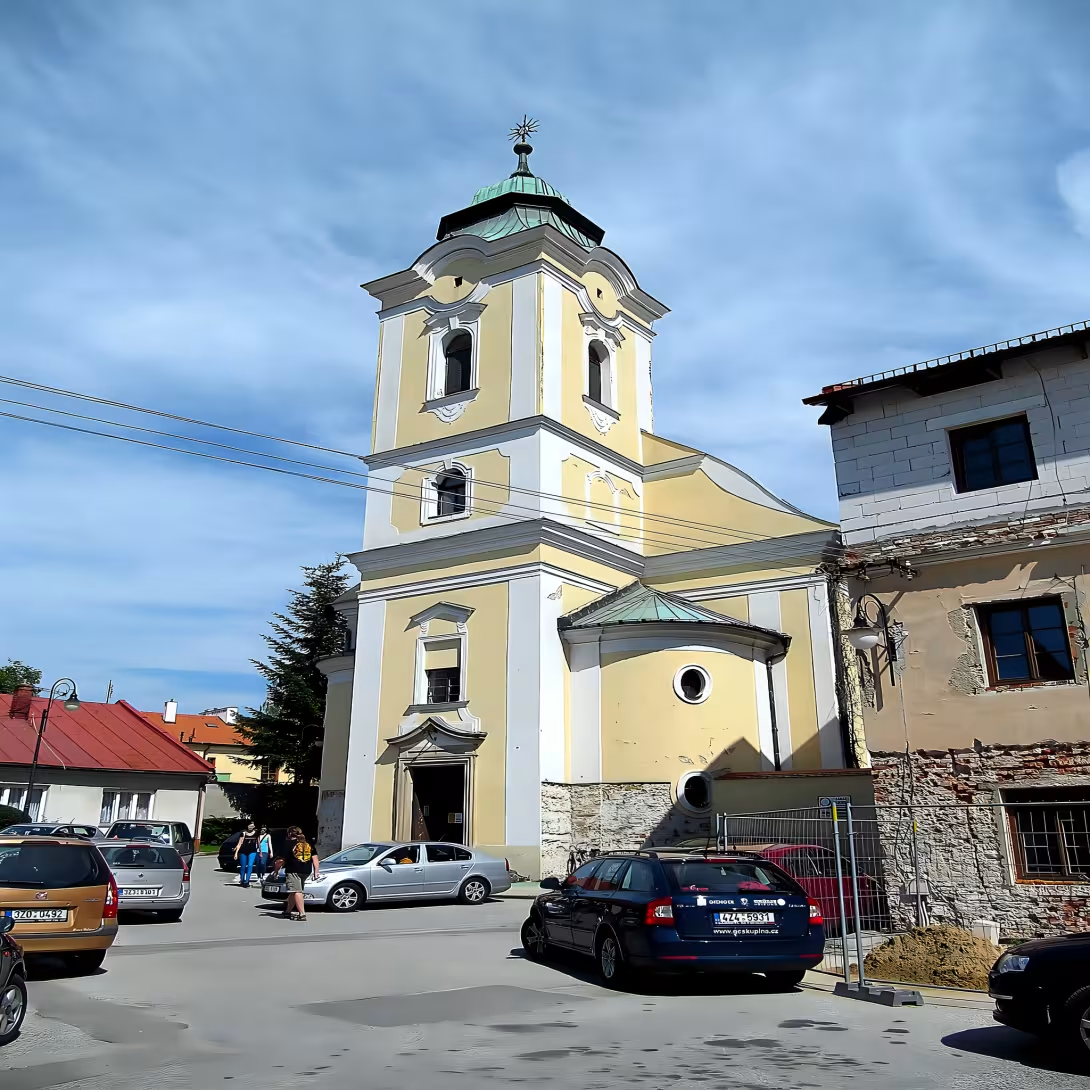
The Baroque church of Saint Anne in Holešov is a significant cultural monument with a rich history. Built on the site of a former Bruderhof from the 16th century, it has undergone several transformations over the centuries.
Initially, the church was constructed as a filial church belonging to the Roman Catholic parish of Holešov within the Olomouc Archdiocese. Later, under Count František Antonín z Rottalu's direction in the mid-18th century, it was rebuilt and expanded. The Rococo-style ceiling painting by Josef František Pilze, discovered during restoration work in the 1960s-1970s, is a notable feature.
The complex has undergone several restorations, including one that uncovered original Baroque decorations in the 1960s-1970s. Recent efforts have focused on preventing water damage and preserving the historic structure.
Throughout its history, the church has played an important role as a cultural hub in Bohemia, reflecting the region's Catholic revival during the Baroque period. Today, it remains an integral part of Holešov's historic town center, surrounded by other cultural monuments and natural features.
The church is notable for its unique blend of architectural styles, from Renaissance to Baroque, which reflects the complex history of the region. Visitors can explore the church's interior, including the Rococo-style ceiling painting, as well as the surrounding area, offering a glimpse into Holešov's rich cultural heritage.
In conclusion, the Baroque church of Saint Anne in Holešov is an important cultural monument that offers a fascinating glimpse into the region's history and architecture. Visitors are invited to explore this beautiful church and its surroundings, providing a unique insight into the region's cultural heritage.
Then and now
Drag the slider to compare how the landmark may have looked when it was built with the view today.
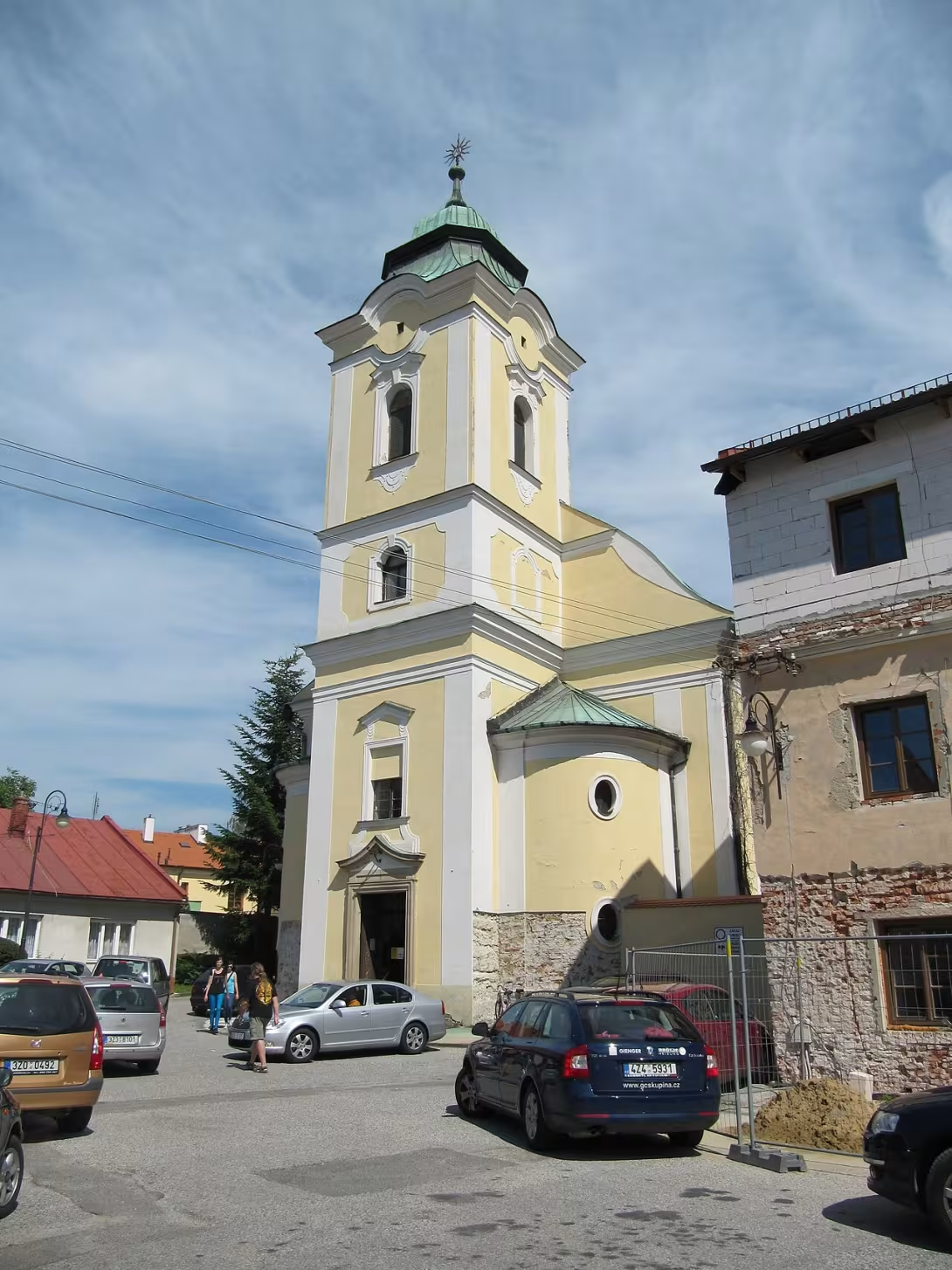

The historical appearance on the left is an AI-generated visualisation and serves as inspiration only.
Historical milestones
- 1748
- Construction of the Baroque church of Saint Anne in Holešov begins
- 1750
- Count František Antonín z Rottalu's direction leads to rebuilding and expansion of the church
- 1960
- Restoration work uncovers original Baroque decorations and Rococo-style ceiling painting by Josef František Pilze
- 1970
- Continuation of restoration work
Architectural development
The church underwent several transformations over the centuries, including a Baroque renovation in the mid-18th century.
Historical events
- 1584
- A Renaissance tower was added to the original Bruderhof.
- 1616
- The church was consecrated by Olomouc Bishop František z Ditrichštejna.
- 1748
- The church was rebuilt and expanded under the direction of Count František Antonín z Rottalu.
Owners
Ladislav Popel mladší z Lobkovic
František Antonín z Rottalu
Points of interest
– The church's original Baroque decorations were hidden for centuries due to a thick layer of whitewash that was applied during a renovation in the late 18th century.
– A unique feature of the church is its blend of architectural styles, including Renaissance and Baroque elements, which reflects the complex history of the region and the influence of various cultures on its architecture.
– The Rococo-style ceiling painting by Josef František Pilze, discovered during restoration work in the 1960s-1970s, is a notable feature that adds to the church's cultural significance.
Guide
This guide is narrated by a synthetic voice generated by artificial intelligence.
Show guide text
This text was created by artificial intelligence and has not been editorially reviewed. It may contain inaccuracies.
The Church of Saint Anna in Holešov is a Baroque structure from the first half of the eighteenth century. It was part of a complex with a monastery of the Trinitarian order, located right next to the chateau. Today it is a subsidiary church of the Roman Catholic parish of Holešov in the Olomouc archdiocese and is among the cultural monuments of the Czech Republic.
A Brother's prayer chapel stood on this site in the sixteenth century, to which a Renaissance tower was added in the year fifteen eighty-four. During the re-catholicization, following the arrival of the Jesuits in Holešov, the manor owner Ladislav Popel the Younger of Lobkovic had the prayer chapel converted into a Catholic church dedicated to Saint Anna. It was consecrated on May fifteenth, sixteen sixteen by the Olomouc bishop Cardinal František of Ditrichštejn, and Jan Sarkander became the parish priest. After the Jesuits left, the church fell into disrepair from the year sixteen twenty-six and served only on certain feast days.
The restoration was undertaken by Count František Antonín of Rottal. Between the years seventeen forty-two and seventeen forty-eight, the perimeter walls of the nave and the core of the tower were preserved, a new presbytery with a sacristy and oratory were added, a crypt was created beneath the nave, and the interior received new decoration. The builder Tomáš Sturm the Elder, a longtime servant of the Rottal family, added a monastic wing for five Trinitarians and incorporated the church and religious house into the chateau complex. The church was reconsecrated on July twenty-sixth, seventeen forty-eight. The Trinitarians committed themselves to celebrating two masses daily. One they celebrated for the living members of the Rottal family here, the other for the deceased in the Black Chapel at the Church of the Assumption of the Virgin Mary.
A second monastic building soon followed, and between the years seventeen fifty-two and seventeen fifty-four a side chapel of Saint Famiān was constructed, later called the Chapel of Saint Cosmas and Damian. In the year seventeen fifty-four, Ignác Foglar the Elder from Valašské Meziříčí built the organ. The monastery ceased to exist in the year seventeen eighty-three as part of the Josephine reforms, and the religious house became a dwelling for the poor. The church again fell into decline until it was repaired in the year eighteen eighty-two. At the turn of the nineteenth and twentieth centuries it served the students and pupils of Holešov schools. The district government office also had its seat in the complex at that time.
During renovation between the years nineteen sixty-three and nineteen seventy-four, the original ceiling painting by Josef František Pilz depicting the Holy Trinity and saints associated with the Trinitarians was discovered in the Chapel of Saint Cosmas and Damian. Rococo illusory wall paintings were also uncovered on the walls, in the window recesses, and in the niche of the altar. Since the year two thousand six, the church has been protected from moisture and the side altars have been restored. After the year two thousand ten, the city renewed the surrounding houses, remnants of the Baroque wall and gate, and renovated Saint Anna Square. In the year two thousand twenty, a Memorial of Reconciliation in the form of a metal tree was added in front of the church, and a Memorial Hall of Saint John Sarkander was created in the oratory.
Tips for visitors
Best Time to Visit: The church of Saint Anne is open year-round, but the best time to visit is during spring and autumn when the weather is mild and sunny. This allows you to fully appreciate the beautiful architecture and surroundings without the crowds that come with summer tourism. The church is also accessible by public transport, with buses stopping nearby. What to Bring: Comfortable walking shoes are essential for exploring the town center and its cultural monuments. Don't forget your camera to capture the stunning architecture and picturesque surroundings. Photography: The best spots for photography are around the church's exterior, particularly during sunrise or sunset when the light is soft and golden. Be mindful of any restricted areas or signs indicating no photography allowed. What to See Nearby: Within a 30-minute walk from the church, you can visit other cultural monuments such as the Holešov Town Hall and the Church of Saint Michael. Take a stroll through the charming town center to discover its hidden gems.
Frequently asked questions
Can the monument be visited?
Religious buildings are usually open mainly during services; at other times a visit is normally arranged with the parish or the operator. We have not verified specific times.
Where is the monument?
Location: Holešov, Zlínský kraj. The map on this page shows the exact spot.
Why is the monument protected?
It is listed in the Central List of Cultural Monuments of the Czech Republic as a cultural monument. It is protected as part of a larger listed ensemble.
Businesses nearby
Do you run a restaurant, accommodation, shop, museum, rental, wellness or other visitor service near this monument? Show yourself directly to the people heading to it — this is how they will see you in the app and on the web:
Nearby
The church is situated in the historic town center of Holešov, surrounded by other cultural monuments and natural features.
Accommodation nearby
Trips and activities nearby
Guided tours, tickets and activities nearby from GetYourGuide
Affiliate link: if you buy from the partner, we may receive a commission. The price for you does not change.
Search tours and activities →Themed route
Holešov Heritage Trail
This trail takes you through the historic town center of Holešov, showcasing its cultural and natural treasures.
1. Town Hall Square: Start your journey at the picturesque Town Hall Square, surrounded by beautiful Baroque buildings and ornate fountains. Take a moment to admire the stunning architecture and soak up the charming atmosphere. 2. St. Anne's Church: The main attraction of this trail is the magnificent St. Anne's Church, a stunning example of Gothic architecture with intricate stone carvings and stunning stained-glass windows. Be sure to take a guided tour to learn more about its rich history. 3. Town Walls and Towers: Take a short walk to the remnants of Holešov's medieval town walls and towers, offering breathtaking views of the surrounding countryside. Imagine life in this fortified town centuries ago.
This trail provides a unique glimpse into Holešov's rich cultural heritage and natural beauty. Enjoy your journey through this charming town!
Seasonal recommendations
Spring
What's special: The spring season brings new life to the surroundings of the St. Anne Church, with blooming flowers and greenery. The gentle sunlight and warm breeze create a peaceful atmosphere. As you walk towards the church, you'll notice the sounds of birds chirping and the scent of fresh grass filling the air.
Practical tips: Spring is a great time to visit the church without the crowds that come during the summer months. Wear comfortable shoes and clothing suitable for mild weather. The best time to visit is in the morning or late afternoon when the sun is not too harsh.
Summer
What's special: Summer brings warmth and vibrancy to the area around the St. Anne Church. The lush greenery and colorful flowers create a lively atmosphere, and the sound of children playing in the nearby park adds to the joy. As you enter the church, you'll notice the warm sunlight streaming through the stained-glass windows.
Practical tips: Summer is peak tourist season, so be prepared for larger crowds. Arrive early to beat the heat and avoid the midday sun. Wear comfortable clothing and shoes suitable for walking. The best time to visit is in the morning or late afternoon when the sun is not too harsh.
Autumn
What's special: Autumn brings a cozy atmosphere to the surroundings of the St. Anne Church, with the leaves changing colors and the air filled with the scent of woodsmoke. The soft sunlight creates a warm glow, and the sound of leaves crunching underfoot adds to the peaceful ambiance.
Practical tips: Autumn is a great time to visit the church without the crowds that come during the summer months. Wear comfortable shoes and clothing suitable for cooler weather. The best time to visit is in the morning or late afternoon when the sun is not too harsh.
Winter
What's special: Winter brings a serene atmosphere to the surroundings of the St. Anne Church, with snow-covered trees and a peaceful silence. The soft lighting from inside the church creates a warm glow, and the sound of snowflakes falling outside adds to the tranquility.
Practical tips: Winter is the quietest season at the church, so you're likely to have it to yourself. Wear warm clothing and comfortable shoes suitable for snowy or icy conditions. The best time to visit is in the morning or late afternoon when the sun is not too harsh.
Visualizations and artistic views


The visualisations are generated by artificial intelligence and serve as inspiration.
Photos from the area
Real photos taken near the monument


Zdroj a licence jsou uvedeny u každého snímku.
Tips from visitors
No tips yet. Be the first!
Log in and add your tip.
Sources and literature
Photos: Palickap / CC BY-SA 3.0, rozlišení zvýšeno umělou inteligencí — Wikimedia Commons. The author and licence also appear when you hover over the image.
Faktickým podkladem tohoto textu byl článek na Wikipedii, jehož autory jsou přispěvatelé Wikipedie. Článek je dostupný pod licencí CC BY-SA 4.0.
Location on the map


Příběhy a pověsti
Legendy, pověsti a příběhy spjaté s touto památkou
Fotografie návštěvníků
Zatím žádné fotografie. Buďte první, kdo přidá fotografii z návštěvy!
Log in a přidejte svou fotografii nebo hodnoťte.
Za ověřenou návštěvu v aplikaci získáte víc bodů — poznáme podle GPS, že jste na místě.
Reviews and comments