



kostel svaté Anny (Přibyslavice) Church
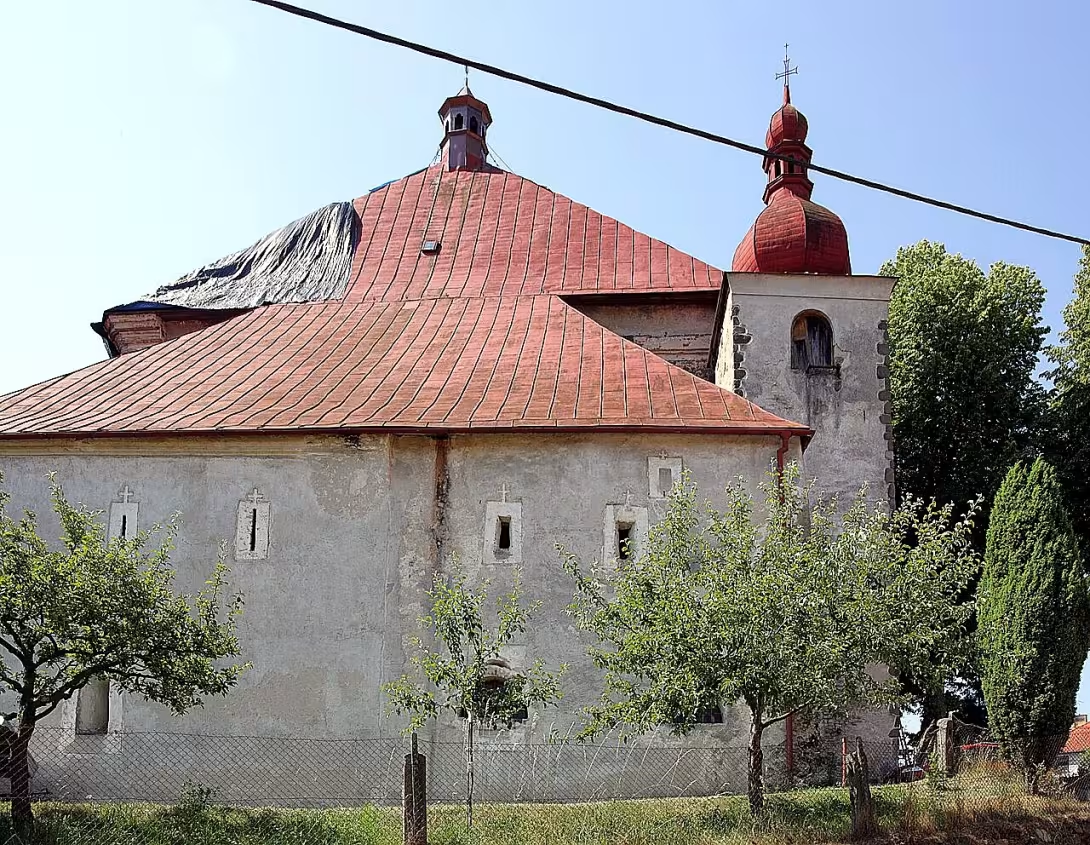
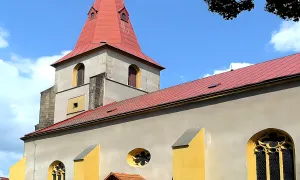
The Church of Saint Anne in Přibyslavice is a filial church under the Roman Catholic parish and a cultural monument, recognized as one of Moravia's oldest structures. Originating from a Premyslid court, this Romanesque building stands next to a newer pilgrimage church dedicated to the Nativity of the Virgin Mary. Its historical significance lies in its architectural style and role during various periods, including its association with Protestant influences before 1622.
The Church dates back to the second third or middle of the 12th century, reflecting Bohemia's era under the Premyslid dynasty. This period marked significant developments in architecture and religious influence across Europe. The church's origins are linked to its function as part of a Premyslid court, highlighting its importance during this time.
Architecturally, the Church is characterized by its Romanesque style, featuring a single-nave tribune with a semicircular apse. The presbytery and possibly the tower were added later, indicating modifications to the original structure. This design reflects the historical context of its 12th-century construction.
Throughout its history, the church has experienced various changes in administration and influence. Notably, before 1622, it was under Protestant control, leading to alterations such as the whitewashing of images, sculptures, and altar paintings. A Gothic painting of the Virgin Mary continued to be venerated due to miraculous healings attributed to its power, transforming the area into a pilgrimage site.
Key events in the church's history include archaeological and architectural research conducted by the West Moravian Museum between 1968 and 1973, followed by further studies by the Faculty of Philosophy at Masaryk University from 1977 to 1980. These efforts helped date the structure and uncover its historical layers. Additionally, significant restoration work took place between 2010 and 2018, focusing on preserving the original roofs and gables, with subsequent facade reconstructions in 2019 and 2020.
Today, the Church of Saint Anne stands as a testament to its rich history and architectural heritage. Visitors can appreciate its Romanesque design and learn about its role in religious and cultural developments over the centuries. The church's preservation efforts ensure that it remains an accessible site for those interested in exploring Moravia's historical landmarks. Its enduring legacy invites visitors to delve into the past while appreciating medieval architecture.
Then and now
Drag the slider to compare how the landmark may have looked when it was built with the view today.
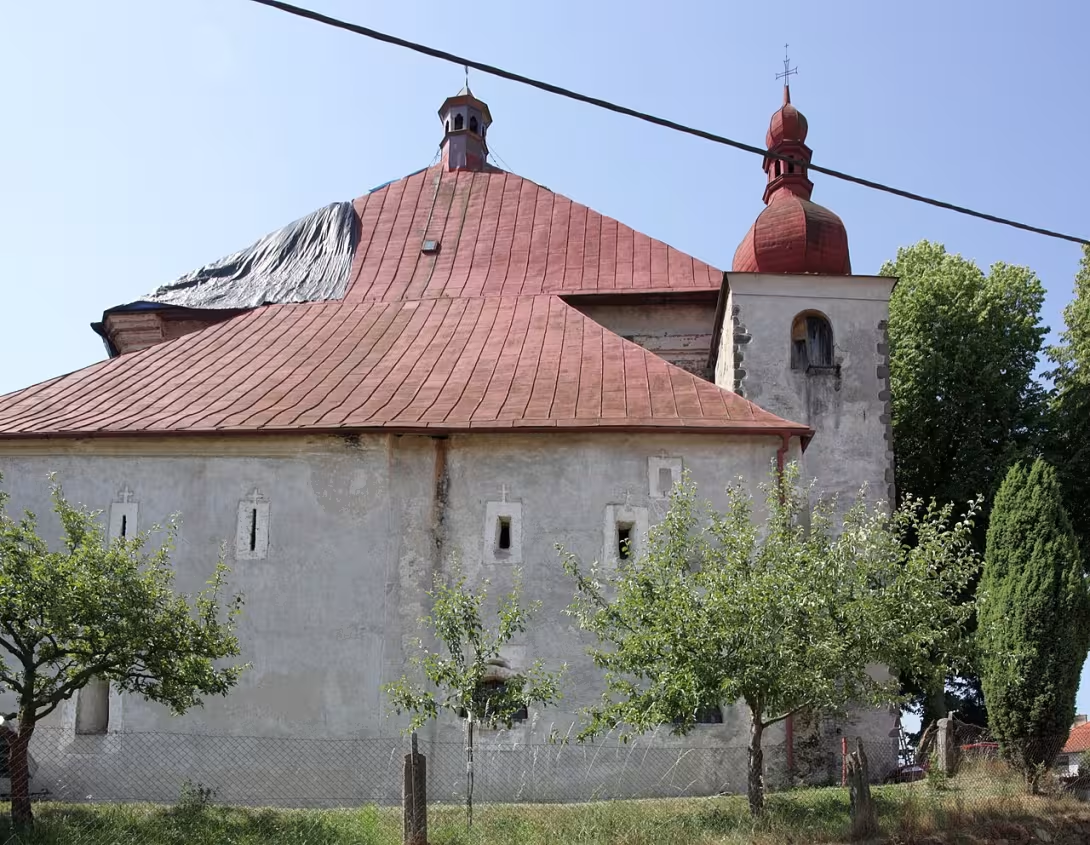
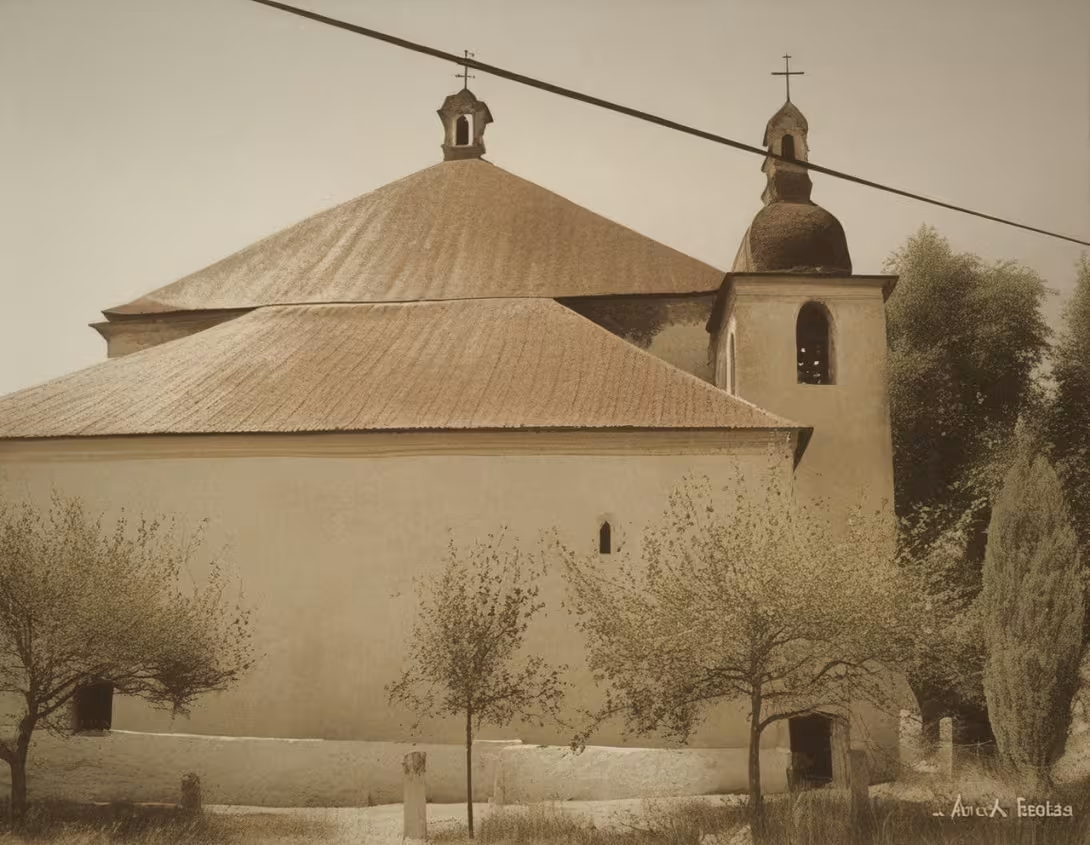
The historical appearance on the left is an AI-generated visualisation and serves as inspiration only.
Historical milestones
- kolem 1150
- The church was established as part of a Přemyslid court.
- před 1622
- The church under Protestant control, changes to the interior.
- 1968-1973
- Archaeological and architectural research by the Západomoravský Museum.
- 1977-1980
- Further studies by the Faculty of Philosophy at Masaryk University.
- 2010-2018
- Restoration of the church's original roofs and ceilings.
- 2019-2020
- Reconstruction of the church facades.
Architectural development
Originally built in the Romanesque style during the second third or middle of the 12th century, the Church of Saint Anne features a single-nave tribune with a semicircular apse. The presbytery and possibly the tower were added later. In the early 20th century, significant restoration efforts focused on preserving its historical architecture.
Historical events
In the second half of the 20th century, archaeological and architectural research was conducted by the West Moravian Museum (1968–1973) and the Faculty of Philosophy at Masaryk University in Brno (1977–1980).
The church underwent roof and gable repairs between 2010 and 2018 to preserve its original structures.
Points of interest
- The Church of Saint Anne's association with a Premyslid court suggests it may have been part of the early medieval political and cultural network, reflecting its significance beyond mere religious function. - Despite being whitewashed during Protestant control in 1622, a Gothic painting of the Virgin Mary survived due to its attributed miraculous healings, which transformed Přibyslavice into an unexpected pilgrimage destination. - Archaeological research by the West Moravian Museum and subsequent studies by Masaryk University's Faculty of Philosophy helped uncover that the church's structure underwent modifications over centuries, revealing layers of historical adaptation. - The restoration efforts between 2010 and 2020 not only preserved the church’s original Romanesque features but also involved modern techniques to maintain its structural integrity for future generations. - Before becoming a cultural monument, the Church of Saint Anne served as a testament to religious shifts in Moravia, reflecting broader European trends of changing ecclesiastical influences over time.
Guide
This guide is narrated by a synthetic voice generated by artificial intelligence.
Show guide text
This text was created by artificial intelligence and has not been editorially reviewed. It may contain inaccuracies.
Welcome to the Church of Saint Anne in Přibyslavice, a remarkable testament to history nestled in this serene village. As you stand here, take a moment to absorb the tranquility and the sense of timelessness that surrounds you. The church's humble yet dignified presence is a beacon of cultural heritage, inviting you on a journey through centuries.
The origins of this sacred site trace back to around 1150, when it was constructed as part of a Premyslid court. This connection hints at its significance beyond religious functions, possibly serving as a pivotal node in the early medieval political and cultural network of Moravia. The church has witnessed transformations over time, including a period before 1622 when it fell under Protestant control, leading to changes in its interior.
Architecturally, the Church of Saint Anne is a fascinating study in Romanesque style. As you explore, notice the single-nave tribune design and the semicircular apse that define its structure. These elements not only underscore its historical significance but also offer a glimpse into the architectural preferences of the era it was built.
Throughout its history, the church has been the focus of scholarly interest. Between 1968 and 1973, the Západomoravské muzeum conducted archaeological and architectural research to uncover more about this site. Further studies were carried out by the Faculty of Philosophy at Masaryk University from 1977 to 1980, highlighting its importance in historical and cultural studies.
One intriguing aspect of the church is its association with a Premyslid court, suggesting it played a role in the broader socio-political landscape of early medieval Moravia. Although much about the architects and key figures involved remains shrouded in mystery, this connection adds layers to our understanding of the site's historical context.
In recent years, the Church of Saint Anne has undergone significant restoration efforts. Between 2010 and 2018, its original roofs and ceilings were restored, followed by a reconstruction of its façades from 2019 to 2020. These restorations have ensured that this architectural gem continues to stand as a testament to its rich past.
As you continue your exploration, let the church's quiet majesty inspire reflection on the countless stories it has witnessed over the centuries. We invite you to delve deeper into its history and perhaps uncover more about the lives of those who once walked these grounds.
Thank you for joining us at the Church of Saint Anne in Přibyslavice. May your visit be both enlightening and memorable, leaving you with a deeper appreciation for this remarkable piece of our shared heritage.
Frequently asked questions
Can the monument be visited?
Religious buildings are usually open mainly during services; at other times a visit is normally arranged with the parish or the operator. We have not verified specific times.
Where is the monument?
Location: Přibyslavice, Kraj Vysočina. The map on this page shows the exact spot.
Why is the monument protected?
It is listed in the Central List of Cultural Monuments of the Czech Republic as a cultural monument (register no. 28331/7-2993). It is protected as part of a larger listed ensemble.
Businesses nearby
Do you run a restaurant, accommodation, shop, museum, rental, wellness or other visitor service near this monument? Show yourself directly to the people heading to it — this is how they will see you in the app and on the web:
Accommodation nearby
Trips and activities nearby
Guided tours, tickets and activities nearby from GetYourGuide
Affiliate link: if you buy from the partner, we may receive a commission. The price for you does not change.
Search tours and activities →Themed route
Tematická výletní trasa: Kostel svaté Anny (Přibyslavice)
1. Kostel svaté Anny (Přibyslavice) - Kostel Začněte svůj výlet u kostela svaté Anny, který je nejen hlavním cílem vaší trasy, ale také historickou a architektonickou perle obce Přibyslavice. Tento barokní kostel je známý svou bohatou historií a krásným interiérem, který zahrnuje významné umělecké prvky. Je to ideální místo pro ty, kteří mají rádi duchovní architekturu a historii.
2. Obecní úřad Přibyslavice - Místní instituce Po návštěvě kostela se přesuňte do centra obce, kde se nachází obecní úřad. Toto místo je vhodné pro ty, kdo chtějí získat více informací o místních událostech a historii Přibyslavic. Navštívili jste ho nejen kvůli administrativním potřebám, ale také jako součást poznání života v této malebné obci.
3. Kaple svatého Jana Nepomuckého - Kaple Přibližně ve stejné oblasti najdete kapli svatého Jana Nepomuckého, která přitahuje návštěvníky svou klidností a historickým významem. Tato malá kaple je ideálním místem pro odpočinek a reflexi po prozkoumání kostela. Je to také zajímavé místo pro ty, kteří si užívají klidné chvíle v malebném prostředí.
4. Náves Přibyslavice - Místní centrum Prohlédněte si náves obce, která je srdcem místního života a kde se nachází různé tradiční domy a malé obchody. Toto místo nabízí příležitost prozkoumat každodenní život v Přibyslavicích, zastavit se na kávu nebo si zakoupit místní produkty. Náves je ideálním místem pro ty, kdo chtějí pocítit atmosféru obce a setkat se s jejími obyvateli.
5. Místní park - Park K závěru svého výletu si oddechněte v místním parku, který nabízí klidné prostory k relaxaci a krásnou příležitost prozkoumat přírodní prostředí obce. Park je ideálním místem pro rodiny s dětmi nebo pro ty, kteří hledají místo na odpočinek po prozkoumání historických a kulturních památek Přibyslavic.
Tato trasa vám nabídne komplexní pohled na kostel svaté Anny a jeho okolí, zahrnující jak historické, tak každodenní aspekty života v obci Přibyslavice.
Seasonal recommendations
Spring: Visiting the Church of Saint Anne in Přibyslavice during spring offers a unique experience as nature awakens around this historic site. The surrounding landscape is adorned with blooming flowers and lush greenery, creating a picturesque setting that enhances the church's architectural beauty. As daylight hours extend, visitors can enjoy longer periods exploring the area without feeling rushed. It's advisable to wear comfortable walking shoes for strolls through the blossoming fields nearby. While the spring season might see moderate crowds as people take advantage of pleasant weather, arriving in the morning or later afternoon can help avoid larger groups.
Summer: Summer is an ideal time to visit the Church of Saint Anne due to its extended daylight hours and warm weather, which allows for a leisurely exploration of both the church and its surroundings. The lush greenery provides a vibrant backdrop that complements the historic structure beautifully. During this peak tourist season, it's wise to plan your visit early in the day or later in the afternoon to avoid the largest crowds. Wearing light clothing and comfortable shoes is recommended, along with bringing water to stay hydrated as you enjoy outdoor activities in the area.
Autumn: Autumn transforms the Church of Saint Anne into a serene haven amidst a tapestry of warm colors, with leaves turning shades of amber and gold. The cooler weather provides a crisp atmosphere that enhances the tranquility of this historic site. This season typically sees fewer visitors compared to summer, making it an excellent time for those seeking a more peaceful experience. Dressing in layers is advisable due to fluctuating temperatures throughout the day. Early morning visits offer the added bonus of capturing stunning natural light filtering through the colorful foliage.
Winter: Winter offers a unique charm at the Church of Saint Anne, where snow-covered landscapes create a magical and serene atmosphere around this historic structure. The church itself may be illuminated against the shorter daylight hours, adding to its mystical appeal during evening visits. It's important to dress warmly in layers, including a hat and gloves, as temperatures can be quite cold. Be mindful that opening times might be reduced during winter months, so checking ahead is recommended. Despite potentially fewer visitors due to weather conditions, those who do visit often find the quiet beauty of the site particularly enchanting.
Visualizations and artistic views


The visualisations are generated by artificial intelligence and serve as inspiration.
Photos from the area
Real photos taken near the monument


Zdroj a licence jsou uvedeny u každého snímku.
Tips from visitors
No tips yet. Be the first!
Log in and add your tip.
Sources and literature
Photos: RomanM82 / CC BY-SA 4.0 — Wikimedia Commons. The author and licence also appear when you hover over the image.
Faktickým podkladem tohoto textu byl článek na Wikipedii, jehož autory jsou přispěvatelé Wikipedie. Článek je dostupný pod licencí CC BY-SA 4.0.
Location on the map




Příběhy a pověsti
Legendy, pověsti a příběhy spjaté s touto památkou

Fotografie návštěvníků
Zatím žádné fotografie. Buďte první, kdo přidá fotografii z návštěvy!
Log in a přidejte svou fotografii nebo hodnoťte.
Za ověřenou návštěvu v aplikaci získáte víc bodů — poznáme podle GPS, že jste na místě.
Reviews and comments