






Kostel svaté Anny (Prostřední Staré Buky) Church
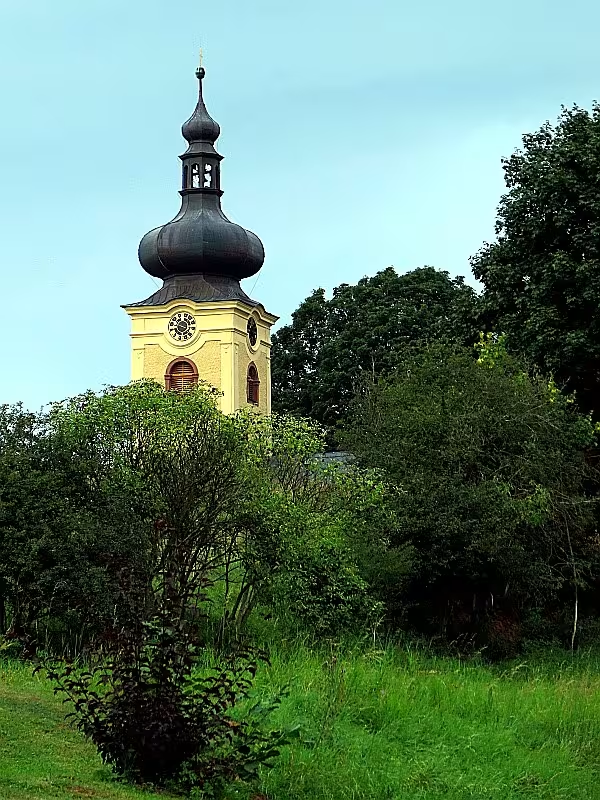
The Church of Saint Anne in the Spice of Old Buka stands as evidence of evolving architectural styles, from Gothic origin to Baroque enhancement. This Roman Catholic church is located in the village of Prostědní Staré Buky in Králové Hradec region and is remarkable for its historical importance and cultural heritage, which has been protected since 1958 as a cultural monument. Originally mentioned in 1355 with an altar dedicated to St. Catherine, he was probably dedicated to the Virgin Mary until 1360. Over the centuries, the church has undergone significant transformations reflecting wider architectural trends throughout Europe.
The origin of St. Anne's Church dates back to the middle of the 14th century when Bohemia was part of the Holy Roman Empire and experienced a prosperous period of Gothic architecture. Initial mention of the church in historical records highlights its early importance in the community with an altar dedicated to St. Catherine in 1355. By 1360, it was dedicated, probably to the Virgin Mary, and called its foundation a place of worship. This period was characterized by a significant architectural development, which is evident in the original Gothic design of the church.
Architectural, St. Anne's church began as a brick structure with a rectangular presbytery without a tower, with bells placed in a separate wooden bell tower. Over time, it has undergone substantial adjustments reflecting its historic and cultural path. After the Thirty Years War, the church was rededicated to Saint Anne and saw expansion during 1692-1755 free Lord de Waggim and Count William von Schafgotsch. The Baroque period brought further changes, including the new presbytery in 1802, the family tombs in 1804 and the addition of the Baroque tower in 1836. These modifications illustrate the adaptation of the church to evolving architectural styles while preserving the elements of its original Gothic structure.
Owning and managing the church have seen significant changes in time. Originally it served as a parish church until 2005, then it became a filial church. The village of Old Buka took ownership in 2006, reflecting changes in local administration and community involvement. These shifts underline the continuing importance of the church in the region.
Among the key events in the history of the church include its initial construction and subsequent transformations which shaped its present form. The efforts to enlarge and expand de Waggim and Count William von Schafgotsch are particularly remarkable as they reflect broader cultural influences in their respective periods. In addition, the church retains a unique medieval drywall, including an illusionist window in the presbytery, which adds to its historical attraction.
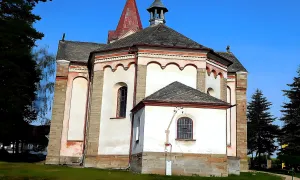
Today, the Church of St. Anne is located on a slope above the village, accessible by way of a school or down the aisle over the bridge across the stream. While regular services are no longer held, the church remains a place of cultural and historical interest. Visitors can explore its unique architectural features, including preserved medieval plasterboard and recessed 15th century tombstones, which document local landowners.
The Church of Saint Anne in Prostí Old Buka offers a fascinating view of architectural development from Gothic to Baroque style, enriched with its historical context and cultural significance. Its unique features and the story of the past make it a convincing destination for people interested in history and architecture. Visitors are invited to explore this remarkable monument and appreciate its lasting legacy in the rich cultural tapestry of the Czech Republic.
Then and now
Drag the slider to compare how the landmark may have looked when it was built with the view today.
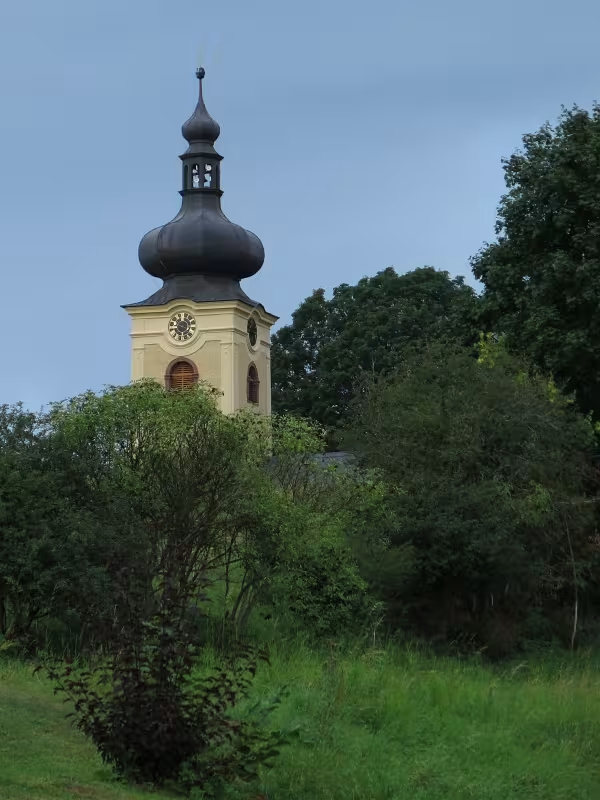
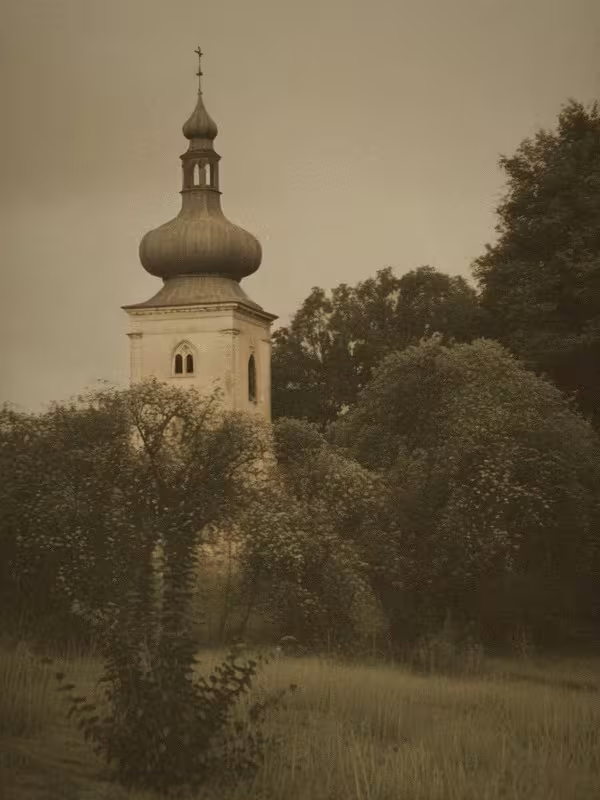
The historical appearance on the left is an AI-generated visualisation and serves as inspiration only.
Historical milestones
- 1355
- The first mention of an altar dedicated to St. Catherine.
- 1360
- Church dedicated, probably to the Virgin Mary.
- 1692-1755
- Expansion and expansion by the free Lord de Waggim and Count William von Schafgotsch.
Architectural development
the church began as a brick construction with a rectangular presbytery without a tower, with bells in a separate wooden bell tower. Over time it was extended and extended, especially after the Thirty Years War, when it was rededicated to Saint Anne. In the Baroque period there were further modifications including a new presbytery in 1802, family tombs in 1804 and Baroque towers in 1836.
Historical events
1355: First mention of the altar dedicated to St. Catherine in the village.
1360: Church sanctified, probably to the Virgin Mary.
1692-1755: Extension and extension of the free Lord de Waggima and Count William von Schafgotsche.
Points of interest
- The church of Saint Anne was originally dedicated to St. Catherine in 1355 before it was probably dedicated to the Virgin Mary until 1360, which reflects the shift of religious priorities within the community in the mid-14th century.
- During the baroque transformation between 1692 and 1755, the church was extended under the auspices of the free Lord de Waggim and Count William von Schafgotsche, whose influence is evident in architectural improvements that reflect European cultural trends.
- the church has a unique medieval gypsum work, including an illusionist window in presbytery, which adds a layer of historical intrigue by showing art techniques from its gothic origin.
- After serving as a parish church until 2005, she went to a Filial church and was taken over by the village of Stará Buka in 2006, underlining changes in local administration and community involvement in cultural monuments.
- Despite the fact that it no longer hosts regular transportation, access to St. Anne's Church is maintained on the way from the school or through the aisle through the bridge through the stream, which is evidenced by its continued integration into the daily life of the Proprietary Old Buky.
Guide
This guide is narrated by a synthetic voice generated by artificial intelligence.
Show guide text
This text was created by artificial intelligence and has not been editorially reviewed. It may contain inaccuracies.
Welcome to St. Anne's Church in Prostejní Old Buků, a remarkable testimony of architectural evolution and historical depth. As you stand before this majestic structure, take a moment to absorb its presence - a harmonious mix of past and present that whispers stories from ancient centuries.
The origin of this church dates back to 1355, when it was first mentioned by the altar dedicated to St. Catherine. By 1360 the church was sanctified, probably in honor of the Virgin Mary, which means a shift in religious focus within the community in the middle of the 14th century. This transformation reflects a dynamic spiritual landscape of time.
As you take it in its architecture, notice how smoothly it integrates elements from different times. The development of the church is evident because the gothic influences give way to baroque grandeur. While particular architects remain unknown, their visions have left an indelible mark on this sacred space. Take a look around and appreciate the unique medieval drywall, which decorate the interior - proof of the craftsmanship of its time.
The period between 1692 and 1755 brought significant changes under the leadership of the free Lord de Waggim and Count Wilibald von Schafgotsche, who oversaw its expansion and expansion. This era brought a church with baroque vibrations and added layers of complexity to its already rich history.
While many historical characters associated with this site remain unnamed, their common impact is undeniable. Their efforts have ensured that this church will remain a beacon of cultural heritage in Prostední Old Buka.
An interesting aspect of the past of this church is its initial devotion to Saint Catherine, followed by the probable sanctification of the Virgin Mary. This shift highlights the change in religious priorities and offers a view of the spiritual life of its medieval community.
As you continue your research, let curiosity guide you to every corner of this historic place. Every step reveals more about the lives and times that shaped it. We invite you to dive deeper into his stories, revealing layers of history with every discovery.
Thank you for joining us. May your visit inspire the continued recognition of the rich tapestry of history woven within these walls. Enjoy your recon!
Businesses nearby
Do you run a restaurant, accommodation, shop, museum, rental, wellness or other visitor service near this monument? Show yourself directly to the people heading to it — this is how they will see you in the app and on the web:
Nearby
ITEX Show interactive overview of the surroundings - restaurants, accommodation, rentals and other places within a 15 km radius.
Data: OpenStreetMap contributors, 15 km radius.
‡ Historical monuments
- General Gablenze Memorial (4.3 km)
- Ruins of the castle Rechenburg (8.5 km)
- bridge Railway street over the River Clean in the Guesthouse (9.2 km)
- bridge Railway street over the River Clean in the Guesthouse (9.2 km)
- bridge Railway street over the River Clean in the Guesthouse (9.4 km)
- bridge Railway street over the river Clean in the Guesthouse (9.5 km)
- Bradlo (9.6 km)
- City Museum - Šháchar (11.3 km)
Restaurant and catering
- Krakonoš (4.9 km - Color 41)
- Coffee & Bar Bruno (4.9 km - Havlickova 110)
- La Piazza (5.0 km)
- Radnice (5.0 km - Krakonošovo Square 72)
- Café VOLKAFE (5.1 km - Allied 61)
- Pub U Lausmans (10.3 km - Vrchlický 788)
- Cafe (11.4 km - Tower 97)
- Karlov (11.4 km - Jiraskova 200)
Accommodation
- Guesthouse near Kopecký (5.7 km)
- Pension 14 (9.6 km)
- City hotel Dorinka (9.6 km)
- B & B Judith (10.6 km - 5 May 428)
- VegZion (10.8 km - Mountain 464)
- Apartments Above the river (12.2 km - Under the Riesboras 22)
- Pension Doctor (12.2 km)
- chata Lawyer (12.6 km - Luční 188)
› Rental and sports
- Hervis (5.0 km)
- Sportisimo (5.9 km)
- Next bike Czech Republic (5.9 km)
- Next bike Czech Republic (6.3 km)
- Sport World (10.2 km - Vrchlický 735)
- Downhill Debrné (10.2 km)
- Kupkola. cz (10.7 km)
- Cycloservice TP (11.7 km)
© Tourism and nature
- Following the footsteps of the war 1866 - 8. Options and Prediction (4.3 km)
- City park Trutnov (4.6 km)
- Tourist information centre (5.0 km)
- U Fox Hory (7.5 km)
- Úpice (11.4 km)
- MIC Court Kings over Labem (11.7 km - Švehlová 400)
- Entries (Horse market) (12.4 km)
- Entries - Sychrov (12.4 km)
Accommodation nearby
Themed route
Thematic cruise route: Church of St. Anne and the surroundings of Prostědní Old Buk
1.Kostel svaté Anny (Prostřední Staré Buky) * Type: * Religious landmark * Why is it worth visiting: * This baroque church is carried by the spiritual centre of the village, but also by architectural pearls with rich history. It is a beautiful interior and important industrial enterprises encourage into the details of this Czech property.
2. Wood rectory (Plain Old Buky) * Type: * Historical building * Why is it worth a visit: * This one is a wooden building is an important example of the traditional Czech wooden theatre. Its historic and architectural value is inalienable to anyone who is interested in small cultural events.
3. The Chapel of Saint Anne (Simple Old Buky) * Type: * Chapel * Why is it worth visiting: * This chapel, though smaller not the church of St. Anne, is an important bridge for smaller residents and tourists. The yoke's calm atmosphere denies a place to rest and reflect in beautiful conditions.
4. Garden Park (Plain Old Buky) * Type: * Park * Why is it worth a visit: * This park, situated near St. Anne's Church, is an ideal bridge for relaxation and walking. Its green spaces promising beautiful lodged on the surrounding landscape and providing these goods after a challenging church and other historical places.
This route will allow you to discover the nosen spirit, but also the cultural richness of the Middle Old Buk.
Seasonal recommendations
Spring: A visit to St. Anne's Church in the spring period offers one experience that relates to the examination and the notice of initiation. The sunny days provided by ideal support for the church project, which is reserved for all the radial suns, which are such architectural details. In this case it may be possible to carry out an on-the-spot check and establish the selection requirements. It is reported that it is not possible to use the relevant applicable for hot and wet spring support, that it would be possible to use other sources of grass for sun protection. The best time based on it is around the afternoon when the temperature becomes useful.
Summer: Summer in the Plain Old Bukavy offers gaseous sunny days and a clear spirit, which makes the atocracy of St. Anne's Church. This season gives information on what are the ideals of support for rural activity, so it adds to instigating the church in the day to wipe out the big crowd. The sunny city peels the architecture of the cube and is the surrounding area from other than visual use of the place. Carrying reclining equipment for heating plants is a slippery, stevish measure against suns such as logs and keys to protect against UV radiation. On this basis, the best things are essential or relevant, which relate to individual areas.
Autumn: Autumn goods in the Plain Old Bukáš Bukávka offers the Betrayed colours of the leaves and quiet atmosphere around the Church of Saint Anne. This season is less demanding on the weather, which allows great pros in circumstances with mild temperatures and often clear notions. The lighting of the autumn sun gives the church and benefits from an increase in capacity which is ideal for quiet activity. The invasion is not in the summer, which allows an intimate experience. The document shall not constitute any notification to be transferred from the moment when the notification is made and which relates for a change. The best time on the basis is taken when the certificate of the church in its full possession was issued.
Winter: Winter purchase of St. Anne's Church offers a one-way experience with a usually quiet atmosphere and a chance to see the church on the side of shorter days. Winter conversion of lubricating weather that can be used in the production of monuments, so it is possible to obtain information that this information has been reported. The architecture of the church appears dramatic at this time, and the frosty world gives a calm, quiet atmosphere. Invalidity may be jeopardised by the fact that it is not in other areas that could affect human health. It is reported that it is not known what conditions could be met and it is established that it will be possible to use feet or boots with authorised switch to the market. The best data on application as set out in the Annex relating to strikes that may be used are set out in the Annex.
Visualizations and artistic views


The visualisations are generated by artificial intelligence and serve as inspiration.
Photos from the area
Real photos taken near the monument

Zdroj a licence jsou uvedeny u každého snímku.
Tips from visitors
No tips yet. Be the first!
Log in and add your tip.
Sources and literature
Photos: Sovicka169 / CC BY-SA 4.0 — Wikimedia Commons. The author and licence also appear when you hover over the image.
Faktickým podkladem tohoto textu byl článek na Wikipedii, jehož autory jsou přispěvatelé Wikipedie. Článek je dostupný pod licencí CC BY-SA 4.0.
Location on the map

Příběhy a pověsti
Legendy, pověsti a příběhy spjaté s touto památkou

Fotografie návštěvníků
Zatím žádné fotografie. Buďte první, kdo přidá fotografii z návštěvy!
Log in a přidejte svou fotografii nebo hodnoťte.
Za ověřenou návštěvu v aplikaci získáte víc bodů — poznáme podle GPS, že jste na místě.
Reviews and comments