






Kostel svaté Anny (Velká Hleďsebe) Church
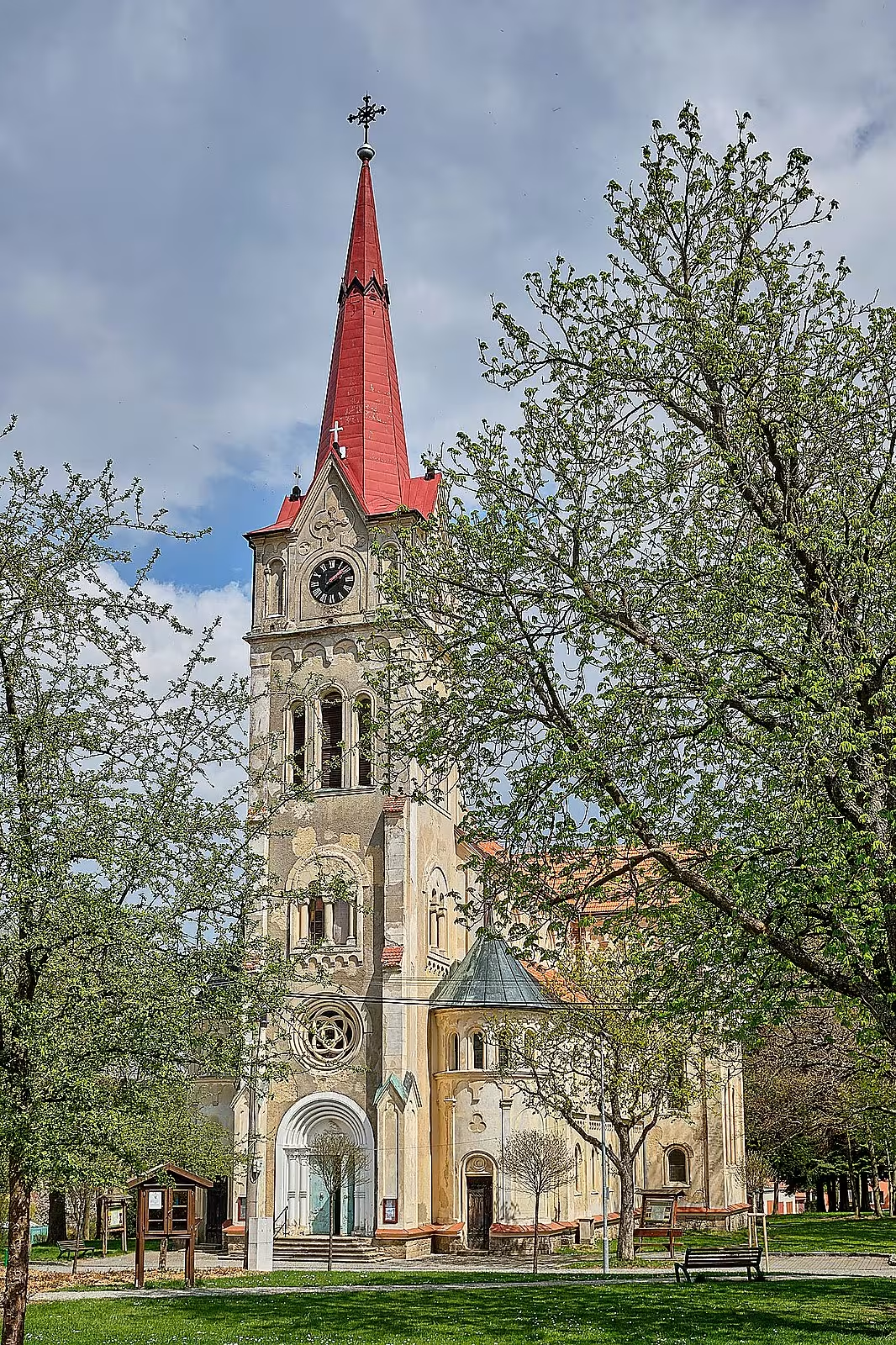
The Church of Saint Anne in Velká Hleďsebe is a significant historical monument near Mariánské Lázně. It features a pseudoromanesque architectural style and was completed in 1911. Designed by Josef Forberich, the church reflects cultural and architectural influences from early 20th-century Bohemia, part of the Austro-Hungarian Empire. Its design draws inspiration from both German and Czech structures, creating a unique blend of regional styles.
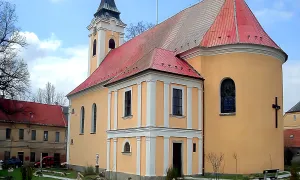
Constructed between 1908 and 1911, the Church of Saint Anne exemplifies pseudoromanesque style with its intricate façade and ornamental decorations. The main tower on the western side is striking, featuring a square shape and rich ornamentation. Visitors can access the main entrance through six steps leading to a portico adorned with simple columns and archivolts, typical of romanesque architecture. Above this entrance, a tympanum displays a Pieta sculpture, enhancing the church's artistic appeal.
The exterior is further enhanced by a rosette window surrounded by three plastic circles that once served as light sources from the west side. This feature is complemented by double-arched windows and a trio of windows above, culminating in a 42-meter-high spire topped with a cross. The tower's clock faces are visible on all four sides, adding to its grandeur.
The church also features two paternoster rotundas adorned with ornate doors and decorative circles, resting on stone foundations approximately half a meter high. These rotundas have conical roofs and crosses, typical of the romanesque style. The main nave extends beyond the side aisles, featuring five round windows that ensure ample lighting within.
The transept, or cross aisle, is distinguished by its gabled roof adorned with wrought iron crosses at each peak. It connects the main and side naves while separating them from the choir area. The southern façade of the transept includes three tall, slender windows on the ground floor, with a central window taller than the others, topped by a decorative rosette.
Today, the Church of Saint Anne remains an architectural gem, reflecting historical and cultural influences of its time. Its well-preserved structure offers visitors a glimpse into early 20th-century pseudoromanesque architecture. The church's proximity to Mariánské Lázně makes it an accessible and worthwhile destination for those interested in history and architecture. Visitors are invited to explore this remarkable monument, appreciating its historical significance and architectural beauty.
Then and now
Drag the slider to compare how the landmark may have looked when it was built with the view today.
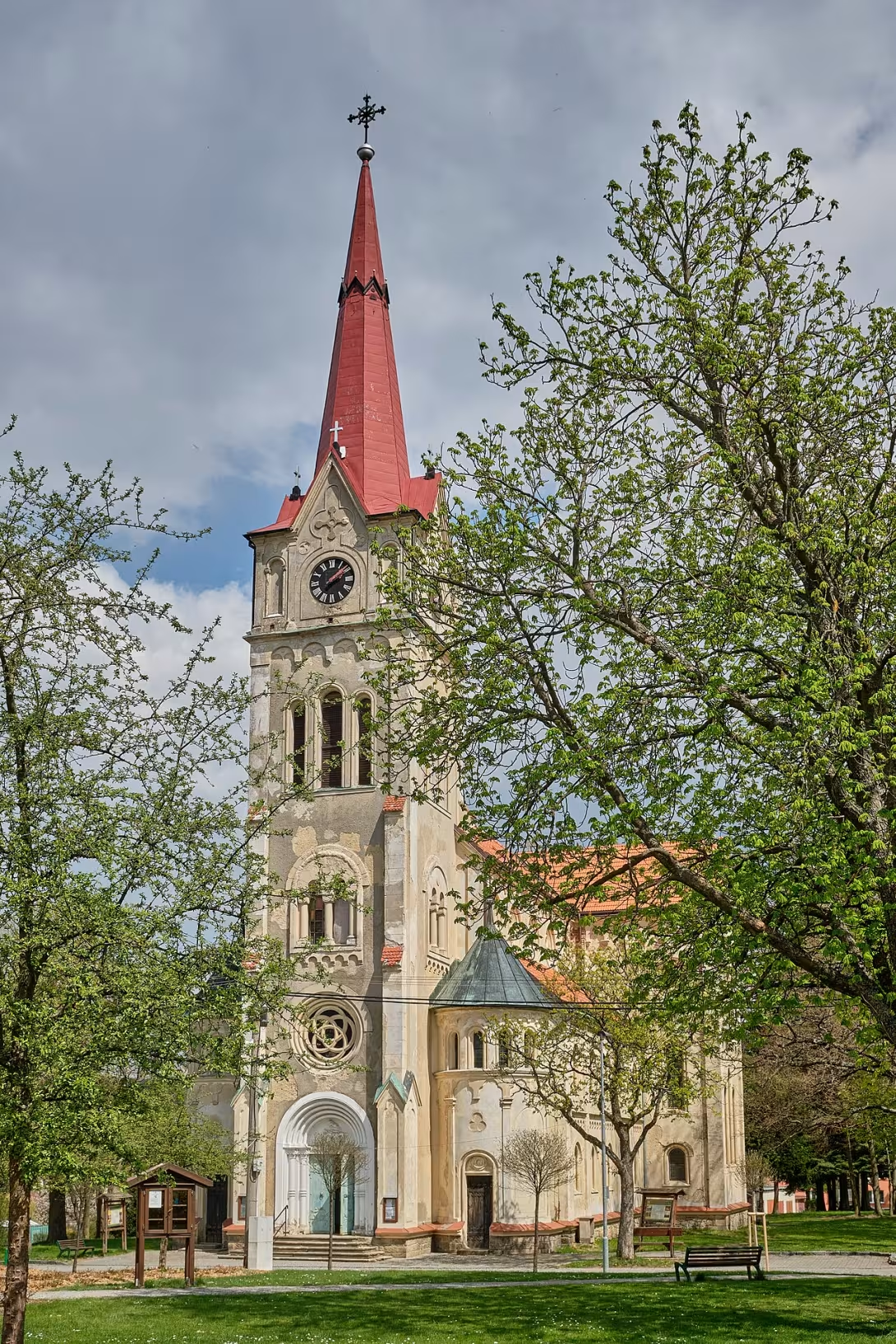
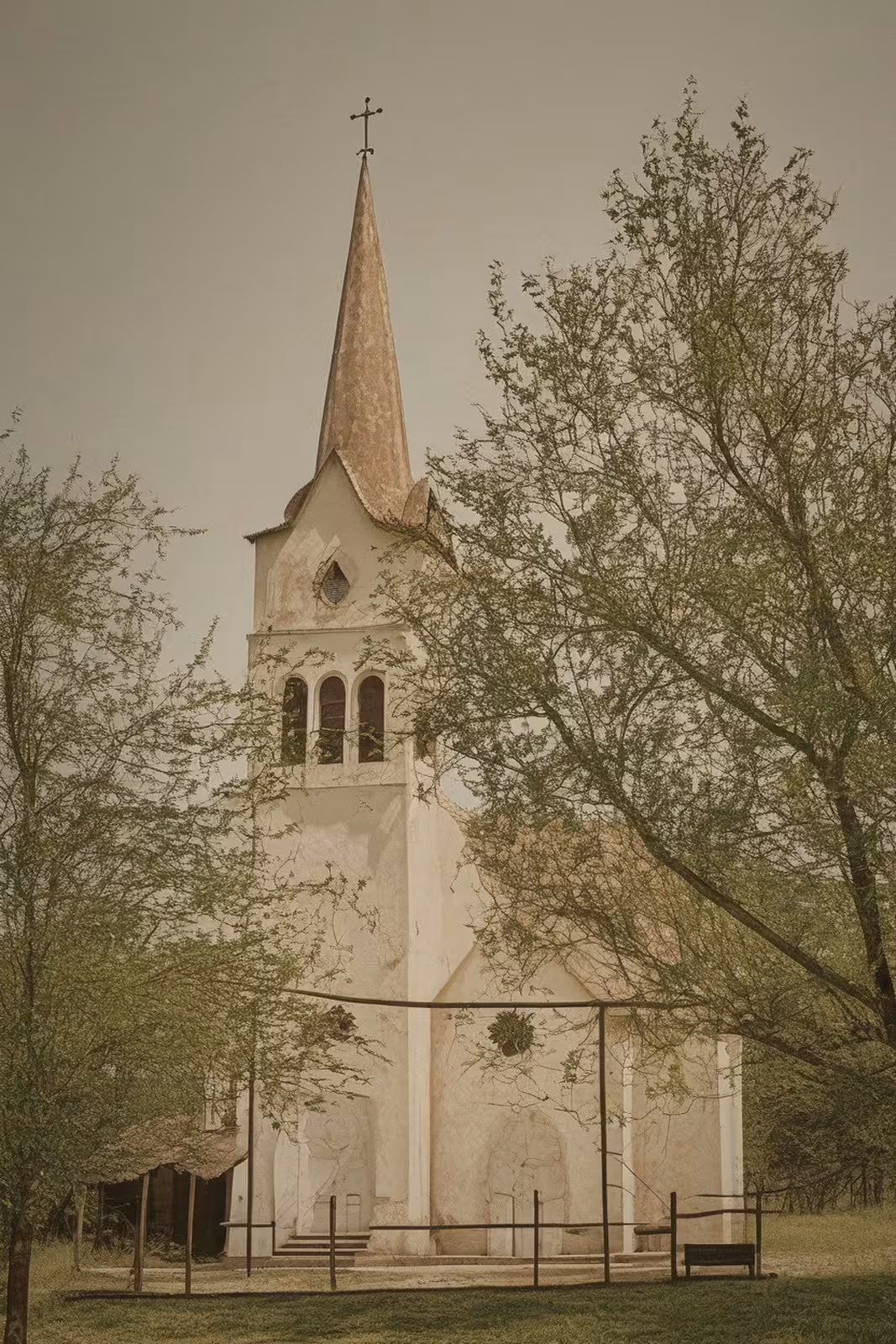
The historical appearance on the left is an AI-generated visualisation and serves as inspiration only.
Historical milestones
- 1908
- Začátek stavby kostela svaté Anny.
- 1911
- Dokončení a otevření kostela svaté Anny.
Architectural development
Built between 1908 and 1911, the Church of Saint Anne showcases a pseudoromanesque architectural style. Its design includes a main tower with ornamental decorations, romanesque tympanum, and archivolts. The church features various windows such as rosette and double-arched ones, enhancing its aesthetic appeal.
Historical events
The church was completed in 1911 after three years of construction under the guidance of Josef Forberich.
Points of interest
- The Church of Saint Anne's pseudoromanesque style is unique in the region as it blends German and Czech architectural elements, reflecting a cultural synthesis during the Austro-Hungarian Empire.
- During its construction from 1908 to 1911, local legends suggest that workers discovered ancient artifacts beneath the foundation stones, hinting at historical settlements predating the church.
- The Pieta sculpture above the main entrance is rumored to have been crafted by an unknown artist who was inspired by a mysterious vision of Saint Anne during a pilgrimage through Bohemia.
- The 42-meter-high spire of the Church of Saint Anne is said to be visible from several surrounding villages, and local folklore claims it serves as a beacon for lost travelers seeking their way home.
- Inside the church, one of the round windows in the main nave is believed to have been designed with an optical illusion that makes it appear larger than its actual size, a feature intended to symbolize divine presence.
Guide
This guide is narrated by a synthetic voice generated by artificial intelligence.
Show guide text
This text was created by artificial intelligence and has not been editorially reviewed. It may contain inaccuracies.
Welcome to the Church of Saint Anne in Velká Hleďsebe, a remarkable historical monument that stands as a testament to architectural innovation and cultural synthesis. As you stand here near Mariánské Lázně, take a moment to absorb the grandeur before you. The church's facade commands attention with its robust lines and intricate detailing, inviting you into a world where history breathes through stone.
Let's delve into its origins. Construction of this magnificent structure began in 1908 and was completed in 1911, designed by the talented architect Josef Forberich. This period marked a time when architectural styles were evolving, blending influences from different regions under the Austro-Hungarian Empire. The Church of Saint Anne is an embodiment of this cultural dialogue.
As you gaze upon its exterior, notice how it exemplifies the pseudoromanesque style—a unique blend that harmoniously combines German and Czech elements. This architectural choice reflects a broader trend during the early 20th century, where regional styles were merging to create something new yet familiar. The church's design echoes structures like the Church of the Holy Apostles in Kolín nad Rýnem, showcasing how local and international influences can coalesce into a singular vision.
Now, let’s explore some intriguing aspects of this site. Local legends whisper tales from its construction period between 1908 and 1911, suggesting that workers uncovered ancient artifacts or secrets buried beneath the ground. These stories add layers to the church's history, inviting us to ponder what mysteries might lie hidden within its walls.
While specific historical figures tied directly to this church remain unknown, the spirit of those who built it lingers in every stone and archway. The dedication and craftsmanship that went into creating such a structure are palpable as you walk around and take in its details.
Before we conclude our visit, I encourage you to explore further. Wander around the perimeter, feel the texture of the stonework, and imagine the hands that shaped it over a century ago. Each step offers new perspectives and insights into this architectural gem.
Thank you for joining me on this journey through time at the Church of Saint Anne. As we part ways here in Velká Hleďsebe, carry with you the stories and impressions from this remarkable place, and may they inspire your own explorations. Safe travels!
Tips for visitors
The best time to visit the Church of Saint Anne in Velká Hleďsebe is during late spring or early autumn, when the weather is pleasant for walking and exploring the surrounding natural landscape typical of the Karlovy Vary region. These seasons offer mild temperatures and beautiful scenery without the crowds that can occur during peak tourist season in summer.
Parking and transport to Velká Hleďsebe are convenient. The church is accessible by car, with parking available nearby. Public transportation options are also viable; visitors should check current routes online for buses or trains connecting from Mariánské Lázně or other nearby towns. This flexibility allows you to choose the most comfortable and efficient way to reach the site.
When visiting the Church of Saint Anne, it's advisable to bring a camera to capture its architectural beauty, especially in natural light during early morning or late afternoon when shadows enhance the pseudoromanesque style features. Comfortable walking shoes are recommended if you plan to explore the surrounding landscape. Additionally, carrying a small backpack with water and snacks can make your visit more enjoyable.
For photography enthusiasts, the best spots for capturing images of the Church of Saint Anne include its exterior façade during golden hour when sunlight highlights the intricate details of the pseudoromanesque architecture. The natural surroundings offer picturesque backdrops that complement the church's historic charm. Families with children can enjoy exploring the nearby landscape and trails, making it a delightful outing.
Nearby attractions within 30 minutes include Mariánské Lázně, known for its spa facilities and charming town center. It offers various cultural and recreational activities suitable for all ages. The natural beauty of the region also provides opportunities for leisurely walks or picnics in scenic areas.
Businesses nearby
Do you run a restaurant, accommodation, shop, museum, rental, wellness or other visitor service near this monument? Show yourself directly to the people heading to it — this is how they will see you in the app and on the web:
Events nearby

Zdroj akcí: otevřená data měst a obcí ČR (Národní katalog otevřených dat) a kalendář akcí Národního památkového ústavu.
Nearby
The church is situated near Mariánské Lázně, a well-known spa town. The surrounding landscape includes natural features typical of the Karlovy Vary region.
Accommodation nearby
Themed route
Thematic Walking Tour: Velká Hleďsebe and Surroundings
1. Kostel svaté Anny (Velká Hleďsebe) *Type:* Historical Church *Why Visit:* This charming church is the centerpiece of your visit, showcasing stunning architecture and serene ambiance that reflect the rich history of Velká Hleďsebe. It's a perfect starting point for exploring the area’s cultural heritage.
2. Mariánské Lázně *Type:* Spa Town *Why Visit:* Just a short walk from Velká Hleďsebe, Mariánské Lázně is renowned for its therapeutic springs and picturesque setting. It offers visitors an opportunity to relax in one of the many thermal baths or simply enjoy the scenic beauty typical of the Karlovy Vary region.
3. Natural Landscape Walk *Type:* Nature Trail *Why Visit:* The surrounding landscape near Mariánské Lázně features lush forests and rolling hills characteristic of the Karlovy Vary area. This nature trail is ideal for a leisurely walk, allowing you to immerse yourself in the tranquility and natural beauty that define this part of the Czech Republic.
This tour provides a balanced mix of cultural exploration and natural appreciation, perfect for anyone interested in history and serene landscapes.
Seasonal recommendations
Jaro: During the spring season, St. Anne's Church in Velké Hleďsebe is particularly attractive due to the revitalizing nature surrounding it. The budding trees and blooming shrubs offer a beautiful backdrop that highlights the historical architecture of the monument. The atmosphere is calm and friendly, creating an ideal environment for visiting. Visitors should opt for warm clothing with layers they can add or remove as temperatures may change quickly. If you visit on a Sunday or during off-peak times, you can avoid larger crowds.
Léto: In the summer season, St. Anne's Church offers views of the lush landscape in full bloom. Sunny days attract more tourists to the Karlovy Vary Region, which may lead to higher visitor numbers at the monument, especially during peak summer months. It is recommended to arrive early for a peaceful tour without long lines. Visitors should wear light but sun-protective clothing and carry a water bottle or deodorant to enjoy their tours as comfortably as possible.
Podzim: In autumn, St. Anne's Church offers the exceptional charm of leaves changing colors before visitors' eyes. The atmosphere is calm and quiet, allowing one to enjoy the historic space in gentle tranquility. Temperatures are usually cool, so we recommend wearing warm clothing and possibly an umbrella or protective hat for any rain. Visiting on a Sunday can be slightly busier, so mid-week visits are ideal for a more relaxed tour.
Zima: A winter visit to St. Anne's Church offers unique views of snow-covered scenery that creates a magical atmosphere around the monument. Temperatures are typically low and opening hours may be shorter, so it is important to plan your tour carefully. We recommend wearing warm clothing, including hats and gloves, and possibly boots suitable for snowy conditions. Winter is a period of lower visitor numbers, meaning fewer people and a more relaxed tour, but being prepared for quick weather changes is always a good idea.
Visualizations and artistic views


The visualisations are generated by artificial intelligence and serve as inspiration.
Photos from the area
Real photos taken near the monument


Zdroj a licence jsou uvedeny u každého snímku.
Atmosphere of the place
This atmospheric visualisation of the place and period was generated by artificial intelligence. It is not real footage of the location.
Tips from visitors
No tips yet. Be the first!
Log in and add your tip.
Sources and literature
Fotografie: Lubor Ferenc / CC BY-SA 4.0 — Wikimedia Commons. The author and licence also appear when you hover over the image.
Faktickým podkladem tohoto textu byl článek na Wikipedii, jehož autory jsou přispěvatelé Wikipedie. Článek je dostupný pod licencí CC BY-SA 4.0.
Location on the map
Příběhy a pověsti
Legendy, pověsti a příběhy spjaté s touto památkou

Fotografie návštěvníků
Zatím žádné fotografie. Buďte první, kdo přidá fotografii z návštěvy!
Přihlaste se a přidejte svou fotografii nebo hodnoťte.
Za ověřenou návštěvu v aplikaci získáte víc bodů — poznáme podle GPS, že jste na místě.
Reviews and comments