



kostel svaté Kateřiny Alexandrijské (Bílá Lhota) Church
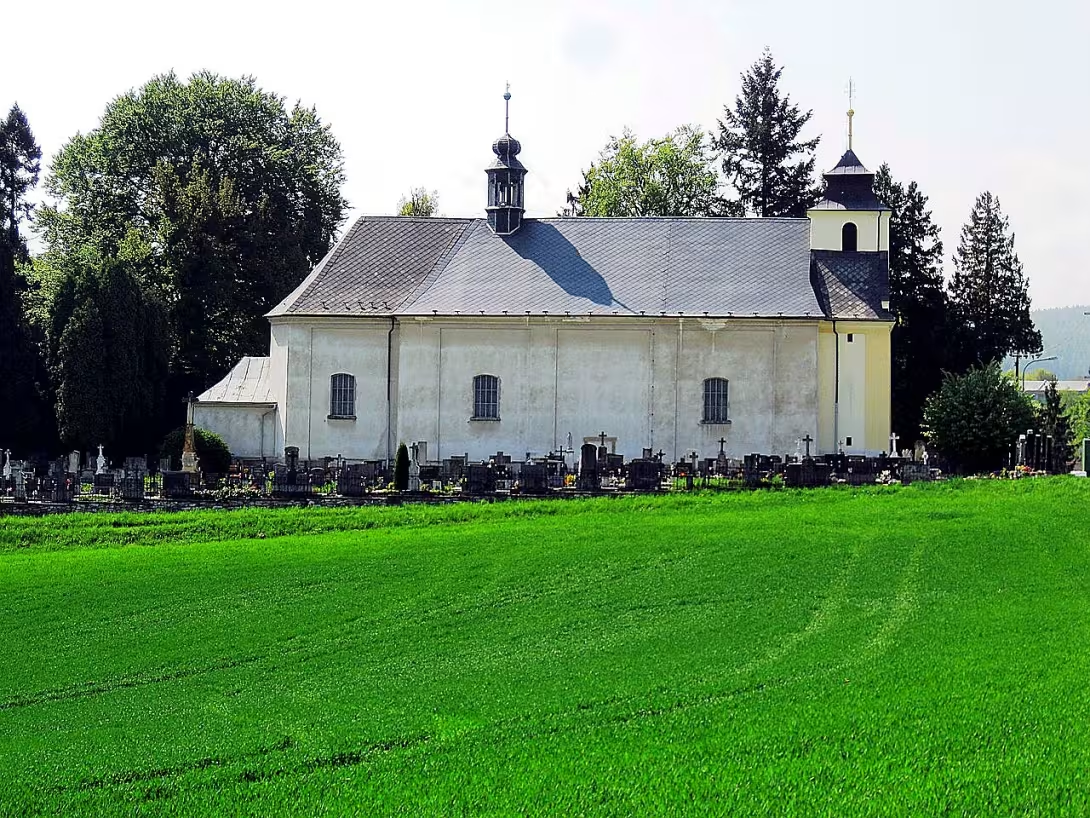
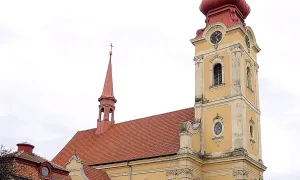
The Church of Saint Catherine of Alexandria in Bílá Lhota is a classicist-style parish church dedicated to Saint Catherine, constructed in 1789. Located in the village of Bílá Lhota within the Olomoucký kraj region, this architectural gem reflects the cultural and historical influences of its time. Its significance lies not only in its religious function but also in its embodiment of classicist design principles prevalent during the late 18th century when Bohemia was part of the Habsburg Monarchy.
The church's construction mirrors Enlightenment ideals of symmetry, simplicity, and rationality that influenced much of Europe at the time. Built with a single nave and oriented layout, it features a recessed chancel and a four-sided sacristy attached to its eastern side. The architectural design includes barrel-vaulted sections for both the nave and chancel, supported by pilasters creating shallow apse niches between the vault ribs. A distinctive bell tower rises centrally above the entrance, enhancing the church's classicist aesthetic.
Inside, the church is adorned with various artistic elements from its period of completion. The main altar showcases a painting of Saint Catherine, believed to be crafted by Jan Havelka, flanked by side altars featuring works attributed to the workshop of Jan Michael Scherhauf. Additionally, there is a late Gothic wood carving of the Crucified Christ from the early 16th century, adding historical depth and artistic diversity to the church's interior.
The churchyard, established after the building's completion in 1789, contains several classicist-style gravestones protected as cultural monuments. These include memorials for the owners of the Bílá Lhota estate, further linking the site to its local historical context and heritage.
Today, the Church of Saint Catherine of Alexandria remains a significant cultural monument within the Czech Republic's rich tapestry of historic sites. Its well-preserved classicist architecture and valuable interior artworks make it an intriguing destination for visitors interested in both religious history and architectural design. The church not only serves as a place of worship but also stands as a testament to the artistic and cultural currents that shaped its construction, inviting exploration and appreciation from those who visit.
Then and now
Drag the slider to compare how the landmark may have looked when it was built with the view today.
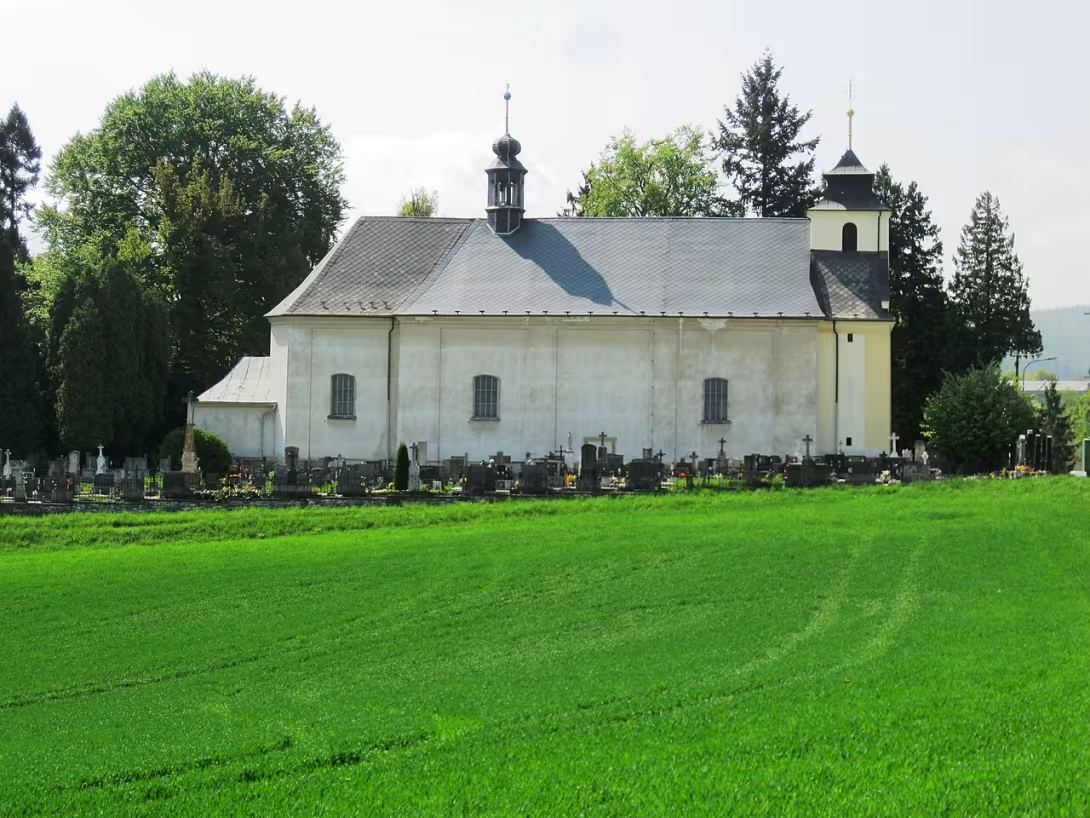

The historical appearance on the left is an AI-generated visualisation and serves as inspiration only.
Historical milestones
- 1789
- Výstavba kostela svaté Kateřiny Alexandrijské v Bílé Lhotě.
- Kolem 1510
- Připojení pozdně gotického dřevěného sochy Ukřižovaného Krista.
Architectural development
Constructed in the classicist style, the Church of Saint Catherine features an oriented single-nave layout with a recessed chancel and attached sacristy. The nave is barrel-vaulted, while both the nave and chancel are supported by pilasters that create shallow apse niches. A bell tower rises centrally above the entrance.
Historical events
The church was completed in 1789.
Points of interest
- The Church of Saint Catherine of Alexandria was constructed during a period when Bohemia was part of the Habsburg Monarchy, reflecting broader European Enlightenment ideals that emphasized symmetry and rationality in architecture.
- A unique feature of the church is its late Gothic wood carving of the Crucified Christ from the early 16th century, which adds an intriguing historical layer to the predominantly classicist interior design.
- The bell tower, rising centrally above the entrance, not only enhances the church's aesthetic but also serves as a distinctive landmark within Bílá Lhota, marking its importance in the village’s skyline.
- Several gravestones from the churchyard are protected cultural monuments, including those dedicated to the owners of the Bílá Lhota estate. These memorials provide insights into the local history and social hierarchy of the time.
- The main altar painting is believed to be crafted by Jan Havelka, while the side altars feature works attributed to the workshop of Jan Michael Scherhauf, showcasing a blend of artistic talents that contributed to the church's rich interior.
Guide
This guide is narrated by a synthetic voice generated by artificial intelligence.
Show guide text
This text was created by artificial intelligence and has not been editorially reviewed. It may contain inaccuracies.
The parish church of Saint Catherine of Alexandria in Bílá Lhota was built in seventeen eighty-nine in the classical style. It is listed among the cultural monuments of the Czech Republic.
It is a simple, oriented single-nave building. The rectangular nave is followed by a narrower, recessed chancel, and to it from the east side adjoins a square sacristy. Above the recessed entrance, a prismatic bell tower rises in the axis of the church.
The nave and chancel are vaulted with barrel vaults. The vaults between the ribs are supported by pillars attached to the walls, and between them shallow altar niches are formed. In the western part of the nave is a musicians' gallery. Its central part projects into the space of the nave.
The church furnishings are also classical and date from shortly after the completion of the building. The main altar with its columned retable bears an image of the celebration of Saint Catherine, reportedly by Jan Havelka. On either side of the altar stand sculptures of Saint Peter and Saint Paul from the workshop of Jan Michael Scherhauff. In the nave is a side altar of the Holy Cross with a stone sculptural group of the Small Calvary by Cyril Kutzer.
A small late Gothic wooden sculpture of the Crucified Christ from the first half of the sixteenth century is freely placed in the church. The bell in the sanctus shrine dates from sixteen eighty-seven, thus older than the church itself.
A cemetery was established near the church after seventeen eighty-nine. On it we find several classicist gravestones protected as monuments, belonging to the owners of the Bílá Lhota estate.
Tips for visitors
The best time to visit the Church of Saint Catherine of Alexandria in Bílá Lhota is during late spring or early autumn, when the weather is pleasant and the surrounding countryside is particularly beautiful. These seasons offer comfortable temperatures for walking around the church grounds and exploring nearby areas without the summer crowds or winter chill. Additionally, visiting on a weekday can provide a quieter experience, allowing you to appreciate the classicist architecture of the church in peace.
Public transportation options are also accessible; however, it's best to verify current routes and schedules using a transport app or website before your visit. This ensures you have the most up-to-date information on how to reach Bílá Lhota efficiently.
When visiting the church, consider bringing comfortable walking shoes as there may be some uneven paths around the site. A camera is recommended for capturing the architectural details of the church and its serene surroundings. Additionally, carrying a light jacket or sweater can be useful, especially if you plan to explore nearby areas after your visit.
For photography enthusiasts, the best spots to capture the Church of Saint Catherine are from the front entrance where the classicist style is most prominent, and from the side angles that highlight its single-nave structure. Early morning light provides a soft glow on the church facade, making it ideal for photos. Later in the afternoon, as the sun sets, you can capture dramatic shadows that add depth to your images.
Nearby attractions within 30 minutes include other historical sites and natural landscapes offering a glimpse into the region's heritage and beauty. Exploring these areas can complement your visit to the church by providing additional context about Bílá Lhota's cultural significance. For families with children, consider planning a day trip that includes a picnic in one of the nearby parks or nature trails, making it both educational and enjoyable for all ages.
Frequently asked questions
Can the monument be visited?
Religious buildings are usually open mainly during services; at other times a visit is normally arranged with the parish or the operator. We have not verified specific times.
Where is the monument?
Location: Bílá Lhota, Olomoucký kraj. The map on this page shows the exact spot.
Why is the monument protected?
It is listed in the Central List of Cultural Monuments of the Czech Republic as a cultural monument (register no. 104823).
Businesses nearby
Do you run a restaurant, accommodation, shop, museum, rental, wellness or other visitor service near this monument? Show yourself directly to the people heading to it — this is how they will see you in the app and on the web:
Events nearby
Zdroj akcí: otevřená data měst a obcí ČR (Národní katalog otevřených dat) a kalendář akcí Národního památkového ústavu.
Accommodation nearby
Trips and activities nearby
Guided tours, tickets and activities nearby from GetYourGuide
Affiliate link: if you buy from the partner, we may receive a commission. The price for you does not change.
Search tours and activities →Themed route
Thematic Walking Tour: Bílá Lhota and the Church of Saint Catherine
1. Church of Saint Catherine (Bílá Lhota)
Type: Historical Landmark
Begin your journey at the heart of Bílá Lhota with a visit to the Church of Saint Catherine. This architectural gem is renowned for its historical significance and stunning Baroque design, making it an essential stop for anyone interested in religious architecture or local history.
2. Bílá Lhota Village Square
Type: Cultural Site
Just a short walk from the church, explore the charming village square of Bílá Lhota. This area offers a glimpse into rural life and community spirit, with its quaint houses and inviting atmosphere. It's perfect for those who appreciate small-town charm and traditional Czech culture.
3. Local Artisan Workshops
Type: Cultural Experience
Venture into the local artisan workshops located near the village center. These workshops are a testament to Bílá Lhota’s rich tradition of craftsmanship, offering visitors a chance to see artisans at work and even purchase unique handmade goods.
4. Bílá Lhota Community Center
Type: Cultural Hub
Conclude your tour at the community center, where local events and exhibitions often take place. This venue highlights the vibrant cultural life of Bílá Lhota, providing insights into contemporary local art and community activities.
This thematic walking tour offers a comprehensive experience of Bílá Lhota’s cultural and historical offerings, all within a short distance from each other for an easy and enriching exploration.
Seasonal recommendations
Spring: Visiting the Church of Saint Catherine Alexandrienne during spring offers a unique experience as nature begins to awaken around Bílá Lhota. The landscape surrounding the church is adorned with vibrant wildflowers, and fresh greenery blankets the hillsides, creating a picturesque setting that enhances the historical charm of the site. The gentle warmth of the season invites visitors to explore at their leisure, often resulting in fewer crowds compared to summer months. For an optimal experience, consider wearing comfortable walking shoes to navigate the natural terrain comfortably, and bring along a light jacket as temperatures can vary throughout the day.
Summer: Summer is the peak season for visiting the Church of Saint Catherine Alexandrienne, with long daylight hours providing ample time to explore both the church's interior and its serene surroundings. The lush greenery and warm sunshine create an inviting atmosphere, perfect for leisurely strolls in the area. However, this popularity also means larger crowds, so arriving early in the day is advisable to enjoy a more tranquil visit. Dressing in light, breathable clothing will help you stay comfortable during your exploration, and carrying water is recommended to stay hydrated under the summer sun.
Autumn: Autumn transforms Bílá Lhota into a stunning tapestry of reds, oranges, and yellows as the foliage changes color around the Church of Saint Catherine Alexandrienne. This season offers a magical atmosphere with cooler temperatures making it ideal for outdoor activities such as photography or simply enjoying the scenic beauty. The number of visitors tends to decrease compared to summer, allowing for a more peaceful experience. Wearing layers is advisable due to fluctuating temperatures throughout the day, and comfortable footwear will enhance your exploration of the area's natural splendor.
Winter: Winter brings a quiet charm to the Church of Saint Catherine Alexandrienne, with snow potentially covering Bílá Lhota in a serene white blanket that adds a mystical quality to the historic site. The shorter daylight hours mean planning is essential; visiting during midday when there’s more light will enhance your experience. Due to its off-peak nature, winter attracts fewer visitors, offering a peaceful and intimate atmosphere. Dress warmly in layers to cope with the cold, and be prepared for potentially limited opening times as some services may adjust their schedules according to weather conditions.
Visualizations and artistic views


The visualisations are generated by artificial intelligence and serve as inspiration.
Photos from the area
Real photos taken near the monument

Zdroj a licence jsou uvedeny u každého snímku.
Tips from visitors
No tips yet. Be the first!
Log in and add your tip.
Sources and literature
Photos: Lehotsky / CC BY-SA 3.0 — Wikimedia Commons. The author and licence also appear when you hover over the image.
Faktickým podkladem tohoto textu byl článek na Wikipedii, jehož autory jsou přispěvatelé Wikipedie. Článek je dostupný pod licencí CC BY-SA 4.0.
Location on the map

Příběhy a pověsti
Legendy, pověsti a příběhy spjaté s touto památkou

Fotografie návštěvníků
Zatím žádné fotografie. Buďte první, kdo přidá fotografii z návštěvy!
Log in a přidejte svou fotografii nebo hodnoťte.
Za ověřenou návštěvu v aplikaci získáte víc bodů — poznáme podle GPS, že jste na místě.
Reviews and comments