






Kostel svaté Kateřiny (Libotenice) Church
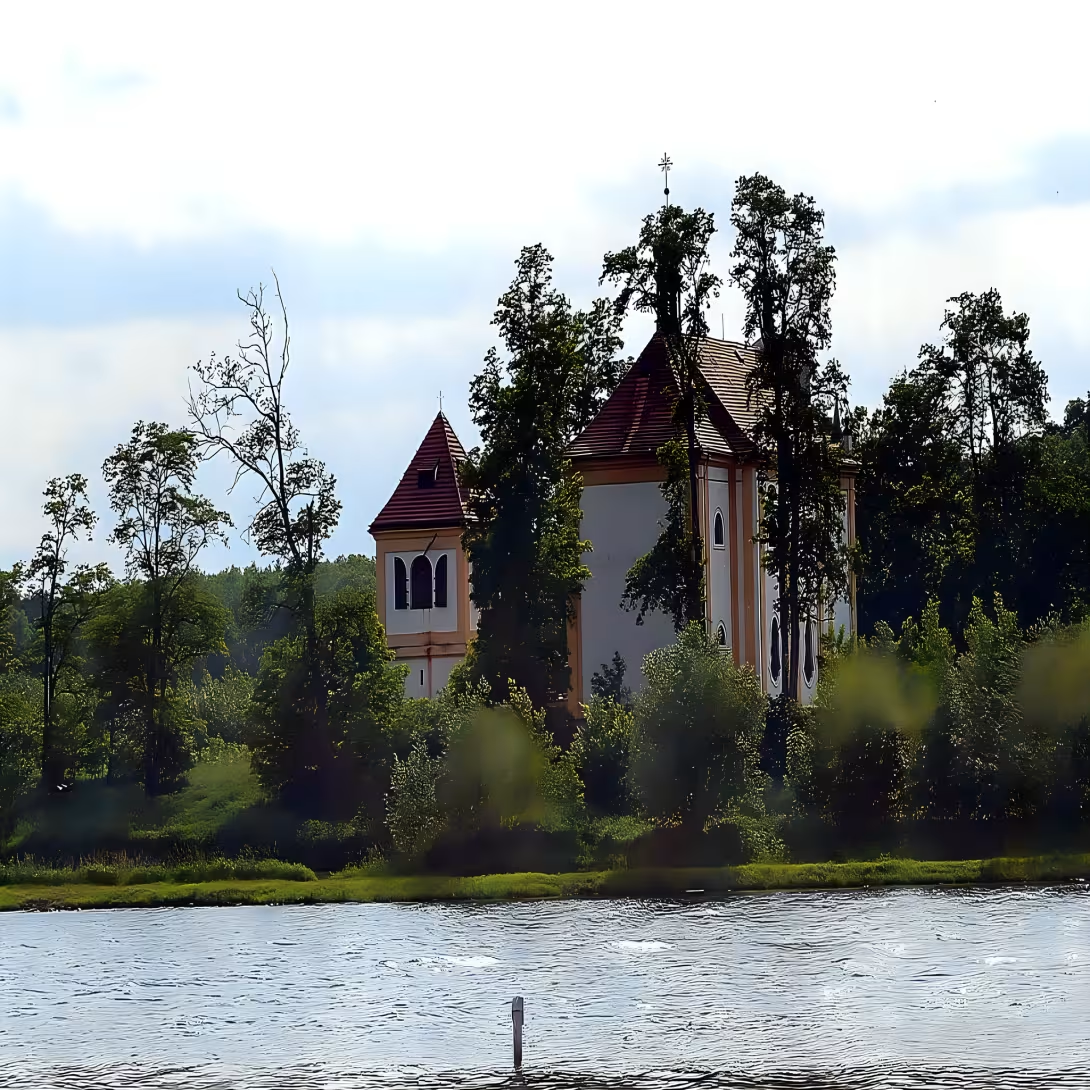
The Church of Saint Catherine in Libotenice, built in 1703 by Italian architect Octavio Broggio, is a notable Baroque structure located about 700 meters north of the village on the Elbe River's left bank. It stands as a cultural monument within the Ústecký kraj region. Its significance lies not only in its architectural style but also in its historical context and role within the community over centuries.
The origins trace back to an older parish and cemetery church established in 1273, which underwent significant rebuilding in 1591 from wood on opus caementicium foundations to a more durable form. By 1702, due to insufficient capacity, it was demolished for the current Baroque edifice. The new construction aimed to accommodate a growing congregation and reflect cultural shifts of the Baroque period in Bohemia during the early 18th century.
Architecturally, the Church exemplifies the prevalent European Baroque style. Designed by Octavio Broggio, it replaced its predecessor with an elegant structure completed and consecrated in June 1703. Later modifications included enlarging windows to enhance interior lighting, a common practice to accentuate dramatic effects characteristic of Baroque interiors.
Ownership and administration have seen several transitions over the years. Initially managed by the Doksany monastery or the Litoměřice archdeaconry, it was later overseen by the National Heritage Institute in Ústí nad Labem from the late 20th century onwards. This transition highlights its evolving role within both religious and cultural contexts.
Throughout its history, the Church has witnessed significant events that have shaped its narrative. In 1968, it was abandoned and subsequently vandalized, marking a period of neglect. However, restoration efforts began in the late 1980s, culminating in substantial repairs during the 1990s. These efforts were crucial for preserving its architectural integrity and historical value.
Today, the Church stands as a testament to its rich history and cultural significance. It is accessible to visitors interested in exploring its Baroque architecture and learning about its storied past. The church also hosts occasional liturgical services, concerts, and exhibitions, making it an active part of the community's cultural life.
The Church of Saint Catherine offers a unique glimpse into Bohemia's architectural and historical tapestry. Its preservation allows visitors to appreciate the artistry and craftsmanship of the Baroque period while reflecting on its enduring legacy. This monument is not only a place of worship but also a cultural treasure that invites exploration and admiration.
Then and now
Drag the slider to compare how the landmark may have looked when it was built with the view today.
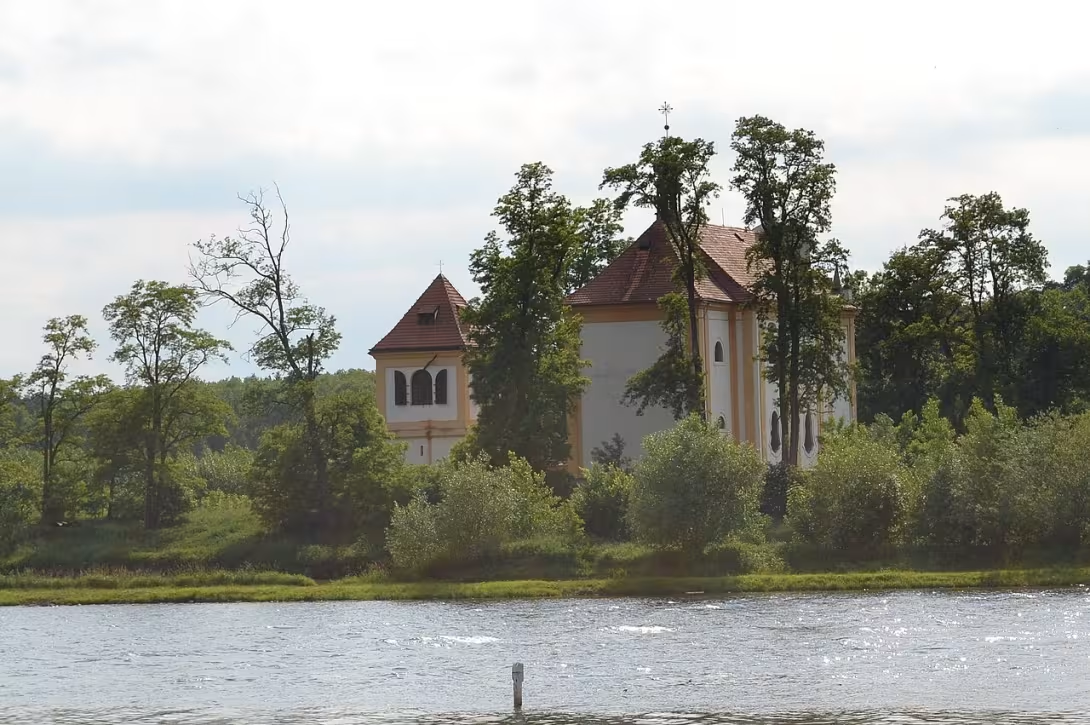
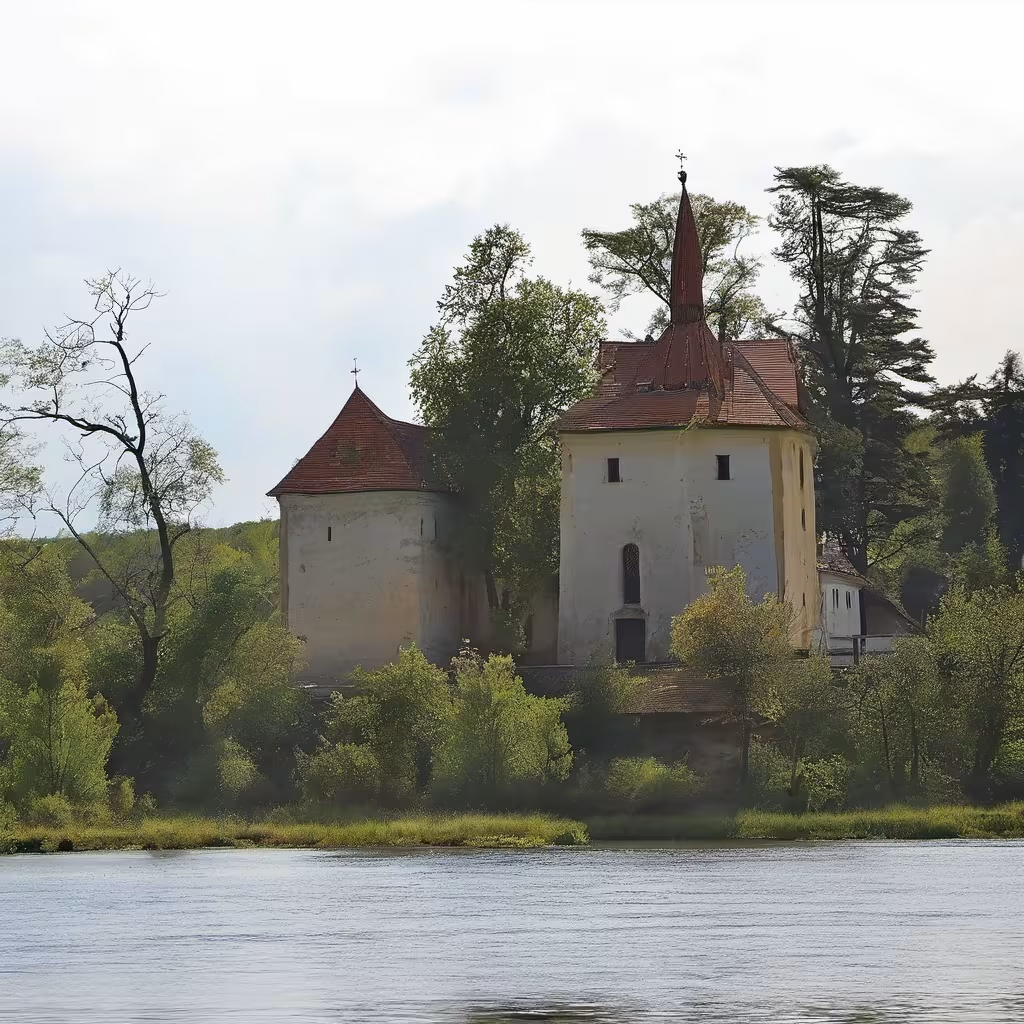
The historical appearance on the left is an AI-generated visualisation and serves as inspiration only.
Historical milestones
- 1703
- The church was completed and consecrated.
- 1738
- Parish registers began being maintained.
- 1787
- A parish was established at the site.
Architectural development
The current baroque structure replaced an older church from 1273, which underwent a rebuild in 1591. The new church was constructed between 1702 and 1703 by Octavio Broggio. A later modification included enlarging windows to improve interior lighting.
Historical events
The original church was demolished in 1702 to make way for a new structure due to insufficient capacity.
In 1968, the church was abandoned and subsequently vandalized.
Restoration efforts began in the late 1980s, with significant repairs completed in the 1990s.
Owners
Initially managed by the Doksany monastery or Litoměřice archdeaconry; later administered by the National Heritage Institute in Ústí nad Labem from the late 20th century onwards.
Points of interest
- The Church of Saint Catherine's predecessor was initially constructed in 1273 and underwent a significant transformation from wood to opus caementicium foundations by 1591, reflecting the evolving building techniques of medieval Europe.
- Despite its architectural splendor, the church faced a period of abandonment after 1968, resulting in vandalism that left it in disrepair until restoration efforts began in the late 1980s and continued through the 1990s, highlighting the challenges of preserving historical structures during political upheavals.
- Interestingly, while the church was originally built to accommodate an expanding congregation, its later modifications included enlarging windows to enhance dramatic lighting effects typical of Baroque architecture, demonstrating how aesthetic considerations evolved alongside functional needs.
- The ownership and administration of the Church have shifted multiple times over the centuries, including management by both religious institutions like the Doksany monastery and secular bodies such as the National Heritage Institute in Ústí nad Labem, illustrating its changing role within society.
- Today, the church is not only a site for worship but also hosts concerts and exhibitions, showcasing its adaptability to modern cultural uses while maintaining its historical significance.
Guide
This guide is narrated by a synthetic voice generated by artificial intelligence.
Show guide text
This text was created by artificial intelligence and has not been editorially reviewed. It may contain inaccuracies.
About seven hundred meters north of Libotenic, on the left bank of the Labe River, stands a baroque church of Saint Catherine of Alexandria. It was completed and consecrated in June 1703. Its authorship is attributed to architect and builder Octavio Broggio from Litoměřice, who was of Italian origin. The church is a non-movable cultural monument of the Czech Republic.
However, a much older church used to stand on the same site. The parish and cemetery church of Saint Catherine dated from 1273 and belonged to the village of Chodžovice, which ceased to exist during the Hussite Wars. It was originally wooden, built on limestone foundations, and was rebuilt in 1591. After the Battle of White Mountain, it became a subsidiary church of the Dolánky parish.
Even after the renovation, the old church was no longer sufficient. Therefore, the Doksany provost Bruno Kunovský had it demolished in 1702 and a new church built in its place. This new church rose near the Lusatian trade route, which led from Prague through Lužice northward to the sea. South of the church stands a brick bell tower. At the turnoff from the road to the church was located the Libotenic Pine tree.
Parish records have been kept there since 1738, and in 1787 a rectory was established there. The church was then managed by the Doksany monastery or the Litoměřice archdeaconry. The building has remained virtually unchanged since then. The only later modification was the opening of side windows to let in more light.
The proximity of the river brought problems to the church in past centuries, when it was damaged by floods. In recent times this happened again in 2002 and 2013.
The most difficult period came in 1968, when the church was abandoned and subsequently devastated. Its rescue began in the late nineteen-eighties and in the nineties it was repaired. At that time the Monument Institute in Ústí nad Labem rented it from the Catholic Church. A gallery of funerary sculpture was created there, that is, monument sculpture, and an exhibition about the history of the church and its reconstruction. Festive masses, occasional concerts, and exhibitions were held there. An apartment for the caretaker was set up in the bell tower.
Today the church is managed by a clergyman who commutes there from Doksany.
Frequently asked questions
Can the monument be visited?
Religious buildings are usually open mainly during services; at other times a visit is normally arranged with the parish or the operator. We have not verified specific times.
Where is the monument?
Location: Libotenice, Ústecký kraj. The map on this page shows the exact spot.
Why is the monument protected?
It is listed in the Central List of Cultural Monuments of the Czech Republic as a cultural monument (register no. 20236/5-2151).
Businesses nearby
Do you run a restaurant, accommodation, shop, museum, rental, wellness or other visitor service near this monument? Show yourself directly to the people heading to it — this is how they will see you in the app and on the web:
Events nearby



Zdroj akcí: otevřená data měst a obcí ČR (Národní katalog otevřených dat) a kalendář akcí Národního památkového ústavu.
Nearby
Located near the Elbe River, the church is close to an ancient trade route. The surrounding area includes natural features like the Libotenická borovice (pine).
Accommodation nearby
Trips and activities nearby
Guided tours, tickets and activities nearby from GetYourGuide
Affiliate link: if you buy from the partner, we may receive a commission. The price for you does not change.
Search tours and activities →Themed route
Tematická výletní trasa: Kostel svaté Kateřiny (Libotenice)
1. Kostel svaté Kateřiny - Typ: Historický kostel - Proč stojí za návštěvu: Tento barokní kostel, postavený v 18. století, je architektonickou perli obce Libotenice. Jeho bohaté interiéry a historická významnost nabízejí hluboký pohled do minulosti této regionu.
2. Libotenická borovice - Typ: Přírodní zajímavost - Proč stojí za návštěvu: Tato starobylá smrková borovice je jedním z nejstarších a nejvýznamnějších přírodních památek v okolí. Je ideálním místem pro relaxaci a užívání krásy přírody, která se rozkládá kolem kostela.
3. Elbový ústí - Typ: Přírodní krajinářské oblasti - Proč stojí za návštěvu: Tato lokalita je blízko k Elbě, starověkému obchodnímu průjezdu. Nabízí pohledy na řeku a příležitosti pro krátké procházky podél jejího břehu, což umožňuje užít si klidné okamžiky v přírodním prostředí.
Tato trasa nabízí kombinaci historických a přírodních zážitků, ideálně pro ty, kteří chtějí objevit bohatou historii i krásu přírody oblasti Libotenice.
Seasonal recommendations
Spring: Visiting the Church of Saint Catherine in Libotenice during spring offers a unique experience as nature awakens, with blooming flowers and lush greenery framing the historic architecture beautifully. The soft morning light enhances the church's intricate details, creating an enchanting atmosphere perfect for photography enthusiasts. As temperatures begin to rise, visitors should dress in layers that can be adjusted throughout the day. Early mornings are ideal for exploring when the site is less crowded, allowing a more intimate experience with this serene landmark.
Summer: The summer months bring vibrant life and activity to the Church of Saint Catherine, as warm weather encourages outdoor exploration. During this time, the church's surroundings become lush and verdant, providing a picturesque backdrop that complements its historic charm. Visitors should expect larger crowds, especially during peak tourist season, so arriving early in the day is advisable to avoid the midday rush. Comfortable walking shoes and light clothing are recommended, along with sun protection such as hats or sunglasses, to ensure an enjoyable visit.
Autumn: Autumn at the Church of Saint Catherine offers a stunning display of fall foliage, casting a warm, golden hue over the historic site. The cooler temperatures make for pleasant strolls around the church grounds, and the softer light in the late afternoon can create magical photo opportunities with the vibrant leaves as a backdrop. As the days grow shorter, it's wise to plan visits earlier in the day to fully appreciate the beauty of the season before closing time. Layered clothing is recommended to accommodate fluctuating temperatures throughout the day.
Winter: The winter months transform the Church of Saint Catherine into a serene and picturesque setting with snow-covered landscapes that enhance its historic allure. While the colder weather may limit outdoor activities, it creates a quiet and reflective atmosphere ideal for appreciating the church's architecture in solitude. Visitors should dress warmly, including coats, hats, gloves, and scarves, to stay comfortable during their visit. Arriving early can help avoid any potential closures or limited access.
Visualizations and artistic views


The visualisations are generated by artificial intelligence and serve as inspiration.
Photos from the area
Real photos taken near the monument

Zdroj a licence jsou uvedeny u každého snímku.
View from the area
This animation was generated by artificial intelligence from a real photograph of the surroundings. The motion and details are not real footage of the location.
Tips from visitors
No tips yet. Be the first!
Log in and add your tip.
Sources and literature
Photos: Sefjo / CC BY-SA 3.0, rozlišení zvýšeno umělou inteligencí — Wikimedia Commons. The author and licence also appear when you hover over the image.
Location on the map
More monuments – Libotenice
Show all in the municipality
Příběhy a pověsti
Legendy, pověsti a příběhy spjaté s touto památkou

Fotografie návštěvníků
Zatím žádné fotografie. Buďte první, kdo přidá fotografii z návštěvy!
Log in a přidejte svou fotografii nebo hodnoťte.
Za ověřenou návštěvu v aplikaci získáte víc bodů — poznáme podle GPS, že jste na místě.
Reviews and comments