



kostel svaté Kateřiny (Mutěnice) Church
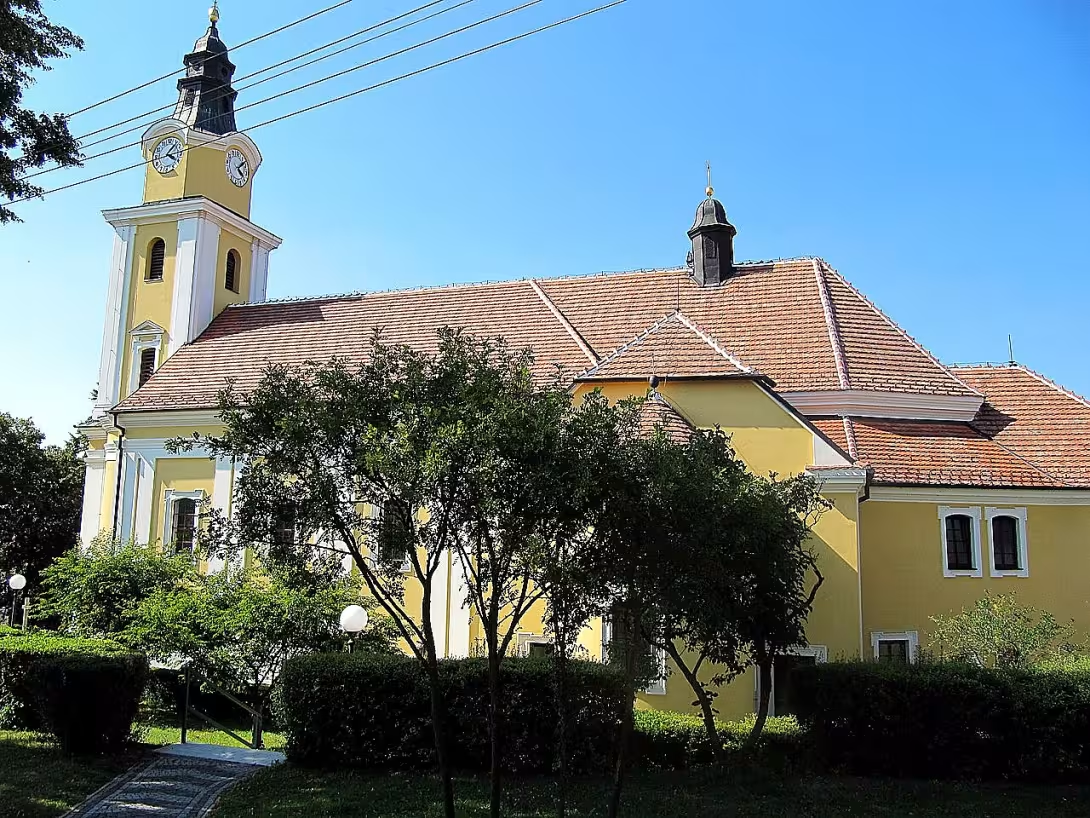
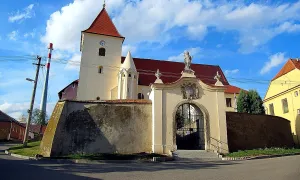
The Church of Saint Catherine in Mutěnice is a Roman Catholic church located in the village within the Hodonín District. This historical monument serves as the parish church for the local community and is protected as a cultural monument of the Czech Republic. Originally constructed between 1769 and 1775 under Queen Marie Terezie's patronage, it stands on the site of an older dilapidated church. The church is notable not only for its historical significance but also for substantial renovations in the mid-20th century that significantly altered its appearance.
Mutěnice dates back to 1348 when it was first mentioned in written records as a commandery belonging to the Knights Hospitaller. The village faced hardship during the Hussite Wars and later saw its parish and school dissolve during the Thirty Years' War, with the church itself being completely devastated. In 1718, Mutěnice began independent spiritual administration with the establishment of Capellania localis, a precursor to more autonomous ecclesiastical governance. By 1785, an independent Curatia localis was created for self-governance in spiritual matters.
The Church of Saint Catherine's architecture reflects its construction period between 1769 and 1775, with significant contributions from Queen Marie Terezie. Major renovations during the 1950s reshaped its structure: the choir loft was expanded, a sacristy added, annexes with oratories constructed, the Chapel of the Holy Sepulchre demolished, and the church tower raised. These changes culminated in the redecoration of the main altar, featuring images of Saint Catherine and the Holy Trinity.
Throughout its history, the Church of Saint Catherine has seen various administrative shifts. Initially under the spiritual jurisdiction of nearby Kyjov and Hodonín, it gained more autonomy with the establishment of Capellania localis in 1718 and later Curatia localis in 1785. These developments reflect broader trends within the Habsburg Monarchy during the late 18th century, a time marked by significant political and social changes influenced by Enlightenment ideas.
Key events include its construction under Queen Marie Terezie's patronage and the establishment of independent spiritual governance structures in the 18th century. These milestones underscore the church's evolving role within the community and its adaptation to changing ecclesiastical needs over time.
Today, the Church of Saint Catherine stands as a testament to both historical resilience and architectural evolution. It remains accessible to visitors interested in exploring its rich history and appreciating its cultural significance. The church is worth visiting not only for its architectural beauty but also for its role in reflecting broader historical narratives of Mutěnice and the region.
The Church of Saint Catherine offers a unique glimpse into the past, embodying centuries of religious, social, and political changes. Its preservation as a cultural monument ensures that future generations can continue to learn from and appreciate this remarkable site. Visitors are invited to explore its storied halls and experience firsthand the enduring legacy of Mutěnice's spiritual heart.
Then and now
Drag the slider to compare how the landmark may have looked when it was built with the view today.
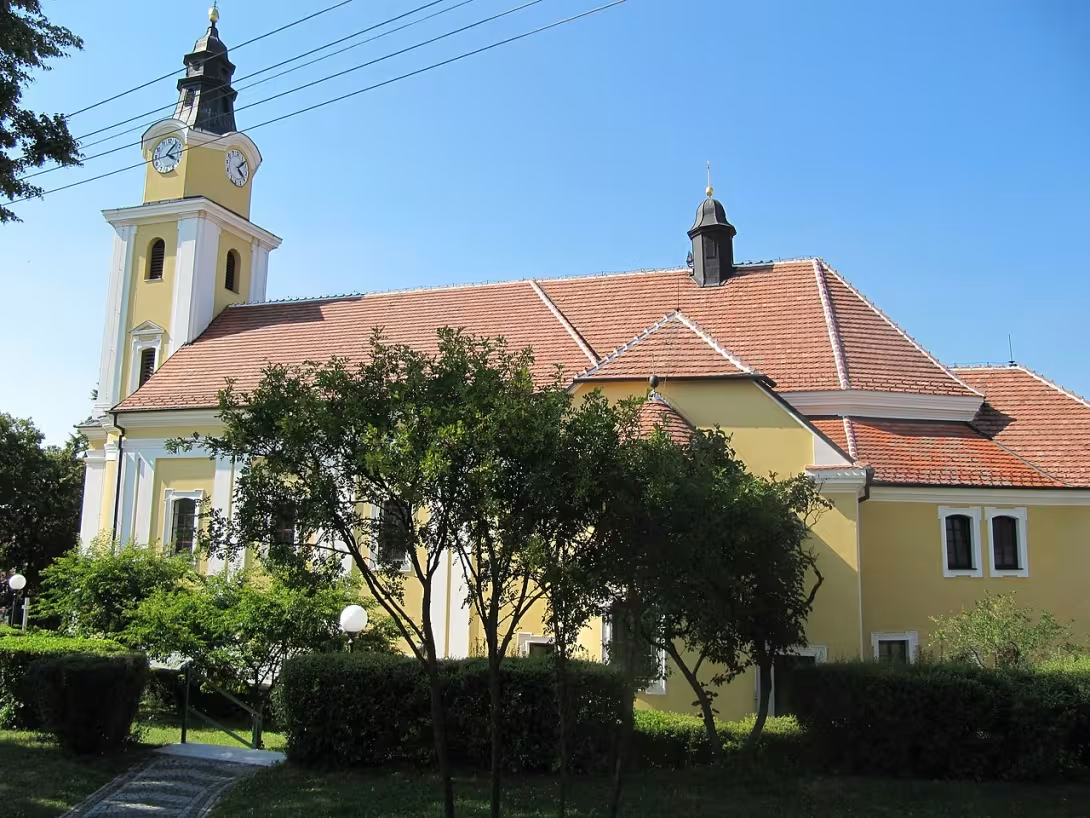
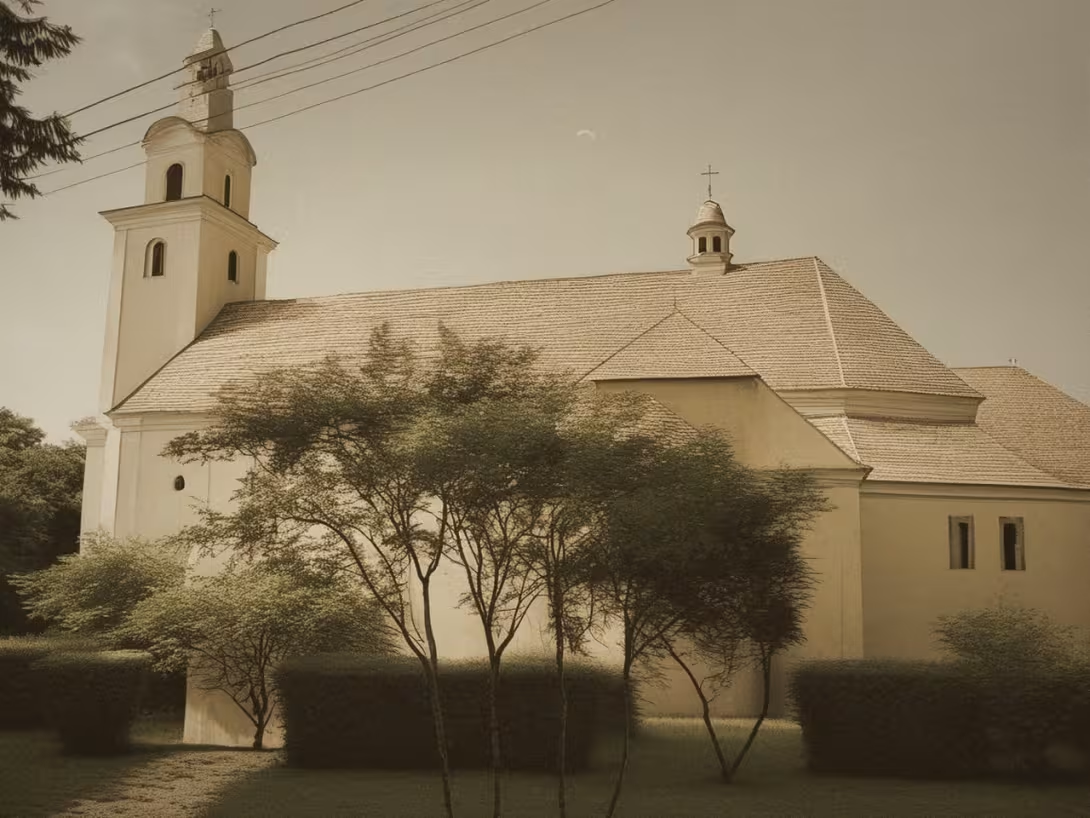
The historical appearance on the left is an AI-generated visualisation and serves as inspiration only.
Historical milestones
- 1718
- Establishment of Capellania localis in Mutěnice.
- 1785
- Creation of an independent Curatia localis.
Architectural development
The church was originally built between 1769 and 1775 with significant contributions from Queen Marie Terezie. It underwent major renovations in the 1950s, which included expanding the choir loft, adding a sacristy, constructing annexes with oratories, demolishing the Chapel of the Holy Sepulchre, raising the church tower, and redecorating the main altar.
Historical events
1348: First written mention of Mutěnice, indicating a commandery of the Knights Hospitaller existed at that time.
1718: Establishment of Capellania localis in Mutěnice, marking the beginning of independent spiritual administration.
1785: Creation of an independent Curatia localis, allowing for self-governance in spiritual matters.
Points of interest
- The Church of Saint Catherine was built on the site of an older church that had fallen into disrepair, reflecting a common practice of repurposing sacred sites in European history.
- During the Hussite Wars, Mutěnice faced significant hardship, and its parish and school were dissolved during the Thirty Years' War, with the church itself being completely devastated—a testament to the turbulent times affecting religious institutions in Central Europe.
- In 1718, Mutěnice established a Capellania localis for independent spiritual administration, marking an early move towards ecclesiastical self-governance within the region and reflecting broader shifts in church authority during that era.
- The major renovations of the 1950s not only altered the Church's structure but also included the demolition of the Chapel of the Holy Sepulchre, highlighting how mid-century modernization efforts impacted historical religious sites.
- Despite its turbulent history, including devastation during wars and significant architectural changes, the church has been preserved as a cultural monument, ensuring its stories and significance continue to be shared with future generations.
Guide
This guide is narrated by a synthetic voice generated by artificial intelligence.
Show guide text
This text was created by artificial intelligence and has not been editorially reviewed. It may contain inaccuracies.
Welcome to the Church of Saint Catherine in Mutěnice, a cherished cultural monument nestled in this serene village within the Hodonín District of Jihomoravský kraj. As you stand here, take a moment to absorb the tranquil presence of this Roman Catholic church, its architecture harmoniously blending with the surrounding landscape. It's more than just a structure; it’s a testament to faith and history.
The origins of this sacred site trace back to 1718 when Capellania localis was established in Mutěnice. This marked the beginning of a spiritual journey for the community. By 1785, an independent Curatia localis had been created, further solidifying the church's role as a pivotal religious center. The decision to build this new church between 1769 and 1775 came under the patronage of Queen Marie Terezie. Her influence was instrumental in replacing an old dilapidated church with one that would stand the test of time.
As you gaze upon the church, notice how it stands as a symbol of renewal and resilience. The architecture, though crafted by unknown architects, speaks volumes through its thoughtful design. Observe the details around you—the way light filters through the windows, casting patterns across the interior, inviting contemplation and reverence. Feel the history embedded in every stone, each one telling stories of the past.
One cannot discuss this church without acknowledging Queen Marie Terezie herself. Her patronage was not merely a political gesture but a deeply personal commitment to her people's spiritual well-being. Under her guidance, what began as a vision became a sanctuary for generations.
A fascinating aspect of this church is its connection to an older site, reflecting a common European tradition of repurposing sacred spaces. This practice underscores the enduring nature of faith and community across centuries. Additionally, during the tumultuous Hussite Wars, Mutěnice faced significant challenges, leading to the dissolution of its parish and school—a testament to the resilience of its people.
As you stand here today, let yourself be enveloped by the spirit of this place. Take your time to explore every corner, from the exterior's graceful lines to the interior's subtle intricacies. Each element invites you to delve deeper into its story.
We invite you to continue exploring Mutěnice and discover more about its rich history and cultural heritage. Thank you for visiting the Church of Saint Catherine—a place where past and present converge in a shared narrative of faith, resilience, and community. Safe travels as you uncover more wonders on your journey.
Frequently asked questions
Can the monument be visited?
Religious buildings are usually open mainly during services; at other times a visit is normally arranged with the parish or the operator. We have not verified specific times.
Where is the monument?
Location: Farní, Mutěnice, Jihomoravský kraj. The map on this page shows the exact spot.
Why is the monument protected?
It is listed in the Central List of Cultural Monuments of the Czech Republic as a cultural monument (register no. 15363/7-2344).
Businesses nearby
Do you run a restaurant, accommodation, shop, museum, rental, wellness or other visitor service near this monument? Show yourself directly to the people heading to it — this is how they will see you in the app and on the web:
Events nearby

Zdroj akcí: otevřená data měst a obcí ČR (Národní katalog otevřených dat) a kalendář akcí Národního památkového ústavu.
Accommodation nearby
Themed route
Thematic Walking Tour: Discovering Mutňany
Welcome to a delightful exploration of the historic village of Mutňany, where you'll immerse yourself in local culture and history with a focus on its architectural treasures.
1. Church of St. Catherine (Mutňany)
Type: Religious Site
Begin your journey at this stunning Baroque church dedicated to St. Catherine. Built in the 18th century, it stands as a testament to the rich religious and architectural heritage of the region. The church's intricate façade and serene interior are perfect for those interested in history and architecture.
2. Local Village Square
Type: Historical Site
Just a short walk from the church, visit the charming village square at the heart of Mutňany. This area offers a glimpse into traditional Moravian village life with its quaint houses and communal spaces that have hosted generations of locals.
3. Village Museum (Mutňany)
Type: Cultural Site
A short stroll from the square, this museum provides insights into the local history and culture. Exhibits showcase traditional crafts, historical artifacts, and stories about Mutňany's past, offering a deeper understanding of the village's heritage.
4. Village Park
Type: Recreational Area
Conclude your tour in the nearby park, where you can relax amidst nature after exploring the historical sites. The park offers scenic views and peaceful surroundings, making it an ideal spot to reflect on your journey through Mutňany.
Enjoy this immersive experience that combines history, culture, and natural beauty in a small but captivating corner of the Czech Republic.
Seasonal recommendations
Spring: Visiting the Church of Saint Catherine in Mutěnice during spring offers a unique experience as nature awakens around this historic site. The blooming of flowers and fresh greenery create a picturesque backdrop, enhancing the church's architectural beauty with natural light filtering through stained glass windows. This season is ideal for photography enthusiasts who wish to capture the interplay between architecture and nature. Visitors should be prepared for occasional rain showers, so carrying an umbrella or wearing waterproof shoes is advisable. The moderate weather makes it comfortable for walking around the area, but early mornings or late afternoons are recommended to avoid any unexpected downpours.
Summer: Summer at the Church of Saint Catherine in Mutěnice brings vibrant energy and long daylight hours, perfect for exploring the church's intricate details. The warm weather invites visitors to enjoy outdoor seating areas nearby, making it a great spot for a leisurely lunch or picnic. However, this is also peak tourist season, so expect larger crowds and plan accordingly by arriving early in the day to avoid the midday rush. Lightweight clothing and comfortable footwear are recommended due to higher temperatures. Don't forget sunscreen and a hat to protect against the sun while you soak in the lively atmosphere.
Autumn: Autumn transforms the Church of Saint Catherine into a serene haven with its warm, golden hues complementing the historic architecture. The cooler weather is ideal for leisurely strolls through the surrounding area, allowing visitors to fully appreciate the changing foliage and crisp air. As this season marks a quieter period in terms of tourism, it's an excellent time to enjoy the church without large crowds. Visitors should dress warmly with layers, as temperatures can vary significantly between day and night. Early morning visits are particularly enchanting when the light gently illuminates the stained glass windows.
Winter: Winter at the Church of Saint Catherine offers a tranquil experience, often shrouded in a blanket of snow that accentuates its gothic features. The chilly atmosphere creates a unique ambiance, with shorter daylight hours encouraging early visits to fully enjoy the church's interior and exterior lighting. Visitors should dress warmly in coats, hats, gloves, and scarves to stay comfortable during their exploration. Keep in mind that opening times may be reduced due to winter conditions, so checking ahead is advisable. Despite the cold, this season provides a peaceful setting for reflection and appreciation of the church's historical significance.
Visualizations and artistic views


The visualisations are generated by artificial intelligence and serve as inspiration.
Photos from the area
Real photos taken near the monument


Zdroj a licence jsou uvedeny u každého snímku.
Tips from visitors
No tips yet. Be the first!
Log in and add your tip.
Sources and literature
Photos: palickap / CC BY 3.0 — Wikimedia Commons. The author and licence also appear when you hover over the image.
Faktickým podkladem tohoto textu byl článek na Wikipedii, jehož autory jsou přispěvatelé Wikipedie. Článek je dostupný pod licencí CC BY-SA 4.0.
Location on the map



Příběhy a pověsti
Legendy, pověsti a příběhy spjaté s touto památkou

Fotografie návštěvníků
Zatím žádné fotografie. Buďte první, kdo přidá fotografii z návštěvy!
Log in a přidejte svou fotografii nebo hodnoťte.
Za ověřenou návštěvu v aplikaci získáte víc bodů — poznáme podle GPS, že jste na místě.
Reviews and comments