






Kostel svatého Antonína Paduánského (Brumovice) Church
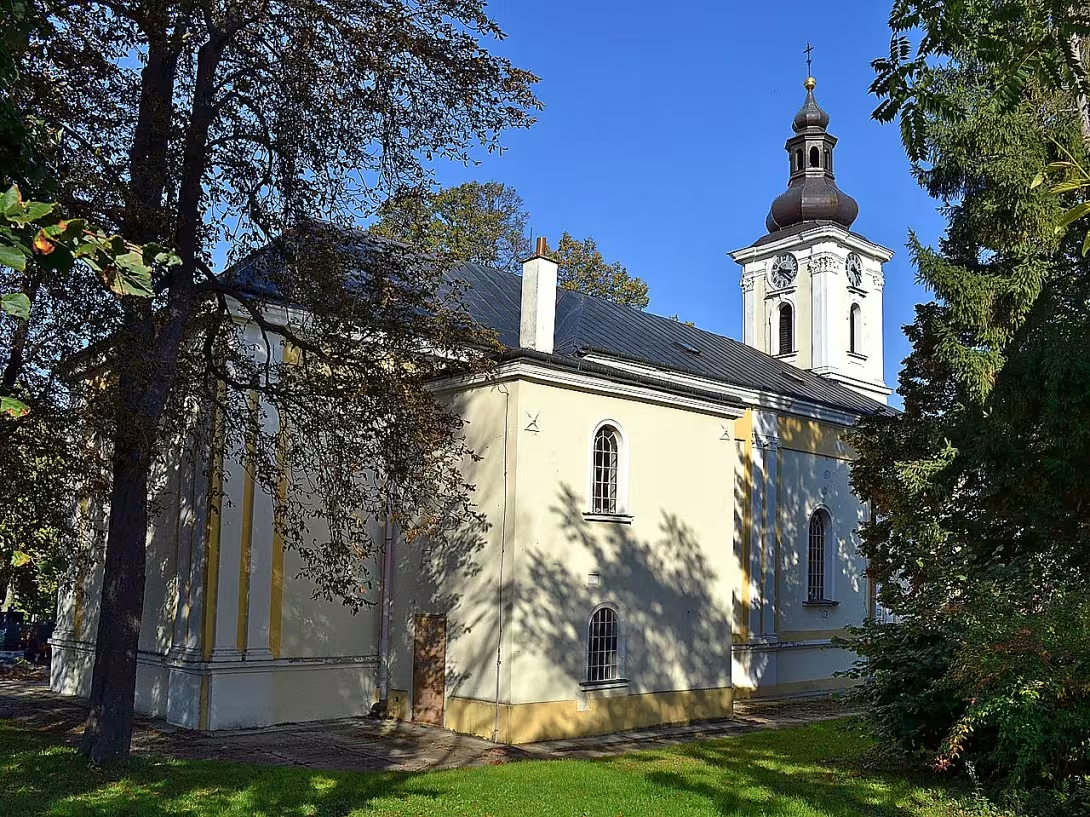
The Church of Saint Anthony of Padua in Brumovice is a Roman Catholic church located in the village of Brumovice within the Břeclav District, Jihomoravský Region. This historical monument reflects the religious and cultural transformations that have shaped Moravia over centuries. First mentioned in 1478, it has evolved into an architectural landmark with Baroque influences.
The church's origins are linked to broader religious shifts in Moravia during the late Middle Ages and early modern period. Initially recorded in 1478, it likely served as a Catholic place of worship, following common practices of the time. By 1541, Jan z Lipé took control over the local estate and aligned with the Unity of the Brethren, a Protestant movement. This shift led to the establishment of a congregation under Čeněk z Lipé's patronage by 1581, marking a significant religious change in Brumovice.
Following the Battle of White Mountain in 1620, re-Catholicization efforts began across Bohemia and Moravia. In Brumovice, these were complicated by the absence of a local Catholic priest after the church burned down in 1637. The community was temporarily affiliated with Kobylí until Marie Antonie z Lichtenštejna initiated the construction of a chapel dedicated to Saint Anthony of Padua in 1716. This chapel expanded into a full-fledged church by 1784.
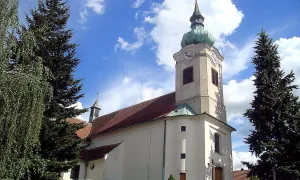
Architecturally, the Church of Saint Anthony of Padua features a single-nave design with a square presbytery and an attached sacristy. Its façades have recessed panels housing semi-circular windows, while the entrance is marked by a cross-vaulted portico. Between 1901 and 1903, significant modifications included adding a new Baroque entrance with a tower, altering the façade, and reconstructing the sacristy and oratory.
Throughout its history, influential figures have shaped the church. Jan z Lipé's alignment with the Unity of the Brethren and Čeněk z Lipé's patronage were pivotal in establishing a Protestant congregation. Later, Marie Antonie z Lichtenštejna played a crucial role in rebuilding and expanding the church after its destruction.
Today, the Church of Saint Anthony of Padua stands as a protected cultural monument, embodying Brumovice's rich historical tapestry. Its architectural evolution and resilience through periods of religious upheaval make it a focal point for understanding Moravian heritage. Visitors are invited to explore this remarkable site, where history and architecture converge to tell the story of faith and transformation in Central Europe.
Then and now
Drag the slider to compare how the landmark may have looked when it was built with the view today.
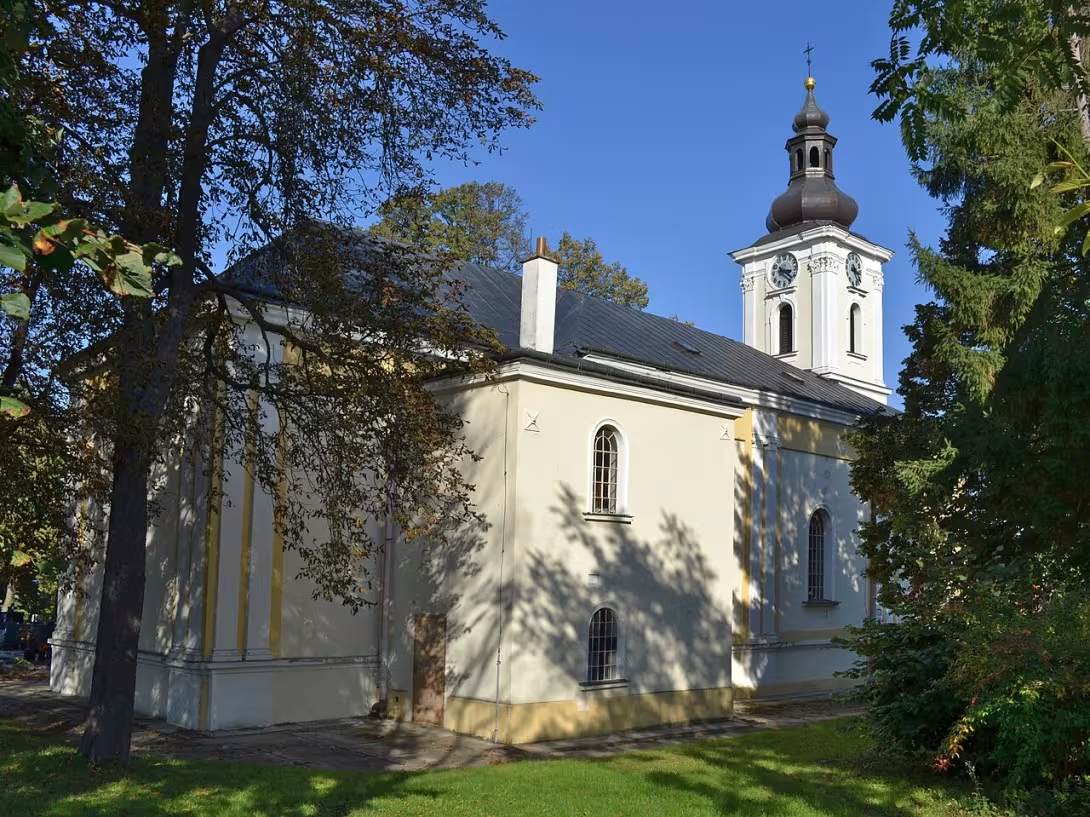

The historical appearance on the left is an AI-generated visualisation and serves as inspiration only.
Historical milestones
- 1478
- The church was first mentioned.
- 1581
- A congregation of the Unity of the Brethren was established.
- 1637
- The church burned down following re-Catholicization efforts.
Architectural development
Initially mentioned as a chapel in 1478, it became part of the Unity of the Brethren community by 1581. After burning down in 1637, it was rebuilt into a church by Marie Antonie z Lichtenštejna in 1716 and expanded in 1784. Further modifications occurred between 1901-1903, adding a new Baroque entrance with a tower and altering the façade.
Historical events
In 1478, the church was first mentioned in historical records.
By 1581, a congregation of the Unity of the Brethren had been established under Čeněk z Lipé's patronage.
The church burned down in 1637 following the Battle of White Mountain and subsequent re-Catholicization efforts.
Points of interest
- The Church of Saint Anthony of Padua in Brumovice was first mentioned in 1478 and has evolved into an architectural landmark with Baroque influences. - By 1541, Jan z Lipé aligned the local estate with the Unity of the Brethren, a Protestant movement, marking a significant religious change in Brumovice. - After the Battle of White Mountain in 1620, re-Catholicization efforts began across Bohemia and Moravia; in Brumovice, these were complicated by the absence of a local Catholic priest after the church burned down in 1637. - Marie Antonie z Lichtenštejna initiated the construction of a chapel dedicated to Saint Anthony of Padua in 1716, which expanded into a full-fledged church by 1784. - Between 1901 and 1903, significant modifications included adding a new Baroque entrance with a tower, altering the façade, and reconstructing the sacristy and oratory.
Guide
This guide is narrated by a synthetic voice generated by artificial intelligence.
Show guide text
This text was created by artificial intelligence and has not been editorially reviewed. It may contain inaccuracies.
The Church of Saint Anthony of Padua in Brumovice on the Břeclavsko region is a Roman Catholic parish church of the Brumovice parish on Moravia. It is protected as a cultural monument of the Czech Republic.
The church with its rectory is explicitly mentioned in the community as early as 1478. Whether it was Catholic at that time is uncertain. However, subjects usually followed their lords in matters of faith, so it can be assumed. Change came with John of Lipá, who took control of the manor in 1541 and joined the Hussite Church. During the 16th century, members of the Hussite Church settled in Brumovice. Čeněk of Lipá granted them a place below the church to establish their congregation. It was consecrated in 1581.
After the Battle of White Mountain in 1620, recatholicization began in the land. However, Brumovice did not have its own Catholic priest, and in 1637 the church also burned down. The parish was therefore attached to Kobylí.
The present building dates back to 1716. At that time, Marie Antonie of Liechtenstein had a chapel of Saint Anthony of Padua built here. In 1784, the chapel was enlarged into a church. During renovations in 1798, the originally flat-ceilinged nave received a vault. Between 1901 and 1903, the nave was extended with a Neo-Baroque entrance section with a tower. At the same time, the facade divisions were modified, the sacristy with an oratory was rebuilt, and a musical gallery was installed in the church.
The church is single-naved. It has a set-back presbytery with a square ground plan, and a four-sided sacristy adjoins its southern wall. The facades are articulated by recessed panels in which windows are topped with semicircular arches. The church is entered through a cross-vaulted space under the tower. The sacristy and oratory have flat ceilings. The interior furnishings are uniform, in a historically romantic style, and date from the 1870s.
Frequently asked questions
Can the monument be visited?
Religious buildings are usually open mainly during services; at other times a visit is normally arranged with the parish or the operator. We have not verified specific times.
Where is the monument?
Location: Brumovice, Jihomoravský kraj. The map on this page shows the exact spot.
Why is the monument protected?
It is listed in the Central List of Cultural Monuments of the Czech Republic as a cultural monument (register no. 1000124307).
Businesses nearby
Do you run a restaurant, accommodation, shop, museum, rental, wellness or other visitor service near this monument? Show yourself directly to the people heading to it — this is how they will see you in the app and on the web:
Accommodation nearby
Themed route
Tematická výletní trasa: Kostel svatého Antonína Paduánského (Brumovice)
1. Kostel svatého Antonína Paduánského (Brumovice) - Typ: Náboženská památka - Proč stojí za návštěvu: Tento barokní kostel je nejen architektonickou perli, ale také důležitým kulturním a historickým centrem pro místní obyvatelstvo. Jeho bohatě zdobená interiér a významné umělecké prvky přitahují návštěvníky, kteří chtějí pochopit duchovní i kulturní dědictví regionu.
2. Obecní úřad Brumovic - Typ: Administrativní budova - Proč stojí za návštěvu: Umístěný blízko kostela, obecní úřad nabízí vhled do místní správy a historie Brumovic. Návštěvníci zde mohou seznámit s dějinami obce a aktuálními iniciativami zaměřenými na rozvoj komunity.
3. Náves v centru Brumovic - Typ: Místní veřejný prostor - Proč stojí za návštěvu: Náves je živoucím srdcem obce, kde se místní i návštěvníci setkávají. Je to místo pro relaxaci a poznání každodenního života v Brumovicích, nabízející možnost prohlédnout si tradiční obchody a restaurace.
4. Památník válečných zesnulých - Typ: Památník - Proč stojí za návštěvu: Tento památník je významnou místní památkou, která připomíná oběti válek. Je to místo pro meditaci a uctění památky těch, kteří zde žili a bojovali, poskytující hluboký pohled na historii regionu.
Tato trasa nabízí návštěvníkům komplexní pohled na kulturní, historické a duchovní aspekty Brumovic, vše zahrnující do jednoho uspořádaného výletu.
Seasonal recommendations
Spring: Visiting the Church of Saint Anthony of Padua during spring offers a unique experience as nature awakens around Brumovice. The blooming flowers and vibrant greenery create an enchanting atmosphere, enhancing the historical charm of the church with natural beauty. This season is characterized by mild weather, making it comfortable for walking tours in the surrounding areas. Visitors should wear layers to accommodate changing temperatures throughout the day. As spring attracts nature enthusiasts, it's advisable to arrive early to enjoy a quieter visit before larger crowds gather.
Summer: Summer at the Church of Saint Anthony of Padua is marked by long daylight hours and warm weather, perfect for exploring both indoors and outdoors. The lush surroundings are in full bloom, offering picturesque views that complement the church’s architecture. During this season, it's common to see more visitors, especially during peak tourist times, so planning your visit on weekdays or arriving early can help avoid crowds. Light clothing is recommended due to the heat, and carrying water is essential for a comfortable experience.
Autumn: Autumn brings a magical transformation to Brumovice as the leaves change color, creating a stunning backdrop for the Church of Saint Anthony of Padua. The cooler temperatures make it an ideal time for leisurely walks through the area, with fewer tourists compared to summer months. This season offers a serene atmosphere, perfect for photography enthusiasts looking to capture the church amidst autumn hues. Visitors should dress warmly in layers and consider bringing a light jacket as evenings can be chilly.
Winter: Winter at the Church of Saint Anthony of Padua presents a quiet and introspective experience, with snow often blanketing the landscape, adding a touch of tranquility to the historic site. The shorter days mean that visits are best planned during daylight hours; however, the church’s interior remains invitingly warm against the cold outside.
Visualizations and artistic views


The visualisations are generated by artificial intelligence and serve as inspiration.
Photos from the area
Real photos taken near the monument


Zdroj a licence jsou uvedeny u každého snímku.
Tips from visitors
No tips yet. Be the first!
Log in and add your tip.
Sources and literature
Photos: RomanM82 / CC BY-SA 4.0 — Wikimedia Commons. The author and licence also appear when you hover over the image.
Faktickým podkladem tohoto textu byl článek na Wikipedii, jehož autory jsou přispěvatelé Wikipedie. Článek je dostupný pod licencí CC BY-SA 4.0.
Location on the map




Příběhy a pověsti
Legendy, pověsti a příběhy spjaté s touto památkou
Fotografie návštěvníků
Zatím žádné fotografie. Buďte první, kdo přidá fotografii z návštěvy!
Log in a přidejte svou fotografii nebo hodnoťte.
Za ověřenou návštěvu v aplikaci získáte víc bodů — poznáme podle GPS, že jste na místě.
Reviews and comments