



Kostel svatého Antonína Paduánského (Heřmanice v Podještědí) Church
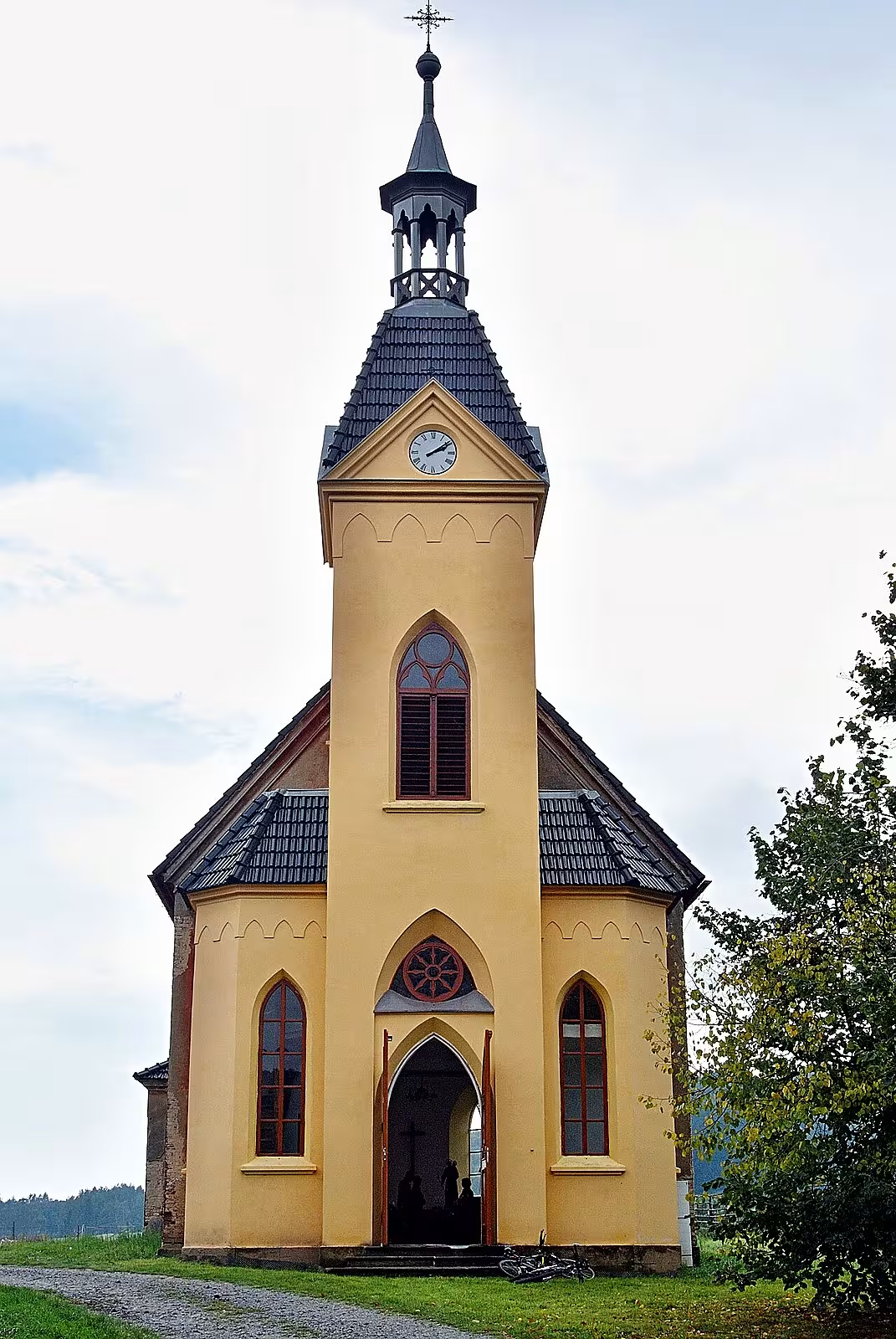
The Church of Saint Anthony of Padua in Heřmanice v Podještědí is a Roman Catholic sacred building constructed in 1896. It features pseudogothic architecture and holds cultural heritage status within the Czech Republic. Located at the village's heart, it serves as a filial to the Roman Catholic parish of Jablonné v Podještědí. Its architectural style reflects the historicism period's revival of medieval elements, making it an important example of late 19th-century Bohemian cultural and architectural developments.
Built in 1896 by predominantly German-speaking local residents, this church emerged during a time when Bohemia experienced significant cultural and architectural changes influenced by historicism. This era saw renewed interest in medieval styles, including Gothic elements, evident in the church's pseudogothic design. The construction reflects both the community's religious devotion and its engagement with broader European artistic trends.
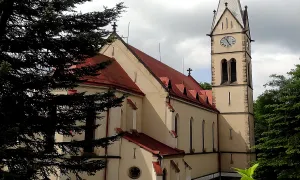
Architecturally, the Church of Saint Anthony of Padua features a non-orientated rectangular layout with a distinctive five-sided apse. Its facade includes three pseudo-gothic windows with pointed arches, while the interior retains simple neo-Gothic furnishings. The roof is saddle-shaped and covered with dark glazed tiles, enhancing its historical aesthetic. A notable feature of the church's exterior is its tower, topped with a spire that adds vertical emphasis to the structure. Despite damage to its plasterwork, remnants indicate the original paint was red, contributing to its historic charm.
Throughout its history, the church has undergone various changes and restorations. As of June 2017, reconstruction efforts focused on repairing the roof and tower. These ongoing projects highlight the community's commitment to preserving this cultural landmark for future generations.
In front of the church stands a baroque statue of Saint John Nepomucene, positioned on a new pedestal, adding historical interest to the site. This statue complements the church's architectural style and enhances its visual appeal.
Today, the Church of Saint Anthony of Padua remains accessible to visitors interested in exploring its rich history and unique architecture. Ongoing restoration efforts ensure it continues as a well-preserved example of pseudogothic design from the historicism period. Its cultural significance and architectural beauty make it a worthwhile destination for those visiting Heřmanice v Podještědí, offering insights into the region's historical and artistic heritage.
The Church of Saint Anthony of Padua stands as a testament to the cultural and architectural aspirations of its time. Visitors are invited to explore this historic site, where they can appreciate both its aesthetic qualities and its role in the local community's spiritual life.
Then and now
Drag the slider to compare how the landmark may have looked when it was built with the view today.
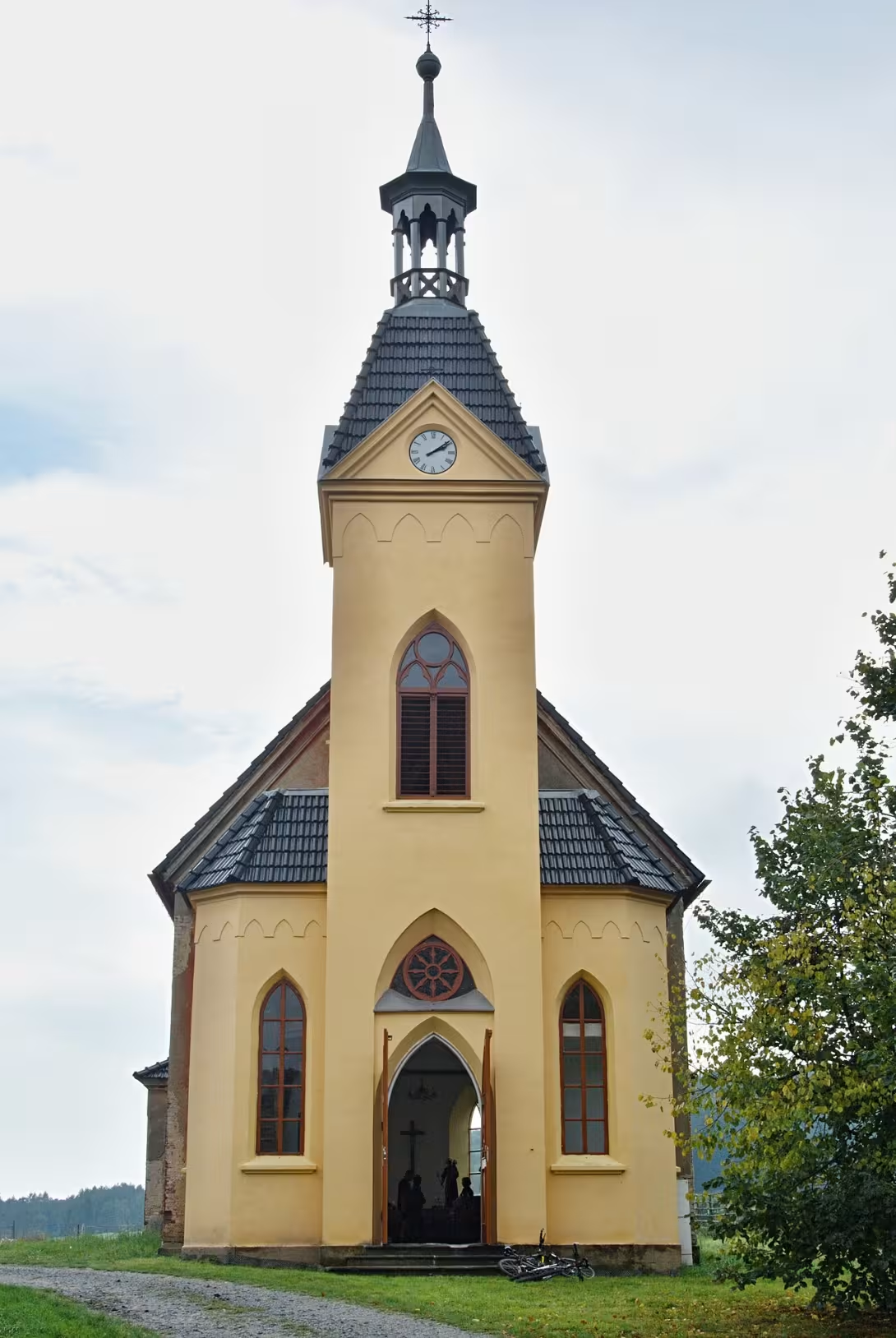

The historical appearance on the left is an AI-generated visualisation and serves as inspiration only.
Historical milestones
- 1896
- Výstavba kostela svatého Antonína Paduánského v Heřmanicích v Podještědí.
- 19. století
- Období historicismu s obnoveným zájmem o gotickou architekturu.
- 2017
- Rekonstrukce střechy a věže kostela.
Architectural development
Constructed in a pseudogothic style typical of the historicism period, the church features a non-orientated rectangular layout with a five-sided apse. The facade includes three pseudo-gothic windows with pointed arches, while the interior retains simple neo-Gothic furnishings. Recent restoration efforts have focused on repairing the roof and tower.
Historical events
The church was built in 1896 by predominantly German-speaking local residents.
As of June 2017, the church is undergoing gradual reconstruction, including repairs to its roof and tower.
Points of interest
- The Church of Saint Anthony of Padua was constructed in 1896 by a predominantly German-speaking community, reflecting the multicultural influences present in Bohemia during that era.
- Despite its pseudogothic design, the church features a non-traditional rectangular layout with a five-sided apse, showcasing an innovative blend of architectural styles typical of the historicism period.
- The original paint on the church's plasterwork was red, which adds to its historical charm and reflects the vibrant aesthetic choices made during its construction in the late 19th century.
- A baroque statue of Saint John Nepomucene stands before the church on a new pedestal, highlighting the blending of different artistic periods and styles at this site.
- The ongoing restoration efforts since June 2017 demonstrate the community's dedication to preserving this cultural landmark, ensuring its survival as an important example of Bohemian architectural history.
Guide
This guide is narrated by a synthetic voice generated by artificial intelligence.
Show guide text
This text was created by artificial intelligence and has not been editorially reviewed. It may contain inaccuracies.
The Church of Saint Anthony of Padua stands in the middle of the village of Heřmanice in Podještědí, southwest of the main road. It was built in eighteen ninety-six by local inhabitants who were predominantly of German nationality. Today it is a branch church of the Roman Catholic parish of Jablonné in Podještědí and is protected as a cultural monument of the Czech Republic.
The structure was built in the neo-Gothic style, that is, in the spirit of imitating medieval Gothic. It has a rectangular floor plan and is not oriented, which means that the chancel does not point towards the east, as was customary. The nave ends in a five-sided chancel. The gabled roof is covered with dark glazed tiles.
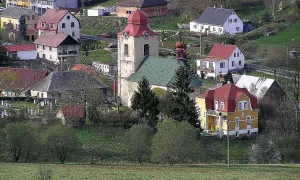
Three windows with pointed arches on the side wall, which are reminiscent of Gothic, divide the wall. Below them runs a small arch pattern created in mortar. The presbytery, which is the space around the main altar, has the same windows. Adjoining it on the sides are the sacristy and vestibule, both with hip roofs. The southwest façade with the entrance is emphasized by a protruding prismatic tower. It bears a spire roof, which is topped by a lantern and a finial.
The articulation of the façade and the craftsmanship details correspond to the neo-Gothic style of the entire building. The plaster was very much damaged, in places down to the bare masonry. Nevertheless, you can see that the church originally had a red coating. From the interior furnishings, only fragments remain, neo-Gothic and simple.
The church is gradually being restored. By two thousand seventeen it received a new roof and the tower was plastered and work continued inside as well.
In front of the church entrance stands a Baroque statue of Saint John of Nepomuk. It is therefore older than the church itself and today it stands on a new pedestal.
Tips for visitors
The best time to visit the Church of Saint Anthony of Padua in Heřmanice v Podještědí is during late spring or early autumn. During these months, the weather is typically mild and pleasant, making it ideal for exploring the church and its surroundings. Additionally, visiting outside of peak tourist seasons can provide a more serene experience with fewer crowds, allowing you to appreciate the pseudogothic architecture in peace.
The area around Heřmanice v Podještědí is accessible by both car and public transport. It's advisable to check current routes and schedules in advance using a transportation search tool.
When planning your visit, consider bringing comfortable walking shoes as exploring the church grounds may involve some walking. A camera or smartphone is recommended for capturing the architectural details of the pseudogothic style, especially during golden hours—early morning or late afternoon—when natural light enhances the building's features. Don't forget to bring a hat and sunscreen if visiting in warmer months.
For families with children, the church visit can be educational and enjoyable. The historical significance and architectural beauty of the Church of Saint Anthony of Padua offer an opportunity for learning about religious history and architecture. To keep young visitors engaged, consider bringing along a small sketchbook or camera to capture interesting details they notice. Additionally, exploring nearby areas within 30 minutes' travel can provide further activities, such as walking through local landscapes.
In the vicinity of Heřmanice v Podještědí, there are several attractions worth visiting within a 30-minute drive. The Ještěd Tower in Liberec offers panoramic views and is an architectural marvel itself. Another nearby site is the Broumov Monastery, known for its stunning Baroque architecture and beautiful gardens. These locations provide additional cultural and historical insights, making them perfect extensions to your visit.
Frequently asked questions
Can the monument be visited?
Religious buildings are usually open mainly during services; at other times a visit is normally arranged with the parish or the operator. We have not verified specific times. According to the heritage register restoration is under way, so access may be restricted.
Where is the monument?
Location: Heřmanice v Podještědí, Liberecký kraj. The map on this page shows the exact spot.
Why is the monument protected?
It is listed in the Central List of Cultural Monuments of the Czech Republic as a cultural monument (register no. 101494).
Businesses nearby
Do you run a restaurant, accommodation, shop, museum, rental, wellness or other visitor service near this monument? Show yourself directly to the people heading to it — this is how they will see you in the app and on the web:
Events nearby
Zdroj akcí: otevřená data měst a obcí ČR (Národní katalog otevřených dat) a kalendář akcí Národního památkového ústavu.
Accommodation nearby
Trips and activities nearby
Guided tours, tickets and activities nearby from GetYourGuide
Affiliate link: if you buy from the partner, we may receive a commission. The price for you does not change.
Search tours and activities →Themed route
Tematická výletní trasa: Kostel svatého Antonína Paduánského a jeho okolí
1. Kostel svatého Antonína Paduánského (Heřmanice v Podještědí)
Typ: Religiózní památka
Proč stojí za návštěvu: Tento barokní kostel je nejenom duchovním centrem obce, ale také architektonickou perli s bohatými historickými a uměleckými prvky. Jeho interiér nabízí návštěvníkům pohled na krásné fresky a sochy, které představují duchovní hodnoty této oblasti.
2. Náves v Heřmanicích
Typ: Místní centrum
Proč stojí za návštěvu: Náves je srdcem obce, kde se nachází mnoho tradičních domů a malého kostela svaté Anny. Je to místo pro relaxaci a prohlédnutí si místního života, kde lze také objevit některé starodávné zvyky a tradice.
3. Památný les u Heřmanic
Typ: Přírodní památka
Proč stojí za návštěvu: Tento les je domovem řady vzácných druhů rostlin a zvířat. Je ideálním místem pro krátkou procházku, kde si můžete užít klidné chvilky v přírodě a ocenit původní lesní krajinu s jejími jedinečnými ekosystémy.
4. Starodávné hřbitovy Heřmanic
Typ: Historická památka
Proč stojí za návštěvu: Hřbitovy jsou svědky historie obce a nabízejí pohled na starobylé epitafy a sochy. Je to místo, kde můžete pochopit historický vývoj obce a uctít památku předků.
Tato trasa nabízí návštěvníkům komplexní pohled na kulturní a přírodní bohatství oblasti Heřmanic v Podještědí, kde každý bod má svou jedinečnou historii a krásu.
Seasonal recommendations
Spring: The arrival of spring breathes new life into the surroundings of St. Anthony of Padua Church, with nature awakening and blossoming around Heřmanice v Podještědí. This season is characterized by vibrant colors as wildflowers blanket the landscape, creating a picturesque setting for visitors. The gentle warmth of the sun enhances the natural beauty, making it an ideal time for photography enthusiasts to capture the church amidst its blooming environment. While the church itself remains under reconstruction, the surrounding area offers a serene atmosphere perfect for leisurely walks. Visitors should consider wearing comfortable layers as temperatures can fluctuate, and early mornings are recommended to avoid larger crowds that gather later in the day.
Summer: Summer at St. Anthony of Padua Church is marked by long daylight hours and warm weather, inviting visitors to explore the area during its peak season. The lush greenery surrounding the church provides a refreshing backdrop for outdoor activities, such as picnicking or hiking in nearby trails. This is an excellent time to appreciate the natural beauty, although it's advisable to arrive early due to increased visitor numbers attracted by the pleasant weather. Sunscreen and hats are recommended to protect against the strong summer sun, and carrying water is essential to stay hydrated during your visit.
Autumn: Autumn transforms Heřmanice v Podještědí into a kaleidoscope of colors, with leaves turning shades of red, orange, and yellow around St. Anthony of Padua Church. The cooler temperatures create a cozy atmosphere, perfect for enjoying the picturesque scenery without the summer crowds. This season offers a unique opportunity to witness the church in harmony with the vibrant fall foliage. Visitors should dress warmly in layers to accommodate the changing weather and consider bringing a camera to capture the stunning autumnal landscape. Late afternoon visits are particularly enchanting as the setting sun casts golden hues over the area.
Winter: Winter at St. Anthony of Padua Church presents a serene and tranquil experience, with snow often blanketing the surrounding Podještědí region. The church takes on a mystical appearance under the soft glow of winter light, offering a peaceful retreat from the bustling holiday season elsewhere. While some paths may be less accessible due to snow, those that are open provide a picturesque setting for winter walks or photography. Visitors should dress warmly in insulated clothing and wear comfortable footwear suitable for potentially snowy conditions. Early visits are advisable as daylight hours are shorter, allowing more time to enjoy the church's quiet beauty amidst the winter landscape.
Visualizations and artistic views


The visualisations are generated by artificial intelligence and serve as inspiration.
Photos from the area
Real photos taken near the monument


Zdroj a licence jsou uvedeny u každého snímku.
Tips from visitors
No tips yet. Be the first!
Log in and add your tip.
Sources and literature
Photos: Koprovka / CC BY-SA 4.0 — Wikimedia Commons. The author and licence also appear when you hover over the image.
Faktickým podkladem tohoto textu byl článek na Wikipedii, jehož autory jsou přispěvatelé Wikipedie. Článek je dostupný pod licencí CC BY-SA 4.0.
Location on the map
Příběhy a pověsti
Legendy, pověsti a příběhy spjaté s touto památkou
Fotografie návštěvníků
Zatím žádné fotografie. Buďte první, kdo přidá fotografii z návštěvy!
Log in a přidejte svou fotografii nebo hodnoťte.
Za ověřenou návštěvu v aplikaci získáte víc bodů — poznáme podle GPS, že jste na místě.
Reviews and comments