






Kostel svatého Apolináře (Modlany) Church
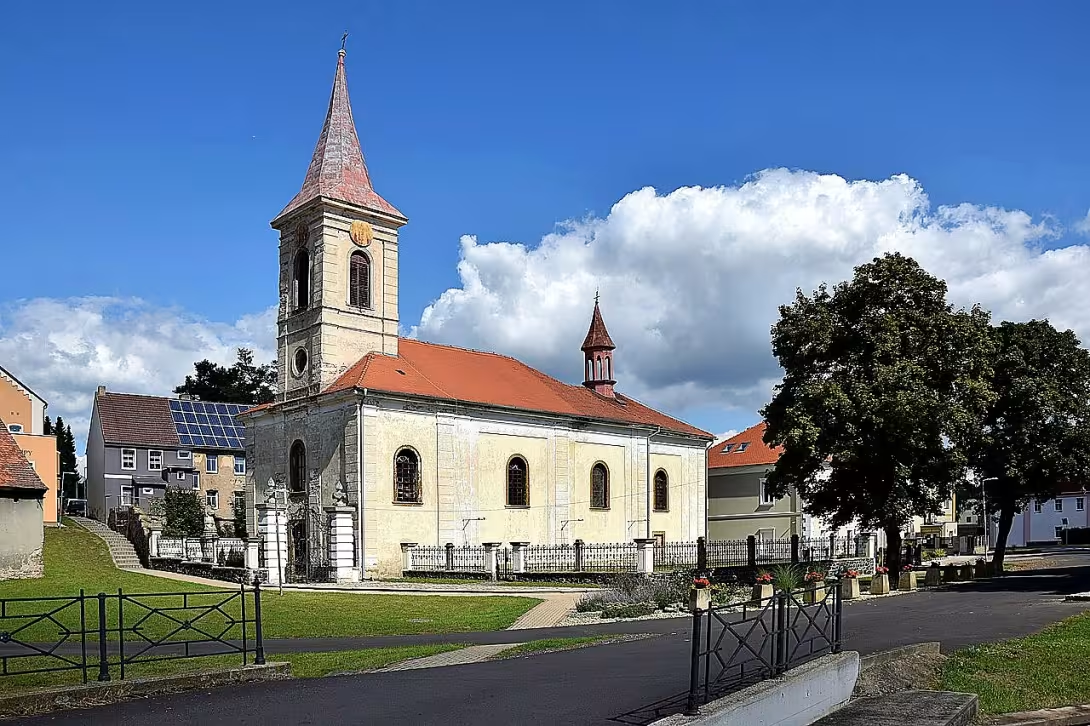
The Church of Saint Apollinaris in Modlany is an early Baroque church situated at the village square's center, serving as a focal point. Built between 1687 and 1691, it replaced a medieval structure and underwent significant changes in the mid-19th century when it was heightened and redesigned in a neoclassical style. Since 1987, this architectural gem has been protected as a cultural monument due to its historical significance and enduring appeal.
The church's origins date back to the late 17th century during a period of religious and architectural developments within Bohemia, part of the Habsburg Monarchy at that time. Jan Mark Clary-Aldringen, owner of the Teplice estate, funded its construction. This era saw the flourishing of the Baroque style, aligning with the Counter-Reformation's emphasis on grandeur and emotional engagement in church architecture.
Architecturally, the Church features a single nave with an attached rectangular presbytery and a pyramidal tower serving as an attic structure. The facades are defined by bossed pilasters, while the windows are semi-circular. Inside, the presbytery has cross-vaulting, contrasting with the flat ceiling of the nave. These elements reflect both its original Baroque design and later neoclassical modifications.
Ownership transitioned to the municipality of Modlany in May 2021, marking a new chapter in its stewardship. Historically, it has been under various spiritual administrators, as detailed on the Římskokatolická farnost Modlany website.
The church houses several notable features and artifacts. Among these is a late Gothic Madonna sculpture from around 1500, housed in one of the side altars, valued for its polychromed artistry. Additionally, the western tower contains a bell cast by Wolf Hilger in 1548 and a smaller bell from 1739 by Christoph Ullmann. The church's interior includes modern main and side altars dating back to the late 19th century.
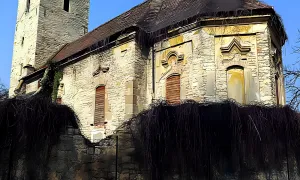
The surrounding area adds to its historical charm. Adjacent to the west facade are baroque iron gates from around 1760, featuring intricate plant motifs. To the north lies an old cemetery enclosed by stone walls, while a former rectory repurposed since before World War II is located to the east. The village also hosts two other cultural monuments: a statue of Saint Anthony from 1725 and a statue of Saint John Nepomucene from 1721.
Today, the Church of Saint Apollinaris remains accessible for visitors, offering insights into its rich history and architectural evolution. Its designation as a cultural monument underscores its importance within the region's heritage. Visitors are invited to explore this remarkable church, appreciating both its historical significance and artistic beauty.
Then and now
Drag the slider to compare how the landmark may have looked when it was built with the view today.
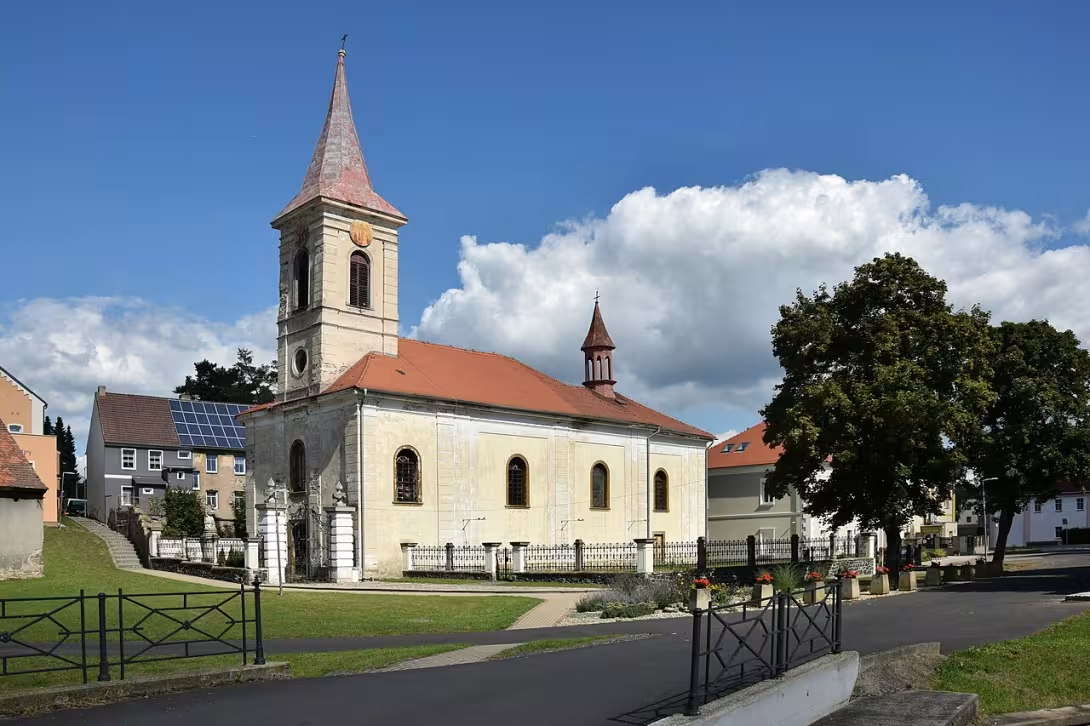
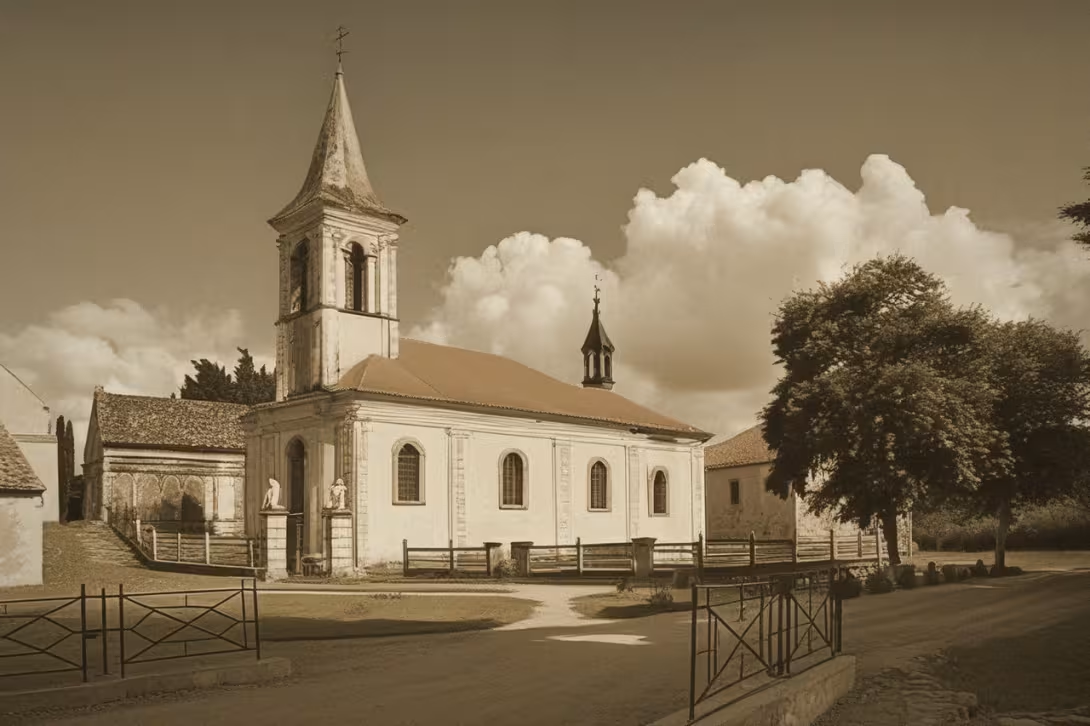
The historical appearance on the left is an AI-generated visualisation and serves as inspiration only.
Historical milestones
- 1687-1691
- Construction of the early Baroque church.
- 1987
- The church was designated as a cultural monument.
Architectural development
Originally built in the late 17th century, the Church of Saint Apollinaris underwent significant changes around the mid-19th century. It was heightened and received a neoclassical redesign during this period, which also influenced its interior furnishings. The church features a single nave with an attached rectangular presbytery and a pyramidal tower that serves as an attic structure.
Historical events
- 1687-1691
- Construction of the early Baroque church.
- 1987
- The church was designated as a cultural monument.
Owners
The church's construction was funded by Jan Mark Clary-Aldringen, the owner of the Teplice estate at that time. In May 2021, ownership transferred to the municipality of Modlany.
Points of interest
- The Church of Saint Apollinaris was initially built during a time when Bohemia was part of the Habsburg Monarchy, reflecting broader European political dynamics and cultural exchanges that influenced its architectural style.
- Despite being an early Baroque church, it underwent significant neoclassical redesign in the mid-19th century, showcasing how architectural styles evolve and are repurposed over centuries to meet contemporary tastes or needs.
- The bell housed within the western tower was cast by Wolf Hilger in 1548, predating the church itself. This suggests that parts of the church's current structure were built around existing artifacts, integrating history into its fabric.
- Adjacent baroque iron gates from around 1760 feature intricate plant motifs, highlighting the craftsmanship and aesthetic values of the Baroque period beyond just architecture, extending to decorative arts as well.
- The transition of ownership to the municipality of Modlany in May 2021 marks a shift towards local stewardship, reflecting broader trends in preserving cultural heritage at community levels rather than private or ecclesiastical hands.
Guide
This guide is narrated by a synthetic voice generated by artificial intelligence.
Show guide text
This text was created by artificial intelligence and has not been editorially reviewed. It may contain inaccuracies.
Welcome to the enchanting village of Modlany, where history and architecture blend seamlessly into a picturesque tapestry before your eyes. You stand on the charming village square, with the Church of Saint Apollinaris as its focal point, inviting you to explore its rich past and architectural splendor.
Constructed between 1687 and 1691, this early Baroque church replaced an older medieval structure, marking a significant transformation in Modlany's skyline. During this period, Bohemia was part of the expansive Habsburg Monarchy, a time when cultural exchanges across Europe influenced local architecture significantly. As you gaze upon the church, imagine it rising from the ground during a vibrant era of artistic and architectural evolution.
The Church of Saint Apollinaris is not just an architectural marvel but also a historical tapestry woven with stories and transformations. Initially built in the Baroque style, its design reflects the grandeur typical of that period—notice the symmetry and harmony as you look at its façade. However, this church has witnessed significant changes over time. In the mid-19th century, it underwent substantial modifications, including heightening and a redesign in the neoclassical style, which also influenced much of its interior furnishings.
As you walk around the church, take a moment to appreciate these architectural elements—the blend of Baroque foundations with Neoclassical enhancements that give this structure its unique character. The church's role as a cultural monument since 1987 underscores its historical and aesthetic significance in Modlany.
Among the notable figures associated with this site is Jan Mark Clary-Aldringen, whose influence can be felt in the history of the region. His contributions to the area during his time add depth to your understanding of this church's place within a broader historical context.
One intriguing aspect of the Church of Saint Apollinaris lies in its ability to encapsulate different architectural eras and styles, reflecting the dynamic cultural exchanges of Bohemia under Habsburg rule. This fusion of styles not only tells a story of artistic evolution but also invites you to ponder the many hands that have shaped this structure over centuries.
As your journey through Modlany continues, we invite you to delve deeper into its history, perhaps exploring nearby sites or engaging with local stories and traditions. Thank you for joining us on this exploration of the Church of Saint Apollinaris—a true gem of architectural heritage in Modlany. We hope you carry forward the spirit of discovery as you continue your adventure. Safe travels!
Tips for visitors
The best time to visit the Church of Saint Apollinaris in Modlany is during late spring or early autumn, when the weather is pleasant for outdoor exploration. This period offers a comfortable climate that enhances your experience as you explore both the church and its surroundings. Additionally, visiting outside peak tourist seasons can provide a more serene atmosphere, allowing for a deeper appreciation of the site's architectural details without large crowds.
The village's central location makes it easy to explore on foot once you arrive.
When visiting the Church of Saint Apollinaris, consider bringing comfortable walking shoes and a camera to capture its architectural beauty and surrounding features. Given the church’s early Baroque style, capturing images during the golden hour—shortly after sunrise or before sunset—can provide stunning lighting that highlights intricate details. The west facade with its baroque iron gates offers an excellent spot for photography.
Nearby attractions within a 30-minute drive include other historical sites and natural landscapes in the Ústecký region, offering opportunities to explore more of Czech history and culture. For families with children, the adjacent old cemetery and former rectory provide interesting points of interest that can be explored together. The village's serene environment is also suitable for a leisurely walk or picnic, making it an enjoyable outing for all ages.
Frequently asked questions
Can the monument be visited?
Religious buildings are usually open mainly during services; at other times a visit is normally arranged with the parish or the operator. We have not verified specific times.
Where is the monument?
Location: Modlany, Ústecký kraj. The map on this page shows the exact spot.
Why is the monument protected?
It is listed in the Central List of Cultural Monuments of the Czech Republic as a cultural monument (register no. 44004/5-5288).
Businesses nearby
Do you run a restaurant, accommodation, shop, museum, rental, wellness or other visitor service near this monument? Show yourself directly to the people heading to it — this is how they will see you in the app and on the web:
Nearby
Adjacent to the church's west facade are baroque iron gates from around 1760, featuring intricate plant motifs. To the north lies an old cemetery enclosed by stone walls, while to the east is a former rectory that has been repurposed since before World War II. The village also hosts two other cultural monuments: a statue of Saint Anthony from 1725 and a statue of Saint John Nepomucene from 1721.
Accommodation nearby
Trips and activities nearby
Guided tours, tickets and activities nearby from GetYourGuide
Affiliate link: if you buy from the partner, we may receive a commission. The price for you does not change.
Search tours and activities →Themed route
Thematic Walking Tour: Discovering Modlany's Heritage
1. Kostel svatého Apolináře (Modlany) - Church Begin your journey at the heart of Modlany with the Church of Saint Apollinaris, a stunning example of Baroque architecture. This church is not only an architectural masterpiece but also a spiritual center that has witnessed centuries of history. Its intricate design and serene atmosphere make it a must-visit for anyone interested in religious heritage.
2. Baroque Iron Gates - Historical Artifact Just west of the church, you'll find the exquisite Baroque iron gates dating back to around 1760. Adorned with intricate plant motifs, these gates are a testament to the craftsmanship of the era and provide an elegant entrance to the church grounds. They offer a glimpse into the artistic styles that influenced local architecture.
3. Old Cemetery - Cultural Site To the north lies the old cemetery, enclosed by stone walls that have stood the test of time. This site offers a quiet reflection on history and tradition, as it holds the graves of many generations from Modlany. Walking through this serene space provides insight into the community's past and its connection to those who came before.
4. Former Rectory - Historical Building Head east to explore the former rectory, a building that has been repurposed since before World War II. This structure serves as a reminder of the village’s adaptive history, showcasing how buildings can evolve in function while retaining their historical significance.
5. Statue of Saint Anthony - Sculpture Discover the statue of Saint Anthony from 1725, located within the village. This sculpture is an important cultural monument that reflects the religious devotion and artistic expression of the time. Its presence adds to the spiritual ambiance of Modlany.
6. Statue of Saint John Nepomucene - Sculpture Conclude your tour with the statue of Saint John Nepomucene from 1721, another significant cultural monument in Modlany. This sculpture highlights the village's rich religious heritage and artistic legacy, offering a fitting end to your exploration of this charming locale.
This thematic walking tour allows you to immerse yourself in the historical and cultural richness of Modlany, exploring its architectural treasures and spiritual landmarks.
Seasonal recommendations
Spring: Visiting the Church of Saint Apollinaris during spring offers a refreshing experience as nature awakens around Modlany. The landscape is adorned with blooming flowers, creating a vibrant and colorful backdrop that enhances the church's historical charm. The soft, diffused light of early mornings or late afternoons adds a serene atmosphere to your visit. It's advisable to dress in layers due to fluctuating temperatures, which can range from mild to chilly. Spring is generally less crowded than summer, making it an ideal time for those seeking tranquility and the opportunity to explore without large crowds.
Summer: Summer at the Church of Saint Apollinaris provides a lively atmosphere with extended daylight hours that allow visitors to appreciate the intricate details of its architecture in natural light. The lush greenery surrounding the church offers picturesque views, perfect for leisurely walks or picnics nearby. However, this is also the peak tourist season, so it's recommended to arrive early in the morning to avoid crowds and ensure a more peaceful experience. Light clothing is advisable due to warmer temperatures, but carrying a hat and sunscreen can help protect against the sun.
Autumn: Autumn brings a unique charm to the Church of Saint Apollinaris with its stunning foliage that paints the landscape in shades of red, orange, and gold. The crisp air enhances the sensory experience as visitors explore the church amidst this natural beauty. The cooler temperatures make it comfortable for walking around, but carrying a light jacket or sweater is wise for those brisk afternoons. Autumn typically sees fewer tourists than summer, offering a quieter time to appreciate both the historical site and its seasonal transformations.
Winter: Winter at the Church of Saint Apollinaris offers a mystical experience with snow-covered surroundings that create a serene and almost magical atmosphere. The church's architecture stands out starkly against the white landscape, making for beautiful photo opportunities. However, winter also means shorter daylight hours and potentially challenging weather conditions, so it’s important to dress warmly in layers and check opening times as they may be reduced during this season. While fewer visitors mean a quieter visit, ensure you're prepared for any inclement weather that might affect accessibility or comfort.
Visualizations and artistic views


The visualisations are generated by artificial intelligence and serve as inspiration.
Photos from the area
Real photos taken near the monument

Zdroj a licence jsou uvedeny u každého snímku.
Atmosphere of the place
This atmospheric visualisation of the place and period was generated by artificial intelligence. It is not real footage of the location.
Tips from visitors
No tips yet. Be the first!
Log in and add your tip.
Sources and literature
Photos: Petr Kinšt / CC BY-SA 4.0 — Wikimedia Commons. The author and licence also appear when you hover over the image.
Faktickým podkladem tohoto textu byl článek na Wikipedii, jehož autory jsou přispěvatelé Wikipedie. Článek je dostupný pod licencí CC BY-SA 4.0.
Location on the map


Příběhy a pověsti
Legendy, pověsti a příběhy spjaté s touto památkou

Fotografie návštěvníků
Zatím žádné fotografie. Buďte první, kdo přidá fotografii z návštěvy!
Log in a přidejte svou fotografii nebo hodnoťte.
Za ověřenou návštěvu v aplikaci získáte víc bodů — poznáme podle GPS, že jste na místě.
Reviews and comments