



Kostel svatého Bartoloměje (Dobrovice) Church
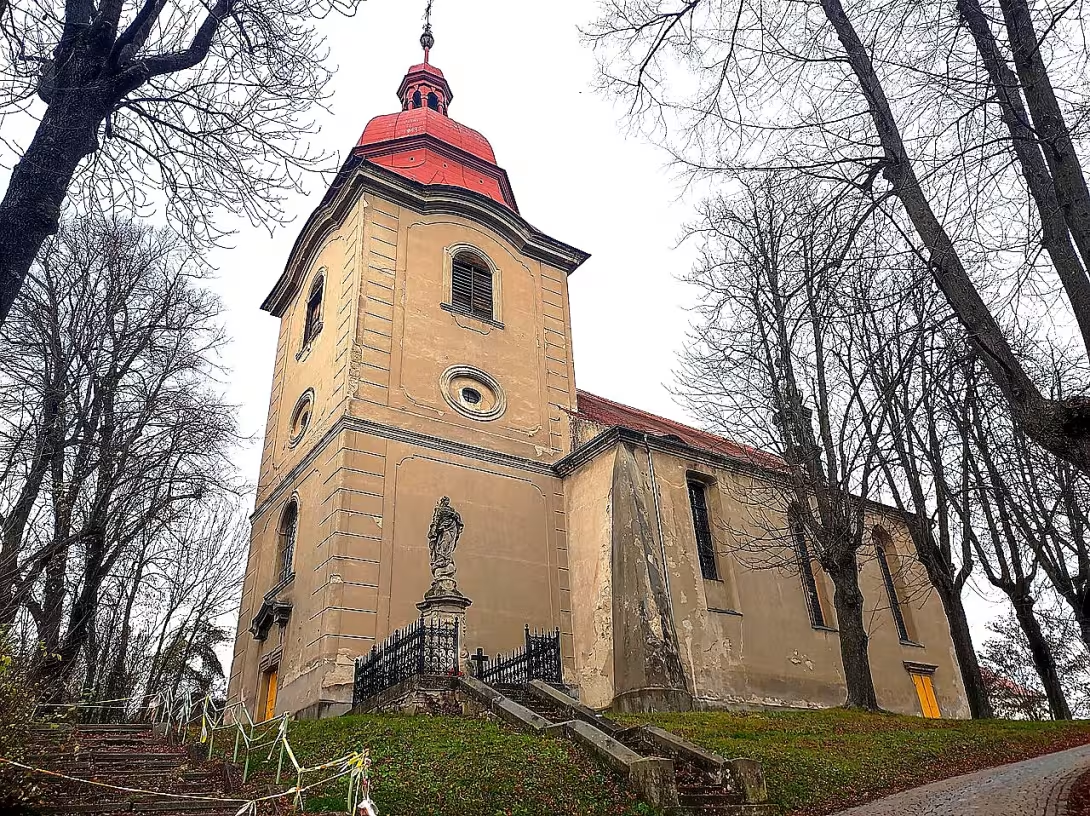
The Church of Saint Bartholomew in Dobrovice stands as a testament to the rich cultural tapestry of the Czech Republic. Situated on a hill above the town square, this Renaissance building with late Gothic elements is both an architectural marvel and a protected cultural monument. Its historical significance is highlighted by its location, once home to an old fortress, blending military and religious history.
Constructed between 1569 and 1571 under Jindřich z Valdštejna's patronage, the church emerged during Bohemia's significant cultural and religious transformations. The late 16th century saw Renaissance influences spread across Europe, with this church exemplifying their integration into local architecture. A Baroque tower added by František Ignác Prée in 1755 further illustrates evolving architectural trends.
Architecturally, the Church of Saint Bartholomew is a hall-style three-nave structure with a polygonal chancel featuring two Renaissance portals. The exterior boasts a Baroque tower by František Ignác Prée, replacing an earlier wooden belfry. This blend of Gothic and Renaissance elements reflects its historical transitions. Inside, the church features Renaissance and Baroque frescoes, including coats of arms and floral ornaments, enhancing its artistic richness.
Throughout history, the church has undergone several renovations, notably in 1813-1814 and again in 1941, ensuring its preservation as a cultural landmark while maintaining its historical essence.
In front of the church stands a Baroque parsonage built in 1709, accompanied by a Rococo statue of Madonna from 1762. These structures complement the church's architectural significance and contribute to the area's historical ambiance.
Today, the Church of Saint Bartholomew remains accessible for visitors interested in its architectural beauty and historical depth. Its blend of Gothic, Renaissance, and Baroque styles offers a unique glimpse into the region's cultural evolution. The preserved frescoes and epitaphs provide insights into Dobrovice's artistic and social history.
Visiting this monument allows appreciation of its architectural splendor and connection with the historical narratives that have shaped it. Whether you are a history enthusiast or someone who appreciates cultural heritage, the Church of Saint Bartholomew in Dobrovice promises a rewarding experience.
Then and now
Drag the slider to compare how the landmark may have looked when it was built with the view today.
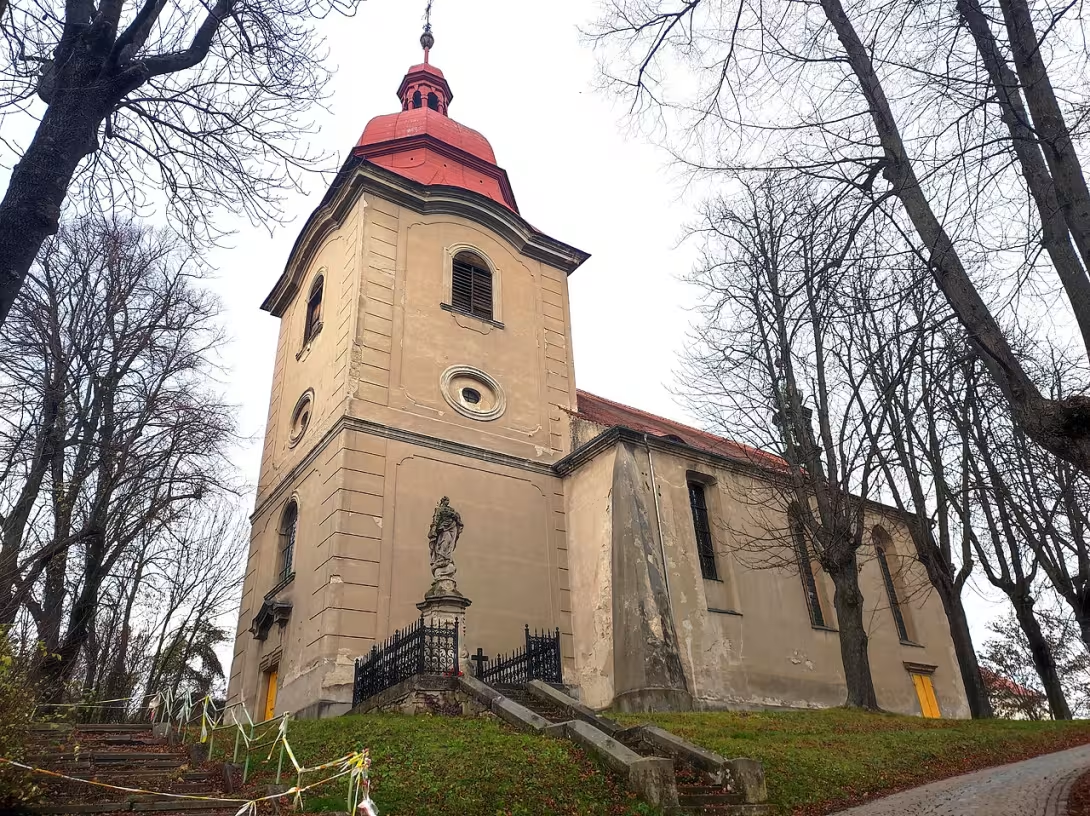
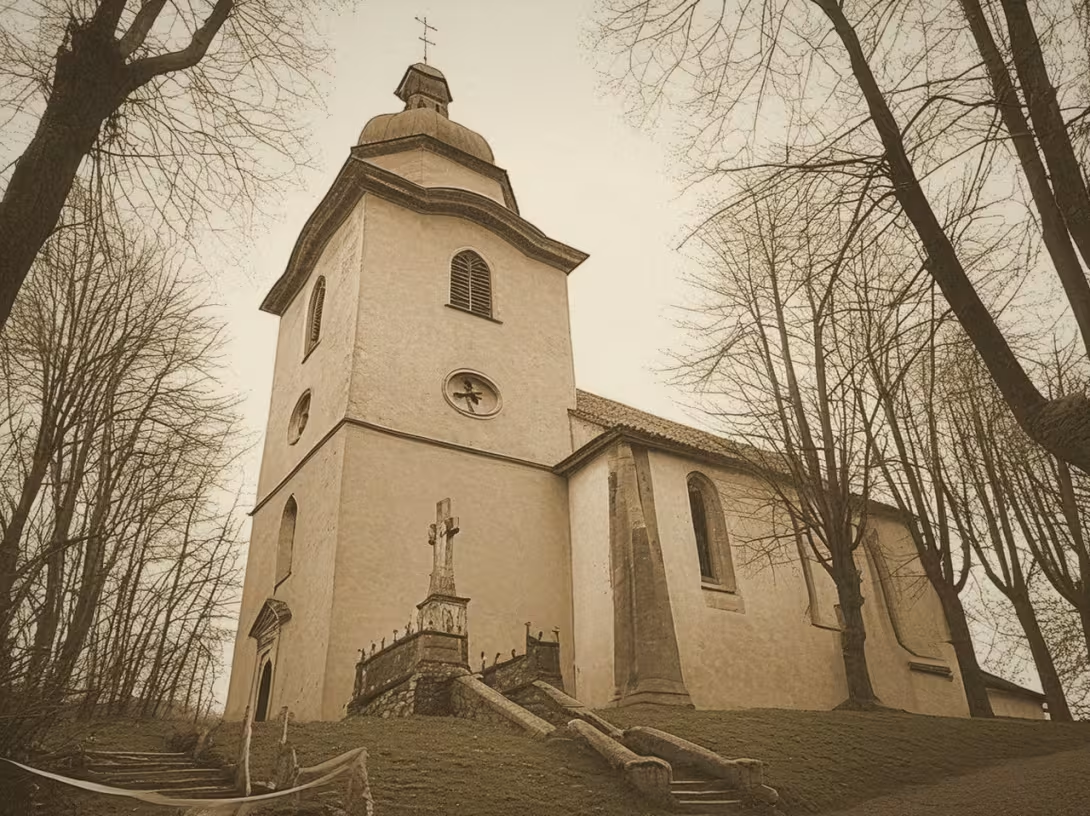
The historical appearance on the left is an AI-generated visualisation and serves as inspiration only.
Historical milestones
- 1569
- Construction of the Gothic-Renaissance hall church began.
- 1571
- Completion of the initial construction phase by Jindřich z Valdštejna.
- 1755
- František Ignác Prée added a Baroque tower to the church.
- 1813
- Major renovations started on the church.
- 1941
- Further significant renovations were carried out.
Architectural development
The church is a hall-style three-nave building with a polygonal chancel featuring two Renaissance portals. It underwent significant architectural changes, including the addition of a Baroque tower by František Ignác Prée and various renovations in the 19th and 20th centuries.
Historical events
The Gothic-Renaissance hall church was constructed between 1569–1571 by Jindřich z Valdštejna.
In 1755, František Ignác Prée added a significant Baroque tower to the west facade.
Major renovations occurred in 1813-1814 and again in 1941.
Points of interest
- The Church of Saint Bartholomew was built on the site of an old fortress, blending military history with its religious significance, which is a rare architectural narrative in Czech monuments.
- Despite being primarily Renaissance, the church incorporates late Gothic elements, reflecting Bohemia's transitional period and showcasing how local architects adapted European influences to fit regional styles.
- The Baroque tower added by František Ignác Prée replaced an earlier wooden belfry, illustrating the shift from practical medieval structures to more ornate Baroque designs that became popular in the 18th century.
- During renovations in 1813-1814 and again in 1941, efforts were made not only to preserve but also to restore the church's frescoes, which include coats of arms and floral ornaments—details that offer a glimpse into the social hierarchy and artistic preferences of past eras.
- The Rococo statue of Madonna from 1762 stands before the church, serving as an example of how religious art evolved during the Rococo period, characterized by its ornate detail and emphasis on elegance.
Guide
This guide is narrated by a synthetic voice generated by artificial intelligence.
Show guide text
This text was created by artificial intelligence and has not been editorially reviewed. It may contain inaccuracies.
The Church of Saint Bartholomew in Dobrovici, in the Mladoboleslavsko region, stands on a hilltop above the town square. It was built on the site of a defunct stronghold, in whose grounds an older structure probably once stood. It is a Renaissance building with elements of late Gothic architecture and is protected as a cultural monument.
The church was built between 1569 and 1571 by Henry of Valdstein. It is a hall church with three aisles and a polygonal choir, two side Renaissance portals, and windows with pointed arches and tracery. A massive prismatic tower on the axis of the western façade was added in 1755 by Francis Ignatius Prée. According to his design, it was built by the stonemason Kytlice. The tower apparently replaced an original wooden bell tower. Major repairs took place in 1813 and 1814 and in 1941.
The aisles are vaulted with barrel vaults on four prismatic pillars. The vaults are decorated with painted coats of arms and floral ornament with ribbons and garlands. The aisles contain Renaissance coats of arms from 1571, and the choir contains Baroque coats of arms of the Valdsteins from 1732. The masonry gallery rests on three arcades.
The furnishings are mostly Baroque. The high altar from the second half of the eighteenth century is supported by angels and contains a painting of Saint Bartholomew by Francis Barbieri. The ornate pulpit from 1732 with illusory curtains and emblems of the evangelists is the work of Jelínek of Kosmonos. On the altar of Saint Barbara stand fourteen small statues of Czech patron saints, and on the altar of Saint Joseph fourteen small statues of holy helpers. The altar of the Virgin Mary was brought here in 1775 from a defunct monastery church in Jičín. Its valuable statue of the Madonna with angels probably also comes from Jelínek's workshop.
On the south wall of the choir is a three-part painted epitaph of Henry of Valdstein with the Valdstein genealogy from 1571 and 1608. Below it stands an inlaid patron's pew from 1732. On the north side is a painted genealogy of the Fürstenberks. The church further contains a figurative tombstone from 1599, Rococo organ pipes, and a stone neoclassical baptismal font from 1786.
On the cemetery wall, the grave marker of Mrkoš, who died in 1819, catches the eye. The relief depicts the bereaved mourning over the deceased. In front of the church stands a Baroque rectory from 1709 and a Rococo gilded statue of the Madonna from 1762 with a relief of the Annunciation on the base.
Tips for visitors
The best time to visit the Church of Saint Bartholomew in Dobrovice is during late spring or early autumn when the weather is mild, allowing for a comfortable exploration of both the church and its surroundings. These seasons offer pleasant temperatures and natural lighting that enhances the beauty of the Renaissance architecture and the Baroque parsonage nearby. Additionally, visiting outside peak tourist season means fewer crowds, providing a more serene experience to appreciate the historical site.
It's recommended to verify current routes and schedules using a transportation app or website before your visit. The town square, where the church is located, is easily walkable from these stops, making it convenient for visitors who prefer not to drive.
When visiting the Church of Saint Bartholomew, consider bringing comfortable walking shoes as you'll likely explore the surrounding area and possibly climb up to the hill where the church stands. A hat or sunscreen might be necessary if visiting in warmer months due to limited shade around the open square. Additionally, carrying a water bottle is advisable for hydration during your exploration of the site and its historical context.
For photography enthusiasts, early morning light offers soft illumination that beautifully highlights the intricate details of the church's architecture and the surrounding Baroque parsonage. The statue of Madonna in front of the church also makes for a picturesque subject against the backdrop of the church. Capturing photos from the hilltop provides expansive views of Dobrovice and its historical structures, making it an ideal spot for landscape shots.
The nearby town offers a glimpse into local culture and history beyond the Church of Saint Bartholomew. Exploring these areas can provide additional context to the region's architectural heritage and offer more opportunities for photography, especially in capturing rural landscapes and historical buildings.
For families with children, the area around the Church of Saint Bartholomew offers a peaceful setting that encourages exploration and learning about history in an engaging way. The open spaces around the church are suitable for a leisurely walk or picnic, making it a family-friendly outing. Engaging children with stories about the church's past and its architectural features can make the visit both educational and entertaining.
Frequently asked questions
Can the monument be visited?
Religious buildings are usually open mainly during services; at other times a visit is normally arranged with the parish or the operator. We have not verified specific times.
Where is the monument?
Location: Dobrovice, Středočeský kraj. The map on this page shows the exact spot.
Why is the monument protected?
It is listed in the Central List of Cultural Monuments of the Czech Republic as a cultural monument (register no. 20334/2-1533).
Businesses nearby
Do you run a restaurant, accommodation, shop, museum, rental, wellness or other visitor service near this monument? Show yourself directly to the people heading to it — this is how they will see you in the app and on the web:
Nearby
In front of the church stands a Baroque parsonage built in 1709, accompanied by a Rococo statue of Madonna. The surrounding area includes these historical structures that complement the church's architectural significance.
Accommodation nearby
Themed route
Tematická výletní trasa: Kostel svatého Bartoloměje a jeho okolí
1. Kostel svatého Bartoloměje (Dobrovice)
Typ: Historická památka
Proč stojí za návštěvu: Kostel svatého Bartoloměje v Dobrovicích je architektonickým dílem, které přitahuje návštěvníky svou historií a uměleckými prvky. Je to centrální bod trasy, kde můžete prozkoumat bohatství barokní architektury a duchovního významu.
2. Barokní fara (Dobrovice)
Typ: Historická budova
Proč stojí za návštěvu: Vedle kostela se nachází barokní fara z roku 1709, která představuje významnou součást místní architektury. Její elegantní design a historické pozadí nabízejí zajímavý pohled na život a kulturu minulých století.
3. Rokoko socha Panny Marie (Dobrovice)
Typ: Sochařská památka
Proč stojí za návštěvu: Tato rokoková socha Panny Marie, umístěná před kostelem a farou, je významným uměleckým dílem. Její detailní práce a historický kontext poskytují hlubší porozumění místnímu kulturnímu dědictví.
Tato trasa nabízí pohled na klíčové architektonické a umělecké prvky v okolí kostela svatého Bartoloměje, což z ní činí ideální pro ty, kteří chtějí prozkoumat historii a kulturu Dobrovic.
Seasonal recommendations
Spring: Visiting the Church of Saint Bartholomew in Dobrovice during spring offers a unique experience as nature awakens around this historic site. The blooming flowers and fresh greenery create a vibrant backdrop, enhancing the church's serene beauty. This season is characterized by mild weather, making it ideal for leisurely exploration without the summer crowds. Visitors should dress comfortably in layers to accommodate fluctuating temperatures. Early mornings or late afternoons are recommended times to visit, allowing you to enjoy the site with fewer people and capture the soft, natural lighting that accentuates the church's architecture.
Summer: The Church of Saint Bartholomew shines brightly during summer when long daylight hours illuminate its historic facade. The lush green surroundings provide a picturesque setting for visitors who often seek respite from the bustling city life. Summer is the peak tourist season, so expect larger crowds and plan your visit accordingly. Arriving early in the morning can help you avoid the midday heat and maximize your time at the site. Comfortable walking shoes and light clothing are advisable to navigate the grounds comfortably while appreciating the vibrant atmosphere.
Autumn: Autumn transforms the Church of Saint Bartholomew into a stunning spectacle with its warm, golden hues. The falling leaves create a magical ambiance that complements the church's historic charm. This season is less crowded than summer, offering a more tranquil experience for visitors. The cooler weather makes it an ideal time to spend extended periods exploring both the interior and exterior of the site. Layered clothing is recommended to stay comfortable as temperatures can vary throughout the day.
Winter: In winter, the Church of Saint Bartholomew exudes a quiet, contemplative atmosphere under a blanket of snow. The stark beauty of the season highlights the church's architectural details against a serene, white backdrop. Winter visits are less crowded, providing an intimate experience with fewer distractions.
Visualizations and artistic views


The visualisations are generated by artificial intelligence and serve as inspiration.
Photos from the area
Real photos taken near the monument

Zdroj a licence jsou uvedeny u každého snímku.
Atmosphere of the place
This atmospheric visualisation of the place and period was generated by artificial intelligence. It is not real footage of the location.
Tips from visitors
No tips yet. Be the first!
Log in and add your tip.
Sources and literature
Photos: Palickap / CC BY-SA 4.0 — Wikimedia Commons. The author and licence also appear when you hover over the image.
Faktickým podkladem tohoto textu byl článek na Wikipedii, jehož autory jsou přispěvatelé Wikipedie. Článek je dostupný pod licencí CC BY-SA 4.0.
Location on the map





Příběhy a pověsti
Legendy, pověsti a příběhy spjaté s touto památkou
Fotografie návštěvníků
Zatím žádné fotografie. Buďte první, kdo přidá fotografii z návštěvy!
Log in a přidejte svou fotografii nebo hodnoťte.
Za ověřenou návštěvu v aplikaci získáte víc bodů — poznáme podle GPS, že jste na místě.
Reviews and comments