



Kostel svatého Bartoloměje (Třanovice) Church
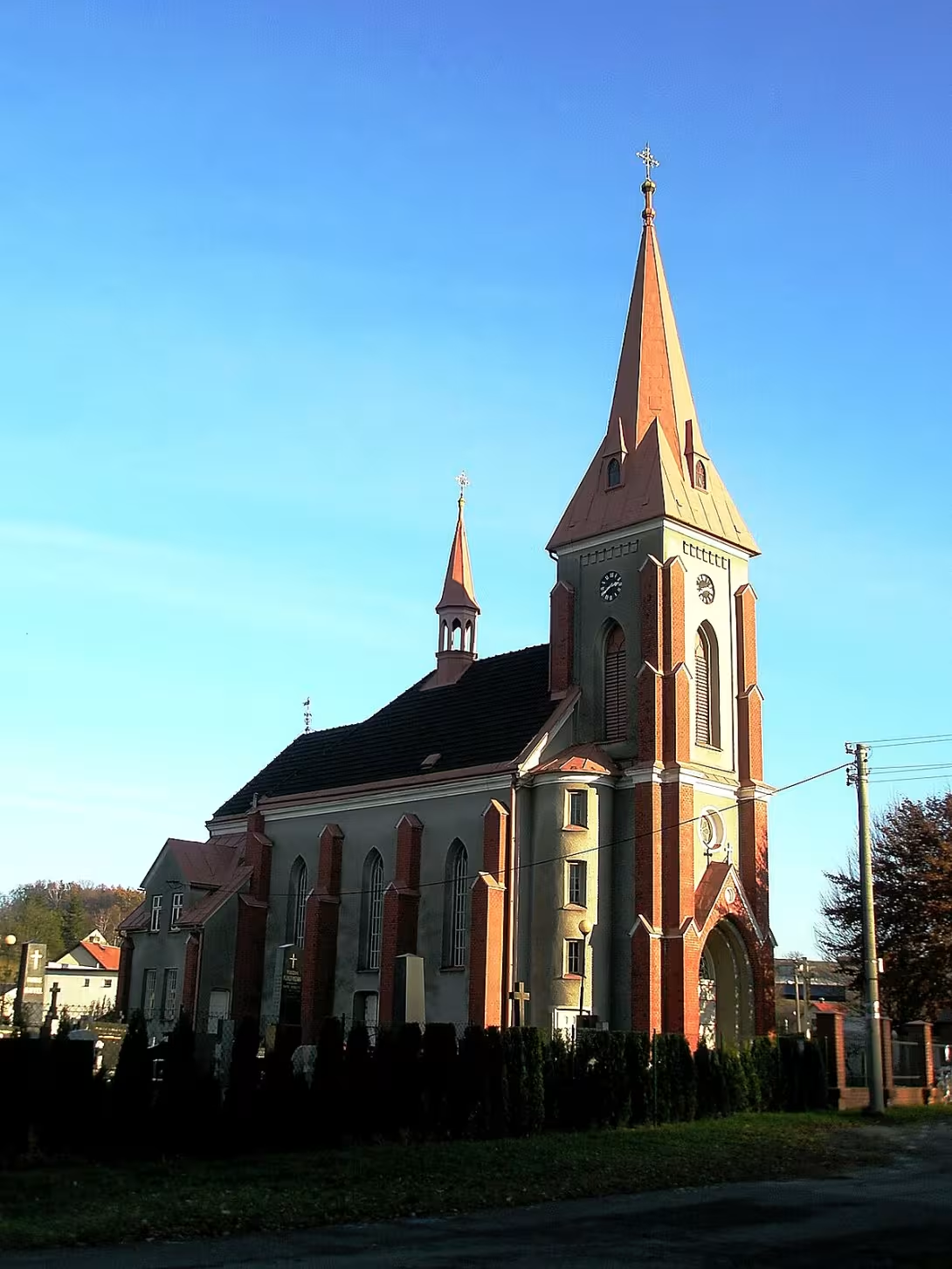
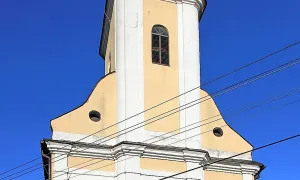
The church of St. Bartholomew in Třanovice is a one-ship building in a neo-gothic style completed by polygonal presbyterium. The most important architectural element is the prism tower with strong pillars of the concrete masonry, which runs directly from the roof of the building in an unusual way. The facade is also divided by massive pillars, giving the church a strong and dignified appearance.
The roots of the temple date back to the second half of the 15th century, when the first wooden church dedicated to St. Bartholomew was supposed to be created here. The written mention dates back to 1652, when it was still in the Lutheran community. Soon after that, August 24, 1654, he went to the Roman Catholic Church and has since served as a filial church of the manure parish. During the 18th century, the construction gradually fell. The 1804 Vision Protocol records a very bad condition. The owner of Lower Třanovic Bernard Galgon promised funds for a new brick church, but this did not happen. Instead, the old church was reconstructed for Galgan's support in 1817 - the beams were replaced with rotting elements, a new tree was built and a tower was rebuilt, which was planted in the roof.
The decisive change came in the early 20th century. In 1902, the decrepit church had to be closed. The new temple was designed and built by Teschen builder Albert Dostal. The construction lasted two years, and its costs exceeded the budget almost twice as much, thus in debt to the municipality. The church was festively consecrated on December 26, 1904 by Dean Jan Sikora of Teschen in the presence of Bishop Jiří Cardinal Kopp of Vrocław. In 1903, the old wooden church was sold to the farmer Karołu Kokotka for four hundred crowns and subsequently dismantled. The old building preserved two chandeliers, four bells and a painting of a patron who were placed in a new church.
Both world wars have brought sad losses. During the First World War, three bells - large from 1879 and two smaller from the original wooden church - were reconstructed. In 1932 a new bell was hung in the tower, which, however, World War II also confirmed. In 2024 the bell returned from Germany and was hung in the church in Fertilizer.
Then and now
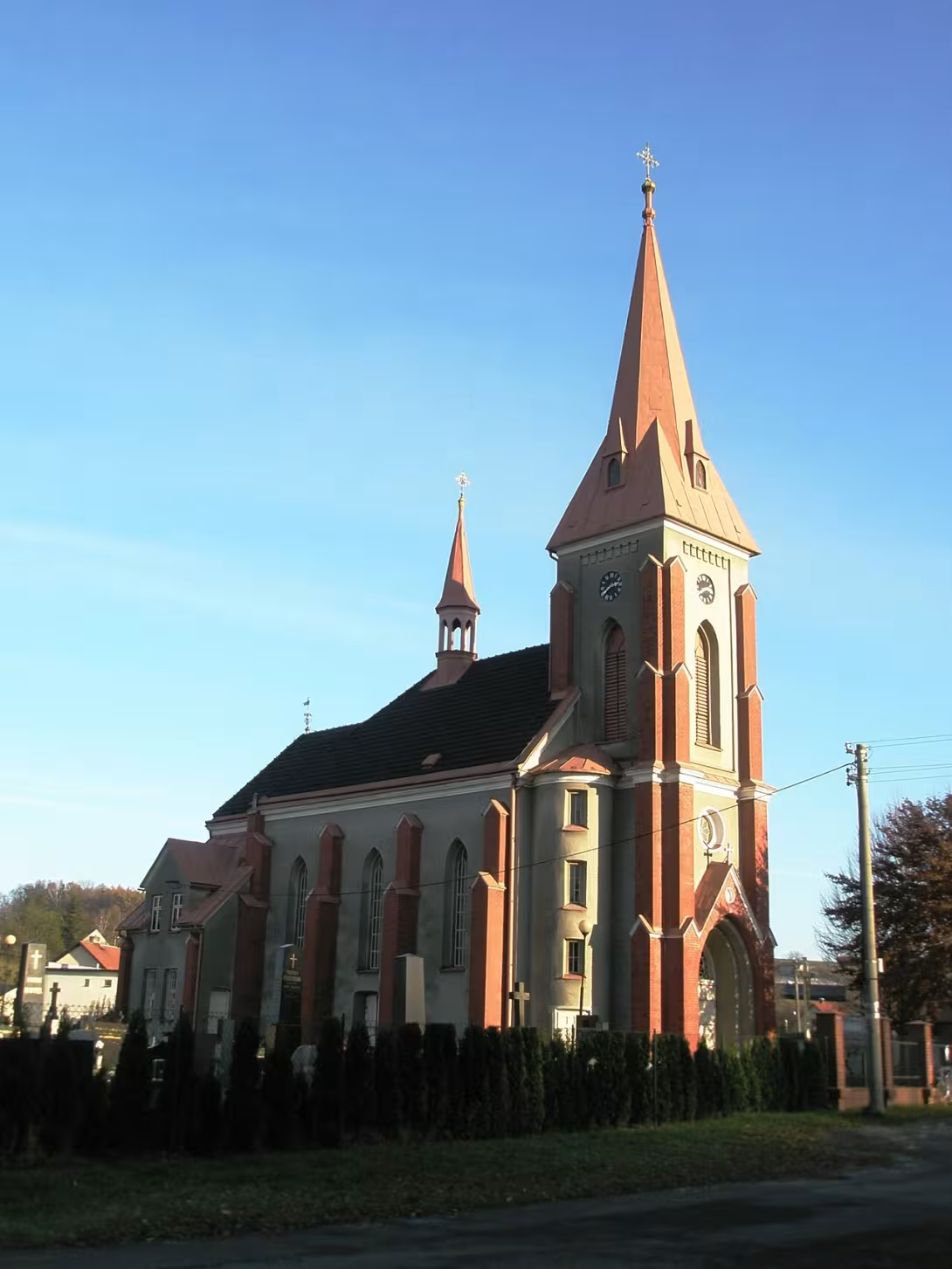
Drag the slider to compare how the landmark may have looked when it was built with the view today.
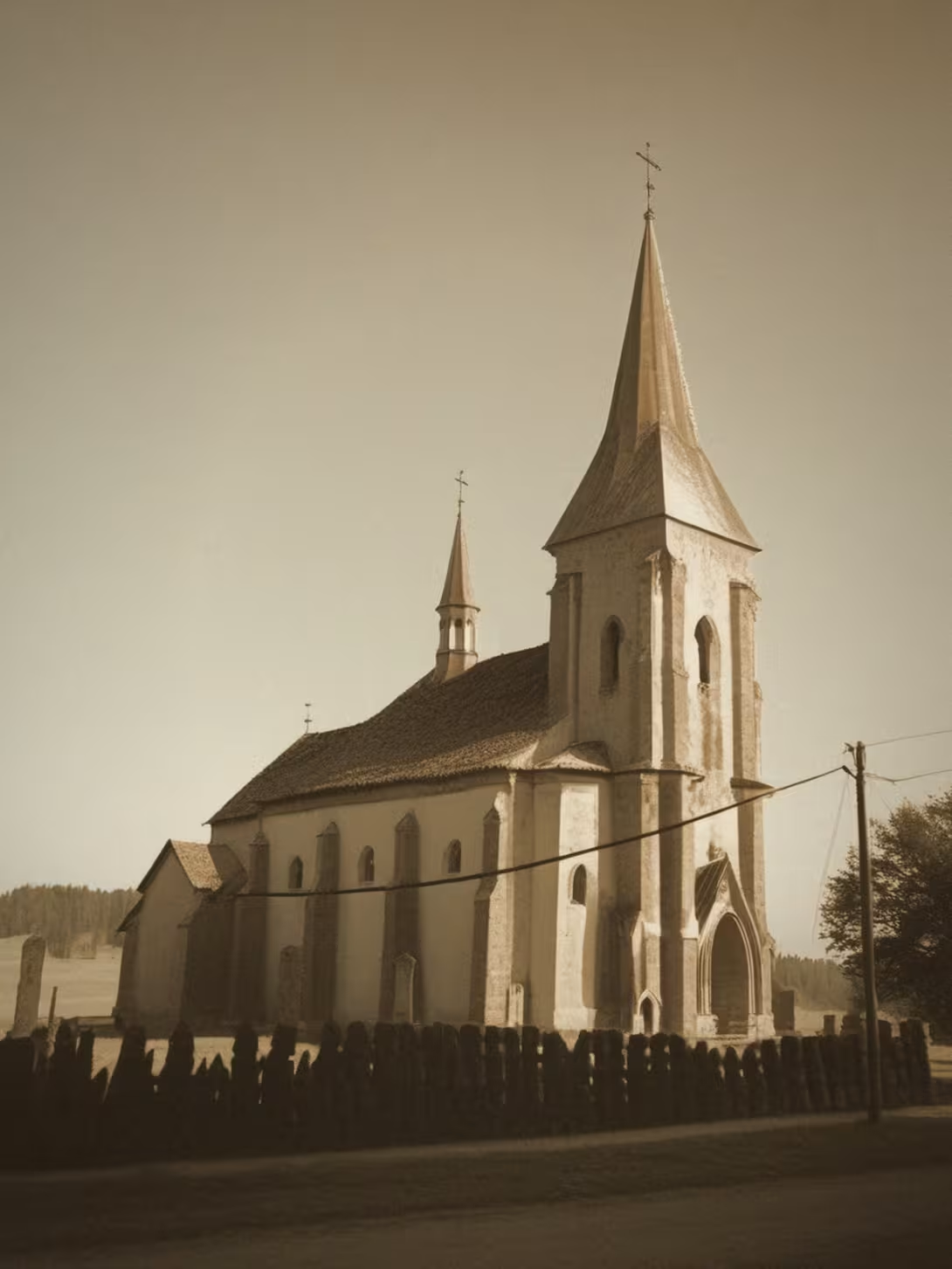
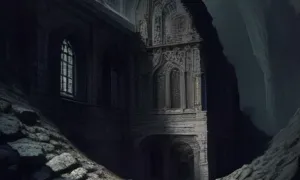
The historical appearance on the left is an AI-generated visualisation and serves as inspiration only.
Historical milestones
- 1652
- The first written mention of the Třanovic church, which belonged to the Lutherans at the time.
- 1654
- The church became the property of the Roman Catholic Church after taking the Lutherans away.
- 1817
- Reconstruction of the wooden church, including replacement of the affected beams and reconstruction of the roof and tower.
- 1904
- The ceremonial consecration of St. Bartholomew's new brick church.
- 1932
- The acquisition of a new bell which was later recited during World War II.
- 2024
- Returning and hanging a bell recited during World War II.
Architectural development
The original wooden church from the second half of the 15th century was reconstructed in the 19th century by a damaged cross and tower. The new brick church was built in 1902- 1904 in a neo-gothic style with strong pillars and prism tower. The material is solid masonry. In 1903 the old church was dismantled and its parts sold on fuel wood.
Historical events
1652 - First written mention of the wooden church, which belonged to the Lutherans at the time.
1654 - The church went to the Roman Catholic Church after taking the Lutherans.
1904 - Ceremonial consecration of a new brick church after many years of preparation.
2024 - Returning and hanging bell recited during World War II
Points of interest
- The church of St. Bartholomew in Třanovice was originally wooden and was established in the second half of the 15th century.
The written mention of the church dates back to 1652, when it belonged to the Lutheran community.
- In 1654, the church became owned by the Roman Catholic Church and became a filial church of the manure parish.
- In 1817 a reconstruction of the old church took place, during which the tower was planted directly into the building of the roof.
- The new neo-gothic church was built in 1902- 1904, and its construction exceeded the original budget and the municipality was in debt.
Guide
This guide is narrated by a synthetic voice generated by artificial intelligence.
Show guide text
This text was created by artificial intelligence and has not been editorially reviewed. It may contain inaccuracies.
The Roman Catholic Church of Saint Bartholomew in Třanovice is a single-nave neo-gothic structure with a polygonal presbytery. The façade is dominated by a columnar tower, whose corners are reinforced by massive pilasters made of ashlar masonry. Similar pilasters also articulate the façade of the entire church.
The current building was preceded by a wooden chapel, also dedicated to Saint Bartholomew. It stood only a few meters away. Based on its construction, it could have been built as early as the second half of the fifteenth century, but the first written mention of it dates only from sixteen fifty-two. At that time it still belonged to the Lutherans. Already on August twenty-fourth, sixteen fifty-four, it was taken from them and transferred to the Roman Catholic Church. It was a daughter church of the Hnojník parish and remains so to this day.
A visitation protocol from eighteen oh-four describes the church in very poor condition. Repairs were postponed because the owner of Dolní Třanovice, Bernard Galgon, had promised funds for a new brick church. This never happened. The old church had to be closed due to its condition and in eighteen seventeen Galgon had it completely renovated at his own expense. Rotten beams were replaced and the roof and tower were rebuilt. The tower was not freestanding but was set into the roof.
In nineteen oh-two, the wooden church had to be closed again, and so finally work began on a new brick building. The design and construction were entrusted to the Těšín builder Albert Dostal. The costs ultimately reached nearly double the budget and the parish was in debt for many years to come. The church was consecrated by the Těšín dean Jan Sikora on December twenty-sixth, nineteen oh-four in the presence of the Wrocław bishop, Cardinal Jiří Kopp.
The old church was demolished while the new one was being built. In nineteen oh-three, the parish sold it for four hundred crowns to farmer Karol Kokotko, who gradually dismantled it and sold it as firewood. Two chandeliers, four bells, and an image of the patron saint were transferred to the new church.
During the First World War, three bells were confiscated. These were a large bell from eighteen seventy-nine and two smaller ones that came from the wooden church. A bell installed in the tower in nineteen thirty-two was confiscated during the Second World War. In twenty twenty-four it returned from Germany and was hung in the church in Hnojník.
Tips for visitors
The best time to visit St. Bartholomew's church is in the morning or afternoon in the summer months when sunlight is pleasant while avoiding heat. In winter is an ideal visit in the morning when there is light outside and the monument looks most beautiful in a quiet environment. The interior is always pleasant because the church is well maintained and warm.
It is recommended to arrive on your own vehicle as public transport to Třanovic is not very common. The current connection and transport options can be found in the transport search engine.
When visiting, wear comfortable clothes and shoes because the church is a neo-gothic building with stone stairs and uneven terrain. In winter, put on warmer clothes as the outdoor areas can be cold. It is also important to take a small towel or handkerchief, because there is often a sink or fountain in the interior.
Photography is allowed in the church, but it is recommended to search for places with natural light such as window openings or entrance space. It is best photographed in the morning or afternoon sun, when light creates pleasant shadows and highlights the details of neo-gothic architecture. The pillar tower is an ideal background for quality images.
In the vicinity of Třanovice you can see the town of Hnojnik, located just three kilometres from the church. Its historical centre and church of St. Martin are an interesting visit, especially for lovers of architecture and history. Another option is a trip to Frýdku - A town that is 15 kilometres away and offers a rich cultural scene and other historical monuments.
For families with children, a visit to St. Bartholomew's Church is a great opportunity to explore history and architecture. Children can look at the high prism tower and find out what the neo-gothic structure looked like. In the surroundings it is also possible to play in the open area or visit nearby Fertilizer, where children will appreciate a walk through the historical centre and the possibility to discover old houses.
Frequently asked questions
Can the monument be visited?
Religious buildings are usually open mainly during services; at other times a visit is normally arranged with the parish or the operator. We have not verified specific times.
Where is the monument?
Location: Třanovice, Moravskoslezský kraj. The map on this page shows the exact spot.
For kids
Imagine going back to a time when the Czech countries were full of life and well-being. The city of Třanovice was a small town where there were people who lived for a living through agriculture and trade. Among them stood the church of St. Bartholomew, which was the center of the village.
How did it look here? The church stood in the middle of a large square where markets and feste took place. People from the neighborhood came to town for shopping and entertainment. There were also craftsmen who took care of the construction and maintenance of the church.
Businesses nearby
Do you run a restaurant, accommodation, shop, museum, rental, wellness or other visitor service near this monument? Show yourself directly to the people heading to it — this is how they will see you in the app and on the web:
Nearby
- The neighbouring city with the historical centre and church of St. Martin, which is an important cultural and religious monument of the region.
- A nearby city with a rich industrial history and several important cultural monuments such as the chateau in Místek.
- Protected area with rich flora and fauna that offers opportunities for tourists and nature lovers.
Accommodation nearby
Themed route
Day trip to St. Bartholomew's Church in Třanovice
1. Church of St. Bartholomew in Třanovice The church is a beautiful Baroque building with rich decoration and historical significance. Its interior retains original frescos and altars that reflect the spiritual traditions of the local community.
2. St. Martin's Church in Fertilizer (3 km) About 3 kilometers from Třanovic lies Hnojnik, whose historical center attracts visitors to visit St. Martin's Church. This church is an important cultural monument with well preserved architecture and traditions.
3. Frýdek-Místek (15 km) It is advisable to visit Frýdek-Místek, a city with a rich history. Here you can see the chateau in Místek, which is one of the most important cultural monuments of the region. The city also offers modern architecture and lively cultural events.
Conclusion This route combines peaceful visits to historical churches with the knowledge of the nearby city, which offers diversity of monuments and experiences.
Seasonal recommendations
Spring Spring at St. Bartholomew Church offers a unique combination of awakening nature and fine light. The sun penetrates glass windows that disperse light into historical frescoes and stone elements, creating playful shadows and golden reflections. Outside the church, the primeval flowers flourish, there are often convalines and spring rubbers that decorate the surrounding meadows. The atmosphere is calm, but full of revival - the air smells of moisture and greenery, while the birds sing in the rudder. The ideal time for a visit is in the morning, when the church is still free and the light is softest. Light clothes are recommended, but prepare a raincoat for the sudden rain that are typical during this period. If you want to escape the crowds, avoid Saturdays and do not share when locals often visit the sights.
Summer Summer brings hot days to the Treanovs, when the church of St. Bartholomew becomes a haven before the sun. The outside facade, illuminated by the middle of the day, creates a contrast between dark stone blocks and bright celestial light. There are green meadows around the church, often planted with sunflowers and lime, which provide shade. The atmosphere is alive, but there is always peace in the church that contrasts with the heat outside. The best time to visit is early morning or late afternoon, when there are fewer tourists. It is suitable for light, but airy clothes and plenty of water, as in the main summer season there are often crowds around the monument. Don't forget the sunscreen if you go for a walk around.
Autumn The autumn visit to St. Bartholomew's church is magical thanks to the changing colour of leaves and mild but variable weather. The sun no longer reflects so intensely from the stone, but creates soft, golden reflections on walls that resemble flames. Outside the church, meadows and forests are dressed in shades of orange, red and brown, while the air smells of fallen leaves and needles. The atmosphere is quiet and reflexive, ideal for meditation or photography. The best time to visit is in the morning when the light is softest and crowds less. Warmer clothes are recommended as autumn days are short and cold evenings, and prepare for the possibility of rain. If you go for a walk around, put on waterproof shoes.
Winter Winter visit to the church of St. Bartholomew offers peace and mystery that is typical of this time of year. The sun rises low above the horizon, and its light is reflected from the snow covering the surrounding meadows and roads, creating frosty, silver reflections on the stone walls. The atmosphere is quiet and calm, as time stands. In advent time, the church becomes a place of comfort, because there is cold and short days outside. The best time to visit is in the afternoon when the light is softest and the crowds least. Hot clothes, wool gloves and solid shoes are recommended because the roads can be covered with ice. The inner spaces of the church are often warm, so it is possible to bathe warm after a winter walk.
Visualizations and artistic views


The visualisations are generated by artificial intelligence and serve as inspiration.
Photos from the area
Real photos taken near the monument


Zdroj a licence jsou uvedeny u každého snímku.
Atmosphere of the place
This atmospheric visualisation of the place and period was generated by artificial intelligence. It is not real footage of the location.
Tips from visitors
No tips yet. Be the first!
Log in and add your tip.
Sources and literature
Photos: Qasinka / Public domain — Wikimedia Commons. The author and licence also appear when you hover over the image.
Faktickým podkladem tohoto textu byl článek na Wikipedii, jehož autory jsou přispěvatelé Wikipedie. Článek je dostupný pod licencí CC BY-SA 4.0.
Location on the map

Příběhy a pověsti
Legendy, pověsti a příběhy spjaté s touto památkou
Fotografie návštěvníků
Zatím žádné fotografie. Buďte první, kdo přidá fotografii z návštěvy!
Log in a přidejte svou fotografii nebo hodnoťte.
Za ověřenou návštěvu v aplikaci získáte víc bodů — poznáme podle GPS, že jste na místě.
Reviews and comments