



Kostel svatého Bartoloměje v Bakově nad Jizerou Church
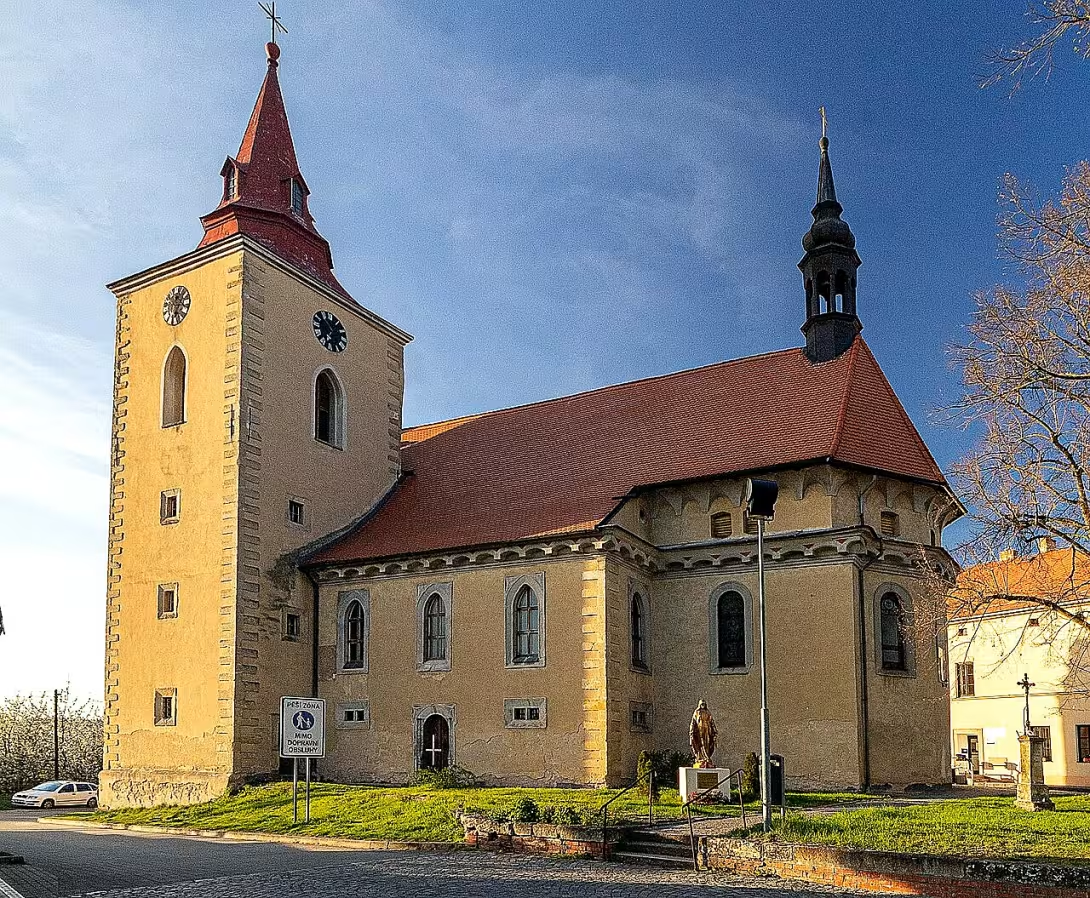
The Church of Saint Bartholomew in Bakov nad Jizerou is a Roman Catholic parish church on the northern side of Mírové náměstí. Originally built in late Gothic style during the second half of the 16th century, it underwent several transformations into Baroque architecture over time. Recognized as a cultural monument since 1967, this church exemplifies architectural evolution from Gothic to Baroque styles.
First mentioned in historical records around the mid-14th century, the Church of Saint Bartholomew has been a longstanding presence in Bakov nad Jizerou. By the second half of the 16th century, it was constructed in late Gothic style. In 1614, it underwent a Mannerist renovation, reflecting stylistic transitions of that era. A significant fire in 1654 led to its restoration in Baroque style, marking the start of several architectural changes. Further renovations occurred in 1741, 1744, and 1759, with additional modifications in 1838 and 1919, contributing to the church's rich historical tapestry.
Architecturally, the Church began as a late Gothic structure and evolved into Baroque architecture through multiple renovations. It features a single-nave, rectangular design with smooth facades. A notable feature is the spire constructed on the southwestern corner after 1657, which received its current roofing in 1838. Adjacent to the nave's southern side is a Marian chapel added in 1744. The presbytery is rectangular and polygonally closed with a Renaissance cornice. Attached to the north of the presbytery is a sacristy with an oratory on the upper floor, completed in 1759. The western façade features a portal from 1656, framed by vegetal ornamentation and topped with a rising pediment. Rustication adorns the corners of the tower, which was modified in its upper story in 1791.
The church's interior reflects Baroque and Rococo influences, particularly evident in its richly decorated interiors dating back to the mid-18th century. The main altar is a Rococo framed piece created by Josef Jiří Jelínk z Kosmonos in 1733. It features sculptures of Saints Florian and Wenceslas, an image of the Holy Trinity from 1741, and a new titular painting of Saint Bartholomew signed "Ant. Kossatecki pinxit 1819." The side altars are Rococo framed and dedicated to Saints Francis Xavier and John Nepomucene. One altar includes sculptures of an Indian prince and angels, likely the work of J. Jelínk from 1757. Another significant piece is the altar of Saint John Nepomucene by František Melichar z Rychnova, featuring sculptures of Saints James, Joseph, and Mary.
Adjacent to the church stands a late Baroque parish building constructed in 1774. Nearby, there is a culturally significant statue of Saint John Nepomucene from 1731 and an artistic Baroque Bakov column dedicated to the Holy Trinity, both recognized as cultural monuments of the Czech Republic.
Today, the Church of Saint Bartholomew remains in good condition, accessible for visitors interested in its historical and architectural significance. Its rich history and transformation through various architectural styles make it a compelling site for those exploring the evolution of religious architecture in Central Europe. Visitors are invited to appreciate this monument's enduring legacy and cultural importance within the region.
Then and now
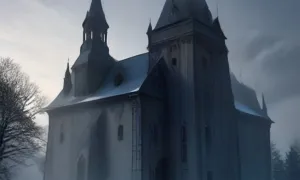
Drag the slider to compare how the landmark may have looked when it was built with the view today.
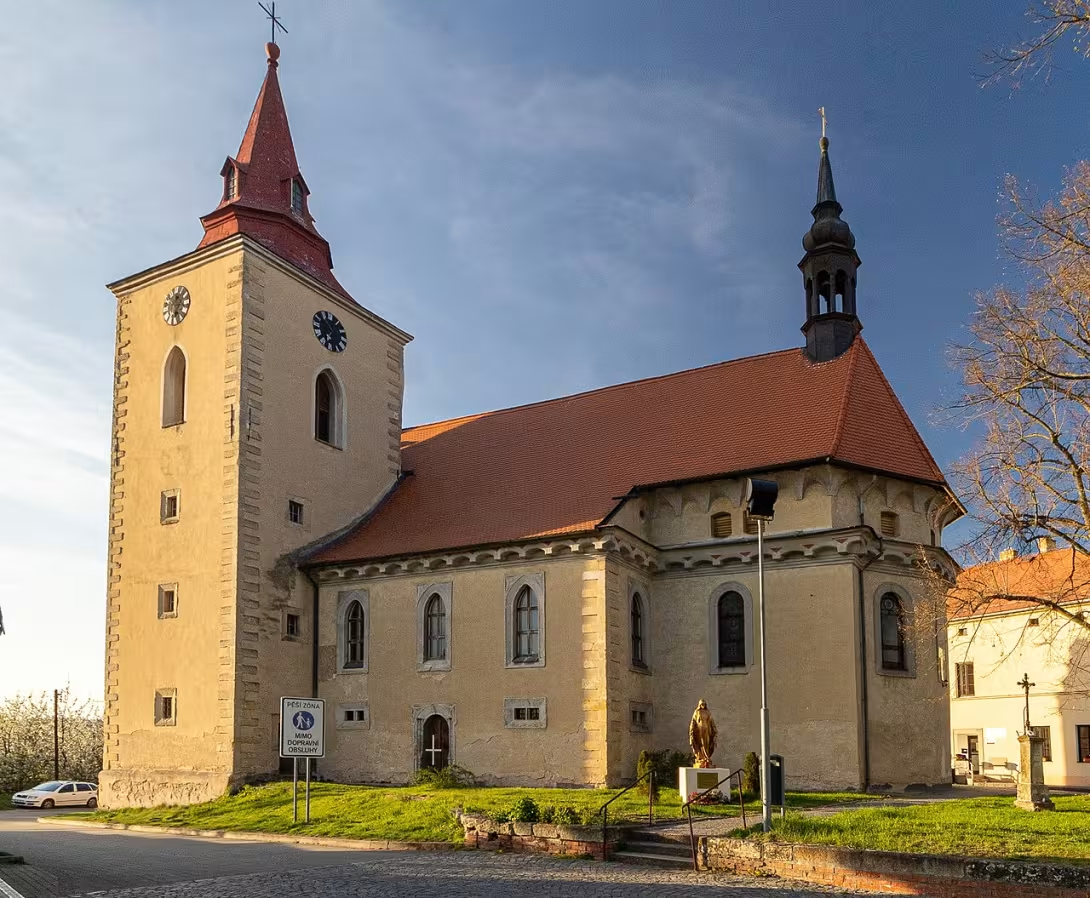
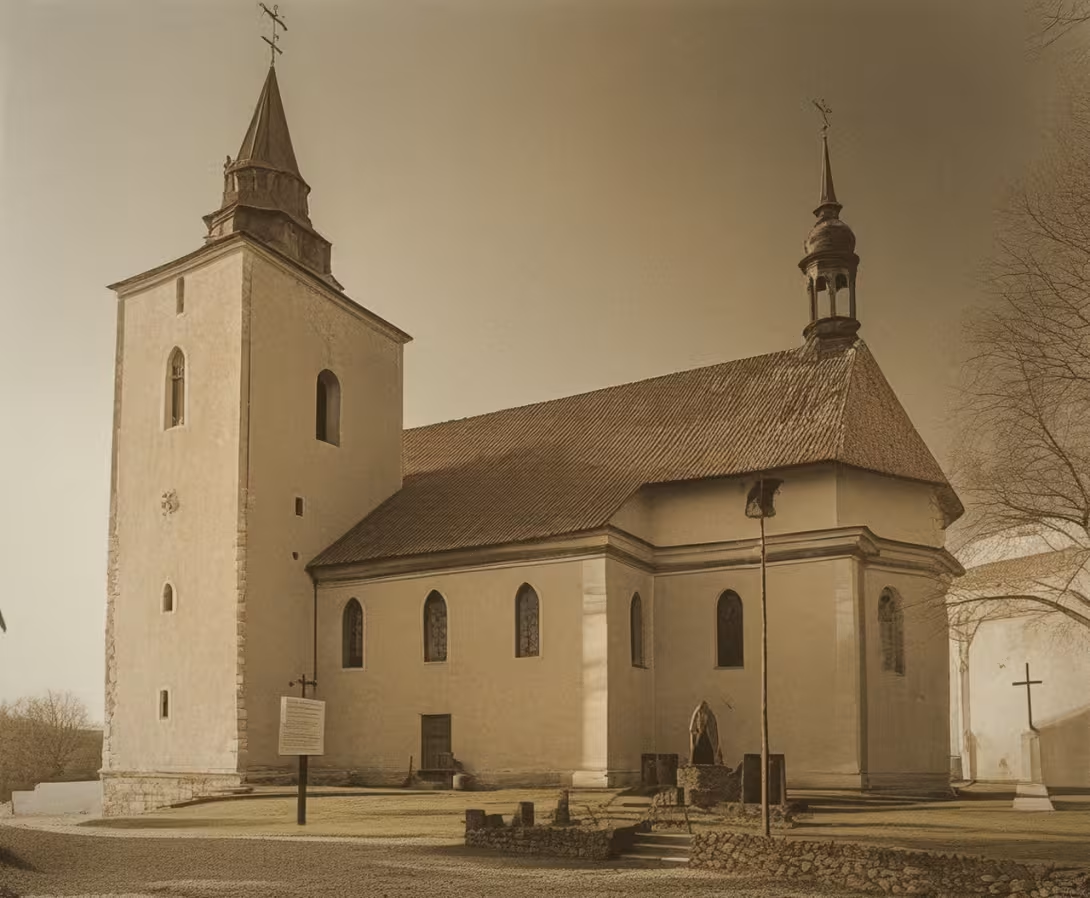
The historical appearance on the left is an AI-generated visualisation and serves as inspiration only.
Historical milestones
- 1614
- The church was renovated in the Mannerist style.
- 1657
- A spire was constructed on the southwestern corner of the church.
- 1741
- An entrance portal to the sacristy was built.
Architectural development
The Church of Saint Bartholomew began as a late Gothic structure and was later transformed into Baroque architecture through multiple renovations. Notable changes include the construction of a spire after 1657, a Marian chapel added in 1744, and several rebuilds in 1838 and 1919. The church's interior features a flat ceiling lower than its original height from 1658.
Historical events
The church was first mentioned in historical records around the mid-14th century.
In 1614, it underwent a Mannerist renovation.
A significant fire in 1654 led to its restoration in Baroque style.
Points of interest
- The Church of Saint Bartholomew has undergone stylistic transformations from late Gothic to Baroque architecture, reflecting the broader cultural and artistic shifts in Europe over several centuries. This evolution is evident in its architectural elements such as the Renaissance cornice and Rococo altars.
- A significant event in 1654 was a fire that led to the church's restoration in Baroque style, marking a transition period where many Gothic structures were reimagined with Baroque aesthetics, including the addition of the spire after 1657 which was later roofed in 1838.
- The main altar, crafted by Josef Jiří Jelínk z Kosmonos in 1733, is a Rococo masterpiece featuring sculptures of Saints Florian and Wenceslas. This piece highlights the rich artistic heritage and skilled craftsmanship that characterized the Baroque period in Central Europe.
- Adjacent to the church stands a late Baroque parish building constructed in 1774, showcasing the era's architectural style with its elaborate designs and serving as an example of how ecclesiastical buildings were expanded during this time to accommodate growing congregations.
- The Bakov column dedicated to the Holy Trinity, recognized as a cultural monument, is an artistic representation from the Baroque period. It stands near the church as a testament to the era's religious devotion and its emphasis on grand, symbolic structures in public spaces.
Guide
This guide is narrated by a synthetic voice generated by artificial intelligence.
Show guide text
This text was created by artificial intelligence and has not been editorially reviewed. It may contain inaccuracies.
The Church of Saint Bartholomew is a Roman Catholic parish church in Bakov nad Jizerou in the Mladoboleslavsko region. It stands on the northern side of Mírové náměstí, in the place of the original village. The church is mentioned here already in the middle of the 14th century. Since 1967 it has been protected as a cultural monument.
At its core, it is a late Gothic building from the second half of the 16th century. In 1614 it was remodelled in a mannerist style. In 1654 the church burned down and was subsequently repaired in the Baroque spirit. Further reconstructions took place in 1741, 1744 and 1759, and then again in 1838 and 1919. It has been preserved in good condition to this day.
The church is single-naved, rectangular, and has smooth façades. In the southwestern corner, it has a prismatic tower built after 1657. Its upper storey was remodelled in 1791 and the tower received its present roof in 1838. On the northern side of the nave is a Marian chapel from 1744. The presbytery is terminated by a polygonal apse with a Renaissance cornice and adjoins the sacristy, above which is an oratory. The western façade is decorated with a portal from 1656 with plant ornaments and a rising gable.
The nave has a flat ceiling inside. On the southern side is a gallery for the literary choir, supported by pillar arcades and vaulted with a cross vault.
The church furnishings are Baroque and Rococo and date mainly from the second quarter of the 18th century. The main altar from 1733 is the work of Josef Jiří Jelínek from Kosmonos. On it stand statues of Saint Florian and Saint Václav. It bears a painting of the Holy Trinity from 1741 and the titular painting of Saint Bartholomew, signed with the name Kossatecki and the year 1819.
Two opposing side altars are dedicated to Saint Francis Xavier and Saint John of Nepomuk. On the first of these are statues of an Indian prince and cherubs. It was originally dedicated to Saint Barbara, but the dedication was changed in 1742. The altar of Saint John of Nepomuk was created by František Melichar from Rychnov. An older altar of this saint, established in 1707, was moved to Studénka.
Among other furnishings worth mentioning is a stone baptismal font from 1665, an intricately carved five-sided pulpit from 1759, and a Way of the Cross from 1831 by Václav Patočka from Mnichovo Hradiště.
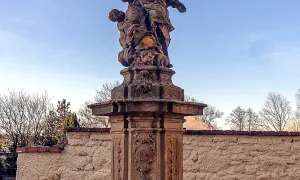
Opposite the church stands a late Baroque rectory from 1774. In front of it is a statue of Saint John of Nepomuk from 1731. In the square there is also a Baroque column of the Holy Trinity. Both the statue and the column are cultural monuments.
Tips for visitors
The best time to visit the Church of Saint Bartholomew in Bakov nad Jizerou is during late spring or early autumn when the weather is pleasant, allowing you to comfortably explore both the church and its surroundings. During these seasons, the natural lighting enhances the architectural details of the Gothic structure, making it ideal for photography. Additionally, visiting outside peak tourist season ensures a more serene experience.
Public transport is also accessible, with buses serving the area; check local transit websites for current schedules. If you're driving from Prague, it's a scenic drive through the Středočeský region.
When visiting, consider bringing comfortable walking shoes as there are several sites to explore on foot within the vicinity of the church. A camera is recommended to capture the intricate details of the Gothic architecture and the Baroque elements of nearby structures like the parish building and the Bakov column. Don't forget a light jacket or sweater, as temperatures can vary.
For photography enthusiasts, the best spots are around the northern side of Mírové náměstí where you can capture the church's façade in natural light. Early morning or late afternoon provides soft lighting that accentuates the Gothic details and shadows. The adjacent Baroque parish building and the statue of Saint John Nepomucene also offer excellent photographic opportunities.
Nearby, within a 30-minute drive, is the charming town of Mladá Boleslav, known for its historical sites including the birthplace of T.G. Masaryk. Families with children can enjoy exploring the local museums and parks in Bakov nad Jizerou itself. The area around the church offers green spaces perfect for a leisurely stroll or picnic.
Frequently asked questions
Can the monument be visited?
Religious buildings are usually open mainly during services; at other times a visit is normally arranged with the parish or the operator. We have not verified specific times.
Where is the monument?
Location: Mírové náměstí, Bakov nad Jizerou, Středočeský kraj. The map on this page shows the exact spot.
Why is the monument protected?
It is listed in the Central List of Cultural Monuments of the Czech Republic as a cultural monument (register no. 29384/2-1453).
Businesses nearby
Do you run a restaurant, accommodation, shop, museum, rental, wellness or other visitor service near this monument? Show yourself directly to the people heading to it — this is how they will see you in the app and on the web:
Events nearby
Zdroj akcí: otevřená data měst a obcí ČR (Národní katalog otevřených dat) a kalendář akcí Národního památkového ústavu.
Nearby
Adjacent to the church stands a late Baroque parish building constructed in 1774. Nearby, there is a culturally significant statue of Saint John Nepomucene from 1731 and an artistic Baroque Bakov column dedicated to the Holy Trinity.
Accommodation nearby
Themed route
Thematic Walking Tour of Bakov nad Jizerou
1. **Kostel svatého Bartoloměje (Church) Begin your journey at the heart of Bakov nad Jizerou with the Church of Saint Bartholomew, a stunning example of Baroque architecture that has stood since 1714. This church is not only an architectural marvel but also a spiritual landmark for locals and visitors alike. Its rich history and beautiful interior make it a must-visit for anyone interested in religious art and architecture.
2. **Parish Building (Late Baroque building) A short walk from the church, you'll find the late Baroque parish building constructed in 1774. This structure complements the church with its elegant design and historical significance. It's an excellent place to appreciate the architectural style of the period and understand how these buildings served as community centers in their time.
3. **Statue of Saint John Nepomucene (Cultural statue) Nearby, you'll encounter a culturally significant statue of Saint John Nepomucene from 1731. This statue is an important piece of local heritage, representing the deep-rooted religious traditions and artistic expressions of the era. It's a poignant reminder of the town's historical devotion and offers a moment for reflection on its cultural legacy.
4. **Bakov Column (Baroque column) Conclude your tour with the Baroque Bakov column dedicated to the Holy Trinity, an exquisite example of religious artistry from the period. This artistic monument stands as a testament to the town's rich history and the influence of Baroque aesthetics in its cultural landscape. It provides a fitting end to your exploration of Bakov nad Jizerou’s historical treasures.
This thematic tour offers a deep dive into the architectural and cultural heritage surrounding Kostel svatého Bartoloměje, providing insights into the town's past and its enduring legacy.
Seasonal recommendations
Spring: The arrival of spring at the Church of St. Bartholomew in Bakov nad Jizerá is marked by a rejuvenation of nature, with vibrant wildflowers adorning the surrounding meadows and lush greenery framing the historic structure. The soft morning light illuminates the church's intricate details, creating an ethereal atmosphere perfect for photography enthusiasts. Visitors can enjoy tranquil walks along the nearby river Jizera, where the gentle sounds of flowing water and chirping birds enhance the serene experience. It is advisable to wear comfortable walking shoes and layers that can be adjusted as temperatures vary throughout the day. Early morning visits are recommended to avoid larger crowds and fully appreciate the peaceful ambiance.
Summer: Summer at St. Bartholomew's Church offers a lively atmosphere with longer daylight hours, allowing visitors to explore the church and its surroundings in ample natural light. The warm weather invites outdoor activities, such as picnicking or hiking along the scenic trails near Bakov nad Jizerá. Light clothing and sun protection are essential due to the summer heat. The nearby river provides a refreshing escape from the warmth, making it an ideal spot for relaxation.
Autumn: Autumn transforms the Church of St. Bartholomew in Bakov nad Jizerá into a picturesque setting with vibrant foliage casting warm hues over the landscape. The golden light of late afternoon enhances the church's architectural beauty, creating stunning photo opportunities. This season is less crowded than summer, offering a more peaceful experience for visitors who wish to immerse themselves in the tranquil surroundings. Layered clothing is recommended due to cooler temperatures and unpredictable weather. Exploring nearby trails can be particularly rewarding as the changing leaves provide a breathtaking backdrop.
Winter: Winter at St. Bartholomew's Church offers a magical, serene atmosphere with snow-covered landscapes surrounding the historic building, creating a picturesque scene reminiscent of postcard imagery. The shorter days mean that visits are best planned for late morning or early afternoon to maximize daylight and capture the church’s beauty in winter light. The quietness of winter allows for a contemplative visit, with fewer crowds and an opportunity to appreciate the peacefulness that comes with the season.
Visualizations and artistic views


The visualisations are generated by artificial intelligence and serve as inspiration.
Photos from the area
Real photos taken near the monument

Zdroj a licence jsou uvedeny u každého snímku.
Tips from visitors
No tips yet. Be the first!
Log in and add your tip.
Sources and literature
Photos: VitVit / CC BY-SA 4.0 — Wikimedia Commons. The author and licence also appear when you hover over the image.
Faktickým podkladem tohoto textu byl článek na Wikipedii, jehož autory jsou přispěvatelé Wikipedie. Článek je dostupný pod licencí CC BY-SA 4.0.
Location on the map





Příběhy a pověsti
Legendy, pověsti a příběhy spjaté s touto památkou
Fotografie návštěvníků
Zatím žádné fotografie. Buďte první, kdo přidá fotografii z návštěvy!
Log in a přidejte svou fotografii nebo hodnoťte.
Za ověřenou návštěvu v aplikaci získáte víc bodů — poznáme podle GPS, že jste na místě.
Reviews and comments